veBINAR Crafting an Unforgettable Executive Brand that Commands Attention
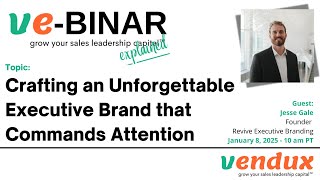
Webinar hosted by Henning Schwinum with guest Jesse Gale (founder of Revive Executive Branding) about building an executive brand through three parallel documents: LinkedIn profile, executive resume, and a short biography. Key recommendations: make LinkedIn scannable (headshot + bolded/sectioned About, bullets), keep resumes concise (~2 pages) with a 4–8 point career snapshot on page one, include ~10–15 years most-relevant experience, and tailor documents to the target role (fractional vs full-time). Common LinkedIn mistakes: third-person voice, empty profile, long unscannable paragraphs. Fractional hiring is faster and requires formats that show focus, not chaos. Contact: Jesse Gale (LinkedIn: Jesse Gale) and reviveexecutivebranding.com for consultations.
Chapters
Welcome and hello, everybody. Thank you for joining us for this webinar. We're happy to have Jesse Gale with us. He is going to be our guest today and we have a very exciting topic prepared. Let's start with Quick Housekeeping. Let's try to keep our microphones muted so that the sound quality is better. And when we open the mics up towards the end for a Q and A, then we'll ask you to unmute and ask questions. In the meantime, you can also use the chat to post questions. We're monitoring that. We're also recording this webinar and make it available on our website. Probably by tomorrow. I'll also be sending out an email to everyone who is attending so that they are aware that the email now is available. The topic for today is executive branding. It's the thing that we all do all day, every day, and we all hope that we do it right. But in order to help us do that, we have Jesse with us, who is an expert in that area and who will share with us how to be memorable, how to be a standout, how to have our executive brand be impactful for ourselves. Jesse, welcome. And why don't you introduce yourself so that the audience knows who they're dealing with and why you are the expert that you proclaim to be.
Thanks, Henning. I. I appreciate being here. I'm excited. So, I. I'm the founder of Revive Executive Branding and my background, I. I actually led a sales team for one of our competitors. Well, now competitors. And so I find myself as an expert because I speak with executives and I've spoken with thousands of executives and seen what resumes, LinkedIns, biographies, what work and what doesn't work.
And.
And it really just came to a point when I was at another company that I realized there's a better way to do things. And I'm not the best writer in the world, but I know how to find the people that can produce the quality that's needed to be there in order to help these people find opportunities, progress in their career, and hopefully see a pay increase and do what they love. So that's a little bit about me. And we're just continuing to grow at Revive.
So you're a practitioner turned expert along the way?
Yeah.
Good. Now, we use this label executive brand and assume that everybody knows and understands it to be the same thing. But in your definition, what is an executive brand?
Yeah, it's really easy to get it confused, and every time I explain what we do, it seems to confuse somebody. So when I Look at an executive brand. I see it as three documents that work in parallel with each other. The executive resume, the biography, and the LinkedIn profile. Usually one of those three documents gets seen first. Right. Either you're sending your resume to somebody or you're popping up on a search on LinkedIn and then they're asking for a biography and then they want to see your resume. It all works in different ways. Or you're at a networking event and they see a biography. And so the way that we see it is your brand is something that's on paper or online that you don't get to explain firsthand what it means. Somebody else gets to determine what that brand is. And you're hoping that they're, they're guessing the right, the right thing there.
Well, it's communication between sender and receiver or recipient of the message. Right. You write something and you hope that it's received the same way that you intended it to be.
Right, exactly.
Okay, so let's talk about the LinkedIn profile then. What pieces would you say on a LinkedIn profile make up somebody's brand?
So obviously, I think a lot of people think of a headshot and a backdrop photo. I think those are just, they make you look professional. Right. Just having something on there just to show that you care about your LinkedIn a little bit and you care about the way people see you. The way that we really look at it is the content. So most people have a paragraph on their about section.
Right.
That's about it.
Right.
If they have that. Usually if somebody asks me in a one on one call, what, what do you like? Most of the time I'm able to say, hey, I like that you have something on there because somebody knows something about you. But what we find is we use some, some coding in other companies because you can actually put bolded letters and different fonts wants in your LinkedIn profile, in your about section, in your experience section, that really makes you stand out. So that way when you have headhunters, recruiters, friends, family, referrals looking you up online, they can see in five to seven seconds who you are and what you can do. And then they can dive in deeper. Right. If they want to, or most likely they'll just reach out and then want to talk more and review more before they speak in, in detail with you. So that's a little bit about what we do. We focus on the content for our clients. What we do is we take care of all of it for them because most of them don't have the Time to do it on their own. So. But we just want to make sure that people get a good understanding really fast so that they don't have to overthink anything.
Yeah, you spoke about fonts and, you know, all changing that in order to stand out. So how much is the brand that you create on LinkedIn about the content and, and how much is about the form, the, the, the way you present it in order to stand out?
It's a good question. I don't know if I could break it down into an exact percentage. I think the, the sad reality, maybe it's not a sad reality, but the reality is that most people, when they're sifting through LinkedIn, they're looking things up, they're on autopilot most of the time. Most of us are. And so having something that's bolded, something that's really easy to see. I always like to think of my son. He's eight months old. He has no idea what I'm talking about when I'm reading him a picture book, but. Or reading a book in general, but he loves the pages and he. And his brain is stimulated. So that's the part of the format that's beneficial, is that they don't have to think.
Right.
You don't have to think. You just know what's there. Quick, quick look at it. You know who they are and what they can do. And then the content is really key because then when people dive in, it's going to be that first stepping stool before they go into your resume, before they want to see a resume or a biography and speak with you. So that's how I'd say it's split there. You want to grab the attention with the format, make it easy, and then have the content really speak to who you are. Because if it's gibberish or it doesn't go to what you're looking for and it just summarizes a bunch of random info, people are going to be confused why they're even looking at you.
Yeah.
I always tell executives that they shouldn't expect that somebody actually reads the about section word for word to sentence for sentence, but rather scans across. And you need something in there that catches their attention. It's either a phrase or something in a bulleted list or a number, something that catches their attention. Is that how you think about it as well? What are your best practice instructions for how to write the about section on LinkedIn?
Yeah, so I 100% agree. I mean, most of the people that, that I see that are looking at LinkedIn profiles, it's like playing Russian roulette, right. You're hoping that it's going to land on red or land on black. And if you put a whole few paragraphs there that's not bulleted, not not listed, you're just hoping that they're going to read the right paragraph. So what we say to do, and again, we typically do it for four people, but what we say to do is make sure that you have some bolded areas that are really structured and focused on your goals, where you want to be, not just summarizing what you've done. I'm kind of been repetitive on that. I know I've mentioned that just a second ago, but having some bullets like what you mentioned, and if you can find a way to have bolded letters, different fonts, so that they see those points first and they can skim it and then they can dive in if they want, that's what we like the about section to look like. A few different sections broken apart, nice spacing and then more detail in the experience section.
Okay, yeah, I'd like to talk about that, the experience section. Because I look at that frequently and I often see that the executive who wrote their own experience section, they're assuming that the person knows, the reader knows what the company does, and that the title tells them what. What their actual function looked like, which in almost every case is not true. Right. You have to explain that unless you work for Google and even then within Google, they do so many different things. What did your role specifically entail? So with that said, I'd love to hear what your advice is to people on what to put down in the experience section.
Yeah, I. If somebody's not actively looking and you don't want to raise red flags for your employer, usually at the current role that you're in. We promote the company more. Right. A little bit heavier promoting the company and then what you do there. Again, I just kind of seconding what you said. Depending on the size of the company, the location of the company, the industry, the title really is going to mean a lot of different things. You might have a COO that does a lot of different things and has their feet in different areas of the company. So what we want to do is showcase exactly what they do, but what they want to be doing.
Right.
Because if you highlight. If I've got a CEO or a CMO that does a ton of different things, if we listed all of that, it's probably going to confuse a headhunter recruiter. That's Looking. But if we focus on what their goals are and what their main focus is, it'll really clear up the air because they might have, you might have a CEO that can be a CMO or a cto.
Right.
But they're totally different aspects of the company and you don't want to list everything because you're just going to confuse the reader and they're not going to really understand who you are and what you can do. So does that answer your question? I hope it does, but it does.
Now then there are. For somebody my age with a lot of gray hair, there are recommendations that I've seen to not list every single role to only go back 15 to 20 years. What, what's your best practice advice around that?
Yeah, we, we do tailor it to each individual, but I'd say an easy rule of thumb is about 10 to 15 years back is the most relevant information. But I'll have clients that they've got experience from 20, 30 years ago, and they want to dive into that experience again and expand on that and maybe a fractional role, maybe in a, just a different gig or board roles, consulting. And so that's when we do tailor it. But we don't want to focus too much on, on, on all the information that's very far back because most people see that as irrelevant and outdated anyways. So naturally we'll take out the, the education, years of education for a lot of our clients and, and information so that they can just see exactly who they are, what they can do. And you don't have to worry about their age because they have the skill sets. They just need to see that right off the bat.
Yeah. So on LinkedIn profiles, what's the worst thing that you've seen? Or maybe your top three list of worst things that you've seen?
A big one I just ran into yesterday and it reminded me is when you have. And you could correct me, I'd love to hear your thoughts on this too. But when I see a LinkedIn profile that's talking about that executive in third person, to me that looks a little bit lazy. It looks like they don't really care about their LinkedIn and their assistant just wrote it. Even if their assistant does write it, it's better to have it look like you wrote it so people can understand who you are and, and how you think.
Right.
So you have a clear and concise manner and you can, you can talk about the subjects that you do. Right. That's the first one that comes to mind. The other one is just when it's blank, when there's no information. Because like what you said, if you just got, you see that they're a VP of sales and then they've been a, you know, an interim, you know, CEO at a time, you have no idea what experience they have. You really don't know their skill sets. So those are the top two, I think if they don't have anything. And then the last one is just if they have a huge paragraph, I would say that's usually nobody reads it. It's, everybody's getting used to AI synthesizing everything and summarizing everything. And so if you can do that for somebody, it makes their life a lot easier and it gets the point across faster for you.
Yeah. Now you brought up two more parts of somebody's brand, the biography and the, the resume. Let's start with the resume. You know, what, what are, what is best practice advice for, for a executive resume?
I would say one thing that seems sometimes to be controversial is the length of the resume. We find the sweet spot to be two pages. If it's over two pages, I would be surprised if anybody's going to read that. And then if it's one page, you sometimes just come off too junior, like you don't have enough experience. So just to start off with formatting two pages, a thing that we do that we've seen a lot of success, success with is on the first page, not just diving straight into experience, but having a quote unquote career snapshot or section that's focused on four to eight points on why you're the right fit for that exact next role.
Right.
So you're focused on that next opportunity and you've listed everything so they don't have to go through and look at every single experience. Why you're the right fit. They see it all right there and they can find that in the experience section as well. And then that experience section is a little bit shorter, easier to digest, and nicer for the reader.
Yeah. And that also means the experience section is then customized depending on the role that you're potentially applying to.
Yeah, I, I, I read a blog post from a another recruiter and he was CEO of a recruiting firm and he said, you know, a resume isn't a one size fits all. And I think that's a great way to put it.
Right.
You want to customize it for the different roles, the different skill sets that they're looking for. Because again, I'm kind of hitting this point that you mentioned, maybe too much, but every role has different requirements depending on the size of the company. And so you want to really focus on what they're looking for, not what you expect that they should be looking for.
Okay, now the same questions around the biography. You know, what is the best practice advice around that?
Yeah, I'll be honest. We include our biographies for our clients for free because it's so versatile, but it's also so hit and miss. I mean, you can correct me if I'm wrong. I see maybe 50 to 60% of recruiters might ask for a bio before they, after they see your LinkedIn, maybe ask for a bio or one pager about you before they see your resume, but it's not all the time that I'm seeing. And then you can also use it at networking events, you can use it as speaking engagements, you can use it for presenting to companies or clients or lots of different things. So what you want, what we want the bio to be, is a brief idea of who you are. Maybe some personal information, not all professional, but really focused on, you know, showing who you are, but so that it could be more versatile and get a full understanding without seeing dates and numbers and times in there.
Yeah. So in those two areas, you know, what's the worst that you've seen? You know, do people, you know, write five page resumes and include every little detail and forget about the summary at the top? Is that the worst or what is the worst?
I do think it's almost the worst when you have a five to ten page resume. I get them all the time. About every day I'm looking at a four to six page resume of somebody that they think it's great and it probably is, to be completely honest, the content probably is there, but you're just hoping again that everybody's going to read all that information. And so a fun example that I always think about is we work with a lot of chief marketing officers and they do the resumes for their family members, for their friends. And when it comes to writing your own story, having a fresh pair of eyes on it can be really crucial because it's not their blood, sweat and tears in all these roles. So it's a lot easier for them to say, hey, this is actually isn't relevant for the role and to take it out and then put in the right information so it is concise because again, they're probably going to spend not as much time as you're hoping and you're going to spend way too much time on it and not preparing in other ways.
Yeah, this, this Topic of standing out. I mean, that's important because there are millions of executives on LinkedIn. A recruiter is holding hundreds of resumes and reading hundreds of resumes. A hiring manager, the same. So what should an executive do to stand out? I mean, we talked about the visual, the formatting aspect and the content aspect. You know, we talked a little bit about LinkedIn, how to, how to stand out on LinkedIn. But otherwise, what is it about being memorable, being create sort of an off the wall comment to start with. You know, what, what creates a true standout?
I, I, this might not be going the direction you're looking for, so you can stop me, I won't be offended, I promise. But what I think really makes somebody stand out is if they have every single document ready. So if a recruiter sees them on LinkedIn and then they ask for a resume, they're not waiting two, three weeks or five days even to get that resume. They have it ready, they send it over. Right. And I think that makes them stand out because they're ready, they know what they can do, they've already got a clear idea of it and they're ready to go. And that's why we always say, hey, be proactive on it. We actually give our clients unlimited updates because we know that little things will need to be changed. But if you have a base resume you can send out and then you get that role that the recruiter's looking to place for, we can make tweaks and adjustments. But if you have a word document that's 10 years old, which most people do, right, and you spend all night, you know, trying to get it ready, I don't, I don't think you stand out as much as somebody that says, yeah, I've got the information, here you go, I'd love to hear what you have. So that's what I think of when you ask that question. But maybe that didn't go the right direction that you were hoping for.
It's one, it's one direction and it's, it's one that I hadn't thought of. But for example, when somebody puts, most often people put in their LinkedIn headline the title that they're looking for, the function they're looking for, the industry that they've worked in, and maybe some highlights, but then everybody does that. So is a standout to say, I saw one yesterday, four times, girl, dad. Or is a standout, you know, CEOs call me when good is not good enough? Something like that. Does that create the standout that, that you think is appropriate in today's world?
I, I really think it's based on personal opinion and I think the, the harsh reality is, is it's people that's look that are looking at your brand that are looking at your LinkedIn. So you're going to find maybe 50 of people that might love it and 50 of people that will say, that is, that's not professional. I don't like it. The nice thing about LinkedIn is it is a lot less professional. And, and I guess people aren't as critical. On LinkedIn, you can throw in four times, girl, dad, or, you know, I, you know, skier, or whatever the random things are. I don't know if I see that helping a lot, but sometimes it does help with a personal connection. I talked with an executive yesterday that had a great background in volleyball and my wife and I play volleyball all the time. We play doubles, grass and sand. And so it really was a great and easy conversation starter. Doesn't necessarily mean he's going to get placed because of that, but it might make a, it might make it easier to break the ice.
Form. Is that the way to think about all of this? As we think about the brand that we put into documents, that it's all about getting the conversation started and when we're in the conversation with a hiring manager, for example, then the format and the form of those documents doesn't really matter anymore. It's all about us at that point.
Yeah, I think that's a good way to look at it. I, I usually say, even though we're an executive branding company, that the, the networking, the interview prep, the. Again, networking who, you know is, you know, going to get you 70 to 80 of the way there. Right. And what we do is just make you stand out. So, yeah, once, once that format is clear, they understand who you are. The rest is up to you in the interview. So you just got to make sure that you can speak to those points. That's how I see it.
Yeah. Now we deal mostly with fractional executives and all of them have sales leadership in common. So that is our niche of the executive market. Are there any particular recommendations or any particular trends that you've seen regarding fractional executives and how they position themselves on LinkedIn or in resumes?
I think showcasing exactly this. Maybe this just sounds repetitive and it all probably is. It's all related. But when I see fractional executives, I'm not a pro in just working with fractional executives.
Right.
Like how you are. But we, what I would say is if you're a fractional executive and you're working with a few different companies, you really need to be careful on how you're wording that and how you're showcasing that. So it shows focus and not chaos. Right. And it shows, you know, hey, I'm successfully helping these two companies or I'm a fractional executive here. Fractional, you know, sales, VP of sales, whatever it is, you know, because it can be a lot of information and really confusing for somebody that isn't well versed in those areas or, or thinks that you might be spread too thin. So that's where we would want somebody to come in with a fresh pair of eyes and say this is what we need to do to showcase that so people have a clear understanding and they don't think that you're, you know, just confusing.
Right off the bat you see the confusion come in because executives are then especially fractional. Executives with a 20 or 30 year career tend to want to describe everything that they have done as opposed to focusing on their true superpower.
Yeah, I, I would, I would say that's a really good way to put it. I probably won't even add anything to that, to be honest. I think, I think that's a good way.
Say it then. On top of that, from a terminology point of view, do you feel that the term fractional is at this point well known enough to describe what the individual is doing, or does it require more explanation?
I think it's, I think it does describe in a good form of what they do. I think having a little bit more explanation in those roles will be helpful. Just like fractional and regular roles. If you've got a VP of sales, you need to get a good understanding of what that entails for that company so they don't get confused or think one thing and you have a call that wastes your time. Even because a recruiter thought, or headhunter or hiring manager, better said, would, would think that they know about you, but they don't.
Okay, there are already questions here in the chat, but I'm going to pick one of them. So I will unmute the microphone shortly. But let me pick, pick up one that is in the chat and ask you, Jesse, about it. And it's around the reference section, the recommendation section that is at the bottom of everyone's LinkedIn profile. What's the importance of that and what do you recommend when an executive comes in that has none at all or that has several hundred. What's the right way to use that for one's own brand?
I don't think it hurts. This might not be the answer that they're looking for, but I would say if you're spread thin already, I wouldn't gruel and, you know, beat myself up over trying to get as many references as possible. Again, it's that, that stat of, you know, they're spending five to seven seconds before they know if they're interested, they might go to those references later on, but I would assume most likely they'll also ask you for references before they bring you on for that role. So it's nice to have. It looks great and it shows that the roles that you're in were real roles. People really liked working with you. But it can be a very tedious process. And I've yet to see somebody not get a role because they didn't have that. But that might just be because somebody didn't have the time to explain that to me.
Right?
Yeah, that's true. Good. Let's open the microphones here. I've had the pleasure of being exclusively asking the questions. Jesse, let's see what others have to. Leslie, if I can call on you, because I don't quite understand the question that you put in the chat here, can you unmute yourself and ask the question directly?
Yeah, absolutely. And Jesse, thank you for the insights and reaffirming a lot of areas that I do and work with my clients on. In the branding area, one of the questions that I have is when you're on your LinkedIn page and you have your name or just who you are, you know, is it CEO? And then you put after that, typically we either put areas of expert expertise or I think Henning asked about, you know, dad, daughter, you know, dad of five daughters or something. But there's always sort of that title that people put under their name. And is the thread trend theme to typically put, you know, CEO of X company, or is it better to put, you know, areas of expertise, strategy, business development, etc. On what you do or put something that sort of has a little bit more of a, of a sentence to it. I'm kind of curious, is the guidance you give your clients?
Yeah, I again, I do think it is some personal preference, but I've seen a handful of people that do have a sentence in there. I really don't think that grabs people's attention. I think having some roles, the company that you work at, if you're a big executive working for large companies, I don't think it hurts to put that company in there. So people know exactly right. I Mean, I spoke with one of the recruiters at Korn Ferry. I've got a close connection or she's been there for over a decade. And that's a huge selling point for these CEOs and CMOs that they're bringing on.
Right.
Is what companies have they worked with. So throwing that in there is a great selling point. But I think after you work on your brand and you have a really clear and concise LinkedIn profile and about section, then taking what direction that's taking you to and putting it in that headline, I think it's really helpful. And there's actually, I wish I had the website on hand, but there's a website that does it for free.
They'll give you.
They'll spit out some ideas. I wouldn't suggest just copy and pasting that, but we've sent some people there as well, just to kind of jog their memory and, and think about what they like. Because it is the personal preference on how you want, you know, people to see for those first three words. So I don't know if that helps, but it does come down to some personal preference and. And who's looking at your profile.
Yeah. And I think it also comes down to the guidance that we get because, you know, recruiters have a different thread, branding people have a different executive coaches. So I'm going to look up the website. That's interesting. Thank you.
Yeah, no problem.
Other questions? Tim, I noticed you put another question in the chat.
Sure, yeah. Thanks, Jesse. Appreciate your time. And I have seen on a few occasions where somebody will have a very, very minimal LinkedIn presence, but they'll have a redirect to a standalone website, which is like Jane Doe.com or something, and it's got a whole series of tabs and, you know, photos, and some of it's personal, but it's. It's like a whole separate biography in a sense, with all the resume with all the background and everything. What do you think about that? Where people are creating personal websites about them personally and it's, you know, it's probably got brand work and colors and all sorts of stuff. Yeah, that's a great question. Nice to meet you, Tim. There's a couple benefits of having that website. If somebody Googles your name, if you have the right SEO going for your website, it'll pop up an extra thing for somebody to find about you. Right. If they're, if they're trying, if hiring manager is trying to decide are they the right fit, do they have any bad or skeletons in their Closet, I guess. Right. Having a few things there and having a website as well is a great way to showcase yourself. I think it's also a great way for you to spend a lot of money and a lot of time. So if you're going to do it, I would say make sure it's really clear, concise and hits all the points, which means it's usually more, more expensive and takes people a lot more time. But usually what I see is people have that website, it's subpar, has some information, some of it's outdated, not all, not all up to date and sometimes it might just not matter at the end because if they, if you've already sent them all the documents right. It's, you might not need it. We've done it for a few clients and I wouldn't say that it's been exponentially better for them. But again it does help that search on a Google search so they pop up with an extra thing for somebody to find out about them. So it sounds like if you're going to do it, do it really, really well and you know, it's got to be at a certain executive level.
Or.
Just don't do it at all. Basically what I'm hearing you say, that's my personal opinion. Somebody might, might disagree, somebody that really focuses on selling that might disagree and they might have some better stats on it. Um, but I, I would say you'd want somebody that creates it or you create yourself and then somebody that manages it. So it's always up to date so that you don't have somebody looking it up and getting confused. Because we always talk about having this parallel message between your LinkedIn, your resume. It's all connected. You don't want somebody jumping to something else and getting confused and thinking, I thought I knew Tim, but maybe I don't understand his background. And you don't want them getting any doubts before they reach out to you or speak with you. Yeah. Thank you. Yeah.
Leslie put the link to the headline generator in the chat. Thank you for doing that, Leslie. Courtney, you have a question unmuted yourself.
I do. And Tim Kelly hacked into my brain and vocalized the first part of my question. But to you, Jesse, without getting into proprietary secrets that you know that we can't know, have you seen any sort of like portal centralized portal that is.
Not a one off website?
Like to mention that executives that are solopreneurs are gravitating towards that you'd rec like that stood out or is it pretty much wild wild west still?
It Kind of is wild wild West. I've got a, a close friend and recruiter and coach. She has a website that she created and it, it kind of sends your information out to over 1300 independent recruiters and has a lot of free information on there. I wouldn't say that it's centralized or that everybody knows about it. Right. So sadly there isn't something like that. I, I started a podcast to interview recruiters. It's actually how Henning and I met. And the whole reason behind that was again, there is this disconnect between candidates and, you know, what branding executives or branding professionals are saying to do and what recruiters need. And so the, the goal of that is to branch or bridge that gap. But I don't know if I'm answering your question the way that you want it.
I was looking for either, yes, they go here or it's the wild wild West. So, yeah, work to do together.
Yeah. Yeah.
Good.
Any other questions? We have a few guests here that haven't asked yet. John, Mario.
I did have one quick question. First of all, thanks again, Jesse, for doing this. This is really helpful. Having worked a lot of recruiters, obviously I've pivoted now to fractional pretty strongly and changed my entire LinkedIn to focus on that. My quick question was is I know there are recruiters out there that basically beyond what, what Henning does, but there's actual, like Korn Ferry has a, a fractional recruitment function. Have you come across that more in your industry or is those, you know, those three or four, you know, recruiting firms. I'm looking at doing that more because, you know, it tends to be more, my experience been, tend to be more on the smaller companies, SMBs and startups, not so much the large enterprises. And I was just curious if you're seeing that more or again, is this just happens to be a one off that that's being looked at?
Yeah, I wouldn't say that I'm seeing it more, but I do see it being more common. So I'm not seeing the inside of how these larger recruiting firms are changing their process for fractional roles, to be honest with the larger firms. I know people at a lot of those firms and they're great, right? They're great, they do great work. But the harsh reality is they have a ton of data, a ton of clients or candidates that they're working with, a lot of clients they're working with. So it's really easy to get, you know, pushed under the rug or get forgotten. And so what we, what I would say is for fractionals, I bet it's just going to take a little bit longer for it to be really a key focus for them. Because I, I would assume Henning could correct me, but I'd assume there's a little bit more time required for these recruiters when it's fractional because it's in and out certain amount of time or multiple fractional roles for one executive and probably a lot more moving pieces than a typical, you know, full time gig.
I would, I would add to that that it's first above all, it's different. And so if you're, if you have done executive recruiting one way and one way only for many years, it's not an easy transition because if you do it the same way, it won't work. The things you have to look for in an executive are different. The speed with which you have to work is different. It's much faster. Most fractional hiring or fractional engagements happen within two weeks of kicking off the search. And so you don't have the three to six months that you typically account for for executive recruiting. So it's different. And then there are many other differences as well.
Thank you.
Thank you, John. Any other questions, Lawrence?
Yeah, I had a question, John, actually sparked a little thought. My background over the last 20 years has been in business services, law consulting, fractionals and multiple, multiple roles. Part of that time period has been in staffing and recruiting. You know, I've worked for manpower group, work for Vaca, building out global consultancies. At one point in time with focusing on revenue strategy, you had earlier mentioned talking about reducing content. I loved how you talked about, you know, the focus on some of it comes down to just the attention span of the reader in some respects. Like arguably that's some of the difference between a corporate recruiter and a recruiter. Like manpower is a recruiter, like manpower is by design has to dig into the weeds of those because they're trying to find things that can't be found by internal recruiters and they're measured differently. One is measured on time internally. The external recruiters measured more on your revenue in some respects. And so I'm curious because like what I found from experience is all the rules don't work with each other with like a resume, like if you, you follow every rule, you'll end up with a resume that's like plain vanilla, loses a lot of content value, maybe doesn't describe the actual value. And so a lot of it comes down to sort of hard, fast rules that everybody kind of comes up with differently. If you were to give advice on the best way to get to the critical path on what you communicate and when you trim it down, that you find leaves the value without cutting out SEO or without cutting out, you know, key sort of outcomes and helping to describe what the company does and all those dimensions that you have to do for someone to look at you and say this is that person. What's the best way you found as a rule of thumb to trim that down without losing the value?
Oh, that's a great question. And it, it really comes down to, it does vary per person, sadly. Right. So, so it does vary per person. But I, I'll go back to those four to eight points I mentioned having on that first page of your resume. It's not a rule of thumb, it's, you don't have to have it. But when you have background in consulting, fractional roles, maybe a full time gig, all these things together, if you are trying to showcase that all in a chronological order, you just might lose the attention again like we're talking about. So one thing that we focus on is the psychology and the thought process behind what people are looking at and what they're not thinking about, but they are focusing on. And so having those 48 points at, on that first page, whether that's, you know, however you want to structure that, I find that to be very beneficial especially for those in fractional and consulting gigs as well. But I, I think that delivers the message quickly and then you don't have to go into as much depth on the career experience which can keep it concise and you can cut out things or maybe have a point on there that's from 20 years ago that isn't in the experience section but they can ask about in the interview. Does that make, does that make sense?
Yeah, I think it's one of, it's always, I always like to hear everybody's perspective because what I find is that the next expert in the area is going to have a different opinion. And you know, it's from my perspective, it's valuable learning. I've review thousands of resumes, but I would never and will never call myself an expert in that I'm good at. When I read a resume, understanding who they are, not as great as, as making them properly. Just like the mechanic.
Right.
Yeah.
Thank you. Appreciate the advice.
Yeah, thank you.
Thank you. Mario, you raised your hand earlier.
Yeah, yeah. Well, thank you. Thank you, Jesse, for putting this together. My question is more related to, to the area of self branding and what, what do you think what are the, what are the things that can hurt you most? In particular, let's say if you are 100 in on a fractional work and then you present all these different opportunities and companies you worked with and you just mentioned in your with with the previous question how it can get kind of repetitive and not actually understanding how much you have done for this company and what actually you've done. So how do you, is it better to say, hey, I am independent consultant or however you want to call yourself, fractional sales leader that work with numerous companies doing X, Y and Z versus listing each one of those and how do you think that affects potential recruiters looking for full time role? Is that something that excludes you from the competition or stands out or what do you think how these fractional leaders are looked at from full time recruiters looking for full time roles?
Yeah, if I understand the question right, I would say you want to make sure that it's concise, focusing on where you want to go, not just summarizing everything. So when you're looking at, you know, if you're interested in full time roles, what you're going to want to do is either you or somebody that does it for you is going to want to focus on what you're, where you want to be and how that's all related and only focusing on information that's relatable. Because when you focus on it, most likely like what Henning and I mentioned is you're going to want to hit every single point of everything that you did because maybe it makes you look like a superhero and a superstar. But the problem is, is they're not looking for all those things. They're looking for a very specific executive that hits all the points in these sales aspects. So you want to really know what they'd be looking for and then tailoring it all for that based on what you do. But again, I think the biggest thing that we focus on is it does need to be different for every single person. There's not a cookie cutter way to say, okay, you need to have these exact same points that this other sales executive has. We want to talk to you and say this is, this is where you want to be. Now let's structure everything to lead to that so that it's not the same as every single other person, so that not even everybody that works with us has the same brand. It's all different and focused on the individual.
Thank you.
Yeah, thank you. John. You unmuted yourself. You have the.
Yeah, I just wanted to I just had, actually, it's more a really quick comment about where Mario's going and it's based on my trials and errors of doing this for almost a year now. And the reason I pivoted my LinkedIn is I think there's a big danger when you're trying to do fractional in the hopes of getting a full time role in that the whole point of fractional is I'm not looking for necessarily a full time role. I'm looking for somebody who can come in, make a change, potentially get hired full time. But I think it's dangerous to try and play both because if I look at my, what I've done in the past and what I'm doing now, it's, it's very different. But Henny, you may have some, some thoughts there. I just think it's hard to have two masters per se.
Yeah, I mean, that's what Jesse said earlier. Right. Know your audience and know what you want going forward and structure it accordingly. If you're fully committed to fractional and want more fractional roles, you should show the diversity of assignments that you've done. If you're after the next full time role, find a way to describe it as you've done consulting and it's consulting in the exact same field that your future full time employer is in. So tailor it accordingly. Jesse, does that sum it up? That's perfect.
I agree.
Okay, good. Rick, I know you, you unmuted yourself. I'll throw one more time. I'll throw you in. But that's the last question then before we close this out.
Okay, thanks.
So once you know about your own experience, then how do you find the right companies that match what you bring to the table?
Is this for me or for Henning? Out of curiosity? It's for you.
Justice.
Okay.
Okay.
Just to make sure it cut out a little bit. So you're saying once you, once you know where you want to be, how do you make sure that the right audience is seeing it? How do you find that audience? Yeah, I, so what I would say, and I'd love to hear Henning's point of view on this as well, I would say you want to make sure that you're popping up on the right searches. So once you take care of that brand, hopefully you're popping up on those right searches on LinkedIn for those recruiters to find you. And then I would say a big part of it is networking, right. Finding people in those areas so that your information starts circulating over there so that you don't have to worry about being in the room, explaining your brand to every single person, but you know it's going to do it on its own. And then you can start talking to others, networking, using that bio, sending it to friends or acquaintances, and then they'll start reaching out to you more. So what we do is we also make introductions to recruiters and send out that information so it really starts circulating so you can start seeing more opportunities in a passive sense. And then you can go and do what you do best and talk about it, showcase what you do and prepare for those interviews.
Got it.
Thanks.
Great. Thank you. Jesse, thank you for being our guest. Maybe the final question, especially for those who are watching the recording afterwards, how can people get in touch with you?
Yeah, really simple. There's two ways. Some people like to reach out to me directly on LinkedIn. My name's Jesse Gale. You might be able to see it on the recording as well, but it's J E S S E and then G A L E. You can find me on LinkedIn or you can go to our website, reviveexecutivebranding.com and then you can schedule a free consultation. I'd be happy to speak with you and talk about if it is a good fit. Right. If we can actually help you on what we would like to do and we'll give you that custom process that we would use for you and then help you out.
Great. Wonderful. Jesse, thank you again for being our guest. Thank you everyone for joining. Have a wonderful rest of your Wednesday. Take care.
Thank you, Jesse. Thank you, Henning.
Thank you.
Thank you, everybody.
More from Henning




ve-BINAR - The Revenue Tornado Methodology: How 3 Power Sources Create Exponential Growth


ve BINAR: Executive Cloning: How AI is Reimagining the Role of the Fractional Executives




veBINAR: Unlock Client Value: Why Compliance is Crucial for the Startups You Serve
