veBINAR The Sales Gap Analysis
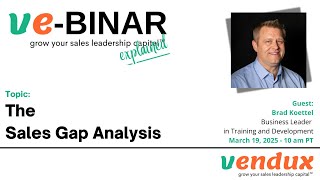
Webinar (veBINAR: The Sales Gap Analysis) hosted by Henning Schwinum with guest Brad Kettle focused on how fractional executives can close the "sales gap." Key points: many fractionals over‑rely on personal networks and referrals, lack a repeatable sales/prospecting process, and under‑qualify prospects (often giving free audits). Recommended fixes include documenting and following a simple sales process, qualifying pain/budget/timing early, charging for assessments to create skin in the game, regular prospecting (timeboxed), and addressing imposter syndrome. The session closes with Q&A including AI tool recommendations (Fathom, Yoodli) and practical tips for differentiation and closing.
Chapters
Welcome, everybody. Thank you for joining us for this next webinar of ours. We're proud to have Brad Kuttle with us, and shortly I'll ask him to introduce himself. What we're talking about today is the sales gap. The sales gap specifically for fractional executives. Obviously a topic for most of our audience to be very curious about, to be very involved in. Very important for them a few housekeeping notes. We'll ask everybody to stay muted during the course of the webinar. We'll have a Q and A at the end, and then you can unmute yourself and ask questions directly. But you're also welcome to put questions into the chat and we'll keep an eye on that as well and address those too. We will make a recording available at the end. Pardon me. For everybody to view. And the recording tends to get a lot of engagement as well. Brad, I always love to have the guests introduce themselves because you know yourself a whole lot better. And me reading off a CV doesn't really make sense. So tell us a little bit about yourself.
Yeah, thanks, Hagen. Thanks, someone, for having me today. Super happy to be here. So, a little bit about me. My name is Brad Kettle. I am. My title doesn't really make sense. We don't really live in a world of titles anymore. But essentially what I'm doing today is helping individuals understand the sales gaps, understanding what they're doing in their sales processes, how successful it's being, and helping them go from where they're at today to where they need to be in terms of driving profitability for the business. So short. I bring this up because I'm like, you guys. Like, I spent a good five or six years back when we used to call ourselves consultants, not fractionals. Now it's all new brave world we live in. We're all fractionals now, but I sat in that same seat. I ran a consultancy, a small, small, small business. And I've been through the challenges of how do I do the work and how do I then continue to build my business so that I could avoid that steak or ramen scenario that we would almost always find. And so I'm really excited to come and talk to you guys a little bit about this. I'm hoping that today is interactive. I am terrible if you want me to just speak at y'. All. I know Henny and I are going to talk about some questions, but if you guys have questions as we're going through or want to chime in or feel like you want us to add a little clarity, go deeper Please do. So. I want to make sure that this time is valuable for you all because I know time is super important.
Great. Appreciate that. So when I talk to fractional executives, especially those who get started, they often talk about the relationships they have and the network they have, and they look at that as their main source of assignments going forward. And I always say that is not enough. You have to have more than just existing relationships and the referrals that come from it. What's your view on the value of that and how you would approach it when you're starting out as a fractional?
Yeah. Thanks. So let me ask you guys, a show of hands. We've all called, like everybody and our best, their best friends in order to. To try and get new business right? Like, that's what we tell every new frank fractional consultant to go in. And that's a great way to start. But when I hear that that's the only way they grow business, I often get concerned about, is that scalable? Right. Some of us have been in market for 20 or 30 years, and it is scalable up to a certain amount. But most people that get frustrated in this role is they're great at what they do, but they've run out of people to call and ask for a favor or tell me of someone. And so they're kind of stuck with losing control of the opportunities, not really sure knowing, like, how am I going to go find a new deal? And we're just kind of waiting for the next deal to come in and we're hoping that we're profitable to that. Does that sound like what you guys have been experiencing?
Well, it certainly reflects what I've seen out there, that a lot of start off with that as their primary source, but then over time, as you say, those channels run dry, those connections are no longer as close. And you need a process because that's what you're doing talking about, right? That's what you're preaching when you talk about. About sales. So when. When you talk to fractional executives and you ask them about their sales process, what do you hear most commonly?
When I talk to fractionals and I ask them anything with the word process, they can tell me all day long, how do they opt, you know, for their cmo? How are they building campaigns and optimizing them? If they're a frac, if they're a cfo, they can understand. How do I look into your books and optimize and find errors and find homes. But when it comes to sales, I just. People don't get into this. Let's minus all of the CROs that are going to jump in. Okay. If you're not a CRO and you didn't get into this in order to sell. And so they just don't. They have like zero. Like, okay, I'm going to call all the people I know. But they don't have a process to prospect new clients. They don't know who to call, when to call them, how to call them, stuff like that. And so without that prospecting, right. They have no way of doing any of the other steps, qualifying, selling, or closing. So it really becomes a scenario of if I ask a fractional, walk me through how you're going to get new business, they're going to say stuff like, I go to the chamber of commerce, or maybe they're, you know, another level of networking where they're going like oe or they've got a Vistage group and that's great. But most people don't know how to take those networking relationships and find a lead, qualify them or disqualify them. So we're not wasting our time. Put them through a sales process to make sure that they're really interested and qualified and then ask for the business. It's just. It's not there because we never teach it to anybody.
Yeah. I would add that I, since I deal mostly with fractional sales leaders, right. People who have held positions as a VP of sales, cso, CRO, you would imagine, you would think that they would know how to do this, right? But they don't. Because selling yourself is different than selling somebody else's product or service or. And running a team to do so. Is that your observation?
You're nodding your head 100%. Because I think what we see most, right, is that they go into sales and what they call selling is actually consulting. Right. Their sales process is I'm going to show up and throw up and I'm going to again. I did a long time in marketing, right. So I can tell you, when I was in my marketing fractional role, my first step was let me audit some of your stuff and see if it's working. Now, first off, do you ever think I sent an audit back that said, you're doing great, I don't need to help you? No. Never sent a good audit back that said, we're good, but we end up spending hours. Right. Of our time in front of a prospect who we haven't even qualified yet, and we give him a whole bunch of free consulting that they probably just go, oh, great. Thanks. And they put it in their pocket and they leave because we didn't qualify. And so we're out. I mean, some of us. I was talking to a fractional CIO the other day who was doing an entire audit on the technology at this company. It had 50 pieces of hardware, plus phones, plus level. And. And I looked at him like, what? How much are you getting paid for that? And he's just like, oh, no, no, this is part of my winning the deal. And I just kind of looked at. We had to have a serious conversation, like, why would you do that for free? That's not part of your process. Your process is, hey, I bring value, I can help you. I'm not going to give you free consulting. I'm going to help you a little bit. But what we're real big believers on, if you can't identify that they're frustrated, angry, worried sick and tired, pissed off of the way things are going now and you don't develop any type of pain. You can do all the free work you want, but you're never going to get a dollar out.
Yeah.
So that's kind of the first thing we talk about in the process, is qualifying. You know, great. You met somebody, you did a cold lead, somebody introduced you. But if all they want you to do is free audits, free assessments, look over this, spend some time. We haven't identified that there's a real need. It's just waste. And you guys, time's too short. Time's too short to waste your time with deals that aren't going to ever move into the next step. And then we're not even processing, running the sales process. We're just disqualifying.
Yeah, let's stick with that qualifying phase of the process a little bit. Because I do believe that as an executive, that as you're sourcing opportunities, you do have to show your value, your qualification. It's not enough to just point at a resume and say, I've done this before. Good. So there is a little bit of give before you get. But where do you stop? What's your recommendation of where you stop and say, you know, this now turns into paid consulting or a paid assessment gig that I can start off with.
There's two factors to that, Hemi and I. I think there's, there's the, there's one way of looking at an opportunity, right. If it's a referral and somebody says, hey, I want you to talk to Brad. And you, you have this connecting relationship. And so it's a. It's a, it's hot, right? You know that we've got a relationship, then I'll normally tell you, hey, give them a little bit more than you normally would, but not much. Right. You need to go in and you need to justify, you know what you're talking about. And you need to do that in a consultative conversational. Hey, what's, you know, how do we have a conversation that's not about, hey, Brad's a great guy, right? Like if, if I was a great chief marketing officer, I wasn't going in going, hey, pat me on the back. I've managed Amazon and million dollar budgets and all that. My role was to go in and say, why would you even talk to me? What are you looking to accomplish? And having that kind of, does this make sense for us to even go. And then you can go in and say, hey, since heading recommended me, let me, let me take a look at that for you and I'll give you one or two high bullet points just real fast of what we kind of what I'm seeing or what my team is saying, what does it look like? But if they're not a warm lead and you've prospecting cold them, right then I'm telling you, you have, you have no responsibility to give anything away. You just have to ask about, do they have a pain, are they frustrated? Are they just, do they have another fractional CEO or CFO or whatever or sales guy? They, they're just going to take your information and give it to you, then don't give the information. Yeah, it's kind of like if you think about it, we're all, we're all young and we're all spry chickens. Right? But when we were a kid at Halloween, what was the deal? You had to go to the door, knock on the door. I haven't had a kid say trick or treat or tell me a joke or do anything in 20 years. But back in the day, it used to be this kind of give and take. I would give you my joke and I would give you the candy. So it has to be that way. And I think today we're just so willing to like open the door and I'm just going to give you everything I got. I'm not getting anything in order to qualify whether or not it's a deal and we miss that opportunity to really understand why would you do something different? It's going to cost you a lot of money. Nobody here is cheap. So if you're going to invest $10,000 a month or ask for that you better know that they're frustrated, angry, worried. They got to be qualified to go forward. And most of the time, you can do that just in a conversation. You can get them to go with you along the way. And maybe instead of taking a free assessment, you tell them, hey, look, this is normally a $2,500 thing just to get kicked off, but we're gonna do it for $500 just because I want this thing to move forward, and I think there's opportunity. You can always do that type of thing, too. I'm a big stickler on I don't do anything for free. You all are way too valuable. You have way too much information. You're worth way too much money in the market. We don't do anything for free.
I would add to that that it's about putting skin in the game, right? It's really easy for a business owner, for a CEO, for a founder to ask for something for free because they don't. They don't invest anything in it. But if they are saying, okay, I'm willing to invest in an assessment, it puts skin in the game. They pay attention to the outcome, and they, you know, they have a vested interest in moving forward because they've already invested once into something.
And there's another side to that heading, and that is if we have a relationship and I'm willing to pay you anything and we do that transaction, that makes the next transaction 10,000 times easier, because I've already had a relationship where I've paid him something, even if it's just a small amount. We all call. We call that. The concept is called the monkey's paw. I can't. If I pull a cruise ship in, I can't throw you that rope that's this big or it'll knock you out. They throw you a ball like this big, and it's tied to a little rope, and then they pull that in, and then it gets the big rope. You want them to buy a 500 assessment, blah, whatever. Because once they've paid you once, asking them for the next thing is like, oh, I'm already in the system. I already know how to do this. You already know. We've already wrote me a check. Let's go to the next one.
Okay, so let's assume we've gotten the client to pay for an assessment. What are the next steps then? In a simple, repeatable process, that leads to closing of a true fractional engagement, right?
So first off, I totally agree. You need to bring value, right? So if I've if you've engaged and you say, I'm going to do an assessment or whatever that is, that little $500, thousand dollar whatever, right. You need to do the best work you can do for sure. But when you go back to them, right here's where people, this is why it's really important to do the first step. When I go back and take my results, the first thing I say in that meeting is heading. Let me remind you, when we first started this, you told me you were frustrated about this, worried about that, and disappointed in this. Is that still the case? Yes. Hey, here's some things that I identified that might solve some of that. And clearly this is just the beginning. But let me go over. And then the trick is most people can then go back in and they spend an hour on a deck that nobody cares about about how many clients they've got and how awesome they are and how great how long they've been in business. And they forget to address the same things that we talked about in meeting one to solve. If you told me you're frustrated with turnaround time, hey, here's, here's what I found. These things, if we made these slight little changes, now you don't tell them how to do it, but you say, hey, you can make this change and this change, I could probably help you with that in a long, bigger term, this is what I would do. But that might solve that. Does that work? You think that might work for you? Yes. So then what you're doing, you're selling to that pain. Now it goes back to the first conversation. If you're not talking about pain, frustration, worry, concern, disappointment, you're going to miss out on all the keys of solving that. And then at the end, hey, does this sound like something we should move forward with and shut up. We often sell too hard, too much because we want the business so bad. Act like you don't need it and you'll get the business. It's crazy like that. Yeah.
So is that the trick to, to get the closing done? You just shut up and wait for the client to say the next word.
You, you show them that you can solve that pain and if their pains are big enough and you can solve them. And now look, I get it, guys, this is a 12 step process that we're turning into a 40 minute discussion. But if you can do that and you can take that pain and say, I can resolve your pain, then let's, let's move forward. How do, is that something you want to do? Never want to look desperate for the deal. You never want to. And you certainly don't want to discount anything at that point. You saw they got a broken arm, you showed it, you know how to fix it. I can fix this broken arm. Do you want to fix it? What do you think we should do? And it becomes a pretty easy next step conversation. Yeah.
So any, any other best practice advice on then sort of signing the deal? Because it's one thing for the client to say, let's move forward, but then, you know, it might take a lot of discussion still to get a deal closed and a contract signed.
Here's what we've found. If you do, if you have a process and you work it, that close is way, way faster, Right. I mean, if we go all the way back to the beginning and say, I know why you're frustrated, you've told me, let's talk about why am I even here, Right? Well, Brad, you're here because we're not selling anything. Okay, Tell me what that means. And I'm talking it through it and I'm trying to understand. And it turns out that their team doesn't want to prospect at all. Or they keep discounting price in order to close the deal. And then I can go back and fix those. Then when it comes to closing, closing is. There's no aha moment. I've solved the need. I can show you that I can solve the need. Now I need to know some things. I need to ask the hard question. Do you have money to. Are you going to invest to solving this problem? Which is something that everybody's got to learn how to ask, do you? Are you ready to invest in solving this problem? What have you budgeted to do this? Because let's be clear, if you don't ask for money, closing is impossible. And if you don't ask for, how are you going to make this decision? Honey, are you allowed to make the decision? Or do all of these people in front of me need to be heard? Then we probably need to talk to all of them at one time. Let's do that. So if you know three things, they're frustrated enough to want to do something, Angry, disappointed. I can give you all the longest list of emotional keywords you're looking for. Stuck, angry, worried, disappointed, frustrated. I think, I think sick and tired today is one. Almost everybody can agree to be sick and tired of the way things are going. Yeah. So if you get pain, right? And you really pick on pain, you just can't, can't just take the first thing they say, right? Oh, yeah. We're worried about it. Hey, tell me what you mean by worried. Like, what are we, we don't. We have to dig through a process to say it's not surface level, it's real pain. And then when you get really good, really, really good, you get to ask them stuff like, really, how does that affect you personally? Well, I'm the head of sales and if we don't fix this, I'm not going to make my, my, my kicker bonus at the end of the year. What were you planning to do with that money heading? You were buying a boat. Now he's, if he'll admit that stuff to you, like surface, emotional and then real personal, he's going to solve that problem. He wants that boat. A no headache. He wants a boat. But then if you don't have, hey, great, you're frustrated, you're angry. Word. Have you set aside budget? If they haven't set aside budget, why don't we even hear. And there's a lot of things in talking about budget. Yeah, we can do that. We can have that discussion if we want. But you have to have budget and timing and how they're going to make a decision. And if you have those three things, you go away, you come back, you show them how you can solve their problems in their budget, in their time frame. And then you just kind of sit there and wait for them to go, what do we do next? And if they don't buy at that point, you walk away and say, I screwed up qualifying them somewhere. Yeah.
So every order, the steps sound very familiar to anyone who's run sales before because it's, selling yourself as a fractional executive is just like selling something else. So why do you think that or why, why do so many fractional executives struggle in executing this process? What makes them not do this? Well.
A great question, I think how many people have heard of the term imposter syndrome? Everybody. Somebody, mostly. I think we get in our own way so much. I, I'm just, I'm, I'm an imposter. And, and, and that gets worse. If you don't have a system to sell. Right. I mean, think about it. If you know that you have a process and you're going to do, this is what I do first, this is what I do second, this is what I do third, then that imposter syndrome kind of goes away because you don't have time to think. You're just focusing on, I have the next, this is what I have to do. So I think most fractional struggles heavily with imposter syndrome. And then that keeps them from prospecting. I would never ask this on this meeting any, but I would bet that if everybody in here thought about how many hours a week did they prospect last week? I would bet the average would be less than 2. Now, I'm not going to ask you to tell me you want to put it in the chat. I'd love it. But I would tell you that most people would tell you they spend less than two hours a week prospecting new clients, and that's. That's death. It's just, you're never going to win that way. And then you're going to cut your price when you shouldn't because you're desperate to get a deal. Because we're looking at that ramen month. And I want to have a steak month. I want to be up here for steak, not down here ramen. And I start cutting my price because I really need the next deal. And that doesn't help you. Now you're frustrated six months later because you're not making up. It's just a. It all comes into it for me. I sucked at prospecting. Sucked at it until I finally realized that I had to spend one day a week, two hours a day of who am I calling? What am I doing? What's my. Hey, guess what? I'm cold calling them. Until I started cold calling again, which. Who likes to cold call? Nobody. But they just don't. We don't prospect enough. And if we were to prospect more effectively and more often, even though it sucks, we'd have better opportunities to work on. We disqualify more stuff that doesn't fit for us. We'd find better things that kind of match up to what I really want to do. And we, we would be better at closing for. Better for four. Eight.
Yeah, I'll pick up a few questions here that have come in on LinkedIn Live and on the chat, the one here on LinkedIn Live, the question is, what if I'm not good at getting client, but I'm really good at delivering value? It feels like I'm missing the one skill that actually gets me into the door. What should I do? I mean, is it, is it learning it. Is it hiring somebody and outsourcing it? What. What would your recommendation be?
I'm going to handle your second one first. And you all are not going to like this. Do not outsource something you are not willing to do yourself. I know that sounds weird, but if you hire somebody to cold call for you and you can't direct them how to cold call or cold prospect in the way that you want to be heard and listened to. You're going to waste money, you know, waste money, particularly as a fractional. Right. You have to prospect and you have to be your unique version of you. Because they're not hiring a CMO or a CTO or CFO or fractional anything. Dan, they're hiring Dan. They're not hiring anybody else, they're hiring Dan. And Dan has to be authentic and go to market and do the work and make the calls or do whatever it is that they're going to prospect with because that's who they're going to hire at the end of the day. So I answered the question. I'm not sure.
Learn how to do it. If that's not a skill today, make it a skill.
Look, no, again, there's no golden like I can tell you how to prospect, I can give you things. Just you got to figure out how you're going to introduce yourself. You got to figure out 30 second commercials. You got to figure out how to ask that first pain question. All that's part of a process. But you've got to be able to do something and make it work. Hey Lawrence. That's awesome. The person on the phone doesn't have, he's in the chat. I don't have a problem. The person on the phone has a problem. I'm just trying to figure out if, if I can solve his problem. And 99 out of 100 times I can't, then hundredth time I'm going to sign a contract and it's going to be worth it.
Yeah. Another question in the chat is how much, how much preparation do you suggest to put in before the initial customer meeting? So the research on the customer before.
You go in, good question. So I'm going to answer how much research do I put in before I prospect somebody? Just enough to get through the front door. One of the biggest things we struggle with is that I did is I would over prepare for a prospecting call. I would freak out. I'd want to know everything I needed to know about you, who your mom is, what does she do for fun. I don't need to know all that. Right. I need to be able to get on a phone call, give a 30 second commercial and say, hey, does any of that sound like something we should have a conversation about? Yeah, it does, Brad. Okay, let's meet for 20 minutes tomorrow. You got your calendar, let's go. And then so I don't overly do the prospecting, quality, getting detail about my prospecting. I know they fit my icp. I know they're who I want to go after. I know they have the number of people that I work with. All that I have to do. But I'm not figuring out what their astrological sign is before I prospect them. When it comes to, in that first meeting, who watches Ted Lasso? Hey, raise your hands. Anybody watch Ted Lasso? Be curious, not judgmental. You don't have to know everything. That's why we're having this discussion. You need to know a little bit. I mean, kind of know enough about their product and their service and what they do and kind of understand who you are in the org chart and all that jazz. But your job in that meeting, your initial prospect, your initial first meeting, is not to show them how great you are. Everybody say it with me. It's not my job to show you how great I am. You have a problem, Can I solve it? Can I get you to admit you have a problem? Can I ask you the right questions to get you talking? Can I play the 70, 30 rule? If you're talking 70% of the time and I'm the salesperson, I got a chance. But If I'm talking 70% of the time and you're the, you're the buyer, you've checked out. So you don't have to know, have to ask good questions. It's all about asking questions. In the first meeting. You'll get to figure out the rest of it. Or you'll waste hours trying to figure out what was the last thing they bought and who, how many salespeople have left. Like, you don't need to know that you're going to ask those questions and then they're going to tell you if they got pain. Yeah.
I would also say that you, you demonstrate your know how and your skill, by the way, that you asking those questions. Right? That's how you demonstrate it. And if they give you indications of pain points and you dig deeper to get to the root cause of it, that tells them that you have the knowledge to solve the problem down the road.
When you all are making, when you have too many clients to deal with, a fantastic way to do the preparation is to send them a survey before you meet with them. I do that all the time. I have a 24 question survey that I send out. If you don't fill it out, I don't meet with you. And it just gives me some directionality where we're going in this meeting. If you're not willing to give me six minutes of your time to fill out a 24 question online, one through five questionnaire on your computer, then we don't meet now. I'm good. I don't, I don't need, I'm not, I'm not in a super desire to get 10 billion new clients when you guys get to that point, adding a step where they have to qualify to meet with me because you're valuable, you're rock stars. I need to have only green M M's in the, in the green room or else you're not, I'm not coming. So you'll get there. But having developed those questions, for you to say, what. Why am I even coming? What's frustrating you? And if nothing's frustrating you on the survey, I've canceled meeting, I've called people and I'm like, hey, we're supposed to meet tomorrow, but you told me you're happy with everything, so why would we meet? I'm busy. And people. Yeah.
Another question in the chat is around competition and from a fractional executive point of view. I know that five years ago when I talked to a business owner, you know, they didn't know anybody else. They called us because they, they had no other connection to go to today. There are more executives, there are more service providers like ours. So there, there is that competitive element also in, in the, in positioning yourself with a potential client. So how do, do you have best practice recommendations on how to differentiate yourself?
I do. You're going to love them. Are you ready? I was working with a fractional information officer and they reached out to him and I said, hey, we want you to submit your resume. And he called me, he's like, him submit my resume is awesome. Operator. I'm like, you are clearly not submitting your resume. He's like, well, it's a perfect fit for me. I'm like, I get that. You don't have to differentiate yourself. If you go to market with, hey, guys, this might, you know, I need to qualify you before I even have a conversation with you. Like, if you follow this process, you don't have to differentiate because all these other dodo heads are running in and throwing up all over them, and they can't figure out the difference. They don't know. They got 20 other resumes there that they're like, I don't know how to. I don't know if I should hire Dan or not. You all say you're great. You all say you're wonderful. You all look good on Paper. I looked you up on LinkedIn and you posted some. You all look the same. So if you do something different and say. And what I told him was call the hiring man who told you about this deal? Well, my friend Joe. He's the hiring manager. Call Joe and tell Joe I'm not sending you a resume. I have a handful of questions. I want to have a conversation. I need to know whether or not this is worth my time. It should take me 15 minutes. Nobody else does that. Nobody. So if you build a process that says I'm valuable, my time, I'll give you 15 minutes of my time that really I should charge you for an hour. But we'll play this game. I'll give you 15 minutes. I have some questions. Does this even make sense? What? And now all you're doing is how many times am I going to say this? What do you think you do in that meeting? Guys, somebody chime in and say, Brad said earlier that he said we're going to develop pain. Could I ask about pain? Why would you hire somebody? What are you looking to accomplish? What makes sense? How you got 50 resumes there. How are you going to make a decision? Suddenly you look way different than everybody else. If you want to be different and beat the competition, be different. Don't go to market the same way they do.
Yeah. We'll open up the mics shortly because we're running towards the end of our set. 45 minute mark for this webinar. One last question for me. For you, Brad. If we have a fractional executive who is struggling, they know they're not getting the deals in the door that they're looking for. And what's the first thing that they should do? What's the one thing that you would tell them right now without having any details on their specifics?
I think I would give them two pieces of advice. And look, I know I'm beating a dead horse here, guys, so I apologize. But write down what your process is like. Really write down how you go to market and note, don't share it with anybody. Don't post it on the Facebooks or LinkedIn. You don't even have to share it with your spouse. Write down what it is that I do to get and really take a look at whether or not that's working for you. Because most people will struggle to really say that. Having a process come up with something that works for you and do it, do it for three months and figure out if that works and then adjust. And I think the other thing I would Tell you. And if you haven't gotten this one from me, qualify. Start qualifying people. Ask questions. Be curious, not judgmental. Ask them, what are you doing about this? Tell me more. You should be able to walk in and say, hey, Lawrence. Like, why am I here? Well, I'm frustrated about this. That's interesting. Tell me more about that. And then shut up and let them talk. We don't qualify enough because we're so worried about being broken. And I need. I need to show them how awesome I am. They just. They don't are. If you get them talking, they won't argue with themselves. They'll just be like, I don't know why I like Lawrence, but I'm buying. He's coming to work for us. You know why? Because you had a conversation. That would be my recommendation. Have a process. Ask better questions.
Have a process. And be Ted Lasso.
If you haven't read that book Lead Like Lasso, everybody Amazon it. I don't get paid for anything for that. Go find it. Read, Read. Lead Like Lasso. It's fantastic.
Good here on the. On the zoom. Call anyone with questions. Just unmute yourself and speak up and ask.
Give me the name of that author. Again, the book, it's called Lead Like Lasso. You can Amazon it. Lead Like Asso. What is lasso spelled? L, A, S, S, O. But you're going to have to go watch the show if you don't know what we're talking about, because it's not going to make sense if you haven't watched Ted Lasso on Apple plus, it's worth. It's worth the free subscription for three months. It's genius. Okay. The only other thing I would tell you is go watch Tommy Boy and sell like Tommy Boy. That's my other piece of advice to everyone. Go be Tommy Boy or watch Ted Lasso. Anybody else? What other questions you got? Talking about the movie Tommy Boy. Yeah, yeah. Movie there is funny as hell.
Lawrence, you unmuted?
Yeah.
Yeah.
I was curious. Do y' all have any AI recommendation tools that can look at both for us as fractionals are speech as we're going for tonality and cadence as well as for clients. And if not tools specifically that are like the AI coaches, what approach would you recommend solving? Because it's really. There's a duality. It's when we as sales leaders, how do we lead our teams effectively in this pipeline review calls and how can we better enable that? But also when we go to market, how can we go to market better?
I have two awesome recommendations. Clearly I'm a big fan of Fathom. There are some add ons you can get to Fathom that will break down stuff cheap pop. We're members of the Sandler franchise network. They put a sales process into Fathom. You just got to ask for it and it'll tell you everything you did right, wrong or need to work on. Two really cool AI tool out there. It's called Yoodli. Y O O D L I you can download, you can get access to it. It is. It's cheap in terms of AI tools but it's expensive because it's a big tool. But you can use that to record test train again. Sandler, this big sales organization that we're partnering with has put their process into that. So if you get into the Sandler process it'll tell you well you just failed at your 32nd commercial and here are the four things you need to do better. And then run the AI and run the AI and then run the AI and get better. So those tools are coming. Usually both of them are available today. They're just kind of basic until you start putting these add ins. And I'm. I'm sure that other processes can be put into those as well. I just know those two that are built into the Sandler process.
Well, I think definitely in, in Fathom you can pick other sales processes.
Yes. Yeah, yeah, I know you can. I've never used them. Like I said, we, we mostly work with people through the, the Sandler process and then customize it to them. So I know it's. But I'm sure you can put others in there. So.
Lawrence is asking about pricing for Yodlee. Do you have any?
Yeah, I'd have to. I'll pull that up Lawrence and I'll. Hopefully Henning will put some way for you guys to reach out to me in this and I can find that for you. I've got it on that. Appreciate the tips. Yeah, Yoodli's really wild and her personal licenses can, can be a lot but if you're going to use it, it's really worthwhile.
Yeah.
It's always good to hear the fact that you're talking along the lines of tonality, cadence and tone. Automatically assuming whatever tools that you've looked at might might be helpful.
Tonality is the one thing you can control and acting like it doesn't mean anything to you and being cool as the other side of the pillow takes you so much further than paid attention to that. So good call. Great.
We are.
Lisa, you've been really quiet. Ask me something you didn't ask. Lisa, go.
I really enjoyed the chat today. Love Ted Lasso. No, for me, I think that what really resonated with me was when you were talking about, you know, not qualifying yourself or like not letting the imposter syndrome sort of take over. I think that was definitely good food for thought for, for me for sure. So I don't have any really good articulate question, but I am quite curious. I'm going to think about it and maybe I'll follow up with you separately. But you know, I thought. And the other piece too. So I work very closely with Henning and when you were chatting, the thing that jumped out at me was you were talking about, you know, maybe with the exception of CROs, no one has a sales process. In my mind, I'm like, our CROs don't have the best process either. And I think that it's really interesting because you'd think that they, maybe they would, but we can't apply that to ourselves.
Very well. Thanks for sharing. Thank you for sharing. It's really good stuff. I appreciate it.
Good. We are at the 45 mark. I'm going to shut it off now. Brad, it was a pleasure to have you. Thank you for joining us. Will be putting the video out by tomorrow. Send an email around, include your contact details so people can follow up with you individually. Thank you for joining us and thank you everybody else for dialing in and asking real intelligent questions. Take care everybody. Bye bye.
More from Henning




ve-BINAR - The Revenue Tornado Methodology: How 3 Power Sources Create Exponential Growth


ve BINAR: Executive Cloning: How AI is Reimagining the Role of the Fractional Executives




veBINAR: Unlock Client Value: Why Compliance is Crucial for the Startups You Serve
