264: Building a Human Brand with Nicole Hatherly
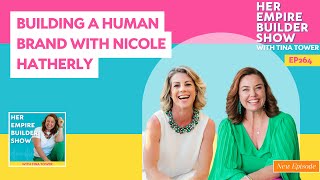
Nicole Hatherly left corporate work to build her own business and talks about the fear that held her back, how neurodiversity shaped her path, and why showing up as yourself online matters more than polished messaging.
Foreign. This is super thrilling. Look at us together.
I know. Okay, so there's many things that I want to ask you about, but one of the main ones, like, we met at Commonwealth Bank Women in Focus back in, like, 2011.
Ish.
I think, where you were like, corporate boss. You were there, you had it all going on. You were so entrenched in that kind of corporate world. And now you've fully transitioned from that, like, structured corporate life to your beautiful autonomy that you've got in entrepreneurship, which was. I think you did it in about 2016. But can you talk to us about why? Because there was, like, naivety is bliss sometimes at the start. And I've never had a job, which means I didn't have far to fall. You know, like when you go in through that failure and the like, starting from nothing. Whereas I think coming from big bougie corporate salaries as well into nothing is very risky and very scary. How did you get your mind around that?
It took about two years. Yeah. Really? A lot of the work that I do now. Yeah. Is making sure I shortcut that for other. Not just women, for all genders. And what I can pin it down to and articulate it is it took me two years. And you use this beautiful word to shift from discipline to autonomy. Yeah. I had no idea how to choose where you would hear entrepreneurs say over and over again, I'm unemployable. You couldn't fence me in. Now I'm the type of person that if you give me the rules, if you give me the guardrails, the rules, if you give me what I'm running at, I will smash through that and go further. And so that's what I did in corporate. I was always exceeds expectations. I was always role modeling in behaviors.
Put an A on your report card every time.
Totally. And you saw how I worked and how I played, and everything was done. It wasn't an ambitious drive. It was a let's do this. Let's take it beyond. Let's give this to as many people. Let's all shine. And it was really that. Firing off all cylinders. But if I. I knew the guard rails and I knew the goal, I was great. Coming to my own. Oh, I still struggle. I'm eight years in and trying to set my own agenda, trying to set my own annual goals. As you would know from our goal setting in her Empire Builder sessions, where I sit there almost in tears going.
I don't know, just tell me what to do.
Just give me a goal. So I guess everyone who is Listening, who's either had that transition but couldn't put that feeling to words. Yeah. It is almost always that discipline, that safety net I could jump around and I was going to be caught most of the time into that autonomy. And you see this with people going, I've left my job, but every morning I get up, I still get dressed, go down to the train station, get my cup of coffee, come back, sit in my office and I'm ready to go. Then at five o' clock I finish and I'm like, whoa, okay, let's chat. Yeah, yeah, yeah, yeah, yeah.
No, that's the. So you've been. I mean, you have embraced the freedom of it now. Like I know the way that you work with your cadence of your timing and embracing that freedom. So I think, I think you're. Well and talk truly unemployable now, Nick.
Well and truly. I was saying that to another friend saying, oh my goodness, I would hate to employ me. And what you were saying really came to fruition probably about only three years ago where I ring fenced and I still do Monday and Friday where I'm not on, I still work, but no one gets to see me if I don't choose them. So I've got no hair, no makeup, basically having a shower and getting some makeup on, but I get to choose. So really I'm only on three days a week. And for an energy management point of view, when it comes to autonomy, it was a game changer. Yeah, I didn't know I could do that.
You can do whatever you want. You can make whatever rule you like. Like, this is what I don't understand about like so many. And that's what I think would be the hardest part of going from, from employment or from, you know, we have a lot of teachers, like they go from the education system or from corporate or from different things that you go into somewhere where, you know, we just came off a master class before this and someone said like, like, can I do this or do I have to do this? And it's like you don't have to do anything and you can do anything. Like you make up all the rules, whatever you want at any time and change direction. Like it's the most incredible, beautiful thing. But I do think that, that it is easier for that than people that have never known any different for that. The other one is, is a learned skill.
You are absolutely right. And if you try and put those entrepreneurs into corporate, a lot of them would just go go crazy.
Well, I don't understand. I'll talk to some friends that have corporate jobs and I'm like. And you say yes to that? Like, you put up with that? Like, how is there not a mutiny? Yeah, it's just not fair. Anyway, so you went from business brand to personal brand recently. So you initially operated under BrandTrunorth and then now you've transitioned more into Nicole Hadley. Very.
Yes.
Can you share your insights on why you've made that shift and why and how you've navigated repositioning that brand identity?
Absolutely. First of all, being the brand person who wasn't in their own personal brand was quite itchy.
So I think that's still the tail end of corporate, though, is you felt like you needed a brand behind you.
It is. And I was also working with a lot of brands, a lot of businesses. So my business, Brand True north, was branding businesses, products and services. But what I was really craving doing and what I really moved into through Covid was was branding humans. Was looking at that impact and the legacy rather than selling things, commodities. And so with my brand shift, I was. I use my own brand team. I've got a team developer and designers, and I was the worst client they've ever had. It was. I've actually marked my journey and that's in my. My new course, and that's personal rebrand bootcamp. And I looked at the ticket, the traps, and the kind of mind field that I had to go through, and I really had a new empathy for everyone I work with. But that journey was really important because Brand True North, I could hide behind that. But what was starting to happen was my credibility as a keynote speaker, my credibility as an adjunct instructor through academia. They did not care about Brand True North. Yeah, yeah. They cared about leadership and more personal brand. And so Branchy north didn't cut it. It didn't make sense in the quadrant that is my business strategy, which is really interesting. So I knew that. That I knew that Branch R.E. north was limited. Everyone, everyone knew the brand of Nicole Hatherly. There was no question in the market what I did and how I did it. And it's mainly I'm known as energize. Like energizing people back into their businesses, their brands, or.
I always describe you to other people as human sunshine.
That's. Thank you. That's it. And Brand True north was not cutting that. Brand True north still exists. Most of our clients are in America, North America. They love Brand True north, especially the Canadians. But Nicole Hatherly is here.
Yes.
And so that transition was a bumpy one. It was 14 months in the cocoon stage.
I was say you came up against like those minefields and the different things, like what were those actual parts that you, you came up against that you were like, this is, this is hard for me to do.
Yeah. Can I tell you the big one? I'll cut straight to the chase. And I didn't realize this sat underneath and I'm just getting a little shaky. Isn't that funny? It was a fear. Yeah. And it wasn't a fear of failure as Nicole Hadley. It was an absolute fear of success as Nicole Hatherly. Because there was no question what I did, who I was. It was very clear. I was a professional speaker. I'm accredited now. All of these big cut of ticks that I thought I needed, I got. And what I realized was I was getting those and getting this fear because of my fear of success. If I have the floodgates open, people will want more from me. And I've been burnt, burnt out before. I've had burnout twice in my career, which I knew that leaving corporate, we were access all areas in, in the roles that we were in. And I was ultra connected. And all I really, all really little Nikki wanted to do was. Was kind of cave dwell in that I didn't want more, which is ironic because I do want more. I want to help more. I want to give more. I couldn't find that balance. So I would come back into Brand True north And it took 14 months for me. And how it played out was I would do positioning, which I'm really good at for other people. And I just found nothing came up with where I needed it to be. I didn't want to be the personal brand girl because I do a lot more. And it was actually her empire builder. It was actually our accountability call. Remember that call with our accountability group? And I was really vulnerable. I shared with everyone. I had this fear. And I shared all the positioning opportunities. And everyone went, oh, my goodness, it's human brand strategist. I just, I couldn't see the label because I was inside the jar. And I burst into tears after that. And I realized exactly what my clients were feeling every single time. Yeah.
And it, I mean, it does help you be able to serve people when you've gone through it yourself as well. And it's something that, like, I know it can sound crazy to people saying fearful of success, but I see it happen all the time. Time. And it's, it's sometimes by being like, you know, in, in getting that burnout. But A lot of the time it's, it's that exposure as well and, and other like going, what does this mean for how people will perceive me to like the, the amount of women that I talk to that go like, I don't want people to think I'll get too big for my boots kind of thing. That is a huge thing. And I see that hold more people back than the fear of failure. Yeah.
What was really interesting, and I think this will help everyone listening because it, it so helped us last week when we were with you. We were at the Kajabi conference and you did these beautiful round tables and we had an ex. An extraordinary table of women who I'm just in awe of. And we were sitting there and we had to do our biggest challenge, biggest business challenge. And ours was so common. But the women were starting to say, oh, the women were collectively saying just this fear of failure. And I came around and I said, my mind's a little different. It's the fear of success. And I took them through the three things that articulate the fear of success, which is starting to get that overwhelm of what people want from me. Not living up to the expectation when the floodgates open and not being able to turn it off. And everyone literally, we had a teary, teary eyed when. Oh my goodness, that's me too. It's not the fear of failure. Yeah, I, I also have the fear of success. I just didn't know it.
Yeah, I think it's really prevalent. So I'm glad that you've brought that up because I'm sure a lot of people can go, oh yeah, and we can get more comfortable with success. But it's, it's only through examining it and really figuring out what is holding you back and being, being okay with that in there as well.
Yeah, totally. Yeah.
Okay, so now how has your. We've kind of touched on this a little bit. But how has your message evolved over the last year? Because I know that we touched on it a little bit when we chatted the other day in going like in who your target market is and how that evolves. And the reason I this question is because I love that it can be an evolution. A lot of people will feel like once I pick a market, once I stick there, like that's it. I can't change my mind on that. And you've been really good at going, this is what's right for this season and this part of the economy. And then as it ebbs and flows, I can ebb and flow with that. So can you talk to us a little bit about how your messaging has changed for different audiences through that?
I would love to. And how it's. How it came about was me wondering, should I niche down? Because I have got four very clear quadrants. And if everyone listening takes themselves through their career golden thread, what their talents and skills, what they're good at, they may find that they've got a similar. And with niching, you don't have to niche your products or services, but you need to niche your messaging. And that's what I nailed. You also need to niche what's what I call your golden thread that overarches everything so it makes sense to everyone. So to bring it to life. I'm brand, but I'm also leadership. So a lot of people who know me in corporate and executive management and I do executive coaching, I work with universities doing adjunct instruction. Oh, my goodness. That's me too. It's not the fear of failure. Yeah, I. I also have the fear of success. I just didn't know it.
Yeah, I think it's really prevalent. So I'm glad that you've brought that up because I'm sure a lot of people can go, oh, yeah, and we can get more comfortable with success, but it's. It's only through examining it and really figuring out what is holding you back and being. Being O with that in there as well.
Yeah, totally. Yeah.
Okay, so now how has your.
And I'm an industry fellow. They don't really care about my brand work. Yeah. They only care about leadership and thought leadership and how to get their message out there. The brand people, when I'm rebranding someone, they don't actually care that I'm a leadership strategist as well. So what I was able to do is I've got brand on one side, strategy on the other. Sorry, leadership on the other. And then I've got public facing. So I work with professional experts and entrepreneurs, and then I've got corporate executives and academics. And so my message overarching is branding humans. It's I align your vision, articulate your value, and amplify your visibility. So I do that for every single segment. And they all light up because my tagline or what I do or my messaging is all about them. That's all they want to do, is they want to align, articulate and. And amplify. They want to work on their vision, their value, and their visibility. That's all I do. Yeah. Three things. And then. Or else I kind of. I make It a little bit more simple and basically it's how to talk about yourself without feeling like a boaster, an imposter or a tosser because your work doesn't speak for itself. Which that's my message.
Relatable. Yeah.
So that comes from that conversation that we had where you're like, oh, these are big words. But I don't really know.
We kind of touch on this a little bit. But how is your message evolved over the last year? Because I know that we touched on it a little bit when we chatted the other day in going like in who your target market is and how that evolves. And the reason I ask this question is because I love that it can be an evolution. A lot of people will feel like once I pick a market, once I stick there, like that's it. I can't change my mind on that. And you've been really good at what you do.
And I came out with, well, I help you talk about yourself without feeling like a poster imposter.
Toss going not to brag.
How not to brag.
I am.
But that we've got to watch our language because it really just has to rubber has to hit the road with people going, far out. That's what I need. It can't be about you and it can't be fancy because people aren't fancy at the end of the day. They just know what keeps them awake at night. So if you can actually come back to what is my client saying to themselves at 3am in the morning? I know my client is saying I'm shit at talking about myself. I just need to get more visibility. I don't know what to say when it's about me and my value and I don't really know where I'm going. They're the things that keep my client awake at night. And I was so obsessed with that and making that into my message.
And that is like you've nailed messaging with that because then once you've got that worked out, it helps you do all of your writing, it helps you do all your social media, it helps you create all your content, your speeches, like everything stems from that. So naturally.
Absolutely. And that's where the extension of, well, what do people. What do people need? And for my audience now, I've got the personal rebound route going.
This is what's right for this season and this part of the economy. And then as it ebbs and flows, I can ebb and flow with that. So can you talk to us a little bit about how your messaging has changed for different audiences through that I.
Would love to and how it's how it came about rebrand and the personal brand boot camp and we've got reinvent you so it all comes into this transitional nature of everyone's transitioning they will always need a transition in their message they're always shifting from something to something else and really losing this beautiful golden thread of all of those me wondering should I niche down because I have got four very clear quadrants and if everyone listening takes themselves through their value for many years thinking they have to cut it off and say something that other people want them to say.
Yeah exactly. And all of Nick's courses we will link in the show notes so you can see that as well but you joined us in her empire builder back in 2020 in our first and launch your business like soon after how did being part of our community like influence your approach to building online business so.
Many things I didn't have an online business when I their career golden thread what their talents and skills what they're good at they may find that they've got a similar and with niching I exited in 2016 as you said I launched my first program my digital program thanks to idea to launch followed most of the things I'd say it was about 80% and that was a huge success it was the 11th of then you don't have to niche your products or services but you need to niche your messaging and that's what I live in 2020 and I launched brand your way and that was in the midst of COVID people were just working out we're going to be in here for a long time so they really needed a nailed you also need to niche what's what I call your golden thread that overarches every this brand we're going.
To be in here for a long time.
Yeah and so it was a $20,000 launch I did cap it at 10 founding members at $2,000 everything so it makes sense to to bring it to life I'm brand but I'm also each.
At $2,000 each which was a great first launch.
Oh my goodness. It worked perfectly because my wait list was another 13 on the wait list and I was really yes I was really oh sorry There was another 13 on the wait list. Yeah so I only had and I remember I only had 84 people on my list back then I've got my launch debrief 84 people so that's all it took but my social media because of the nurturing I'd done with my audience for the last and also leadership. So a lot of people who know me in corporate and executive management and.
That'S it, I think, you know, especially when you're starting out and you've got a small audience, like you're, you're.
Can I do executive coaching? I work with universities doing adjunct instructing and I'm an industry fellow. They don't really care about my brain work.
Yeah, connection is a lot richer as well. Like a lot of those people know you quite well and were waiting for you to be able to deliver that.
Absolutely. And then it turned a little bit of a corner and it went a little bit sideways, but in a good way for me. And this is probably interesting for other people who find a different pathway. I launched my program, they only care about leadership and thought leadership and how to get their message out there, the brand people. And then in January, off the back of that, I launched Brand your way membership and it was a hit. So people just wanted to come into the membership. I had the 12 month roadmap, that's what they wanted to do. And they didn't so much want to go through the program. They just wanted me live well, as in me taking them through life. And so that was my monthly recurring revenue and it was more than I expected. And then I went into. I did launch a second time and we go on rebranding someone. They don't actually care that I'm a leadership strategist as well. So what I was able to do is I've got brand on one side, strategy on the other. Sorry, leadership on the other. Probably another 10 people, I think. Then I launched the third time and Tina, I got one person and so this is my one person launch. It was September 2022. Yeah. So two years ago now. And I was in my depth of despair going, how could I have not warmed up the audience? I know the. So I didn't give myself enough. And then I've got public facing. So I work with professional experts and entrepreneurs and then I've got corporate executives and academics. And so my message overarching is branding humans. It's I align your vision, I take lead way. And also I had exhausted my list and people were able to come into the membership. So that one person though I was, I, I launched my high value VIP thanks to her empire. Because you had just gone through VIP and how to. We did our masterclass on VIPs. I'm like, my God, I can just do my six weeks for one day for this person. You let your Value and amplify your visibility. So I do that for every single segment. And so that launched that off the back. And since then I've just finished my 21st VIP. VIP. That's at an average of about $9,000. So that's bringing in about 190 grand over those two years which is a huge injection into a digital based business.
And that's so impactful to VIP days.
And they all light up because my tagline or what I do or my messaging is all about them. That's all they want to do is they want to align, articulate.
And with someone in a day that intense, it's just, just I love VIP days.
And the problem with my program and it's a big problem is it's very hard to go through as an individual because they're so individualized when we're talking amplify. They want to work on their vision, their value and their visibility. That's all I do. Yeah. About personalized messaging where someone can really hold the whole group back if they're not getting their messaging or not getting heard. So the vip. Thank goodness for my three things. And then. Or else I kind of, I make it a third launch flop. And then I paused launching 14 months ago to go through this rebrand. Yes. And what I did through that rebrand is also focus on building credibility for Nicole Hatherly.
So of which I mean your speaking engagements have been incredible. Like what, what do you see as the biggest things that you've done in the last year to build that personal brand?
Yes. Becoming an accredited global. A bit more simple. And basically it's how to talk about yourself without feeling like a boaster, an imposter or a top speaker. And that's been making sure that I'm on big stages. So New York, Toronto. Oh, I was in South America. Yeah. Oh, I forgot about that.
The whole retreat in Fiji.
Yes. And we're doing that again because your work doesn't speak for itself. Which that's my message.
Relatable. Yeah.
So the retreat in Fiji and that was the other thing is a high value collaboration. So Christina Carlson, founder of Kiki K and your dream life, Shayna Blaise. So that comes from that conversation that we had where you're like, oh, these are big words. But I don't really know. Australia's most trusted interior designer who actually takes us through life design with the same model she takes through interior design. And Sarah Purinali, who is Wanda and Wanda wired for wonder, one of the world's best design thinkers. So We've got the four areas of design, Dream dream design, develop and deliver. And that was a game changer with what you do. And I came out with, well, I help you talk about yourself without feeling like a poster imposter.
Without going.
Not to brag, however, not to brag. I am raising visibility for all of us, actually.
When's the next retreat happening with that one?
So we are. We've got half sold. It is the 25th to the 29th of October. It's at Mummy Bay, Fiji. It's all inclusive. It's very accessible. But that we've got to watch our language because it really just has to. And affordable. It's six and a half thousand dollars for the whole four days for your reinvention or your workbooks or your meals or your accommodation. And US Rubber has to hit the road with. With people going, far out. That's what I need. It can't be about you.
Nice. I will link to that one also so that people can check that out. If this. We're going to. We're going live very soon, so hopefully there'll still be another couple of spots.
Hopefully it is. And the Reinfor inventors from last year, we did. We sold out last year. It will sell out and it can't be fancy because people aren't fancy at the end of the day. They just know what keeps them again this year. But almost half of what we've sold now is reinventors coming back, which is fantastic.
Nice, Nice. Now you've mentioned to us, you know, you've had. You've had some internal resistance and I think it was not last year's end of your planning day. The year before that you were like, like, I think I have adhd.
Oh, wasn't that a big one?
Yeah.
You're awake at night. So if you can. If you can actually come back to.
Like I was talking about it a little bit, you're like, I think I do. And now you've gone and got your formal diagnosis of that. How has understanding that and the way that you've approached your work.
What is my client saying to themselves at 3am in the morning? I know my client is saying, I'm at talking about myself. I just need to get more visibility.
Work kind of shifted since there. And have you got any advice for other people that are. That are kind of facing similar challenges?
Such a good question. I had no idea I was neurospicy. I had an idea that I had. I don't know what to say when it's about Me and my value and I don't really know where I'm going. And probably 13 or 14 different things wrong with me that I just couldn't get. No, no, as in, as in executive function. I didn't understand executive function. So my executive function is very different to other people. And I'm quite low on time. And it's time blindness. I'm time organization. They're the things that keep my client awake at night. And I was so abs, memory, short term memory, few things. And I just thought I couldn't do this. I couldn't do what other people do. And with time, I'm not organized with that and making that into my message.
And that is like you've nailed.
Messaging is to deliver. So I have to have a lot of processes. So I look very organized and I am, but it's very processized. And what happened when you were talking about it was a light dawned on me because I actually couldn't do the goal setting the way that everyone else was doing. And I realized I struggle with the executive function of future focus. I do it a different way. So being diagnosed was pivotal. I don't think I probably needed the actual diagnosis to understand. And I hold the label lightly. But the difference is it really is understanding my executive function. My business has gone next level because I know that I'm like rain woman on a whiteboard. The ideas that I have, the way that I can see concepts, the way that I can actually articulate value is my neuro spiciness. Do not get me to write a report. Do not get me to follow up. Do not get me to do anything that is long form writing on my own. It just doesn't suit me. So I've got a wonderful team around me that picks that up. They're fantastic in the executive function that I'm not good at. And it has just been amazing. Two years. I am so much more in joy.
Yeah, I love that.
And I was always in that resistance, wondering why I couldn't do things. But I realize that the things I can do, oh my goodness, I wouldn't change them for the world.
Totally. Well, I mean I was really lucky. I was diagnosed when I was at uni, so I was about 20 when I had my formal diagnosis, which was rare for girls back then because we present so differently. But then I know many women, it's very common in female entrepreneurship that have an ADHD formal diagnosis but present really, really differently. And so to me it's a superpower. Like I went on medication for two years when I was finishing uni and it really took my spark away and the superpower I have. But there's a lot that, you know, like my reliance upon Monday boards is. Is next level ridiculous. But I need that level of organization and discipline to actually not be overwhelmed and not let my brain explode.
So we can now circle back full circle. And this may be helpful for others.
With that because then once you've got that worked out, it helps you do all of your writing, it helps you do all your social media, it helps you create all your content, your speeches. Like everything stems from that. So naturally.
Absolutely. And that's where the extension of well, what do people. What do people need? And for my audience now I've got the personal re. Rebrand playbook and the personal brand boot camp and we've got reinvent you. So it all comes into this transitional nature of everyone's transitioning. They will always need a transition in their message. They're always shifting from something to something else and really losing this beautiful golden thread of all of their value for many years, thinking they have to cut it off and say something that other people want them to say.
Yeah, exactly. And all of Nick's courses we will link.
This is why I thrived in corporate. Yeah, give me the guardrails, give me the processes. Give me what you're expecting of me. And this is why I was okay at school as well.
Million mile an hour I'll go.
But if I'm left to my own device, I can't organize a party. And I can organize a party actually, but I can't organize much. My organizational skills in executive function, the show notes.
So you can see that as well. But you joined us in her empire.
Builder back in on my brightest part.
And that's what I think like no matter what. As an entrepreneur, knowing yourself and knowing your brain and knowing how to get the best out of yourself is absolute key to unlocking your success.
And this doesn't. This, this is not about neurodivergent or anything. Even if you go in and I become a Gallups cliftonstrengths coach, if you go in and just understand your strengths.
In 2020 in our first and launched your business like soon after. How did being part of our community like influence your approach to building my strengths?
Actually have an underlying understanding of my neurodiversity. Neurodiversity. So it's really interesting that it. It does display that in my strengths as well. It's not always like that, but it gives you such a good clue to know yourself. Everyone should know their top five strengths.
Yeah. Nice. Okay, I've got two questions left. One is, what would you tell people that are looking online business?
So many things. I didn't have an online business when I exited in 2016, as you said. I launched my first program, my digital program, thanks to I do to launch followed most of the things looking at.
Joining her empire builder and I like, do I want to do this online thing? Am I going to be able to do it? Like, is this going to be the thing that's going to help me get there? What's your advice other than like join?
My top advice is join. It's an investment in ourselves that you can't put a price on. And I say this because, as you.
Have heard and you've gotten a massive return on investment. I love that.
And this is where there is a price on it. I could never price it. So what you've heard really actually naturally through our conversation is those pivotal moments where I learned who I was in that sense or I really needed our accountability cohort because I was really in a. In a struggle space. I really needed the cohort to catch things. I'd say it was about 80% and that was a huge success. It was the 11th of the 11th 2020 and I launched brand your way and that was in the midst of COVID People were just working out. We're going to be in here for a long time. So they really needed me when I kind of realized that I'm wonderfully different. All of those moments, not many of them were about the digital programs and digital courses, but I have been able to follow them. They have been a lifeline for my business. I have built again. We've gone from strength to strength this year. We keep building the business. Hopefully I'll be on the bougie boat again this year.
We're going to be in here for a long time. Yeah.
And so it was a $20,000 that don't know.
At the end of every year, I rent a boat on Sydney harbour and we fill it with the 20 people that have experienced the most growth inside their business.
Dollar launch. I did catch Capital 10 founding members at $2,000 and we call it the bougie boat.
And it's like the celebration vote, which is fantastic.
See, you are my equivalent to the corporate goals. Yeah, yeah, yeah. You tell me to get there and I will. But it's been the content definitely has built my business, but it's the community, the cohort and the coaching that has built me as an entrepreneur. Has built my confidence. Has. And I'm. I'm a quite a confident person. But I'm talking about the quiet confidence that I can sit in a room and know I belong.
Yeah, I love that. Love that, Nick. That's my favorite thing like that that makes me the happiest out of everything. That is exactly what I wanted to build.
So thank you for $2,000 each, which.
Was a great first launch.
Oh my goodness. It worked perfectly because my wait list was another 13 on the wait list list and I was really true version. Yes. I was really. Oh, sorry. There was another 13 saying that.
And my final question for you, what does success look like for you going forward now?
It's very different this year. Success for me is doing a lot less and making it mean more. And I'm talking about doing a lot less products, services, doing less spruiking of on the wait list. Yeah. So I only had and I remember I only had 84 what those different products and services are and really coming in. My focus is on brand branding humans. And so that has really come in. Success for me is every single person that can actually see their own value, realize their own value and then articulate it, their life changes. Yeah.
So good, Nick. Thank you.
So people on my list back then, I've got my launch date.
So much for coming on and chatting with us. I have linked to Nicole's all her things with her courses and her retreats and all her things to go and find fabulous in there. She is human sunshine. Thank you for sharing it with us today and inspiring everyone. You're amazing. Thank you. Thank you.
Oh, and thank you for this podcast. It is another one of those brief 84 people. So that's all it took. But my social media, because of the nurturing I'd done with my audience for the last pieces. But it's open to everyone. It's so generous and it's been an absolute privilege.
And that's it. I think you know, especially when you're starting out and you've got a small audience like you're.
You're pleasure and fun to be on and to be contributing. Thank you.
Connection is a lot richer as well. Like a lot of those people know you quite well and.
More from HEBA




Mastering The Mental Game of Business with Jacqueline Snyder on Her Empire Builder Show







This year, be the woman who takes risks, starts the business, grows the business, makes the money, t