Filly Bellette's Business Evolution Story
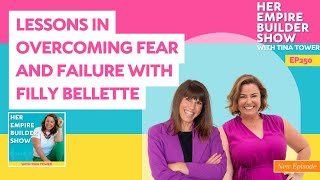
This is a YouTube video titled "Filly Bellette's Business Evolution Story" featuring a detailed interview between Tina Tower and Philly. Recorded in 2024, the conversation explores Philly's journey from traditional health consulting to creating successful online programs focused on functional medicine and burnout recovery. They discuss challenges, business pivots, marketing strategies, and personal growth within the context of online course creation and entrepreneurship. Tina Tower leads the interview, providing insights and support throughout the discussion.
Gorgeous filly. Welcome to her Empire Builder Show.
Hello, Tina. I'm so excited to be here.
Yes. And I'm so excited because we've got the member series happening now, which we were just talking about and bringing on some of our beautiful members to spotlight, because I love the story from where it started to where it is now, so that it. It can help people to have realistic expectations of. Of what to expect and how the whole online course journey unfolds. So thank you for coming on and being willing to share, like, all of those different iterations as well.
Thank you. I've got some. Pearl is.
You do, you do. Okay, so you joined her Empire Builder, like, not even a year ago in September 2023, but you've been running courses for a few years before that and running your business before that as a traditional business. So take me back to when you first entered into the business world and how that first looked.
Yeah. Okay. So I entered into it, like, in a really organic way, actually. So after I had my first baby, she is almost 12, I had a lot of health complications, which then led me to essentially do what I do now. But after she turned one, it was literally like, every month, I was just getting sicker and sicker. Like, I just started developing all these weird health issues month by month. And when she turned one, I literally felt like an 80. I was in chronic back pain. I had really low immunity, anxiety, gut issues, hormone issues, all the things, chemical sensitivities. And I picked up a book called Deep Nutrition, and it basically, it was a book that talked about, you could eat whole food and you can heal your body. And I'm like, what? How have I not known this? And so that's probably where my business journey started, because as I started finding natural solutions to try and heal my body, because I had hit a roadblock with gps, I just started sharing on socials. And then eventually I'm like, I could maybe, like, actually sell some things. And so. And then during that process as well, I became a practitioner. Clinical nutritionist first, then functional medicine practitioner later on, trauma therapist, transformational coach.
Love when you find something in your life and you're like, all in. Like, this is me.
Oh, I was. And maybe a little bit slightly in an unhealthy way, I became very obsessed and. And standing on my pedestal too, like, thou shalt not eat sugar. You will get cancer if you eat that brownie.
Yeah. Okay. So you went really hard.
I went really hardcore. And that was partly why I developed body burnout in the first place, because I was I ran massive perfectionism, overachieving, overdoing patterns. So when tried to heal myself initially I kind of, I could have done it in such an easy, flowy way and I would have healed so much quicker. But that's now what we help people to do. Yeah, so. So initially it was, yeah, it was kind of the standard brick and mortars. Come in, come to my clinic, have a consult, pay per consult, here's some supplements, here's some lab tests. And like I really loved doing what I was doing back then, but I just found that this sounds really bad, but I probably. There were only about 10% of clients that actually got really good results. Then other 90% either couldn't take the treatment plan that I had created for them based on lab tests and actually.
Too rigid or why was that?
More just because there's so much unconscious self sabotage going on, it's like it's not safe to be well, can I do it? Like a lot of people, they don't know what's happening. But now what we do with clients is we're breaking down those unconscious barriers. So a lot of people struggle to implement a treatment plan because what if they fail? So if they try really hard and they fail, then it's going to essentially bring up the greatest fear that they had about themselves, that they're a failure. There's a lot of people too who have had chronic health issues that develop unconscious core beliefs that they're broken, they're the flop, they're the weird one where nothing ever works. They're the ones that go to the doctors and specialists and can't get answers, so they must be essentially broken. And then another group of people too could take a treatment plan and implement it perfectly but get no results. And you know, that was just really mind boggling. So during 2020, the lockdown Covid so many people have pivot stories from that.
Yeah, it changed everything for everybody.
Yeah, it changed everything. But we'd already. So my husband Chris, who is now in our business, he was a personal trainer, elite athlete, but he was also probably a year or two previous really getting into mindset coaching and looking at the power of the mind to, you know, to help with performance and get results. And so we Talked previously to 2020 that it's like, oh, you should come and join my practice because there are people that need what you do. I don't have this skill set. I'm really good at telling people what to do, but I don't know how to coach them to help them do the things and so 2020 gave us that opportunity because his gym back then, which again was brick and mortars, got locked down. He was completely burnt out as well. So we both had our burnout stories, and he loved it. Lockdown was the best. He's like, I don't have to get up at 4am and get home at 10pm and train people every day and have, like, staffing issues. I'm not gonna. So he just decided just to, like, let go of the gym. We didn't even sell it. He literally just sold all the equipment, which there was a lot and.
But also a good time to sell the equipment in Covid.
Oh, yeah, absolutely. It all went really quickly. Yeah.
Everyone wanted it.
Yeah. And then. And then we created Chris and Philly Functional Medicine. And it was very intentional that we wanted to do it on the online. Online space, so that could give us more freedom to live the life that we wanted to, whether it was go traveling or just hang out together as a family. Because previous to that, like, I was pretty much single mommying, and my children hardly saw Chris.
I don't know how people do it. I mean, I talk to Matt and my husband about this a lot in going because I get asked a lot how. How we do life and how we spend so much time together as a family. I don't know if people don't own their own business. I actually don't know how they do it. And if two people are, like, working full time, I don't know how they do it either. Like, both those things, I go, I just don't know how this works for people. So often my. My response is, I don't know how you do it. This is how I do it. And. And that works for us. But it's. Yeah, I think once you have a taste of that life, you never want to go back. You're like, how did I do that for so long?
Yeah. Yeah, absolutely. So agree. The other reason, too, is, as I mentioned before, I just wanted to help people get great results. And the standard paper consult. Take this piece of paper. Here's your lab results. This is. This is out of whack. Go and do the thing. It just wasn't working for the majority of the people. And so that's where we developed our skill set and really started looking at the deeper root causes to why someone's body systems burnt out in the first place. And offering a complete and remarkable program. Well, a complete program that is very supported, very holistic, that can provide our clients remarkable results.
Yeah. Nice.
Yeah.
And so what did you start with. Then you got to 2020 and you're like, all right, we're going online. We've got Chris and Phillies functional medicine. Let's launch. What did you launch with?
Yeah. Okay, so we started off with a six week program called Rise up and it was really cheap.
That's how a lot of people start out. If they go, we'll just market cheap and then we'll sell like bucket tons of them. And I love this story because it's like, I always stand by. I actually think it's easier to sell higher ticket than it is to sell low ticket in a lot of cases.
Yeah. So right. Stuff actually, in terms of selling. Okay, first of all, I had major money money blocks back then. So the moment that Chris and I joined forces, and Chris was very or still is very visionary and like risk taker and let's try this and try that. And I was back there like little Philly, still stuck in paper consult. That's the only way people are going. Like, the only way we're going to be able to get clients. So. So already I brought a whole heap of negative energy to it.
Yeah.
But I just let him sell it. And look what actually we sold. I can't remember. I probably should have found the figures, but we sold it a good chunk of beta testers into the Rise up protocol, I think, because it was new and we had like people that already liked Node and Trust us and they're like, oh, yeah, I'll give that a go. It was cheap, it was, you know, discounted and it was good. But then kind of after a couple of months, well, it just stopped. Like, it was almost like the people in our current audience that were interested had already purchased it and gone through it.
Yeah.
And I guess we hadn't really created a ongoing marketing machine to be able to bring new people into the circle. So it kind of like fizzled out. And when we created Rise up, we also made the decision that no one could work with us unless they join the program. So, like, literally we just cut the, the paper consult model out. And that got really stressful maybe six months in, because all of a sudden it's like, where are all our clients? Like, we're literally not making any money.
Especially when you're both in there and your whole family's like, lifestyle and everything. It's all based on this one business.
Yeah, absolutely. Like before, when we had the gym, that was probably our mainstream of income. Luckily, during COVID we got the jobkeeper, the business stimuluses, all that sort of stuff. So that kept going.
Yes.
Yeah, that kept us going. So anyway, things got really tight and stressful and then we ended up joining a business program, which is where I met you, Tina. Yeah. Which was really great. But we created our next product called the Power Parent. I laugh now. It sounded really good at the time. Yeah.
When I was reading all your backstory and I'm like, this doesn't seem to fit in everything else, like name wise and what it. What it is. So, yeah, talk to us about that.
Okay. Yep. So Power Parent essentially was like, okay, well who do we love working with? I love working with people like me. So I mean, maybe that's like a business owner and a mum who's burnt out and Chris is like, yeah, a dad and a business owner. So we kind of went down the, the parent route for a bit. Makes sense. Yeah, yeah, so that made sense. But then Power Parent look to, to be honest, so in the program, it was a brilliant program. It was quite masculine though. So Chris was over here like Power Parent. And then our coaches when we brought the idea to them, they're like, yeah, I love it.
Power Parent.
Yeah, I can see myself as a Power Parent and I just knew that it didn't quite feel right, but I just went with it. So I already, I kind of wasn't listening to my own intuition and I feel like since we've pivoted to our message now I'm kind of the main, the main, the main face of the business because I, I am the embodiment of what we help our clients.
Totally. Yeah, totally. And so how did Power Parent go?
It was a flop. So we launched the program and this time we. It was six months. You know, there was like a combination of one on one group online course, all that sort of stuff. Very well supported. But mind you, we didn't really know what, what was inside it. We were literally planning to just create it as we received our first beautiful intake of clients. And then we're like, and then we'll build it out. So already the messaging was kind of unclear. I had all the money blocks back then as well. So I'm like, I don't even know what we're selling.
Yeah, I hear people talk about this a lot in our industry is like, sell it first and then create it. And I always disagree with it and, and most people disagree with me on that sort of ethos. But I think from a sales and marketing point of view, if you have built something and you're so proud of it and you know exactly what it is and what it can do for people. It then becomes so easy to sell it because you're like, I know what's behind this curtain. Like, this is going to show you so much and teach you so much and going to deliver on this transformation promise. Whereas for me, I always feel a little bit like if it's not created yet, you're just not lying because you know you're going to create it, but you don't quite know. Like, you don't have the same conviction with this is what we go through, this is what we do because it's not there yet. So I love that you, I love that you felt like that because you should have felt like that.
Yeah, I so agree. Chris, like he worked with a few different people and they had the same, like the opposite message was, yeah, just sell it first and then create it. But I couldn't even now, like, sometimes we'll put on in advance, you know, for launch period, we'll do like a three day live event. And I've mapped out like the skeleton of what it's going to look like, but I really don't get into the, into like the zest of it until I know exactly what's going to be. Yeah.
And you know how it's going to transform for people completely.
So we launched Power Parent. Now we actually used your free checklist. So, like, I really put a lot of effort into back in 2021. Back in 2021. This is after meeting you in a masterclass as well. So you kind of like offered that as like, oh, yeah, here's a free checklist. I'm like, okay, cool, we're gonna sell heaps. This is great. I've got the formula.
Don't blame my checklist.
I'm not blaming the checklist. The checklist was awesome and we actually had quite a lot of engagement from it. But I remember the last day of doing live, so we did like 4live Instagram.
Yeah.
I actually, I said to Chris, I can't, I can't turn up. I'm. I feel sick to my stomach. I'm burned out. I'm like not sleeping. So he. So I ditched him. So already, like, there was a lot of, like, mind you, it definitely wasn't your checklist and it probably wasn't even our program. It was that I was in a very insecure state within myself back then and I didn't even know why or that it was happening.
Yeah. And so in hindsight, looking at that, because I see a lot of people do this like, they put a lot of effort into a launch and then it doesn't go well. And, you know, the, the whole instinct is to, you know, get under the covers and hide and never come out again because you've failed in your eyes of gone totally below what your expectations are. And you experienced that. And I know, like, we'll get to the business that you have built now, which is awesome, but for a lot of people, they would have quit then how did you not, like, how did you get through that? And what do you think caused you to go, like, to put your head in the sand through that launch and to be so burnt out through it and not show up as, you know, the vivacious human that we know you are? Yeah.
Okay. First of all, we sold one and then she asked to cancel like a month in. So that was like an extra dagger to the heart.
Yeah.
And you know, we were just so deflated by then and we had a no, can't, like you can't get a refund after a week cooling off period. But we were just like, stuff this crap. Take your money.
Yeah.
So I. Look, actually I experienced PTSD from that. That's like a big claim. But my, I definitely felt it in my body for many, many months afterwards.
Yeah. Yeah. Oh, I think whenever you fall well short of your expectations in something, it hurts.
Yeah, it hurt. And so, so what we did to recover from that is that we, we were just like, okay, let's turn this program into a membership option. So we turned it into more like a. You can join. There's no contract. You know, there's little commitment. We don't really know what's gonna come, like how this is going to build out. But we sort of just did an open ended sort of membership so that we could still have people coming into our vision of a holistic container.
Yeah.
But there was less, less pressure, I guess, for the person making the purchase because, you know, if they didn't like it, they could leave after a month.
Yeah.
And then also there was kind of less pressure for us too, because it was a bit of an easier sell. But what we also did was I added back in the paper consult because I knew that that sold. I knew that, you know, people were asking Chris would get so many free discovery calls, especially from maybe like old people that either worked with me in the past or followed. I don't want to do the program. I just want to see Philly.
Yeah.
And so, you know, people were asking for it. We weren't making any money. We weren't Paying ourselves a wage. So I took, I put that back in place from a financial security point of view. Smart.
Yes.
Yeah, it was smart. But I also felt again, like a failure. I'm like, oh, I thought we were never going to do this. This isn't the best way of practicing. But like, literally this is going to be feed my children while we figure out how to make this work.
Yeah, I mean, it's the conversation I'm having with a lot of people now. Like, in our economy generally, like, some industries are really touched, some are not touched at all. But generally speaking, our economy is worse than it has been since the 90s. And so for a lot of people, it's going well. You know, if, if there's things that you have in your toolkit that you can put in that you know you'd stop doing, but will pay the bills and will allow you to survive another day and to thrive throughout an economic downt. Do the thing. Like a lot of us as course creators, we stopped doing done for you services. I'm seeing a lot of people get back in do done for you services. And to me, there is nothing shameful about that whatsoever. Like, we do what we've got to do as business owners. Our job is to survive and to run sustainable, profitable businesses. And I hate that when things get hard that people feel shame around having to get back in and serve clients again. Like, like, it's fantastic. It's wonderful that you have that backstop as well. Yeah, yeah, yeah. So you did the right thing there. That's why you're still here now.
Absolutely. Otherwise, I don't know, I'd probably be in hospital psychiatric.
You're hard on yourself, aren't you?
Well, I really was. I'm like, yeah. So, okay, so in the space of. So we joined her empire builder last September.
August, yeah.
The month before that, we did our second ever, like, proper launch.
You a while to go again. So you waited nearly two years to launch again.
Yes.
Oh, yeah. That was hard for you.
That's what I, that's what I mean. So. But during that two years, we continued working on our message. So we're like, this power parent thing is not working. Let's just shelve it. Even though we'd spent a lot of money on like a graphic designer and like, it was all pretty and beautiful and you know, all that sort of stuff, but we're like, it's not working. Yeah. And I'm, I can't remember the time frame, but I'm pretty sure pretty short after the Burnout. Burnout. It's like, this is what. This is what I've experienced in the past. This is what Chris has experienced. This is what majority of our clients who are already in our world are experiencing. Because burnout, like, a lot of people think that burnout is, you know, you've just been working too hard in your job or business and now you're burnt out. But burnout is essentially like chronic stress that has gone on long enough that now your body systems are literally burnt out.
Yeah.
And it's. And it's. And you don't recover from just having a holiday or having a good night's sleep. It's literally like there is something deep inside your system that is burnt out.
Yeah. It took me a good two years when I hit, like, adrenal fatigue and full. Full body burnout. It took me about two years of getting better.
Yeah, yeah. And it takes time.
Yeah, yeah.
So. So then we came up with, all right, well, it's something around body Burnout. And again, this went against every coach that we'd ever spoken to before, because they always said, name your product or your service or, you know what you're known for something positive, like the price. Yeah. But we're like, far out people.
People like to it.
They're late to it. But Power Parent didn't work because it was way too, way too up there in terms of, like, you know, a person is struggling to get out of bed and work and parent. They don't. They're not even thinking about wanting to be a power parent. They actually are stuck in survival. And so we needed to. We needed to be able to talk to those people. Um, which is why actually talking about the pain point really started working. So end your body burnout. And then, you know, the tagline is. And find your spark.
Yeah, yeah, yeah, yeah.
Which is really nice, too, because a lot of people who are really burnt out, like, struggling with what we call body burnout are exhausted. They're stuck in survival. Like, the next step, Alfie, is. Yeah, I want to find my spark. Like, I want to find something that then can build my energy and my motivation so I can do the things that are going to be able to heal me and have the life of my dreams.
Yeah, yeah. And so then in August, you launched Ending Body Burnout, and you had a very different result. Talk to us about that.
Yeah. So, okay, here's the thing. We. We didn't actually launch it. It's just that we. We closed doors. So over those two years, maybe it was maybe a Year before, we did, like, a proper launch. Again, it was still just a membership model. Anyone could join at any time after they had a consult with me. And if they wanted the holistic approach, come and join the program. Still, back then, we still had a pay per consult option. Again, that's like the PTSD I was talking about. I'm like, I have to hold on to that as a safety net because I'm really nervous that if we drop that, we're going to go bankrupt again. Not that we went bankrupt, but, you know, I felt like that.
Yeah.
And then, yeah, last year, things were going really well. So there was a lot of things we'd done from a marketing perspective as well. So we became Telstra Best of Business Awards winner in Tasmania. We were a national finalist. We were winner for the Australian Women's Champion Awards. So, you know, we'd build up those accolades and awards over that period. Also getting featured in Forbes, Body and Soul. I published a book.
I mean, all of that goes, like, goes so far for your credibility and trust building, which I think is. Is a key metric in terms of how successful a launch will be.
Yeah, yeah. And then I think what made that launch really successful. So actually by then, our podcast. I mean, my book wasn't even published. It was published last November. But we'd also built our podcast and I started pitching to higher profile podcasters in our industry. And it just so happened. And it was good because then we. I could offer a podcast swap as well. It's like, I'd love to come on your podcast to add value to your audience. Oh, I've also got a podcast, so I'd love to have you on. And most people say yes because it's like, yeah, cool. That was easy. I didn't have to, like, organize that. I'll show up. Yeah. I don't know if you're a Thermomix lady, but there's a beautiful, beautiful lady called Jo Witt. Jo Witten. She has a business called Quirky Cooking. And honestly, she was just, oh, yay. I was her. She was my idol. Because when I first started changing the way that I was eating, it was her cookbook, the Thermomix. Like, literally, I'd been cooking with Jo for 12 years.
Oh, I love that.
And then she said yes to me to come on her podcast and I was so excited.
That is the best feeling.
Yeah, I know it was. So we recorded that. I don't even know when, but she didn't release it until the week before we did the proper launch. In August last year. Yeah. So that was kind of like perfect timing. We had a lot of people join that and then we closed doors. Back then we were still doing a membership model and it was a lot cheaper than what it is now. So I still felt like, like I really. It almost like made me a little bit sick to the stomach because I'm like, this is still so cheap for what people are receiving in terms of support, but also results. But it, but, you know, I want to be able to have enough people that we can say, this program is flipping awesome. And it works. Yeah, yeah. So then we closed doors. I think we had maybe 24 people join us in that one. And then I'm like, tina, I'm ready to join your program now. I'm really gonna, like, this is gonna work.
Interesting that it's like, so you were already using the free resources we put out, like in 2021, but you felt like you needed to like, reach some invisible marker of success before you were like, okay, I'm ready. Whereas part of me is like, if you just joined back in 2021, you could have saved two years.
I know, isn't that funny? I don't think that was the only reason. I think, like, initially when I came across you, the moment that you're in a masterclass inside the other business program, I'm like, at some point I'm going to work with Tina because she's so cool. I just loved you. And also, like, what you offered in that three and a half, three hour masterclass was so gold. And like, that's how I got the tell. Not, you know, that's. That's why we went for the Telstra Business Awards. I probably never would have if you hadn't inspired me to do that. Awesome. But also, there was. So there was a period too, after I finished that program that I'm like, I got to do some deep work on myself. And that's when I. Before we joined your program, I'm like, we were literally hitting a financial ceiling because I don't know why. Invisible me sabotaging my ability to be able to make more money. And so that was really important for me to do that personal work on myself. So that then I'm like, yeah, yeah, exactly. So then when we joined Tina's program, I know it's just going to be like, amazing.
Yeah. And how did it go?
So good. So good. So then we did our next launch in January this year and this time that. So this was again, like a little bit nerve wracking because Instead of having a month by month membership option where people could cancel at any time, we turned it into a six month program. Because we've found too that, you know, if someone can stay in that space for six months, they're going to get pretty awesome results. Sometimes people need a little bit longer and we have a back end membership for that. But generally if someone throws themselves wholeheartedly into the results, I mean into the process, they get amazing results.
Yeah, for sure.
And we doubled the price and you know, so it was a little bit like, oh, I don't know what's going to happen. But we outdid the previous launch in September. I think we welcomed in 28 or 29 clients. I think it was close to $70,000 launch.
Congratulations.
So that was so cool. Yeah.
And so what do you think that you did differently for that launch that you hadn't done before, which got you that bigger revenue than you'd ever had in a launch?
I feel like it was probably just the price. Yeah, the price, but also the program. What I found with the membership one, when we had that, is that a lot of, is that even though in my psyche I thought that that would be easier for people to opt into because it's low commitment, most people had questions around how long am I actually going to be in this for? Like, is this like a three month thing or is it like a two year thing? And, and when we turn it into a six month program, Like a six month program. I actually feel like for people's nervous systems, which essentially when we're talking to a prospect or a new client, we're talking to their nervous system, not to their brain. Yeah, their nervous system felt safe because it's like, oh, okay, six months. Cool. Yeah, that's good. That's, that's, you know, there's a clear time frame there. It's not ambiguous. Okay. Yep, I can do that. So I feel, I actually feel like that was beneficial. And also during all the launch marketing stuff and when we did our three day live coaching event during that too, I was able to talk about the program with more authority. That's not the right word. With more clarity.
Yeah.
That it's like in this amount of.
Time, what does now. So you running your three day challenges, you showing up like I know you well enough to know how you show up and I watch everything that you do. But from what you were saying before with you got to the end of launch, which launches can be exhausting. Like they are very high energy, very concentrated marketing activities. What do you do now so that you don't like wig out and go, oh, you, Chris, I'm out at the end. How do you support your nervous system when you're going through it so that you're staying really vibrant throughout?
Yeah, cool. Awesome. Okay, so I'm a. I like to be prepared and organized, so I make sure that. Love language. Love language. So I try to do all within my power to get what I need to do done before launch. Now we also have Chris on our team who is like a last minute dude, but, you know, I've learned to like, accept that. And he's okay to, you know, crunch out whatever work he needs to do during launch. But if I can do what I need to do, then I can feel settled so that when I come into that, my energy is there to show up and serve and to love and to answer questions and to just feel really regulated myself, because I feel like that's, that's essentially why people are attracted to our program. They're disregulated. They want the opposite.
Yeah, for sure.
So that's a huge one. Another one is like, literally just talking to myself around. Your worth is not attached to a person joining our program. So it doesn't matter if someone buys this or not. It has nothing to do with me as a person. Like, at my core. Even if we had a flop launch like our last one. When was that? Just recently. May. I wouldn't call it a flop. It was actually great. We hit a benchmark in terms of our program for how many people we can fit into our program. We hit that and actually we let a few extras slide in, but that was like a huge milestone. So I would say last launch, even though it might have been a bit less in revenue, is still a complete success. But if that hadn't have happened, I am still an awesome practitioner. Like, our program is still flipping, flipping amazing. And so, like, I really work with myself and my own inner self, talk that I'm unattached to the outcome of whether someone chooses to join or not or the amount that we earn. And that allows me again to show up grounded, relaxed, calm, and to also just like, love the person, especially when they say no or like, not this time.
Love that.
I love that.
And what do you think has been the biggest learning for yourself in the last two years in terms of the actual, like, you've talked about, you know, you becoming more comfortable with yourself and your being. But what do you know about course creation now that you can share with people as tangible tips that you maybe didn't know. A couple of years ago, like, so much.
Didn't even know what Kajabi was.
Yes.
Okay. What can I tell? Tips. I actually find it really fun. I think one of my superpowers, too, is being really detailed. So when we are creating a course, I want to imagine that client or customer working through it and getting great results. So I actually really love mapping out, like, what the video is going to look like and what the little download and what the action steps are going to look like. And then in terms of, like, the tech side, I actually don't do a lot of that. Chris does a lot of that. Or our va. Yeah. So I guess I'm probably the more creative one on the course creation side.
Which is so handy to be able to have both of you doing it. Yeah, yeah, yeah, yeah.
Actually, that's. That's a big thing that I've learned is that Chris and I were trying to do jobs that weren't in our genius zone.
Yeah.
So, for example, he's amazing at graphics and what things look like. I'm really great at words and writing. And when we try and move into each other's space, that's where, like, things go really haywire and we get really angry with each other.
Yeah.
So, like, that might be really helpful for someone who has a team, even. Even if it's a small one, even if it's you and a VA or there's two founders. What's your zone of genius? And being able to really amplify that. And rather than you trying to do everything well, what are the things that you're not so good at or that you don't like doing? And find someone to be able to do that.
Yeah. It'll save you a lot of angst in there. So where are you heading? What does success look like for you?
I think success is a feeling in my body. Love that it's when I can wake up. There's no success for me is there's no urgency that it's okay to build the business slowly or fastly, depending on how I feel in my body. So it's being aligned with myself to know am I moving towards this project or towards this growth period or even this slow period from a space of alignment, or is it from a space of fear? And when I can tap into that alignment energy, like that success. So it's actually less to do around numbers of clients or the amount in our bank account or revenue or profit, and it's more around how I feel, because when I feel great, I know that we make more money.
Yeah, everything works.
When you feel everything works better, my marriage is better, my parenting is better, my kids are happy. I feel better, I feed myself better, I move better, I sleep better. So just. Yeah. So that trust in. Trust in self.
Yeah. That's such good advice. And my final question. What do you love most about being part of her empire builder?
Oh, so much. So much. I know that I've, like, listened to other podcasts when you have spoken to other members, and pretty much everyone says community. And I didn't think that that would be the case when I joined because I, again, like, I'm. This strategy, the detail. It's like, yeah, give me the things to do and I'll. I'll implement it. But the community is awesome. The Gold coast conference, which was my first one in April, was so good to be able to connect with people and to be excited and motivate, motivated by what other people are doing, too. And when you get stuck, there's always someone who has solved the problem, whether it's yourself or someone else.
Yeah. And I think that's so, so powerful in going, like, obviously, I'm a strategist. I put so much effort into all of the strategies and all of the templates and all of the SOPs and everything that we do, but it's. It's like having being surrounded by, you know, 200 other women that are all in it and doing it at the same time really pulls people out of that. You know, if you have a launch that falls below expectations, like, you can be pulled up in the resilience. Like, the bounce forward is so much more. Or, you know, we see people all the time that are that scared to take the next step, but then they'll see a woman to their left kind of doing that and be like, okay, if they can do it, I can do it too. Like, there's just the. The rise up of everybody together is. Is my favorite thing.
Yeah. And I love being able to just pick your brain as well. So, like, in our group sessions or at the end of masterclasses, sometimes I'll bring a question. I'm like, oh, this is so basic. I think I already know the answer. But you'll be like, and do this and this and this. I'm like, whoa, I didn't even think about that. So it's so. It's so nice to have that regular touch point, because otherwise that wouldn't progress. I'd just be trying to do the things that I think work or that might have worked a year ago but you are so up with the times all the time.
Yeah, I do love it. Yeah, I nerd out on all of it. But also like you, I think you do well because you do. You do ask questions, you do get involved, you do go. You know, I'm at my edge now. I want to go past the next one. How can I get there? And you're open to experimenting in that which, which is such a hallmark of, of people that go further and do really well. So well done on you for going. Yes, I am always open to learning but I'm very happy to see you embody more of your confidence now because the results that you do get for people and the program that you run and the way you run it is so important. Yeah.
Thank you. I'm very happy to.
Amazing. Thank you so much. Billy, you're amazing.
Thank you.
More from HEBA




Mastering The Mental Game of Business with Jacqueline Snyder on Her Empire Builder Show







This year, be the woman who takes risks, starts the business, grows the business, makes the money, t