Her Empire Builder Podcast - Vocal and Body language Coach Dr Louise Mahler on increasing confidence
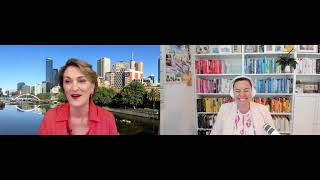
Tina Tower interviews vocal and body language coach Dr Louise Mahler about nonverbal communication and public speaking confidence. They cover how to project vocal presence, manage performance anxiety, and adapt presentations from live events to online formats.
Louise, welcome to her Empire Builder. Hello.
Hi. Hi. Hi.
I am so excited to have you on here now.
Small world.
We did when the world all came crashing down with COVID 19, you got in contact, create your online course, which.
We'Re going to talk about later.
And you didn't remember that we had met years and years and years ago. The Telstra Awards.
Ah, yeah.
And so that was kind of my main thing when I saw your name pop up and I was like, oh, my gosh, I can't wait to bring this to life. Because it was like you totally changed my entire experience of winning the Telstra Awards. And now when I look at anything that came as a result of that. It would have been very different had Dr. Louise not come into my life a little bit earlier. I'm like, yeah, so I need for you to be able to share all of those tips with everyone. So the first question I have, which I like to ask everyone at the start, is, what do you do and.
Why do you do it? Oh, great. Well, you know, I don't have a career. I have a passion, I have a calling. I can't not do it. So if I didn't get paid to do this wasn't my career, I'd be out there on the street pulling and. And, you know, because of my unusual background, I have this conglomeration of skills that allows me to have a different pair of glasses and actually see what's going on for people. So, for instance, I just literally this morning had a call with the lady who said she wants to be, you know, she is part of the exec team and wants to do better and have more gravitas. And she said, these are the problems I think they are. And it's all about, do I have the right knowledge? Is it my accent? Is it the fact I'm a woman? Is it the fact that I'm younger? Is it. I'm like, none of those. You have shithouse eye contact, you nod backwards and your top lip moves. You know, I just, I see things differently and I analyze them.
Oh, now I've become all self conscious all of a sudden.
Everyone says that, everyone says that. And usually, you know, I don't pick it up unless somebody asks me or they do something weird. Then I'm like, what? What are you doing? But, you know, so I see things differently. Why do I do it? Well, I'm driven by seeing things, you know, that other people don't see that make a dramatic difference to people's lives. Dramatic. And so I'm driven By informing others about this blind spot. And the blind spot is about their nonverbal, which includes their body and their voice.
I remember like to bring it back to the Telstra Awards because that's where I kind of saw you the most in action. And there was. We had to do this whole practice day that you led in. If you win, this is how to present your speech, this is how to walk onto the stage. This is how to hold your certificate. And we did a practice run and we had to like pretend we won and then hold our certificate up. And you looked at me square in the eye and you were like, honey, you look like a primary school girl who's just like won her award. It's like this feature and I had it up under my chin just like.
Grinning from like this. I was yes, what are you doing?
Exactly, Exactly. But you know what. Which seems so simple and so not important at the time. I was like, oh, I'm just excited, you know. Now I look at that picture though, and it is a completely different picture and depiction than if I'd held it the original way. So there's some things do make a difference.
There are two reasons for getting that right. One is that by actually doing this, you're shielding your body and it looks stupid, it looks unprofessional, you know, so it's looking, it's about having it out here just looks professional, you know, this is my wool. But the other thing is actually what it does to you personally and that's even a greater fascination because constantly we choose options that gloss and what you're.
Right on your microphone. Yeah.
Oh, sorry. And we choose options that block our body and you know, that's not good for you, you know, that's not healthy. You can't breathe, you can't exist. And so it's two angles we're coming from. One is the perception of others, which is non verbal studies. But also what I call vocal intelligence. So it's understanding your mind, body, voice cycle and how you express yourself and bring the best of yourself to every engagement.
Yeah. And so with that work on. Because you do a lot of work on body language and then a lot of work on vocal as well. How did actually get into that?
Ah, well, you know, I mean I started off with an economics degree and my PhD is in business. Masters in org, psych, NLP, master practitioner. But I sang opera for you know, a decade, a decade or more. And I was in Europe for a decade and I had a soloist contract at the Vienna State Opera, you know, one of the young singers who came in and did, you know, roles, tours, understudies, whatever, ballet performances. I didn't do ballet, but often they had voice over in the ballet. And as part of being in the Vienna State Opera, I mixed with some world experts in body, people who'd studied with Feldenkrais, Alexander, you know, dancers, Nureyev, you know, all of these people and how they use their body to express. So that became a fascination. So it's this combination of, you know, study, study, study with practice, practice, practice, and a specific edge to that practice, which is around professional voice, but also professional voice connected with body and how important the.
Okay. And so a lot of people that are listening now, one of the biggest pushbacks I get when people have to step into their personal brand, step into doing a lot of video, a lot of speaking, presenting themselves is, I mean, there's the fear around speaking, there's the fear around putting us out there. So many people I hear say, I'd love to do a podcast or I'd love to do video, but I hate the sound of my voice and I hate the way I look. What do you say? Because I'm sure you work with a whole lot of people that say the same thing.
Yeah, you know, there's fear and there's fear. So there's. We have been. This is cruelty to dumb animals. What's happened in our society, we've been let down dramatically by not being given the right education and this sort of, sort of a, you know, a subtext. You have to think about why are we being demeaned as a population by not being given these skills? So for most people, they don't understand and that they, they can be lifted dramatically very quickly by a few simple tips. Because who wouldn't be afraid? If you're going into the lion's den and you have no idea how to battle a lion, you know, they don't know the rules of the game. So for some people, it's about telling the rules. And then we have those who literally have performance anxiety. And I have a lot of clients who have performance anxiety and I have performance anxiety. And this is. You have to deal with that in a special way. So, yes, it's all about educating about what do you do? Like on the screen. You need to be in the middle of the screen, unless you have some sort of slide, then it's one third, two thirds. You need a little bit of a gap at the top. You need to be one distance away from the camera. You know, this gives you the Right. Perspective. Can you use hands? Yes, but they're wide and they're off your body. You know, these are the rules of the game and we just need to know them. So when people say, oh, my voice, I can't stand the sound of it. Well, here's the reality. We hear our voice from inside. Our eardrum is closer to the inside of the throat. Therefore, we hear a really resonant sound and then it gets squashed on the way out. So what other people hear and what we hear when we hear recordings back is, hello, I'm Louise, how are you? And we go, well, you know, that's the reality. So you just have to go, that's reality. That's the way I want to change it or not. I hear it differently myself. Yes. So we go, I'm confused. I'm so confused. Well, don't be confused. That's just acoustics. Now listen to that and go, is that viable or not? Do I want to change it? You know, there's no criticism. It's just an analysis. And a choice voice is a choice. Make it want to change it. It's completely changeable.
I mean, I know when. So we're on episode 90 something now of this podcast and I remember when I got up to about 20 or 30 and I had an email from a man saying, I just wanted to let you know because it's probably something that you do unconsciously how much you giggle in your podcast and it's very off putting and it could be very annoying and you should really look at adapting and changing that. And I love what you just said about analysis because it was something that I had to then look at and go, oh, do I really need to consciously tone that down? And then I thought, you know what, fuck it. That is part of my thing. I giggle a lot. So I giggled.
That's fine.
One of the benefits of getting older is it used to be construed in my 20s as like a silly dumb girl thing. Now it's just like, oh, she's a happy person.
Well, you know, there are several things that actually were taken out of the business environment. And one was not only not giggling, but smiling. People didn't smile, you know, for years, for decades in business, they haven't smiled. Well, guess what, it's back. You know, people haven't used gestures for decades. Well, guess what, it's back. People haven't expressed emotion. Guess what, it's back. And women's voices have not been accepted as voices of leadership, let alone giggling, which is to the extreme. So that man would be, you know, you know, responding to, no, no, that must not be or you will not be seen to have gravitas. But at some stage you have to go, well, do I actually want to change perception? I think I do. You know, I'm not going to pander to that. And that's great that you go, let me think about it. The perception is this good. However, I'm going to lead the way. And I do think that a lot of us need to lead the way with our skills. But this does require that you understand who you are, get the feedback so that things aren't a shock, like, oh, I sound shrill on the recording. Yes, you sound, you know, that's. Do you know what I mean? It's this understanding that lets you make choices and move forward.
And so with that, when people are looking at their recordings and looking at their videos, for example, and we all pick things that we do in videos, I mean, I always, if I ever. And I don't watch back a lot because I then get too self critical and I often think, I totally agree. Yeah, I go, girl, why do you move your arms so much? And then I do this weird thing with my mouth. There's a whole lot there. But I go, what can people do? Because there was. So there was a speaking coach I went to once, for example. I'm asking this question in a really roundabout way because I'm just making it.
Up on the spot.
It's not one of my written down questions, but with what you just said, I'm like, I have to ask this. So a speaking coach I went to once and she was very much on every inflection of different words to do a different hand gesture that would evoke different things in the audience, which I see the value of doing all of that. But I go in what, where do we draw the line in? How do we really analyze what parts of our natural body language and voice should we keep and how much should we actually be consciously contrived in going, I'm going to do this because it has a better impact or it looks more professional. How do we find that balance?
Well, how far do you want to go? You know, this screen were a graph that went from here. When you're at a lower level in an organization, you know, do whatever you like. But once you start to come up in leadership, you know, it goes exponentially. The importance of these areas becomes exponentially important. So for instance, people will, some people when they're thinking will do funny expressions like this. Well, you know, does that work? You know, at some stage you have to go, that doesn't work. And of course men will get away with it. I have to tell you, women don't. Women have to be closer to bringing their best. Always working on bringing their best because we get crucified.
So you think it's worth really analyzing it and going, okay, how can I get a better result out of my presentation?
I do, you know, and you use the word natural. Forget natural. You said my natural habit of my natural gestures. Your natural gestures disappeared years ago. They are now habitual gestures. And all of us have a habitual gesture. And many of us cross over and do I call this Tyrannosaurus rex, you know, where you just do that or we, you know, we flap like the seal or, you know, you do a lot of that.
Yeah, yeah, I have a lot of hands up. Yeah.
So that's because you're a visual preference. Excuse me? That's because you're a visual preference. It takes your hands high and a lot of visual people will play with their hair or, you know, it's hands up. So you have to go, well, you know, actually pandering to that visual perception, you know, learning preference where I'm. It will take your eyes up, it'll take your voice up. So. And it'll take your hands up. So, you know, as a visual preference, I will. If I get caught out or nervous, I'll go, well, okay, thanks, Tina. You know, why do. That's what I want to do. And yet. So I have to go, well, does that work? And I have to go, no, it doesn't. Can I stop it? I have a visual preference. I can't, but I can reverse it. So if you ask me something that maybe throws me, I'll go, sorry, well, why would we want. And I will do the cough to change state. So not everything has to go. But I do think you have to understand yourself backwards. And why? Because it's not just about every day. It's about stressful situations. And as you get into these leadership or not leadership roles, but leading others. Say in webinars, we are under the magnifying glass here, and every micro expression counts. So are we, you know, as it becomes important to others and how we influence then I'm not even saying you change it, but I'm saying be aware of what your patterns are. Decide if they work and you keep them or change them.
Yeah. One of the most recent things I've had to work on is when I speak a lot, mainly just on screen, I scratch My nose.
Oh, do you? Yeah.
Well, I should remember that that's what I've been working. But I've gone, what a weird habit to do. But it's like the vibration or something when I talk irritates my nose. When someone pointed it out, I was like, really? And then I watched back a few and I'm like, oh, my gosh, I touch my nose all the time.
Yeah. I just videoed lady this morning talking to me. And as she's talking to me, I had the camera there. She couldn't see it. I had it down. But as she's talking, I'm videoing her. And I videoed it for 10 seconds. And in those 10 seconds, I don't think she looked at me once. She'd come back to the middle and then close her eyes and then off again. And then has the nerve to say to me, you know, I think it's my. It's the fact that I have an accent. She had no accent. It's your bloody eye contact. You know, so, you know, scratching your nose is another one. You know, she had no awareness of that. And you didn't know until somebody pointed it out. And you need people to point it out. And then you need to decide, do I do that? I don't believe it's because your nose itches. I believe it's a sort of an insecurity thing. You know, you grab, however, what is the nonverbal research on scratching the nose? That's your dog, not mine. On scratching the nose. And it says you're lying and uncertain. So you have. Yeah.
So then I really need to. Yes, I'm very certain.
Number one, the perception is lying and uncertainty. Number two is actually that crosses your body and crosses your mouth. So there is nothing about that that works. So get rid of it.
Yeah, yeah, working on that.
Yeah.
And so is there a place that you can learn in going, you know, if you notice that you're doing things habitually that you've learned over time, how can you identify kind of, you know, what you just said that the nose thing is perceived as that.
Well. Oh, how do you learn?
How do you learn that?
Yeah, you know what, Google. What does scratching my nose mean? These things are really, really, really well researched and understood. Scratching your head, moving your hair is always seen as a sexual gesture. So people. I just have to put my hair back. Oh, stop it. You know, no, that's a no go.
Sometimes you just have to adjust your hair.
No, you don't. You know, hairspray. Seriously, you know that's one of the rules of presenting. Your hair is off. Your face doesn't have to be right off your face, but it cannot be shadowing your eyes. You know, which side am I? You know, this is not on. It's not sexy. It just looks stupid. So, you know, get it back. Hairspray. I've got hairspray on. Look at that. Doesn't move. Did you hear my voice for people.
On the podcast now? Louise looks like a newsreader.
You know, and I do that for a lot of my clients. Executive, you're influencing others and you've only got one eye. Well, nah, I mean, number one, it looks like you're hiding something. That's the non verbal perspective. But number two, actually you can't see. You know, not a good look. And this lady who looked all over the place actually had the nerve to say to me, I had difficulty reading the body language. The people around me. I'm like, have you tried looking at them? You know, this is just stupid. Yeah, you get the feedback. Do you know, I believe videoing is cruelty to dumb animals. It's too harsh. We are living a world from inside here and when we watch from the outside in, it's like, ah, you know, my nose is too fat, my this like that. I should never wear orange. You know, whatever it is, it's too harsh. So you need to get other people to give you feedback and then at the same time you need to say, well, who is this person? You know, so for instance, that was interesting about the giggle. The feedback was from a man. Of course it was. You know, they are so attuned to not doing that. And you have to go, what do I think about that feedback? From whom did that come?
Yeah, whole different set of rules that he's operating by. Yeah, yeah. And so for people that are stepping into this for the first time and starting to do it, knowing that people are watching this stuff and you've got all these non verbal clues. What are some tips to get over the confidence issue in actually putting it out there? Knowing that there's so many things that we're saying and not saying that are going to be under the microscope.
Get educated. You know, I believe there's a mind, body, voice, of course it's all in the mind. You could go, do you know, I need to work around myself. Self belief, you know, I need to love me. Yeah, really, how long have you got? Because that takes a decade, you know, of psychotherapy. We don't have that time. You know, I get people who go, I Have this major TV thing or, you know, tomorrow or this afternoon. I don't have that time to say, tell me about your relationship with your mother. I don't have time. So what we do is we recognize that the mind reflects in the body. So you go to the body. So this is your understanding of the body. So, for instance, if I'm really stressed, I would not be sitting as I'm sitting now. I would. I have. Specifically because I suffer from nerves. I have a standing desk, so I will stand. Now, what this does is it brings the energy into my lower body and gives me more power. So it's going to power me up a lot more. I can move my legs. I can. You know, I'm going to do things and understand. I'm going to make sure that I keep my arms off my body, that I stay central, that I keep my head loose, that I keep blinking, that I keep my mouth not sealed but, you know, moving. I'm just going to have strategies.
It was. I mean, I go back to when I had the training from you for that day and you taught us the tree route, which was a very big thing for me because obviously being in that, I was. What was I at the time? It was a while ago. I was still in my late 20s when I got the Telstra award. And so, you know, it's a very exciting. It's probably one of the most exciting moments I've ever had. And so with that comes really so much of every emotion all at once. And the tips that you gave us was, you know, we can't be up there shaking. We just can't. It's just this is the moment. And although it is your personal moment, there are so many people watching from the media. There's so many opportunities that will come if you can hold yourself properly. And a part of that was getting the tree roots into the ground. It was, was the chin up, it was the shoulders back. It was so many things that in that moment, I would not have done those.
Woof, woof. That was me. No. One of the things walking onto a stage that people do for awards is that they will look down, down, down, down and then up. You know, that's, you know, self sabotage. When you walk onto a stage, you always want to make sure you're looking out, looking out, out to people, looking out. Hi, everyone. You know, look out. And that's a discipline. Do you do it naturally? There's very little that's natural. It's habitual. You have to practice, practice, practice. And, you know, there's other little tips. Women don't have the gravitas that men have because we don't have the size, we don't have the volume and, you know, we look different in bright colors and things. So people aren't accustomed to that. More accustomed now, but weren't. So you. But you can use techniques like movement followed by static. And people use that in videos as well. You know, movement followed by static. So you might start, hi, everyone, I'm Louise. Do you know what I mean?
If I did that, I feel really funny, I think, coming into the video.
Hello. You know, you make it part. So, you know, some clients I work with, they have a prop and they'll have somebody pass them a coffee and then they go, oh, hi, thanks very much. Oh, I like that. Yeah, it works, doesn't it? That's very Jacinda Ardern. And then to go, you know, one of the things that I'm. The other thing is, oh, where are they? I've got some, you know, puppets that I use. That works too high.
That's adorable. And so with our world changing from, you know, I'm going to get into that next is you've had a very, very successful career as a speaker on stages, at live events, and we've just taken this massive turn into online. What's the biggest difference in your presentation style in changing from being on a physical stage to being on this little box that's on people's screens?
It's much more intimate, you know, so when I'm on the stage, I'm all about the big movement and which hand is out and where I'm walking and where my placement is and how I'm turning. Whereas here it's much more intimate. And, you know, the first webinar I did, I cried. You know, it was very different for me. When I finished, I cried. You know, I was just like, what am I doing here in front of the screen? And now I love it. I love it because I can. I've just discovered a whole new game, you know, like my puppets and intimacy. And it's a different level of intimacy.
Yeah. And so let's talk about that for a second because I. I mean, when we first spoke, it was the same week as I spoke to many people. In going, the entire business that I've built and known has overnight just stopped. I've now got to do something different and take it all online. Can you talk to me about how you decided what to do and how you coped with that from a personal point of view with that transition?
Yes. Well, you know, I'm an old dog and what that meant for me was that I just never stop to take breath. I just hit the ground running with what I could do. And fortunately for me, what I do is actually highly relevant for the moment. And so that was very lucky people. Ah, you can't sell at this time. Well, you know, I did and I did because I had something to offer that was helpful in that moment. And funnily enough, I've had a lot of text saying thank you Louise, for your leadership at this time. And so what I did was rather than my keynote work, which was often about humor and funny and imitations, is that I went more to what people didn't normally see up front, which was my coaching work, which is substantial. You know, I've done 16 years of full time study at the university. I've got two masters, Ph.D. and Z degree. You know, I have all that performance experience and I can translate that. I have endless bottomless material that I can work with to help people. So not just about non verbal and voice, but also about the structures of engagement. So presentation, giving feedback, handling difficult situations, asking forgiveness, whatever it is, you know, we, we can do. And, and therefore I was able to look at all these programs that I did from my coaching and translate those.
Yeah. Which is great because I do think that overnight a whole lot of people had to become really effective communicators and really effective presenters that didn't previously need those skills.
And the struggle is massive. We have been let down by not being given these skills.
And so we had a little chat before I hit record. And you said, you know what? When the world moves on, I don't think I'm gonna go back to the stage.
Which I went back to the stage, but I won't go back full time. See, I was presenting full time, you know, traveling the world. I just got back from America when the, you know, everything stopped and, and I was in Sydney, you know, and then I was in, you know, Brisbane, Perth. I'm supposed to be back in. Where is it? Vietnam and then America and then, well, you know, all of that stuff, all of that stopped. So having done this, but I am finding it so rewarding, you know, the things people don't see. I get little private messages saying thank you for being there. Thank you. We're in the right place at the right time. And one of the things that I'm finding people are now, you know, coming and owning up about is performance anxiety. It's chronic. The research shows that there are small numbers of people who have been performance anxiety. It's hidden. It's an undiscussable. There's a lot of people out there and at senior positions at all levels. And performance anxiety is not a social anxiety. They used to think it was part of the social anxieties. No, it's not. It's completely separate little thing. You can have that and everything else is perfect in your life, but you have to sort that out or it has enormous career limiting potential. And it is sortable, you know, so let's do it.
Yeah. And so what's been the biggest shift in terms of having to move everything to online? Did it give you a moment to kind of reflect and stop getting off that travel treadmill and going, oh, hang on a minute. Life can look very different.
Life can look very, very different. I'm enjoying not going to the airport and losing that computer time and having time to work on the business as well as in the business. The difference is that I do think there needs to be a lot more research about the amount of zoom. Like if you're doing six to eight hours of webinars a day, that is exhausting. And I don't think they've got to the bottom of why it is so exhausting. And one of the things that people mention are the glasses, you know, where I can't wear those glasses and present. Cannot be serious. You know, I can't do that. So, you know, the screen I find very tiring on the eye.
Yeah.
But, you know, so we have to work out new techniques of how do you have breaks, how do you have eye risks?
Yeah, I found that as well when I've done a few full day ones. The energy, it's exhausting by the end. But I found as well, a lot of people present with ring lights and light boxes and that's which I can never ever do. So I usually have all of the lights off in my office and I have a really awesome webcam which makes me look brighter that has no light. And so with that, if I have the lights on by the end of the day, I always have a headache and I'm always really tired. So it does make a really big difference when you're not getting that fresh air and that natural light and those rain breaks as well.
Yep. So at least I'm not in the plane and not getting any sleep or standing at the luggage.
Amazing. Well done on doing such a big transition because that's never easy.
No, no, it's great. I've got leadership programs all over the place. Women in leadership programs, Leadership team programs, Sales teams programs. Yeah, and loving it, because I'm able to go to that different depth.
But the speed at which you chopped from one lane to the next lane, just seamlessly, we're just like, I was doing that. Now I'm doing this. No big deal.
One of the tricks was that all of the work went down the toilet like that. And some clients, they said, of course, because we can't do your work virtually. And I was able to say, well, we could try. And we have, and it's worked.
Yeah, well done.
So it was great to get, you know, early adopters, people who wanted to take a risk, who had a go, and we've explored it together, and it's great.
And I think that's a big thing that people learned, too, is when it first hit, a lot of people were saying, you know what, we'll just cancel everything and we'll just wait and reschedule it for a couple months time when everything comes back. And now everyone's realized, actually it's going to take years for our world to come back to how it was at the beginning.
So it will. And. And I believe that, you know, people are saying the world will change dramatically. I don't know, for several reasons, because we're creatures of habit and we all want to go back to the old ways. The issue is with big performance, big audiences, that's going to be the struggle that's going to take the longest. And, you know, I think that will really go on for some time. So I'll go back to that because I love it. I get such a kick from it. But I will always keep this going. It's a different level of satisfaction.
Yeah, that's awesome. So I want to ask you about Profile, because you've done such a brilliant job of your personal brand building that, getting all the right media. Has that been a really long thing? Have you done that consciously? Do you use a PR firm? How did you craft your personal brand?
Yeah, nothing beats live tv. You know, it's the weirdest thing you can do. So little live TV and people. It means a lot to people. So, you know, I could do, say over three months, I might do one breakfast tv and I'll meet people in the street and they'll say, oh, are you professional TV now? And I'm like, where did you get that impression? But they see one and they think that's what you do for a living.
I was on the Today show earlier this year, and I've never been so Crazy nervous in all my life.
Hugely stressful, isn't it?
And it was so different to, you know, they were just like, okay, so you just sit here and we'll just let you know when they're ready, when we're ready. And I was beaming in, the presenters were off site and then they walked over and went, okay, Tina, you ready? Just look over here, we're ready to go. And then they were on. And I'm like, are you kidding me? I have never prepared for this. I don't know what I'm doing.
Do they not know?
I don't know what I'm doing? And I didn't know whether to look at, like, which box to look at where the actual camera was. I'm going, oh, my. And then I finished. And they're like, thanks so much. Okay, you can exit over there. Like, that was the weirdest experience ever.
Bye, bye. Piss off, you're gone. So you never know when you're on. So that's where it's important of this. Nod, blink, smile like an idiot, because you don't know, am I on? Am I not on? What the hell is going on here? And then suddenly you are on. Yes. Okay, get ready, because you don't want to be caught up. In the early days, I was caught up going, sorry, what am I sorry? You know, oh, oh. You know that you don't want to be caught up. So you have to be all of that time, you don't know what's going on. You have to be there. And. And then they always get the first question, you know, that's what throws me. So they'll. They'll give you the questions and your first question, you know, you've got. And they might say, so tell us about running program. And they don't do that. They suddenly go, so you come from Melbourne. What? And that. That will throw you the first question. But, you know, knowing, like, you doing and just no panic and knowing that at the end they never give you attention. They never say, well done. Well, thank you very much. Look at you. No, they just go, there's the door. Piss off. And so you don't walk out and start going, I hate me. Nobody loves me. Look, no one's giving me feedback. So I have. This is part of performance anxiety, is that I will always have. We have a heightened rumination after events. So we walk out and we go. They said, there's that door rather than that door, because they hate me and everybody hates me and nobody loves me at all. And then we start going over Everything. And I never should have said that. That's because I'm an idiot and I'm too ugly for television. And so I have a strategy where I walk out, I will ring a friend and go, what was it like? And they go, yeah, well done. I go, okay, good. You know, like, I'll. I just. I can't take my own advice. Yeah, don't take your own advice. But this is part of education to know that you cannot take your own advice after a very serious event because we are too in heightened awareness. And in a heightened awareness state, you make big mistakes about what things mean.
And so is that why. Just reminded me of something else. I had someone tell me once when I'd came, I'd come off the stage and I forgot a whole heap of stuff that I wanted. I missed a whole bit. And they said, tina, don't worry, there's always. There's three speeches that you do. Every time you do a speech is the one that you prepare beforehand, the one that you do on the stage, and then the one that you do in your head for, like the following 24 hours of everything that you wish you'd said. And that was one of the most comforting things that I'd heard in terms of speaking and going, because that's always what I do.
Well, let's change that. Because the one that you do in your head beforehand needs to not be a scrap speech. It needs to be a structure that is ready for that flexibility. Then when you get to the vent, that's where you do the one that you had in your head, structure. But you are doing that flexibility. And when it comes to the one that you ruminate about, throw it in the bin.
Yeah.
It is the performance skill to throw things. It takes 20 seconds to get over a mistake. So if you hit a wrong note, ah, it takes 20 seconds. No, that was wrong. Why did I do that? Oh, I never should. I should have practiced more. Oh, I knew that would happen. Oh, I'm not good enough. Oh, I never should have done this career. Oh, 20 seconds. Will you just ruin 20 seconds of your performance after that note? So what you have to do is, ah, do that wrong note, throw it and move because you don't want to damage the next 20 seconds as well. And that's a discipline again. So we know we ruminate. Don't.
Yeah, okay. Yeah, yeah. It's something I always do is after I go, I should have said this, I should have said that. Gosh, I would have said. And I have these great ideas. So is it because we're too heightened while we're doing it, that we're not thinking as clearly and free flowing as.
What we normally would in the moment. The issue is that we plan too specifically. You know, the speech that you have, you shouldn't have a speech. You should have a structure and outline and ideas or stories or be more flexible. You know, one of the agents once said to me, Louise, a 60 minute keynote is 23 minute acts. You know, and I do think that these days I have thousands of three minute acts and you mix and shape them in the moment. So like, ooh, let's do that act, you know, and throw that in and make it funnier every time or whatever it is. But yeah, so we're too concrete in what we thought we should do. We have to recognize it will be different in the moment. You know, one gig I did recently where I was talking about one topic on TV and then literally the phone rang a couple of minutes before on and the guy goes, look, we just had the Prime Minister on. Can you analyze him instead? And it's like, oh yes, I can go boom, thing down. Louise, you're on. Well, the prime minister, you know, like, you've got to have that flexibility built in. We can't set. If you are writing a presentation and learning it off by heart, you are playing the wrong game. Yeah, you know, there's Monopoly, there's Scrabble. Well, you know, they're different games. And writing something and learning it off by heart, that's a speech or reading it. That's a speech. That's not a presentation. Presentations are about winning hearts and minds. There has to be that flexibility, that connection with the audience.
I love that. Yeah, that's good. And so to take you back to the media and profile building, how do you get those coveted TV spots that just elevate your credibility so well, yeah.
Look, there are people, you know, you can do mind your own PR with Jules Brooks. You can go in and do it. I don't have time for that. And I do. I love Jules's work. I'm on there, but I actually have somebody who knows the producers.
Ah, fantastic.
Yeah.
And is part of it. I know when poor Meghan Markle was being scrutinized, you did a couple of bits about her and analyzing her. Was that part of the strategy in because it was so topical.
You know, if I had a choice of the strategy, I would just do leaders and political work. But nobody wants to hear that. Everybody wants to hear about the Royal Family, you know, Harry and Meghan, you know, I get Trump. I get sick of Harry and Meghan and Trump. I know them, but that's what people want to hear. And inevitably I go on and they might ask something else and then they'll go, and what about Harry and Meghan?
I love them. I'm a royalist. All right, so to finish us off, if you had to give the one tip to someone that's going, you know what? I know I want to step into my light. I know I want to show up more confidently. What's the one simple thing that you've seen has the biggest impact on how people can show up?
Yeah, to have a neutral rest position. Yeah. And that's the nod, blink, smile like an idiot. Nod, blink, smile like an idiot on the screen. To have your position on the screen and be able to hold a neutral. We give so much away when we're listening to others. What? Or we're just. And also, that rest position is like when you played Chasey as a child. You anchor that as your position of safety. So, you know, it has two purposes. One is it looks like you're listening. Two is, and you're in control. Two is you are actually in control. You know what you're doing. And I have a mantra. Nod, blink, smile like an idiot, Smile like an idiot. Nod, blink, smile like an idiot. It's the best.
I'm not sure I like the self talk messaging of smile like an idiot.
You know, and that's the thing you have to explain. You don't have to smile like an idiot, but you do have to lift the face in some way. And there are many reasons for this. And I've done tons of research on smiling which shows that it actually clears the throat. There's part of the throat, the drowning mechanism that is opened by lifting here. Other people imitate your smile so it makes them happy. You actually live seven years longer if you smile at more calories than, you know, weights. So you know smiling and you don't have to smile like an idiot, but you do have to have the lips separated and the teeth showing.
And it says, gonna practice neutral position.
Yeah, neutral position.
What's this neutral position? Just actually, I don't want to know. Don't tell me.
See your eyes straight ahead.
That's it. Louise, thank you so much. I was will link to all of your different things, your programs, your online courses, how to get in touch with you all in the show notes. So that is all there for people. If you go to Tina Tower.com podcast, you can find all of that information. Louise, you're a legend. Thank you.
Tons of research on smiling which shows that it actually clears the throat. There's part of the throat, the drowning mechanism, that is opened by lifting. Here, other people imitate yourself, smile, so it makes them happy. You actually live seven years longer if you smile at black.
More from HEBA




Mastering The Mental Game of Business with Jacqueline Snyder on Her Empire Builder Show







This year, be the woman who takes risks, starts the business, grows the business, makes the money, t