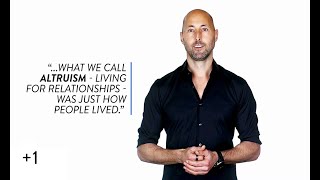
Brian Johnson (Optimize) reads and reflects on a passage from David Brooks's book The Second Mountain (cited at page 64) arguing that the term "altruism" is an 18th-century invention and that, historically, living for others was ordinary rather than heroic. Johnson uses this observation to encourage viewers to rewind modern individualism and practice simple acts of kindness today.
Chapters
Hi, this is Brian. Welcome back to another Optimize plus one. Today we're going to tap into some more wisdom from David Brooks's the Second Mountain. Let's flip our copies of the book Open to page 64. David is in the middle of describing the Second Mountain to us, telling us that it's a life filled with moral joy that is a byproduct of deep commitments to our marriages, vocation, faith and communities. Basically that it's all about relationships. Now, if your copy of the book looks like mine, you'll also have a lot of underlines and asterisks and a big wow right next to this passage I quote. It's worth remembering that the concept of altruism was invented only in the 18th century. Once people decided that human nature is essentially egoist and selfish, then it was necessary to invent a word for when people weren't driven by selfish desires. But before that, what we call altruism, living for relationships, was just how people lived. It wasn't heroic or special. End quote. Isn't that amazing? The word altruism didn't even exist until the 18th century. Before that, being kind and generous and selfless and altruistic was just how people lived. And that's today's plus one. Let's rewind the clock. Before Instagram selfies, before celebrity culture, before the hyper individualistic mentality David describes so firmly established itself in our collective consciousness, and let's simply be nice and put others first a little more. Today.