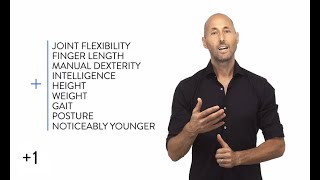
Ellen Langer's 1979 study had men in their 70s and 80s spend a week immersed in 1959: the music, movies, even conversation in present tense. The group that relived being 20 years younger showed measurable improvements in flexibility, dexterity, and height. Independent raters judged them as looking noticeably younger.
Chapters
Hi, this is Brian. Welcome back to another Optimize plus one. Ellen Langer is a brilliant researcher out of Harvard. She focuses on what she calls the psychology of possibility. While everyone else has been testing what is, she's been testing what's possible. She makes the very important point that we simply don't know what we're capable of. And she makes the equally powerful point that subtle little changes in our lives can lead to very significant results. Here's one of her most fascinating studies she describes in her great book Counterclockwise short story. In 1979, Langer recruited men in their 70s and 80s to participate in a study. She split them into two groups. Each group went on a little retreat with her. One of the groups was told to reminisce about life 20 years before 1959. The other group was told to actually relive the past as if they were 20 years younger. The group that was pretending to be 20 years younger listened to music from 1959, watched movies from 1959, and all their conversations had to be in the present tense as if they were actually living in 1959. Imagine that for a moment. Now, what happened? Well, here's how she puts it. She says on many of the measures, the participants got younger. The experimental group showed greater improvement on joint flexibility, finger length and manual dexterity. On intelligent tests, 63% of the experimental group improved their scores compared to only 44% of the control group. There were also improvements in height, range, weight, gait and posture. Finally, she says, we asked people unaware of the study's purpose to compare photos taken of the participants at the end of the week to those submitted at the beginning of the study. These objective observers judged that all of the experimental participants looked noticeably younger at the end of the study. Think about that for a moment. That sounds nuts, right? Young, yet it's true. Subtle changes, significant results. The psychology of possibility tells us to question presumed limits. We need to start by thinking about what we really want in our lives. Then go for it. So what do you really want? Go for it. Isn't it a bit odd that we went from math to science to history but somehow missed the class on how to live? For some wacky reason, optimal living 101 never made the schedule. Of course, it's too late to go back and change that and you're too busy to read full time to catch up. But if you're like us, you're all about optimizing your life so you can actualize your potential. So imagine this. Imagine having someone read the best books on how to optimize your life and and pull out the big ideas that can really change your life. You know those sections you underline and asterisks and mark all up? Then imagine that guy me connecting those awesome ideas to other great books and helping you actually apply the wisdom to your life today. Well that's what I do with something we call Philosopher's Notes where I've distilled hundreds of great books into 20 minute super practical summaries. Then imagine me taking the absolute best big ideas from those great books and sharing them with you in hour long Optimal Living 101 classes on everything from productivity, purpose and confidence to nutrition, goal setting and conquering procrastination. Helping you optimize every facet of your life so you can actualize your potential. You've got a personal trainer. I'm kind of like your personal philosopher. Ancient wisdom, modern science and practical tools. That's what our Optimize membership program is all about. If you're feeling it, we'd love to have you join us.