Brian Johnson breaks down how fast your body falls apart in space: astronauts lose 25% aerobic capacity in two weeks, compared to 10% per decade on Earth. Joan Vernikos, a NASA scientist, links this to what happens when you sit too long. The message: move against gravity, or gravity wins.
Questions this video answers
About 25% in 7–14 days (compared with ~10% per decade on Earth).
Up to ~5% per month in space (compared with ~1% per year on Earth).
Plasma volume decreases by ~10–20% in 7–90 days in space (compared with ~0.5–1% per decade on Earth).
Sitting Kills, Moving Heals.
Chapters
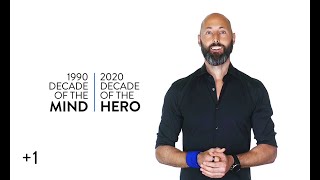
Hi, this is Brian. Welcome back to another Optimize plus one. The other day, I was chatting with one of my favorite people on the planet, Joan Vernikos. Joan was at NASA when we landed a man on the moon. She was part of a small group of health scientists responsible for running research studies on the effects of being in outer space, while, of course, making sure our astronauts came back safely and healthy. Now, Joan learned a lot about the effects of gravity deprivation and how rapidly astronauts age when they're floating in space. Without Earth's gravitational pull, it's nuts. Get this. It usually takes a decade to lose about 10% of aerobic capacity on Earth. Astronauts lose 25% in just 7 to 14 days. Bone density can decrease by up to 5% per month while in space, while it usually decreases by 1% per year on Earth. Plasma volume decreases by 10 to 20% in 7 to 90 days in space, while it usually decreases By 0.5% to 1% per decade on Earth. Now, she wrote a book all about the fact that sitting affects us in very similar ways that gravity deprivation in outer space affects astronauts. That book is called Sitting Kills Moving Heels. It's awesome. Check out the notes, etc. But that's not quite the point of this. Plus one. I was chatting with Joan to invite her to join us at our optimized 2020 event. She's a. Yes, awesome. We were chatting about the fact that 2020 is. Is a powerful year. Not only is it a nice, round, beautiful number, it's also the start of a new decade, which of course, is always a nice time to step back and do an inventory of where we're at in our lives and where we want to go, not just personally, but on a societal level. Joan told me about how the 90s were known as the decade of the Mind. Apparently at NASA, they dedicated themselves to running cool studies on the mind in space. Then she said, what will this new decade be about? To which I replied without hesitation, the decade of the hero. To which we both said, yes, our world is simultaneously more amazing than ever and well caught in a bit of a vicious downward cycle in the most etymologically literal sense. Virtue has taken a backseat to vice in way too many domains of our modern world to deal with all the challenges our world faces, from chronic anxiety, depression, and disease on a personal level, to the equivalent sickness on a societal and planetary level. I say the world needs heroes today more than ever before. We need you to be a modern hero and me and, well, all of us. So let's make 2020 the greatest year of our lives and the greatest decade of our lives. Let's remember that the word hero literally means protector. We can all be everyday modern heroes with love as our secret weapon. Let's do the hard work necessary to gain the strength for two as we move from theory to practice to mastery, closing that gap between who we're capable of being in any given moment and who we're actually being as we give our greatest gifts and in greatest, most heroic service to the world. When today, More accurately, right now. Plus one. Plus one. Plus one for a solid decade.