#1: Did you know… Loneliness = 15 cigarettes?! Let’s Optimize TOGETHER! (#11)
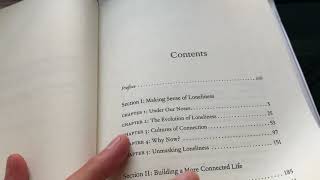
Brian Johnson records a short YouTube monologue (Aug 14, 2020) reflecting on personal optimization experiments (sleep, HRV, PEMF/nanov), announcing a Mastery workbook series, and sharing notes from Vivek Murthy’s book Together. Johnson highlights the health harms of weak social connections (citing research: strong social ties cut premature death risk by ~50%; lack of connection equals smoking ~15 cigarettes/day), distinguishes solitude from loneliness, and proposes applying these lessons to his Optimized Coach community ("social prescriptions").
Questions this video answers
August 14, 2020
50% less likely to die prematurely (compared to people with weak social relationships)
Equivalent to smoking 15 cigarettes per day (i.e., lack of social connection = risk similar to 15 cigarettes/day)
Chapters
Hey, guys, what's up? This is Brad checking in number one today. Together, Vivek Murthy, 19th Surgeon General of the United States. Wow. I'm only one chapter in, but it's just extraordinary. I can't wait to do a note on it. Already changing how I think about things in our optimized community and coach program, etc. I'll share a few ideas from there that I think you'll enjoy. I'll also do our little 1, 2, 3 on that. And then also just super fired up Mastery series is done. Here it is. I printed out the worksheets I'll go through at some point, but we have 150 plus pages of worksheets. So, like just dozens and dozens. I was a little weird. Dozens and dozens of exercises, reflection exercises to help move from theory to practice to mastery. We have in house just amazing sketch artist Yasmin, who works with Michael and Calman and Patrick behind the scenes to get these worksheets just the way we want them to help you. Again, apply the wisdom Again, more on that today. Let's 1, 2, 3, 8, real quick and then we'll get to together. So again, the 1, 2, 3 idea is, you know, we're constantly striving to spiral up. We want to see what's working. Started a new style of burpees. I'm calling them hero makers. Mark Devine calls them man makers, where you kind of jump, do this, and then you do a lat pole, whatever you want to call it, a row up, and then it's kind of a modified burpee. Whole nother chat. We're gonna call them hero makers. Emerson and I hung out with his rooster and then he came in and did some with me. So that works. This needs work. This is what I'm going to do. 1, 2, 3. Right? We want to know what's working and do more of it. We want to know what's not working. Needs work. It. No shame, no big deal. Data is awesome. And then we want to do this. Boom, boom, boom. You do that for one or two or three minutes a day. Looking at your last day, and you're going to do some great stuff. So I feel great. Scores say I'm doing great. And it's funny because I'll go to the sleep first. So if you recall, two nights ago, I was only in bed as an experiment for eight hours. I got seven hours of sleep. Didn't feel as great as I do when I get eight hours of sleep. So I ran the experiment yesterday, was in bed for nine hours and 12 minutes, got almost eight hours of sleep, felt great. Boom. And then I did the same thing. It's kind of funny. 9 hours and 14 minutes. 7:52. Then yesterday was 9 hours and 12, 7:53. It's almost absurd. I kind of pride myself on consistency, but this was like. That was kind of funny. So anyway, boom. That works. Nine hours in bed leads to eight hours of sleep. I feel way better when I do that. Then it's just I'm not sure what to think of this data. So my heart rate variability, resting heart rate again, 3940, 40, 142 is kind of where I'm at. Heart rate variability, 91 is insane. So this is massive spikes. I'm trying to figure out what's going on here. I think it's the. I'm using this thing called a nanov, which Alexander found. And then I've got a PEMF machine and I'm spending a lot more time on that with this and I think it's just jacking up my recovery and doing amazing things with my heart rate variability. So that works. Continue doing that pimp, nano, etc. And then training my recovery like a professional. Like, truly. I want to hit it harder than ever and serve as profoundly as I can. And I got to take care of my energy to do that. So today's focus number one. And now I'm all in on reading. And then we're setting up a studio in the barn over there. I've got a plus one studio, I've got a master series studio. We're setting up a PNTV studio and I'm going to catch up on the hundreds of books that I've read since I last got into the studio and just hammer out some PNTVs. But I'm going to get ahead on some other stuff before our film genius flies out to set that up. So I'm reading together. Wow. Loneliness. Let me just check this out. We'll just flip through and I'll actually show you a little bit how I read books too. Right. So I always love to start, of course, back cover. I've got a YouTube video on how I read a book. Back cover. Just to feel these testimonials. In this case give you a really good sense of, like, what this is all about. Of course, front flap, back flap. Beautiful human being, good energy. And then, you know, some more testimonials in here. It's just published in 2020. Thank you, HarperCollins, for giving us this Goodness. And then, boom, Boom. Okay, so I'm underlying stuff. And then, wow, that's good. Well, loneliness engenders despair and even more isolation. Togetherness raises optimism and creativity. When people feel they belong to one another, their lives are stronger, richer, and more joyful. Now that's what I call a pull quote. I'll put that in a philosopher's note on this side of it. Boom. We got to share that. I want to remember that. I want to share that with you, which is kind of my standard, by the way, when I create a philosopher's note stuff that I want to make sure I remember. So this is our. I call that an intro quote. So, you know, an author, like, kind of captures what the book is all about. I can kind of. I got a spidey sense for that now of, oh, this is it. Boom, let's go. I'm going to go like that, but I'm going to skip a part and I'm going to come over here. That will be the very beginning of a philosopher's note. Basic idea here is that when he started as surgeon general, he. He thought that he was going to be dealing with obesity, opioid crisis, mental health, et cetera. Then when he went out and did the research with his team and listened to what people needed, he realized loneliness is a prevalent and perniciously challenging thing that so many of us are experiencing loneliness. And then he tells a story about one of his patients who won the lottery. He was a super happy baker. He won the lottery, and then his life changed and he became less happy. Right. So I read this, and I'm like, oh, that's good. We got to pull that out. And I'm going to talk about Hedonic. This guy went from being eudaimonic in his pursuits. He just had great relationships. He was a master of his craft as a baker. Then he won the lottery. Then he changed everything and became the guy that had the big house and did all that. He lost all of his friends. He lost his craft. He went from Eudaimonic to hedonic. So I'm going to make that connection. I'm going to talk about Hercules and Epictetus here, that we're making the wrong trade. We got to know the game that we're playing and how to play it well. And in this case, your relationships really, really matter. And our society can diminish the importance of that. We need to remind ourselves of it. So that'll be the first big idea. And then this, I think, will be the second idea. Although it might evolve. He defines loneliness. So what is it? Right. And he says, well, the counterpoint to loneliness is connection. There are three forms of connection. Intimate, right. And I kind of keep my notes over here. So I remember intimate is basically you have an intimate partner with whom you can share deep things. Social is the second. That's kind of like friends, right? Actually, it's relational is what he called it. Right. I called it social. And then collective, where you feel like you're part of a community, a network of people that are sharing your values, et cetera. But then he makes an important distinction on solitude. Loneliness isn't necessarily being alone. It's being disconnected from people in those three different dimensions. Right. So solitude is actually something that helps you create deeper connections because you really get to connect with yourself. And it's an important opportunity for self reflection, as he says, and a chance to connect with ourselves without distraction or disturbance. It enhances our personal growth, creativity and emotional well being, allowing us to reflect, restore and replenish. And then, boom, we come over here and we can connect more deeply. Anyway, as I was reading this, I was thinking of our optimized coach program. And it was weird because the last note I talked about, the last number one, I talked about. Community, you know, and our swim buddies and meeting at graduation. And then the first comment was from a coach. I'm forgetting your name right now. Sorry. I can't wait to see it when I get back online. In talking about not just the swim buddy, but he created a group that's meeting weekly. So I'm like, well, what is that group? Did you do it on your own? Did we help facilitate that? We need to create groups. So we've got this, this intimate connection and relational between our optimized buddies and also the collective on a weekly basis. So I'm actually based on this book and based on that comment, I'm looking at how we're going to architect our coach program to make sure that we're optimizing together is kind of what I. What I captured. I can't wait to talk to our head coach and team about that. Then we get into some stats. He talks about how people are ashamed of being alone, which is a big deal. We need to let go of that. It's a human need in our society, again, is just it's not set up and structured to help us connect deeply. Then he dropped some research, which is amazing by this wonderful woman, Dr. Julianne Holt Lunestad, which I'll definitely share, which showed that people with strong social relationships are 50% less likely to die prematurely than people with weak social relationships. Now, some of us are introverted. I'm introverted, some of us are extroverted. So your personality will dictate how many relationships and the frequency, but they're important. So for me, it's pretty much my wife who I spend blessed to spend time with my kids and then our team, you know, But I'm like a pretty and I get a couple of people I spend some more time with. But I'm a pretty introverted guy. But I've got deep relationships within that that serves me. But if we don't have. So you'll find your own rhythm here. If we don't have those deep social connections, it's astonishing what it does to our health. He says that even more striking, she found that the impact of lacking social connection on red lifespan is equal to the risk of smoking 15 cigarettes a day. And it's greater than the risk associated with obesity, excess alcohol consumption and lack of exercise. Simply put, Julianne had found that weak social connections can be a significant danger to our health. That's a big deal. It's a fundamental human need. Eating, drinking water, breathing air, connecting with people. So this book is astonishing. I highly recommend it. Note PNTV coming soon. Oh, and here's the another really cool idea social prescribing. Doctors actually bust out a prescription pad basically and prescribe social connection, which is so cool because Mark Hyman, who's one of the testimonials for this, talks about in Food Fix Food prescriptions. So we actually have really leaned into that theme and we have an optimized Coach Fundamentals prescription pad that our coaches can use to write prescriptions to themselves and to their clients. Actually, their clients write it for themselves. Eating, moving, sleeping, breathing, focusing, celebrating, prospering and connecting will be one of the other things that we need to do fundamentally to have great health. So do you need to write a prescription for yourself to connect more deeply? The prescription I wrote for myself in my mind, I got to write it out physically, is calling my mom more. I love my mom. We moved. She's far away now and gives me tears in my eyes. We need to FaceTime more. So we've been doing it like once a week, whatever, but we need to just randomly facetime Grandma More Grandma, Grandpa Covid. They can't get out right now. We got to connect more. This is super important. So what's your social prescription? Get on that. Let's make today another awesome day together. Thank you, Vivek.
More from Brian

Heroic +1: What’s THE Most Creative Act in the Universe?: Turning Around Glitches (#2024)









