Brian Johnson (Heroic +1 #1,491) summarizes and applies Dr. Satchin Panda’s The Circadian Code to daily habits, especially evening routines. He frames three circadian fundamentals—eating, moving, sleeping—and focuses this episode on sleep optimization: prioritize 7–9 hours of sleep, limit evening light exposure (reduce blue light), and treat 6:00pm–midnight as the critical window for setting your biological clock. He also reiterates time-restricted eating (an 8–10–12 hour eating window) and points viewers to related resources (Sleep 101, Why We Sleep notes, The Sleep Revolution, Sleep Smarter) for deeper guidance.
Questions this video answers
An 8 to 10 to 12 hour time-restricted eating window.
Seven to nine hours.
6:00pm to midnight.
Chapters
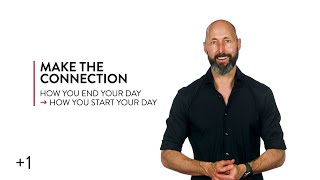
Hi, this is Brian. Welcome back to another heroic plus one. In our last several plus ones, we've been spending some time with Dr. Satchin Panda in exploring wisdom from his great book, the Circadian Code. Quick check in. Have you optimized your eating window to make sure you're getting all your fuel for the day in that 8 to 10 to 12 hour window? If so, nice work. If not, let's go. There are very few simpler ways to immediately optimize your life than time restricted eating. I'm serious. Now, Dr. Panda tells us that there are three circadian rhythms we want to optimize, which not surprisingly, happen to be our top three fundamentals. Eating, moving and sleeping. Today we're going to focus on sleep. Tomorrow we'll chat about movement. Dr. Panda tells us, and I quote, the now that we know how our circadian code works, the next step is to hack it. We want to get the most out of our daytime activities and nighttime rest. The goal is twofold. First, we want to adjust our activities to the optimal times of the day that are most in sync with our clocks. We want to eat when we can metabolize foods the most efficiently. And we want to be active when our brain and body are functioning at their peak levels. And we want to get the right amount of sleep so that we can do it all again tomorrow. Second, we can fix disruptions and retrain our clocks to improve our health. He continues by saying it would be a totally rational guess to assume that the first thing we need to fix is our eating pattern. But in reality, circadian clocks readjust best when addressing our evening activities, namely limiting our access to light and enhancing sleep. The reason is because sleep is not a passive experience, the human body begins to get ready the night before. Just like we start off the new year with a celebration on December 31st. Sleep is the beginning of our biological day, not the end. For years I've been talking about the fact that our day begins the night before. And this is the first time I can recall any author stating it so clearly. As he says, and I quote, again, the changes you'll make from reading this book that will be most profound will be created by monitoring your life from 6pm to midnight. Now, we may think that our sleep is the end of our day, but it's not. It's the beginning of our day. So how do we optimize our sleep? Well, first, as we Discuss in Sleep 101 and our mastery series, that's part of our Heroic Coach program, we got a bunch of modules, one of them's on sleep, we need to prioritize it. If we're not getting the recommended seven to nine hours of sleep, we need to restructure our days to give ourselves the best shot at getting it. As you'd imagine, Dr. Panda offers a ton of practical tips on how to optimize our sleep, nearly all of which are discussed in Sleep 101 and the mastery series of our Coach program. And all that wisdom is echoed in our notes on why We Sleep by Matthew Walker. If you haven't read those notes yet, please do. It's powerful. Also, check out Arianna Huffington's the Sleep Revolution and Sleep Smarter by Sean Stevenson. And check out the notes on the Circadian Code for the detailed science of how our brains respond to blue light and why that's so disruptive for our circadian rhythms and overall well being. For now, think about your PM bookend and what's one thing you know you could do to take it to the next level? Make the connection between how you end your day and how that directly impacts how you feel when you start your next day. As Dr. Panda says, your performance at any moment during the day is primarily determined by what you did the night before, when you ate and how much you slept, because that is what sets your clock, which then primes your body and brain. Tonight's the night Hero. Let's go.