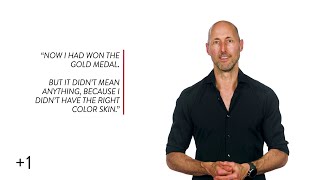
Brian Johnson narrates a short Heroic +1 video reflecting on Muhammad Ali (born Cassius Clay) winning the 1960 Olympic gold medal at age 18 but returning to Louisville and being refused service because of segregation. Johnson quotes Ali's autobiography (including Ali throwing the medal into the Ohio River and later changing his name) to illustrate how that experience galvanized Ali's commitment to racial justice. The host then connects the story to a personal anecdote about his son Emerson winning a JV state chess championship and emphasizes unequal resources for children as a moral call to action.
Chapters
Hi, this is Brian. Welcome back to another heroic plus one. Muhammad Ali was born Cassius Clay in 1960. 18 year old Cassius fulfilled his dreams and won the gold medal in the 1960 Olympic Games in Rome. Then he came home to Louisville, Kentucky and couldn't even eat in the restaurant in his hometown. And that experience changed his life. Here's how he puts it in his autobiography, and I quote. I had won the gold medal, but I still couldn't eat in the restaurant in my hometown. The town where they all knew my name. Where I was born, in General Hospital only a few blocks away. I couldn't eat in the town where I was raised, where I went to church and led a Christian life. I still couldn't eat in a restaurant in the town where I went to school and helped the nuns clean the school. Now, I had won the gold medal, but it didn't mean anything because I didn't have the right color skin. He continues by saying, Ronnie wanted me to call one of the millionaires from my sponsoring group and tell them what happened. And I almost did. But more than anything, I wanted that medal to mean that I was my own man and would be respected and treated like any other human being. Then I realized that even if it had been my key to this city, if it could get only me into the white only place, then what good was it? What about other black people? Later I realized that it was part of God's plan for me that they wouldn't serve me. That day, before I was kicked out of the restaurant, I was thinking what the medal could do for me. The more I thought about it, the more I began to see that if that medal didn't mean equality for all, it didn't mean anything at all. Then he says, when I remember most about 1960 was the first time I took my gold medal off. From that moment on, I have never placed great value on material things. What really matters is how you feel about yourself. If I had kept that medal, I would have lost my pride. And over the years I have told some people I had lost it. But no one ever found it. That's because I lost it on purpose. The world should know the truth. It's somewhere at the bottom of the Ohio River. End quote. Now let's pause and reflect on that for a moment longer. It's 1960. You're 18 years old. Imagine training relentlessly to qualify and then go to the Olympics. You win the gold medal. You're incredibly proud of yourself and the fact that you just represented your country well. You come home to Louisville, Kentucky and all caps and you can't even eat at the restaurant in your hometown. Now as a white man, I can't even imagine that experience. That's literally crazy. Yet that's exactly the world Muhammad Ali and millions of other black men and women lived in as recently as the 1960s. And as insane as that reality was, go back just a few more generations and those very same men and women and children were enslaved. So what would you do in that situation? The young Cassius Clay threw his gold medal into the river and fiercely committed to doing something about the injustice on behalf of his people. Then a few years later, he threw away his name and became Muhammad Ali. Little PS Here Ali tells us about why he changed his name. The short story is because he was named after his ancestors. Slave master. Did you know the last name of slaves would change when they were bought and sold again? It's impossible for me to even imagine that. He tells us, and I quote, elijah Muhammad later gave me the name Muhammad Ali. Muhammad means worthy of all praises and Ali means most high. By the way, check out the Netflix documentary Blood Brothers Malcolm X and Muhammad Ali for another really powerful perspective of this complex life and times. PPS A few weekends ago, Emerson and I had an incredible just the boys trip to the Texas State Chess Championships. We dominated our pre match protocol eating, moving, sleeping, breathing and focusing our minds like professional optimizers. He wound up winning the state championships for his JV division. Of course I was proud of him and as I looked around and saw how many of the kids and their families were clearly struggling with their weight and their confidence and their overall well being, my heart was broken. What difference does it make if my kid could compete at a high level in every area of his life? If these kids didn't have anywhere near the same resources and advantages that he has? Then I deepened my resolve to do everything in my power to help as many kids and their families as we can.