Brian Johnson reads Muhammad Ali's autobiography about how media shaped Black self-image, including a story of a Black girl painting her face white at Halloween. Ali saw boxing as a platform to fight injustice and inspire marginalized communities, a contrast Johnson draws to his own white privilege.
Chapters
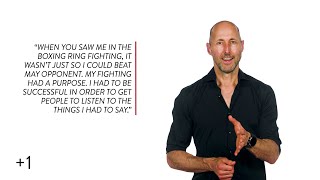
Hi, this is Brian. Welcome back to another heroic plus one. In our last plus one, we talked about the fact that Muhammad Ali won the Olympic gold medal in Rome in 1960. Then he came home and couldn't even eat at a restaurant in his hometown. I'll repeat, as a white man, I can't even imagine what that would be like, nor can I imagine this. Ali tells us, and I quote again, one Halloween, a little black girl was trick or treating around the neighborhood, dressed up in a superhero costume, but her face was painted white. When I asked her why, she said that her sister told her that there was no such thing as a black superhero. And she was right. Ali continues by saying, when I turned on the television, everyone was always white. Superman was white. Santa Claus was white. They even made Tarzan the king of the jungle in Africa, white. I noticed that Miss America was always white and the president living in the White House was white too. Nothing good reflected our image. Andy says, at that early age, I could see that something was very wrong. I didn't understand it. I thought that my skin was beautiful. I was proud of the color of my complexion. But everything black was considered bad and undesirable, like black cats bring bad luck. Devil's food cake was the dark cake and angel food cake was the white cake. These may have been subtle messages, but the effects were profound. Every day these messages shaped the images that I and other non white children had of ourselves. And he says, I didn't know how, but I knew that I was going to help my people somehow I was going to make a difference in the world. The more injustice I saw, the stronger my feelings grew. It made me feel that I was here for a reason. Now, that's from one of the early chapters called Black is Beautiful. And it's passages like that that open my eyes to just how different and privileged my experience of life has been. Now we scratch the surface of the challenge of seeing that reality in our notes on white fragility. And over the span of a few days last month, I read this book in Eric Thomas Uou in another memoir by Kareem Abdul Jabarg called Coach Wooden and Me. And as I read each book, I realized just how powerful these biographies are as a vehicle for white men and women like me to open our eyes to just how radically different our life experiences have been. I highly recommend reading these and other autobiographies by black men and women as a vehicle to expand your awareness while getting inspired by seeing heroic greatness in action. Now let's talk about the purpose the young Muhammad Ali, then Cassius Clay felt when he saw and experienced the injustice in the world. Later in the book, there's a chapter called My Fighting Had a Purpose. In that chapter, Ali tells us, and I quote again, when you saw me in the boxing ring fighting, it wasn't just so I could beat my opponent. My fighting had a purpose. I had to be successful in order to get people to listen to the things I had to say. And he says I was fighting to win the world heavyweight title so I could go out in the streets and speak my mind. I wanted to go to the people where unemployment, drugs and poverty were part of everyday life. I wanted to be a champion who is accessible to everyone. I hope to inspire others to take control of their lives and to live with pride and self determination. I thought perhaps if they saw that I was living my life the way I chose to live it. Without fear and with determination, they might dare to take the risks that could set them free. Remember, the hero's secret weapon is love. For what purpose are you fighting life's battles? Connect to that deeper purpose. Forge the strength for two and give us all you've got today.