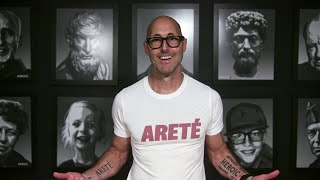
Brian Johnson (Heroic +1) teaches that the physical signs of stress—butterflies, dry mouth, and a pounding heart—are the body’s preparation for peak performance, not indicators of failure. He cites John Elliot (Overachievement) and Marie Forleo (Everything Is Figureoutable), and examples like Tiger Woods and Bruce Springsteen, to argue we should reinterpret these sensations as excitement and readiness and respond with a smile and affirmation.
Chapters
Hi, this is Brian. Welcome back to another heroic plus one. In our last plus one, we talked about my drive home with Emerson and the fact that our engines revving in the form of butterflies in our stomach and an increased heart rate before we do something we care about is awesome. It's our body's way of getting ready for us to crush it. So the optimal response to that surge of energy is to flip the switch as we take a deep breath, thank our body, smile and say, I'm excited. Let's go. Now, as I was sharing that wisdom with Emerson, I was thinking about some wisdom from John Elliot in his great book Overachievement. Check out those notes. He tells us the same thing. Here's how he puts it. Working on techniques to manage stress is a bit like trying to win the Indy 500 by putting a governor on the engine of your race car or swapping out a powerful V12 for a V4 because it offers a quieter ride. You wouldn't do that. Not if you were after the checkered flag, not if you were racing star Jeff Gordon. No superstar is about to give his opponents an edge. Nor should you by trying to relax when the pressure's on. He also tells us butterflies, cotton mouth, and a pounding heart make the finest performers smile the smile of a person with an ace up their sleeves. They definitely would agree with Tiger woods, who has often said, the day I'm not nervous stepping onto the first tee, that's the day I quit. And John Elliot says, the physical symptoms of fight or flight are what the human body has learned over thousands of years to operate more efficiently and at the highest level. Anxiety is a cognitive interpretation of that physical response, and that's today's plus one. Let's remember that everything that your body does to you when the pressure is on is good for performance. As we flip the switch, smile, and know we just activated that ace up our sleeves. Vroom, vroom. Engines are activated. Let's go. P.S. in her great book, Everything Is Figureoutable, Marie Forleo shares some parallel wisdom. Using Bruce Springsteen as her example, she tells us, and I quote her legend has it that when Bruce Springsteen is about to go on stage in stadiums full of screaming fans, the Boss feels a host of physical sensations in his body. He says, just before I go on stage, my heart beats a little faster, my hands sweat a little, my legs go numb as if I'm getting pins and needles, and then I get a tight feeling in the pit of my stomach that starts to spin round and round. He says, when I get all those feelings. I know I'm excited, pumped up and ready to go. On stage, Marie continues by saying, fascinating, right? Springsteen interprets those body sensations as a sign of readiness, not a sign that he's afraid, anxious or incompetent. He's chosen to believe that the vibrations and sensations in his physical vessel are telling him he's prepared to give his fans a legendary performance he's chosen and interpretation that serves him. So here's to channeling our inner Tiger woods in Springsteen as we choose to interpret our cues to give a legendary performance.