Eudaimonology: The Study of a Good Soul ← YOURS!
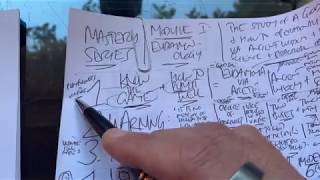
Brian Johnson launches Eudaimonology, a course on virtue built from ancient philosophy and modern science. He covers five core virtues—gratitude, hope, zest, curiosity, and love—with practices for each, and maps out seven modules designed to help you become your best self.
Chapters
Hey guys, what's up? This is Bry. I'm excited to walk you through tomorrow's Mastery series session on module 1, eudaimonology, the study of a good soul and how to operationalize virtue via ancient wisdom plus modern science plus practical optimizing tools. Last week was Module 0, in which we kick the party off as discussed in the last video. Like this. So fun. Gave an overview of the modules we'll cover. We have seven plus one core modules in the mastery series to help you move from theory to practice to mastery. So then tomorrow it's module one, eudaimonology. Then we're going to talk about antifragile responsibility, stepping in between stimulus and response. We call that module X. Then we get into our big three times two, the energy, the work and the love. The identities, the virtues and behaviors that help us operationalize being the best version of ourselves and closing that gap between who we're capable of being and who we're actually being more and more consistently. Then we move on to carpe diem. Today's the day we got to move out of the abstract into the concrete. We're going to spend two months helping you become a master at architecting masterpiece days. In the process, you're going to cultivate your emotional stamina, your highs will be higher, your lows will be higher, etc. Then we're going to step back and look at heroic quests. The science of motivation, grit, hope, making your dreams a reality. Yes, there's a science to that and yes, we will talk about it. And yes, we've had a lot of people say that was the most impactful thing in changing their lives. Then we're going to go back into the nitty gritty algorithms. Using our willpower wisely to install habits that run on autopilot is module five. That's a four session deal. Overview how to install habits. We're going to get that number one habit that you want to install installed once and for all. And we're going to delete that kryptonite. It may have been driving your life in the wrong direction. Then our head coach, Michael, will help us identify our power algorithms. We've got some cool exercises there. Then we get into the fundies. Two months on carpe diem, two and a half months on the fundies. Module six, eating, moving, sleeping, breathing, being present, being grateful and prospering can be fun. And then we have module seven wrapping it up. Optimus, you equals virtue embodied. If we do our work here, we're going to move from Theory to practice to mastery, operationalizing virtue, such that the best version of you is what shows up more consistently. That will feel like more energized tranquility, more calm confidence, more heroic encouragement, and profound service of others as you connect to something bigger than yourself. As you can tell, I'm kind of excited about this. So tomorrow we will discuss ten things, as always. Then we'll have a practice which will involve both the reflection and action. We're going to start at the very top. We need to know the game that we're playing in life and how to play it. Well, we summarize it in one simple phrase. Eudaimonia via arete. So eudaimonology is literally the study of a good soul. You, daimon is what Aristotle told us is the summum bonum, the highest good of life. Let's study how to do that. He said you can do that in one word. We translate arete as virtue or excellence, but it means something closer to expressing the best version of yourself. Which is why we have our little lanyard, which I busted out in our session. Hi, I'm Brian. This is from our coach graduation. Optimize. Where's optimize? Optimize equals optimus, which is Latin for the best, equals eudaimon equals good soul. That's you, equals hero, you using your gifts and service to the world. That's the game we're playing. We're going to connect that to ancient wisdom, modern science, then our take on it. Then the second idea is going to be warning. If our society is not going to support you in this process, I'm going to quote Krishnamurti. It is no measure of health to be well adjusted to a profoundly sick society. Worth repeating the most oft repeated phrase from our entire program last year. It is no measure of health to be well adjusted to a profoundly sick society. We're going to talk about the choice of Hercules. This challenge goes back 2,500 plus years. In all wisdom traditions, there's always been this battle in Hercules. We've got a great story there. Vice dressed up as virtue. We're going to talk about two buses, two mountains and two motivations, intrinsic versus extrinsic and some other goodness there. This always blows me away. Researchers on motivation. If you are primarily going after the extrinsic stuff, fame, wealth, hotness, etc. Even if you are, quote, successfully pursuing those ends, you will be less, quote, psychologically stable than people who are focused on the intrinsic stuff. Becoming a better human being, deepening relationships, contributing to the world we're going to talk about how important it is to know the game that we're playing and how to play it well in the midst of a culture that is playing a very different game than we want to play if we want to thrive. Third idea is we're going to introduce you to your new bff, Optimus you. The best version of you, the ultimate soulmate, is that inner soul within the daimon, as the Greeks referred to it. We're gonna have some fun. We introduced you briefly in the last session. We're gonna make it formal. Hi, optimist. What do you think I should do right now? It'll be one of our action and practices for the week as well. We're gonna have fun. Looking at this as. It's almost as if that higher force, whatever you call it, God, whatever, Gave you the most amazing playing partner. You're in a tennis tournament. You got matched up with this guy. The best version of you, Optimus, you. You want to win, Just do what he or she Sundays. Your new BFF, we need to close the gap by high fiving your inner daimon. We want to have fun with this. Remember, it's a game. We want to play it well. Playfulness is, in fact a virtue. Last week, we did some pretty intense quick trip to hell exercises. A eulogy exercise. We want to embrace our mortality to create a sense of urgency. But then we want to play the game of life with joy, with a sense of playfulness, curiosity, which we'll talk about in a moment. Fourth big idea is let's become virtue connoisseurs. So I was originally going to call this soaking our minds, soaking our souls in virtue, which is a play on a Marcus Aelius thought. And I said, no, no, actually want to become virtue connoisseurs? Went to the dictionary. Do you know what the word connoisseur means? Comes from the same root as cognition. To know, to learn, you become an expert in and have a fine taste for something that you dedicate a lot of study to. Well, let's become virtue connoisseurs. That's really the intention for this course, for this class, and for the course we're going to talk about the ancient wisdom take on this again. The four cardinal virtues of ancient Greek philosophy. Ancient Stoicism, the modern positive psychology take on not only the Greek and the Stoic, but also all wisdom traditions. Modern science founded their entire positive psychology movement on six core virtues. Thank you, Timex1000. Second timer. I've already done my 77 burpees. Knock out the Rest on the trail in a moment. Then we're going to talk about the optimized core virtues. We take the four from ancient, the six from modern, distill it back into four, playing around with plus one. And again, we want to become virtue connoisseurs. We want to know that virtue exists right in the mean between a vice of deficiency and a vice of excess. That'll be a fun conversation. Then we're going to talk about the top five virtues times two. You have five unique virtues according to modern scientists. And we're going to encourage you to take a test to understand how you can put your virtues in action. I want to know what your unique constellation of five virtues are. I'll share mine with you. Then we're going to challenge you to apply them to your life today. Why? Because science says when you do that, you're happier. You have more meaning, more of all the other things you want to experience in life. More Eudaimonia. Then we're going to talk about not only the unique top five virtues that you have, but also the universal. Science says there are five virtues. That if you embody these five, you have the greater chance of living with a deep sense of joy and happiness and flourishing. AKA eudaimonia. Okay, well if that's the case, which it is, then let's practice them. That's how you move from theory to practice to mastery, close that gap, etc. So what are those five? Well, glad you asked. Gratitude, hope, zest, curiosity and love. Not quite in that order. Zest is as we have discussed and will discuss a ton of times. Zest. A sense of energy and vitality is the number one predictor of well being. Which is why we spend so much time with our fundamentals. Getting your energy dialed in two and a half months. Get your energy dialed and you're going to feel great. But we're going to start with gratitude. Start here, return here. We're going to talk about some eye popping stats. You want to be 25% happier? Practice gratitude. We're going to change our language. Integrating thank you gifts, feeling blessed, taking things as granted versus for granted. The number one obstacle to gratitude, by the way, is entitlement. You think you just deserve it. I should have that. Why should I be grateful for it? Yeah, okay. Well, decrease your happiness. Have some humility. Realize that life is a gift. Everything in it is a gift. Quit taking it for granted. Take it as granted. Then we're going to talk about hope. I love hope. The science of Hope. One, two, three. We need to have a clear target, science says a goal, a sense that our future will be better than our present. You don't have that. You're hopeless. We're going to talk about that. That's the vice of deficiency of hope, hopelessness. There's a vice of excess, too. You can be kind of manicy, have too much hope, not rub it up against reality. Well, there's a way to deal with that so we can wind up at the virtue of hope. Second aspect of the science of hope agency. You have to see a better future, and you have to believe that you can create it. You have the power, the ability to make that happen. Then you need to have pathways, a plan, and a willingness to embrace different paths as you inevitably face obstacles. Ohms style. Then we're going to talk about something kind of heavy. The leading scholar in hope actually ended his own life. When I found that out, it kind of rocked my world for a while. Still does whenever I think about it. We're going to talk about the importance of connecting our bodies to our minds. Psychology can tend to lean a little bit too heavily and exclusively in the mind. So psychology literally means the study of the soul. Eudaimonology is a fun play on that, the study of a good soul. So psychology can get too much in the mind. Eudaimonology, the study of a good soul, integrates the body and the soul. We know that there is no separation between the mind and the body. If you're not eating well, if you're not moving your body, if you're not sleeping well, then you're not going to feel great, period. Your zest will be diminished. You're going to have a hard time feeling a deep sense of trouble, true embodied hope, et cetera. We're going to talk about the fact that we had a chat in the Q and A after our first session where one of the wonderful women in our program said that often when she feels depressed, her energy goes low. I said, wait, wait, wait, wait, wait. Actually, turn that around. Because when your energy goes low is when you tend to feel depressed. And researchers show that if you want to go from despair to hope, get a good night of sleep and vice versa. You want to go from hope to despair, get a bad night of sleep. So we're going to talk about the importance of creating zest energy via disciplined action on our fundamentals. Again, we need to make the connection. This is such a cardinal part of our work together. And again, science says pay attention to these virtues. So we're going to move from there to Curiosity. We want to have a flashlight on the data that comes in our life when we inevitably fall short of our ideals, which we will. Which we will talk about in this session. You don't want to bring a hammer to yourself. Bring a flashlight to the situation. That's a David Brooks distinction, which is great. You want to have an experimenter's mindset. Put a lab coat on, have a growth mindset, not a fixed mindset. If you fall short, we're going to run through a process. Lanny Basham introduced me to that. I love the Olympic gold medalist. Needs work. Oops, fell short. Needs work. No big deal. You can use that data to get better. That's curiosity again. You can have too little curiosity and you can have too much. You can numb yourself and not have any self awareness. Or you can be obsessive and perfectionistic. We want to find the virtuous mean there, not the vice of excess or deficiency. The tenth idea is going to be our fifth virtue, arguably the most important, Love. We're going to look at this in 0.0, 1.0, 2.0, 3.0, infinity.0, and we might add 8.0 work. The self is going to start with self compassion, which is an extension of curiosity. And then your number one self care. It will move through some practices here, but again, the intention is you are a virtue connoisseur. You know what it tastes like to live with virtue. You spit out the vice that's either too bitter or too sweet, depending on the excess or deficiency. Then we're going to move all through that and put it into practice. We've got some great reflection exercises to help you get more clarity on it. And then we've got some great action exercises including. Hey, Optimus, remember your playing partner, your new bff. What virtue do you think would be awesome right now? It's a great way to high five that guy or gal and close that gap between who we're capable of being and who we're actually being. Optimized equals optimist equals best equals eudaimon equals hero style. That is module 1. Eudaimonology, the study of a good soul and how to operationalize virtue via ancient wisdom plus modern science plus practical optimizing tools. Join us. I think we almost blew up Zoom last week. It was awesome. Loving this and so excited to make this mastery series part of our general offering. You can get access to the. What do we got? Over a thousand actually just created. Plus one optimized plus one number 11. 1, 1, 1, 1. I thought that was kind of cool. You get access to all those. You get access to 500 philosopher's notes and 50 optimal living classes and this mastery series, all for basically 10 bucks a month, 8 bucks, 13 depending on what you do, 2 weeks free, all of that stuff, etc. If you're feeling it, we'd love to welcome you if you're part of it. Love you, appreciate you. Look forward to seeing you soon. Late.
More from Brian

Heroic +1: What’s THE Most Creative Act in the Universe?: Turning Around Glitches (#2024)









