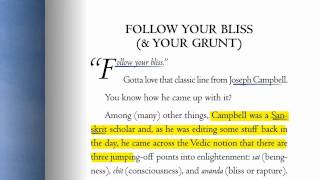
A short spoken monologue by Brian Johnson titled "Follow Your Bliss (& Your Grunt)." Johnson explains Joseph Campbell's invocation to "follow your bliss," tracing it to the Vedic triad (sat — beingness, chit — consciousness, ananda — bliss) and cautions against treating the phrase as a license for laziness. He pairs the idea with the Sanskrit concept of tapas (disciplined effort/hard work), urging listeners to both follow their bliss and commit to disciplined effort.
Chapters
Hi, this is Brian with another mini chapter from a Philosopher's notes. This one's called follow your bliss and your grunt. Follow your bliss. Gotta love that classic line from Joseph Campbell. You know how he came up with it? Among many other things. Campbell was a Sanskrit scholar, and as he was editing some stuff back in the day, he came across the Vedic notion that there are three jumping off points into enlightenment, sat, or beingness, chit or. Or consciousness. In ananda, bliss or rapture. Campbell said that if he was honest with himself, he didn't know what proper beingness was, nor did he know what proper consciousness was, but his bliss, his rapture, that he could trust. Enter. Follow your bliss. Of course, it's easy to get all geeked up about such an inspired idea and see it as a license to do whatever we want, whenever we want. Which is why later on in his life, Campbell once joked that he wished he had said, follow your grunt. As it turns out, there's actually a word for that in Sanskrit as well. It's called tapas. The idea that hard work and disciplined effort can burn away the impurities that keep us separate from the divine. Powerful stuff. So I hereby preach, follow your bliss, and equally importantly, follow your grunt. There you go. Follow your bliss and your grunt. Hope you dug it. Get out there and have some fun following your heart and working hard. Look forward to sharing more with you soon. In the meantime, have an awesome day. See you.