Heroic Chat with Caroline Adams Miller: Cultivating Authentic Grit
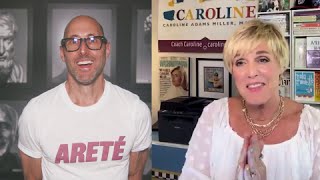
Caroline Adams Miller distinguishes authentic grit from harmful versions like "stupid grit" and "selfie grit." She argues happiness precedes success, recommends using character strengths like zest and gratitude, and emphasizes amplifying others' wins rather than just your own.
Chapters
Foreign.
Plus three Central time. Caroline and I just had a great chat and realized, well, all right, we got to go ahead and into the the zoom meeting here and have this discussion with you. So today I am very excited to introduce you to Caroline Adams Miller who is the author of Getting Grit and as I shared with her what is among, if not tied for first as my favorite all time positive psychology book. I haven't done a note on it yet coming back to that and I don't say that lightly, creating your best life as you know, if you've been following along and I will show you the scope of the books with which I am comparing this book. Caroline. I've done everything from Maslow's Motivation, Personality, Viktor Frankl, Seligman's Flourish, Gabrielle Oettingen, of course, grit and your book. We have dozens and dozens and dozens of the best books on positive psychology and guys, this book is right there at the top of that list. It's incredibly broad and deep and most importantly, practical. What Caroline gets and what Angela Duckworth says on the the COVID of Getting Grit is Angela says she doesn't know anyone who's done more work thinking on how to apply grit, the science of grit. So yeah, I'm really excited to connect today. We will learn more about some of your heroes, Caroline, and just your process. But I also want to go deep into getting grit and some of your favorite most practical wisdom because I just have a sense we'll be able to have a fun chat. But before we do that, I want to say hi to coach Lanny Stewart. I'd like to say hi real quick. Dave, Lisa, Bradley, Robin, Pauline, Eloy, Ryan, Aki, Roy, Great to see you. Rick, rj, Gary, Monica, nice to see you. Jonathan, Happy Friday. Sarah, Gene, Warren, John, Jeff and John on my first screen. We're going to have fun today. Caroline, if you can say hi real quick and then we'll do that. Flip the switch and then we'll get to work.
Hey everybody. I'm so happy to be here. I just got over Covid, so I don't know I sound like this, but you'll be able to hear me. No problem. But welcome.
You sound great and nice work. Second, first, second, Third time. What do we got here?
It's my second maybe third time of COVID I just. What do you do? We're just living with it now.
Yeah, exactly. If I get it again, it will be my third time at least. But yes. Awesome. Let's go. Opportunity to practice our philosophy and to have that grit in action. Right. But let's flip the switch real quick. Deliberately connect with the best, most heroic version of ourselves. Whatever you do, to center as we recommit to living with wisdom, discipline, love, courage, gratitude, hope, curiosity, and zest in a healthy dose of grit as we move from theory to practice to mastery together today, let's get to work. Caroline, tell us a little bit about you, please, and would like to hear more about your hero's journey, kind of what brought you to this moment. And perhaps some of your heroes will explore guides that have supported you. And then we'll get into some nuts and bolts in terms of how to move from theory to practice.
Well, I'm here because you read my books, some of my books. What got me here was really the field of positive psychology. Gave me a new way of looking at coaching, gave me a new way of looking at the world. My family, myself as a woman, my interactions with other people. But really, my backstory starts with overcoming bulimia at the age of 21. So when I was 21, I was in my seventh year of bulimia and dying. And there was no cure. It was a hopeless disorder. All we knew is that people died. And I thought I had a death sentence. So I was at Harvard University, just a billboard. Just a billboard, a swimmer. Nothing behind this picture that I presented to the world. A very fixed mindset. And it took me under. And I got married a week after I graduated because I thought that would cure me. And instead, seven months later, I found myself in a 12 step meeting for compulsive eaters. And I think my life began in February of 1984, because that's where I really learned the practicality behind what joy was, what was happiness. It wasn't about success. It wasn't about test scores or swimming times or any of those things that I was brought up in D.C. to think really were the things that brought you joy or happiness or confidence. It was none of those things. What brought me joy was the ability to do something really hard and even considered impossible. And that was recover from bulimia one day at a time. And when I had four years of recovery, I took my story to the world. And there was a bidding auction. People couldn't believe someone had gotten better. And that book, My Name is Caroline, ended up being the first book by anyone who recovered from bulimia. And I'm just so proud of the fact that that became my touchstone. And when I looked back after getting my positive psychology degree with Marty Seligman and everyone else in that first class at Penn and meeting Angela, who was just doing her initial work on grit, I realized I had cultivated grit in my 20s. And I realized if I could cultivate grit, which is so different from success, anybody can cultivate it. And so that's why I went ahead. After I wrote Creating your best life, which was the first evidence based goal setting book ever published for the mass market, I went ahead and looked at, okay, if the happiest people set hard goals, what are the qualities you need to accomplish hard goals? So I went back and touched into my bulimia journey. And in getting grit, if you looked at it, I go back and forth and I realized what it takes to cultivate that X factor, which is so missing in our society, in our world. And so really, the roots of my grit were in failure. And because I failed so spectacularly with so much misery, and then rebuilt myself one day at a time in a community of people who cared about me, but I only knew their first names for the most part. That's why I'm alive, That's why I'm here. And I'll just finish with this. I heard something at an AA meeting because I got sober at the same time. And somebody said, you can't keep what you don't give away. And that became my mission in life, was to give away what others had given me, whether it was my education or my recovery story. And that's how I've lived my life for 40 years.
What a beautiful story. Every single thing about that is so perfect. I wish I could do a quick costume change into heroic. We talk a lot about antifragility, where you're able to take life's challenges and go from being fragile to resilient and even gritty to antifragile, where you literally get stronger every time you get pushed around and knocked around. And then just the wounded healer, the story of you using that greatest challenge to be the thing that allows you to serve most profoundly. My own parallel is my struggles with depression and, you know, thinking about ending my life and my dad's alcoholism, his same challenges, my grandfather, father's father, alcohol, ended his own life. And just that, the beautiful challenges that I face that I've been able to alchemize and sorry about that. Wonderful reminder to get up and move. Deep work mode writing right before we came in, being able to alchemize that and then being able to share what we've gone through as an act of service, of, no, no, if I can do this, you can do this. And this is some of the things that I did, help me go from there to here. And again, you need to find your own idiosyncratic pathway. But we know ancient wisdom, modern science, common sense to be, common practice. These things work. So going into that, I just want to go right into it. Grit, can you define it for us? And then we'll talk about how we can systematically build it in our lives. Then we'll step back and look at the broader field of goal setting, psychology, et cetera.
Yeah. So there's two kinds of definitions for grit. I'll just say Angela Duckworth's classic definition is passion and persistence in pursuit of long term goals. I looked at that in the process of writing, getting grit, and realized, because I coach mostly CEOs and companies right now, is that that definition fits far too many toxic people who have a vision that they pursue to the ends of the earth and cause a lot of harm. So they have grit. But I call that stupid grit. So I think the kind of.
How do you really feel there, Caroline? I'm just wondering how you really feel about that. That is so good. Sorry to interrupt. You needed to interject. Stupid grit.
Stupid grit. Well, there are three kinds of bad grit, and one of them is stupid grit, where you don't know how to disengage from your goal. You no longer recognize that it fits. You know, the world fits your path, your path. So it's like mountain summit fever in mountaineering, or rapture of the deep in scuba diving. You literally have lost your way and you don't have the humility to get the help that you need to turn to pivot. But I do believe there's a kind of grit that is good grit that actually elevates the world, makes it better. So my definition is that you're pursuing hard goals outside of your comfort zone, but in process of doing that and living a life without regret, you unconsciously inspire and elevate other people and even awe them to ask themselves, what if I took those kinds of risks to live my best life? What if I stepped out of my comfort zone? Because I do think grit is best in the service of elevating the community, elevating others, because it is a contagious quality. So I think we have to get away from the idea of us being, you know, finishers, everybody just finishing at their own hard goals, which we really do need to do. But in the process of doing that, who are you awing and inspiring to also be their best self? So that's where I go with what I call authentic Grit.
Yeah. As I was rereading my. My notes in preparation for our chat, that was actually the thing I wanted to make sure we talked about. So that you went there immediately. I find really inspiring. So, again, your definition here of inspiring others to go follow their own again, passion meets persistence for something bigger than themselves, I think is such a beautiful articulation. Absolutely love the. The stupid grit and the, you know, the summit fever and the. The wisdom and the self awareness to have the discipline to know when we need to disengage and move forward. Anything else on that before we move to the next?
Yeah, there are two other kinds of bad grit, and the lack of humility and arrogance is part of the bad grit. There's faux grit, or false grit, fake grit, which I think is an epidemic in our society where people want you to believe that they got a PhD but they're faking their research, or they want you to believe that they qualified for the Kona Ironman, but they skip a loop on the marathon and hide in the porta Potty or whatever, but they have faked the way that they got to a finish line. And there's lots of examples in the business world, like Enron or the VW emissions scandal. They want you to think they did the work, when in fact, they took shortcuts. And people often die in those situations. So that's faux grit. Then there's selfie grit, which we also have an epidemic of. And that is where you did do hard things, but damn it, you got to tell everyone all the time you suck all of the oxygen out of the room, because it's all about you. Everybody wants a YouTube moment, and I'm so tired of people not having the humility, the intellectual or social humility to let other people be the star. And so you get this selfie grit. Bad grit always repels people, and good grit inspires people.
Healthy grit. My goodness, you're on a roll. That is so good. What a frame. Those weren't in the book, though, right? These are newer ideas in the book.
No, no.
I miss that. Oh, my goodness. And Caroline has a new. Your new edition or just the audio edition of it coming out? Getting grit.
I just. I just recorded the audio edition, and it should be out in the next month or two on Audible, God willing.
Okay, cool. Well, we'll make sure we highlight that. Perfect. So now we've talked about the classic grid, the authentic grid. Talk to us about. I'm a huge student of, fan of, grateful recipient of the service of the Naval Special Warfare. You Know, seals you talk about, don't. The bell is one of the examples you use. Can you tell us about that? And that, that the importance of having that level of fortitude. And also. And bread, of course. Also the service there, you know, and the fact that these men in the seals anyway to this, they're now women, obviously going through the candidacy. But tell us about that boy.
Okay, that's a big topic. So I raised three of my three adult children and I raised them during the self esteem parenting movement, which was just a disaster. We were told to tell our kids they were special and they were winners and they got trophies for just waking up in the morning. And the long term look at what happened as a result of that is that we created a whole generation of narcissists and sociopaths who'd rather do the color run and not get a time or go to work and be the CEO the next day than actually do the work. Now that's a generalization. There's tons of people from Gen Z and millennials who do do the work, but by and large, the research shows that there was a dumbing down of playgrounds, et cetera, et cetera. So I researched what happens when you take away all the standards in the world for excellence and elite levels. And I have stories in the book about it. But one thing I looked at was people long to know how they're measuring up. So I was curious, are there more Special Forces movies in the world during those parenting years than other years? And indeed, Hollywood put out more movies about heroes and Special Forces during those years because people didn't know where to find out how to even get on a record board. At my local swim club, they took the record board down because they didn't want the kids to be intimidated by previous fast times. I mean, it was literally insane. And so I do think that Special Forces is the epitome for certain kind of mental and physical toughness. What I want to say is I am really clamoring for research on things like this to be parsed into genders, because Special Forces is still just men. And there is another kind of toughness you often see in women who are not allowed to be in Special Forces teams or groups. So I think we have to be careful when we always look at examples like, I'm looking behind you and we talked about it. You have a dude wall behind you. There are no women there.
And I think I have one woman, to be fair. I have one woman, Eleanor Roosevelt, who is, you know, one of my heroes. And I'VE got a bunch of other ones, and it's also my wall. So I'm unapologetically aspiring to embody the qualities that the dudes of which I am one embodied. So I'm going to the fact that I've got men back there while honoring the fact that there are so many beautiful women who have the potential to make a difference and the importance of studying it the way that you did. But just as a. As a quick, playful response to that.
First, what I want to say is thank you for being unapologetic because I love the fact that you're saying I know it. I have. I have sat back and listened to many business podcasts that some days, and I've realized I've never heard a woman's voice. I've never heard a woman mentioned as an example of excellence or grit. They haven't been interviewed. And I just finally realized that if we're not hearing about the grit of women and the special ways they show up, we don't have anything to shoot for. And we know in goal setting theory you have to have relatable role models. And too often we have not had those. And one interesting thing I'll end with there is that when I was interviewing people who have authentic grit or good grit, and I asked them, where did you learn to bet on yourself? Where did you learn to play bigger in life? Where did you learn to have that kind of humility and confidence? And the number one answer I got from most people is their grandmother. And I was so interested in that. And I talked to Angela about it. I was like, angela, what is Angela Duckworth? What does this mean? And I think it came down to is, in order for women to really stand out two generations ago, they didn't have to be good at something. They had to be super ordinary. They had to be extraordinary. And so for that reason, they had all of the qualities of grit on steroids. And then they became the subject of family stories. And that's how so many people, I believe, began to revere their grandmothers, including me. So I just want to say there's so many exemplars of grit. And actually, I'm going to say one more thing. There are not enough women's biographies in Wikipedia. There's a project called Women in Red to bring more of these stories to the world, because 85% of the biographies in Wikipedia are of men, 15% are of women. We need those stories for you and I to continue to teach people about relatable role models.
I love it. And then just to pull that thread another inch or two further of color. So, you know, I recently profiled a number of African American men, in this case Muhammad Ali, Kareem Abdul Jabbar, et cetera. And I got a note from one of our community members who's African American, whose son heard me talk about Muhammad Ali winning a gold medal in 1960, then coming home and not being able to eat at the restaurant, that he got the key to the town. Goosebumps. And that it was the first time that he had seen a relatable hero. Even today, I mean, just this, the importance of that. As much as I playfully push back on that and own the fact that, yeah, yeah, I got it. Hyper masculine, unapologetically, yet trying to help people find their own idiosyncratic expression. I do have Alexander the Great back there, which represents my wife Alexandra. So there is a transmitted female energy there, but absolutely 101%. And I appreciate you embodying that right now, you know, and one of the things that I'm so excited about to continue to shine a light on your wisdom, Angela's wisdom. Sonia Liebomirski is a dear friend and scientific advisor. And, you know, so. Yes. Amen. Thank you. Bless you. And let's go. What else?
Can I say one more thing.
It's your show. Yeah. What do you got?
No, it's your show. But I'm so honored to be here. So right around the corner from me here in Bethesda, Maryland, Katie Ledecky, the greatest female swimmer in the world, maybe of all time. I watched her grow up. I drove her to swim practice, and we all just saw her at the World Aquatics pass Michael Phelps for the most individual gold medals. I didn't know this until I was talking to her mom one day. The American Girl dolls in the last 20 years stop being paragons of grit. They ended up being dolls that were just kind of pretty to look at. They brought out a Katie Ledecky doll a few years ago. And with that introduction of this girl who made distance swimming fun and sexy to the point where they don't take commercial breaks during those long events anymore, and they've added the mile at the Olympics, she has single handedly brought an exemplar of grit and goal setting and hard work and humility to the world in a way where she's not preaching, she's doing. And so when you look at the dolls that are our young women have grown up, you know, handling, we're only now starting to get an exemplar of grit back in the American girl to style collection. And that has a cultural impact that I can't even overstate.
Yeah, that's amazing. And then it makes me think of my little 6 year old gritty girl who ran a 5k at 4 years old adult version kids. So I'm all in raising the next generation of heroes. Let's go. What else? Continue, please.
No. You know, you asked me a question. I just had to.
So then just now I'm going to look right at our note or my notes on your great book A dream. You say it starts with a dream. So tell us about the importance of dreaming, setting those high hard goals, etc.
Yeah, okay. So creating your best life was my fifth book. That was my capstone in that class at Penn. Actually. Marty Seligman and Chris Peterson, who wrote the Via character strengths survey were my mentors. Marty still is. Unfortunately Chris passed on. But Creating your best life talks about the importance of setting the right goals. And so goal setting theory, Locke and Latham is, is integral to what I'm talking about. We have to have the science. We've had all of this law of attraction crap with the smart goals. Smart goals isn't science. I mean, I'm just stunned at how many companies have been built on snake oil and urban legends. Starts with goal setting theory. But there's research on using the word dream. When you ask somebody what their dream is, it creates, creates a chemical bath in your brain and your body that makes you dream a little bit bigger. And that dream has to be something that pulls you forward, that's magnetic. If you say the word goal, it narrows your thinking. So I want people to have dreams to be shooting for something that isn't just about, let's say an extrinsic goal. You know, a bigger house, more money, a boat, nice clothes, so other people will envy you. Great dreams actually use your top character strengths in a way that makes the world better and gives to other people. So you must start with a dream. And I'm going to precede that by also saying Brian. And this is so important. And this was really at the cornerstone of creating your best life. Research came out just as I entered the Penn Program in 2005, co written by Sonia Lubomirsky and Ed Dean and Laura King that said that all success in life is preceded by being happy first. That was a seminal slam dunk meta analysis that the world had never heard before. Which means before we talk about dreams and goals, we have to start with how are you booting up your Daily flourishing every day, because that's the rocket fuel that allows you to pursue and achieve your dreams.
Oh, that's so good. Which is the next idea in the notes. And by the way, I'm going to take a little commercial break here and promote your book again. Caroline, if you could feel the heat and the density of wisdom that she's dropping right now, right. We could talk about any one of these ideas literally for a weekend. You know, goal setting. That is a long chat. This book is like one page after another of that. I'm like, what, what, what? That's so good. So love it. Commercial Complete happiness, you say, comes before success. Tell us about that, the science behind that. And then let's talk about how do we create a deeper sense of happiness in the eudaimonic sense of flourishing, such that we can show up, dream, and then have the grit to pursue and fulfill those. Those dreams.
Yeah, so it was a meta analysis. So it looked at longitudinal self report, other report likert scales. It looked at really everything and basically said all success. Whether you're talking about professional success, success in religion, success in sports, success in friendships. It is all preceded by showing up as your best self, as a flourishing at the top of your level. Because we're all born with a set point that we can maximize with interventions, positive or wise interventions. And it, it sets us up for success because when we're more hopeful, when we're more zestful, when we're more curious, when we're more grateful, we draw resources to us. We build relationships with other people. And that's Barb Fredrickson's very infamous broaden and build theory, which is right at the base of positive psychology. Why do positive emotions matter? They broaden and build. And so I have a list in in the book and elsewhere. But you know, some of the interventions that really matter and I'll just stick with goal setting are going to that via character strengths survey. Knowing and using your top five strengths in new and different ways every day in the service of connecting with others and achieving your goals. When you come from your top five strengths, you are coming from a blueprint of who you are at your best and not some karaoke version of trying to be leadership, which might be at the bottom, or humor, whatever. Stick your top five and use them in new and creative ways. And that has been found to improve people's well being. Meditation is the silver bullet of positive psychology gratitude exercises. As long as you add the piece, not just what am I grateful for, but why did that thing happen? To me, that's what changes it from an Oprah journal to a real scientific exercise. Why did that happen to me? Those are just a few of the ways that you can boot up exercise. And that's how I begin my day. I'm a competitive master swimmer. That is how I boot up most days, or with weightlifting or something else. So everybody has a way to do it. It's individual. But it's your responsibility to show up as your absolute, highest, flourishing self on a daily basis. And it's not a fog that descends upon you. It's work. Do it anyway.
Caroline. We are soul sisters. So we architected our entire app, and you just went through. And I just opened up our app here at the very top. You can find a link that you can click on to find our virtue compass. So the entire function of our app is to help you show up as the best, most heroic version of yourself. And we designed it with the same company that built Slack, Tinder, Uber Eats, neuralink, that sort of thing. But the very first thing we had them design was a virtue compass, such that in any given moment, they can go into their pocket to what is often an addictive, negative kind of influence, and find the ultimate purpose of life, which is to flourish by putting your virtues in action. Or as Aristotle said, as we discussed before, we came on to live with eudaimonia via arete. But literally, you just rattled off, we have the four cardinal virtues. Wisdom. I take temperance, and I call it self mastery or discipline. And then I take justice, and I call it what it is. Love. Even the positive psychologists call it humanity. It's like, come on, that's love. Let's just call it what it is, you know? And then, of course, courage. But then you mentioned gratitude, which. Gratitude and hope. Top three most powerful virtues. Curiosity. And then zest. My understanding. Niemonic. Is that how you say his name? The via? Yeah. Okay, cool. Until I say it out loud. Here's someone. It's one of my superpowers. Caroline. Mispronouncing names. So there we go.
That's okay. I feel you. I feel you. Ryan Nemec.
Ryan Nemec made them.
And since you're talking about Zastat, what I want to point out is there is a big, you know, dialogue in the positive psychology community about the fact that zest is very high in most children, and it has plummeted to bottom five by the time people are adults. They stop thinking. It's mature to do April Fool's jokes. They stop skipping. They stop swinging on Swings at the park, they get so serious. And the thing is, zest is one. It's my number three strength. It is part of the joie de vivre that makes life worth living. And too often, people are dying while they're alive. Knowing where your zest score is critical, I asked George Valiant, who ran the Harvard men's study for, I don't know, 50 years. I said, george, what do people do? And he said, do what children do. If you want to raise your zest score, do what children do. And so being childlike, not childish, although maybe that would work sometimes. Childlike is one of the ways to bring up sassy, which is a critical, critical strength.
Yeah, for sure. My understanding is it's the number one strength. And then I take it deeper than that, and I say, well, what is zest really? Yeah, it's a joie de vivre for life. And there's a certain playfulness and a spring in your step and all the other things, but it's energy. And if your energy sucks because of poor lifestyle choices and you are not eating, moving, sleeping, breathing, and focusing your attention properly, you will not feel like skipping and playing, and you will not have that verve and that. That zest and that energy. And this is, if I had one potential criticism of the movement, is we're not talking enough about the fact that physiology drives psychology a lot more than what we think. So getting to that point where we're focused on. And again, you went off on your, well, I swim, I do this, I do that. The meditation, those basic fundamentals are what we obsess about. That focusing on the basic stuff, that is hard work. It's not glamorous, but from my vantage point, is the foundation on which we build a life that allows us to show up consistently as our best selves, et cetera.
I have to raise my hand and say something, if you don't mind. The two of us are clearly high in sass. I feel the bubbles going up. It's like this is a carbonated conversation. We need to talk about the fact that we often raise our character strengths in concert with other people. Chris Peterson's stopped our class constantly in 2005, 2006. He said, okay, people, I just got to stop you and tell you, no matter what research I'm doing or looking at, everything comes down to three words. Other people matter. And so it's our relationships with other people that can often elevate us or degrade us. And some of the research that I've been focusing on in recent years because it's such a taboo topic, is about the ways in which women undermine other women's happiness and success. Particularly when women succeed. Other women go silent. So we have to guard ourselves around who spends time with us, who has the benefit and the. And the privilege of being in our first link. We read their emails, we take their phone calls, whatever. Don't ever neglect the fact that this isn't just something we do ourselves. It's things we do in relationship to other people as well. We can't overlook the quality. Quality of people around us.
Goosebumps. All right, so let's go there. And then I think of Barbara Fredrickson. And then, you know, you got the positivity. Broaden and build. Then we have love 2.0. And one of the ideas in that book, which will be a big. Well, not a big part, but a micro chapter in my book, is celebratory love. So what you just said was, what's missing among women, by and large, from the perspective you shared, is celebratory love, which she says is the most important. Gratitude's generous cousin. Where I'm excited about someone else's success, and not only do I not go silent, but I actually shine light on them and say, goosebumps. Nice work, Caroline. You are on fire. And that's so exciting. And my wife and I talk about it all the time. Just yesterday morning, I'm coming in, and it was one of those moments where she needed to be celebrated and let's, let's go. You know, and my kids, not trophies for doing nothing, but yet finding moments when they are actually working hard and rubbing my hands together and saying, Carol Dweck style, oh, nice work. You achieved something because you worked hard. But finding moments to celebrate. Can you talk about the importance of that?
Oh, yeah. So Chris Peterson said to our class in 2005, okay, people, I've been looking for the opposite of the word. The word schadenfreude, which is joy in someone else's misery. He challenged my class of 32 men and women from all over the world to come up with the opposite of schadenfreude. And we sat there just. Just dumbstone, like, what? And so for almost. So for 14 years, I looked all over the world for that because I was studying the impact of words and cultures. If a word doesn't exist in a culture, the behavior doesn't exist either. And that's a lot of linguistic psychology research. That is fascinating. So I was with Barb Fredrickson. I went off into the Bush with her in Australia after the Melbourne International Positive Psychology Conference. And I stumbled into just a breakout session on words. And at the end of it, I said, okay, I've been looking for a word for 15 years that means joy in someone else's joy. And this woman said, oh, there's an untranslatable Hebrew word. It's fear, gun, joy in someone else's joy. And since then, I found out the word mudita in Sanskrit means the same thing. And so what I do believe is that there aren't enough people who are rejoicing in another person's joy. And I'm focusing on women for one second because women do what's called tending and befriending and tend and befriend is what we do when another woman is hurting. You know, we. We stroke her. I'm looking at primates now. You stroke them, you know, you groom them. But women are great when another woman is hurting. We do not as women, we're not wired for what I call believe and achieve. When another woman achieves, are other women clapping. And I think there isn't enough fear done in the world. And men celebrate differently because they know, if he got a piece of pie, I can get a piece of pie. A lot of times women are culturally raised to think, she got pie. I'm never going to get pie. There's only one seat at the table. And so I came up with a word called amplitude, because there is a missing behavior in the world which is amplifying the successes of other people in front of witnesses. There have to be witnesses or it doesn't count. And that's the missing word in the world right now. Mentoring, sponsoring, and allyship can all be done behind closed doors. Amplitude has the muscle of celebrating someone else's success with witnesses. And I want that to be the word of the year. And we don't do enough of it. And I think the word would be a happier place if we took joy in other people's joy. Brene Brown and I are on similar train tracks. She's made up the word Freudenfreud. Or somebody else did. But really there is a real word. Took me 15 years to find it. Fear gone. We can use it.
Wow, Appleship. Has this shown up in any of your books yet?
It shows up in my eighth book, which is available the download on my website, and it's called hashtag, I have your back. And what I decided to do was only talk about the issues of women undermining other women when I had an evidence based solution. So for six years I studied all the research on women and it was really troubling, let me tell you. And so that book, I have your back is about the power of forming strategic mastermind groups. Because women don't get to be experts. They don't get to be in conversations where they're not interrupted. They don't get to have active constructive responding a la Shelly Gable. Curiosity and enthusiasm every time something good happens to them. Men do, women don't. And so it's in that very short 40 page book. It's a download. I want everyone to read it in two hours. Understand the research on why women are desperately needing this mastermind concept because women are not flourishing. Positive psychology has failed women. And I just spent five days with the past president of ipa, Lee Waters from Australia. We were talking about the fact that women are failed by positive psychology. Women are dying from diseases of despair in unbelievable record numbers right now. We have not served the needs of women. Which is why I noticed your dude while even though you're unapologetic, it is a dude. While I would put a woman somewhere visible.
It's great. I appreciate that feedback. I hear you loud and clear and I I'm looking at our community. Hi Monica. Hi. We've gotten the memos now. What's up? Make sure someone in the chat. I'm going to give you another. Make sure we get the explicit promo. If someone hasn't dropped that in the chat, I don't think they have yet. Caroline, where's your website? What? What's. Where do they find this?
It's my name. It's my name.
Caroline miller.com Caroline miller.com Get the 40 page downloadable ebook at this stage. So amplit ship. I love it. And that makes me think of another topic and another virtue that I think is underplayed in our society. So with respect for compassion, knowing that compassion is incredibly important but also looking at the etymology of the word to suffer with is what compassion literally means. Of course. Now again, not. Not understating the importance of that virtue. I look on the other side of that and I say, all right. If Aristotle tells us that the most important virtue we need to embody in order to flourish is from his perspective, courage to act in the presence of fear, as Robert Beeswas diener defined it, then wouldn't encouraging someone be the most wonderful, supportive thing you can do for someone? So this, you know, again, it's appropriate to juxtapose them because it's not either or. But I'm really excited to Bring encouragement up where. When someone is suffering, we meet them where they're at, of course, mindfully, lovingly, compassionately. And we also are able to inspire them with our own example and then challenge them and encourage them to see what they're capable of doing, to dream again when they may have lost the hope to give them the practical tools in order to go achieve those things.
And.
And so encouragement is a really big. I don't really like the word come up with, but. Tom, courage, calm courage was the word I came up with for compassion or come corre. Or something to that effect, where it's a little bit. A little bit more stylistic in its root. But I. I just push it. Love that idea.
I have something to say.
I. This is. And I would like to, if I may playfully correct you right now, you have the opportunity to speak with authority without being interrupted. So although women do not have the opportunity to do so as much as they need to, I'm excited to give you that space today and for us to continue to find ways that we can amplify and support women in general, and particularly those with such passion and wisdom that needs to get out there. So I'm deliberately trying to do the thing that. That needs work in our society.
Well, thank you for that. I do appreciate it. Because it doesn't happen enough. If you look at the BYU gender lab, I mean, they were so troubled by the research on what happened in small, mixed groups that they said, we'll never do mixed groups again because whoever takes the most airtime is seen as the expert, whether that's true or not. But what I want to say about compassion that I think is so important is after I wrote Getting Grit, I realized as Covid unfolded that there was a kind of grit that I had not written about or even spotted because I don't think many opportunities come along in life for us to demonstrate and embody something I call compassionate grit, where we do hard things not because they benefit us, but because they benefit somebody else. And so people were doing things they didn't want to do during COVID I mean, some people found it hard to just wear a mask they didn't want to. But the more we did things like that, give up seeing our grandmother because it might put her at risk for something like that. I think we had an opportunity for a Mother Nature reset, where we looked around and said, it's not about us so much these days, it's about others. And I think that's where positive psychology has made an important transition. I think compassionate grit is about doing other things so that other people will flourish. And I think it's important that we draw attention to that in much the same way we talk about courage. Because it takes courage to do that.
Yeah. And then I would call it heroic grit. So then I'll. And I got to make sure I actually. Give me. Give me one second here. Let's take another breath. I'm going to do something for a moment. Taking your wise counsel. I will be back in a second. I'm going to move around some heroic portraits. Is the spoiler alert? Once I.
Gosh, I didn't start a riot. Thank you for being so open minded about this. So there's a question here. I hope I can answer it. Whom would you recommend for a heroin's wall? I'm going to go ahead and answer that. I'm going to say people like Malala Yousef. See Eleanor Roosevelt. There was a mathematician in the third century, I think BC Hypatia. They're great artists. Only 1% of the paintings in the British National Museum are by women. And so I think there are women who are making a massive difference in the world. We all have different heroines. But I was struck by how many of us mention our grandmothers who are unsung, ordinary grit heroes in our. In our world.
Angela. Yeah. I mean Amelia Earhart, you know, Helen Keller. There's just so many. I'm excited to get my, my portraits going. But here we have. Eleanor has made an arrival on the board which is long overdue. Thank you for that. I might even decide that. We'll see what I do. That actually be nice. I bring my wife right here. We'll have fun. That'll be a fun exploration. Harriet Tubman. Of course.
Thank you for saying that. I pass the Underground Railroad every time.
Abigail Adams. I just wrote about her. I mean, my goodness, the wisdom, you know, that she led her family that obviously created the. Our beautiful. So fantastic. So I'm saying heroic grit, I think compassionate grit. Absolutely. I think that heroic embodies both the compassion and the encouragement that we talked about. So I've asked this to a number of people. No one's known the answer. Do you happen to know the etymology of the word hero?
I have looked it up many times and it's not sticky today.
I love it. Okay. Well, I was introduced to it by a guy named Christopher McDougal. McDougal in a book called Natural Born Heroes. So apparently in ancient Greece, where the word hero comes from, when they came up with the word for hero, they didn't pick tough guy or killer of bad guys. The word that they picked was protector. So the hero's secret weapon, ultimately, is love. It's compassion. It's living for something bigger than yourself. And it's obvious when we say that out loud that the hero is the one who runs to the front of the battlefield or wakes up in the middle of the night to be there for their kids when they need them. And so our whole concept here is to redefine what it means to be a hero and to challenge each of us to show up as the best, most eudaimonic, heroic version of ourselves, as protectors for our families, for our communities, for the values that we cherish. And then we extend it one step further and say, the moment you live with arete, excellence, virtue, expressing that best version of yourself, you are heroic. You don't need to wait until you're on Oprah. You don't need to wait until you do whatever you think you need to do in order to achieve something significant. You, like your grandma, influencing the culture of the family for generations, are heroic when you show up and do what you know is best, and service is something bigger than yourself. So I love the idea of compassion plus encouragement equals the heroic in the form of our great conversation, but and calling them out.
People long to be seen in the ways they want to be seen. Not just see them for how you see them, but it's important to know someone else's story so that you can see them and recognize them in ways that they wish to be seen. And in that way, their compassion has legs, because those stories can spread. I'm thinking about a woman I read about in the Washington Post, and she's in one of my boxes because she saw that there were children showing up at school somewhere in Georgia, and they would show up early so they could clean themselves up in the bathroom. They wore the same clothes every day. And she very, you know, quietly started a closet where they could come shop and just take clothes. And it expanded. And then she added food. I mean, that woman's a hero because she saw a need. She saw somebody and the ways they needed to be seen. And she did something. It took courage. It took grit. It took love. And so I do think that those ordinary heroes out there, we all need to salute them and tell their stories.
Yeah. And again, I go even more specific. You know, when my wife is getting up and she takes care of the kids middle night, to get up in the middle of the night. No one will ever know that but me and Our kids, if that isn't heroic, I don't know, is heroic. And again, it's a redefinition of the concept. And then of course, there are the broader ripples that become more everyday heroic in the acceptable sense. But for me, it's no moment, moment to moment. You recovering from bulimia, others recovering from their alcohol or other addictions. The day that they show up, the moment that they choose not to slip back into the vicious behavior, that's heroic. And again, that's such a, you know, a passionate opportunity to establish that and then to show people how they can do it. You, you know, it's funny because I asked our team and our community to share some of the favorite ideas I've shared with them over the years to make sure it gets in my book. And Nat shared with me something that you shared with me, which is the definition of health. I believe that I almost certain I got this from you in getting grit. Do you know what I'm talking about? And put you on the spot.
I think I am.
I think I am.
It's two books ago.
All right, let's go.
You talk about it.
Oh, okay, cool. Well, well, my understanding from my recollection of your book is, and the quote that you had was that some can define hell as meeting the version of yourself you could have become.
Yeah.
At the end of your life when you can't do anything about it, boom, you're gone. There's, there's hell for you. I've pulled that out and made that an exercise to try to wake people up to the right before I do a eulogy exercise, after I do a best selves exercise, I slide in the quick trip to hell as a wake up call of this is it. This isn't a dress rehearsal. Let's get to work.
Well, so I interviewed Gary Latham, the co founder of Goal Setting Theory, and he told me that most people don't like to set hard goals because they don't want to disappoint themselves. And yet the happiest people set goals outside their fingertips. You know, their reach exceeds their grasp. He said at the end of life, research shows that most people are coulda, woulda, shoulda, they do not go out of their way to take risks to live their best lives. And the number one regret of people in nursing homes, people who are dying, is that they did live somebody else's life, that they were passing out programs for other people instead of being on stage. And that takes courage. And it takes the ability to stand up and see. Stand out even when other people don't agree with you. And to me that is a version of hell. But it's very difficult to be an individual at times and the more we can see those people and applaud them and practice amplitude, the better off we're all going to be.
Yep. And then can you tell us what you believe to be the most effective way to approach our goals? We've talked about it and I know that we talk about it a lot in creating your best wife, but can you give us the Caroline notes on that?
Oh, gosh. My next book is on the bridge methodology because I've discovered this huge gap between an OKR and a KPI. Nobody talks about how to get there. I think you have to first decide if you have a learning goal or a performance goal. And that's again Lock and Latham Learning goal you've never done before. Performance goal, something you have done before. Checklist. And then you have to brainstorm, which is find new ways to do it. See who can help you. Is ChatGPT4 going to make it easier for you to accomplish it? ChatGPT4 is changing everyone's lives right now. You have to look at it before you pursue any goal. See if it's better. Take a look at who do you need to be on this journey with you on this goal and who do you need to excise from your life because the negative influence of the wrong people will take you off your path faster than you can imagine it? What character strengths are you going to need to use and amplify in new ways? What's your decision making style? When you make your best decisions, when are you making them and what are the ingredients of those decisions? And when will you know to pivot or pull the plug on something so that you don't have stupid grit? And then ask yourself, do I have the resilience and the mindset? I gave a TEDx talk about this. Do you change the channel so that you are prepared to keep going even when your body and mind are screaming, this is too hard. So how do you make decisions to keep going? Do you have good grit? And what's good grit? It's humility, it's passion, it's persistence, it's the ability to build relationships with other people. It's having criteria of excellence. It's about not being a quitter when it's so easy to be mediocre. And then excellence. What is the definition of excellence that you're shooting for? Because if you have no metrics, there's a great Saying goals without feedback and feedback without goals are both meaningless. You have to have metrics so that you are not kidding yourself that you're getting warmer or cold or on your way to pursuing your goals. Too many people avoid measurement and they have fuzzy goals. So. And then the last thing I'll just throw out is, everybody should be in a mastermind group. Everyone should be in a mastermind group where they know that people have their backs and will support them virtually or in person once a month and run it like a business meeting. Don't waste your time. Don't have alcohol. Don't talk about a book club stuff. Go there because you have a dream and you want support and you want to see around the corner and you want to know what you don't know. And you have the humility to have people poke holes in your plan. But most of all, you know who has your back. Everybody form a group or get in one immediately. And then my book hashtag, I have your back on my website. That'll walk you through the steps. That's. That's critical.
Let's go, hero. So exciting. So much I can amplify and practice our new virtue of amplitude on that one, knowing we're coming up on our time just to drill into some of your own personal practices, if you're open to sharing. I like to playfully say, I don't agree with Freud on a lot, but I think he got it right when he said a good life comes down to essentially your work and your love. Right? So if you can get those two things right, I like to say you're at least about 80% there. But if your energy isn't good and at an optimal level because of poor lifestyle choices, then good luck showing up in your work or your life. So we call that our big three. Energy, work, and love. So when you think about that, what do you think of as the most transformative practices that you engage in to show up as your best self in your energy, your work, and your love?
So I was hospitalized the day I turned 60 with cytomegalovirus and I nearly died. And that made me come out very aware of the people around me. I did. I listened to the Hugh Rimman Lab podcast a lot, and I changed the supplements in my life and the rest of it. I've been sober for over 40 years. I drink no alcohol. I think alcohol is one of the biggest spirit killers and goal killers on the planet. And so I eat incredibly well. I exercise every day. I'm a martial artist. I've got a Black belt, and I'm going for another black belt. I really take care of my body and my mind as much as possible. The Oura ring has been one of the best additions to my life, I will tell you. That's telling me about my sleep quality, quality, which is so important. So my energy is just a de facto important thing. And every time I can burnish it or make it better, I do work. I do work I love. And I do it because I took my top Gallup strength competitor and I turned it into being competitive for other people's goals, not for myself. And so I work with CEOs all over the world, and I help them learn to compete better as athletes, as black belts, on behalf of their companies themselves, take better care of themselves. So the work I do, the work I love, is what sustains me and love. I've been married for 40 years to a guy who met me when I was bulimic and he didn't know. And we went through hell and back, and I got better and I stayed better. And then I wrote positively Caroline behind me, how I got to 30 unbroken years of recovery, and now 40. So I have stability in my life. I have three adult children. I have my first grandchild. And love is my number one strength. I prioritize relationships and love. And that's really the most important thing that I just keep narrowing it down to. Am I spending time with the people I love and am I giving as well as I'm getting?
Oh, my goodness, so much there. Valiant comes to mind again. I mean, happiness is love, full stop. Is his quote right? Other people matter. Love is it. What's a practice? What's your number one practice to bring love into your life as powerfully as you clearly do?
Pictures. There's research showing that the happiest people have plants, pets, and photographs in profusion in their lives. And so I have pictures everywhere. I've magnetized the walls in my house so that I've got those floppy magnetic frames, hundreds and hundreds of pictures everywhere. When I thought about this research, like, why is scrapbooking so popular? It's because happy people have happy thoughts twice as often as unhappy people. And the easiest way to stimulate feelings of love and awe and pride and happiness is to have pictures around you that make you smile. And that is what I do.
Oh, my goodness. So good. I'm going to give the third or fourth advertisement for the book. Check it out. Like I said, it is this chat over the span of 333 or so pages. Caroline, anything else you Want to share, knowing we can talk about so many other things.
You can't keep what you don't give away. So I would just love everyone who's gotten even one nugget of something from this that's new or different to find someone who's not in this class, someone who hasn't had the benefit of the education that I've had or even you've had, Brian, and just give it away. Tell them that gratitude is the number one strength of happy people. Tell them that relationships that have active, constructive responding, curiosity, enthusiasm, are the ones that sustain your dreams. Have a dream. Just do something. Hand something that you learned today off to somebody else and let's see what happens to the world.
That's fantastic. Beautiful. Bless you. Thank you. Caroline miller.com. check it out. Are your interviews there as well? You mentioned a number of interviews. Were those private one on one book prep or were those publicly interviews?
Now I've been lots of interviews. I was even on To Tell the Truth. Will the real Caroline Miller please stand up When My name is Caroline came out. It's all there. 30 or 40 years of interviews. I'm, I'm out there. It's all on my website. So. Yeah. And thank you, Brian. I know you're a real icon in this field and I know you have a platform and sharing your platform is an act of love and service. And I really, you know, it's not just about being your own hero. I love the fact that you're letting other people be heroes without interruption here. So thank you.
Well, in this context, bless you. Thank you. I appreciate you celebrating and amplifying me in that regard. Our vantage point is look the hero when they go on their quest gets a guide and then they get buddies. So what's coming next that I'm excited to share with you is our Heroic social training platform, which is my background. I built and sold two social platforms before Facebook. One of them died before Facebook even existed after selling it to a publicly traded company, as often happens, and I waited for 15 years for someone to create a virtuous Facebook. Long story slightly shorter. On election night 2020, I woke up and realized we can do better. Politics aside, apparently I need to do that. That's when Heroic was founded. So the vision for Heroic is a social training platform with guides, heroes on a quest, being supported by guides in partnership with buddies. I'm the prototypical guide, but I am not the essential guide. Our coaches and again, as we talked about before, we have 10,000 plus individuals who have signed up for Our coaching program from 100 countries are our local guides, and you are our global guides. So I am fiercely committed to amplifying your wisdom, and you have great reach. But playfully, you've been very candid at times in our chat. Often there is what I perceive to be an inverse relationship between one's reach and one's wisdom because they spent a lot of time marketing, whereas the ones who are spending the most time cultivating the wisdom and not marketing often don't have the platform and the reach. So a big part of my life's mission is to amplify your wisdom, to amplify Angela's wisdom, Barbara's wisdom, Sonia's wisdom, to name some names, and to really connect people to you and to one another, and even your mastermind idea. I'm excited to explore more with you because our vision is to go offline. It's the local connections where you're offline. You meet virtually getting together with people who share our values. But thank you, bless you and all in. So, as we discussed before, I'm here to support in any and all ways and really appreciate you and the hard work you've done for however many decades it's been for you now. Hard to believe you're 60, so. Or turns, whenever I'm like, no, you haven't turned 60 yet. Okay, you turn 60 in order to experience that. But bless you. Appreciate you modeling what a beautiful, strong, empowered, wise, disciplined, loving, courageous, grateful, hopeful, curious, and zesty woman looks like. So thank you. Bless you and look forward to connecting again soon.
Thank you so much. Appreciate it.
All right, we're going to segue into letting our community connect with one another. We kind of have a virtual mastermind every day. At the end of this, they get together and connect and share ideas with one another. But thank you. Have a great rest of the day.
Bye.
All right, well, Caroline, you're welcome to stay. How awesome was that, everybody? That is how it is done. That is my connection.
Good.
All right, cool. Caroline, you can hang out if you want to. You can hang out in the little breakout groups. We like to bookend these things and flip the switch again. So let's take all that energy and ground it. Another beautiful idea from Barbara Fredrickson that we talk a lot about, Caroline, is buoyancy. Then we need to blend the levity with the gravity. We don't need any more manic people flying around with ideas. How do we have that levity, that inspiration grounded with the gravitas. So find your center. Feel the weight of the earth. Beneath you if you were standing ground into that. Bringing the energy up through your heart where courage is activated via love through your mind and the wisdom to know the ultimate game that we are playing and the fact that it's a lot more fun when we do it together. Send some love and blessings to Caroline. Gratitude for her embodying all the virtues that we explore in her own wonderful, powerful, iconoclastic way as we recommit to doing the same in our lives. Building the strength for two so we can help create a world in which 51% of humanity is flourishing by 2051, starting with us today.
More from Brian

Heroic +1: What’s THE Most Creative Act in the Universe?: Turning Around Glitches (#2024)









