Heroic Chat with Caroline Adams Miller: The Science of Setting and Achieving BIG GOALS
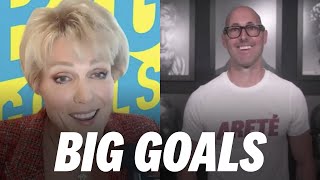
Caroline Adams Miller discusses her new book Big Goals, explaining why challenging and specific goals work better than vague ones. She introduces the BRIDGE framework for goal-setting and critiques popular approaches like SMART goals and the Law of Attraction. The conversation covers how goal advice affects women and people of color differently, types of bad grit, and practical steps for leaders and parents.
Questions this video answers
November 27, 2024.
1990.
Brainstorming; Relationships; Investments; Decision-making; Science; Good grit and Excellence.
Chapters
Foreign.
I am thrilled to be chatting with woman I consider a dear friend now, Caroline Adams Miller, one of my favorite writers and favorite practical positive psychologist, bringing the science of flourishing to life in a really, really practical way. I've mentioned in the past that I admire you and your work, what you did with getting Grit, then creating your best life. And today we're going to talk about your new book. We're recording this a couple days before it comes out on November 27. Big goals, subtitled the science of setting them, achieving them, and creating your best life. I am honored that you invited me to write the forward for your book.
Oh, yeah.
In which I shared the fact that this is. This is. Well, I say this is the best book on goal setting, period. On the back cover, let's go. We got Brandon Guyer back there. We got Angela Duckworth, Gary Latham, Sonia Lybamirski, some of my favorite people. But thrilled to be with you today. And I'm just so excited about you and your book launch and looking forward to our discussion today.
You've been very kind. Your team has been very kind. I've just. The graciousness has really struck me. So thank you very much.
Ah, truly, it's an honor. We're excited, and the fun has just begun. And it sounds like we're having some fun in the house behind me. Can you guys hear that or is the sound okay? Good. All right, perfect. Big goals. The science, Upsetting them, achieving them, and creating your best life. Let's start at the top. We talked about it a little bit when we had our heroic chats with Masters, where you called me out on the dude ball, which I have since improved with many girls, many more female heroes of mine. From my daughter Eleanor, we got Alexander behind me, but we had a real fun chat. Maybe we did.
Yeah.
And you handled it so well. You just.
Because I. I'm sweating right now just.
Thinking of it, Caroline. But no, it was great. It was great. No, you get a lot of points for that.
I appreciate that. Likewise. But can you just give us a quick biographical sketch of what brought you here? Then we'll get into the. The kind of wisdom of big bulls.
Yeah. So what brought me here was I've been a lifelong kind of in pursuit of goal setting. So my great uncles won the olympics. They went 1, 2, 1, 2, 3. And I just grew up with a legacy of competition and excellence, fell into bulimia in my teen years, finally pulled out of that in my 20s, and that was my first book. My name is Caroline, and that was my first book about doing hard things. And so I went from there to being a coach to ending up in the first year at Penn in the master's of Applied Positive Psychology. That is where I found out I knew nothing about Goal Sett. We were assigned Locke and Latham's Goal Setting Theory. And I found out there really was a science to goal setting. And I think, for the most part, the world still does not know this science. And so I brought it to the world with Creating youg best life in 2008. And 15 years later, here's the book that I always wanted to write, which is Goal Setting Theory and my bridge methodology on top of it. And it's the only book anyone needs to set, pursuit, and achieve goals with the highest likelihood of accomplishment, because it's all science, and for some reason, it was never out there. That's why I'm here.
Yeah. That's fantastic. And you make the great point that, you know, there's a lot of different pop kind of psychology, if you will, around goal setting, but there really isn't any book before yours that talks about the unbelievably rigorous. Some of the most rigorous research done in the field of flourishing. Yeah, Wick with Locke and Latham. And it's one of those just kind of astonishing things. No one before you had really brought that to kind of the general market, and.
Nope. And I'm still surprised, Brian. I'm still shocked that it was out there waiting for someone to shine a light on these two men.
That's great. I think we got a little flare from your hands, too. We got some soul force going there. That was nice. But tell me. Well, I'm actually curious. Why do you think that is? Why do you think that it just hasn't the mainstream yet? Then we'll talk about what the research says, and we'll make the bridge with your take on and all that good stuff.
Yeah, well, I'm glad you asked that question, because they are two men who worked separately and then together for decades. And then Goal Setting Theory came out in 1990, and I think they just did great scholarship. They did it in the field, they did it in the lab. They did decades of rigorous work, and they've had no replication challenges. It's been replicated in thousands of experiments. And I think everyone thinks they know how to set, pursuit, and achieve goals. That's what I think is going on. That's why Annie Duke says in decision making, people think they know how to make decisions because they just grow up making decisions. I think the Same is true with goal setting. People think they know how to do it and then they get caught up in smart goals, and then. And then zombie goals take over.
Yep. Then they have secrets as well, which we're going to talk about, which will be fun. But, Steph, walk us through, as you do in the book, give us the quick take on Locke and Latham, their goal setting theory, why it's relevant, and how it's been so rigorously proven.
Yeah. So Locke and Latham just wanted to study the field of motivation psychology. Why do people do what they do? And this was coming after the behaviorists. And they began to realize that people actually, when they had a goal in their head, that's what drove them forward. So what they discovered after decades of doing this together is there are two kinds of goals, learning goals and performance goals. Learning goals are things you haven't ever done before, and you need to acquire the skills and the knowledge to do them well. Performance goals are things you have done before. I also call them checklist goals. And those are the things that usually have five to seven steps on them. And because you know how to do this, because you know what excellence looks like, you can set a date and a specific outcome for yourself with that goal. Why is that important? The reason it's important is every business disaster in the world comes from mixing up learning goals with performance goals. That's why it's so important. So just think about Oceangate, the Titanic, submersible, Stockton. Rush tried to get that thing out there as fast as he could just to get paying customers. And the next thing, because it was a learning goal. He had never built anything like that. The world hadn't built anything like that. And he turned it into a performance goal. People died. Same thing with the Boeing 730. Same thing with the VW emissions scandal. I could go on and on. The reason why learning goals are so incredibly important is because when you have a learning goal, you're more engaged in the process of learning how to do something. You're more curious. You have a growth mindset. You know, you're engaged in the process of doing something and you don't have the pressure of a time deadline kind of hovering over you. You still need to make it challenging and specific, because both kinds of goals need to be challenging and specific in order to get the best possible outcome. But you always have to have a grace period of learning with most goals. And when you skip that, that's when people disengage, that's when people cheat, that's when they have faux Grit. That's when all the bad things happen. And people then start to believe they can't accomplish goals, that goals are worthless. We need to learn the science. I'll just stop there with goal setting theory.
Yeah, that's great. So then learning goals and performance goals. Give us an example of a learning goal and then how, after one has learned a certain skill that might be translated into a performance performance goal. Just so we can kind of.
I'll just give you something kind of banal, which is we. We bought a vacation house during COVID and we rented out for six weeks in the summer. So it was a learning goal for me to rent the house out. I had no idea how many things had to be done ahead of time. You know, what has to be hidden, what can be out, what kind of sheets, what kind of pillows. It was a learning goal. So consequently, it took me a few weeks to get it ready. Now it's a performance goal because I know how to do it. I know where to hide things. I know how fast I can be. I know if the renter agents say, you got to be out of there quickly, I know how to do it. Same thing with writing a book. I've written nine books, and the first one was a learning goal. I didn't know where I could write. Where would I be most creative? How long would it take me to do it? Now I can tell the publishers with exact details. I will have it done by this month with this many words because I know how to write a book. So that is a learning goal that became a performance goal in both cases. What was the other part of your question?
No, that's great. And then. And I saw some feedback on your writing, your performance goals as it came to the book. So, yeah, mastery has been achieved. But give. So then specifically, when you were setting a learning goal for putting your property up, you know, as a rental listing, for example, how did you approach that in the learning goal phase vis a vis the performance goal phase? What specifically did you do?
Well, with curiosity, I actually created a checklist in Evernote, and it was blank. And I walked through every room and wrote down what needs to be done in this room and how am I going to do it? What do I need to hide? What kind of remotes do I have to put out? What kind of signs do I have to make? Do I have to hide this? Do I have to put this out? Do I have to order sheets? Do I have to get. You know, I just went around and learned, learned, learned. Then that summer, you learned people like this kind of coffee people like this kind of towel left for them. People like a fire pit? No, they don't like a fire pit. And so I was learning how to be a host. And so in the process, I got better and better and better. And the house is great now, but I can get it ready in under a day. Before this, it was like two weeks of walking around, writing things on a checklist, and so perfect. So then even better and better.
That's great. And then the mindset you brought was that growth mindset you mentioned, which is, look, I'm genuinely just looking forward to learning right now. I'm going to measure myself to different standards when I move to performance. Perfect. Then can you just tell us, like, the, the, you know, Lock and Latham stuff? Regarding the loggers, I found that really interesting, the research. They started to learn these things about high and hard goals and challenging us. Can you just give us maybe one or two of those studies?
This was fascinating. The warehouse tree organization or company hired Gary Latham. And before that, Edwin Locke had worked with the Pulpwood Association. And what they found is that the people who were doing the logging, they knew how to cut the trees down. They had all the equipment, they had the crew around them, but they had never really set goals. So they would just come back with logs cut down every day, never really tracked it. So what they came along and did, Locke and Latham did separately and then together is they said, gosh, what if you tried to cut down 30 trees instead of coming back with doing your best? What if. What if you went above and beyond, you know, past your fingertips, challenging and specific? And what they found was they suddenly started to cut down more logs. They became more efficient, they became prouder of their work. They were happier. At the end of the day. They felt like their. Their jobs had more purpose because they had this goal that made them feel like, gosh, I'm going outside of my comfort zone. I'm doing a great job. So that's where they came up with if you have a performance goal, as I said, they had the crew around them, they had trucks, they had the saws. Everything they needed to know was already inside of them and around them. That's why challenging and specific came from that and other experiments like them is because when you go past your fingertips, when you go outside your comfort zone, when you try to do your best, you will always get the highest and best outcome. So that's where they came up with the loggers. Oh, and then there were two other kinds of goals. Go out and do your best. Well, they didn't do very well. And then no goals, no instructions whatsoever. Mediocrity results from that. And here's what's interesting, Brian. We all scan our days at the end of the day for what we're proud of. And the things we're proud of at the end of the day are the things we did that were outside of our comfort zone in pursuit of something hard. So when we don't do hard, we're robbing ourselves of building this self efficacy and this confidence and things that the law of attraction used to say, you just have to want it and then you're going to get it and then you're just going to feel great about yourself. None of that is true. You need to do the work, you need to do hard things and it has to be your goal.
I see where you're going there. Well, let's go there. So perfect. So then I'm very excited to continue to get clarity on the specifics of the big goals theory and how you've extended Lock and Latham. We'll talk about the bridge in a moment. But let's go to a couple of other goal setting theories. Smart is more of a kind of a goal setting approach. And then there's the law of attraction that you just mentioned as part of the secret, etc. Let's go there. So tell us, tell us your thoughts on that subject.
Well, I've been very public about this for quite a while. So the law of attraction was really kind of fun to think about in the 80s and 90s. If you want it, you can have it. Write it in red lipstick on your car mirror, in your, you know, wherever. And you know, it. It sounded good, but it went right along with the self esteem parenting movement which basically said take all rigor out of your kids lives and then they're going to grow up to be happy and confident and they're going to do hard things. And none of that was true. So when you take the hard out of people's lives, when you take the hard out of your own life, you never find out what you're made of. You never find out who your friends are. You never find out what your strengths are. So we've completely gotten away from that, particularly in parenting. But the law of attraction has basically been shown to be just a very fatuous, silly, self indulgent way to set goals. So let's forget about the law of attraction. Then there's smart goals. So smart goals started with a consultant in 1982. He was going in to give a workshop and he just came up with this acronym and that's why it stuck around. The problem is when you use different words to mean different things like realistic or reachable or attainable or action oriented or whatever, you get into what's called jargon, mishmash syndrome. And this is where an acronym means different things to different people. So it's lost its impact. But beyond that, Locke and Latham said very conclusively, the best outcomes come from challenging and specific goals. And no matter how you slice smart, it never says hard, it's reachable, attainable, and so on. So it's a little bit like looking at an iceberg and seeing the tip at the top of an iceberg. It's, it might get you into the area of goal setting, but the minute you know goal setting science, you realize that there's nothing to it. That's actually something you could put in a footnote. And in the book, as you know this, there is research showing that if you use a smart acronym, you're more likely to undermine your success, not attain your success.
And what's the specific reason for that?
Because you're constantly undercutting the ability to do hard things because you are setting out to do something reachable or attainable. And it's means that a lot of people are kind of, you know, holding their fire, particularly if they're, if they have goals about getting a bonus or attaining something that will make them feel good and there's no pressure on them. It means that you won't find out what you're made of. So that is why. And I, I just hate to blow up these zombie theories, but it's been hanging around a little too long.
Oh, Caroline, I know you love it. What are you talking about?
No, well, you know what? Fine. You know what else is. Wait, you know what else is kind of weird and I'm sorry these things are going up is when I go into artificial intelligence, when I go into Claude or ChatGPT or any of perplexity and you ask it about goal setting, what comes out of smart goals. And so what I can see is that artificial intelligence has been trained on zombie theories. My goal is to edge it out. And by the way, Locke and Latham have endorsed my book. They have never endorsed a goal setting book. And that says a lot to me. So I'm really proud of, proud of that. And I think it's time we give up smart because bridge is so much easier to remember anyway.
Yeah, that's amazing. And then Gary Wam says, and I'll quote from the back of the book. Caroline Adams Miller has done a superb job of translating my theory of goal setting I developed with Edwin Lock into everyday, meaningful, memorable language. So you can put our findings into practice immediately. That's awesome. And it's so consistent with how I see your work of being able to take what is often abstract, you know, basic science, and bring it into our everyday lives. Let's just circle back. So there's a couple of questions I have there, but I want to go back to. Actually, let's go there. Then I'll go back to the Law of Attraction for the specific reason why it falls short. The thing I'm hearing from you is smart doesn't push you out of your comfort zone.
Right.
But how to define with a high hard thing, they're specific but not high and hard. How do we find that property, high hardness? I know you talk about it in the book, but I would love to hear tell us now.
Well, everyone's a little bit different. And so depending on what the goal is, high for somebody could be. I'm going to drop that. It could be easy for somebody else. So what you're looking for is to have an outcome that's excellent to you that pushes you out of your comfort zone that will make you stretch past your fingertips. It will mean you use your character strengths in the pursuit of accomplishing that goal. And it means that you want to set leverage goals. As I attain this goal, I will then go on to attain the next one. Leverage goals mean if I accomplish this, I'm more likely to accomplish that. And so that is what you're doing is you are just building stepping stones into the future and hard for me is different than it is for you. Different from somebody else. In the book. There's so many worksheets to walk you through this that there's going to be no questions at the end of it of how to go from here to here to here. So I hope, I hope that helps answer that question.
Yeah, that's perfect. And then basically we want to take the reasonable in the smart and push that.
Yeah.
To. Yeah. Find that zone for you. And that's going to come through experimentation. Some of them will be learning, goal testing and others performance. But find that edge. Be willing to go to the edge.
Find the edge.
So then law of attraction. And again, I. I know the essence of the answer, but I would just love to hear you describe like the specific shortcomings of it, which I think will lead us into the next thing that I'm excited to chat about.
Well, it's been a long time since I've read Law of Attraction books. I used to own them. But the, the, the nugget that I took away is that you will attract what you want if you think hard enough, if you even chant it, if you focus on it, if you journal about it. Now, what's interesting to me is there are tiny little shreds of research in some of that. Like you can prime your environment. Gary Latham has done wonderful work on priming and he found that even subconsciously primed goals, you can make progress on them in pursuit of another goal. As long as it's prime part of your strategy. That's different from just writing about it and wanting it. As I recall, Rhonda, I forget her name, really focused more on just the wanting than the doing. And that's where I think I really do feel like we sold my children's generation short because that's where we got dumbed down playgrounds and watered down grades and valedictorians were eliminated and really did them a disservice. And now the pendulum is starting to go in the other direction. So that's what I recall about the Law of Attraction.
Yeah, that's great. And then in the note I talk about, I kind of riff on your premeditatio Malone and then your also think about the good. And then I compared that to Gabrielle Utensin's process and just that. Yeah, get excited. You know, even create a vision board if you want to prime yourself. But then recognize the time to think about what might go wrong, the obstacles to plan. Can you talk to us about the importance of that?
Yeah. And so Gabriel Ottojan is married to Peter Goldweitzer, who came up with the if then implementation intentions. At least that's my understanding is they are a couple and they've done brilliant work in goal science. So she has her approach. When I looked at the ancient Stoics and found premeditatium alarm, premeditate the evils in front of you, it felt very similar to what she looked at. And so the idea of looking at the path in front of you, which is why my bridge method is a series of prompts through these six different areas. You have to be very thoughtful and thorough in things like decision making, science and relationships, et cetera. But what was found is that you can have positive fantasies and you can begin to believe you've actually done more to accomplish your goal than you have. So when you dwell too much in the wow, look at the future. I Can see myself standing on top of the podium with the medal around me or I've got that new job or whatever it is. You can begin to feel kid yourself. And I see this in myself. Sometimes I'll buy books and I'll think I read them just because I bought them. And I'm really embarrassed. But I finally just realized that's exactly what I've done is I imagine myself reading this book. So there's even newer research that I put in the book that I thought was fascinating. So yeah, vision boards can be nice. It can prime you. And there are lots of different ways to do vision boards, but it's just not enough. But in the book there's some new research on writing a letter to your future self a year, two years, three years, five years, 10 years in the future about what it is that you see yourself doing, what's, what's the, the state of your life, the people around you, what are you passionate about? But then the future self writes back to the present day self and that's where they're seeing that exercise has even more oomph and power. And so the research keeps moving along and I just don't think think the mass market and people like you and me really are lucky enough to have access to it unless we're really digging. So Sonia Lubimirsky, one of our favorite people. One of her pieces of research, the benefits of frequent positive affect, that happiness precedes all success. She is replicating that research right now. And she's one of the ones who wrote the best possible future self. See yourself in five years doing, you know, everything you wanted to do. All your dreams have come true. You. She's one of the ones who wrote that exercise in positive psychology two decades ago, which also was found to make people more zestful and optimistic and more focused on their goals than if they didn't write such an essay.
Yeah, that's great. I love that you again. Your book has so many exercises and worksheets, et cetera. We haven't talked about the bridge. So one of the ways that you extend this and help us go from where we are to where we want to be is through this acronym, bridge. Can you walk us through what means I can?
So there's six areas. And what I wanted to do was I wanted to make goal setting theory the engine of all goal accomplishment. I think it is required learning should be in every elementary school in the world because if we have dreams and goals for ourselves, we deserve to have the science and tools so that's the engine. On top of that, what I've done is I've put together brainstorming, relationships, investments, decision making, science, good grit and excellence. And what I brought together was all of the research in those six areas that show that you have to really carefully prompt yourself to look at things like who should be on the journey with you as you're pursuing this goal and who shouldn't be in the journey. So I talk about contagion, I talk about the importance of relationships. Other people matter. So you really have to take a look at that for any and all goal pursuit first, because if you don't do these things, you're going to end up going back just like with Prochaska's Stages of Change. And then so sorry. B. Brainstormin. I love this step because we're in a learning goal condition. Ever since COVID everything in the world has changed with artificial intelligence and drones and all the changes that have occurred since COVID So the whole world is learning how to do things in new ways, deliver vaccines, educate, et cetera, et cetera. So when you're brainstorming, there's a lot of ways that you can do it to avoid the anchoring bias that Daniel Kahneman writes about, where if somebody says it in a room and they're important, boy, it kind of people do not deviate far from the anchoring. So there's a lot of ways to look at brainstorming. And I have a bunch of cool prompts in there. And the number one prompt that I think makes the biggest difference as you work on brainstorming is what's new? What's new? Start with that. So then relationships, investments, investments of time and energy and money and your character strengths. But what are you going to have to do? Will you have to take a course? You're going to have to get a second job? What will you have to do to invest in the process of this decision making? Hygiene is so cool. Most people don't even know, let's say, Annie Duke's work in Texas hold' Em and how poker is the most similar to real life decisions of anything because it's imperfect information and you have information coming at you. You have to make decisions without bias and noise. So I have Daniel Kahneman in the book, and I have everything comes from game theory and John von Neumann's work. But most people don't know how. They make decisions and never challenge it. And noise is particularly important. And then there's good grit. You know, Angela and I are friends and I've really You know, I wrote the book Getting Grit, and I really think you've got to think through do I have the qualities that I need to do these hard things, these big goals? And that's patience, passion, humility, self control, goal setting, science. So, you know, you have to take a look at that. And you have to take a look at three kinds of bad grit, faux grit, or fake grit, stupid grit, and selfie grit. You have to know what the lines are that you're crossing from good grit to the bad grit. And then there's e excellence. What is the standard you're shooting to achieve? Because you can't, you can't set a target. You can't see. You have to have a very specific target attached to all your goals. And that's the excellence, that standard you're shooting for. Just like a record board. And so I brought all of that research together because we are now starting to ask new questions. Of the research we have in the area that has jumped out the most at me is around gender. And so in, in the book, I talk about how do you brainstorm and how do you look at the relationships and how do you look at decision making and all by also taking into account does this strategy or does this is the information that I've been given to be more humble or to lean in and negotiate, does that work for me the same way it does for a white man? And we're finding over and over and over again that some of the advice given to people of color and women that works very well for men and achieving their goals is very counterproductive for women. So again, this is new stuff because we now have the tools to dig into this research in new ways and get new answers. And people usually haven't asked these questions. And so I'm really excited about that.
Yeah, that's awesome. So much there we can unpack, but let's go straight to the gender. Get the dudes off the wall. Let's talk about what is the difference that you're seeing in the research that some advice that may be given, generally speaking, may work for the white men of room, that may not be as effective for those of color and women, et cetera.
Well, I mean, there's new research even in the last two months, just one that just kind of blew me away. And that is when you're onboarding at a job and you're encouraged to go to happy hours and to meet your new fellow employees, et cetera, et cetera. Women who do that and who do a lot of that are actually criticized for being too ambitious. Men who do it are not criticized. Women who become CEOs are determined to be failed CEOs more than a year before. Men are, you know, and men are given quite a chance to actually achieve their goals. And so it, the, the feedback that women get is very different. There's also new research. Again, I think it's cool because I just keep reading it, new research on. In an organization, when men and women are given the exact same goal, the same task to accomplish, and women do it very well, excellently, and do it on time, men who take longer to do the same task, who work nights and weekends, are seen as more dedicated to the organization. And that's just a few. So they get higher marks for that. Women are judged on what they've done. Men are judged on future potential. Feedback that women get in leadership and performance reviews tends to not be the kind of feedback that allows them to grow into new positions. Men are given more leadership feedback. And then the last thing I'll say is in the last 90 years, when you look at the most recent meta analyses of gender in the workplace, women have made zero progress in terms of being seen as agentic and goal directed. So we are seen as more competent than we were in 1940. But when we are ambitious, when we are bold, when we're proud of what we've done, we pay a very stiff social penalty from both men and women for violating stereotype norms. So women are interrupted more in group discussions and no one gets back to them or calls the discussion to go back to them. In so many ways, there are these microaggressions and indignities that cause people to not see women as leaders. And so feedback, you know, the way you're promoted or not promoted, the insults or microaggressions that you receive, they're so different that you can't really compare men and women because there's just not even an even comparison. The woman I quote in the book about this, who I think has done brilliant research, is Cecilia Ridgeway at Stanford, a sociology professor, who said this system of how we treat women around goal setting and pay is so deeply embedded in how businesses have been structured that it's almost invisible to the naked eye how discriminatory it is. And it's time we talked about it.
And I appreciate you sharing. So then going to your, your expertise in, in making this practical. What are practical things that one can do? And again, whether they're men or women in these environments, bring that agency to before. And Jonathan Hyde talks a lot about the language of microaggressions and just the loss of agency, even using those types of words. So that makes me stand up a little bit straighter of, you know, and you're such an advocate of no trophies and, you know, the coddling of the American mind and not having language in itself be violent, per se. So I'm sensitive to even that language as it kind of divorces us from the agency. But what specifically can we do as a white man and as, you know, women who are listening and others who may not have the same experience that I do, that the research is on leadership is kind of speaking to more often, what specifically, practically, would you advise us to consider doing?
Um, I think you have to look at the advice that's out there in podcasts and shows and success and motivational speakers and their, you know, sales packages and find out, is the research they're quoting, does it apply to people who look like me and sound like me or not? Because you have to do your own research and say, does it work for me to lean in. In salary negotiations? Am I going to get the same payoff if I'm a giver at work? And this is what Adam Grant has found, and he said that in the book Give and Take. He said, oh, boy, if you're a giver, it's going to come back to be successful for you. Well, no, it doesn't work for women. Women are seen as not compliant enough. They're seen as cold, not helpful. But men who say no to extra efforts to pull them away from their own jobs are seen as taking care of themselves, having boundaries. So you have to first take a look at, does this work for me, and how do I know? I think you also need to find women who have your back in the organization you're in. And there has to be a pact or an agreement that you know each other's goals and you agree to support them. If you hear them being, you know, interrupted in a meeting or somebody else is claiming credit for their work, make sure that you are the person who speaks for them, because women do not get criticized when they do things on behalf of other people. And so this is where you can create, like, a mastermind group in your own organization. Every woman should be in a mastermind group. And I just think you. You have to build that circle around yourself and find organizations, if possible, or people who you can look up to who have fought these battles successfully before and find out what they did, because these have been fought before and some people have won them. And Some haven't. Do your due diligence on how to do it. And one last thing I want to say, and Wikipedia is really trying to help us with this because 82% of the biographies, the people who are role models in Wikipedia are of men. And so if only 18% of the biographies with stories that we can look up to and use as guides about what to do and what to do better and how do you fight this battle. Those stories are not readily out there for women, so they're trying to change that with their Women in Red project turning women's stories into stories. Blue hyperlinked stories that will help us do our research on what to do better. So that's just a start.
Yeah, obviously so much more we could talk about. There anything else you want to share? On the practical level.
I think this book is a really. Not to just go back and say buy my book, but I've taken a lot of care in the book to bring the latest research on this and how to do it and where can you go wrong. One thing that Locke and Latham talk about in goal setting theories. You have to get feedback. You have to get feedback that tells you that you're getting warmer or colder. Women don't get feedback the same ways men do. So check the feedback you're getting. Maybe you're getting no feedback. That should tell you something too. So feedback is something I would be checking.
That's great. And then of course, just to make the implicit explicit, men make sure that we're taking the time to hear all opinions, especially those who may not feel as comfortable sharing them or may feel like they're not being paid attention to. Looking at you, Michael and Yana, as I, as I share that. And we continue to commit ourselves to creating a culture of excellence in which we're able to do that which we aspire to do. I can't.
Can I say something about you? I have to say something about you, something really positive. Offline. After our first or second encounter, I mean, I found out I, I was in an audience with you 15, 18 years ago and it's like, wow, here he is in my life again. Offline. You said to me, I'm privileged, I'm a white man. And what I want to do is open the door for people who haven't had the same benefits I've had to be seen and to be noticed and to have access to these corridors of power. And that's stuck in my head, Brian. And that's part of the reason why I reached out to you, because of the work you're doing, but because you also said I can be a door opener and you didn't know me. And men like you make so much of a difference in the world for people like me. I am violating every stereotype norm in the world by writing a goal setting book. Women are not allowed to do this. That's why you don't see other women who've written best selling goal setting books. And so you are making a difference in my life with your behavior. And you're one person. Lots of other people can do this too. So thank you.
I appreciate you and again, honor to be part of your journey. And I admire you as I've shared so many times and you're doing really, really important work. So. And thank you for your candid feedback. I mean, you like, where are we going? Where are we going? Caroline, it was so good, you know, last time just for you to, to playfully yet earnestly, you know, call me out on the dude wall and, and I share that, actually. I gave a talk to an audience that will remain anonymous, but some very elite leaders. And I cracked that joke because I got a slide where I've got a bunch of heroes, you know, and it starts with me. Then we get some more gender diversity, if you will. But I'm like, you know, I did an interview once, this awesome woman who told me I got a dude walk. And there happened. It was a, I'll leave it at that. But it was a very, very fun moment. So I appreciate you very much and just really excited about what you're doing and bringing these important issues to bear with again, a rigor and an agency. You know, I think it's, it's very, very challenging in today's world to, to approach these very difficult, nuanced, complex conversations, maintaining the wisdom, the discipline, the love, the courage, and that agen. I'm hopeful that we can continue to support you and your work will continue to get out there and you'll inspire more and more women to do the same. And in the note I mentioned my favorite positive psychologist. Nearly all of them are women. Sony.
You.
Sony Lyubomirski. Angela Duckworth. Kristen Neff. God.
Women are very comfortable in the field of psychology. In academia, we may not get tenure as often as men do, but there are women who really study emotions. This is what women can do. Emotions, happiness, love, joy, awe, contentment. There are men out there, but women really have, have done a great job of breaking down some of the most important research for all of us.
Yeah, no question. And I didn't mention Barbara Fredrickson. Her take on love and positivity, which you mentioned in the book, is fantastic. So I cannot have a conversation with you and not talk about your take on grit. So very creative. And again, you wrote a book, Getting Grit, where you extended Angela's research. She wrote a testimonial for this book, the other book. But I love your take on fog grit. So you mentioned three of them. I got my notes. We got fog grit, you know, not real grit. Fog grit, stupid grit. And then selfie grit. Give us the quick take on those. And then, yeah, have that bring us to. And this is how you make sure you have authentic, true, you know, wise and noble grit.
Well, so the Rorschach test is. Good grit draws people towards you. Good grit awes and inspires people. Bad grit repels you. So good grit is the process of doing hard things in an inspiring way without giving a speech, without expecting a trophy, but going outside of your comfort zone to pursue something you're passionate about. And the dignified way you do those things is what inspires other people. And awesome. So as I'm writing the book, I'm realizing that I had cultivated grit to overcome bulimia so many decades ago when nobody was getting better, it was just a death sentence. And I was so excited to realize I cultivated grit. Oh, my God. Anybody can. If I did it in my 20s, you know, it can be broken down. As I broke it down and looked at my clients, because I work almost primarily with CEOs and senior leaders now, I realized that I was seeing and studying and writing case studies about three bad kinds of grit. Stupid grit, like summit fever. When you don't listen to anybody, you are your own best judge. And so you're heading for the mountaintop, and here's the avalanche of the whiteout, and the sherpas are saying, turn around, we're going to die. And you're like, no, no, no, I know the way. You know, drunk on high. High air embolism or whatever it is. High altitude sickness. But, you know, stupid grit is when you don't listen to other people and you insist on things being your way, and so you hurt yourself and others in the process. Faux grit. We have this epidemic of fake grit. People who want you to think they've done hard things. They want you to believe they did their research for their PhD, or that you kind of mastered training for this marathon in record time, or that you developed a long haul plane in record time without doing the work to retrofit without, like, Boeing basically just didn't take the time to come up with a plane to rival Airbus. And there you have the 737 Max. So faux grit is when you fake or skip steps in order to make people think you've done something hard. And we have so many college presidents resigning now because we can figure out that they plagiarized anyway, so it's easier and easier to catch this. And then there's selfie grit. You do hard things, but damn, you tell everyone. And you suck all the oxygen out of every room because you don't give thanks to anybody else, but it's all about you. So those three bad kinds of grit repel people, and they don't draw you towards them. And we really have to take a look at when do you go from pursuing hard things and doing a good job and doing it because it's important to you? And when do you cross that invisible red line? And everyone has to know when they cross from good grit and harmonious passion to bad grit and obsessive passion. And everybody's got a line they've got to take a look at.
Amazing. Love it. And you, I'm going to put Michael and Yana, you on the spot with questions in a minute, so get ready. You're welcome. Anybody else have a question? Think about it, raise your hand. Caroline, what have we not talked about that you want to make sure we talk about? And while you're thinking about that, I want to make sure everybody knows biggoalsbook.com is where you can get the book. And then whatever bonuses Caroline has, you know, with the book, it comes out again. We're recording this two days before it comes out. When you listen to this, it will almost certainly already be out, but check out big goals. Book.com comes out November 27th. But what have we not talked about? Caroline, you want to make sure we discuss.
I. I want to say that this book has everything you could ever need to set, pursue, and achieve a goal. Because I was really focused on not having everybody go out and buy every book out there as good as they are, you know, on resilience and mindset and habits and all the rest of that. Because what I realized is all of that is moving deck chairs on the Titanic if the goals aren't well set. So I think that this is where everyone needs to start. Everything you need is in this book. But then go out and go deeper on habits, go deeper on grit, go deeper on resilience, go deeper on all kinds of things, because you will need those. But I Wanted everything in one place. So that's really what I wanted to say. It's all here. Give it to somebody who wouldn't know to go buy it. I wrote it to be as readable for teenagers as for people in the process of reinvention in their 70s. I deliberately did that because I want everyone to have a copy on the corner of their desk by their bed, Go out and set big goals, because it's life changing to do it, and I can help you.
Amazing. Bless you. Let's go. Michael, Yana, who wants to go first, and then Sarah. I see you, and I'm excited to get you up in a second, but let's start with Michael. If Messiano wants to go first, we got to go to Yana. Yana, you're going first. Let's go.
All right, let's go.
What do you got?
What do I do? Oh, I get.
I get questions for Caroline.
Yeah, exactly. You get to answer Yana's question. What do we got, Yana?
Oh, my gosh.
I have.
I have so many. And I have been so grateful for this conversation and, Caroline, just for your work. And, you know, I'm in the very, very fortunate situation where I get to connect with authors like you, and I've just been so inspired by how you are tackling the world and bringing this book out into the world, and it's. It's so important, and I got an early glance at it, so I just. Just, first of all, gratitude for you and what you're doing here.
I have.
I've lost.
You've been great. I'm glad there was a small window. You have been so amazing behind the scenes. So thank you.
Thank you, everybody who doesn't know.
Yana is our VP of impact and culture. She basically does everything with. And Michael and I and the team aren't doing. It's Yana's. Yana runs the show. If you've ever been to an event that we've produced, Yana produced it with her team, and it's just amazing. So bless you and excited to hear what's on your mind and the question you have.
Thank you. Yeah.
It'S not fully baked yet, but let me try. So really, really inspired by this idea of goals. Shouldn't be as we have them articulated and smart, but should be hard. In truth, Michael and I had a little, like, text geek out on. On that, as you were saying it, for sure.
How do you.
What parts of the framework we might have heard before are still relevant as we aim to create goals that are really hard. And I heard you on sort of personally hard. But how does. How do other things like focus come in or. Yeah, I guess I'm just curious more.
On the hard part. There's, you know, that's interesting. So big goals are usually hard and there might be goals leading up to it, like driving a stick shift car. That's going to be irritating and you're going to cry a few times and you're going to, you know, go back down the hill you just came up. I know all those things. But when you've got big life changing goals, goals that will put you out of your comfort zone because you want to change careers or you want to do something that scares you, that's where big really comes in. But goals can be specific. Let's just take the S Specific. That's still in there. Measurable has to be in there. One of the knocks on measurable though is it wasn't always clear because, you know, goal setting theory wasn't out when this guy wrote smart. Not always clear that people measure learning goals correctly. So you have to measure learning goals as accurately as you measure performance goals attainable. I think I've said my piece on that. So let's just skip realistic, reachable and attainable because those are called low goals. And maybe that's where somebody needs to start to build mastery experiences. But you know, even Albert Bandora said that, you know, when you do hard things, you build your self efficacy and self efficacy is the muscle of goal accomplishment. So, you know, I'll just nod to all these men and time bound. Yeah, you need to have time bound if that's what you use the T for. Because you have to be able to measure your progress on what are you learning and how fast are you learning it with what have you accomplished and is it as excellent as it could be?
I love that last part especially.
Thank you.
Awesome. Mr. Bolsheim.
Yeah. I've got a couple questions, but just wanted to start by echoing the gratitude for you, Caroline. We had fun too. And like smat anyone that talks about.
Smart goals, but like, you got to.
Add the Boston accented H on it, it's a smack goal. It's got to be hard.
So I'm thinking about. I like that actually. I like that smahrt that actually kind of works because then it's still, you know, realistic in the context of it's hard. It's not crazy impossible hard. It's realistically hard. I think there's something interesting about combining those two, which is a whole other topic.
That's interesting. Yeah. And hey, I. I went to school in the Boston area, so. Bridge. Bridge, Bridge. Okay. Yeah, go ahead. Let's go.
I think about a couple of things and. And to make it really personal, I love setting goals. For me, when I'm in the middle of going after a goal and there's new information that's available or new opportunities that arise, what advice do you have around? How do I know when it's time to adjust a goal? When it's time to look like, how do we go from one big goal to the next big goal? And does it have to be at the peak of the first big goal? Or what's that process look like?
Yeah, I think what you're speaking to is the whole idea of decision making and decision science because you have to have quick criteria or pivot criteria built into the goal setting process. When do I need to pivot? How would I know that this isn't working? Because you have to be measuring along the way. Am I hitting the metric? So as Annie Duke would say, because I love her work, as the cards are being dealt, you are getting more information and you do have to add in that information to what you're doing and how you're doing it. So I think you have to have these quit criteria. Some people say, have a quitting coach and you just have to adjust as you go. Because having the goal, having this heading up to the top of the mountain is important. But, you know, things could come up along the way. The car might break down. What are you going to do? Well, maybe you've got to pivot and go back down, or maybe you have to get a different kind of car next time, whatever it is. So you just want to take in the new information and adjust your decision making process along the way. That's why I included D. You have to go through your decision making and not kind of mix it up with resulting. Too many people talk about they made a bad decision or a good decision because it either worked out or it didn't work out. And that's not the criteria for whether or not it was a good decision. Resulting is what people default to, which is it was a good result. So it was a good decision. Be very thoughtful about that when you're in the process of setting goals. So I hope that helped.
Yeah.
And the process of both decision making and action. Right. So to set the goal and you know, we love our targets and we love our rubber bands and let's go after. And I've. I've got that goal and how do I navigate? When's the right amount of information to make the decision?
Or.
Yeah, when is it like, time to get an action? Because only by getting action, I'm going to learn what the next step is. How do you think about.
Well, you have to. You have to make bets on yourself. You have to go out and experiment and you have to. This is where decision making comes in, is when is it go time? When is it time to go? And that's all part of creating the strategy. And you know what I see when I use. Because I use the Via Character Strength survey, and when I see people who are high in things like love of learning and judgment and critical thinking, what I find is they often want to take in more and more and more information before going forward that maybe are low in bravery. So it depends on how is it that you usually do move forward. Do you need accountability or are you getting hung up on an analysis paralysis? So that's. That's part of creating the strategy, is knowing yourself and knowing what you need. And where have you needed a little bit more of a kick in the pants or where have you had stupid grit and been reckless? And this is where coaches can really help is because people have patterns and you want to be honest about what your patterns are.
I could go on. On David. I know we got a lot more.
Yeah, yeah, Great questions. Dude. I'm reading the biography by Chernow on Grant right now. Usss Grant.
Yes.
Oh, my God. Oh, I know. Like, you know, that high hard goal, you know, and the mission and then the absolute dynamicism. It's not that things may come up to shift your plans. It's your plan will never survive first contact with the enemy. And that agility and the excess flexibility which becomes chaos. The vice of deficiency, which we've talked about so many times, Michael finding that dance. And I think you and the team are doing a great job and. But you got to know when to seize opportunities as well. Data comes in.
Absolutely.
You have to know when to go all in on a certain hand and when not to. And I can't wait to read Andy Duke, by the way. I've got both of her or two of her books. I think she only has two that will get up escalated on this stack of books.
She's so good. Just go to YouTube and watch some of her interviews on quitting. I mean, you have to have somebody. It floated across my screen about quitting criteria. You have to know what would cause you to quit. When would you need to fold your hand. And that's usually when you've taken in enough information from the cards being dealt with that you know you're out. And one interesting thing about the pros is they quit so often in poker early, early, early. And most people stay stuck and in their decisions because they think, well, sunk costs. I've already been in this long. Or let's just see how it works out. People aren't taking in the right, right information from the environment to make good decisions. You have to learn how to make good decisions. And so many women are learning to play Texas hold' em because women in particular are not t be risk takers. As I said, they're not allowed to be agentic. So the risk taking is really important because you'll always be taking a risk. If there were known outcomes, they wouldn't be hard goals.
Yeah, that's so good. Again, long conversation on that. That's so good. Stand it up or kill it quickly, you know, and then that, that quitting quickly in commitment to something bigger, which is winning ultimately, is such a cool. Can't wait to read her books. Caroline, how you doing on time now? We've we had scheduled.
I think I'm doing fine.
Okay, Sarah, I think we got you on now. Good to see you.
Yeah. I'm in a cabin with a bunch of teenagers.
Let's go.
Single mom. Wow.
Heroic. So read your book today, the older.
One about and you brought up this Covid generation of teenagers and how they might have something new called compassionate grit. Yeah. Can you talk just a smidge about that? Because I see it in these kids. There's something about this generation. They, they do have a heart to them. Yeah. So my kids are millennials. So the self esteem parenting movement was my, my kids. And they're, you know, late 20s and mid-30s. I do think compassionate grit is something that comes about when mother nature or some big event happens, a black swan event. And you're forced to do hard things not because you're achieving something big, but because help somebody else. And so during COVID what I saw were people rising to the occasion and wearing masks if they didn't want to, canceling family gatherings because grandma might get sick. And I saw this huge heart coming out. And in the United States, one of the things that's fascinating to me is we have so many hours that we require of our teenagers before they graduate from high school, that what we're seeing is they have a much greater kind of empathy towards, you know, what matters in the society around them. So I have a lot of hopes for the next generation. Because I think they, they have really good basis in heart and we're entering a bumpy period in, you know, politics and global, all kinds of things. And we're, you know, you have to know when to fight and organize and you also have to know when to quit at something and have a heart. Thank you so much. I'm looking forward to that research on this generation and Covid. Yeah. Thank you.
Thank you. Sarah. Andrea.
Hi.
How are you?
Good.
So honored to be on this call with you. I love when I see all people but a woman rising and shining in an area that you like. You were saying no other women have really created goal setting books. And that's interesting to me. I don't think I registered that because I, I think about like Gabrielle and everyone else as, even though they're like, they're whoop and stuff. So it's surprising to hear you say that. But, and I want to dig a little deeper, but my question is more around like your, your statements around like, like women and goal setting, like, are, you know, it's, it's trickier that they're not as well received. And I work in the construction industry, so I know it's. Yeah, it's. And, but I feel like 21st century is the time for women, right? Like I'm seeing on our, on our job sites where, you know, that old style command and control, like, get her done like that. That's not working for the millennial generation, women or men. And I'm wondering how you take such a thing, like big, your big goals concept and bring it down to like a field level of first for, you know, helping people rise who maybe don't necessarily think in terms of big goals. They think more, you know, this is my job. And you know, they're not. A lot of them don't feel inspired anymore, I guess, is my point. And I'm just like, how do I take that this concept and apply it over there sort of to the bringing it down. Like, I think people in positions of authority or whatever the right term is, tend to be goal setters. Whether or not they're doing it the right way or the wrong way versus, you know, the people in the field. Not so much.
Well, it's an interesting question with several parts. I want to start by saying there are amazing scholars in the field of goal setting. Katie Milkman is one whose work I adore. I let fish back up. And it's not that they're not out there. It's that they don't dominate the airwaves when you turn on most podcasts or look at most stages where motivational speakers talking about success are, it's overwhelmingly dude stages, dude podcasts, dude walls. And so women are just not given the opportunity to do what I'm doing right now. So anyway, so I'll just leave it there. But they're women scholars. They just haven't pulled everything together in just one book. So. And so that's one thing I would like to agree with you, that this is a different era and that women can seize control. But we just saw a black woman not get elected in the United States for all kinds of reasons. I don't want to be political here, but there's general agreement that a lot of women did not vote for her. Now, maybe they didn't agree with her politics, maybe not. But there is great research on kicking and climbing in male dominated industries. Whereas women rise, they don't climb and lift, they kick and climb. And it's really disturbing research. And so I think, I think what we have to do is start to role model the next generation. Seeing us pulling up other women, you know, repeating their ideas, stop watching the Real Housewives or whatever, you know, don't, don't patronize shows called mean girls or go on stage because we have, we have given rise to a trope that I don't think has to exist. We seem to think that this is just the way women are and girls are. So we can start right there, right in the play pants. Women are not wired to be mean girls, and we need to stop acting that way and stop watching shows that glorify it. But big goals. I think one of the things we want to do is challenge the people we work with or the people we manage and ask them. Here's an interesting question. What's the hardest thing you've ever done and how did you do it? So you get them in touch with the idea that they probably have done hard things before, but maybe they just thought, everybody does this. So you want to get people in touch with that muscle that they've used before. And as I said, girls are encouraged to be more verbal. Boys are encouraged to be physical. And that's why women grow up so sharp with what they say, the shading, the. The things that they do with their words that can be kind of damning and difficult. But we want to teach them how to also do hard things that stretch them outside of their comfort zone, that aren't just. Well, that are, that are personal to them. So I would do that and then help them to, you know, strategize goals that are slightly outside of their fingertips and give them the support and the resources they need to do those things. Everybody thrives and gets bigger and happier when they're proud of what they've done. And there's so much research on this. It's just we're not always shoved outside of our comfort zone or encouraged to be that person. So I'll just leave it there.
Okay. Thank you. Thank you for your time.
Thank you.
Great. Thank you, Andrea. Great question. And exciting to imagine you bringing this and your wisdom to the next generation in that context. Super inspiring. Love that perspective of helping them celebrate their past wins. It's what we do when we train our workshop instructors. Start by celebrating what we call your hero bars. When have you really achieved things you're really proud of?
Yeah.
And then, very importantly, what do you want? What are your big goals? If you wave a wand and we do Sonia's exercise as one of our best selves contemplations. Well, look, if. If you can do that and that and that, those things you're proud of, then you can do this.
Yeah.
It's exciting.
Can't take them for granted. Yeah. It's like our top character strengths. We start to think everybody is creative or, you know, judgment and critical thinking or whatever. But we need to celebrate the things we might be taking for granted that we did. Like, I. I look back at my recovery from bulimia, I'm like, if I could do that when no one else was in recovery, I can do anything. I take that as one of the proudest moments of my life. And so they're hard things in all of our lives we may not be thinking of.
And we need to make those implicit wins explicit. Focus on them. Craft that self efficacy. Then get.
How do we do it? Yes.
Yeah. Learn and perform and iterate and get better and all those good things. Wonderful. One more question, if you're up for it. Caroline, do you get one more? Okay. Beth, good to see you get another powerful woman teacher here.
Like your shirt.
Yeah.
Caroline, I'm wondering if you could say a little bit more about the quitting criteria. And I think I'm getting that any Duke and from you. But I would just like, what are the highlights about quitting criteria that you would like us to consider? Yeah, Well, I mean, her work is amazing. Just go on YouTube. You can watch her give any number of interviews. But quick criteria are the things that will occur in the process of pursuing your goal. Premeditatio malorum. Premeditate the evils that could be coming along the road. If this happens, we will abort. If we're trying to send our rocket ship up into space and the propellant is leaking on the launch pad, abort. You have to have those kinds of things in place because too often we celebrate crossing a finish line when in fact that that stupid grit. So think through the things that could make your journey dangerous could tell you that your strategy isn't working. You've got a B testing on a product you're putting out there, and it's telling you this approach with these words in this market isn't working. We always have to have the ability to look at what's not working ahead of time and be prepared for it because imperfect information will keep. Keep coming in and we have to keep adjusting ourselves. So probably the, the best thing I can say about quit criteria. No, I appreciate that and I think I probably know what you will say on this, but I'm going to ask it anyway. So how do you, when you do decide to quit something, how do you keep that from, like, taking you down and letting you get to like, oh, I'm a failure, rather than, okay, well, I just need to change course. Yeah. Well, I think it's really important to say why you're quitting. What are the criteria that have led you to, quote, unquote, quit or to pivot? Pivots are very nice word. And what is it that you're doing it for and where are you going to go next? So you don't want to just stop dead in your tracks unless you really have to reevaluate. But where am I going to go next and why? And this is where I think having a mastermind group, a group of people who have your back, who can brainstorm with you when something isn't working, can make the biggest difference in the world. So, you know, there are times I was writing chapters for my different books and they were just. I was dead in the water. It's like I didn't know what to say. I didn't have the right examples. Where's the research? It's like, gosh, I can just keep writing chapter five because I. It's the next one in order. Or I can jump to nine because I have all these ideas about writing chapter nine. I have learned to allow myself the flexibility as long as I'm continuing to kind of, you know, sway, you know, weave my way to the end of the goal. So that's what I would advise. Guys, thank you so much for your work. I appreciate it. Thank you.
Good to see you, Beth. Thank you. Well, time flies from having fun with friends. Can I ask one more, Michael? You may. Oh, thank you. Genuine.
Thank you. So I am curious from two positions. One is as a white male leader in an organization that's trying to change the world, and the other one is as a father to two young girls. Yeah, we are. We're just feel so blessed to have so much wisdom to be able to share with them with all the work that has been doing and my daughter's back on the app and all sorts of fun things. But what are some of the things, the potential highest level things that I can do as a leader to try? And I heard what you said earlier about, like, not interrupting and making sure that we're circling back to ideas and being more deliberate and intentional about elevating that.
Yeah, yeah.
But as a leader and then as a father, what are some of the things that I might work to try to support my daughters as they, you know, navigate this world?
I'm so glad you're asking this, because there's so many things I want to say, and I hope I don't forget any of them. First of all, the research shows that the fastest way to get men to be sympathetic to a plight or kind of the shoes of people they may not identify with because they've never had to, is to have a daughter. And so both of you are kind of in the right boat to start to look at this. So where did I want to take that first? So one thing that I've become very aware of, and I think Brian, when I said to Brian, after I talked to him for 45 minutes, it's like, there are no women behind you. And he said, but these are the people I identify with. And, you know, I said, thank you for saying that, because you're right. I think one of the things that's become white noise in our lives is we can listen to hours and hours of podcasts or watch shows and. And only hear men talking to other men about men, about special forces, about presidents, about, you know, CEOs. And I think it's all very normal to all of us. It's only when you step back and go, wait, did I hear anyone who sounded like me look like me, had a story I could relate to. So you want to not be asleep at the wheel about what are the examples that are being thrown around in your house, in stories, in the books they're reading? That kind of thing is incredibly important. And then I would ask your daughters to draw pictures of leaders. And if they don't draw women, ask them, why not ask them who the leaders are in their lives and what they think leadership actually means. Because there's so much research showing you ask girls to draw pictures of leaders. They never draw women. They never draw women. And that's because the criteria in most organizations for leadership are mostly male dominant behaviors like extrinsic goals that involve status and winning. Think about space race. When you think about the people at the top of the space race, it's kind of winning. First man on the moon, man on the moon, et cetera, et cetera. It's been all about winning things and dominating. So we're used to talking in those ways. But that's not how women see the world and are socialized. So I would be observing the world around you, helping them to set goals. And when you see women in your environment who have big dreams, I would ask them how it is they're planning to accomplish it and what can you do to help them them. What doors can you open? Like Brian said to me, I'd like to open doors for people like you. Think about this conversation. I'm here because he said that to me. I'm here because he said that to me. His name's on the front of my book because he said that to me. That was a one off sentence for Brian and that was everything to me. So just these one off conversations. I'd like to help you because I've really had it good and I recognize that I have doors open to me that you don't. You know that that's important. And I also want to say that if you're giving feedback to a woman, this is where artificial intelligence is brilliant. Because what, what it's reducing is the noise and the bias in, in the metrics being used to hire, to fire, to promote, to give praise and leadership praise. You want to be sure that you're giving the exact same neutral, agnostic feedback and praise to a woman as you are to a man. And I'm going to include people of color who are also not on the receiving end always of the kinds of feedback they need. So I appreciate your question. You sound like a great dad and I know you're going to do great things for other women. So thank you.
Great question. Oh, and I echo that. Brilliant. What a special day. I appreciate spending time with you, Caroline. A day or two now before your, your book officially comes out.
Thank.
We obviously both covered a lot and just scratched the surface of everything going on. Big goals book.com check it out folks. And I think you and Michael are going to talk as well. Right. So Michael, as you I think almost certainly know Michael, right guy, our head coach who runs the show. So I get to do what I do because of him and Yana and yeah in our team. So bless both of them for giving me the opportunity to spend the morning reading grant 500 pages into it. Let's go. And to be able to prepare for our talk today. But I believe you and Michael to talk more about bringing this wisdom to our coaches so they can bring it into their communities, etc. So I'm really excited about that. Is there anything else that we haven't discussed? I know you asked, I asked you the question before but does anything arise for you before we thank you and wish you.
My publisher is judging my success by my pre orders. So as great as the book is, it's been nominated for the next big idea club. They are waiting for me to bring not the 17,000 pre orders you had according to Yana, but I would love it if people could order my book and maybe order one for somebody else so they have some real science in their hands for New Year's resolutions and beyond. So that's just I've never actually said openly please buy my book but the publisher has made it very explicit that I need more and they're awestruck that you got what you got lot. So you know, I have two more days to pre order.
I'm seeing a pre order done. And Michael, can you throw in the link there just to make sure that I know I said it a million times. You probably.
Thank you everybody. I see that. I would love to shock my publisher.
Bless you for asking. Well, again there's the, the launch, you know, and then there's the continued. So we're going to be continued supporters. And my, my gut is that, you know, I'm excited about what will happen with the launch watch. And obviously we're excited to play however modest of a role in supporting you with that. And then also just I'm really hopeful this book will have longevity to it and kind of that perennial seller opportunity.
I think it will.
Yeah. But we will be spreading the word, excited to share this via all of our, our channels. And where can people learn more about you personally beyond just I'm such an open book.
I have a website, carolinemiller.com you know, my first book was an autobiography. My fourth or sixth was the continuation of staying in recovery and how hard that really is. So I'm I'm an open book, but go to my website. It's there, but it also links to biggoalsbook.com and somebody said, can you pick it up in a bookstore? Yes, I've been walking randomly into Barnes and Nobles and they all have it. In fact, they have my book, my. My book from 15 years ago still on the shelves. But this one's going to bigfoot it. You know, Big Goals is going to bigfoot creating your best life.
So right on.
It's time.
Well, proud of you, excited for you and again, honored to be part of your hero quest. Thank you for your hard, hard work. Thank you setting high hard goals and doing such great, important work. So bless you. Thank you. And I look forward to.
Yeah, can you take me to Athens next time?
I'm thinking you can come with us to Rome. So why don't you go? Why don't you plan on Rome? Well, what are we talking about then? What's high heart, baby. Let's set the plan. This is a checklist. You've done these hard things before. I want to come. We'll figure out how.
I want to go to Pompeii and Herculaneum because they're solving one of the world's most unsolvable problems right now in Herculaneum.
Is that right?
Yes. It's the coolest thing ever. Brian. The Herculaneum papyri, they're solving an unsolvable mystery by. They gamified these. Julius Caesar's father in law had all these scrolls. The greatest library in ancient. The ancient world. And three guys from Egypt and some farmer's son in Nebraska and somebody else. They gamified it and came together and they are now reading these scrolls that they've been trying to unroll for 500 years. And they're. It's going to rewrite biblical history. It's rewriting plays. It's rewriting, you know, Epicurious. And it's all because people chose a big goal and said, we're not going to quit and we're going to pull our forces together and they're using artificial intelligence and take me to Herculaneum because I'm so on fire about what they've done. It's amazing.
Curious bombs. 2026, let's go. Okay, 2026. Well, 2026, where is it relative to rock know?
I do not know, but it's very near Pompeii. So it was covered in ashes. Pompeii got a lot of lava.
Hercules, I'll send you the article I got you. It's the coolest thing in the vicinity. Then that's awesome. All right, we'll Talk details on Rome 2025 separately, but bless you and again, good luck and we're rooting for you. You. Great to see you.
Thank you. And thank you very much for everything you've done. You and your team, very appreciative.
We're blessed to be on the journey with you. All right, big hugs until I give you a real everybody. Thanks for being here. Hope you enjoyed. Look forward to seeing you soon.
More from Brian

Heroic +1: What’s THE Most Creative Act in the Universe?: Turning Around Glitches (#2024)









