Heroic Chat with Dr. Nasha Winters: Optimizing Our Terrain
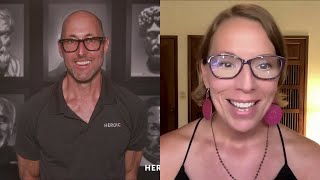
A long-form Heroic Chat (YouTube) featuring Brian Johnson and Dr. Nasha (Naysha) Winters. Dr. Winters shares her personal stage‑4 cancer survival story and describes the metabolic/mitochondrial view of cancer (Warburg-centered, terrain/metabolic approach). The conversation blends theory (mitochondrial dysfunction as a driver of cancer) with practical guidance (metrics, simple labs, nutrition—ketogenic principles, reduce sugar, circadian care, environmental toxin/mold awareness) and points listeners to resources and practitioner networks (MTIH.org).
Questions this video answers
October 21 (year discussed as 1991).
CA-125 over 15,000.
MTIH.org (Metabolic Terrain Institute of Health).
Chapters
Foreign.
It is 1:01pm Central Time, which can only mean one thing. It is day one. Typically, we do these heroic chats with masters on a Thursday. We're doing it on a Friday because Dr. Naysha Winters has a very, very, very busy practice supporting people going through their cancer journeys. So we've scheduled today, obviously Friday cannot be more excited than I am right now to introduce you to Naysha. I will give you a proper introduction in a moment, Naysha. But so great to see you. I'm so thrilled to have you here today.
Big love. Big, big, big love.
All right, so feel Naysha's soul force and rewind over 25 years ago now and imagine this radiant woman being told she had three to six months to live, that western medicine could do nothing to help her stage four terminal cancer and her taking the next steps. Goosebumps on her heroic quest to not only conquer her own cancer diagnosis, but to create a protocol and a program and so much more to help countless others navigate their journey. Naysha, as I've shared before, was really actively involved with my brother as he went through his stage four pancreatic cancer treatment. And I, I love you, Nisha, and I appreciate you. In addition to being just a radiant exemplar to being a wise human being and doctor, you're just a good person. The way that you showed up for me and my family when we needed your support was just so beautiful and so life affirming, independent of the outcome that we experienced with my brother. We did everything we could and you navigated the process with us with, again, so much wisdom, so much grace, and it was just a sacred thing to go through with you. And as you know, I'm, you know, one of your, your biggest advocates and biggest fans and consider you a dear friend. So again, so blessed to have you here, folks. Check out the app search. If you search Naysha, you will see it autofill with Winters because a lot of people have searched for Eunacia in our app and what you will find are the three plus ones in which I directly address Naysha. But nine out of the 11 philosopher's notes, I address Naysha in her great book. And the only reason it's not 11 for 11 is because this was the third book that I wrote a note on Ben Greenfield recommended I get this book. When I reached out to him and some other dear friends, he said, get this book the Metabolic approach to Cancer. And as I say in the intro here, follow it to the T. Now, I respect Ben Greenfield. I need to get him in here. I still need to do a note on his insane encyclopedic book. But this is it. This is the book that I encourage you to first and the note I encourage you to read first. If you or someone in your family is going through a cancer diagnosis and all the things that occur when we go through that again, this is the book to check out. We're going to talk about some big ideas from that today, but want to make sure that you see it in this context. Yeah. With that, I'll pause. Naysha, officially welcome.
Oh, my gosh. Well, first of all, you didn't. I'm going to grab a tissue because you did not tell me the snots were going to be flowing today, my friend.
I didn't.
I didn't know we were going to be going there that quick.
Love you, though. That's. That's, that's why we connect, because we just go right to the core of it. Right? So that's. That's. I'm honored to be here with you and all of these folks that are on quite a journey, their own heroic journey to be part of your program. So it's an honor. Thank you.
Bless you. All right. I usually say hello to everyone, so I will do that briefly, at least the few people that are on my first screen here. Andy, great to see you. Peggy, Isaiah, nice to see you. Dude. Beard's looking strong as always. Victor, great to see you. Heidi. Shannon. Coach Lanny Ryan, Timmy B. Sheila. Jessica. Simon. Wendy, Nice to see you, Wendy. Maurice, David, Keith, Kevin, et al. Now, if we have not been personally diagnosed with cancer, it's very unlikely that you have not had a loved one who has been diagnosed. And if that's the case, then wow. And we're one degree away outside of that circle for sure when you look at the stats. So here we are. Let's take a breath, Nisha. We like to begin with a breath. I actually didn't ask you before, are you open to. And the answer can be no. Thank you. To just guiding us in, like, maybe a minute. To centering kind of breath process through which we can connect to our best selves. We've learned that that's a really fun way to connect with our, you know, kind of visiting guide. And if you're up for that, we'd love to hear and to experience that with you.
No pressure. I'm in.
Let's go.
I'm standing right now, but if you're sitting, please make sure that your feet are touching the earth. Get your wiggles out. Maybe just feel into your body for a moment and just create some awareness before you slowly, naturally breathe. Just being present in this room with this amazing energy at this amazing group of people. For me, I like to take in a deep belly breath for about a 4 to 6 second count. Like to hold it at the top for a few seconds and then slowly, slowly release it at a slower pace in which I took it in. Then hold for a few seconds at the bottom and repeat that three. And as you take in the next breath and the next breath, see if you can go a little bit further past your throat on that inhalation, past your heart, into your diaphragm, letting your belly fill below the diaphragm into the umbilicus, into the pelvic bowl and just see what's pushing against you, what's opening to you. When you exhale that slower release, notice again what might be coming up for you. Sometimes emotions come after breathing in this deep. Just be aware on the final breath, maybe really notice your feet rooting into the earth and the breath really drawing in the energy above you and seeing yourself as a Taurus of light and energy moving in and through you and recycling out into the world. Thank you.
Bless you and thank you. And let's start at the top. I'm going to drop your note just so we have it here again. So it's there ready at hand for me. But tell us about your story, Naysha. These are heroic chats with masters in which I like to do a number of things as we discussed, but starting with first and foremost, you and your story and your heroic quest. Tell us about you.
Oh my. Where to begin? Well, I mean, I'm a perpetual student like the rest of you. I ended up in the field of oncology. Not out of a vote, like a, hey, this seems like a good job. This was my own journey. It's interesting because I feel like I have the pre cancer life and the post cancer life. That experience leading up to my cancer life I think was one of sheer survival. I think many people can relate to that and whatever their life story may be telling, one of complete frenetic energy running around trying to just literally survive in the circumstances in which I came into this world and the family of origin that I was born into and the community and the culture that I was born into. All of those pieces impact us no matter our best efforts. They do, they do. And so for me, I think that there were a collection of conditions and situations that left me completely unaware of this container that I Inhabit and move around the earth with. And so I think for me, cancer was the ultimate wake up call. The layer cake effect of my chronic conditions, of the suppression of symptoms, of the doctors telling my mom that pooping once a month was normal because that was my normal, that the medications to be on six or seven different medications in my teen years to continue to deal with things that was considered normal. This is back almost 32 years ago at this point, for all of that, the disembodied being that I was, I was also the hyper overachiever, which was that disconnect even further. Like I'm not in my body. But I have to achieve to survive. I have to achieve to receive love. I have to achieve to get worth. And so that I feel, was probably the biggest contribution to my cancer diagnosis. Despite many other definite things, from genetics to toxicants to dietary lifestyle choices, to extreme stress, trauma, abuse, like all of the collection into the terrain 10 bucket of my being was flowing over with all of the whys. But that didn't matter. It still was at that time. And so for me, that diagnosis, despite trying to take my life on two occasions prior to that, was my opportunity. It was my opportunity to really choose and to choose to be here or go. And I say that and it still brings up emotion, it still gives me goosebumps. And it's that moment where I feel like that pilot light finally got lit.
Bless you. My goodness, there's so many places we can go on that, previous to the cancer diagnosis, struggled so deeply that you actually contemplated ending your life independent of the diagnosis?
Yeah, yeah. Once at 14 and once at 16 years old.
Wow. And then how old when you're diagnosed, knowing we could talk about that for a weekend. How old were you when you were diagnosed?
Well, I was officially, I ended up in the ER two weeks before my 20th birthday, but it took two weeks after, a couple of weeks after my 20th birthday to get the official diagnosis. But they told me in the hospital or the ER two weeks before my 20th birthday that it was cancer. They just didn't know the details yet. And the Official diagnosis came October 21.
1991. Who's keeping track?
No, I can tell you what he looks like. I can tell you everything.
Yeah, I got you now. At which point was the diagnosis moved to a terminal diagnosis and that clock started ticking from their perspective.
This is hilarious because I'm in the hospital. I've been in and out of the ER for every month for six months leading up to this. Four. Four months leading up to this and it was one more like, here's another drug. You're just a histrionic female. This is just your continuation of your endometriosis or your polycystic ovarian syndrome or your ibs. Like everything was just worsening of the symptoms I'd already had. So it was missed. It was missed. And it was when my roommate found me unconscious and took me to the ER when I had pulse oximetry levels of in the 70s, so my oxygen levels were really low, not compatible to life. I had a massive fluid buildup in my abdomen that came on almost out of nowhere, despite the fact that I know it was brewing for some time. They thought initially I was pregnant and then realized that was all ascites. Malignant fluid built up in places where it shouldn't be in my body. I had a bowel obstruction. So anytime I ate or drank anything, it would come up. It would cause extreme pain and distress. So I hadn't eaten for a few days leading up to that event. So I just thought I was weak from not eating. I had fluid built up around my heart. I had. My kidney function had completely stopped because I had a tumor pressing against my ureter. So I blocked off my kidney function as well. And my liver was in failure. So that's where they went, oh, shit, this is a problem. My CA125, when they finally ran appropriate labs was over 15,000. For anybody who knows tumor markers, that's a big deal. Should be under 20. That was a problem. My electrolytes were completely off. They were actually afraid to pull the fluid out of my abdomen and actually said, we're going to pull a little bit because if we take it all, you'll die from the electrolyte imbalance that's going to happen with taking that much fluid out of your belly. They took out a little bit and that's when they saw that it was bloody, which little tmi. But that's when they knew it was malignant fluid. And then the imaging that they also did at that time, they realized I had a grapefruit size tumor in my ovary. I had what's known as peritoneal implants, lots of little specklings of cancer throughout my entire abdomen. I had all my lymph nodes lit up everywhere in my pelvis, my abdomen. I had lesions in my liver. So they knew. And then they also found the bowel blockage at that time. So basically, I don't know how frank I can be here, but I was asked, like I was totally like that. Was it? And the funny thing is they told me then, you probably have three to six months to live. I'm a doctor now, and I know that I probably had three to six months, six days to live at the state that I was at that time. So when they sent me basically, they basically stabilized me, pulled some fluid, sent me home because there was nothing to do. They sent me to palliative care and they said, here's an oncologist. I immediately went home and rested. Took two days off school and ended up at the library and happened to pick up a book called Quantum Healing. This crazy Unknown Guy in 1991 by Chopra. I sat down and inhaled that book in about two hours on the floor of the library, sitting in a sunbeam on a. On a fall day. And that's the moment when I started to realize that my perceptions and my life experience were what had led me to that very moment. Wow.
And then, golly.
And then it was like, because. So here's the accidental, here's the retro, you know, the. What is it? Hindsight is 2020 because I was so sick, because I got the second and the third opinions and everyone said, you're too sick to actually even get chemo because your organs aren't functioning, you have a bowel blockage, so we can't do radiation and you can't do surgery because it's stage four. There was nothing else to offer in 1991. There was nothing else to offer. So they wanted me to just be comfortable as I died. That was all. They literally said I wouldn't see the end of the year. So I wasn't even in that moment. I hadn't quite decided to live. I definitely didn't expect to live. I definitely didn't expect to survive that. And so for me, when I sort of realized that there was a possible other way to think about, things started to change. But in that moment, what I realized is I wanted to understand why. Why would a 20 year old, you know, now, 20 year old at that time of that news, sophomore in college, why would I have a diagnosis like this? No one else around me. I mean, sadly today that's not the case. But back then, no one else had that type of diagnosis. No one knew what to do with me. There was no Dr. Google, there was no integrative oncologist. There were no readings about what could you do with this? I literally worked in a library where I had like a microfiche and, you know, like and Dewey decimal system to go to, and everything was very antiquated. And so for me, there was no resource, so had to go inward for the resource. And I will say, I think in some ways I was lucky, because I think today the choices that we have, the information overload that's out there is incredibly overwhelming and actually creates paralysis by analysis. And so for me, I think having no way, no road, I had to go internal. I had to resource within. And I think that was one of the biggest gifts I could have ever been given. But the other accident of this is I couldn't eat. I couldn't eat for two months. Anything I put in would cause such pain or make me very sick that it wasn't worth it. I did the best I could on sipping on very small amounts of liquid. And I'd run across a study about pau d', arco, which is tabebuia, which is a South American herb. In our local little health food store, I was able to find some pau d' arco tea. And I would just sip on that. That's pretty much all I drank, is my fluids for almost two months. And so slowly but surely, after three or four taps, I think I had four taps in total. The first one was. That first night was kind of kludgy, but that first night was the first one. Then I had to come back three more times because my abdomen kept filling up, but slowly over time, it stopped filling up as fast, and then it kind of just never came back. The ascites, the fluid, and at that time, the blockage naturally opened. I gave it to the bowel rest that it needed. And I have to say that prior to that, my diet and my lifestyle were pretty atrocious. I was working a million jobs. I was burning the count up too many ends. I was under enormous stress, running from the demons of my life, of my background. I mean, just all the things. And so it was a really challenging time, to put it mildly. And so that piece, I didn't expect to be here at the end of the year. I didn't expect to be here into the spring of 1992. Those were not things I was expecting. And so I just started trying on new things, other modalities, acupuncture, et cetera. I worked at Planned Parenthood at that time, and so I was able to get regular imaging ultrasounds, vaginal ultrasounds, abdominal ultrasounds. I was able to have my blood test run and looked at closely, and things sort of weirdly stabilized. They didn't get better, but they didn't get worse. And so that's the moment where still nobody knew what to do with me. And that I guess is where it all began of me getting incredibly curious and saying, well, if I'm still here, I'm onto something. There's a bigger path, there's a bigger purpose, so let's start digging in. And I thought I was going to go to conventional medical school. That was the plan. I changed my degree from biology and chemistry to biology and psychology and I basically created a self constructed psychoneuroimmunology which in 1991 was a very new concept. And 1991, 92. And so I basically threw myself entirely into that world and started to play in the world of people like Candace Perch and Bruce Lipton and Robert Ader and some of the folks that the originators of the concept of psychoneuroimmunology, which is no longer conceptual. We have deep understanding now very much of how our thoughts affect our immune system, our neuroendocrine system, et cetera. So kind of always been a little bit of the outlier, I suppose. So that I think is what has led to a 30 plus year journey on figuring this out for myself. One of my patients made the hilarious discussion. She's labeled me as a graduate and she's created other graduates herself of Save your ass University. And so that is, I feel like I maybe have gotten two doctors doctorates from that.
I'm a canceler at this point.
At this point I think I'm the dean.
Yeah.
And so thank you, Lacey Murray for, for that little thing. She actually, in fact on, she, she gave me a bumper sticker recently. I don't know if you guys can see it there, but there it is. Save your ass University. There's an official, official bumper sticker. So I think that makes it real. But that's where I've been. And so I have been like the perpetual student with all of my clients, with all of my patients. So I started out as sort of the student patient and then I became the researcher experimenter on myself and then I started to apply it to other people as I learned things in my medical trainings and then would apply it to myself first before applying it to somebody else and became a teacher, docere doctor in that realm and worked in that capacity for 17 years and then moved more into consulting. And now I teach the teachers. And so it's just been this whole circle and I literally learned something new every single day, every single moment that helped bring more vitality to my life. I am healthier now at 50, almost 50 fricking 2. I can't even it comes out of my mouth and it is not real, but there it is. First, I didn't expect to see the end of 20, much less the beginning of 20. And so I'm grateful for every decade, every laugh line, every wrinkle, every. I've got like three gray hairs now, Brian, so I'm pretty excited about that.
You got to see my new beard. I just aged a decade over the.
Last year as we've been launching this amazing platform. That's why.
Oh my goodness.
So there it is. So I now get to. I keep learning. Every single time I meet with another client, another patient, another doctor, go to another conference, meet another thriver, I learned something and I apply it. I just keep adding it into the toolbox and into my awareness. And so I think, I think that's kind of the culmination. That's a big story. I know I took a lot of time, but there it is.
Yeah, well, this is it. I mean, what? The entire ethos of our company, of course, is heroic. The hero goes on the heroic quest. They battle their demons, their dragons, etc. Each is idiosyncratic and you got some good ones at a young age. They get some buddies along the way. I'm sure there are some people there that were supporting, get the guide in the form of Deepak Chopra showing up like Dumbledore for Harry and Ron and Hermione. But then the hero, as they fulfill that particular quest becomes the guide and becomes the, in this case, the wounded healer who's able to share your stories and to share your scars, you know, and to share the lessons learned and to help us all battle our own demons and dragons in general and in this domain. So again, there's so many details we can fill in there, but that was just perfect. Let's go to the metabolic approach to cancer in the distillation of your decades of n equals 1 personal experimentation and growth. To your experience as a naturopathic doctor, to your experience as the practitioner, the consultant and now the trainer of the practitioners and consultants. The metabolic approach to cancer integrating deep nutrition, the ketogenic diet and non toxic bio individualized therapies. Before we get into the two different theories for cancer and the other big ideas here, Team Community, I want to connect you to the word metabolic in the title in the plus ones we've been sharing Naysha, recently we've been talking about Chris Palmer, the Harvard psychiatrist. Yeah, great. Who wrote Brain Energy, who basically connects as you do with cancer, anxiety, depression, etc and all the other metabolic disorders to the psychological Disorders. So that this inter. This chat and interview with Naysha, I believe, will be tied for first with Chris for the most important and impactful. And I want you to note that they're saying exactly the same thing. And I have goosebumps as I say that. The exact same thing.
And I read his book. I'm like, did he just scrape off cancer and put psychiatry on there?
So, Naysha, you know, and you influenced. You influenced how I've been teaching. But, you know, we talk about physiology, drives psychology more than most people realize. And his, you know, your articulation of it theoretically and practically. His theoretically and practically is obviously the same thing with the slightest different tweak and context. But again, team, if you haven't read Brain Energy and watched the interview with Chris Palmer, please do so. But let's go to the note, and let's start at the top here with the two theories of cancer, please.
Well, before we do that, I realized I left out a very big part of the story. If I may, you.
What do you. This is your show.
What do you mean? What are you talking about? Okay. Okay, scoot over.
Here we go.
No. What's weirdest about my process, which is hard for people to grok, I think, is I did not. Even though I survived and got this thing inside of me to learn and keep applying, my process was very private. Very private. And so it was literally not until 2012, people knew I had, like, people have known I had cancer. Like, people knew a little bit, but I think they probably thought I had like a little basal cell or something on my nose, you know, like something really minor. But there were a handful of people, literally I could count five people in my life that knew the significance of the diagnosis that I had. That I just think is really important. Once I stepped into private, once I stepped into medical school, I decided I wanted to keep learning for myself, for my own savior ass university. But I was never going to work with cancer, ever. That was my stipulation. My first week out in private practice in 1999, I was working as an acupuncturist before I finished my naturopathic degree. My first week, a man comes in in a wheelchair for pain management. And I recognize immediately his skull is bulging out. He is unable to talk. He's moaning with such pain. He's clearly soiled himself. His family, his wife is beside herself. She just looks totally exhausted. They came to me because the morphine wasn't working any longer. And here was a person who, on his CT scans, his. The. Everything had Shut down. The ventricles of his brain were shut, and they told him he'd have a matter of days. He came to me for end of life pain management. He was also having about 100 seizures a day. I definitely did not. This was like, oh, my gosh. But because I was using acupuncture, I was working in a really, really incredible, progressive neurological office environment as well. I had lots of good conventional medical support at my fingertips that supported me as well. I was very, very blessed to have that container. I thought, well, least use some acupuncture and give this man some relief because nothing else was touching it. Fast forward. He lived 18 months beyond that. His imaging still showed that his ventricles were closed the entire time. Within a matter of a week. We implemented a ketogenic diet to help get his seizures under control. We implemented homeopathy to deal with what he said. His wife translated because he couldn't talk. Then was extreme childhood trauma and that his parents had poisoned his brain. Those were his exact words that she translated to me. And that then we just dealt with the pain management through homeopathy, acupuncture and some kind of emotional communication and the ketogenic diet. He came back to life, a very good life. For the last 18 months of his life, his last day on this planet, he driven up into the. To look at the flower, the colors changing in the mountains around Durango with his family and his three kids and his wife curled up next to him that. That night. And he went to sleep and didn't wake up. And so those. I say that, and that gives me stories, and I thank him every day for that. But they were also known in our community. And you have one person who has an experience like that. Even though he still died, he healed into dying. Though I would like to add a lot. He healed everything in his life into dying. I became known in my little community for working with cancer. And that door would never be closed again. And so that's how that piece came. But it was Also not until 2012, when I was invited to speak at a symposium on ovarian cancer in Denver, that the entire.
The.
All the doctors walked because they were letting a naturopathic doctor talk. They were. They were completely. What's the word? They were, like, vetoing me. You know, like, that's great. We're gonna. We're gonna forget about this lady. But they had to have me talk three times because the rooms were packed. There were, like, three different sessions happening simultaneously, but no one wanted to go to the other sessions. They wanted to come to my session. So I ended up speaking three different times just so people had the opportunity to go to the other sessions and still hear mine. We crashed their site from people coming out because ovarian cancer. There's only about 30,000 of us diagnosed a year, but over half of those die every year. And no one's putting research funding into this. No one knows how. So these women are a bunch of save your ass university attendees because they have to lean on each other for the resources. And they'd heard wind that I was somehow an ovarian cancer survivor, and they wanted to get close to that. So that is when I first. I was very, very, very brief on what I shared about my story because I did not want my journey, my path, to influence theirs, because theirs was theirs, mine was mine. And so I was still very careful with that. It wasn't until I left private practice, and it wasn't until I had urgings of people like Kelly Turner who said, you have to share your story. And friends and family was like, it is time. I get very emotional thinking about this. I was always afraid to talk about it because I kept thinking it would come back and I would be a failure. And it never really went away. Like frame that too, and never went away. But it was scary for me to, like, talk about it. And so the other thing is all the naysayers that come out, it's amazing how many people don't celebrate these victories, that they're just like, that's impossible. I hear that more. I literally get like 10 of those to everyone. Right on, you know. But these women changed my life at that gathering in 2012 and started letting me come out of the cancer closet and start to let me start to talk about this in a different and meaningful way. Despite the fact I had saved successfully been treating cancer patients for 12 years at that time and applying everything because I applied it to myself first. That was a very important part of the story. That's why I also share the story, is because this gentleman who I shared came in the wheelchair with the gbm. That is where we started to really talk about metabolic approach to cancer again is in the brain tumor space, thanks to people like Thomas Seyfried, who dusted off the Warburg theories, and people like Mina Bissell who was looking at the extracellular matrix and people like Domestino and all of those that were doing the research and starting to look at this. Suddenly things I'd been doing naturally for myself and for my patients was getting researched, getting published, getting Talked about getting, leading to more research. And so it was like I was just applying it all those years to the bedside while they were actively working at it at the bench. And so that's what led to the ability to start talking about. I never used the words ketogenic diet until later, until they started talking about it, because I knew if I said that, I would be shut down, kicked out of practice so fast. That was the nature of it. You guys, this is what's so amazing, is how many things have changed in such a short period of time. More has changed in the field of cancer in the last five years than it did for the 25 years prior. Collectively. Now we can start thinking about this. We have been addressing cancer as a somatic mutation, as a genetic disorder disorder. And I will never do this as well as Thomas Savery does, but he is basically able to teach us that says it is literally impossible when if that was true in all of our nuclear cell transfer studies, meaning taking the healthy nuclei, sort of the hardware, the DNA database out of a healthy cell and putting it into and replacing the one in a cancer cell, theoretically, if this is a genetic condition, you would turn that cancer cell into a healthy cell. Vice versa, if you took the hardwired genetic DNA nuclei out of the cancer cell and you put it into a healthy cell, replaced that nuclei, you should, theoretically, if this is a somatic mutation theory approach to cancer, you should turn that cell into cancer. That does not happen ever. And that's where we've spent the past 50, 60 years trying to figure out the genome and realized at the end of that wonderful experiment that it didn't take us very far. And so this is what we landed. It's like, why are we still all beating to the drum of an antiquated, outdated theory that maybe it's not to say that genes don't have a role, but maybe they're not the starting point that we've given them the credit for being. And so that's what I think is so fascinating. But when we come back, when we back it up, we go upstream a little bit. We're like, what fundamentally causes the genetic, you know, problems? That's where you have to look down into that mitochondrial metabolic bucket. And that's where people like Dr. Chris Palmer and people, you know, like, like Terry Wahls, when you're thinking of the autoimmune world, you're thinking of the psychiatric world, you're thinking of the autism world, the diabetes world, we're all talking about the same condition, the same cause the same soil, but it might have a different label. Right. That's all. And so we keep coming back at it as a metabolic mitochondrial disease. That's where we're starting to see the biggest, the biggest changes happening in the field of chronic illness in general and cancer in particular.
Beautiful. So then let's drill into that and then we'll talk about some practical things to consider as we navigate. So what does that mean? What does it mean to say that it's not principally a genetic mutation disorder per se, Although, again, there's, there's elements in which that is an influencing factor. But when we talk about the metabolic approach to cancer, we talk about mitochondria and how important that is to the creation and then the resolution of cancer. What does that mean?
Yeah, yeah. So I'm going to keep this very simple. It's simply an exchange of energy. So our mitochondria are sensing, are sensing agents. Like their job is to sense all the information coming in at them from our diet, from our lifestyle, from the light, lack thereof, from the relationships from the environment around us. Anything we put in on and around us. Our mitochondria are like little feelers, little sensors, taking in that information and running that information through these pathways that are happening within their cell structure, their organelle, their organ structure. The more it accumulates of things that aren't in harmony with its true nature, the more gummed up and inefficient and ineffective and downright dangerous, it can actually metabolically shift into an entire new energy production system, or energy requirement system, I should say. And then that changes all kinds of metabolic expressions and metabolic levers, which then sends out messages, signaling pathways, cells please don't die pathways, proliferation pathways. It sends off all of these signals. So it's a sensing agent, taking in the information, translating it and putting information back out into the system. Very simply stated. So what Otto Warburg and what a lot of the researchers are finding is that there's no such thing as a cancer cell. With a healthy mitochondria, they were able to find that commonality. But you also find unhealthy mitochondria in all the chronic illnesses I just listed off. It's not unique to cancer. What's unique to cancer is when it makes this metabolic shift and it starts to burn more glucose and sometimes glutamine at a faster rate and starts to starve the healthy cells of their energy resources while fueling their own agenda. The thing about it is they don't die. They no longer have the response to the signals to die and therefore they become more difficult to kill. Actually, if we try to overkill them with certain therapies, chemo, radiation, surgery, targeted therapies, and we're not successful at eradicating all of them, we make meaner ones, we make ones that are bigger and even more difficult to kill. And so what we've been learning is if you can create a more metabolic flexible or regress back to the normal metabolic energy creation and energy utilization, you can restore balance into the system, you can stop the cancer cell proliferation and you can even reverse it altogether. What's changing also in the conversation of the metabolic approach to cancer is not that the goal is to eradicate every last cell and every last tumor, because that's literally impossible. We can talk about that on a separate topic. What is possible though, is to live well with cancer. And by the way, you all do, all of us do, we all have cancer all the time. And so this is the opportunity to understand that you can live well with it and you can manage it and you can keep that balance, that homeostasis at play at all times by understanding everything you think, eat, expose yourself to that goes into that mitochondrial bucket is going to have impact on your metabolic expression and your metabolic flexibility.
Brilliant. And again, we could talk about this for a year and still just scratch the surface. And to echo again, Chris Palmer. So we're talking about metabolic dysfunction, end function optimization, we're talking about mitochondria, the energy powerhouses within every cell. And then we talk about our fundamentals. So for us, we come back with our coaches and with our community to the basics. Eating, moving, sleeping, breathing, focusing how we place our attention, talk to us about some of the practical. And again, knowing we just very quickly framed up the theoretical side, check out the note and then also check out conquering Cancer 101 and Cancer 102 as our 101 classes in which I talk about nature's work, talk about Seyfried. Right. I always hesitate before I Professor Seyfried, who's done some fascinating research on exactly what NISH is talking about. And we have a number of different books here that you may find interesting, on which we have notes. So again, theoretical framework there. And then the practical framework includes what how do we. And how do you encourage us to think about optimizing, you know, what you call our terrain, our metabolic kind of functioning? What are some key practices? If we were going to make it top three list, knowing that there's 10 elements of the trend, but if we were thinking top three look, these things are the wisest to pay attention to in order to. And again, you're telling us you can't even prevent it, you've already got it. But in order to mitigate and to use it, you know, in the wake up call to our advantage, that now's the time to do the work in order to make sure that we're on the spectrum of non malignant, non, you know, pervasive, life threatening side of things, what do we think about and then more importantly, what do we do?
Perfect. Well, first of all, I will tell you, probably 99% of the time, patients would say to me or to my colleagues at a train, I was healthy until I got cancer. Every time. It's just incredible how. And I feel like a dog hearing a high pitched squeal, my head turns to the side there. It's like, that's impossible. Like that is literally, literally impossible. And it's not that anyone, what I want people to hear here is it's not that you did something wrong. We just live in a time and a place that is so far from our natural state of being that unless you take very specific effort, which is what we're going to go into here to mitigate all of that that's coming at you, you're going to be one of the two men or one of the 2.4 women who will meet this diagnosis, this in their lifetime. Not my stats. Right? But that's the reality of it. And so that's where folks, because of the nature of the human, and that's why I love this group, because you guys are giving me hope that maybe there is an opportunity to reach people before. Because there is no cure for cancer. There is prevention of it taking off and being bigger and louder than your healthy cells, right? Like, so that's, that's the key here is that constant relationship. It's relational, it is you. Cancer is you. And so for you to have that awareness of really, really, you're healthy. How do you know? How do you know? You have to start there, you have to start with some metrics because a lot of people can feel in, maybe you can feel it in your body. So there's that one. So we were starting with that breath, exercise, noticing, observing what you're seeing and feeling, noticing and observing what you're seeing and feeling around the people that come around you, right? Like notice how you feel when you, and you guys, I know you feel this like when you walk into a space, does that person light you up or they drag you down when you see someone's name on your. As a doctor, I always say to my colleagues, I'm like, if you see this person that's coming in to see you this week on your schedule, do you feel dread or do you feel joy? Those are the moments that even then, as doctors, we can choose who we want to spend our energy with. We are not obligated to help everyone because our job is not to fix you. Our job is to be a guide for you. And so that's the place too, that sometimes we're just not meant to be that guide. But you also need to start to take some other metrics in mind. We all have access in developed countries to get labs. There are also ways of taking just basic, simple things like an Ayurveda and whatnot. You can do pulse diagnosis in Chinese medicine, Ayurveda. You can do tongue analysis in those cultures to really get a sense of what's going on in the body. We used to do, before we had thyroid tests, we would do reflex tests on your patella and on your Achilles heel. And that would tell you how well your thyroid was functioning. You could do lights to the pupils to see what's going on there. And your adrenal function, you can feel the back of your arms and see if you notice little bumps. That's vitamin A deficiency. You can look at your fingernails and see if there's zinc deficiency. If you've got little white spots there, cracks on the side of your mouth, B12 deficiency. So there's ways to access your data. So I want that, because people are like, oh, that costs money, what you're telling us to do. But for those who don't, you can do nutritional physical exams and use some of these ancient methodologies. You can also do some good questionnaires. There's a lot of really good health questionnaires that start to illuminate when people are like, maybe I'm not so healthy. And the simple five things of metabolic health that standard of care has defined are what's your hip to waist ratio? That's one. If you're done lapping, you probably want to start to think about changing that, because that is like one of your biggest drivers. That's a free test. Simply look at your waist and your hips. The other one is what's going on with your blood pressure. You know, too high or too low is a problem. Too low, you're not perfusing. Too high, you got something revving in the system that's not appropriate for whatever reason you want to look for that if your lipid profile. Now my lipid profile is different than standard of care. I don't really care about the overall. We can go into that a whole other time. I'm looking at triglycerides, they're above 90. You've got fatty liver, which is now like a pandemic. It's way more pandemic than other things we've experienced. And so I would want to look at your triglycerides and your HDL. If that's low, if that's below 70 in women and below 60 in men, I'm looking at problems with methylation. And so that's a big one. You need to be able to methylate, to be able to utilize your nutrients, to be able to ward off a lot of chronic illnesses. And so those are some things to look at and then just your general overall stamina, like how do you feel? What's your overall general energy level? Can you go for a workout and recover quickly? Those are things signing our metabolic health. Other things that are good questions for yourself is can you go four hours without a meal without wanting to punch someone? Can you go 12 hours without a meal, 13 hours without a meal? So if you can't comfortably fast, 13 hours every day through the night, nothing but water, you are metabolically inflexible, especially if you notice that you feel kind of with that. So these are your free tests. But there are definitely a whole menu of tests that you can pay for. Go to direct labs, have your doctor's order, et cetera, that dig deeper. So I look at five main ones that tell me a lot and you can get those for under 75 bucks through various walk in labs. So that's your C reactive protein. Make sure you get a quantitative one. It's a marker of inflammation, your sedimentation rate, sometimes known as the esr, that is a marker of how fast are your blood cells falling out of solution. So it's kind of just showing you the fibrin matrix of your blood. Like are you thick and sticky or are you in the flow? And then you're looking at ldh. LDH used to be part of all of our complete metabolic panels until about 15 years ago when someone behind a desk thought, that's an erroneous test, let's get rid of it. Probably the most important test you could ever run. It's so misunderstood today that most doctors order it as an ldl. They don't even know what the heck it is. It is your cheapest marker of mitochondrial function. It's lactase Dehydrogenase. And when you look into the biochemistry of your mitochondria and the Krebs cycle, you will see that this is integral of what's going in and what's coming out. When that number starts to go up, we can assume that the mitochondria are going down and not a good way. And so that is a very simple marker. A CBC with differential. I did a literal 90 minute class just on how to interpret your $12 CBC. It tells me everything I need to know about your immune function. It shows me so many prognostic factors. It shows me how your marrow is working, how your immune system is working. Then a metabolic panel, cmp, that's showing me your electrolytes and your organ function. Those tests alone are standard to just take a look at. There's always many more you can take, but that's a good starting point and affordable for almost everybody. Those are the places to start with and start to examine. And then the Terrain 10 questionnaire, we actually have an updated version getting ready to come out on our website that's relaunching in about a month. And so that will have a much deeper dive into what's in the book. We've also added a lot more questions and updated it. Because the book came out six years ago, we wouldn't really change anything in the book, we would just add another entire volume to it. And so instead of doing that, we're keeping it dynamic because this is dynamic. But there are so many ways in which we can test ourselves. And so when you see that something is off, do something about it. That's the key here. So you can do it through labs, you can do it through feeling, you can do it through kind of ancient techniques, but you can also start auditing your life. What's in your fridge, what's in your freezer, what's in your medicine cabinet, what's under your cabinet, what's in your garage, what's in your hoa, what's in your community. And so I'm notorious. You've heard me say this before, but I will come to your house and I will look in all of your covers. Like, I just can't help it. It's my OCD kicking in. And so I want to know, because I know the second I walk into someone's house if it's toxic, if they're using Febreze, if they're using fragrance, if they're using things, these things are known carcinogens. We are swimming in endocrine disrupting carcinogens. So if you're not taking full, you know, advantage of doing an audit on your home, on your body care products and your cleaning products and what's being used in your hoa, you're missing a really big opportunity to also clean up your terrain. And then for the record, when we do all the things right, just had a conversation yesterday with a consult. When you're doing everything right, you're doing all the, you're exercising right, you're sleeping well, you're doing all the circadian rhythm things, you're doing all the great biohacks, you're doing it all right, and yet you're still not getting well, what do you guess that would be? What's the final frontier at that point, in your opinion?
Mine?
Yeah.
Well, we're experiencing it again. Mold is one of them. So is there an environmental toxin, at least for us, that led to Alexandra seizures back in the day? She's talking to Miriam again. So that arises for me whether or not that's the answer to your question. That is certainly an invisible factor, that mycotoxin, for us, that's influencing things.
Absolutely. And for me, I think mycotoxin in all cancers, just in general. And I put that under my environmental bucket. It because it's such a, like you said, an insidious, quiet problem. But for me, when I'm thinking when someone's done all that, they've mitigated their, their mycotoxins, they've detoxed their metals, they've dealt with their biological dentistry, they've changed up their diet, they've cleaned up their house, they've, you know, changed their. Maybe got a husbandctomy, whatever like they needed to do to change things up in all their lives, right? Like went on that amazing retreat or whatever. When folks have done all the things and they're still unwell, that is when you have to walk into the fires of the mental, emotional. That's always the last thing that anybody wants to do, but it's often the first thing they want to do. And speaking of my own history and trajectory of this, I can speak with personal experience that I'm still working, that we always will be. There's always going to be a trigger that suddenly you're like, how am I 4 years old all over again, feeling that same sensation. But here I am again, another opportunity to see it and address it and metabolize it differently. So that is kind of the essence of it. And then specifically to kind of now what I think the what is going to be very personal because it's what your data tells you. So maybe you feel really comfortable changing up your diet, but maybe you don't feel comfortable changing out all of your cookware just yet because it's expensive or overwhelming. Or maybe like we had one gal who, she lives next to a paper mill, right? That's one of the most toxic places. And she raises organic blueberries. But bet your bottom dollar, when we get the soil results back, it's going to be loaded with dioxin, an absolute carcinogen. So not only is she poisoning herself, but she's poisoning her family. And it's not her doing. This is the world around us. And so this is the thing that collectively we are not just doctors, we are not just coaches, we are advocates and we are activists. And it takes all of us because even the mold conversation is a really good example. A lot of people still poo poo and pretend it doesn't exist. So, yeah, it's a lie.
That is. Other than that, not a lot to think about, folks, and not a lot to do. You want to go back and listen to the recording there because there's about 100 different ideas and nuance, any one of which again, we can pull the thread on. But beautiful. I appreciate the depth, depth. The breadth and then the associated depth that goes with every single one of those points. So we're approaching the hour. Let me think about where I want to go. The website. Let me just make sure everyone knows where they can go to get access to the resources you just mentioned. What's the best website for them to visit and if someone can share this in the chat, that'd be great.
Score. So I would say the best place to go now is to M T I H which stands for Metabolic terrain institute of health.org this shows all the things, not just the relationship with Dr. Naysha doing, speaking in books, et cetera, but also all the initiatives that are coming out of this 30 plus year living experiment that continues to gain momentum with the likes of all of you. And so that's where I would go and keep watching. It's very rudimentary right now. It's about ready to launch into something very different in about a month from now. So please, please, please come back and see what we're up to. There's of working parts and there's a lot of opportunities for all of us to create awareness for ourselves and those that we deeply care about and to make a bigger impact together into changes of what you guys are doing. I mean, you're the perfect allies on this mission.
Oh, it's so inspiring. So check it out. MTIH. Was that right? Yeah. MTIH.org check it out. And then Naysha is an investor in Heroic. And we've talked about, you know, my vision with Heroic is in addition to all the community stuff that you do, that when and if someone is diagnosed or someone in their family is diagnosed, they're able to come to the heroic social training platform, find you as a guide with access to the appropriate content on the platform, and a community of individuals who are going through your protocol or have been through your protocol and are able to support one another, such that we are here together navigating this and all the wisdom that your community has gathered. I'm really proud of our community of coaches and individuals who are going out applying our philosophy, the antifragile confidence and the big three and the ultimate game and all that, the wisdom goosebumps in your community. And again, I experienced this firsthand and how you fundamentally and permanently changed my brother and his wife their lives. And to imagine that collective wisdom in community together is something that inspires me. And whenever I look forward at our social platform, you know, as we put the. The rudimentary foundation together this year and look forward in the years and, God willing, decades ahead, I see that. I see the power of you and Naysha. One of the things that she shared with me was, and how fortunate we were to be able to work with her was there were countless people who were literally dying in her waiting room because they didn't have. She just has a limited amount of bandwidth with. So her creative heroic journey now is training the individuals who can then see more people. And the more we can amplify your wisdom at the grassroots and the consultative guide level, the better. So we're all in. I'm all in, as you know, and supporting you and. And again, bless you. Great stuff. I want to open up some time for questions after, so if you have a question, please raise your hand. Naysha has graciously offered to stay for an additional 30 minutes.
Sense.
Yeah.
But first I want to hear a little bit more about you and what you currently do. We went deep into the practical and the theoretical and the practical with you because it's so unbelievably essential. We hit the your own heroic journey, and I appreciate you sharing so candidly with us, which in itself is a demonstration of those thought demons. You know, if you can't talk about the desire to end your own life, you can't talk about the fear of oh, my God. But what if it comes back and I fail? You can't talk about the oh my God, I still have these problems. But when we do, you know, the Kristen Neff self compassion and all the other teachers that you lean on psychologically, you're modeling that for us now, practically speaking, I know you do so many things to stay at the peak of your optimal health, but I'd like to quickly kind of speed round go through energy, work and love. As you know, that's our big three. So you get the, you get your energy right, you bring it into your work, you bring it into your love. You're at least 80% if not 90% there. How would you frame up the most life changing theoretical to practical ideas you've implemented energy, work and love wise?
Well, for me that's huge question, but I think very simply, they're not siloed for me they're just one, they just are. So my work is my life. Like my life is my work. My work is my life life. My love for this work, my love for what fills my cup comes from this work. What brings me joy, gratitude and purpose is this work. And that's how I live it. In my life, I am never a different person. You meet me anywhere, I'm a spas cake goof everywhere I go, whether I'm talking on a podcast, whether I'm at a medical conference, I'm always the weirdo at the medical conferences. Like all the things like this is just who I am. There's a level of just like it's everything integrated all the time. I happened to be with a partner who the weird. The way the universe line things up was when I opted to not. He was one of the handful of people who knew what was going on with me. What night what 22 year old decides I think I'll fall in love with a 19 year old dying lady. But he had walked through the experience of his brother. When he was 16, his brother was 36, diagnosed with stage 4 pancreatic cancer. Cancer given three months to live, Bob literally said, I'm going to do something different. He had 24 bonus years, bonus years. His work got into his soil science work got into the Smithsonian. He met and married the love of his life. He watched his boys grow up. He lived his life with a stage four terminal diagnosis for 24 more years. And so it wasn't weird or foreign to Steve to see me wanting to choose that path. He'd already been witness to it for many years before we got together. And so that was a miracle. Of all miracles, because I think anybody else would have been like, no, this is crazy, I'm out. You've got to do something different, right? But I kept explaining to people today I didn't have something different to do. That's what I did. And that's what has infused into me. You mentioned the word fear. I do do not have fear. Like I fear. Okay, let me take a few sharks. Okay, if you're sharks and big spiders, those I have fear about. Weird, but there it is. But I don't fear death. I fear people not living. I. I have concern when I see people so struggling to live that they forget to live, that they're so afraid of dying that they don't live. That to me is the biggest travesty of our times in all things. Things in cancer in particular. And so when I think about the integration of what I do differently, I walk the path of knowing very, very deeply. I have mastered joy, gratitude and purpose, even in the darkest of moments, without fail, every single time. And I don't shirk away from it. I lean into it every single time.
I can feel it. And you're living proof of being that all in embodiment. It's funny too, because I got John Mackey up on my wall here of heroes and blessed to have him as one of my friends and mentors, et cetera. But we talk about that often of him counseling me, if you must be the brand. So just for me, it's heroic, obviously, but being that living, walking embodiment of the thing that we aspire to, encourage others to consider. But I love the fact that you framed it the way you did. Abraham Maslow, who's on my wall back there, would say in this self actualizing individual, the apparent dichotomy between things like work and love dissolves. There's no difference, you know, and you let somebody else figure out what you're doing every moment of every day. I'm optimizing my energy so I can show up powerfully in my work and my love. There's no separation in my life. Am I working or playing right now? Am I hanging out with friends or am I. What am I? All of the above. Let's go. You know, so that integration, that purpose is such a powerful part of your work as well, and what you lean on encourage us to create and what that may lead to in terms of mitochondrial dysfunction when we're discordant, et cetera. Let me hear briefly before we go to the questions. I see two hands up already. And we will absolutely Looking forward to connecting. Sarah and Wendy, talk to us about sugar because one of the things that you deepen my resolve on again. Tom Rath talks about this in his beautiful way. So many different teachers talk about it and it's, we have four food rules with our heroic coach certification program. And the first measure by which we hold people is we don't, we don't do waste to hip. We do waist to height. And the idea that you know less than 0.5 if you are not less than 0.5, that's the one thing that a doctor can look at and predict your morbidity from my understanding more than anything else. So we hold our coaches accountable to either being there or en route to there. And if they don't want to perfect. But you're not a heroic certified coach because we need you to be the living embodiment of our shared philosophy. Let's go. Now, the means by which we help people get there, of course, starts with nutrition. You can't out train a bad diet. All the obvious things. You get your extra hour of sleep, which is going to regulate your insulin, your leptin, etc. But then, then it's number one, don't drink your sugar. Mark Hyman has that great little phrase, perfect. Number two, reduce the processed foods. If it didn't exist 150 years ago, reconsider eating it. Number three, have a fasting window. We target 13 hours. At least 13 hours. And then number four, playfully eat like your favorite philosopher who's at least 300 years old.
Oh, I love that.
That's so cool you're getting before the industrial revolution, et cetera, etc. But I want to emphasize sugar because I remember walking into my brother's oncologist office during which literally he's going to get a PET scan which is going to measure hot spots of glucose metabolism. And while we're checking him in, there's a candy bowl so he can feed cancer with their favorite fuel sugar. Right when he's going to go get a diagnosis or, you know, whatever you want to call it, analysis of how he's doing with it. Tell us about sugar and its role or dysfunctional cells and how cancer cells preferentially feed on it, which is one of Warburg's distinguished ideas, et cetera.
Well, it's the default. It's like the lazy aspect of our mitochondria. That's what's the go to of energy source. But it doesn't produce as much efficient energy as fat stories do. And so also the higher your carbohydrate level. The higher intake of carbohydrates, the heavier the water is in your body, the more potential for things to get kludgy and congested and congealed in there. So perhaps you've all talked about deuterium.
We haven't yet, although I did that, and it was insane. Yeah.
Yeah.
That's insane stuff.
Yeah.
So like that. So carbs raise our deuterium levels, and we've been able to show in 11. This is all related to the mitochondrial function as well. So the more carbohydrate you take in, the higher your deuterium level, and basically the more inefficient and ineffective your cellular energy production. Very simply put, it also stunts your immune system. It also creates inflammation. Okay. And then it also leads to more fat storage, which leads to more opportunities for toxins to store up in all those newly little created storage units that you put into your body. Those are just the things that come to the top of my head just in the moment. And so we today, we kind of make fun of people who are quote, unquote, low carb. And yet 150 years ago, that was just normal carb. We went from 5 pounds of sugar per person per year in the late 1700s to over 175 pounds of sugar per person per year today. That's very fast. And we did not adapt to it. And it is wreaking havoc on all the things metabolic, psychiatric, autism, diabetes, obesity, cardiovascular disease, cancer, autism, Alzheimer's, the whole thing, all of it is being impacted by this. And yet the sugar industry maintains its momentum, maintains its drive, because it's also highly addictive. It's pushing that little dopamine button in the brain over and over. I want more. I want more. I want more, I want more. And it's also feeding the condition of our civilization, which is one of disconnect and despair for many people. The only sweetness they have in their life is through food. Having these conversations as a coach or as a physician, we also have to appreciate and have compassion for where people might be, using that as a means to just simply survive. But help them start to have awareness and help them start to make those steps. Your recommendations that broadcast broad scope are not too limiting in the cancer world. We need to take it a bit further than what you suggested, but ultimately it is what it is. We've really exploited the sugar crisis in the world, and now we have a lot of cleanup to do and a lot of education to do about that.
Amazing. I'm looking in the chat right now. Michael's already thrown in a quote from you in our quote Art. You may see, I don't fear death. I fear people not living. Oh, wow. Beautiful. Talk to us about hope before we go to the questions. Give us the quick take on hope. It's the final big idea in the chapter. It's one of the things that you really elicited with us and the family. Yeah, goosebumps as well.
You know, in medical school, whether you went to naturopathic medical school, whether you went to conventional medical school, we were all taught never to give patients false hope. That was literally the sound bite of what we were all taught.
But.
I think I flunked that course in don't give false hope, because there is no such thing as false hope. And so without hope, there's nothing. You can always hope for the best. And as I mentioned before, people sometimes think that death or a recurrence or a progression is a failure and they might lose hope at that time. In those moments, those opportunities, my hope goes up because I recognize for myself that there is just something else I can focus on. There is something else that can be done. There is something else that is calling me to dig deeper, to look deeper, to connect deeper. And so that is my hope float that takes me through this and helps me talk to patients who are going through this process or to doctors who are supporting patients going through this process, is that there is nothing wrong with hope. I've literally had people on their deathbed, myself included, who are here to tell the story many months, years, decades later. And I've had people that we thought were completely fine, nothing going on, and just died because they literally believed what their doctor told them they believed. Yup. Your expiration date? Six months. And pretty much by the watch. We're done. Even if I'm looking at their labs and I'm looking, I'm like, you're stable. There's so much work can be done here. We can do something about this. But they chose in that moment. And maybe that was the divine. The divine choice. Maybe they had a contract that none of us will know about, that they had other things to do. But that's the place where hope. There's room for hope everywhere, all of the time.
I love it. And again, you. And I'm going to briefly highlight that. I'm thinking of the, you know, that study with the swimming rats, which asterisks on the swimming rats. But, you know, when given hope, these rats that can typically swim for a long time are put into two cylinders, right? And the first group swims for about 15 minutes on average and then basically gives up and drowns. Then if they're pulled out, they're dried off, they're reset so they feel like they're ready to go again, they're dropped back in. They can then on average do it for dozens and dozens of hours, something like 60 times long. It's just insane. So hopefully the belief that our future can be better than our current reality, the agency to believe that we can do something about it, and then the pathways and the relentless exploration of plan A, plan B, plan C, looking at all the marginal gains you share in your work is so, so, so important. And I appreciate you highlighting that. And then also I appreciate you most for modeling that. So again, what's so beautiful is. Here we go. Here's a woman who was told now, 30 plus years ago, that she had three to six months left to go. How are we doing? Looks like.
I think I'm okay.
And the final, final, final thing on there, I forget the note, but that in one of the notes on cancer, we talk about stats, right? So there are general statistics which are appropriate when applied across a population, but literally nearly completely irrelevant when applied to you. And really, really smart people have said that across different domains. But yeah, yeah, it's interesting that X percent of these people will experience that. That says something about the general population. It does not say anything about you, the one who decides to stop eating at that place and eating all the fast food and decides to clean out your pantry and clean out your life. And you can be and should be in this scenario, the outlier. So again, stats are interesting.
Not the outlier, not the stat.
No. And then to your point too, just the Krishnamurti line, that it is no measure of well being to be well adjusted to a profoundly sick society. So everything Nish is talking about sounds less weird than it did 25 years ago or 10 years ago or even five years ago. But it's still obviously counterculture. But in a culture in which it is normal to be obese, to have diabetes, to be diagnosed with cancer, we don't want to be, be the norm in that world, obviously. So we need to do the work to craft our own heroic journey and then share what we learn in the process in our own idiosyncratic, iconoclastic way. With that Sarah. I would love Sarah, Wendy, Maddie, let's see if we can frame it up. I know that we could talk about things in depth for quite a while, but see if we can connect and explore your ideas in the remaining time we have together.
Thank you.
Hello. So I just want to do a happy dance. It's so wonderful to be here with both of you. I've been waiting for this moment. Brian, it was amazing to give you a big hug at heroic Naysha. Love you, love you, love you. And just to give you. So my question, I'm lucky to be in both of your. I'm lucky enough to be in both your communities. And so my question is, how can we connect our communities? And, Brian, you already done that. So, Naysha, I would love to hear from you. And just to give you. So I have this quote up from you, Naysha, today that you said, I fear people not living. And when I. So I'm an advocate with Naysha. I started in July 2021, and my background is actually in nursing. And so the reason I came to Naysha, many, actually, Brian, I first found Naysha through you, through our luminaries.
Goosebumps. Let's go.
Here we go. We're coming full circle, and I'm asking you about connecting our communities. But the reason I started the advocate program is because I had yet another diagnosis, cancer diagnosis in my family. And I went to the beach and I just cried. And I'm like, okay, universe, I get it. This is what I'm supposed to do. And so I came because my number one fear was of cancer. And now my number one fear is literally this fear of not living and continuing to play small because I've recognized this with my belief. And so I'm just so happy and grateful to be here with both of you. And I would love to hear.
Yeah.
Just on connecting our communities and bringing our people together. And I just really loved and appreciate you both and love the conversation today. So thank you.
Aw, yay. Thanks, Sarah. It's beautiful to see you. And how cool how the bridge brought us all together. And I will say, Brian and I have been talking behind the scenes for several years now. Like, how could Wincha sh? And I know I don't know exactly what it looks like, but I have zero doubt that our paths will intermingle and be mutually supportive. There's a word I'm playing with these days called the syntropic mindset. This concept of syntropy of togetherness, where these organisms are mutually sort of symbiotic and supportive and mutually pushing things forward. It's happening a lot in the EcoAg and the regenerative ag world. So that's where I've been stumbling across it. But I think it applies to all things, education, healthcare, relationships, all the things. So I have a feeling there's a syntropic movement that will happen with the heroic team and the Metabolic Train Institute of Health. I hope so.
Amen. Amen. Look at that. I mentioned syntropy in the notes on Seifried. I'm almost certainly I quote Eric Butterworth in that context. So then. Yeah. Love it. And you, Sarah, what a great connection that we were able to make with you and Naysha. And Naysha, actually, we're working on things right now too that I think will be interesting, even inviting our coaches. And of course, we've had over 10,000 people now from 115 countries go through our program to learn more about you and your certification program and vice versa. The individuals who have gone through your program may benefit from a program that's all about helping them be a radiant exemplar. As you know, Sony Liebomerski has done the research on our program and we've seen the results on the mental and the physical side. So we're actually in the process of doing that. That may wind up being a nearer term thing. But then the social platform, Sarah, what I see is that where our communities are together and the, I mean, just the sheer power of that moment in a life that awakens us to our potential. And in finding Joe Nisha, you know, Gay Hendricks talks about life can either tickle you with a feather and invite you on your heroic quest, or it can give you a sledgehammer to the head, you know, or to another part of your body. So it's up to you. But the wake up invitation call will be made. And when that is made in the form of a cancer diagnosis, there's such a powerful, potent opportunity to bring people together around these ideas and use it as a catalyst to show up as the best, most heroic version of ourselves. So again, we continue to work hard to be worthy of partnerships. So I and Sarah, just so thrilled for you. Grateful for your work and honor to be part of your life.
Blessings. Thank you. Thank you. Thank you.
Good work. All right. Wendy, good to see you.
Good to see you. Vivi, Nice to see you. Naysha, thank you for coming. My question to be succinct is I have an 11 year old golden retriever who has a pituitary brain cancer. They don't know what time it is because they can't get to it.
There's no.
And they're saying he's 11 and he's not going to live forever. So, you know, here's Some steroids and, you know, good luck, you know. So is will your. Will your work work for him?
I love this question so much. You have to get Lauren nations on this call. Lauren nations is a dear friend. He's actually come through my medical training program. He is one of three veterinary doctors who come to our program. We're actually starting a vet track for metabolic approach to cancer for vets. He is part of the research that Dom d' Agostino and others have done with Keto Pet Sanctuary using, like, your dog, what they're describing. First of all, this is like the perfect example where ketogenic diet and hyperbaric oxygen would be amazing for your dog. I even taught Lauren how to do mistletoe on dogs. And so he's doing all the things. So Lauren nations is out of Florida. I would look for him. I would contact him. Talk about a light worker. This man is an incredible human being and a go getter. So he's basically doing what I'm doing in the vet space.
And then let's draw the parallel too, that the dogs and the cats are getting the conditions that we have created for them. Were they dying of cancer 150 years ago? No, but you look at the absurdity of the environmental toxins, which are easy to ignore, and then the food we're feeding them and the indoor, they never see the day. They see it for 10. I mean, all the things that are leading to our own challenges are obviously running in parallel with our pets. Just fascinating and sending love.
We're doing a huge study that golden retrievers have the highest incidence of cancer of any breed.
Yep.
And Lauren will talk about that. He'll speak to us because they're also. They literally are our canary in the coal mine. They're revealing to us. So, Wendy, your dog is trying to heal you.
Well, I had brain cancer at 14 and breast cancer at 37. So, I mean, our stories are similar in that way. And I kept quiet because people didn't like. And it was, yeah, this whole trauma healing. I. Your girl before, she, she reached out to me and said, you need to hook up. So it's like, okay, we'll do.
Yes, but you're right. He's got the mark. He sees that beautiful dance, that human animal relationship. They are our. They're our best friends and they are trying to help us with this as well. And so it's incredible. And he's doing some incredible. I love that you're talking about this research like this. There's a, A ton blowing up in this field and we're doing some collaborative research in this exact area. So wonderful.
Thank you so much.
Great question. Keep me posted.
I will.
Thanks.
All right, Great to see you. Wendy. Sending love. Love you too, Maddie.
Hi guys. Gosh. Now, Sarah and Wendy, I loved your questions and I would love to just add to that because I've had television people tell me that I would have cancer if my cat weren't absorbing my vibes. But first of all, Brian, the part about hope, I just want to give you just like that this heroic program is the first glimmer of hope that I've had in about almost 30 years being on board with you guys. I've had multiple traumatic brain injuries. The first time at age 5, I flew through a windshield. I mean I I from a backseat of a vw. No seat belts. Right. The last time was in. I'm getting around to a question. Okay. Six brain injuries. One was a. But two were windshield flying through the windshield. The last one was four years ago. Literally one bicycle accident even with my helmet and that three others were from seizures where my brain was split open. And it's affected everything in my life. But the thing is I am the author of of 15 books that I ghost wrote for medical integrated medical doctors. And I'm also an nd but I'm using it. I'm a nutritional microscopist like they do in personal fitness trainer. So I want to bring all that together for virtual training. I mean coaching. But my issue is since that last accident four years ago where I was, there was a semi in my lane and the road was wet and slippery and my car flipped five times down a hill and hit trees and I was, I mean, there's a reason I'm here. And Brian, your program is the only thing that's helping me stay consistent. Naysha. Dr. Naysha, I wanted to give you like huge heads up that you are talking to our community and that. Brian, even before Anisha came on, you were talking about keto because back in. Okay, so as a ghostwriter for medical doctors and they were integrative medical doctors and they taught me me that the pharmaceutical companies own 99 of the medical schools who teach three hours of nutrition in seven years. The rest is all how to diagnose and Medicaid or surgery. But before I get to the adhd, which I'm unable to write, I had to stop in the middle of my 16th book and I'm no longer.
I was.
I toured the world as a violinist with Yanni and John Tesh and all these Other big, big, big names I've been. And everything is sort of just went south and I've been a shut in until this group. So this is my community. When we get to get the together part, Ryan, you know, where we're. I really am looking forward to interacting with, with the community, but I want to turn you, you all on to maybe you know about this movie. Naysha Meryl Streep is in a movie called first do no Harm.
Yes.
And I am a social seizure since age 5. I flew through the windshield. Right, right. So in that movie, she's the mom of a seizure ridden kid. Right. But the entire staff, the entire movie cast are St. John's Hopkins Medical center staff and patients. And after the movie ends, they're like two years seizure free. Brian, this would be great for Alexander too. Five years seizure free. Right. So I've been. And I. 23 years ago, the first book I wrote for this new publisher was called the Smart Guide to Low Carb Anti Aging Diet, which was basically a healthy keto diet. Then I said, what about a cookbook? He goes, that'll never sell. It ended up being his best. It was his best seller, Smart Guy too, that low Carb Anti aging. So then I went to the amen clinic after that.
Maddie, I'm going to just frame it just a little bit. Is there a question in here that Naysha can help us? And your background's incredible. Let's go right on the question.
Okay. The question. I know I, I've been in these groups, but I had to give you background because, yeah, we're good. Run the gamut.
Okay.
So this last accident left me with adhd, leaving this book hanging. And I'm going like, okay, I'm doing everything. I'm doing all the brain supplements. I'm off of the seizure medication, which is great. Doing the whole protocol. I like warm lemon juice in the morning when, you know, cold. Nutritional. And all the supplements, it's really expensive. Everything organic and fresh. And I have had an appointment yesterday for an ADHD doctor to get some Adderall or something because I have brain fog, like where it feels like there's a veil between my frontal lobes and the back. And I'm doing yoga and qigong and all this energy work too. And I'm going like, I don't want to be on Adderall. That's why that. Cancel cancer. That, that appointment was canceled. I've been waiting for four months. And do you have any, do you have anything for that?
First of all, I love this story. Because we started the oldest diet for the oldest treatment for epilepsy from the 1920s from Hopkins was the ketogenic diet. So we've been safely using it in pediatric cases since the 1920s. That's when Meryl Streep's character in that group brought that up. So here's what's interesting, is I've also gotten to be friends with Jim Abramson and his son Charlie, part of the Charlie's Foundation. I would encourage you to work with one of their nutritionists, because this could be very impactful. They are very old school about how to help you with this. And then I saw, I think it was Sarah put up a link to our advocates and our physicians who, you know, this is all metabolic mitochondrial disease. And the brain is very much the hub of that. So any one of our practitioners could be a great service for that. And I would just encourage you, first of all, I love that you're finding your hope here, that you're realizing that there is a way that you're getting curious and you're reaching out, and you have a massive resource here. But there are so many others that are all coming together. I feel like you're. They're all coalescing for you right now. So thank you so much for sharing.
Oh, amen. And then, Naysha, just to be clear, and it sounds like Sarah may have put this in the chat, but we can find your practitioners@mtih.org there'll be a director of practitioners. I'm seeing that now, so check that out. Maddie, bless you. Thank you. Naysha, I appreciate you. Thank you for going so long. And, yeah, just excited about all that we were able to cover. And here we go. That was one. I am very happy we recorded. Will you shake it out and bring us back to where we started and bookend it with whatever you feel is appropriate as we reconnect to our best, most heroic selves and get ready to go out and move from theory to practice to mastery, together to day.
Well, I like the idea of the shaking it out. That was a lot of energy input, a lot of information. So let's just kind of do a little shake it out, dance it out, move it around, all of you. Just get it going and just take all that energy in and move it into your heart and through your whole body. Let it ground you into the earth and just nourish you for the rest of the day. Thank you.
There we go. Day one. Naysha, I hear you're talking to Alexander on Monday. We got. We got heroic Naysha let's go. Lucky. Look forward to chatting more, sending tons of love and bless you all. Appreciate you being here today. I hope that you gained a lot for your loved ones and broader community. Let's do the work.
Thanks, Nat.
We'll just go ahead and break up today or did you want to do the actual breakup? Naysha, we're good. We may actually connect the team but bless you. Thank you. See you soon.
All the best.
Take care.
Nat, should we offer the opportunity to connect?
Yeah, I think so.
What do you do?
I'm all in. Cool. I just. I was so conscious of how long we've spent together today that I almost forgot. Let's go. If you would like to remain on and connect, obviously so much to chat about today, please do so. If not, please have a great rest of the day. Nat, please do shepherd us through the next steps.
More from Brian

Heroic +1: What’s THE Most Creative Act in the Universe?: Turning Around Glitches (#2024)









