Heroic Chat with Rich Diviney: The Attributes
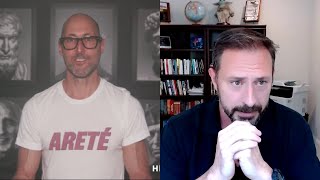
A recorded conversation (YouTube) between Brian Johnson and Rich Diviney (former Navy SEAL commander) about attributes that drive optimal performance, heroism, and translating virtues into practice. Diviney recounts his path into the SEALs, explains the distinction between visible skills and hidden attributes (originally 25 attributes in his book, expanded to 42 for organizations), outlines how healthy narcissism functions, reframes 'hero' as 'guardian', and describes methods for developing attributes (awareness, motivation, deliberate exposure to stress). He emphasizes 'optimal performance' (best possible in context) over peak-only framing and practical routines (gratitude, connection, recovery) for energy, work, and love.
Chapters
Foreign.
It is 1 o', clock, 1 o, 1pm minus 1. We're early today. Let's go. We have a special guest, Rich Devini, former Navy SEAL commander in the seals at the highest possible levels. We were talking about a mutual friend that introduced US, served for 20 years, 13 deployments, 11 of which were to either Iraq or Afghanistan. Wrote a great book called the Attributes, which I listened to at a time when I wasn't doing philosopher's notes. So I'm going to go back and reread it and create a note on it. But it is phenomenal. He talks about the training that he did with these elite SEAL warriors and the attributes that lead to their elite performance, optimal performance, 25 hidden drivers, et cetera. But Rich, let's say hi, then I'm going to say hi to everybody who's here, then we'll jump in. Good to see you. Thanks for being here.
Thank you, Brian. It's great to be. Great to be here. Good to see you again, my friends, and excited to be here with the group.
All right, day one. Alex, great to see you. I like to make it as close to actually being with people as we can. So a quick hello. Alex, great to see you. Gary, Aki, Ryan, Sarah, Dennis, Robin, Coach Steve, Tara, Happy Friday for you. So. Hi, Kimmy, Ellen. No, that was Eileen, Roy, Andrea, Justin, Isaiah, Beards looking solid. Christian, good to see you. Coach Kevin, Eamon, Maureen and Becky on my screen one. Everybody else, great to see you. Everybody else who tunes in on the recording, let's go. Hey, Rich, I put you on the spot. I didn't ask you this before, but do you have a. Just a check in routine? We like to do what we call a flip the switch. We're just, you know, 15, 30, 60 seconds kind of grounding exercise. So I didn't check in before we came in, but are you open to doing something like that for us that might have worked for you back in the day?
Sure. I mean, you know, just in terms of my, one of my routines, dude.
Whatever you feel inspired to share, but basically inviting the best, most heroic version of ourselves to join us through whatever protocol you may feel inspired to share.
Sure. Well, I'll do something I've done quite often, especially, especially since getting out of the Navy. I kind of learned it when I was in the Navy, but, but it's really this, it's as, as I've kind of gotten into and been fascinated with neuroscience and neurobiology and the, and the effects that we have chemically on our systems based on the emotions that we express. One of the things I've learned is that gratitude is actually one of the most powerful emotions. And it's a great place to actually ground yourself both. Both emotionally but especially biochemically. So. So it's quite often that I stop and I just take a moment and ask myself, what am I truly grateful for in this moment? So I would offer that we perhaps take. Take 30 seconds and think about that question. And as you think about that question and think about especially the answer, absorb those feelings of true gratitude and. And you will literally feel a. A positive change of state. So I'll. Let's take 30 seconds. So as you feel that, just know that you have just flooded yourself with, with neurobiology. Things like dopamine, dhea, which is the building block of, of testosterone and estrogen and, and a healing chemical, oxytocin, has been part of the, you know, has been flooding your system. And so, so these are all very, very powerful positive chemicals that you've just literally flooded your system and puts us in a great state to have a. Have a great conversation. So let's do it.
Right on. Let's do it. And my gratitude, you know, I got the kids yelling in the background here, you know, and I got them quickly appreciating them. But you, I appreciate you individually and your team and the military in general, but just appreciate you and the fact that you dedicated your life to protecting our freedoms and bless you, man. I appreciate you deeply and all those with whom you serve. So pause. Thank you. And let's use that as our. As our first kind of our segue into our first question. Tell us about you. This is a, you know, heroic chat with Master. I want to understand your hero's journey and, and particularly what led you to want to serve in the seals, but however you want to frame that up and then of course, we'll drill into, you know, your service and the book and all that good stuff.
Yeah, I would love to. Let's. Let's make sure we earmark this idea of the, of the hero's journey itself and kind of how, how, how I or my teammates would look at this idea of heroism. But to back up, you know, I grew up in. I grew up in Connecticut. I had an older sister, a twin brother, and a younger brother. And my dad was a private pilot. My. And so we'd go flying with him on the weekends. And so my twin brother and I got really hooked into flying from early, early age. We, we decided very early on. This is pre Top Gun, Pre Top Gun 1, that we wanted to be Navy pilots. And so we focused on that. And then as we kind of finished up high school and went to college in the late 80s, early 90s, found my way into an ROTC program at Purdue University, but really started learning about the Navy seals. I'd never heard of them before and as I learned about the Navy seals, I said to myself, well these, these guys seem pretty interesting, it seems pretty unique and, and very tough and very, very elite. And so, so ultimately as I graduated from my ROTC program in, in 96, I kind of said to myself, well, I could always, I know I could be a pilot, but I want to, I wonder if I could be a Navy seal. So decided to go that route and got selected, went to seal training in 1996, made it through. And for those of you who may or, I may or may not know, SEAL training is very tough, about a 90% attrition rate. So, so my class started with I think 170 people. We graduated 38. And began my career in the SEAL teams. The first part of my career, first five years, a lot of training, a lot of preparing, but then of course 9, 11 hit, so that my career became very, very kinetic. I was an officer in the teams, so I was in charge of, of troops, of, of, of training. I was, I was a commanding officer at one point towards the end of my career of a squadron and, and during that time frame learned obviously a lot, you know, going to combat, but also running training about high performing teams, performance in general, what causes people to behave and do what they do. Became really fascinated with that ultimately until I retired in the basically end of 2016. So, so January 1, 2017, first day as a civilian, began working in the leadership space with my buddy Simon Sinek and, and a couple other leadership folks, but ultimately wanted to kind of get back into the performance space. So, so in, in doing that, decided I was going to write this book about the attributes and wrote it, published it in, in 2021 and have been, have been doing the attributes business with my wife since then. So, so that's a quick synopsis about the journey so far.
Yeah, I love it. Now I want to go back. Why, why did you want to serve? Why the Navy? You know, obviously started as that, oh, let's be, you know, pilot, but then evolving into the sales. But why through your young mind and then your decision making process to join ROTC and to go all in.
Yeah, I think so. So there's, there's, there was a, there was of course A desire to serve my country. I thought that was a really cool, honorable thing to do. And I, and I, I believe and know that that's, that was a part of my decision making process. But I also joke often, I don't even joke. I say actually quite, quite factually. I talk about in the book the attribute of narcissism. And this is an attribute that we all carry. That narcissism at a very elemental level is the desire to stand out, be adored and be recognized. That's what it is. And every single human being on the planet at some point in their lives wants to stand out, be adored, be recognized, be made feel special. It's a very human thing. And so I, I, as I thought about why I became a Navy seal, of course I was a patriot, of course I wanted to serve, but ultimately one of the biggest reasons is I wanted to see if I could do something that very few people could do. And so there's a, there's a little bit of, there's a, there's a hint of narcissism in there, but narcissism is an attribute and I know we're talk about this a little bit more this attribute when properly metabolized because obviously too much is a bad, bad thing when properly metabolized it actually can be and is the impetus to some very audacious goals. Why else would someone want to be a Navy SEAL or, or write a best selling book or be the best surgeon or be the best teacher? There's a, there's an element of wanting to stand out and be, and feel special. So, so I will, I will say that there was always a desire in me to serve my country and I'm very proud that I was able to and did so. The, the military and certainly the seal. The SEAL team route provided me an opportunity to test myself in ways that I had never ever thought about doing and, and helped me become part of an organization that was extraordinarily elite and, and a very, very cool, powerful identity. And so, so I want to, I want to kind of be honest about the fact that yes, there's always the, the patriotic version but, but it's okay to have audacious goals as long as again you keep that narcissism in check. It can't be over overbearing or else you're, you are then disordered and have narcissistic personality disorder, which is not a good thing. But only 6% of the people population has that. So, so that's how I'd answer that in Terms of the. The why.
That's so good. And I appreciate the candor, which of course, is part of your book and part of everything that you do and talk about. Rethinking Narcissism is a. Is a book that we have a note on in which he talks about the same thing. There's a healthy and an unhealth of that. What would you describe as the attributes of the healthy expression? And again, in your book, 25 attributes. It's essentially 25 virtues is the frame that we use in all of our work together. You got to operationalize virtues. And one of the reasons I loved your book so much and everybody. If you want to find a way, if you're inspired by the SEAL ethos and that elite performance that the. Again, the. And I don't know how much you talk about it publicly, but the highest possible levels of what you did and training those at the highest levels, you'll love the book. The 25 attributes are 25 virtues, essentially healthfully expressed. But there's a vice of. Of deficiency, and there's a vice of excess to every virtue. Of course. Give us the brief take on narcissism now that we're there. Then we'll step back and revisit some other themes.
Yeah, so. So narcissistic personality disorder is the. Is the excess. Right. And again, if you look at it. So what I did is I got a copy of the DSM 5, which is kind of the psychological bible, and you can kind of go through it. I'll go through all the disorders. It has a few pages on narcissistic personality disorder. Again, only about 6% of the population has this. But in that book, it outlines about nine criteria. So nine sentences that when the physician reads. The idea is if the physician can say yes to five or more of those sentences, then he. He or she will consider the patient. Disorder. Right. So I got a copy of the DSM 5. I began reading through these nine things. And as I read through those nine things, I can say with certainty that I. I could not say yes to five or more, which is a good thing. But it was. I was not innocent of everything that I was reading. In other words, I'd read something, I was like, well, sometimes I feel like that. Sometimes I feel like this. Which got me thinking that this is a very human, human thing. So. So the real key way to metabolize narcissism in a healthy manner is to. Is to look at the people you surrounded yourself with. The disordered, the unhealthy, narcissist is always going to surround him or herself with sycophants, with, yes men, with people who bend the knee and put them on a pedestal all the time. And what's interesting about those groups is those groups are, are often very transient. In other words, someone can't bend the knee forever. So, so eventually someone will, in that group, will leave the group. And as soon as that happens, as soon as that person leaves the group, that person becomes enemy number one to that narcissist. Okay? That is disordered narcissism. So narcissists, narcissism at a, at a healthy level will be, hey, I want to set a very audacious goal. I want to be the best singer in the world. I want to be the best surgeon in the world. I want to be known as this. I'm going to pursue that goal, but I'm going to surround myself with people who keep me grounded, keep me humble, who don't always put me on a pedestal, who I'm not always the center of attention, who tell me the truth when I need to hear it.
Right?
So, so to metabolize narcissism in a healthy way, you must surround yourself with people who keep you grounded and keep you humble. And then the. Finally I'll say if, if you, if you have too little narcissism and there's no desire to stand out, be recognized, be special, be adored, you, you may just find yourself with a, with a blah life, with no, with nothing to strive for. Because it feels good to be recognized. It feels good to feel special once in a while. So, so I think go ahead, set those audacious goals for audacious regions and, and surround yourself with the people who keep you grounded.
That's fantastic. And then you grafted over. We had William Damon, Stanford scholar on the psychology of moral development, talking a lot about purpose and grounding all of that ambition into something bigger than yourself. Which brings us back to your combination. I think part of the. You want to iron out any narcissism and yes, men, go join a SEAL team. Talking to Captain Ryan Shan, who I'm sure you know at NSW tomorrow morning and just, you know, he was talking about some things we may do together and yeah, we can count on some candid feedback.
Yeah, it's funny you should say this because again, the, the. Whereas narcissism may have gotten me and my buddies onto the beaches of SEAL training, right. Day one, it's. It's stripped away because you are taken down to zero and you recognize that you are 100 humble. And by humble you mean. We mean you are, you are laying bare all of your strengths and weaknesses so all can see because your teammates need to know that. Right. And so, and the environment alone in that, in that world keeps you humble. I always kind of joke, I don't care what kind of swimmer you are or what kind of surfer you are, if you turn your back on the ocean, it will kill you. So, so when you're in an environment where the, where the environment in of itself is humbling, is deeply humbling, that also works. So, so I think this is all, it's all congruent. I think the, the, the, the narcissism that gets you. I mean any, any audacious goal, the narcissism that gets you to embark is often swiftly going to be slammed and it's your humility that will, will keep you going. So you just have to balance it.
And you talk about this in the book too. And then it's the interplay of all these attributes of all these virtues. So then it. But you better hold on to that audacity with the humility with the hustle and all the other attributes that make you excel. I love it and appreciate you going there. Stepping back, you kind of touched on briefly. Well, you know, we have an idea in the teams about what it means to be on a hero's journey. Let's talk about that. When you think of the hero's journey, how do you think about that generally? And then we can frame it up however you want with your experience, etc.
Yeah, I think, I think one of the distinctions I've thought about frequently but also recently is this idea of heroism and being a hero. And, and what I, and I kind of take the seal, the Navy SEAL view of it and one of the views I take is we never call ourselves heroes. And it's because heroism and being a hero is actually. You can't necessarily self designate and, and, and, and heroism is often, is often contextual and, and sporadic. In other words, it's a time and place, it's contextual and someone else is one that is someone labels you that. Right. It's, it's, it's somewhat paradoxical to, to define oneself as a hero. So what I always kind of felt like we defined ourselves was instead was guardians as a guardian. That's different. A guardian can actually. Oh the other thing about heroism and hero is it's all good. It's all good. What a thing about guardians is Guardian is something that you can actually self designate you can decide that I will be a guardian. Guardian can be enduring and guardian is, it can be, it can be good and bad. It can be ugly and beautiful. And the idea would be that the example would be, is if any of us have kids, do we, do we want to be our kids hero or do we want to be our kids guardian? And the answer is inevitably always guardian because, because we would do anything for our child. We would. Even if, if, if I, if I knew that, that what I had to do to help my child made me the bad person or made him, Made him. Him even think of me as bad, I'd still do it. I'd be the dark knight, you know. And so, and so I think, I think heroism and a hero's journey is about deciding to be a guardian, something you can control and manage so that others will then look at you and label you as hero. Because that's going to happen inevitably if you do the right thing and you follow the right path. So I, I think there, there, there are two terms that live and breathe and are symbiotic in a way, but, but in our decisions in life, we have to understand what we can control. And I think from a Navy SEALs perspective is that, hey, we are guardians. And if that ends up us looking like heroes, that's great. It may not, but we're still going to be there. We're still going to do the dirty work.
So.
Good.
And then I've asked this question to a number of my friends and people who've joined me here. Do you actually know what the etymology of the word hero is in ancient Greek? Dude, it's a synonym of guardian. Protector. Yeah. So in ancient Greece, when they were coming up with a word for hero, which we now use as our English word for hero, and I can feel it as I say this, they didn't choose killer of bad guys or tough guy or anything like that. The word they chose was protector. So my frame is kind of yes to what you just said. That when we decide that we will be a protector or a guardian for our team or for the virtues we want to see in society or for our kids or whatever it is.
In.
That moment from my vantage point that we express the best version of ourselves and we actually do the things we know we could do, we are heroic. And again, it's not an external. Check me out. Yeah, we all like the validation, but it is. I am committed to being my best self. I'm committed to having the strength for two. And then Plutarch talked about this in the imperfection of the hero and the fact that the hero. And you talk about cunning, you talk about love, you talk about all the attributes of a hero on one level. But he said that the secret weapon of a hero and one who chooses to protect is love. And what I feel from, from my friends who have served with you, many of whom have served literally with you, and like you, the amount of love that I feel and the willingness to sacrifice, the willingness to literally put your life on the line again and again and again is, Is the most, quote, heroic expression of the heroic. But we like to bring it back here in our conversations. And as we kind of, you know, I want to ask you about your tattoos next, by the way. You know, when I want to rebrand the idea of what it means to be heroic, to be what we just described, where there's this, this combined humility and audacity to say, I'm going to step up, I'm going to do my best in service to the world, principally because it's the right thing to do. And yeah, yeah, of course I like to be seen for doing those things. But then the other word I use, I don't know if you mentioned arete in your book, but the ancient Greek word for virtue or excellence, being your best self, closing the gap between who you could be and who you are being. And the way I frame it up is the moment you are being your best self. Living with arete, living with virtue, embodying your attributes, you are heroic. You don't need to wait 25 years. You don't need to wait for whatever citation. And that's what we're trying to do in our community is redefine it, commit to having the strength for two to show up and protect all the things we just discussed. And I love the fact that the guardian is implicit to and synonymous with that word. What do you think?
So this is one of the reasons why I've loved our relationship. You know, I've known each other for a little while now, but I've always felt like that's the, that that's the angle you've always taken on this. And I think you're absolutely 100 right to know. The etymology is even better. I love the etymology of words. This is why I'm into the attributes. And just, it just, it seems so congruent. But I think, yeah, that decision to be a protector, you don't, you don't necessarily decide to be a hero. You decide to be a protector, guardian. And from those actions, from living that bell Self, then, then that, that expression of that behavior is then defined often externally as heroic, which is exactly how it should be. So I love it.
Yeah. And again, I just want to highlight, you know, Mags connected us and that's, that's, he's in I are now whatever kind of publicly connected in that regard. So the guy that connected us is a guy named Mike Magari, who's the former Force Master Chief of Naval Special Warfare, the highest enlisted Navy seal. The amount of humility that that man has and he is just a, he's a living, walking, breathing American hero. You know, when we got a tour, I did some stuff for him and Captain Bob Schultz and we got a tour with my kid. I think I sent you some top secret footage from your obstacle course, etc. You know, and I'm sitting there and I kind of knew who Mags was, you know, but we're with a young sniper that was giving us a tour as well. And he's like, do you have any idea who he is? You know, and goosebumps. His humility and your humility. And then we talked about Wyman Howard, who also has done significant things with you with nsw. It was one of the first things he said in our very first chat. You're humble because you know what it's like to lose men on the battlefield. You know what it's like to lose. And that beautiful. I can't even put it into to a proper frame. Commitment that you and your team have made to us is what drives me so much to show up and to serve your community in different ways we haven't discussed yet. And just again, it's hard to put into words, man, but appreciate you embodying that right now. And now I want to talk about the attributes. So 25 attributes. Tell us what you learned and what you think is most powerful for us as we look to move from theory to practice to mastery together today.
Yeah, absolutely. And so the attributes work. Actually. When I was working with Mags and Wyman, I was running this training for this very specialized selection process. One of the tasks I was given was to start to determine why guys were or were not making it through this selection. And this selection, again, very specialized command. It was, you think about some of the top dudes getting picked to come to this particular selection course. And it takes a while, it takes a lot to get picked to come. And then only about 50% were making it through. And so, so we were having an issue explaining and articulating why that was. They asked me to take A better look at it. What I, what I realized was that, you know, we were actually looking at performance in the wrong way. A lot of times we look at performance in just the visual terms. In other words, we see someone do something and we measure if they're good at it or not. So in the case of the SEAL training, could be, well, this guy can, he's a good shot, or can't shoot very well, or can do this, or can skydive well, or cannot do very well. And what I recognized was, was true, true performance, especially performance in Uncertainty Challenge and stress has very little to do with these visible skills. It has a lot to do with these hidden qualities, these attributes that drive performance at a very elemental level. So quick, quick example I'll give from basic SEAL training. So for the audience, basic SEAL training is called buds, Basic Underwater Demolition Slash SEAL training. That's where Brian's talking about visiting out In San Diego, California, a six month course again, 90 attrition rate. The story I heard, and it happened years ago, goes like this kid showed up to SEAL training one day and walks into the instructor's shack and says, I want to be an AB seal. And the instructor says, okay, well you have to do a swim test. And so the kid says, okay. So they take him out to the swimming pool. It's going to be a 50 meter swim, so 25 meters to one end, 25 meters back to the other. And so the kid gets ready and it's his turn to swim. He jumps into the pool and he sinks right to the bottom of the pool. And he starts walking across the bottom of the pool to one end and he touches the end and he walks across the bottom of the pool back to the other end. And he comes back, he comes up, he's gasping for air, nearly drowning, and the instructor looks at him and he's like, what the hell are you doing? And the kid who's still trying to get his breath looks at the instructor and says, I'm sorry instructor, I don't know how to swim. At that point, the instructor pauses and then looks at the kid and says, that's okay, we can teach you how to swim. Now the question is why did the instructor say that? Right? The instructor said that because he knew that if this kid had the attributes to show up the hidden qualities to show up to Navy SEAL training, the most elite maritime unit on the planet, and he didn't know how to swim, right, he had everything inside of him for him, for us to, for him to be a Navy SEAL teaching Him the skill of swimming was going to be the easy part, right? So, so this is when I began to dig into attributes to give people kind of a quick, quick context or quick comparison. Skills are not inherent to our nature. We're not, we're not born with the ability to ride a bike or throw a ball or shoot a gun. Skills direct our behavior known in specific environments. Here's how and when to ride a bike or throw a ball or shoot a gun. And then because they're very visible, skills are very easy to assess, measure and test. You can see how well anybody does any one of those things. You can put them on, on resumes, you can put stats and scores around this stuff. Which is why we get seduced by skills often when we're picking teams or assessing performance. But what skills don't tell us is how we're going to show up in stress challenge uncertainty. Because in an unknown environment, it's very difficult, if not impossible to apply a known skill. This is when we lean on attributes. Attributes, on the other hand, are inherent to our nature. All of us are born with levels of patience, situational awareness, adaptability. Now you can certainly develop these things over time and experience, but you can also see levels of this stuff in very small children, right? Any of us who have kids know that there are two year olds who are patient and there are two year olds who are impatient. Okay? So there's a nature nurture element to attributes. Attributes don't direct our behavior, they inform our behavior. They tell us how we're going to show up. So in other words, my son's levels of perseverance and, and, and resilience informed the way he showed up when he was learning the skill of riding a bike and he was falling off a dozen times doing so. And then finally, because they're hard to see, they're difficult to measure and test right there, it's hard to measure someone's levels of adaptability. They are the most visible and visceral during times of stress, challenge uncertainty. And so what I discovered was if we're ignoring, if we're not, if we're not considering attributes in this performance, in our, in our performance, we are, we are missing a huge part of the performance picture. But, but specifically the part that describes our performance when we are at our most raw, at our most elemental, in times of deep stress, challenge uncertainty, we are learning, we are leaning on these attributes. And so the book I talk about the 25 attributes of optimal performance, we are now working with 42 attributes. When we go with Companies and organizations. We're actually working with 42 attributes, but these 25 are, are coming, some of the key ones for what we call optimal performance, but it's these drivers, these hidden drivers. The other thing I'll add before we kind of go on is all of us, think of all of us. We all have all of the attributes. Okay. We're born with all of them. The difference in each one of us are the levels to which we have each. So, so if we take adaptability and 10 is high and 1 is low, I might be a level 8 on adaptability, which means when the environment changes around me outside of my control, it's fairly easy for me to go with the flow. Right. Someone else might be a level three, which means the same thing happens to them. It's difficult for them to go with the flow. There's friction there. They're still adaptable because human beings are. But if we were to line up these attributes on a wall, like dimmer switches, all of us would have different settings on these dimmer switches. And that starts to inform us as to how and why we perform the way we do. And that's kind of why I've really been fascinated with it and what the book kind of goes into in helping people discover these attributes.
Brilliant. Continue. Go on. So what did you learn? So you're studying these individuals going through the most elite training. They had to already go through this and this and this to get there. 50% don't make it through. Of course, the 25 attributes, we talk about how each impacts performance in different situations. But what's the high level of what you learned and how we can take that into our lives.
So what I learned was the first thing we had to do was figure out what attributes we were looking for in the operators that we were putting through. Question course. What were the primary attributes we were looking for? So, you know, situation awareness, task switching, adaptability, compartmentalization, what were these things? And then we look, we. We began to look at training from this alternate optic. So, so when we, When I would see someone who was going into a room and not shooting, not hitting his targets, right. I wouldn't say this is because he's a bad shot, which is a skill. I would say this is because he is having trouble task switching between targets or he's having trouble adapting or so we could start to see where these attributes would show up. Where this translated and how this has really helped is now that we've been able to. I've been able to write the book and Start working with businesses and teams. We can help teams and organizations figure out what their master list of attribute looks list looks like for their particular team. The master list of attributes required for a SEAL team is going to look different than the master list of attributes required for a sales team or a teaching team. So we help them figure out what that list is and then we can help them look at their current team and make sure people are properly placed that, that that seed towards their attributes. But also, and especially hire people for the right attributes versus just how often do we hire the rock star person because the resume is so good, but they end up being the worst person on the team or toxic to the team because we didn't consider the attributes. We want to hire that kid who showed up and yes, he couldn't swim, but he had everything we needed because teaching the skill is the easy part. So we help organizations rework their hiring and selection so they actually hire the right people, the right, you know, the first time completely congruent with the culture they're looking for. Dude.
So we need to, we need to spend a lot more time hanging out. So the entire app that we built with Heroic is operationalizing virtues, what we would again, attributes, virtues, et cetera, on an individual level. And the idea again is if you ask Aristotle what the ultimate purpose of life is, he says the summum bonum is eudaimonia. A good soul to flourish, to be your best self. You ask him how to do that, he answers you in one word, arete, live with virtue and excellence. Be your best self. Well, that's the single word that describes your 25 or 42 attributes. Right? So anyway, our app is to help individuals get clarity on who they are at their best in their energy, work and love. Longer chat, you know, but we boiled down a good life to three things. Freud says two things, work and love. I say yes, and if your energy sucks, good luck showing up in your work or your love. So we have energy, work and love. We have an identity. We help people create in each, but then we get into their virtues. And the reason I share that in this context is, and why we do need to talk offline is we're working with corporations now to help them move from theory to practice to mastery, individually embodying their idiosyncratic virtues. But the vision is to do what you just described in our own way to help them get clarity on what their corporate virtues are, but most importantly, live them on a daily basis. So again, we're going to have some fun chats and I can't wait to see what we might be able to do.
And I'll add. Brian, I'll add, because we do need to chat, because one of the things you've mentioned, which I really keyed in on, is help people understand who they are at their best. And one of the things that we do and the attributes work, allows us to do is help people understand who they are at their worst as well. Right. And when I say our worst, I say who. I've always been fascinated because of the, I guess the gift I was given going to SEAL training and even combat. I've been fascinated with this idea of our real self. Like, we always hear that it's, it's at our most raw that the real us shows up. Right. So is where the real us and, and, and I was given the opportunity, day one of SEAL training and then combat, to understand exactly who I am at my most raw. Right. These attributes define us at our most raw. And so, and so this is where we begin to get a real clarity on how we show up for ourselves and for others. If I know who I am at my most raw and I know what my teammates are their most raw, then I know exactly how we're going to perform. And I will, I will add to that. And you and I have talked about this, I think we talked about this last time. This whole idea of optimal performance. I picked those words very specifically because. Because one of the things that I always found was everybody was focused on peak performance and peak here, peak there, peak everywhere. And people used to tell me, you Navy SEALs, you're the ultimate peak performers. And I would disagree with that statement because peak is an apex. There's only one place you can go from an apex that's down right. Peak also often has to be planned for, prepared for, and scheduled. Like the. The professional football player plans and schedules his entire week so he can peak for three hours on Sunday. We don't get to do that, not as Navy SEALs, not as regular humans in this world. So I used to say that we are, in fact, optimal performance. Optimal performers means. Or optimal performance means I'm going to do the very best I can in the moment, whatever the best looks like in that moment. Okay, so sometimes my best look might look like peak, and it's flow states and everything's clicking and everything's awesome. Sometimes my best, however, is I am just head down, nugging it out because that's all I have right now. And it's dirty and it's gritty and it's ugly. And it's hard. That is still performing optimally. And so optimal performance allows us to a celebrate those times when we are not at peak. We are just moving and it's ugly and dirty and it's gritty, right. I can't tell you how many missions we did and we came back, we're like, man, that was ugly. But we got the job done, right. The other thing it allows us to do, and this is really important in the performance space. And I know you know this, it allows us to, to do what I call responsible energy management. In other words, I don't need to be peak when I'm driving to the grocery store, okay, I can manage my energy. I often say that, you know, you know, we would oftentimes be in our helicopters flying into combat and the guys around me would be napping, they'd be asleep. And there's a reason, because we don't want to. We don't know what's coming, we don't know what's going to be required. We're not going to waste an ounce of energy doing things we don't need to do. So optimal performance allows us to manage our energy responsibly. So we can peak on demand and we can gut it out. And so this, it's this umbrella underneath which peak lives, gutting it out lives, recovery lives, all this stuff lives. And this type of the knowledge about ourselves and how we show up allows us to maximize that.
Absolutely brilliant. The company before Heroic was called Optimize. So we talked a lot about the fact that optimize equals optimus. The Latin word means the best to your point, not the perfect, not the peak. The best within the constraints of your reality, which will change depending on the constraints of your reality. And then that management of energy, training and recovery, the professional seal, the professional athlete, when they're not all in on whatever field is their field, they're napping, you know you're getting it back. I love dude. So good. Anything else you want to, you want to share on that, on that theme or on the high level attributes? Before I take us a couple different.
Directions, the only thing I'll add on attributes just for the audience. If you want to determine whether or not it's a skill or an attribute, you just have to ask a specific question. That that question is can I teach it or can it be taught? If the answer is yes, it's probably a skill. If the answer is no, it's probably an attribute. So, so, so Brian could say, rich, I want to learn how to shoot A pistol and a hit, a bullseye. Right. Well, I could take Brian to the range and teach him how to do that within a couple hours. That's a skill. Or Brian could say, hey Rich, I want to learn how to be more patient. I can't teach Brian how to do that. Right. So. So if you are low on an attribute, you in fact can develop it. It just takes three things. It takes first, a, an awareness that you need to develop it. It takes. The second thing is a willingness or a need to develop. In other words, just because you're low on an attribute doesn't need you, doesn't mean you need to develop it. I always kind of say the, the stand up comic who's too high on empathy is not going to be a good stand up comic. Right. So. So just because you're low on an attribute doesn't necessarily need you to develop it. But, but if you, if you know you need to develop it and you want, there's motivation to develop it. Those are the two things. And then finally, it takes a very deliberate step into an environment of stress and challenge and uncertainty that develops and teases that attribute. So in other words, if you want to develop your patients, you have to go find environments that test and tease your patients. Whatever that looks like for you. It could be deliberately driving traffic. I'm going to pick the longest line in the grocery store to stand in. I always say have kids, having kids with developed patients, but whatever that is, you have to find that you can do that with any of these attributes so you can develop them if they are low and if there's a need for you to.
So just to go there, are you making a distinction between developing and teaching? Because what I heard there was you can't do it, but you can. So how.
Right. Skill.
I get it. Skill is concrete, you know, and I can teach how to shoot a pistol very formulaically and systematically. But walk me through the difference between that and how one cultivates or develops an attribute that may not be, you know, at the level in which we'd like to see it expressed.
Yeah, I think teach, teach in the teach I'm thinking about is really a, an exchange of information and technique between two individuals that allows someone to absorb knowledge or skill. That's teach. Right? Develop is. I am, I am, I am individually pursuing this, this, this building of whatever it is. Right. So I, I consider development an internal exercise, whereas teaching is more of an external exercise. That's how I would define that.
Okay, cool. We'll save the, the nuanced philosophical chapter. I love it, dude. Anything else on that tattoo? I find that to be one of the most powerful ways to get out of myself, by the way, and learn so much goodness from someone. Give me what do we got there?
So I am a, I have always been a fuse, a huge fan of the martial art aikido, but specifically, and I'm not an aikidoist, I actually don't take aikido, but specifically the founder of aikido, Morha Yoshiba. A fascinating man, a fascinating life. I've read a bunch of books about his life and he, he, the philosophy that he had around Aikido was kind of be like water, way of the water. And he used to put on his dojo wall, he used to put the universe and I are one or I am the universe. And that's what this says. And so, so what that means is it describes our relationship with everything. You know, I think that's really powerful. And how we can kind of synergize and flow with everything. So there's a philosophical definition, but, but scientifically I also like it because scientifically it's also accurate. We are, if you look out into the universe, the universe is made up of four, I mean many, many elements, but four primary ones which are carbon, hydrogen, oxygen and nitrogen. And our human bodies are also primarily made up of carbon, hydrogen, oxygen and nitrogen. We are literally the stuff of stars. So this is I am the universe. And it's both philosophically true and scientifically true.
I don't know what to say after that. It's so good. When did you get it? Just so I frame up, I got.
It, I think back in 2001. 2002.
So yeah, it's a 2001. So five years after joining the team teams. You're, what are you, 27 years old? That's fantastic. Any other tattoos we need to know about?
No, this one was too painful. So I'm done.
My wife has officially told me I've exceeded my maximum quota. Oh, that's so good. All right, cool. So then let's talk about you and your current practices. So as you've, you know, evolved and obviously had different constraints of reality, when you're doing one thing and you're doing what you're doing right now, energy, work and love, again are the big three that we kind of bring people back to all the time. What have been the most powerful theoretical distinctions you've made that have led to the most practical, life changing things that you do in energy? And then we'll come back to work and then in love. How do, how do you think about that?
Well, I think, I think theoretically it's probably this idea of optimal performance. Am I managing and expressing the energy level that's required for the moment? I think I was, I think I was trained to do that in the Navy because it was required for the, for the, for the longevity of the business. But I think it, it, I've absorbed it into multiple, if not all, facets of, of my life. I don't, I don't typically find myself over expressing if I don't need to over express and sometimes I have to push myself to over express if it's like, hey, now's the time, right? But, but it's really, I am, I am always gauging an environment in terms of what do I, what am I required so that if I have to go long term, I can go long term. So I think, I think theoretically it's from an energy standpoint, it's this, it's this constant awareness of managing my energetic state, peaking when I need to peak, but also relaxing and recovering. Recovery, as we know, is one of the most important things that we can do in terms of our own full holistic performance. And oftentimes as top performers or go getters or people who get shit done, we forget about the recovery piece. But recovery is as if not more important than the actual act of doing. And recovery is about optimizing energy and, and I think that's one of the philosophies I, I, I really use daily if I can.
So give me, give me one, two, three things you do on a given day to, to put this into practice.
Yeah, well, gratitude is one. I always, I'm constantly hugging my kids and kissing my wife. Right. The family, the connection piece. So there's the, there's the relationship connection piece, family and friends. I just had coffee with a great buddy of mine who we served together. We were at war together. We had coffee for three hours today. Completely filled us both up right from a, from a, from a mental state. One of the things I'll do is I'll go on, on runs in the woods out here in Virginia. I won't, I won't time myself. I won't bring my phone, I won't run with anybody else. I won't have any music. I will just be out in nature and my mind will wander. And that is extraordinarily cathartic for me. It's a recovery activity for me from a physical standpoint. So I think those are Some things, I think anything that brings us joy can be defined as a recovery activity, whatever that is for you, do do that and you will be both recovering and inducing a very powerful biochemical response in your system.
Oh, dude. So inspiring. And again, former Navy Seal, served for 20 years, 13 oversea missions. Here we go. Finder joy. So then to continue briefly, we have the identities in energy, work and love. And then we have the virtues. And then we have the things that you do when you are at your best embodying those virtues. So I'm just going to come into my. For me, I'm a joyful soulmate, and soul is daimon. To daimon. The ancient word for soul is daimon. So I'm thinking I want to be a soulmate with you right now. I want to meet daimon Daimon with our community, with my team, with my wife, with my kids. And then I have certain virtues I embody. Joyful happens to be my number one virtue in love. Really showing up joyfully. And as a hopefully healthy, ambitious narcissist, I have a lot of ambition. I want to do certain things and I want to do them now or yesterday. Even better. Bringing joy is important anyway. I do certain things, including and why I open this up, kiss my wife, hug my kids. So, team, if you haven't yet decided to actually concretize that as a specific target you're hitting, consider doing it with Rich's inspiration. There's so much power to it, even.
It works if you don't have kids or even a spouse. Pets, we get the same amounts of oxytocin with our pets as we do with other humans. So. So pets are. Pets matter as well.
Right on. Yeah, I. I have to discipline myself to have that. That attentionality to the two dogs that adopted us. It's like, all right, buddy, let's go. You know, the five seconds. But even cleaning the house, I'm trying to train my recovery in the mundane things that used to annoy me, right? So, you know, cleaning the house and making that an actual. It's an act of love for me. Can I do that? Can I fold the laundry? And again, without getting too out there on it, but like, I'm folding my little girl's, you know, six year old pants. I'm like, my God, these are just amazing. And they're not going to be this small for that much longer. Let's go. So making the mundane in act of joyful love and service is always present. Love it, dude. And you. Oops, that's the Amazon Link. Let me go back to the actual site there for our app. So then energy training our recovery optimal performance demands that we're attuned and properly using our energy. Love the the long quiet still default mode activated runs the hugs, the kisses etc work biggest theoretical and then practical application of those distinctions.
I think the biggest thing is to try not to make a distinction. I love what I do and so, so work is what I, the work I do, I love it doesn't. I try not to make it feel like work. I. You know part of what I do is a creative, the creative process. It's the etymology of words. It's diving into these distinction and proportions performance. And so I have, I have tried to pick something in my work that I just enjoy a great deal. The other thing I've done, I say I've done. My wife and I, we've been married for 21 years. You know she lived the, the war with me. We have two kids, 18 and 16. She is now we are co CEOs in our, in our company. We get to work together and build this business together. Which I, I mean I. If there's, if there's one thing I'm so most grateful for, it's that because this next journey I can do with her. You know, I did, I did 21 years in the Navy without her. I mean technically she can't go to Iraq with me, nor would I want her to. But. But now we get to do this together. And so, and so I think for me the secret has been to combine these things in a way that they, that they live and breathe together. Everything I do, my, my purpose in life is to, is to, is to give support, create for those that I love. Family, friends, that. And it's not, it's not even about a legacy. I want to leave. I want to, I want to develop and build something that, that my family and friends can, can, can live and grow from and continue and have fun doing. And so, so as long as I'm in that purpose and I get to do it as much as I can with those that I love, man, that's, that's the secret for me.
I love it, dude. And we talk a lot about Abraham Maslow who's on my wall back there and he says the self actualizing individual which you are embodying and articulating right now within that individual, the apparent dichotomy between things like their work and love dissolves. You know, which one am I doing right? What are we doing right now? Are we working? Are we playing? Like, what are we, Are we serving? Are we creating? I don't know, like, this is good. Let's just keep on doing it and create a life in which that, again, apparent dichotomy is dissolved deliberately. Is so beautiful. Love it. Energy, work. And of course our work is our love. And yet our love is, is distinct as well from at least one perspective. How. How have you, what have you learned to best show up most powerfully as a husband, as a father, as a friend, as a leader, etc in the love domain?
Serve. Just serve. I'm. It's, it's. It's never ever about oneself. As soon as you. This is something you learn as a we. All those of us who are a little bit older. I just turned 50 just a couple days ago. And so as I think back on my, on my teens and twenties and I look at, I have kids who are in that age. It's a selfish period of our lives and actually supposed to be. I mean, I think, I think that's fine. It's a natural progression and you're just figuring it out. You are about oneself and, and as soon as, as soon as someone else comes into that picture, if you don't immediately recognize that it's not about just you anymore, that now you're thinking and behaving with someone else in mind, if you don't do that, you're going to have issues. If you do that, you begin a journey of service and discovery. And it only gets better and better as you grow your family. Because, because you recognize that's really the juice of, of. Of life for some of us, right? Not for everybody, but for some of us. And so, and so I think, I think I'm always thinking about how what I'm doing is in service to those that I love. That's what keeps me going. That's. Make sure my purpose is in line. Because even taking care, even going on a run by myself, which ostensibly is not with my family, is still in service to them because I'm taking care of myself and my, my mental health in a way that allows me to be better and show up better for them. So, so I think that that type of, that type of motive in whatever you're doing, if you can tie it back to this idea, if I can tie it back to this idea of service, then I'm good to go.
That's so cool. I've got a couple of stoic philosophers back there, Epictetus and Aurelius. One of the guys that taught Epictetus was Musonius Rufus and the dude had the best relationship advice I've ever, ever, ever read. He says that a good relationship is one in which you made me think about it with your commitment to service. He says the best relationship is one in which the partners are out trying to out compete one another in serving in love and what can I do? You know, and it's such a humbling, beautiful challenge, you know. And then I love the way that you articulate that self care is an act of service to those in our, in our lives. Beautiful. And again, we've had so many conversations in these daily sessions here trying to make that connection. And again, there's an edge, right? Sometimes that can become a vice of excess and we need to pull back a little bit. But for a lot of us, a lot of time it's a vice of deficiency and we're not properly taking care of ourselves such that we can show up. I love it, man. Anything else you want to share before we. And if you have a question, raise your hand. We've got a few minutes that we can use for Rich to connect with you if you would like. But anything else you want to, you want to share and frame. And before we go there too, best.
Place to find you is theattributes.com check us out there. You can pretty much find everything there. The book you can. We have assessment tools for the attributes. For some of them we're building out a brand new one which will we have hopefully live here in a month or so. But you can, you can look at some of these assessment tools and check out a bunch of stuff. So yeah. Theattributes.com okay, cool.
And I have not been paying attention to the chat, but if someone can drop that in there, that would be fantastic. Please do. Anything else you want to make sure we talk about?
No, let's get to questions.
All right. Kimmy, good to see you. You are being asked to be off of mute. Let's go. We got you, Kimmy. Rich. Rich.
Hi everybody. Thanks so much for being here. We are like I'm so, so, so excited and, and like containing myself so grounding myself. You mentioned the attributes and how you're, how you're practically using them with companies and how they're using them to hire others. Now I've heard of people being interviewed for certain roles at certain institutions and then they come back a year later looking to be hired again. So I know that you said that you can grow in certain areas, but what are your thoughts on if you're very if an institution is very clear on what their needs are and then the person one year isn't quite cutting it, what are your thoughts on their growth mindset and the growth development and their, their, you know, the possibility of the next year having them more qualified?
Yeah, I think it's a great question. I think one of the ways I describe us as humans is like, like we're all, we're all automobiles, okay, so we're all, we're all kind of automobiles. But, but we're all different types, right? Some of us are Jeeps, some of us are SUVs, and some of us are Ferraris. And there's no judgment there because the Ferrari can do things the Jeep can't do and the, the Jeep can do things the Ferrari can't do. But it behooves us to lift our hood and figure out what kind of engine we're running with. This is our attributes, okay? Because we may be or have been some of the, some of the consternation in our lives might be because I've been a Jeep that's been trying to run on a Ferrari track or a Ferrari that's been trying to run on a Jeep track. So, so what I would say is if someone wants to be a part of a team organization where their attributes or their engine doesn't quite line up, then it's a deliberate choice. You can say, okay, what might those attributes be that I want to develop to make my Jeep run better on the Ferrari track? Because you can do that. We have the ability to have that free choice. But I think more, more enlightening is for someone to understand who they are and try to align themselves with what might be more congruent with their attribute set. So, and I would say even I tell organizations this is not organization. A lot of times organizationally it's not necessarily about this certain, this certain person won't fit here. It's specific roles come with different attribute requirements as well. And I remember I was just as a commanding officer, I had a supply team and half of the supply team was doing, was doing a forward look kind of gear acquisition. The other half was doing kind of logging and record keeping. I had a sailor who was in this logging or in the future acquisition, she was performing poorly. It was really low performance of bringing the whole team down. I brought her in, I'd already done this attributes work. So I had a conversation with her and immediately I recognized that her attribute, her specific attribute set was way more congruent with the record keeping side than the future acquisition. All I did was shift her, and her performance skyrocketed and morale went up. Right. So this is not about telling people they can't or they're not. It's really about finding the right position. So we're actually putting ourselves on the tracks that allow us to be our best selves. So I think if someone finds themselves in a position where they feel like they need to develop, sure, go ahead and develop it. I mean, it takes effort, it takes time, but you can absolutely do it. Thanks, Kimmy.
Awesome. Yeah, thank you, Kimmy. Well, perfect. Anybody else got a question? If not. Well, I'm going to ask you, Rich, to bookend us with a. We did gratitude on the way in. We got a second. We got a second trick in that bag of tricks over there to kind of. Again, we like to bookend it with. All right, we're starting out mindfully, deliberately committing together to being our best selves. That gratitude exercise was brilliant. What may we do at the end to bookend it and send ourselves off? Anything arise for you? And if not, I've already put you on the spot once. I'm happy to do whatever you need to do.
That's okay. The secret to growth, mindset. The secret is really the questions we ask ourselves. And if we ask better questions, we get better answers, and that focuses our mind. So, so what I think the. The great closing exercise for now or even after this, is what did this time together allow us to learn? And how can we grow from it and ask those questions? Our brains will start to answer whatever question we populate it with. A lot of times we do this the wrong way. We say things like, why am I so bad at this? Why am I so pissed off? And we get spectacular answers as to why we're pissed off. Right? But if we change the quality of our questions, we change the quality of our answers. And so I would. I would encourage us to. To ask better questions about how. What we learned and what we can take away to. To. To do better, be better.
Dude, that's so good. We must be soul brothers, because check it out. Sonia, can you put on the screen right now the question that we asked? So we've gotten together here. How many times? We have gotten together 182 times as of today. And every single one of them, we end with this question, which is basically your question, which is, what's the number one thing you got out of today's conversation? And what's the specific thing you can do to apply it to your life? So with that team, if you would like to connect with one another, please do stay on. Rich. Please do enjoy the rest of your day. It was great to see you. And I'm all text you so we get reconnected on that side of things. I'm very much looking forward to continuing our dialogue, and I really appreciate you taking the time to be with us today and the decades that led to this. And happy belated birthday as well. I'm just a few months behind you. 50 is a good one, dude. Let's go.
We're only. We're only. I say we're only one third of the way done with our lives, so we got a long way to go.
So it's really funny because I was actually playing the other side today and having that humble. You know what? I might be two thirds, so always. Yes. And let's go, hero. That grounded urgency while we play the long game, managing the energy and pushing this thing out as far as we can. But thank you, man. Have a great rest of the day.
Thank you to all. Thank you to you, Brian. We'll chat soon. Thank you to the group for having me. Have a wonderful rest of your week. And, yeah, we'll see you on the back end of any attributes or arete stuff.
Right on, man. All right, see you soon. Thank you.
Thanks.
All right, team. That's how it's done. Thank you, Kimmy. Thank you, everyone, for being here. If you would like to connect, please stay on. Sonia, can you please help us with that?
More from Brian

Heroic +1: What’s THE Most Creative Act in the Universe?: Turning Around Glitches (#2024)









