Brian Johnson calls Brain Energy by Chris Palmer his number-one book for coaches. Palmer argues mental disorders are metabolic disorders of the brain, with mitochondrial health as the common link across mental and physical illness. Johnson draws parallels to metabolic approaches in cancer and Alzheimer's treatment.
Chapters
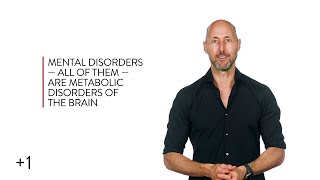
Hi, this is Brian. Welcome back to another heroic plus one. In our last plus one, I deliberately repeated myself and told you about the most important interview I've ever done, as I encouraged you again to check out the notes and the chat with Harvard psychiatrist Chris Palmer about the wisdom from his great book Brain Energy. As I said in the chat, Brain Energy is now the number one book I recommend our heroic coaches read. And of course, it's the number one book I recommend everyone in our community reads. Again, check out the notes and my interview and get the book on Amazon. We got a link here. For years I've been saying that our physiology drives our psychology. More than 99% of therapists and our mental health care providers recognize, which is why our heroic big three starts with energy and why we relentlessly encourage our coaches and everyone in our community to dominate their fundies. Now, although many others have discussed important components of this approach, Chris is the first author and thought leader to systematically connect it all into one coherent theoretical and practical framework. Chris tells us, and I quote already, this may seem impossible to reconcile. You might be yelling, but these are different diseases. Schizophrenia is not the same thing as an eating disorder or a mild anxiety disorder. Cardiovascular disease, bipolar disorder, epilepsy, diabetes and depression are all different. They have different symptoms, they affect different parts of the body, they appear at different ages. Some of them, like a stroke, can kill people quickly. Others, like mild depression that lasts only a few months, might come and go without any real intervention. He continues by saying, and I quote him again, it's difficult to imagine that all these disorders share one common pathway. If there is such a common pathway, it will have to be involved in many different aspects of how the body works. It will need to tie together everything that we already know about these different disorders, their risk factors and symptoms, the treatments that work. That's a huge role for any bodily process or function to fill. Andy says, as you will see in part two, metabolism fills this role. Yes, we have arrived at our common thread, the underpinning factor that lets us answer our tangled questions about causes and treatments, symptoms and overlaps. And all of that leads us to the distillation of the brain energy, perspective. I quote him yet again. Mental disorders, all of them are metabolic disorders of the brain. I repeat, and here's the thesis of the book and the theory that truly has the potential to revolutionize the way we treat all mental illnesses. Mental disorders, all of them are metabolic disorders of the brain. Let me repeat that this time in bolded all caps. Mental disorders, all of them are metabolic disorders of the brain or one more time, this time in larger font just to make sure it sinks in. Mental disorders. All of them are metabolic disorders of the brain. If we all and by all I mean every mom, dad, aunt, uncle, grandma, grandpa, doctor, therapist, school teacher, principal, social worker, parole officer, HR executive, military officer, government official, coach, etc. Truly got this, we could change the world. Literally. Know this. By focusing on optimizing our metabolic systems with an emphasis on the health of our mitochondria, which are the engines of our energy, we take huge strides in solving not just our mental illness challenges like anxiety and depression and alcoholism, but also our physical illness challenges like obesity, diabetes and cardiovascular disease, which Dr. Palmer painstakingly points out, are also driven by metabolic dysfunction. Now, as I read the book, I was struck by the parallel wisdom I learned while trying to help my brother navigate his late stage pancreatic cancer, most specifically Naysha Winter's wisdom from the Metabolic Approach to Cancer. I was also struck by the parallel wisdom in Dale Bredesen's the End of Alzheimer's. Check out both of those notes for more the fact that mental illness is primarily a metabolic issue is ultimately an incredibly powerful perspective because we can do a lot more to deal with our mental and physical health challenges than we may otherwise think. We'll talk about a few practical things we can do to optimize our metabolism in our next plus one. For now, who do you think might benefit from learning more about this wisdom? If you feel so inspired, perhaps you can forward this plus one to them or send them the PDF of the note. Day one all in. Let's go. Hiro.