My Life’s Work in 1 hour 11 minutes and 35 seconds (Seriously. This is it!! 🤓 )
Brian Johnson presents his 300-day Mastery Series, a foundation for the Optimize Coach program. Seven modules cover virtue and flourishing, the hero's journey, energy, work and love, plus daily practices designed to close the gap between your potential and actual performance.
Chapters
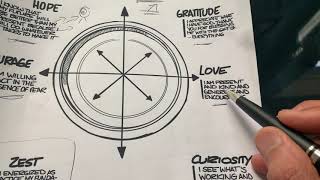
Hi, this is Brian. I am fired up this morning. I just finished Preparing for the module 0, the introductory module for our mastery series, which is the foundation of our optimized coach program. You know, I realized that this is basically my life's work. 300 day program, the mastery series where I help our optimizers and optimized coaches move from theory to practice to mastery so we can master ourselves, serve heroically and empower others to do the same. And I thought it would be fun to challenge myself, to boil this down into whatever this winds up being. But literally this is a 300 day program, 25 different sessions, 7 modules. I'll walk you through. I'm going to see how efficiently we can hit this. So I like to start at the top. Optimize comes from the Latin word optimus, which means the best. In our case, we're talking about you, of course, being the best version of yourselves. Now in ancient Greece they had a word for that they called people who were committed to optimizing and actualizing eudaimons. We'll talk more about that in a moment. Good soul is what Aristotle said. And then we don't stop there. We don't just become the best version of ourselves for ourselves in a six pack selfie on Instagram. We do it so that we can become human heroes. The ancient etymology of that word is very interesting as well. It means protector. Not tough guy or killer of bad guys, but protector. Heroes have strength for two. Their secret weapon is love. As we say, our world needs heroes more today than ever before. We need you to be a hero. We need you to master yourself so you can serve heroically and empower others through the same. Why? So we can change the world one person at a time together. Starting with you and me and us today. That's our second module, Hero ology. Now, I have spent as many of you know, half of the last 20 years as a founder CEO. I've built and sold a couple businesses, raised 10 million bucks, yada yada. And the other half as a philosopher, a lover of wisdom. In the process, I've created a number of, I've read hundreds and hundreds of books. We have 600 plus philosopher's notes, 50 optimal living 101 classes, over a thousand optimized plus ones. In this class, in this mastery series is basically me saying, look, start here. This is the best of what I know, right? So these are kind of my notes for each of these ideas. This is the best of what I know of ancient wisdom, modern science, practical tools. This is how we move from theory to practice to mastery. This is how we close the gap between who we're capable of being and who are actually being. Because if there's a gap between who you could be in any given moment and who you're actually being, it's in that gap that regret, anxiety, disillusionment, et cetera exists. Close the gap. All the wisest teachers tell us. Ancient wisdom, modern science. And you're going to feel joy, happiness. We'll talk about that in a moment. As Abraham Maslow says, what one can be, one must be. Isn't that a beautiful phrase? The self actualizer, the optimizer, the eudaimonic hero. Now, module one. Oh, that sounds nice, right? Module one, use a little memento mori coin as our placeholder here. Thank you, Ryan Holiday. Remember our mortality. Let's wake up. This isn't a dress rehearsal. So module one is. Look, we need to understand the game that we're playing, right? And how to play it well. So if you went back in time and you can actually play around and say, okay, who can we invite to the party? Ancient Wisdom style and modern science style to ask them the question, hey guys, what's the ultimate purpose in life? Let's pretend that we could bring Aristotle into a room and we could bring Martin Seligman, the founder of the positive psychology, into the room and say, what's the ultimate purpose of life? Well, guess what? Aristotle would answer you immediately in one word. Read his ethics and what he'll tell you is eudaimonia. You want to have a good soul, you want to be a eudaimon, you want to express the best within yourself, etc. Alright, that's nice. Now that word directly translates into English as something close to happiness, but it's actually deeper in its meaning. It's not quite happiness in the hedonic sense. This is eudaimonic happiness. And you know what that is in English? It's flourish. Now let's go to Martin Seligman, the founder of the positive psychology movement. Done some amazing work. Look at his book titles. We go from learned optimism to authentic happiness to Flourish is literally the name of his most recent book. So they're going to give you the exact same answer. Ancient wisdom, modern science, Aristotle, Seligman, in one word, eudaimonia, flourish, the ultimate purpose. The summum bonum is how Aristotle put it, is to be a good soul, to high five your inner soul, as we say, right? So then you say, okay guys, that's nice, and how do you do it? Aristotle Again, immediately, one word answer, arete, which, if I had to summarize my entire philosophy in one word, it would be this. Now, we directly translate that word as virtue or excellence, but it has a deeper meaning, something closer to expressing the best version of yourself, moment to moment to moment, closing the gap between who you're capable of being and who you're actually being. Boom. Arete equals you experience eudaimonia via arete. Now you go to Martin Seligman, say, hey, what do you think? Study the science of this. What do you think? Well, you got to know. And we talk about this in this module, which we call eudaimonology because it's the study of a good soul. Side note, psychology means the study of a soul. That's what psyche is. And I playfully say they wouldn't have had to add positive to psychology if they had started with the right name in the first place. Eudaimonology. We've got to know the game we're playing this and how to play it well. So again, you put your virtues in action is literally what Martin Seligman says. So when they started the positive psychology movement, longer chat. But they started by studying all the ancient wisdom traditions, they wanted to prove or disprove what all the ancient wisdom and spiritual traditions said. And what they found was universal expression of certain virtues that we'll talk about in a moment. And they said, look, the whole foundation, it's more nuanced than this, but the whole foundation of our work is we need to help people and we need to establish a science of putting virtues in action. And they see that one will be more happy in the deep eudaimonic sense when they put their virtues in action. Therefore, all of our work together is about operationalizing virtue. That's the game we're playing. And we have to start there, because our society is not about virtue. You might have noticed it's rather vicious these days. That's the opposite of virtue. Vice, vicious behavior. You see any in the world lately? This is the game we're playing. We need to know how to play it well. So very briefly, and again, we talk about this in depth. I jokingly say, we need you to be a virtue connoisseur. Right? You need to be. People are wine connoisseurs. Be a virtue connoisseur. This is the ultimate game we're playing. So the ancient Stoic and Roman philosophers said the four cardinal virtues were wisdom, temperance, courage, and justice. Modern science says, yep, that's what everybody says. And they added two more, humanity and transcendence. Now, humanity and justice are kind of weak words for love, right? Longer chat. And temperance is a weird word for self mastery. So we it's not this that you don't eat too much or drink too much. It's that you have control over yourself. Self mastery. So we optimize have four cardinal virtues. Wisdom. Everyone agrees self mastery is what we call temperance. Courage, everyone calls it that. And then love, which integrates the justice and the humanity. Because if you look at the ancient Greeks and Stoics, their sense of justice was love. It wasn't legal justice. It was being an awesome human being. That is a core virtue and why we do everything. We practice our wisdom, our self mastery, our courage. Such that we can live with love and have the strength for two and be heroes. Now we also talk about the top five signature strengths that you have that are unique to you and the top five strengths that science has said, or I'm sorry, virtues that science has said are most highly correlated with your well being. So now we created a compass. So this is one of my favorite things that we've done is. And we're actually working on a compass right now that you can hold. That will be my new placeholder soon. But basically we have wisdom, self mastery, courage and love. Those are the cardinal virtues. Wisdom, again very briefly is. I know the game I'm playing and how to play it well. Self mastery is. I'm committed to playing the game well today. Moving from theory to practice to mastery. Courage is. I am willing to act in the presence of fear. We talk a lot about courage. There's a science to that. Love. I am present and kind and generous and encouraging. Right now I'm giving my best self to the world. Now science also says that there are five core virtues that are most highly correlated with your flourishing. The number one virtue is actually zest. It's your energy level. Whole on conversation about that. But this is why we spend so much time getting your energy right. Because if your energy is not right, you can't get out of bed in the morning. But good luck showing up powerfully in life. Your physiology drives your psychology a lot more than what positive psychology has studied to date. Which is why we focus on eudaimonology. You have to get your energy right. We'll talk more about that. You also need hope, zest. Hope and gratitude are the top three most highly correlated to your flourishing virtues. Hope has three parts. You have a vision of a future, a target, a goal that you know is going to be better than your present. You have Agency, you believe you can actually make that happen and you're willing to pursue multiple pathways. There's a science to hope. We come back to this again and again and again and again because we want to operationalize all these virtues so you can live with art and close the gap. Gratitude. Don't be entitled. Be humble and say, I appreciate what I have. God, thank you for blessing me with the gift of everything. Happy people have Gratitude. It's crazy. You're 25% happier simply by doing a gratitude journal, capturing five things once a week for 10 weeks. 25% boost in happiness. No. By the way, you'll sleep 30 minutes more night. You'll exercise 33% more than people who aren't happy. The one of the other five top scientific strengths is love. So we count that twice, and then we come to curiosity. You need to be open to life. You need to see what's working, do more of that. You need to see what needs work and do less of that and then optimize it. No shame. We're just going to use the data to get better. So those are our virtues that we want to operationalize, to play the game as well as we possibly can. Wisdom, self mastery, courage, love, hope, gratitude, curiosity, zest. I journal this every morning. I meditate to it every morning. We encourage our coaches to reflect on this every morning and to meditate to it as well, etc. Now, all that's nice and warm and fuzzy, but okay. Eudaimon. That's how you win that game. Then what? Then? Hero. We want to study what it means to be a good hero, because again, optimize equals optimist equals best equals eudaimon equals hero. Now, this is kind of like Hero's Journey 101. I happen to be in a documentary on Joseph Campbell called Finding Joe, which, if you haven't watched it yet, you might really enjoy. Features Deepak Chopra, Laird Hamilton, Robin Sharma, a bunch of other great people. And I happen to be in there talking about the hero's journey. So we spend three sessions a month helping you operationalize that so you can master yourself, serve heroically, empower others through the same, so we can change the world, et cetera. Starting with you and me today. Three sessions, big picture. And then we go into some detail. I'll share in a moment. But first thing you need to know is it's not supposed to be easy. It's supposed to be hard. You're fighting dragons on a hero's journey, not sidestepping lizards. Right? If you think it's Going to be easy. That's your first mistake. You're doing hard things. You're supposed to get knocked around. You just need to know how to bounce back and get stronger. And then the most important part of the hero's journey, you leave your community of the known. You go face some dragons, you get some mentors and advisors. Then you bring the boon back, AKA you serve profoundly. Ultimately, it's not about you. It's all about you mastering yourself in service to the world. Again, we talk about that a lot. There are three cardinal themes. Cardinal. Use that a lot. My favorite bird, by the way, now is a cardinal. We have a ton of them on our property here these days. Found a cardinal feather the other day, which was a highlight. So, anyway, we want to cultivate three primary things in our hero ology, the study of a good hero. That would be you. Antifragile. Confidence. I'll describe that briefly. Heroic courage. I'll describe that as well. And responsibility. So antifragile confidence. Antifragile. You can be fragile, you break easily, you can be resilient, you sustain a lot more pressure than you break, or you bounce back a little bit faster. But of course, resilience is better than fragility. But there's something better than both of them, which, as Nassim Taleb tells us in his great book, we want to be antifragile. The more we get kicked around, the more, the stronger we get. Angela Duckworth says, fall seven, rise A. That's the essence of grit. Fall seven, rise A. But we say rise stronger. Every single time you get knocked down, you get stronger because you alchemize the wisdom you're learning. Our mantra isn't om. It's omms. Oms, the hero's mantra. Obstacles make me stronger. Which is why our coach. If you want to be a certified, optimized coach, you need to do a Spartan race with us. We had the second largest Spartan race in history last year. We're going to have the biggest race when we can do it again. You need to do that or asterisk something else that demonstrates you are at your energetic best. Why? Because zest is the most important virtue. We need to get your energy right and we're going to hold you accountable. That's what our coaches say. Hold me accountable to these high standards. And as a side note, optimize coach. We've trained over. We're approaching 2000 optimizers from over 50 countries around the world, half of whom go through our program because they're coaches and they want to take their business to the next level or they want to become coaches. The other half, and it's almost weird because it's almost exactly half, just want to optimize their own life and become masters in their own life as executives or, you know, entrepreneurs or moms or dads or just good human beings. But anyway, that's that. Check it out. Optimize me, coach, etc. Etc. So, antifragile, we want you to be antifragile. The more life kicks you around, the stronger you get and you're going to have antifragile confidence. The word confidence etymologically means intense trust. Confidera. Intense trust in what? Not that everything's going to go perfectly, but that you have what it takes to respond to whatever life throws at you. Antifragile confidence. This is like the number one thing that I'm most proud of, what we've been giving to our community members. Then we have hundreds and hundreds and hundreds and hundreds of testimonials saying how we've helped people change their lives fundamentally and permanently. And this is one of the key ideas. Wow. To be antifragile, to respond to life's challenges and get stronger from it. Thousand second timer. We get up. I've already done 110 burpees on that. That's part of our movement work. So antifragile confidence, then what? Heroic courage. Again, the word hero. Well, I should say one more thing here. Nassim Talib has a great metaphor. Imagine the wind. The wind will extinguish a candle, but it will fuel a fire. Think about that. Wind will extinguish a candle, little flame, it will fuel a fire. Everything you throw into a fire, a blazing fire consumes it. Blazing fire consumes all obstacles. It gets stronger. It's all fuel. We want you to be a blazing fire, not a flickering candle that gets blown out the moment something hard happens. Heroic courage. Hero means protector. Strength for two. Love is our secret weapon. Courage comes from love. It's from the Latin word, Greek, Latin words, etc. From heart. So courage is just like your heart. Your heart pumps blood to your arms and legs and organs. Courage is the virtue that vitalizes all the other virtues. Powerful idea. Without courage, the willingness to act in the presence of fear, none of this matters. It doesn't mean you get rid of all your fear. It means you know how to manage it and then act in the presence of it. We have that conversation many times. Then we have responsibility. This is Viktor Frankl, Steven covey, etc Stephen Covey 7 Habits of Highly Effective People Uber jumbo best selling book. What's his number one habit? Pop quiz. Be proactive. Don't be reactive. Be response able. Viktor Frankl says, in between stimulus and response, there's a gap. In that gap is your freedom. Boom. Something happens in life. Can you step in between stimulus and your old response and choose a more empowered response? That's the name of the game. We want to help you get really, really good at that. We have something called targeted thinking. When something happens that you don't want to have happen, stimulus. First of all, quit having that story that it shouldn't be happening. Embrace it. Then ask yourself, what do you want? What's your target? Then say what needs to get done? Boom. That's responsibility, heroic courage, antifragile confidence. That's the essence of our month we spend operationalizing the hero's journey. Then we say, okay, all that's nice. Awesome. Eudaimonology Hero ology. Now what? Now we say it's time for the big three times two. We got to move from theory, the abstract, to the concrete. How do we apply that to your life today? So I talk about an origin story of this. Stephen Covey, Tony Robbins. Two of my favorite teachers influenced me a ton over the last 20 plus years. Tony Robbins, I'm sorry. Stephen Covey says, roles and goals. Modern guys bringing some of this ancient wisdom to bear on their own style, right? Covey says, look, we have different roles in our lives and different goals. You need to get clear on all the roles you play and all the goals you need to have for them. Tony Robbins echoes that in his own way, saying, you have categories of improvement in your life. You want to improve this, this, this, this, this. How you doing on each of those right now? Those are both awesome and they can be a little bit overwhelming. Which is why for perhaps the only time in my life, I really agree with Freud, which is he said that the good life is all about two things, work and love. You get that right, you're doing pretty well, which I like. That's a good way to boil this down into the most essential, which is what I try to do in all my work. Boom. What's essential here? Work and love. But guess what? That's not enough. You need to have your energy dialed in. Because if you don't have your energy dialed in, good luck showing up in work and love. So our big three Energy, work and love. We get our energy just dialed in. Best, most energized version of ourselves in our Lives. And then we channel that powerfully into our work and into our love. Boom. That's the big three. Now we times that by two. Of course, we unpack that and we remind ourselves the number one virtue is zest. Get your fundamentals right, dial yourself in. Big three times two. We want to know who you are identity wise, energy work and love wise. So pause for a moment. Who are you at your best energy wise. Again, we walk through this with our coaches again and again and again. Who are you at your best Identity literally means repeated beingness. So imagine that you could wave a wand. What do you look like? How will you feel like? That's you at your energy best. Well, guess what? We want you to be that best version of you today. Then we want to ask you, what virtues do you embody when you are being that best version of you? Awesome. We want to remind ourselves of that because that's the game we're playing. Then we say, what are you going to do today? What's your number one thing you're going to do today to be in integrity with your energy, identity and virtues. And then guess what? We do the same thing with work. Who are you at your best work wise? What are the virtues? What are you going to do today to be in integrity with that? Who are you at your best love wise? Feel it. See yourself. How? Spouse, father, son, whatever roles you play. Who are you at your best love wise? What virtues do you embody? What are you going to do today to be in integrity with that? That's how we move from theory to practice to mastery. It can't be a once in a while thing. It's got to be an every single morning thing. Which leads us to. This is what I journaled this morning. I've got some personal soul goals we call them, and wildly important targets that I'm marching toward between here and my 50th birthday. Thousand philosophers notes, certain levels of impact, etc. Then I journal quickly. My compass. I do this every single morning. Takes me a minute. Boom. Reflect on it. Yeah. Let's go, let's go, let's go. Then I have my identity, virtues and behaviors for my energy, my work and my love. We coach our coaches and we require them, by the way, to do this every single day. Even if it's just one word, they journal it. We're going to talk more about that in our next one on today's the day. But for me, my energy, identity, we want you to get clear on that in one word or a phrase. For me, it's athlete. I'm an athlete. This is another Greek word. It means a competitor going after a prize. Yep, that's me in the energetic sense and in the overall sense, I'm an athlete. The number one virtue I'm going to embody today is I'm disciplined. And what am I going to do today? Well, I've got a very simple protocol. I work day in and day out. It works, I repeat it. Boom. I do what I want to bore you with that, but I do a few different things, energy wise. And then what's my identity work wise? I'm a philosopher. I aspire to be a world class philosopher and teacher, a lover of wisdom. Boom. I step into that identity. My number one virtue is I'm prolific. I show up, I'm consistent. I hit 1, 2, 3, 4, 5, 6, 7 hours of deep real work, including breaks, every single day. That's my target. Do I hit it every day? No. That's my target though. Then what am I going to do today? I'm prepping for this session. I'm going to go film, I'm filming this, I'm going to go hit the studio. Then I'm going to recover. Then I'm going to start reading, finishing a book called Driven, which is awesome. Boom. Identity, virtues, behavior. Today my identity, love wise is soulmate in the deepest sense of that word. Eudaimon, Good soul. I'm a soulmate to my wife, to my kids, to you. In this context, it's our souls are hanging out right now. Soul to soul. Let's go, let's go, let's go. Want to be connected. That's my number one virtue for this identity. And again, I want to be connected today, right now. And then I've got a few things I do. Primarily I focus on one, on two, time with my kids, in the a.m. i work out with them and in the p.m. we have some great time. Mom gets some time alone, I get some time with the kids. It's awesome. Boom. I do that every single day. You know what? When I do that every single day, it's really hard to have a bad day, which is the whole point. We want to permanently, fundamentally and permanently change your life. So again, we've got now we have marched through the first three modules. We're now months into the program. Eudaimonology, hero ology, the big three. Now we want to know that today's the day. Then we're going to write some algorithms and we're going to focus on fundies. Then we're going to Tell you, keep on doing it right back to the show. When do you think is a good time to put all of this wisdom into practice? Carpe diem. Today's the day. This is our fourth module. We have six sessions here. We share two, then we take a week off, then we share two, then we take a week off, then we share two, then we take a week off. Takes us two and a half months to get through this. We want you to become a master at creating masterpiece days when you need to know your protocol, of what you do when you're on. And we're going to help you systematically architect that. Six different sessions each of them has. And this is why the stack is so big. I could have mentioned before. Each of these sessions has its own thing that I'm walking through, like right now, right? So six parts, a big picture, then PM bookend, then AM book, and then energy, then work and love. We're always going to weave in energy and work and love. Energy, work and love. The big picture is, look, you got to get that today's the day. Wake up. This isn't a dress rehearsal. And we want you to cultivate what my coach, Phil Stutz, calls emotional stamina. It's the ability to endure tough times. I call that antifragile confidence, where you get stronger the more you get kicked around. Right. He says you have emotional stamina via your protocol. This is a really important point. The worse you feel, the more committed you are to your protocol. Can you imagine that? You're feeling totally off. Bad day, something bad happens. So you're more committed to your core practices. Now, that presupposes you have a protocol. What do you do when you're at your best? Seriously, if you looked back in your life and you thought about you just crushing it, what were you doing? It's not complicated, but you need to do more of that stuff and less of the stuff you do when you're not on. Make your best, your prior best. A new baseline. That's how Josh Waitzkin puts it in the Art of Learning. Brilliant. The worse you feel, the more committed you are to your protocol. Boom. Emotional stamina, antifragile confidence. And then you know what happens? Your highs get higher and your lows get higher. Imagine that. Imagine you're still going to have highs and you're going to have lows, right? You're going to be feeling like this and feel like that on different days, but they're going to get higher. Your highs are going to get even higher, and you're no Longer going to do this, your lows are going to be locked in and they might even be higher than your current highs because you're the kind of person that the worse you feel, the more committed you are to your protocol. You're antifragile now. Boom. Helping you achieve that level of mastery is what this program is all about. And you do that by seizing the day today. PM bookends. We want you to know that your day actually started. If this is your day, everyone starts, oh, here's my day. Boom. My day is going to be awesome. No, no, no. Your day started the night before. See these arrows? Night before, Night before. Night before. Your day started the night before. So what did you do during your PM bookend? Darren Hardy compound effect says you have more control over your bookends AM&PM than any other time of your day. So you better rock them. We start with the PM bookend. Tell you your day started the night before. You want to wake up feeling energized. You need to do certain things. Number one thing is digital sunset. Most people blow their minds up with blue light way too late. You can't fall asleep deeply when you do that. And then you wake up feeling not good. You need to know that sleep is important. We're going to talk about it a ton. In fact, it's the bridge from despair to hope. You want to feel hope in your life? Get a good night of sleep. Most people don't. Two thirds of the population do not get the required or recommended seven, nine hours of sleep. And guess what? If you don't do that, you double your risk of cancer and you don't feel good in the morning. So you need to prioritize actualizing your potential over being entertained and turn off the electronics. We talk about that. I get a little intense, as you might imagine. PM bookends dialed in. Then what do you do? Then you crush your AM bookend. You don't turn on your technology first thing. You have some what we call pre input wins. Energy, work and love wise. What can do to win the day before? You respond to the world reactively. Be proactive. We encourage meditation, deep work and family time. Win, win, win. Then we move on to energy, work and love. The core theme in energy as it relates to carpe diem is we want to help. You have energized tranquility. You're simultaneously super energized and super grounded. Most people have innervated anxiety. They're running around all day every day overwhelming themselves with inputs. They're trying to Manage their time. And we say, no, no. Start by managing your energy. Oscillate during the day. Be super on but also super off. Energize tranquility. That's what helps you fall asleep at night, not wake up in the middle of the night. This is a big, big, big, big theme of our work. Then we say, okay, work, how are you going to win the day in work? Alright, we're going to increase productivity. We're going to increase meaning. We have something called a genius work equation extending Cal Newport's deep work equation. You need to get your energy right. You need to focus on what's most important right now consistently. And you can tap into infinite power. This is actually a big theme of our work. We call it soul force in a broader sense, but you're going to produce at a higher level. If we do our job than ever before and have more meaning in your life and in your work, then how do we seize the day as it relates to love? Big three we have fun with this. Barbara Freddickson, a leading positive psychologist, has something called love 2.0. She says it's not just about love 1.0. You want to extend love to micro moments of positivity resonance to other people in your life, people you don't even know, but you can be present right now with them. She calls that love 2.0. It changes your underlying physiology, your vagal tone, etc. I say, well, let's have fun with that. You got to start 0.0 with yourself. You got to love yourself. We teach you how to do that even more with self compassion, one on one. And also your number one self care habit. What do you do when you're on this one idea can change your entire life. For me it's sleep. If I don't get a good night of sleep, I'm just not the same human. Therefore guess what? I've literally structured my entire life around making sure that happens because I want to show up powerfully. Energy, work and love wise. What's your number one self care habit? If you don't do it, then you get wobbly. Well, guess what? We need to make that non negotiable. That's love 0.0. Then we have 1.0 with our family. Of course we talk about optimizing that those micro moments. Then we say 3.0 is heroic love. We encourage people to be the best version of themselves. We playfully compare that with compassion, which is important, but that's to suffer with. Okay, you know you want to have compassion, but have Courage with Aristotle says this is the number one virtue. Courage. Encourage people literally means to inject them with courage. That's heroic love, but you've got to be living it. You got to have strength for two to be able to give it to them. So have it. Today then we talk about 8.0. Love 8.0 in your work. Some powerful ways to extend that. Then infinite point zero. We want to love life, all of it. Be true philosophers in the deepest sense of the word. That, my friends, is carpe diem again. Two and a half months to help you master the process of creating masterpiece days. Let's take a sip of water. Going off here. We're 30 minutes in. Let's go. Thank you, Queen Canteen. Moving on. We're now well over, maybe right around halfway through the program and we've done again some good work, right? We've got the basic game that we're playing, Eudaimonology. We're heroes in training. We've had our big three times two. And now we're seizing the day. Now we're going to step back and say, okay, cool. We need to get really, really good at mastering that wisdom. We call this module algorithms module five. We could have called it Self Mastery 101 Wisdom. Know the game. Boom. Play it well. Today we like algorithms because we, we reference Yuval, Noah Harari and Ray Dalio. They tell us the number one language of the 21st century is algorithms. Tesla, what do you think it is? It's one big algorithm after another. That little robot vacuum cleaner you got, what is it? One algorithm after another. The world is changing and algorithms is driving that change. And we say, look, we need to apply it to our lives. We say this phrase again and again and again. You need to use your willpower wisely to install habits that run on autopilot via those algorithms. Roy Baumeister, the, you know, leading researcher in willpower, I interviewed him, he said willpower exemplars play offense, not defense. They actually don't use their willpower. They use it to install habits that run on autopilot. It's easy for them because they took the time and they programmed their ancient intelligence. So we playfully say there's two AIs artificial intelligence, which we all know about, but also ancient intelligence, your basal ganglia, part of your brain, hundreds of millions of years old. When you do something repeatedly, it just does it for you. We teach you how to write those algorithms. We have a big picture discussion. Then we help you install the number one life changing habit. Then we help you Delete the number one life destroying habit. Then we have a power algorithms. Our head coach Michael comes in and boy, that thousand seconds goes fast, doesn't it? By the way, standing up every, you know, 15, 20, 30 minutes literally changes your insulin levels. It changes your overall energy. Simply standing up, just like that. Boom. We'll talk about that in the movement session. That's why sedentary ness is the new smoking. You need to move consistently through the day if you want to have the energy you want. Anyway, our head coach Michael takes everything that I do, all these theoretical discussions and he brings it to life in practices. So we've got each of these sessions has about an hour long presentation from me. Then he takes it home with a bunch of worksheets and kind of practical lessons and reflection exercises. I'll share the workbook at some point, which is pretty awesome, but that's that. But I want to take a moment actually think about what's the number one thing that you just know, you know you could be doing that you're not doing right now, that if you did it would most change your life. What is it for you? Seriously, what one thing? We all have got one thing, right? What is it? Well, helping you install that is, is I. We are fiercely committed to that and we're pretty good at helping you do that and also pretty good at helping you then systematize it so you can do it again and again and again. This again is how you fundamentally and permanently change your life. The short story here we tap into BJ Fogg's tiny habits. James Clear atomic habits. Stephen Guys has written some great books, mini habits, etc. Here's how you install it. You make the trigger or the prompt or the cue obvious. You want to meditate, Put your meditation cushion right outside your bed. So you trip over it. You want to work out. Put your running shoes right there. So you trip over your trigger is there, can't miss it. Then make it easy to win. Don't say you have to meditate for 60 minutes. They have to meditate for one breath. Boom. Install the behavior, then you make it optimized and where you want it to be. Then you celebrate it. This is a BJ Fogg idea, which is genius. Right now, immediately, intensely, you celebrate it. You change your brain's neurochemistry. It craves that you program your ancient intelligence basal ganglia. Again, obviously a longer chat, but exciting. Then you need to know that the fastest way to optimize your life is actually to delete a Kryptonite if you're doing something that's just killing you and just draining your energy, you need to stop it. This is the fastest way to optimize. It's actually not to install things. Whether it's eating or other habits, get rid of the stuff that's toxic. That's how you change your life. We call those Kryptonites. You want to be a superhero? Get rid of your Kryptonites. What's your number one? We've all got them. No shame. Again, that's a big theme. No shame. Own it. Accept it. Big deal. Now, we seem to do good work on it. BJ Fogg tells us it's not a character flaw per se, it's a design flaw. You just haven't been taught how to design your behavior. Well, we're going to teach you how to design your behavior so you use your willpower wisely to install habits, run on autopilot, and delete the ones that don't belong there. The 1, 2, 3 on that is the opposite of installing. Rather than make it obvious, make it invisible. It's the fastest way to get rid of a bad habit. Make it invisible. So for me, technology is my nemesis, my demon. And again, when you think of closing the gap, here's your daimon telling you, hey, do this. We could do this right now. Your demon, which literally, etymologically, in Greek is just the diminutive of daimon, it's whispering in your ear, do this. Do this. No, no, no. Don't listen to that guy. Listen to this guy. High five. Your inner soul. You, Daimon. Now, if you have a trigger that's obvious, you're going to make it easy to do the behavior. You don't want to make it easy. You want to make it hard. So make it invisible. So, for example, I pull out my smartphone just to use for these videos. It's otherwise off in airplane. In airplane mode, off in my closet, tucked away. It's invisible. If I had it out all day, every day, guess what I would do? Use it all the time. Get rid of the trigger. Get rid of the prompt. Fastest way to change your behavior. Food. Same thing. Throw out all the food you don't want to be eating. Quit buying it at the grocery store. Willpower, researchers say buy your willpower at the store by not buying the stuff that you're going to eat in your weakest moments. Then you make it hard to do it. You make it one step harder, even longer. Chat. And then when you, oops, I did it again, then you don't shame yourself, you do it. What we call a needs work equation, which is a Lanny Basham inspired idea. Gold medal Olympic rifle shooter. You don't do it the way you want to, no big deal. You're neutral about it. You just say, huh, where did I go wrong? Oh, right at that moment, I could have done this. Fantastic. Replay that in your mind. Don't ruminate on the. On the negative. Replay it, learn from it, then go get better. That's algorithms. Self mastery 101. Take another sip here. My hands getting a workout. We move on from there to the fundies, what we call the fundamentals. We spent three months here. Again, energy is your number one virtue, assessed most highly correlated with your flourishing. We got to get it dialed in. Absolutely. Must we call those the fundamentals? We say, look, I like to draw this little triangle here. We have seven fundamentals. I'll share in a moment. Eating, moving, sleeping, breathing, focusing, celebrating, prospering again. This is how we fundamentally and permanently change our lives. Getting this idea. Maslow had a hierarchy of needs, right? I draw that. I draw this optimist, best version of you. Then I draw a circle at the bottom and I focus on this. Foundation must be strong. Boom. If you want to go up and actualize, the taller a building is going to be, the deeper you need to dig the foundation. So we help you optimize to actualize virtue wise, peak performance wise in spirituality wise. In our big picture discussion, I talk about the fact that you would never, if you're spiritual and religious, you'd never spray paint the inside of your temple or church or synagogue. You just would never do that. But guess what? If you're consuming sugar and you're consuming digital inputs way beyond when you should be in bed, how's that any different? Isn't your body a temple of God? Act like it. It's a spiritual practice to optimize your eating, moving, sleeping, breathing, et cetera. Your ability to focus your attention. That's a spiritual practice. One of the things I'm most proud of is how many different traditions, faith traditions, people have come to us and said, you've made me a better fill in the blank. Pastor at my Christian church, rabbi for my Jewish faith, Muslim practicing my faith. It's deeply inspired to me. These are universal ideas. Again, all are grounded in virtue. It's a spiritual practice to do the right thing. And oh, by the way, you want to be great. Greatness is consistency on the fundamentals, full stop. Robin Sharma says in the Greatness Guide, and I can't Agree more. You look at all great performers, athletes, you know, leaders, musicians, whatever performers you want to imagine. The best are the most consistent on their fundamentals. Their fundamentals differ from one domain to another, but they're ruthlessly, fiercely committed. And of course you want to be virtuous. You need to be committed to your fundamentals. Then we need to know that all the power we need is always already there. There's a myth of the metaphor of the Golden Buddha that's actually the kickoff story to Finding Joe. I won't even go into it right now, but all the power is always already right there. You just need to plug in. As Desmond Tutu says, you're the little light bulb. All you need to do is plug in the divine power. We talk about the fact that the word we say, the meek shall inherit the earth. That's how we translated that passage from Jesus. It's actually more appropriately translated as the disciplined. It's not meek. It's those who have submitted themselves to God who have disciplined themselves to harness the power that is God. They shall inherit the earth. You do that through these basic core practices. We talk about Eric Butterworth, a great spiritual teacher. Maya Angelou's teacher, wrote one of Oprah's favorite books. He says it's like Niagara Falls before we actually figured out how to harness it. All the power was there. We just needed to know how to harness it. That's what these fundamentals are. And again, applying all the wisdom we've done, algorithms, etc. I also talk about John Wooden, the greatest coach in history. This is a coaching program, coaching you and you coaching others. He's the greatest coach in history, ESPN says. What does he do with the greatest athletes of his generation? He started by teaching them how to put on their socks. If they couldn't put their socks on, they might get a blister. If they got a blister, they might have to sit out of a practice. If they sat out of a practice, they wouldn't win. Took him 16 years to figure out how to win a championship. Long time. Might have taken you a long time to figure it out. But once he figured it out, he won 10 of the next 12 championships and he focused on the fundamentals again, digging foundations. If you want to go tall, then. I love this metaphor, too, that Ken Wilber talks about. He calls it states and traits or states and stages. I like to say, look, you can go get shot out of a cannon. Even right now you might be feeling super inspired. You go to a weekend workshop, you walk on Fire or awesome. You go to a meditation retreat. You like levitating off your cushion. Amazing. You go to a yoga whatever workshop. You're like an enlightened pretzel by the end of it, right? Perfect state experience. Or maybe you do it some sort of psychedelic trip or something like that, if that's your thing, not my thing, but you get a state experience. Now that's nice. But unless you have the habits, the algorithms, the fundamental behaviors, you're going to come right back down to where you were. And in fact, you might even go further down because now you tasted that. And you shame yourself because you don't know how to get back there. Now, a lot of teachers don't give us enough awareness of this reality. We're all in on fundamentally and permanently changing your life. You got to lock in the games. And this is how we do it, by truly mastering the fundamentals such that I like to say, look, it's like being on a penthouse floor that has no floors below it. You go up, but then you crash down. No, no, you got to build the scaffolding, have the discipline to have the habits. Then you build the floor so you can just go straight up in an elevator, walk the stairs, whatever, and boom, you're living from this place consistently and confidently. That's where we want to get you to. And you can't do that, by the way, in a weekend workshop or a 30 day program, which is why our program is 300 days. Even that, obviously is just beginning, but at least it's a deeper effort. As I've mentioned, we have seven core fundamentals. Eating, moving, sleeping, breathing, focusing, celebrating and prospering. Drinking water perhaps falls into eating. Again. Each of these sessions, these are actually pretty long. These are 60 to 90 minute sessions. 10 ideas that you need to think about to move from theory to practice to mastery. The number one thing with eating is our food system is unbelievably dysfunctional. There's $12 billion spent on junk science by the junk food industry trying to convince you that their food isn't that bad. Newsflash, it is. So we have food rules. Sugar researchers call that candy for cancer cells didn't exist 150 years ago. We ate basically nothing. Now we eat 150 pounds of it. It's crazy Again, a thousand years ago, literally you ate nothing. Kings begged for sugar back in the day. Now we have is absolutely toxic. And the cornerstone of our obesity crisis, our chronic disease crisis, et cetera. So we talk about that. Then we have food rules. Three plus one. The first rule is a Mark Hyman inspired quit drinking sugar. If you could do one thing that would most fundamentally change your life health wise, quit drinking sugar. A lot of money spent trying to convince us it's not that bad. There's the independent research that says no, no, no. For every 150 calories of sugar you consume in a soda, you7x your risk of diabetes. Not good. And by the way, parents, fruit juice is just as bad as soda. Not a health food. Longer chat. Then we say you need to eat real food and throw out the factory food. That's the second food rule. We have three different types of factory food. Ultra processed food that literally did not exist 10, 20, 30, 40, 50 years ago. If you can't make food with a certain ingredient in your own house, like some weird ingredient you can't pronounce, guess what? You shouldn't be eating it. It's not what our bodies were meant to produce to eat the flour you're eating today, ultra processed. Not the same thing that the old school peeps ate. And then you want to get rid of factory farmed animals again, a lot of reasons for that, ethically, nutritionally, environmentally, etc. Then you want to get rid of the factory produced fat. Olive oil. Socrates was hammering that 2500 years ago. It's been around for thousands of years. Vegetable oil, soybean oil, canola oil, safflower oil. Brand new, just invented, literally. Before the industrial revolution you couldn't squeeze oil out of a soybean. Now it's in. 20% of our calories come from soybean oil alone. Go pick up your salad dressing. Check. Tell me what the number one ingredient is that's toxic. It's creating an imbalance between your omega 3s and omega 6s. Yes, I realize I'm saying a ton right now. We go into detail on that second food rule. Third food rule is you need an eating sunset. You have a digital sunset. You need an eating sunset. You stop eating by what point in time. Research is done on this that if you have a window of less than 13 hours, your risk of getting cancer or recurrence of cancer goes up dramatically. Your body needs a break to do work both in your, in your gut and in your mind. Alzheimer's. We know that letting your glymphatic nervous system, immune system take care of your brain cleanup is so important. And if you don't give yourself the night off of eating, 14 plus hours is our target. We have some of the leading cancer researchers in our luminary in Our program haven't mentioned that yet, but I do. The Mastery series. My theory for 300 days. Michael does the practice side of things. Our head coach. Then we invite dozens of luminaries in to help you as well. Cal Newport, Talban Shahar, Mark Devine, Dan Siegel, just a ton of Sony Liebomirski, Gabriel Oettingen, all the people I talk about all the time. We invited them to come and be visiting faculty. They give a presentation on the top wisdom. Then we have our coaches get one on one coaching with them. Naysha Winters, the metabolic approach to cancer. In her talk, she talked about the importance of 14 hours. Give yourself an eating fasting window. And if you can't do that, that's a sign of metabolic inflexibility. We will help you solve by doing this. And then those are the three rules plus one. We playfully say, look, a lot of people say that nutrition is just about doing what your great, great, great, great, great, great, great, great, great, great grandparents did. Just do that, you'd be fine. I playfully say, well, pick your favorite philosopher who's at least 300 years old. Eat like them. 80, 20. You're there because guess what? They didn't have sugar. They could drink. They ate real food because factories didn't exist and they didn't have refrigerators. So they weren't eating all day. Boom. That's a playful way to get there. Three plus one. That's an intense one that session. I'm really proud of that. And I'm proud of how many people have changed their lives. And we hold people, our coaches, to a standard of waist to height, getting it to less than 0.5. Again, longer check. But the greatest predictor of your morbidity is your waist to height circumference. If it's greater than 0.5, your risk of dying of chronic disease is through the roof. Therefore, we need to crush that. We need to get you to your optimal weight. It shouldn't be as hard as it is, and it is, because our society is so profoundly sick. Sick. But these steps make it possible. And as we chip away at it, we get to that optimal state. And I'm so proud of how many of our members have lost tons of weight and reached a state they didn't think they'd ever get to again. Moving important. We're going to go a little quicker now. So then we need to know that movement transcends and includes exercise. We want to be perpetual motion machines. Know that exercise is like taking a little bit of Ritalin, little bit of prozac and getting hope molecules. There's actually a threshold for depression. Number of steps. If you get less than 5,649 steps, you're more likely to not feel great. Most Americans don't get that, and most international people don't get that. We challenge our coaches to get to 10,000. I get to 14,285.7 every day. So I can hit 100,000 steps a month. That's my fun game. Sleeping the foundation. Matthew Walker, leading sleep researcher, says sleep is actually the foundation on which the other pillars of health exist. As I said, if you get less than seven to nine hours of sleep, the recommended you double your risk of getting cancer. We talk about the actual amount of sleep you're getting versus time in bed. Big distinction. And the number one practice is digital sunset. At least an hour before you want to go to bed, put your electronics away, jacks up your cortisol, which reduces your melatonin. Blah, blah, blah, blah. Breathing. We can last for weeks without eating, days without drinking water, but only moments without oxygen moving. This is actually one of our practices. Every thousand seconds get up. So oxygen is cell fuel, but paradoxically, it's your carbon dioxide that you need to optimize. And if you breathe through your mouth, you're breathing wrong. It's a very short story. We train our coaches how to breathe right. Nose. Belly. Exhales longer than your inhale. This actually is the thing that might have changed my life the most. Optimizing my breathing. It triggers a level of calm confidence, parasympathetic nervous system. And if you're always breathing through your mouth. The only time we used to breathe through our mouth was in the most extreme fight or flight situation. Now, because of bad nutrition, bad posture, chronic stress, people breathe through the mouth all the time. Guess what they feel. Chronic fight or flight. Simply breathing through your nose into your belly, exhaling slightly longer creates an energized tranquility. That's astonishing. I had done a lot of work in my life, meditating, changing my nutrition. And then when I integrated a breathing practice, literally. Wow. And again, Patrick McGowan, the leading expert on breathing, one of the leading experts, the guy I follow in our program. Awesome. You need to focus your attention. The spotlight of your attention is what researchers, scientists call it. And they actually say all these different experts say this is the most important nutrition. No. No movement. Every one of your trillions of cells is connected to your movement. Oh, no. But so are your cells connected to sleep. This is the most important. No, no, no. Breathing. Is the most fundamental. Well, psychologists will tell you your ability to put your mind where you want, when you want, for how long you want. They call it a spotlight of attention is the most important hallmark of flourishing human beings. They say this is the most important. We say, yes, yes, yes, yes, yes. Let's crush it all. A wandering mind, science says, is an unhappy mind focus. We have an equation called soul force on this moment right now. We help you train your focus and identifying what's actually most important than doing it consistently. Then you need to celebrate. We work too hard not to enjoy our lives. Too many of us shame ourselves or hold unrealistic expectations and never really enjoy their lives. So we say it goes in three steps. Acceptance, gratitude and celebration. First, you need to accept yourself, your reality and your failures. We have a lot of fun with that. It's powerful work. Gratitude is huge. I already mentioned 25% boost in well being. We talk about some practices we can engage in. Then we need to celebrate immediately, intensely, all of it. Then we move forward to our last fundamental. Prospering. Etymologically, we think of money when we think of prospering. And again, this is the final thing we talk about, by the way. We focus on virtue. Virtue, virtue, virtue, virtue. Operationalizing wisdom, self mastery, courage, love, hope, gratitude, curiosity, zest. Then we'll talk about money. But even that we're going to talk about in a spiritual, philosophical sense. Etymologically, the word prosper means to go forward with hope. Pro sparity is literally spare is related to hope. Pro means to go forward. The opposite of hope isn't being poor, unless you're talking about poor in spirit. It's despair. Prosper, despair. To go forward with hope or to not have hope, to move forward toward your life's challenges, or to curl yourself up in a ball of despair, we have. That's a pretty powerful thing. But we talk about being a public benefit corporation, which optimized enterprises is. We talk about heroic fires, the fire movement you might be familiar with. We tweak it. Not financial independence, retire early, but financial integrity. Realizing eudaimonia. Then we do what I call eudaimonic accounting. Looking at your assets, capitalizing mistakes. Those aren't expenses. Those are valuable assets. All my gray whiskers, I earned them. So anyway, eating, moving, sleeping, breathing, focusing, celebrating, prospering. This is how we fundamentally and permanently change our lives. Which is why we spend three months on it. Then we arrive where we started. Seventh module, which is also called our infinity module. Optimus, you, the best version of you Practicing your philosophy. It's funny because right before I filmed, I've already filmed this entire thing. Right before I filmed that, I had a chat with my Phil Stutts. Now, Phil coaches many Oscar winners. He wrote a book called the Tools. I fell in love with it, interviewed him and his co author, Barry Michaels. And I've been working with him for three years. Every single week for three years, right? And at the end of our last session, I was kind of on a roll, you know, I was talking about Soul Force. We were talking about how do I maintain this high level performance. And we always end our chats with I love you, son. We kind of playfully have. He's 70 something, I'm 40 something, 30 years ahead of me, right? So he's kind of my spiritual father. I'm his spiritual son. He says, I love you, son. I'm proud of you. I love you too, dad. I get tears in my eyes right now. Appreciate you. And then he said, apply this, apply this, apply this. Live this philosophy right now. Put it into action. He's all about microtransactions. There's never a moment when we aren't called to express that. Best version of ourselves. Close the gap. Arete, Arete, Arete. So anyway, we had this chat and I said, that's funny because I'm teaching this module tomorrow morning and I'm gonna actually share this story, right? Because it's so perfect. And then I had 10 minutes left before I ended my day. Shutdown complete, 6pm and I check in for dad duty and family, etc. 10 minutes between my session with him and when I needed to turn in, I meditated for 10 minutes. And my wife and kids were out, so I had a little extra bonus time. So I had a little dessert, which is the last dance by Phil Jackson, I'm sorry, featuring Michael Jordan, about Phil Jackson and his bowls, etc. Now, 10 seconds into my fifth episode, I think I was on, Phil Jackson says this again. One of the greatest coaches ever. Right up there with wooden whatever. How many championships did he win? 6 and 5. 6 with the Bulls, 5 with the Lakers, plus his own with the Knicks. Anyway, I turn it on after hearing apply this, apply this, apply this. Practice your philosophy. And Phil Jackson says, you're only a success in the moment. You perform a successful act, then you have to do it again. That's it. That's arete. You got to do it again and again and again. You're never exonerated from the work. This is an infinite practice, which is our seventh Module, which leads us to our soul force equation. So if we want to do anything with you beyond mastering yourself, serving heroically, empowering others to do the same so we can change the world, etc. Cultivate your soul force. It's the ability right now. Time. There's an equation we developed. Time times your energy, times your focus, times what's important right now to the power of consistency. So can you get your energy way up? Can you get your focus way up? Can you put that energy energized focus on what's important right now? Then can you do it consistently? Because that's our exponentializer in our equation. If you do the math on that, then you say, look, one to 100. Let's get our energy to 100. I'm feeling great. Boom. I'm practicing my philosophy. Eating, moving, sleeping, etc. I feel fantastic. And I know how to focus my mind now. I'm not distracted. I'm not a compulsive little addicted rat. Put my technology away and I go all in. Boom. 100. And I'm focusing on what's truly most important right now. And I know it's important, and I do it. Wisdom, self mastery style. 100 times 100 times 100 is a million. If you raise a million to the power of 100, you know what the answer is? It's infinite. Your power is literally infinite. Go do the equation in a scientific calculator. I laughed when I saw it. Now, if you once in a while can get your energy to 100, 100, 100, you get a million. Congratulations. But if you don't do that consistently and your consistency is a zero, you kind of only do it when you feel like it. If you run that through your calculator, you know what the answer is? 1. Not a lot of power, but let's just say you never really get your energy all the way where you want. In fact, you only get it to a ten. Same with your focus. Ten. Same with your what's important now. Ten. That's a thousand. It's a thousandth of where you were at a hundred. 100, 100. But if you can do your best consistently, even if you never get where you want to get, but you do your best and you show up, which is within your control. Whether or not you show up and you make that 100, you know what the answer to that is? It's one followed by 300 zeros. Which of course I find amusing for a number of reasons. Our program is 300 days long, which is actually a nod to the ancient Spartan heroes at thermopylae. Right, 300. Boom. Moral of the story, be consistent. Two fills. Apply this, apply this, apply this. You're only a success in the moment. You perform a successful act, you have to do it again. You want to be a success, Apply it right this moment, moment to moment to moment to moment. Consistency, where it's at. And then your soul force. Boom. You bring it to life. Wow. Well, there's my life's work in an hour. Hope you enjoyed. We wrap up our introductory session. Actually, I should say as well, practice your philosophy. Keyword is practice. Key phrase is your philosophy. Not mine, yours. What's your philosophy? We challenge our coaches to remember Nietzsche's wisdom. When asked, what's the way? He said, there is no the way. This is my way. What's your way? So I share my way with intensity. I hopefully I share some universal truths that are just applicable, period. But the question is, what's your way? What's your philosophy? To graduate our program, our coaches need to do a number of things related to those fundamentals. And they need to submit their little handbook, the top 10 distillation of what they got out of the class. It's most life changing. We want that handbook, which literally means in ancient Greek, in Kyridian, which is the name of Epictetus book, who is my favorite philosopher. His book literally means ready at hand. Wasn't a handbook that's like for a librarian, it was for a warrior. It was a tool, a weapon. What are your top 10? You can do this right now. What are the top 10 things you know philosophically to be true, that when you live them, you're on. You need to know your philosophy. Needed to practice your philosophy again, not as an abstract concept, but as a concretized. Boom. I'm doing it. Moments, moments. Whenever perfectly our ideals are as tall. Ben Shahar says, guiding stars, not distant shores. Guiding stars, not distant shores. All of which leads us to what we call the dojo decision. I say, look, imagine you're walking into a dojo. You're a white belt right now. You may already have four black belts and other arts, or this might be the first time you've ever been in a dojo. But the question is, what are you going for? Are you just going through the motions and kind of patting yourself on the back for showing up you're a white belt. Hey, you're working out. Awesome. Or are you going for mastery? Have you decided that you want to be a black belt in this art? You're all in you're going for it. We want to know how we're approaching what we do in our lives, whether it's our energy, our work, and our love. Again, it's technically fine. You can choose to just go through the motions of life. But I'd offer that we need to wake up, you know, and realize this isn't a dress rehearsal and show up in the dojo that is life, which is, of course, by the way, infinitely more important than the dojo that is your martial art. And go for mastery. We need to hit a point of what chemists would call activation energy, where things just change. You put water to heat, nothing happens until it reaches 212 degrees. You rub sticks together, nothing happens until it hits an activation energy of 451 degrees. Then, boom, you have fire. One of the guys we profile authors says, you think you're at a 9, but you're really at a 2. Check in. Do you think you're at a 9? Perhaps you're at it too. Perhaps it's time to light a fire. As Joseph Campbell, again our hero's journey exemplar scholar, tells us, you need to approach life. He quotes Sri Ramakrishna who said, don't approach enlightenment. We would say optimization, actualization, heroic service. Unless you approach it like a person whose hair is on fire is seeking a pawn. We need activation energy. We need intensity and urgency to move from being librarians of wisdom to. To warriors of wisdom, winning the eternal struggle between the Daimon and the demon. I talk a lot about heroes, whether it's the Avengers or Gandhi reading the Bhagavad Gita. The Bhagavad Gita is literally set on a battlefield. It's a reluctant warrior being advised by his God Arjuna, being advised by Krishna. To do what? To show up, to go for mastery, to win the battle between the demon and the Daimon. The part of you that doesn't want to show up in the party, that knows what you're capable of doing, watch any superhero flick. That's all we're watching. Is this in action. Closing the gap again. Wake up. This isn't a dress rehearsal. That's the dojo decision to help you make that decision. As I said, every one of these sessions has a theory, which is me in front of the camera, studio style, with post production, animation, etc. Pretty cool. Then a practice session. We have a ton of worksheets. Everyone has worksheets again. Our head coach, Michael, walks you through it. Each practice has a reflection and an action. The reflection for this Module is this. We're going to make three quick trips to heaven, to hell, into your funeral. Hop in a time machine. Imagine we've got a time machine, right? I'm leaning on some, a tall bench of horror idea here and adapting it for my purposes. Time machine. We're going to go to heaven. You're going to hop in and you're going to go forward 5, 10, 15, 25 years, right? Imagine that. Let's go five years. You're five years away. For me it's actually four years. I'm going to go, I'm going to turn 50 in four years. Do you have a milestone that fires you? Think about hitting that milestone and you're going to fast forward to that point. Boom. We get in the time machine, we strap in, we're there, you walk out. And the thing that you see is you. Fully optimized, naturalized again. You're never going to get there. But this is the best, most radiantly live version of you you can imagine. Boom. Calm, confident, wise, self mastered, courageous, loving, hopeful, grateful, curious and zesty. Feel the presence of that best version of you right now. Close your eyes. If you feel so inspired. See it, feel it. Then imagine that you get to spend just 30 seconds with that individual version of you. What do they tell you? Imagine you had an hour to spend with them. Perhaps you can actually do a journaling exercise and spend an hour just hanging out with that best version of you. What do they tell you to do and not do? Then what's the number one thing that best version of you from the future tells you? They wish that you started right now? What's the one piece of wisdom they just want to impart to you? That's your trip to heaven. Come back to today after capturing that. Now we're going to make a less pleasant trip. It's going to be to hell. We're back to today. Now we're going to fast forward to the end of your life. A breath before the end of your life. And again, we're all going to get there. Memento mori. Humbling, but good to remember our death. Cardinal practice of stoicism and many, many other traditions. Now, some people say that this is a way to experience hell. You get to the end of your life. You did not do the little things that add up to big things and experience the best version of you. In fact, little moment by moment. You didn't have virtuous cycles. You had vicious cycles. Oh my gosh. And there's a gap between who you could have been and who you are sad face, not happy face. Now, this version of you is sitting there, deathbed, and in walks this version of you right before you take your last breath and you see them through the eyes of not having honored your potential and listening to this advice and this advice. Boom, you're gone. Right when you can't do anything about it that some people say is hell. Meeting who you could have been. The version of you you could have been when you could no longer do anything about it. Now, the good news is you can do something about it right now. It's never too late to close the gap. Close the gap. Close the gap. However imperfectly as you build up the power. And then you want to remember that you don't need to wait till the end of your life. You're experiencing heaven or hell right now. Heaven is when you listen to your Daimon. Hell is when you listen to your demon and there's a gap. Boom. Heaven or hell. Heaven or hell. Heaven or hell. As I say, you're either stepping forward into the next best version of you or you're stepping backwards. Daimon demon. Daimon demon. You aggregate and compound enough of those and you create this gap. At the end of the day is when you plus one the heck out of it. You walk in the door at night or wherever and you're like on fire. Boom. Let's go. Life is good. Energy, work. Love the days you don't. You start the day off bad, then it gets worse and worse and worse. What do you want to do? You want to numb yourself because you feel like that? Close the gap now and avoid the huge gap then. Now heaven and hell. Intense. Let's go even more intense now. Let's fast forward back to today, and then we're going to fast forward and you're going to go to heaven. You're going to be this unbelievably awesome version of you more and more consistently again. Never perfect perfectly, but more and more consistently. Using all your little mistakes as data to get better. The end of that life where you were just awesome. Optimist, best you, you die. Only this time, you know that you gave life all you got. It was just, boom. You died empty. As Todd Henry would say. Now I want to hear the eulogy that you're going to receive. A true celebration of your life. It's not your funeral. It's a celebration of your epic life. You did it. Yeah, baby. Let's go. You showed up one of the rare ones who mastered yourself, served heroically, and empowered others to do the same. Your family is there, your friends, your colleagues, your clients, whoever's there. Maybe even the grocery store clerk who you just were cool to that you had the micro moments love 2.0 of positivity resonance. They appreciated you there. They're celebrating you. What do they have to say? This is another Stephen Covey exercise. He says, begin with the end in mind. And there's no more ultimate end than your own end of your life. We want to know what your loved ones have to say about you at the end of your life. And they're not going to talk about external things. They're going to talk about your virtues. And guess what? Our whole work together is all about getting clarity on your optimist best self energy work and love wise virtues and then behaviors so you can live them today. Moving from theory to. To practice to mastery. How's that for some reflection exercises? And again we got worksheets. And you can actually check out the studio produced version of this. I should have said earlier I'm going to go film this in the studio. You can check that out at Optimize Me Coach. We've got the module zero for free and you can watch Michael walk you through these exercises. Use our worksheets. Get a taste of what the program looks like if you would like to. So practice is reflection and then action. Here's our action. Now if I had to boil down our entire 300 day program in 30 seconds or whatever it takes me here, this would be it. This is the ultimate algorithm. This is how you win the optimizing game Number one. Three parts one. If your daimon tells you something, whispering or yelling, the best version of you, which is always there, you just need to quiet down long enough. Call it whatever you want. We call it the daimon. If the best version of you whispers something to you, listen. Then you do what we call flip the switch. Assume a power pose, Amy Cuddy style. Go from Clark Kent to Superman. Pull a thread through your head. Put your chest up, your chin down. Breathe deeply through your nose into your belly. Exhale slightly longer than your inhale. We teach you how to do that and say, hi, Optimus. I heard you. Step two, then three. Go. Bring all the Soul Force you've got to the only moment that ever matters. Right now you want Eckhart Tolle's power of now. Boom. This is how we cultivate it. 1, 2, 3. If your daimon is whispering or yelling, listen, flip the switch. Then go do whatever they're advising you to do. That's how you experience Eudaimonia via arete and win the ultimate game of flourishing by putting your virtues into action, closing the gap, experiencing the deep eudaimonic joy that life is inviting us to experience in this one precious journey of ours. If that sounds like fun, we would be absolutely honored to welcome you to our optimize coach program, of which again, this mastery series is the cornerstone. Again, half the people are doing it because they truly want to take their coaching practice to the next level and or become coaches. We help you not only with, we call this client number zero. So why we spend so much time on this is we say you need to be a radiant exemplar. You want to build a coaching business. Move from theory to practice to mastery, as Emerson says. Ralph Waldo Emerson, who you are, what you do, speak so loudly I cannot hear what you say. You want to be a successful coach? You're your number one asset. You better make yourself client number zero. Which is why we push our coaches so hard to be the change they want to see. That's how you build a successful coaching business. And many people want to either take their business to the next level. They've said this is. They have multiple certifications. This is the most impactful. Honored to get that feedback. Others are starting a practice. Fantastic. We help you with client number zero. Then we help you with client number one. Here's how you use the optimized protocol if you want to in your practice. Then we help you with dollar number one. Client to infinity, dollar to infinity. Here's how you build a business around it. That's the three parts to our optimize coach program. Client number zero, client number one and dollar number one and up. So if that sounds like fun, again, we'd be honored to welcome you. Truly, this is my life's work. This is how. Again, I say this again and again. This is more than a tagline for us. Master yourself, serve heroically. Empower others to do the same. That's our summum bonum, our ultimate target. And humbly, we know it works. And if you work it, and ultimately, at the end of the day, it's so we can change the world one person at a time together. Starting with you and me today. So There you go. 1 hour, 11 minutes and 30 seconds. Hope you have an awesome day. Let's do this. See you.
More from Brian

Heroic +1: What’s THE Most Creative Act in the Universe?: Turning Around Glitches (#2024)









