My Top 3 favorite teachers (and why!)
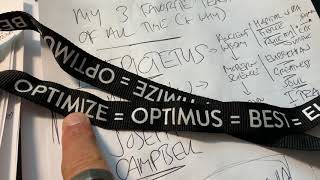
Brian Johnson ("Bry") presents a short YouTube talk naming his top three teachers—Epictetus, Abraham Maslow, and Joseph Campbell—and explains how each shapes his Optimize philosophy: Epictetus (ancient Stoic emphasis on virtue and control of response), Maslow (modern science and self-actualization/hierarchy of needs), and Joseph Campbell (the hero's journey and calling to heroic service). The video links ancient wisdom, positive psychology, and mythic storytelling to the idea of becoming the best/version of oneself and acting as a protector/modern hero.
Chapters
Hey guys, what's up? This is Bry. This morning I was sitting here working on my top three books of all time list. I'm going to create a series of top three videos, all time habits. What are the three best books I've read on habits? We have 600 philosopher's notes at this stage. What are the best on habits on Ancient wisdom, Modern science, nutrition, fitness, sleeping, breathing, focusing, celebrating life. We can have 30 different subjects basically covering all the different domains we want to optimize, which of course is what we're all about here at Optimize. Check us out at Optimize Me free two week trial. Get access to notes on all of these books and a lot more, etc. Etc. And of course we've got the Optimize coach program of which these books form the central part of it in the Mastery series to help you operationalize all this wisdom. But anyway, I was working on the Ancient Wisdom, my top three favorite books. Ancient Wisdom style, right? Which happened to be Aristotle's, Nicomachean Ethics, the Discourses by Epictetus, and the Bhagavad Gita, Gandhi's Bible, right? So I talk about why and then I realized, oh, wow, okay, so Epictetus is my number one all time favorite teacher, right? And then I'm like, but who are my other top three? Which leads me to this video. My top three favorite teachers of all time and why. So here we go. Which will also give us an opportunity to talk about our overall philosophy here at Optimize via these three individuals. Epictetus, ancient Stoic philosopher, Abraham Maslow, in some ways the godfather of the positive psychology movement. Right? So we've got ancient wisdom represented, we've got modern science represented. Then we have Joseph Campbell. Joseph Campbell, of course, is the scholar on the hero's journey. I happen to be in a documentary that you might have seen called Finding Joe with Deepak Chopra, Robin Sharma, Laird Hamilton, Tony Hawk, people like that. Check it out. Finding Joe. The producer Pat Solomon was actually inspired by my philosopher's notes on Joseph Campbell to produce that movie. It's awesome. You can watch it for free on YouTube, etc. So Epictetus, Maslow, Joseph Campbell. Let's see, where do we want to go? I'll talk about the philosophy quickly, then we'll swing back to them. So Abraham Maslow again created the hierarchy of needs. He defined the idea of the self actualizing, described the self actualizing individual, right? So this is how I represent it. Got kind of a triangle representing the hierarchy of needs. You Kind of go up this hierarchy and you strive to actualize your potential. And one of the big things that he did for us was tell us that as you ascend your basic needs, you get to a point where the need to actualize your potential is as fundamental to you as your need for eating and moving and sleeping and self esteem. In relationships, we call that soul oxygen. You need to give us all you've got. He said, what one can be, one must be. So if I had to summarize our entire philosophy at optimize, it would be that what one can be, one must be. Now it just turns out that Aristotle, who wrote my favorite book in ancient wisdom, defined the summum bonum, the highest good in life, which Epictetus tweaks a bit as eudaimonia via arete. If you asked Aristotle in the ancient Greco Roman philosophers, hey, what's the ultimate purpose in life? They would tell you to be a good soul, eudaimon, good soul, to live with eudaimonia, to flourish. And how do you do that? By living with arete, which literally or directly translates as virtue or excellence, but really means expressing the best version of yourself, moment to moment to moment. I like to draw these two lines. If this is what you're capable of being, and this is what you're actually being, and there's a gap, and you are not high fiving your inner soul, that best version of you, we call it the optimist best you, then that's where regret, anxiety, disillusionment, ick exists. When you close that gap by living with arete, there's no room for that negative stuff. You feel great, you feel this deep sense of eudaimonic joy. Longer chat, but I'll leave it at that. So eudaimonia via arte is essentially what all the great Greek philosophers, and then the, by extension the Roman Stoic philosophers taught us, right? Then you bring in Joseph Campbell and he says, well, that's not enough. You don't want to just be a great soul for the sake of it. You want to be a hero. And this is interesting. Let's see if I can do this with one hand. Because at our graduation, for our coaches, right, we give them lanyards. And the lanyards, pardon me for the awkwardness here, the lanyards say optimize, right? Which is from. I keep this in my pocket every day. So I remind myself, which is why it's so wrinkly and weird. Optimize equals optimus. So in Latin, optimus means the best, right? So we Named our business Optimize after the Latin optimus, which means the best. In our case, of course, we're talking about you being the best version of yourself. Then we say, well, the ancient Greeks called that eudaimon. That was the whole goal, again, is to be a eudaimon by consistently living with virtue and expressing the best version of yourself. Then we say, that's not enough. We need to be modern heroes. Optimize equals optimist equals best equals eudaimon equals hero. A hero, etymologically, in ancient Greek, was protector, wasn't tough guy or killer of bad guys. It was protector. A hero has strength for two. A hero is willing to do the hard work, to live with virtue, to have that strength. So that's the overall philosophy that these three gentlemen contributed to. Thank you. Epictetus Maslow and Joseph Campbell. Ancient wisdom, modern science, the modern hero. Other reasons why, very briefly, I love Epictetus. He's fierce. If you've studied Epictetus via his enchiridion and discourses and other commentaries on his work, you know, he's fierce, he's intense. He says that when you finish a session with a philosopher, you should feel like you just left a hospital, not a spa. And the sophists of his day, the ones who were really good at eloquently speaking about things, they inspired people. They got applause at the end of their talks. Epictetus says, no, no, no. When you listen to a philosopher, you should be sitting there almost wincing in pain, that they just revealed to you what you need to do in order to live in integrity, with your highest self and all the virtues that you need to embody, away you are from that perhaps should feel like you're leaving a hospital versus a spa. I love that idea. And of course, Epictetus gave us rule number one of Stoicism and life, which is obviously to live with virtue. But more specifically, he says that in all the Stoics, say, and again, Epictetus was one of the greatest influencers of Abraham. I'm sorry. Of Marcus Aurelius via his tutors. Epictetus taught the tutors of Marcus Aurelius. He is the guy Marcus Aurelius refers to the most in his meditations as his deepest inspiration. A slave, A former slave. I like that about Epictetus, too. I grew up without a lot of material resources. My father was an alcoholic. His father was an alcoholic. I came from a challenged background. I like the fact that Epictetus did as well. Fierce. That hospital trip you just got, surgery performed on You. And then rule number one is some things are within your control, some things are not. Ultimately, the only thing that is within your control is your response to a situation. So I draw these little dots. Stimulus response. Viktor Frankl, you may not know, was also deeply influenced by Epictetus. He was a stoic man's search for meaning. He attributes a lot of his philosophy to Stoicism, the cognitive behavioral therapy movement, which is arguably the most powerful intervention to reduce depression, etc. Those guys trace their wisdom back to Epictetus and, and the ancient Stoics. So there's a stimulus, there's a response. The only thing we have control over is our how we're going to choose to respond, how are we going to interpret that event, and then the virtue that we're going to put into practice. Do we have the wisdom and the self mastery to do what needs to happen right now and to close that gap between our capable being and who we're actually being? That's Epictetus in a nutshell. Then Maslow, of course, again, hierarchy of needs, self actualizing individual. He didn't talk about Eudaimon and Eudaimonic flourishing. He called it Eu psychean. Eu psychean. Good soul, the study of a good soul. That's what he was pushing in the 1950s and 1960s before the positive psychology movement took off with Martin Seligman and Mihaly Csikszentmihalyi and all the great teachers in that domain. But Maslow also had a lot of soul and he once looked at his class again. Imagine being a college student in the 50s or 60s in having your professor ask you, which of you is going to be great? Which of you is going to achieve greatness in your life and give yourself fully to the world? The class would stare at him blankly and he would say, if not you, then who? And I absolutely love his fierce commitment to science. He studied the greatest people of his generation, Eleanor Roosevelt, Einstein, all these great actualizers. And he said, we each are called to express the best within ourselves, to go for that sense of eudaimonic heroic greatness, which is one of the many reasons why I love Abraham Maslow. Then we have ancient wisdom, modern science, then we have Joseph Campbell. Why is it that you get inspired when you watch all these hero stories, whether it's Harry Potter or Iron man or any other story that can bring you to tears, when you see a hero leaving the comfort of their known world, going on a quest and then battling their dragons and coming back transformed and giving their gifts to the world because you have that power within you. What one can be, one must be. Express and high five the best within yourself by high fiving that inner soul by living with Arete and go give us all you got. Have the strength for two. Be a protector. Our world needs heroes today more than ever before. And if Joseph Campbell would say we need you to be a hero, we need you to express your greatness. And it's not going to be easy. Epictetus tells us says look, if you want to be an Olympic athlete, you got to train all those challenges in your life, that's God giving you a young buck. He says to train with so we can see what you're made of. We want you to be Olympic caliber heroic, heroically awesome version of yourself. So optimize equals optimize equals best equals eudaimon equals hero. These are my three favorite teachers of all time and why thank you Epictetus. Abraham Maslow, Joseph Campbell. Let's do this today.
More from Brian

Heroic +1: What’s THE Most Creative Act in the Universe?: Turning Around Glitches (#2024)









