PNTV: Grit by Angela Duckworth (#293)
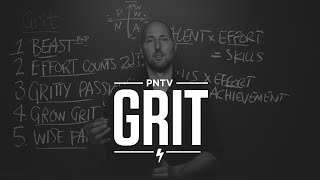
Brian Johnson summarizes Angela Duckworth’s book Grit: The Power of Passion and Perseverance. The video highlights five big ideas: (1) ‘Beast’ (Beast Barracks study at West Point showing Duckworth’s grit scale predicts persistence), (2) effort counts twice (talent + effort → skill; effort again → achievement), (3) gritty passion as enduring ‘compass’ rather than fleeting enthusiasm, (4) four psychological assets to grow grit (interest, practice/deliberate practice, purpose, hope), and (5) wise parenting/leadership combining high standards with high warmth to bring forth potential. The host also promotes his membership offering and related resources.
Chapters
Hi, this is Brian. Welcome Back to Philosopher's NodeTV. Today we've got another great book, Grit by Angela Duckworth. Grit Subtitle the Power of Passion and Perseverance this is an awesome book and you may notice that my chalkboard is already filled up with a bunch of goodness. I just went off, recorded something that I was really proud of. It was great. Fifteen minutes of what I thought was pretty awesome. I go check it out. Sound wasn't working. Had a little moment of an opportunity to practice some micro grit. And here we are, take two, Philosopher's note. Bunch of my favorite big ideas from the book. And just to highlight Angela Duckworth's background, she is the world's leading researcher on the science of grit. In fact, she created the field of grit and it's just phenomenal. So you may have seen her TED Talk. If not, we'll link to it below. And I was super excited to get this book. One of our members let me know, actually more than one, that her book was coming out. Pre ordered it, read it the day it came out. Here we are a couple days later and I'm like in Philosopher heaven. I had this book and Anders Ericsson's peak on the science of great expert performance. Angela actually talks about Anders Ericsson's work. We're going to talk about it a little bit today. And there you go. So, Grit, five big ideas. Let's start with number one. Beast. Beast. What is that? That is short for Beast Barracks. Angela Duckworth started her research on grit at West Point. So West Point is an extraordinarily difficult place to get into, right? And the top students from around the country spend literally like two years prepping to get in. You have to have a congressman or a senator or vice president write you a letter of recommendation to get into West Point. Extraordinarily prestigious, hard to get into. Yet once you get in, 20% of the class that starts will drop out by the end. And most of those drop out during the first seven weeks of orientation in something called Beast Barracks. And for decades, military scientists were trying to figure out how to decide and how to predict who's going to drop out and who's not. They have something called a whole candidate score, which looked at the gpa, the sat, their athletic and leadership experience, stuff like that whole candidate score. It didn't predict who made it through Beast Barracks. In comes Angela. She creates a survey, a Grit survey score, and is generated from this little survey, right, that measures your level of grit. She asked very simple questions on passion and perseverance which we're going to come back to a lot today, which are the two facets of grit. Things like, do you tend to move through setbacks? Tough things happen, and you move through it. Is that like you or not like you? Are you passionate about stuff, but then get excited and then kind of drop it after a while? Is that like you or not like you? Depending on your answers to these questions and the test that she has in the book, there's only 10 questions, but it will create a grit score. And that grit score that these West Point cadets took predicted who would make it through the beast barracks with crazy, astounding levels of predictive value. Nothing else they had done in the decades before would predict the the way that her grit scale would predict. It turns out that grit predicts a lot of the things that we want to see in our lives. It is the secret sauce of creating a great life and achieving our potential. So that's the basic idea of our first big idea behind grit, passion plus perseverance. Let's look a little more about how we cultivate our grit. Angela tells us there are two variables, talent and effort. But she tells us, look, effort counts twice in the equation. All other things equal, right? So let's take out luck and good teachers, which are both very important. But here we're talking about the psychology of achievement. What's going on in your mind and how you're behaving that leads to great outcomes. Since there's really only two variables, right? You have talent and you have effort. She says that talent is basically your ability to create deeper skills, right? So you have a certain level of talent. When you put in effort, you can get better at something, right? That's the basic idea of talent. It matters, right? Different people have different levels of talent, but it's only when you have talent that's matched with effort that you create skills. Raw talent isn't going to do it. You got to put in the effort to create skills. Then once you have skills from this effort times talent, you take those skills and you put in more work, you put in more effort, and then you have achievement. If you notice, effort counts twice. Effort shows up in both parts of the equation in the skill development and then in the skill application. So you're actually productive and you achieve great things in life. Now, that's exciting because we have control over the amount of effort that we put in. Gritty people put in a ton of effort over an extended period of time. Next big idea, gritty passion. There's a difference between the type of passion that you can have for things you're excited about. Angela starts by saying, look, gritty people who endure with passion and perseverance on a goal that's important to them over an extended period of time, they love what they do. You're not going to find any greedy people that are like, no, I hate what I do. It sucks if that's your attitude. And you're only doing it because you have to do it. There's no intrinsic motivation. There's no way you're going to have the grit to persevere passionately over an extended period of time. Right. You may show up and do a decent work, but you're not going to do great work. So love is extraordinarily important, but it's not any kind of love. She says that our passion, we don't want it to be like fireworks where you get fired up about something, you do it for a while, and then you kind of get bored and you go do something else, and you get fired up, you do that for a while, and then you go tiptoe to something else, fire it up, and then you go do something else. That's not the kind of passion we're talking about. She says it's passion that endures. It's more like a compass that points the direction than a firework display that goes off in beautiful awesomeness, but then it kind of fades away. Right. We want a passion that guides our lives. And she talks about it in very similar ways that Gary Keller talks about it in the one thing. What's your ultimate concern? She talks about, you need to have an ultimate concern that your compass that you're passionate about, you're willing to give your life to, and you're willing to structure your entire life around. She shares some extraordinary examples that echo the wisdom that Mihaly Csikszentmihalyi shares. And in his great book Creativity, when you discover this passion, right, then you need to protect it and you need to go all in on it. In purpose 101, we talked about black hole focus. You're all in your entire life, and all your little minor goals are supporting that big ultimate concern, that compass of yours that you're most passionate about. That's our third big idea. The fourth big idea is growing grit. So Angela tells us that we can grow grit from the inside out, and grit can be grown from the outside in. Outside in is stuff like parenting, which we'll talk about in a moment. Cultures in which we live, sports team, stuff like that. And then we Also obviously grow it from the inside out. Four psychological assets that she talks about that are important that she's found in gritty individuals. Here they are. The first one is interest, which we just talked about. You need to have a passionate interest. Interest in something that truly fires you up over in a sustainable period of time. And then you need to practice that. Interest isn't enough. You've got to actually practice deliberately. Anders Ericsson, peak style. Check out the episode on that. We'll link to that below for how to do that. You need to stretch out of your comfort zone, right, and be willing to extend yourself to do great stuff. And then the third psychological asset is purpose. So if you want to have deep passion, you need to connect what you love to do with what you're committed to giving to the world. So it's got to be about more than just you. You got to bring service into the equation. That's the essence of purpose. And then our fourth psychological asset is hope. Hope. We've talked about this a lot lately. Shane Lopez's Making Hope Happen on the Science of Hope. Angela talks about the fact that we're not talking about hope in a. I hope. I kind of wish that my life is better in the future. You know, maybe it will be. That'd be cool. Gritty people, she says, resolve to make their lives better in the future. That's their hope. It's a very engaged, active hope, better future agency, a belief that they have the power to make it better, and then a willingness to try different pathways. That's the science of hope. That's the kind of hope we want to cultivate that gritty people have. So interests, practice, purpose, hope. The four psychological assets to growing are grit. And then the fifth big idea is wise parenting. So she's got a great section on cultivating grit from the outside in. If you're a parent, obviously you want your kids to thrive and to flourish. I certainly do with our son. She says wise parents do something interesting. And she has a cool little kind of chart that outlines this might be a little hard to see, so bear with me here. But basically, wise parents are up here in this little quadrant. And what they do is they combine high standards, right? So they've got high standards, super high standards versus low standards over here. And they have warmth, they're supportive, they're kind and supportive to their children while holding high standards and knowing that they're capable of a lot and challenging their kids to do that. Now you juxtapose wise parenting with authoritative parenting. Authoritative parenting has High standards, but they have very low warmth. They're cold. Hey, you can do this. Do it right. There's no warmth to it. There's no supportive, nurturing capacity to it. On the other hand, over here, you. You have low standards and high warmth. When you're talking about permissive parents, permissive parents are, oh, yeah, you know, do whatever you want. That's cool. Low standards, but they're super supportive and warm. But you need to have both high standards and high support and warmth. If you don't have either, you're a neglectful parent. If you're watching this, my hunch is you're not following on that side of the spectrum. But check in. Are you a little bit too permissive in not having high enough standards or. Or are you a little bit too cold and you need to have more warmth? She shares a really cool study in the book, a number of them, obviously, but one in particular on this context, and I should say that she describes the Latin root of the word parenting. Do you know what that is? I didn't know until I read this book, and it was just awesome. I created a little micro class on this as part of my Prep for Fatherhood 101. Check that out as well. But for now, she says parenting comes from the Latin, which literally means to bring forth. So a parent brings forth the potential within their child. And she says, look, it's not just parents and children. It's anyone in a position that can support someone else in bringing forth their potential. Whether you're a teacher or a coach or a leader of any kind, you are parenting in bringing forth your potential. And the best way to do that is, is to hold high standards with high warmth. Yes. And to both of them, she shares this study on teachers. Right. So researchers come in to a classroom or however many classrooms, and they have the teachers kind of grade and offer feedback on an essay that these students write. They do everything they normally do. Oh, hey, you know, feedback. Try this. You may want to do that. Little feedback's in the margin, right? And then they give them to the researchers, all those essays with feedback. They give them to the researchers, who then take them and randomly give them one of two different post it notes. On one post it note, kind of the control group, they have just a simple message that says, hey, post it. Here's some feedback on your essay. On the other post it note, they said something along the lines of, I'm offering you this feedback because I have really high expectations of you and I really believe you can meet those expectations. Gets me a little. I feel that even when I say that, can you imagine receiving that? I have really high expectations for you. So I'm going to give you this feedback, and I know you can reach them. That attitude of kind of, let's do it together. High standards, high warmth. So that's first part of the study. The kids get these back. And then the second part of the study was to measure which of these kids did more work, which one submitted a new draft of this essay. The short story is the group that got the neutral, hey, here's feedback. 40% of them submitted a revised essay based on the feedback they got. The other group that had high standards and high warmth, 80% of them submitted a new paper. Wow, that's inspiring for me. I really want to do better. Right? That's awesome. That's wise parenting, wise leadership, wise teaching, wise coaching, high standards, high warmth. And that leads us to kind of the essence of what we're doing as parents. What are we bringing forth as teachers and coaches and leaders? Our genius within. And Angela talks throughout the book. She starts the book and she ends the book and then brings it up throughout about the fact that her father, when she was a young girl, used to say to her, you're not a genius. You're no genius. And she says at the end of the book that her father was right when he said that she wasn't a genius. If he defines genius as someone who can achieve great things with no effort, well, in that case, she wasn't a genius and he wasn't a genius. But if you define genius as someone who's willing to show up with passion and perseverance on a goal that matters to them over the long run and to structure their lives and do their best to show up with excellence and to really create something of value in the world, well, then her father was a genius who did extraordinary things right, and she was a genius. And most importantly, we each can be geniuses. We can bring forth the latent potential within us and actually give our gifts and greatest service to the world. So powerful stuff. Parent yourself well, everyone around you as you cultivate your four psychological assets. Interest, practice, purpose, and hope. Get your gritty passion on. We're not talking about fireworks where you bounce from passion to passion, but a sustained, enduring compass that guides you. And in your life, remember that effort counts twice. Talent times effort. There you go. You got your skills. Take those skills, put in more effort, and you've got achievement. You've got productivity. Effort counts twice. It's within our control. Gritty people show up, they persevere, they work hard. And then we had that beast Barix. And remember that grit is an extraordinary predictor of all the things you want to achieve in your life. Thank you Angela for a great book. I highly recommend it. As I said, this is my favorite book of 2016 at this point. Super inspiring, practical. If you are interested in optimizing and actualizing, I think it's a must read. Check it out. What was your favorite big idea? What jumped out and landed for you? Think about it, reflect on it, write it down. If you really want to make it stick, share it with a friend, and most importantly, go out and embody it as you have another awesome gritty day. See you. Hi, this is Brian. I hope you enjoyed that PNTV episode. A lot of people don't know all the stuff I do beyond these free videos I share on YouTube, so I thought I'd do a quick video to give you an overview of our membership program that you can get access to and get a ton of other stuff. So here's a quick look. 10 bucks a month Join the Optimal Living Membership program. You get Instant Access to 250 philosophers Notes on some of the best Optimal Living books out there. Old school classics, positive psychology, Modern stuff, Mindfulness, Peak Performance, purpose, neuroscience, wealth, etc. What you may not know is that in addition to the PNTV episodes, I create PDFs on all these great books. So six page PDFs. Let's take a look at one of them. Joseph Campbell, you want to figure out how to live your hero's journey? Well, this is a great place to start. I basically pull out my favorite big ideas, riff on them, connect them to other books and other ideas and help you apply this wisdom to your life today. That's what the PDF looks like again. We have 250 of these on all these different great books and then I record those PDFs as an MP3 so you can listen to that MP3 while you're on a walk or working out or doing some errands or whatever that is. Philosopher's Notes. A lot going on there. And then in addition to Philosopher's Notes you get access to Optimal Living classes. Optimal Living 101 idea here is that all those great teachers come back to the same big ideas again and again and again. I distill those ideas into classes. Super practical, fun, inspiring classes ranging from habits 101, confidence 101, getting stuff done one on one meditation 101. Instant access to all those classes and then Future classes include Relationships 101, Energy 101, Purpose 101, Business Goals, etc. Those are our full length classes. And then I create micro classes. Two to three to five minute little bursts of wisdom on my favorite great ideas from these great books across the domain that you want to optimize in your life. So we have dozens of these so far. I create 50 new micro classes every month and 10 new philosopher's notes every month for 10 bucks a month. So we're blessed to have thousands of members who are enjoying the program and sharing some incredibly kind words with us. And super simple. 10 bucks a month. Cancel anytime. Would be honored to be a bigger part of your life and I appreciate your support. And here's to optimizing and actualizing.
More from Brian

Heroic +1: What’s THE Most Creative Act in the Universe?: Turning Around Glitches (#2024)









