PNTV: Move Your DNA by Katy Bowman (#318)
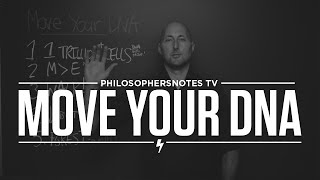
Katy Bowman argues that movement, not exercise, shapes your genes. Ancestral humans moved roughly 3,000 minutes daily versus 300 minutes weekly for active modern people. Frequent, varied movement throughout the day—short walks, posture shifts, micro-breaks—stimulates healthier gene expression than single workout sessions.
Questions this video answers
July 11, 2016.
He cites estimates ranging from 15 trillion to 70 trillion (phrased as “a trillion plus”).
Ancestral humans: ~3,000 minutes/week (≈8 hours/day); modern active people: ~300 minutes/week — a roughly tenfold difference.
Do multiple short walks (e.g., three walks × one mile) rather than one longer walk (one walk × three miles).
He sets a timer and takes movement breaks every ~20 minutes for 1–10 minutes.
Chapters
Hi, this is Brian. Welcome back to Philosopher's Notes tv. Today we've got another great book, Move youe DNA by Katie Bowman. Move youe DNA Subtitle Restore youe Health Through Natural Movement Katie Bowman is one of my new favorite teachers. We just covered her. Don't just sit there and. And she has another book called Whole Body Barefoot that I'm excited to read and cover as well. She's one of the world's leading biomechanists who helps us apply proper alignment and load balancing and basically proper movement throughout our days with optimal living. She has a super popular podcast called Katie Says Check it out and a blog called Nutritious Movement. As I said in the last episode, Alexandra has been into her forever and I am excited to catch up to her party. Philosopher's Note. Bunch of big ideas. Five of my favorites here. So move your DNA. Let's start with a pop quiz. How many cells do you think you have in your body? Don't look up there. How many cells do you have in your body? Is it a million, 10 million, 100 million? Or maybe a trillion plus? You have a trillion plus. Estimates range from 15 trillion to 70 trillion cells in your body, each one of which in its nucleus, you may recall from your science class, I vaguely do, has DNA in it, right, which is controlling the replication of those cells and basically everything going on within your body. Over a trillion cells that are host to your DNA. Right. And Katie says that scientists, the bulk of scientists, are missing out on the most important factor, certainly one of the most important factors in epigenetics. Of course, we know that above genetics, epigenetics, our environment influences the expression of our genetic code. We know that we need to eat well, we need to sleep well. We don't want to live in a toxic environment if we want to most healthfully express our genes. But she says we're ignoring one of the most essential things, which is the fact that out of these trillion, 15 trillion, 70 trillion, whatever the number is, cells, almost all of them, have built in mechanisms to sense our movement or our lack thereof. Therefore, movement is one of the most important epigenetic factors we should be paying attention to. Yet no one is paying attention to that at the level she thinks we should be. Hence, move your DNA, move your body throughout the day, and know that as you do that, you're triggering the most healthy expression of your genetic code you possibly can. Of course, the book is all about how to do that. Not just moving more, but moving better. She has a ton of exercises in the Science Behind Biomechanics in the book, Check it out. Trillion cells. That's just crazy to me. So, second big idea here is differentiation she makes between movement and exercise. So I want you to think for a moment about exercise. There's your circle of exercise. Think about all the things you could do that you consider exercise, right? Whatever that is for you. For me, it's things like rowing and burpees and doing some stretching or yog, whatever, other strength, conditioning, occasional run. What is it for you? What things fall into exercise for you? Think about that and then realize that exercise is very different than movement. And she has these circles that she draws. She says, look, there's exercise, there's movement. Movement transcends and includes exercise. And we want to move our DNA by focusing here on the macro level. Exercise is important. We want to make sure that we're moving our bodies vigorously on a healthy level, consistently, right? But we want to move throughout the day. As I mentioned in the episode, on her other book and on Joan Vernakos, the NASA scientist, great book. Sitting kills moving heels. You can be super active and sedentary. You can go work out and exercise on your way to work, stop at the gym, workout for 60 minutes, go crush it, right? And then go to work and sit down all day long, hop back into your car, sit down, hop in to your house, or walk into your house and sit down and watch TV for a few hours. And you're active. You exercise, but you're otherwise sedentary. That is not what we want to do for these trillium cells. She says, if you go back and look at the ancestral heritage of our species, right, we're proud of ourselves. If we work out like 300 minutes a week, like, you're pretty active, right? If you're busting out five hours of exercise. But she says our ancient ancestors worked out, move their bodies. I should say important distinction, not exercise. They moved their bodies 3,000 minutes a week, eight hours a day. Basically, they moved their bodies. And the most active among us are moving our bodies 300 minutes a week. That's a tenfold difference. And she says it doesn't mean that you should go sell everything and move to a cave so you can move all day long. And what's exciting is, first of all, we do want to make sure we're exercising right, but then we want to expand into this zone and do everything we possibly can. Here I'm moving right now. This moving my body standing up right now. Those are simple movements, tiny movements, but they count. We're going to talk about walking in a moment, beyond the exercise act and actually just moving your body. I've set a timer on my watch, on my whiteboard. Right now I have perpetual motion machine. A phrase from Joan Vernakos, her great book. She says, look, gravity challenges us to basically be perpetual motion machines. We want to be moving all the time. We want to match our ancestral 3,000 minutes a week by moving more consistently. Now I read a lot and I write a lot. Obviously I find myself in a sedentary position. I'm just locked in for like two hours at a time. I can easily be and have been active, but sedentary. So for me now it's just this one big game. I'm kind of obsessed with perpetual motion machine. Bri, right? How can I move consistently throughout the day when I'm sitting and typing? I'm still sitting and typing. Katie wrote, typed her entire book. Stretching, laying on the ground and stretching. She was moving. That's a subtle movement. That's not exercise. She wasn't at a yoga class, but she was still moving while writing her book. That's awesome. Whole long conversation with that, right? So I'm still sitting. I'll migrate to getting on the ground at some point. I'm not quite ready for that yet. But I'm moving consistently. I'm even stretching while I'm typing and whatever, moving, changing my posture, little movements matter. Then every 20 minutes, my little alarm goes off. I get up and I do some movement for a minute or two or three or five or ten. I move my body. Whether that's a quick set of step back, simple burpees, 10 of them, right? Or some jumping jacks or going for a walk or some stretching or whatever it is. Perpetual motion machine. That's what we want to be moving throughout the day. Remember our ancestors, 3,000 minutes a week to our 300 minutes. For those of us who are considerably active, third big idea is to walk. One of the primary things we want to do is walk more. It defines our species really. Right. We've been bipedal for millions of years. Way longer than having stone tools or fire or a big brain, right? We need to move our bodies. Walking is a great way. She's got some great tips on how to get your alignment right in the book. But she also makes the point that we need to do so frequently. She says, look, if you go out for a three mile walk once a day, so let's say you do one walk times three miles, right? She said you'd be much better off to do three walks times one mile. And move your cells more regularly, more frequently. Put a load on them more often than doing it just once a day, than waiting 24 hours to do it again. She challenges us in the book. You're reading it, right? And she says, okay, now stop and go out and don't read another word until you've walked for five minutes. I read this book, it was super early on a morning, and I'm kind of like, okay, well, I'm not sure if I want to go on a walk. I kind of want to. I'm excited to read the book. So I started out being reluctant in my commitment to honoring her request and command. And then I got excited. I went for a walk, brought a little dog, Zeus, out. It's pretty sweet. Going on the little loop, bang out my pull ups. Awesome. Ten minutes later, I'm feeling fantastic. And setting up these regular walking breaks is a really, really smart idea. So think about how you can walk more throughout your day. She says, whether it's one minute or three minute or five minutes, just walk around your house or your office or go outside briefly. Find little opportunities to move, as Michelle Seeger calls it in, no sweat. Opportunities to move, they're always out there. Walking is a great thing to consider integrating more often. Fourth idea is another cool one. She says, we move physically less than ever before, right? Again, the active among us are moving a tenth of what our ancient ancestors did, all of them. So we're moving physically less than ever before. But we move like we completely rest, almost never, right? So we're moving less, but we completely rest and turn off all physical stimulation. Almost never, so. So physical stimulation, things like noise, right? In nature, something that's 75 decibels would signal an avalanche or an earthquake. If you were just hanging out in nature tens of thousands of years ago and you heard something at 75 decibels, what would qualify at that level is an avalanche or earthquake. It'd be a serious warning sign for you, right? And you were always attuned, listening to nature because loud sounds could be threats. Now, our world consists of all kinds of stimulation above 75 decibels that we just take for granted. You walk down a City Street, 75 decibels, your phone ringer is often over 75 decibels. So we're moving less, but we shut off completely almost never, right? We need to turn off all that noise. We need to turn off all the data that's streaming at us. We need to turn off all the light that's Emitting in our lives the unnatural light, particularly at night as we talk about all the time. And we need to completely relax way more often than we do. One of the best ways to do that is to go outside and take a forest bath. She talks about. In Japan, they've studied this a lot and they've identified the actual scientific underpinnings of why nature is so restorative. We talked about this In Focus by Daniel Goleman. They call it attention restoration therapy. Going out into nature and actually restores your attention because you're shutting off your focused mind and you're allowing it to wander, but you're also getting physical benefits. Katie tells us. She says there's something called phytoncides. Might be mispronouncing that, but you get the idea. Phytoncides that are being emitted by the trees, that help them ward off bugs and rot. Right. But we absorb that and it's a positive thing for us. It's like taking a forest bath, the researchers in Japan say. So get out in nature as you do your walking and then when you're in nature, you're shutting off. Hopefully if you can actually get to a place in nature where you can't hear the air blowers and all the other noise of city life and actually slow down long enough to get fully charged. Another tip, by the way, on reducing the stimulation. Obviously turn your lights off at night. Do the digital sunset that we talk about in optimal sleep. 101. Turn your radio off on the way to work next time you go out on a workout. Awesome way to learn, right? Or whatever. But turn off the music right and go once in a while without listening to anything. Just allow your mind to cool down. This is one of my huge practices I love. I never have the radio on or anything on when I'm driving. That's a time for me to relax and slow down whenever I go out on a hike or a walk. I don't like to listen to things or although whole nother conversation. I'm looking to see how I can listen to more books rather than sitting and reading them. It's a whole systems challenge for me. But finding ways to cool off your mind and just relax, get to zero, get to completely shutting down more than we do right now. Remember that movement transcends and includes exercise. You need to change your mindset so you're not thinking about how you exercise more. Who has time to exercise more if you're already exercising 30, 60 minutes a day? That's not what we want to try to do. We want to move more. And what's exciting is for me in my game, perpetual Motion Machine, it doesn't take me any more time. I don't need to schedule any more time. I need to take little breaks anyway. And those little one to two to three minute breaks aren't costing me any time. Right? They're actually just replenishing me. I don't need to put on my workout clothes and go to the gym or whatever, although my gym is right across from my office. But you get the idea. You want to find ways to move and quit thinking that it's all about exercise. Then remember you are moving your DNA which is inside trillions of cells within your body. And you need to do so if you want to optimize that epigenetic expression of your latent potential. So there you go. Move youe DNA. I really enjoyed it. Check out Katie and her work. Katie says Podcast Nutritious Movement Blog post. I think you'll dig it and I appreciate your work Kati. And for now, think about what idea landed. How can you take a baby step in becoming a perpetual motion machine? If you feel so inspired, get on that. Have another awesome day. See you. Hi, this is Brian. I hope you enjoyed that PNTV episode. A lot of people don't know all the stuff I do beyond these free videos I share on YouTube. So I thought I'd do a quick video to give you an overview of our membership program that you can get access to and get a ton of other stuff. So here's a quick look. Ten bucks a month. Join the Optimal Living Membership program. You get instant access to 250 philosopher's notes on some of the best Optimal living books out there. Old school classics, positive psychology, modern stuff, mindfulness, peak performance, purpose, neuroscience, wealth, et cetera. And what you may not know is that in addition to the PNTV episodes, I create PDFs on all these great books. So six page PDFs. Let's take a look at one of them. Joseph Campbell, you want to figure out how to live your hero's journey? Well, this is a great place to start. I basically pull out my favorite big ideas, riff on them, connect them to other books and other ideas and help you apply this wisdom to your life today. That's what the PDF looks like again. We have 250 of these on all these different great books and then I record those PDFs as an MP3 so you can listen to that MP3 while you're on a walk or working out or doing some errands or whatever that is. Philosopher's Notes. A lot going on there. And then in addition to Philosopher's Notes, you get access to optimal living classes. Optimal Living 101 idea here is that all those great teachers come back to the same big ideas again and again and again. I distill those ideas into classes. Super practical, fun, inspiring classes ranging from Habits101, Confidence101, Getting Stuff Done101, Meditation101, instant access to all those classes. And then Future classes include Relationships 101, Energy 101, Purpose 101, Business Goals, etc. Those are our full length classes. And then I create micro classes. Two to three to five minute little bursts of wisdom on my favorite great ideas from these great books across the domain that you want to optimize in your life. So we have dozens of these so far. I create 50 new micro classes every month and 10 new philosopher's notes every month for 10 bucks a month. So we're blessed to have thousands of members who are enjoying the program and sharing some incredibly kind words with us. And super simple. 10 bucks a month. Cancel anytime. Would be honored to be a bigger part of your life and I appreciate your support. And here's to optimizing and actualizing.
More from Brian

Heroic +1: What’s THE Most Creative Act in the Universe?: Turning Around Glitches (#2024)









