PNTV: Rethinking Narcissism by Dr. Craig Malkin (#351)
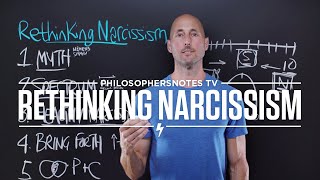
Dr. Craig Malkin argues narcissism exists on a spectrum, not as a binary disorder. Healthy narcissism means feeling special while maintaining secure relationships. To cultivate it in kids, combine high warmth with high standards and tolerance for imperfection.
Chapters
Hi, this is Brian. Welcome back to another episode of Philosopher's Notes. TV Today, another great book, Rethinking Narcissism by Dr. Craig Malkin. Rethinking Narcissism. Subtitle the bad and surprising good about feeling special. Rethinking narcissism. Fantastic book. Dr. Craig Malkin is one of the world's leading researchers on the science of narcissism. He challenges some of the myths out there and lets us know that of course there are raging narcissists out there on the upper end of the narcissism spectrum, but there's also a spectrum and that feeling special in the right degree, you don't want too little and, and you don't want too much is actually a healthy thing. So the book walks us through the science of that. I capture some of my favorite big ideas in the six page PDF and 20 minute MP3 note. And now we have our five big ideas. So let's start with the myth of Narcissus. My hunch is you are familiar with it, but Craig gives us a great story, a rendition of it. So it goes something like this. Narcissus is divinely beautiful, right? So his parents include some divinity in his lineage, right? And he is just a stunningly good looking guy, right? He's got these locks kind of tumbling down. Everybody falls in love with him. Men, women, young, old. Everyone is just enamored by Narcissus, right? And what does he do? He ignores everybody, he rebuffs everybody, and he turns down everybody who wants to be connected to him. One person gets so upset that they go to the goddess Nemesis, the goddess of revenge, and he begs her to curse Narcissus. She looks at the situation and says, you know what? He deserves it. So she curses Narcissus. What's her curse? Her curse is one day he's cruising around the forest. Everyone's looking at him and enjoying him. He's ignoring them all. He comes up to a pond and that's so still because Nemesis cursed it to be that he can see his reflection in the water, which is like a mirror reflecting back his own beauty. Narcissist goes to take a drink and he's captured by his own beauty the same way everyone else is toward him. He falls in love with his own image. He talks to himself and says, wow, you're beautiful. Tries to engage in conversation. No response. He moves in to try to kiss himself in that reflection in the water. And then his image just ripples away. And finally, in despair, he Jumps in to try to connect with this beautiful image, and he's never seen again. He dives deeper and deeper into his own image, and he's never seen again. So fast forward, 20th century psychologists are understanding this idea of feeling too special, and they call it narcissism. And there's different approaches to it that Craig walks us through, right? Some thinking, you know what, a little bit of this is healthy. Others thinking, this is super dangerous. We need to always be concerned about it. And again, bad and surprising good about narcissism. But that's the myth of nemesis. He falls so in love with himself, and then he dives in and he can never come back. Now, what science shows from. From a lot of the research that Craig has done is that there's actually a spectrum of narcissism. There's super unhealthy on both sides of the spectrum. Too much feeling special, becoming untethered to others, and too little feeling special. So the spectrum looks something like this. You've got 0 on this side and 10 on this side. And another character from the myth that Craig talks about, Echo. So do you know the origin story of Echo? I did not. But apparently echo, I think she was a wood nymph or something of the sort, and was super chatty, super outgoing, always talking, and she annoyed some goddess, believe it was Hera who cursed her such that she couldn't talk anymore, she lost her voice, and all she could do was repeat back that which she heard, echo. So someone says something to her and she can just repeat it back. So that's on this side of the spectrum of narcissism. Craig calls these people echoists. You can be an extreme echoist or you can be a subtle echoist. And this is going to be our healthy zone. We'll talk about next. And then you have the raging narcissism on this side, right. Completely untethered from other people. It's all about them obsessively, etc. Etc. So, but there's a spectrum here, and that's the important distinction, is that it's not either or. There's a spectrum. And the element that's kind of aligned on this spectrum or arrayed on the spectrum is a sense of feeling special. That's ultimately what narcissism is. The echoist doesn't feel special at all. They're all about other people's needs, echoing their needs all the time. The narcissist is obsessed with feeling special. They need to be the center of everything all the time. They're disconnected from everybody else. What we want to do is move toward the healthy side of things, which again, we're going to talk about in a moment. One more way to think about this is the U curve as Malcolm Gladwell describes it in Adam Grant, or it's officially known as the Yerkes Dodson law. Which means that too little of something is not good. If this is a scale of good and not so good, too little of something is not good, too much of something is not good. You want just the right amount, which is basically our spectrum here. And that's pretty much how everything goes. You can throw caffeine into this, no caffeine. Your performance will be better with a little bit, but too much and it drops well. Guess what? Same thing with feeling special. Not enough of it. Not good. Healthy amount, good. Too much, not good. That is a quick look at our spectrum. So what is healthy narcissism? First idea is healthy narcissism. Really? Yeah, healthy narcissism. You can have a healthy sense of feeling special. He uses, he actually has a test in there which you can find online as well. We linked to it in the note. We'll link to it in the comments section on YouTube. Or you can just google Craig Malkin. I think his website is Dr. Craig Malkin. But google Craig Malkin narcissism test and he tests you for your echo tendencies, your narcissism tendencies, and your healthy narcissism tendencies. It's a very cool test. And again, we want to do everything we can to increase our self awareness, to know when we're falling one way or the other and to optimize. Long story short, he says that the phrase, if you will, that captures the healthy narcissist more than any other. They have big dreams, they're willing to feel special enough to think they can do something meaningful in the world. That's really important to give us a sense of vitality. And they're not going to sacrifice their relationships in the process of going after those big dreams. The tether that keeps us in the center here ultimately is love. It's secure relationships. It's a sense of caring about others. So whereas the narcissist all about big dreams and screw others kind of thing, right? They could afford to increase their concern for other people. The echoist, on the other hand, is all about other people. They could afford to increase their sense of specialness and be willing to dream a bit more. But that's our healthy narcissism. Another thing worth talking about briefly is that the number one Thing that creates this unhealthy narcissism is a complete, basically a complete unwillingness to deal with human imperfection, right? Deal with uncomfortable emotions and to have shame for any faults that might exist. Then that insecurity and insecure relationship to themselves and others leads to an overcompensation which becomes toxic and dangerous at the higher ends of the spectrum, right? So the gifts of imperfection. Brene Brown Self Compassion by Kristin Neff Being willing and comfortable to deal with negative emotions is one of the most powerful ways, again, to navigate this way, if that's the direction you need to move. The fourth big idea is from a chapter on how to bring forth healthy narcissism in your kids and by extension, in your own life. So he basically says in his own way, the same exact thing that Angela Duckworth says. If you want to build grit your kids, and recall the Latin etymology of the word parenting means literally to bring forth. To parent is to bring forth. So a parent is bringing forth the latent potential in their kids. We really are parenting ourselves first and foremost and bringing forth the best within ourselves. Well, how do you do that? He walks us through four parenting styles, one of which is effective for creating healthy narcissism, which happens to be the exact same parenting style, of course, that elicits grit. So the short story here is that you want to be high on two measures. You want to have high standards and you want to have high warmth. If you have that, you are a wise parent, or to use somewhat awkward language of the parenting researching field, you are an authoritative parent. Parent. Authoritative versus authoritarian. Authoritarian has high standards but no warmth. So they show up here. It's like a drill sergeant, yeah, I'm going to hold you to high standards and I'm not going to give you any love and warmth and compassion, right? You can do that to yourself or you can do that to your kids. Not going to help. That is going to tend to create this, whereas this is going to create the healthy narcissism. And then you could have a ton of warmth but low standards. And then you fall into what they call a permissive parenting style. A permissive parent is super warm and loving and hey, you can do it. They don't set any boundaries. They don't have high standards, they don't have high control. You need both. You need the warmth and you need the high standards. What Malcolm says here, Craig says here, is that this group never involves other people. Their kid can do whatever they want, but you need to create controls and let them know your Kids know and yourself know that other people matter. Right? We've got to bring that in, which the authoritative people do, right? It's all about doing the right thing for other people. But they miss the warmth in that regard. And then the final one is neglectful. You don't have high standards and you're not warm. You're basically just not present. Right? And there's obviously extreme versions of this and subtle versions of this. If you're constantly tapping away on your smartphone and you're at the park and why connect with your kid? You can connect to your smartphone some more. Our last note, we talked about the factor a couple ago. We talked about the fact that people spend up to four hours on their smartphone. What is that? 100 hours a month on their smartphone, which equals 11 years of their life, right? Well, get rid of that and connect. Be warm, be present with your kids. Give them the gift of secure love. That's the best possible way to create a healthy narcissist. If you're constantly absorbed in yourself and not giving a secure foundation for your child, you're going to wind up on a side of the spectrum that you don't want to be on. So wise parenting, bring forth the best within yourself and your kids. The fifth big idea brings the point home of the whole reason why we want to rethink narcissism and deal with the good side of it. There's a beautiful image that he has. We're using up all of our little chalkboard here today. So the healthy narcissist, the source of a passionate life is this. You have a sense of passion, right? Self interest. And you have a sense of compassion. You care about what other people are up to and how you can serve them. Passion plus compassion. This is where we want to play. That's how you land here with your big dreams that you're not going to sacrifice relationships in pursuit of. That is a very quick look at how to rethink narcissism. Again, Passion plus compassion. Bring forth high standards and high warmth. Healthy narcissism might sound like an oxymoron. It is not. Secure relationships, comfort with imperfection, etc, the spectrum which is the real contribution here. Narcissism exists on a spectrum of feeling special. We don't want to get caught at either end. The echoist or the narcissist. And then we have the myth of Narcissus, right? He would have done really well if he had been passionate about his life and excited about things and he took the time to say hi to all the people that wanted to connect with him love 2.0 style and engaging in their life, caring about what they're up to, having that compassion to fuel his passion. So there you go. If you enjoyed I think you'll enjoy the book and the note of course. For now, what was your favorite big idea? What jumped out and landed? Where are you intuitively on this spectrum? Go take the test for feeling like it and make today another awesome day. See you. Isn't it a bit odd that we went from math to science to history, but somehow missed the class on how to live? For some wacky reason, optimal living 101 never made the schedule. Of course, it's too late to go back and change that and you're too busy to read full time to catch up. But if you're like us, you're all about optimizing your life so you can actualize your potential. So imagine this. Imagine having someone read the best books on how to optimize your life and pull out the big ideas that can really change your life. You know those sections? You underline an asterisk and mark all up. Then imagine that guy me connecting those awesome ideas to other great books and helping you actually apply the wisdom to your life today. Well, that's what I do with something we call Philosopher's Notes where I've distilled hundreds of great books into 20 minute super practical summaries. Then imagine me taking the absolute best big ideas from those great books and sharing them with you in hour long Optimal Living 101 classes on everything from productivity, purpose and confidence to nutrition, goal setting and conquering procrastination. Helping you optimize every facet of your life so you can actualize your potential. You. You've got a personal trainer. I'm kind of like your personal philosopher. Ancient wisdom, modern science, and practical tools. That's what our optimized membership program is all about. If you're feeling it, we'd love to have you join us.
More from Brian

Heroic +1: What’s THE Most Creative Act in the Universe?: Turning Around Glitches (#2024)









