PNTV: Self-theories by Carol Dweck (#273)
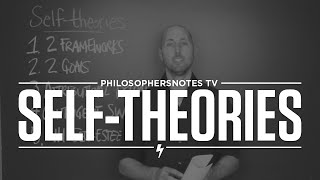
Carol Dweck distinguishes between fixed and growth mindsets: believing your abilities are locked in place versus believing they can develop. People with fixed mindsets avoid challenges to protect their image; growth mindset people embrace them to get better. Praising effort and strategy, not talent, builds the resilience that actually matters.
Chapters
Hi, this is Brian. Welcome back to Philosopher's Notes tv.
Today, another great book, Self Theories by Carol Dweck. Self Theories subtitle Their Role in Motivation, Personality and Development Essays and Social Psychology. So Carol Dweck is one of the world's leading researchers on personality, social psychology and motivation. We featured her classic book Mindset, which nearly every expert who talks about the 10,000 hour rule or creativity references in one way or another. Her growth mindset versus fixed mindset ideas are truly revolutionary. This book is kind of like a bridge between mindset, very popular book, kind of mainstream audience, and her research, academic studies, which are very, very, very dense. This is right in between. It's a collection of essays, it's a short book, but it's definitely not a quick read. She's incredibly smart, dense in her intellectual wisdom in the most positive sense of that, and just very concise and precise as she unpacks her research and how it affects our lives. And we've got a Philosopher's note with some of my favorite big ideas. Five of them here.
Really excited to jump through this.
This is tied for first as one of the most important things we are going to ever understand. The difference between her two frameworks. It's just essential that we get it and lock it in and start practicing living in the optimal mindset. So two frameworks are these. There's something called the entity framework or entity theory, right. And then there's the incremental. So this is what she calls the fixed mindset. Before she wrote Mindset, she wrote this collection of essays. Now she calls it the fixed mindset. She used to call it the entity mindset. The entity mindset is basically the idea that you have an entity within you that is your intelligence or your ability. It's fixed. You can't do anything about it. You either have a lot or you have a little. Sorry, that's how it is. That's the entity or fixed mindset. The incremental is what she now calls the growth mindset. And those are our two different frameworks, the incremental mindset. Whereas the entity mindset thinks that you've got a fixed amount of whatever. Intelligence, skill, social ability, whatever. Right. The incremental believes that. Well, look, intelligence can be grown incrementally. Any ability or skill can be developed over time. Different people have different capacities, of course, but we all have the capacity to get a little bit better incrementally over time. That's a growth mindset. And the choice we make in how we frame our views on intelligence and Achievement are critical to our overall success. If you have different psychological worlds in your mind, you are going to respond to the exact same situations very differently. So it's very important that we get this. Those are the two frameworks. Now, those two frameworks are associated with two very different goals. So when people approach life with an entity mindset, their primary goal is a performance goal. They have a performance goal. What does that mean? It means that they want to look good. They're so nervous that they won't look good because whether or not they look good says how much of this entity they have. If intelligence is fixed, your performance is poor. That means you don't have a lot of intelligence and you can't do anything about it. That's scary for people who hold an entity mindset. Now, on the other hand, incremental theorists, their primary goal is to learn. Their worldview is look. Intelligence isn't fixed. It can get improved incrementally over time. I can grow. Therefore, I'm less concerned about looking smart in every single thing I do and performing a way that impresses people all the time. Then I am in getting better, I want to learn. So then when I experience challenges, I lean into it, whereas the entity theorists lean away from it. Now, what's exciting is, and what's amazing in the book is that she walks us through unbelievable research, incredibly rigorous, looking at different facets of the equation. And what's amazing to me is that the entity theorists and the incremental theorists are actually very similar when everything is going well. So in theory, it's not that big of a deal if things are going well if you're focused on either one of these. But what's fascinating is that the moment things become challenging in an entity theorists experience a mistake or failure, things change. The entity theorist crumbles when they experience failure. They have a vulnerable, helpless response to challenges and to failure, whereas the incremental theorists have a hardy mastery response to failure. So again, they're similar when everything's going well. But the moment things don't go well, your entity theorist crumbles while your incremental theorist leans into the challenges because they're excited. It's just an opportunity to learn and get better. Those are our two frameworks and our two goals.
Of those two frameworks, we obviously went.
Through it very quickly. Now we're going to get into a little more detail on how to rock that next big idea is attribution retraining. Attribution retraining. So we discussed the fact that dealing with failure is One of the key ways they differ, right? Entity versus incremental theorists. What's exciting is that that Carol and her researchers took a group of the most extreme helpless students they could find who responded to failure in the worst possible way. Helplessness just gave up, right? And they trained them to deal with failure better. They called it attributional retraining. Attribution retraining. Now, most entity theorists, when they fail, they think it's because their ability isn't there. They think it's because they suck. Right. What she trained them to do was to see that it was because they didn't put in enough effort to approach it more like an incremental theorist. So they ran this study right? Where one group of kids, these are the kids that have extreme helplessness in response to failure. Split them into two groups. One group was trained with success. The other group was trained with failure. In this attribution retraining, the success group just experienced success after success after success. This group experienced failure intermixed with success. But when they experienced failure, the researcher said, oh, you missed a certain amount of problems here. You could have gotten this many, right? That means that you need to try harder. Which short circuited their own little self dialogue, which was. That means that I'm an idiot. No, no. It didn't mean that you weren't smart enough. It meant that you didn't try hard enough. Then that was the first part of the study. Success, success, success versus success, failure, success.
Right.
Then they ran the study some more and they gave everyone a failure opportunity where they just couldn't perform the way they wanted to. This group, the entity theorists that had all the successes fell apart. This group that used to respond helplessly to failures once they got the attribution retraining and they realized, wow, I can move through obstacles if I try harder, outperform this group by a huge margin. So when we think about retraining ourselves or retraining our kids, we want to help those of us who are locked in an entity mindset or those of us around us who are locked in it, to see that effort can help us move through obstacles. That's the essence of attribution, retraining. And it's a theme we come back to again and again and again. Fourth big idea is another really powerful one. Contingent self worth. SW Self worth. Contingent self worth. Now, this is really powerful for me in particular, as a new father with a three year old son you typically like. For me, for example, when I take my son Emerson on an adventure every morning, we'd spend an hour plus together and we often go on an adventure to the park, right? And his new thing right now is to climb up this little kind of climbing structure apparatus at the playground. And I'm actually kind of impressed by it. He's right at his edge of ability and it's taking a certain amount of courage and agility for him to get up. Now, my default, before I read books like this, my default response is, you're such a good climber. I make what Carol Dweck would call person praise. It's the equivalent of a kid getting a good score on a test. And you saying, you're so smart, that's facilitating an entity mindset. You're so smart. That's very different than saying, you must have studied really hard. You worked so hard, you employed great strategies on that test to get a good score. Very different things, right? So for me, as I watch him climb now, I'm disciplining myself to reward effort and strategies. That's how you facilitate incremental mindsets, right? So rather than saying, you're such a good climber, I say, wow, you really tried hard and you tried different things to get up. Maybe next time you can try a different route that will challenge you because that's kind of easy. Now and again, entity mindset, people just want to do easy stuff again and again and again because they perform and they look good. Now the reason why I don't want to say you're such a good climber or we don't want to have person praise is because that creates contingent self worth. We think we're helping people by saying, you're so smart, you're so smart, you're so good at that, or whatever. But then the child or the adolescent or the adult becomes really self conscious unconsciously, right? And they want to always perform well. They shift from trying to learn to trying to look good. Their worth becomes contingent on them doing something well. And we backfire when we praise the person we need to praise the performance, the activity, the efforts, the strategies. This is a huge idea. Contingent self worth. So think about how you praise. I was joking with Alexandra. I wrote this note this morning. I played with Emerson. Now I'm recording this, right? And I praised him as the effort and strategy at the park. And then I came home, we were talking about it before. I was getting ready for this. And. And he was saying, yeah, you know, I said, you almost fell and you caught yourself. And he said why? He asked why about everything, right? And I said, because you're a good climber. I started to anyway, and I caught myself and said, because you were paying attention, you were focused, and you noticed you were slipping and you caught yourself. So play with this. Have fun noticing how often you're rewarding the person vis a vis the effort and strategy. And start doing the effort and strategy. That's contingent self worth. This leads us to the final big idea of wholehearted self esteem. Wholehearted self esteem, which you can juxtapose with contingent self worth. If contingent self worth is by definition contingent self worth, contingent on someone else's opinion of me, where I feel great about myself when I'm doing well, but the moment I don't do well, I think my worth is gone. When I fail, I think that you're not going to love me or you're not going to accept me. Contingent self worth. Carol tells us that we can't give kids self esteem. What we can do is create the circumstances and model the behavior that facilitates wholehearted self esteem. Wholehearted self esteem, which she describes beautifully, which I capture in the note, and I'll paraphrase now as essentially engaging in your strengths fully, giving yourself fully in pursuit of something that matters to you, in service to a goal that matters in people in your life. Self esteem. Wholehearted self esteem. Very different than contingent self worth. Contingent self worth is all about, did I do a good job? Did I perform well? Wholehearted self esteem is did I engage in life fully? Did I have a learning mindset? Did I seek to grow and get a little bit better today in service to goals that matter to me? Wholehearted self esteem. And she talks about the fact that as parents and educators, the way that we help kids do this is we model it. When we experience challenges in our lives, she says we need to approach them with unabashed enthusiasm, rub our hands together and say, oh, this is hard. Work is hard today. Or this little thing I'm doing at home fixing whatever is proving to be more challenging than I thought it would be. We can't complain about that stuff. We've got to get excited about it if we want them to get excited about it and to lean into challenges. And a joke we have in the house is, we from the beginning never wanted to make chores a pain, right? We wanted it to be exciting. So we've always rubbed our hands together and said, hey, I get to do the dishes now. Awesome. Or we're going to do this or we're going to do that. And now at 3, he just turned 3amonth ago. He can't wait to help Unload the dishwasher and everything that he can't quite do yet we playfully do. And we say, hey, when you're bigger, you're going to be able to do this. When you're bigger, you'll be able to do the vacuuming or you'll be able to do this. Now he feeds the dog and he's excited about that. It's because we've embodied it with joy. Well, we want to do the same thing with our challenges. And if we don't want our kids to complain about being challenged and overwhelmed and making mistakes, we need to celebrate it. When we make a mistake, we've got to say, look, I made a mistake and I learned from it. Another thing we do in our household all the time, I make a mistake.
We jokingly say, daddy.
We laugh about it. Oh, I've made a mistake. It happens. Not a big deal. What can we learn from it? How do we adjust? We need to embody the things we want to see in our kids and in those around us. That's wholehearted self esteem. We can't give it to other people, but we can model it and we can create the circumstances, contingent self worth. Quit praising the person you are so whatever and start praising their behavior. I like the strategy you employed there. That was awesome. You worked really hard to achieve that. Fantastic. Keep it up. We want to retrain our attributions for failure. It's not because something's wrong with you. It's because you need to adopt your strategy or maybe work harder or maybe both. And then we have the two goals and the two frameworks. Entity or fixed mindset, incremental or growth mindset. One leads to always trying to perform looking good. The other is trying to get better and learn. It's a quick look at self theories. If you're into this idea as a parent or an educator or a leader or just optimizing in general, I think you'll really love it. And I'm deeply grateful for Carol and all her amazing research and dedicating her.
Life to this work.
So thank you. And there you go. What was the idea that jumped out? And most importantly, how can you apply that wisdom to your life more today? Get on that.
And I look forward to sharing more soon. Have another awesome day.
See you.
Hi, this is Brian. I hope you enjoyed that PNTV episode.
A lot of people don't know all.
The stuff I do beyond these free videos I share on YouTube. So I thought I'd do a quick video to give you an overview of our membership program that you can get access to and get a ton of other stuff. So here's a quick look. 10 bucks a month Join the Optimal Living Membership program. You get Instant Access to 250 Philosopher's Notes on some of the best optimal living books out there. Old school classics, positive psychology, modern stuff, Mindfulness, Peak Performance, purpose, neuroscience, wealth, etc.
And what you may not know is.
That in addition to the PNTV episodes, I create PDFs on all these great books. So six page PDFs. Let's take a look at one of them. Joseph Campbell. You want to figure out how to live your hero's journey? Well, this is a great place to start.
I basically pull out my favorite big.
Ideas, riff on them, connect them to other books and other ideas and help you apply this wisdom to your life today. That's what the PDF looks like again, we have 250 of these on all these different great books. And then I record those PDFs as.
An MP3 so you can listen to.
That MP3 while you're on a walk or working out or doing some errands or whatever that is. Philosopher's Notes. A lot going on there.
And then in addition to Philosopher's Notes.
You get access to optimal living classes. Optimal Living 101 idea here is that all those great teachers come back to the same big ideas again and again and again. I distill those ideas into classes. Super practical, fun, inspiring classes ranging from habits 101, confidence 101, getting stuff done 101, meditation 101. You know, instant access to all those classes. And then Future classes include Relationships 101 Energy 101, Purpose 101 Business Goals, et cetera. Those are our full length classes. And then I create micro classes. Two to three to five minute little bursts of wisdom on my favorite great ideas from these great books across the domain that you want to optimize in your life. So we have dozens of these so far. I create 50 new micro classes every month. 10 new philosopher's notes every month for 10 bucks a month. So we're blessed to have thousands of members who are enjoying the program and sharing some incredibly kind words with us. And super simple. 10 bucks a month. Cancel anytime. Would be honored to be a bigger part of your life and I appreciate your support. And here's to optimizing and actualizing.
More from Brian

Heroic +1: What’s THE Most Creative Act in the Universe?: Turning Around Glitches (#2024)









