PNTV: The Art of Connection by Michael Gelb (#371)
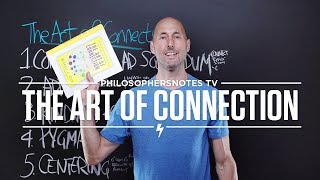
Brian Johnson reviews Michael Gelb’s The Art of Connection (advanced reader copy), highlighting practical relationship-building skills leaders need: connect before solving (conjugare ad solvendum), remove phone-driven attention distractions, kindness and micro-moments of connection, the Pygmalion (Rosenthal) effect of seeing the best in others, and rapid recovery to centeredness. Johnson relates these ideas to parenting, neuroscience (Richard Davidson), behavioral science, and his own daily practices.
Chapters
Hi, this is Brian. Welcome back to another episode of Philosopher's Notes. TV Today, another great book, the Art of Connection by Michael Gelb. The Art of connection. Subtitle 7 Relationship Building Skills Every Leader Needs. Now. This is an advanced reader copy. Thank you, New World Library Every and Michael. I'm a huge fan of Michael Gelb and his work. Sixteen years ago, 2001, I vividly remember reading how to Think Like Leonardo da Vinci, another one of Michael's books, and absolutely loved it. Literally changed my life. The Hundred Questions exercise, which I've talked about a number of times, we've got a plus one on that. If I look at those questions I generated in that exercise, I'm living them today. Thank you, Michael, for that inspiration. And then years after that, years ago, Michael and I connected at a conscious capitalism event and became fast friends. And here we are. We've also featured a couple other books of Michael's Brain Power and Creativity on Demand. Check those out. For now. Got a philosopher's note. Bunch of my favorite big ideas. Five of them here. The Art of Connection. Let's start at the top with. What is this? Conjugare ad sulvendum. Conjugare ad sulvendum. This is a Latin phrase that Michael made up, connect before solving. This is one of the big themes throughout the book. That is, if you want to solve anything, the first thing you need to do is connect. You cannot solve before connecting. You can, but you're not going to do it as gracefully. And what happens when we take the time to truly connect with someone? These insoluble problems become easily solvable. Right. This is a Carl Rogers thought that Michael references. And it's funny because Michael says, hey, this works in your personal relationships with friendships and marriage, professionals, relationships, colleagues, et cetera. And then as a father, I said to myself, yeah, and in parenting as well. And one of the things that I've practiced with Alexandra's coaching is, is connecting with Emerson in moments where there's an opportunity for disconnection. So if you have young children, you know that at times they can whine. We can all whine, but it's a little more pronounced and obvious in our little ones. Right? And in those moments, my old tendency was to want to disconnect. I'd get a little impatient, a little bit frustrated. And Alexander's coaching was we need to get into connection in those moments. That's really what our son is wanting in those moments is connection. So anyway, following this wisdom, conjughere ad sul vendum I discipline myself to rather than kind of reflexively pull back and disconnect to connect. So I would literally, when anything would kind of start arising, bubbling up in Emerson, he'd start whining about something. I'd move in and I'd give him a hug and I'd say, hey, buddy, it sounds like you have some needs that aren't being met, which is one of the ways we frame things in our house. And I'm giving him a big old squeeze, right? I'm giving him a hug. Give me a hug, buddy. And we're hugging each other and he might be crying, and I say, buddy, it sounds like you've got some needs that aren't being met. What are they? And he'd tell me, whatever it is, you know, I want egg on yucca toast or whatever, right? And his mommy didn't want to do that. I'd say, oh, wow, I hear you. You have a need to have such and such or whatever, right? And then maybe I'll say, and what are mommy's needs? Or what are our needs? And. And then he'll talk about what needs his mom might have or I might have. And then oftentimes we'll just hug for another, you know, 10, 20, 30 seconds and then nothing else needs to happen and we're good, we're fine. All we needed to do is connect. And what's amazing is I talk a lot about in any given moment. You can go minus one or you can go plus one, right? Minus one, plus one. That difference is not one unit, it's two units. And for us in our family, it was a subtle thing. But oftentimes when the whining started, it just become a little bit more of a tension filled evening, which is when it tends to occur. And when we moved forward plus one, it felt more like plus two, plus three, plus four. And this gap was significant. Connect before solving. And connecting is the solvent that allows you to dissolve a lot of life's challenges. So think about that as you enter a potential challenging situation. Find a way to connect, whether it's an actual hug with a little loved one or whatever works for you. There we go. Second, big idea. We want to master the art of connection. We need to look @ add in two different ways. So Michael talks about Richard Davidson, one of the world's leading neuroscientists and a professor at the University of Wisconsin, Madison. We featured him and his book, the Emotional Life of youf Brain. Right? He's gotten into our brains. He's the one who first Scanned the Buddhist monks and understood what was going on. The fact that meditation dramatically changes your brain. Anyway, Michael was attending an event where Richard was presenting and he said that Richard did that. We basically all have attention deficit disorder to some degree because of our addiction to digital devices. So add attention deficit disorder and addiction to digital devices. This is a great way to disconnect. If you want to connect with someone, the first thing that needs to go is your smartphone. We've talked about this a ton of different times and in different contexts and ways, but we've got to pay attention to this and know that that's a huge barrier to our connection. We talked about what's known as the iPhone effect. It can be called the smartphone effect. Simply having a smartphone in sight is going to reduce the quality of the interaction that you have with someone, even if. Even if it's not your phone. I know I talk about this a lot, but we've got to move from theory to practice on this one. Put your phone in airplane mode, tuck it away somewhere you can't see it or feel it, and connect deeply. Another thing Michael talks about here is Herbert Simon. So in this context, he talks about attention. And Herbert Simon was a Nobel prize winning economist who talked about the attention economy. He's the one who said a wealth of information. The more information you have, the poverty. A wealth of information creates a poverty of attention. All of that information that we bombard ourselves with consumes our attention. We have a poverty of attention. And he described this, Herbert Simon did in 1971. 1971. Three years before I was born. Right. The information that he was saying was consuming our attention consisted of a television set with three channels on it, maybe five. Right. VHS tapes hadn't even been recorded. The newspaper news was delivered on your front door. That's how you got it. There was very little information. Yet he was already saying that a wealth of that information in 1971 was creating a poverty of attention. And he also said when we need to get really good at deciding selectively what information we allow in, well, we need to move beyond, again, theory. Oh, yeah, that's a really smart thing to say. To practice. Start reducing the amount of information we allow in such that we have the attention that we want to have to focus on what we want to focus on, which is what we talked about in our last episode on Wired to create and again, get rid of the technology when we want to go deep in connection, one on one. The third big idea to master the art of connection here is kindness. Michael walks us through some very simple practices we can engage in on a day to day basis. Taking the time to make eye contact with the bank teller, he says, or even going inside the bank rather than using the atm. Just have a little human interaction, a little more connection. Something I like to do when I'm visiting the bank during business hours. Yeah, it takes a couple more minutes, but we get that little depth of connection. Right. You're at the grocery store, put your phone away, connect with the cashier who's checking you out or the person who's helping bag the groceries. Open the door for someone behind you, give up your seat on the subway. Michael suggests, find these little micro moments of connection that deepen our connection to others and make us feel good and energized and everyone else feel great. So those little opportunities are, are huge for us. In the note, I talk about the fact that Michelle Seeger, one of the world's leading researchers on the science of health behavioral motivation, basically getting yourself to do the things you know are good for you, talks about finding opportunities to move. Now, too often people think of movement in terms of exercise. It's just one big thing you can do. I can get a good workout in today. And she says, yeah, but you can also find all the opportunities to move, right? And she calls them OTMs, opportunities to move. And she says the healthiest among us find all those little opportunities to move. Well, when we think of opportunities to connect, we can think of the micro moments of positivity resonance, which is how Barbara Fredrickson describes those little opportunities of warmth and connection. Right. She says, that's love 2.0. You don't need to wait for the big moments of love. You can have micro moments of love. I like to think of that as opportunities to love. Otls. And if we ever create a little day planner, like a journal you can use to map out your day, and we've actually thought about doing that, we have some mock ups based on some stuff I do every day. We will definitely have both of these things in there, little checkboxes, you know, like little bubbles that you can fill in. Did you seize opportunities to move? Yep, I got two. Today I was going for three. I only got two. Did you find micro moments of positivity resonance? Did you do little acts of kindness, opportunities to love throughout the day? I'm looking for three. Yep, I got three. Today we want to actively look for moments of connection, opportunities to love. Fourth big idea. Another thing we want to look for is the Pygmalion effect, otherwise known as or also known as the the Rosenthal Effect. The basic idea here is Pygmalion, right? Ancient myth. The idea was a sculptor, an artist, fell so in love with his statue that it came alive, right? He prayed and prayed and prayed that this beautiful statue he created would become a real person. And it did. He was granted his witch. That's known as the Pygmalion Effect. When you see the best in someone, then the best comes out, right? They become what you imagine and what you see within them. A guy researcher named Rosenthal has done a ton of research on teachers, coaches, etc. And basically demonstrated the fact that when teachers believe that their kids have high potential or high IQs, their IQs or potential go up. Same thing with athletic coaches. If you see the best in someone, the best tends to come out. The Pygmalion Effect. This is a great practice for us as we look to master the art of connection. When you interact with people, look for the best in them. Sounds like an obvious thing, but actually make it a practice. And remember that you like hanging out with people who see the best in you. Well, give that gift to other people. As Tal Ben Shahar says, when you appreciate someone, their value appreciates. They become a better person when. When you appreciate their good qualities, they get more of those good qualities. The Pygmalion effect. Fall in love with those people in your life even more and let their potential come to life. Next and final little idea here is centering. So in addition to being an author and a creativity expert, Michael Gelb is also an aikido master and a qigong master. He actually taught me a qigong practice that I do every morning these days on the trail, which is awesome. And in the book, he talks about the founder of Aikido, Morihe Uesheba Ueshiba. I think that's saying it, right? Ueshiba, right? O Sensei is how he was known. The founder of aikido, one of the most beautifully spiritual human beings ever and one of the greatest martial artists ever. So O Sensei trained a number of people, one of whom was the first to come to the west to establish aikido in the west on O Sensei's direction, right? Michael studied with this guy who told him stories about how he used to train with them. And Michael's friend and aikido teacher said, oh, Sensei, you're so good. You never lose your center, right? He's just so centered always, which is an important characteristic of aikido practice. And O Sensei said, oh, I Lose my center. I just recovered so quickly, you don't even notice. And Michael says, that's how we want to show up in our relationships. We will lose our center. The issue isn't never losing your center. That's naive. We're going to lose our center. You can't get close to people and not step on their toes occasionally. As Craig Malkin, the author of Rethinking Narcissism, tells us, you can't get so close to touch someone without stepping on their toes on occasion. Remember that you're going to make mistakes. As Michael Beckwith says, even enlightened beings burn their bagels on occasion. But when they make a mistake, it's just a mistake. No big deal. Let me do that again. Let me recover my center. Right? Marcus Aurelius talked about it in a way that I describe as the equanimity game. He says, when force of nature knocks you off of your center, see how fast you can get back to equanimity. We want to see how fast we can recover our equanimity, our centeredness. Take another take. Right, Miss Take no big deal. And Michael says, practice with the little things, those little petty annoyances that don't really matter. Practice seeing how fast you can recover so you've got the discipline and you've got the ability to return to center in those bigger moments of life. It's kind of like training for a marathon. You better be training on the little runs, aggregating, so you're ready for the big run. Same thing with reclaiming our centeredness, we or our equanimity. It's not about never losing it. It's about getting really good at getting back to center as quickly as you can. And as you do that, see the best in yourself as well. By the way, in our interview, Michael said that you're going to have a really hard time seeing the best in someone else if you're not seeing it within yourself. So see it first within yourself. Bring it out in yourself and others. Practice kindness. Fill in these little bubbles. Opportunities to love. Yep, crushed it. And so same with the opportunities to move right. Add times two. Our attention deficit disorder is strongly correlated with our addiction to digital devices. Discipline yourself to manage the inflow of information, knowing it's consuming your attention. And wisely choose to put your attention where you want, when you want, for how long you want, hopefully with a lot of deep work involved. And then we have our connect before solving Latin motto. If you run into some challenges today, slow down. Connect to yourself. Centering style connect to the other individual and to notice how quickly you can often resolve those challenging opportunities. The Art of Connection Fun book. If you're looking to master more of these ideas, check it out and think now about what idea jumped out and landed and how you can make it more of an integrated part of your life starting today and make today another awesome day. See you. Isn't it a bit odd that we went from math to science to history but somehow missed the class on how to live? For some wacky reason, optimal living 101 never made the schedule. Of course it's too late to go back and change that and you're too busy to read full time to catch up. But if you're like us, you're all about optimizing your life so you can actualize your potential. So imagine this. Imagine having someone read the best books on how to optimize your life and pull out the big ideas that can really change your life. You know those sections? You underline an asterisk and mark all up. Then imagine that guy me connecting those awesome ideas to other great books and helping you actually apply the wisdom to your life today. Well, that's what I do with something we call Philosopher's Notes where I've distilled hundreds of great books into 20 minute super practical summaries. Then imagine me taking the absolute best big ideas from those great books and sharing them with you in hour long Optimal Living 101 classes on everything from productivity, purpose and confidence to nutrition, goal setting and conquering procrastination. Helping you optimize every facet of your life so you can actualize your potential. You've got a personal trainer. I'm kind of like your personal philosopher. Ancient wisdom, modern science and practical tools. That's what our Optimized membership program is all about. If you're feeling it, we'd love to have you join.
More from Brian

Heroic +1: What’s THE Most Creative Act in the Universe?: Turning Around Glitches (#2024)









