PNTV: The Path to Purpose by William Damon (#307)
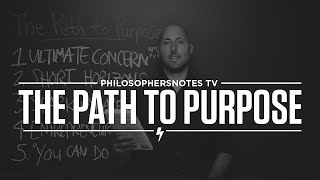
William Damon argues purpose is an enduring commitment to something larger than yourself that builds resilience and joy. Young people fall into four categories: purposeful, disengaged, dreamer, or dabbler. Parents can cultivate purpose through nine practices like noticing a child's spark and sharing their own passions, plus teaching goal-setting and persistence.
Chapters
Hi, this is Brian. Welcome back to Philosopher's Notes tv. Today we've got another great book, the Path to Purpose by William Damon. The Path to Purpose Subtitle How Young People Find Their Calling in Life William Damon is one of the world's leading developmental psychologist. He's a professor at Stanford. He's also one of the world's leading authorities on the development of morality. So he recently covered another one of his great books called the Power of Ideals, and before that, another great book called Noble Purpose. I said that I was committed to reading everything he's written, and I'm getting to work on that. It's super inspiring. All of his books are. This one in particular is about the path to purpose, with an emphasis on how adolescents, how young people discover their purpose. It's basically the science of discovering and cultivating your purpose, told with a kind of insight into how parents can help cultivate creating that purpose in their children's lives as well as the educational system, et cetera. And it really applies to all of us. He's got a questionnaire at the end that they use to ask kids questions, to kind of interview them and to see who was on purpose and who wasn't. And those questions are useful not just for kids, but for us. Super insightful. So there you go. So we'll talk about some of my favorite big ideas. We talk about many in the Philosopher's Note, five of them here. We'll start with what is purpose? Why is purpose important, and what is it? So purpose is the ultimate concern. It's the answer to why we do anything. So why do you do what you do? Why am I sitting here creating this episode and doing it three times a week and a bunch of other stuff every single day? Why do I do that? Well, my ultimate concern is very straightforward. I want to help people optimize. Every single morning or afternoon, I write down my purpose. First thing I write down in my journal, purpose. I help. We help people optimize. That's my ultimate concern. Every single thing I do in my life is an instrumental goal to serve that ultimate concern, that biggest. Why? Why do I meditate? Because I want to optimize my life. Why do I want to optimize my life? So that I can help other people optimize their lives. That's my ultimate purpose. And what William has found, and all the other researchers have found is that having a deep sense of purpose, a commitment to something bigger than ourselves, that we sustain over an extended period of time leads to deeper joy in the good times. And deeper resilience in the challenging times. It's an incredibly important thing for us. To gain clarity on ultimate concern, he juxtaposes those with purpose with those who do not have purpose. So kind of four categories. You can be purposeful or you can be disengaged. Kids and adults who are disengaged or basically not concerned with anything beyond their own enjoyment, right? So what can I get out of life? How can life be more fun for me? That's kind of a disengaged group. They're not seriously committed to something bigger than themselves. Then there are the dreamers, the three Ds, right? Disengaged dreamers. And then what does he call them? Dabblers. Right? So the dreamers are the ones who have aspirations. They're not just in it for themselves, right? They have aspirations for doing something noble, but they're just dreaming. They haven't grounded that vision into practical reality, which is a theme throughout the book. And then the third is the dabbler who jumps from thing to thing to thing to thing to thing. But an important hallmark of being purposeful is sustaining commitment. Angela Duckworth said that the type of passion that she talks about in gritty people isn't a fireworks display where boom goes off and then it goes off over here, and then it goes off over here. It's more like a compass. It's sustained passion in a given direction. That's what we're talking about when we look at purpose. So ultimate concern, the ultimate why. Being purposeful versus being disengaged. A dreamer or a dabbler. Now, purpose is important. What gets in the way of us living our purpose? He says the number one obstacle to people, he uses the example of children, but to people in general discovering and living their purpose is short horizons. Our culture is obsessed with short horizons. He wrote this book in 2008. He talks about the fact that the most popular television shows are all about essentially, people, and a lot of them young people becoming rich and famous in a matter of minutes or hours or at most, weeks. Short horizon, boom. You don't need to do a whole lot of work. You can just become rich and famous. Now, there are problems with two major problems with that. One is the speed with which our culture, our media, it constantly impresses upon us that the speed with which the people can achieve success, right? And then the type of success they're actually showing us is all the extrinsic stuff. It's all the fame and the wealth and the hotness and all that stuff, right? So you've got two issues with those short horizons, the speed, and then what the actual destination is people are heading toward. That doesn't help us to create a vision of sustaining commitment to something bigger than ourselves over the long run. And again, it was written in 2008. It's way worse now. This is before Instagram and Twitter and Facebook completely took over the world. Now that's all we see, is enviable people. He says we're constantly seeing people we can envy, right, who are telling us that they got it instantaneously. Not helpful for purpose. The third idea is he has a chapter on how parents can help cultivate purpose in their kids. And again, it's useful for anyone. Remember, the word parent comes from the Latin word which means to bring forth. So in a sense, we need to parent ourselves. We need to bring forth the potential within us. And he has nine things that parents can do to help their kids discover and cultivate their purpose. The first idea is to look for the spark. He says that every child, every individual has a spark, something that interests them or multiple sparks. Interest. And we as parents of our children or of ourselves, need to pay attention to what those interests are. When we see a passion for something, we need to say, hey, is that something that looks like something you're really excited about? Then the next step is to see if we can fan the flames of that little spark. And he uses a great example of a parent talking to a kid after school one day, right? And saying, hey, how was school? And the parent gets the normal response of, oh, yeah, it was fine. They say, oh, what was the most interesting thing today? Nothing was interesting. No, really, what do you find most interesting? Well, science class was pretty cool. Well, what do you think was cool about science class? And the kid proceeds to say, oh, we learned about this, or this or this. The parents ask a question, oh, really? Well, that's interesting. I wonder how you might be able to learn more about that. And the kid said, yeah, well, that would be cool to look into this. And then the parent says, oh, that's interesting. Maybe this summer we can think about getting an internship where you can look into that even more. Really simple questions that cascaded, obviously, in an idealistic way, but in a really powerful way to take that spark, to fan it, and then to say, well, we can extend this a little bit more and support our children in getting more engaged in whatever they find interesting. Really, really cool stuff. So the spark, and then we fan it, and then we support them in different ways. He's got the nine ideas. Another one of the ideas that he has in those nine that parents can embrace is the idea of sharing our own passion for what we do, right? So too often parents are just complaining about their jobs and they create this dynamic where it looks like the only reason they go to work is to get money. And if the only reason you go to work is to get money, or at least that's what you're communicating to your kids, guess what? They're going to think the only reason to go to work is to get money. That's a really toxic relationship with what we spend the most time doing in our lives. He says we need to discover and share our passion and meaning for our work. And it was cool because even after doing this reading, the book went down and I told Emerson, you know, we were hanging out, hey, I read a great book today. I'm constantly talking about how people help people and how I help people optimize their lives, whatever, right? He's three and a half years old. He's not getting all of it yet, but it's exciting and it was fun to say, you know, I love reading books. It's such a great way for me to be able to help people more. Those tiny little micro occasions he talks about, the fact, William does, that you can't lecture your kids on this stuff, right? That's when the eye rolling occurs and just the disengagement, it needs to be micro occasions where you share in context different things, whether it's asking them about their day or telling them about your day. Wow, you did this. And this is why it's meaningful for you. Those little things register, William says every single little thing we do registers. And those little moments that our children have with us and with other people that have a role in their lives, create their character. It's not the big time. It's the little moment to moment to moment, the micro occasions. And he also says it's really important for us to share practical wisdom. So we need to teach kids how to create a vision, then how to actually take steps to reach it. We obviously, I have a lot more gray whiskers than Emerson at this stage. So that's our opportunity, our role. He talks about the Kennedy family, and just around the dinner table, they would share ideas about how they can make a difference in the world. We need to use those opportunities as often as possible. Fourth big idea is the entrepreneurial spirit. He makes the point that he profiles a bunch of kids, right? So he looks at all these different kids. Twelve of them were exemplars in demonstrating purpose. They've done some extraordinary things at a very young age. So in the Power of Ideals, he profiled six moral exemplars. Eleanor Roosevelt, Nelson Mandela, extraordinary people that we know who changed the world. In this book, he looks at 12 kids who nobody's heard of. Actually, some of them have done some amazing things you might have heard of, but these young people who have done amazing things. And what he found was, although they were decent at school, they weren't the straight A students and they weren't necessarily all about academic goals. But what they did have all in common was an entrepreneurial spirit. And he talks about the six, I think, facets of the entrepreneurial spirit. And he said, if I had to bet on long term success, it would be this quality entrepreneurial spirit. The ability to set goals and to create realistic plans to achieve them, to persist in the face of obstacles, the willingness to take risks. Right. Healthy risks, to, to push ourselves, to stretch ourselves when things don't go well. Again, we're showing up with a level of persistence and resilience. These are important qualities of an entrepreneurial spirit. And it doesn't mean necessarily that we're building businesses, although some of the kids he profiled did. But we approach the social or civic challenges that we're committed to helping solve with an entrepreneurial spirit. Really, really cool stuff. And one of the ways we can do that, one of the ways we can support that quality in our kids is to adopt what he calls a four word mantra. You can do it. You can do it. Say this to your kids. Rather than create a level of timidity, right? A kind of timid, I don't know if I can do it. Create a positive sense of being willing to engage in challenges. You can do it. Yeah, you got that idea. You can do it with me. With a young child stepping back and letting him do certain things that don't need my assistance, let him create a sense of efficacy, a sense of trust in himself, confidence in himself to be able to meet life's challenges. And then I talk about in the note, Carol Dweck, who he talks about in this book. You can't do one of these books without talking about the growth mindset and the fact that the healthiest and happiest among us have a really healthy relationship with, with challenges. And that we as parents need to embrace challenges in our own lives and say to ourselves, I can do it. It's a challenge. And get excited about a challenge rather than frustrated about it. And I use a really Mundane example in the note, just the other day, Emerson and I replaced the flapper in our toilet. I didn't even know what a flapper was until X months ago. But Emerson loves toilets and loves a ton of things. Right. She's very interested in the different parts. Right. We had a plumber come and replace it once and. And now we needed to replace it. So this time we did it. He was very excited to engage in this activity. Now, I'm not the most mechanically inclined guy on the planet, to say the least, so I'm installing this little flapper, which is not a particularly challenging thing to do, but for me, it is somewhat subtly challenging. Now, knowing what I now know, I look at these little opportunities and Carol Dweck says, we literally need to rub our hands together and get excited about challenges and demonstrate for our children who don't listen to lectures, but do model what we do that. I like challenges. So I say to Emerson, oh, this one's challenging for me. I'm trying to figure it out. Where does it go? This is challenging. Awesome. Challenges are great. They allow us to work harder and figure out new strategies. This is fun. Awesome. And of course, he's all in. This is fantastic. This is exciting. And he. When he experiences challenges, we have the same attitude, oh, you're trying to climb up that little thing at the park. Awesome. It's challenging. That's great. You're going to have to work a little bit harder. Challenges are so fun. They really bring out the best in us. We need to rub our hands together and complement it. My new cherry on the top of my little challenge fest is, you can do it. You've got this. You can do it. You can do it. You can do it. He says, make this a mantra. Say it so often that we encourage them to lean into challenges and develop their own sense of confidence, rather than a sense of timidity, of, oh, I can't handle what life gives us. It's connected to the overall sense of optimism, which was another one of the big ideas that parents can do. Have a positive sense of. This is what's possible. We can approach life's challenges with grace and poise. There we go. Entrepreneurial spirit. Find the spark. Cultivate the spark. Fan the spark. Share your own passion for what you do. Notice our culture's obsession with short horizons. Unplug. Talk about the importance of sustained commitment and the ultimate concern. Why do we do what we do? To be able to have that compass that guides all of our actions, a commitment to something bigger than ourselves, that we sustain over an extended period of time rather than being disengaged and being self absorbed. Right. Or being a dreamer who's imagining. Yeah, I'd love to change the world. Okay, great. Let's help our kids connect that to well what specifically can we do to take steps in serving our community in pursuit of that big dream? And then of course there's the dabblers jumping from thing to thing to thing. We want to find a way to sustain commitment. And he says of course we're going to have different interests, especially in our adolescence, things that come and go. He says it's kind of like planting seeds. If you're planting a new lawn, you throw a ton of seeds. Most don't sprout, but enough do that you have a beautiful lawn. It's the same thing with these sparks. We've got to be willing to tend a number of different seeds or sparks in order to find the one or ones and the causes that really sustain us. So there you go. Path to Purpose. I hope you enjoyed if you're a parent looking to cultivate purpose in your kids lives, I think you'll really enjoy it. William, I appreciate your wisdom and support. Looking forward to connecting for an interview soon. And there you go. Have another awesome day. See you. Hi, this is Brian. I hope you enjoyed that PNTV episode. A lot of people don't know all the stuff I do beyond these free videos I share on YouTube. So I thought I'd do a quick video to give you an overview of our membership program that you can get access to and get a ton of other stuff. So here's a quick look. Ten bucks a month. Join the Optimal Living Membership program. You get Instant Access to 250 Philosopher's Notes on some of the best optimal living books out there. Old school classics, positive psychology, modern stuff, mindfulness, peak performance, purpose, neuroscience, wealth, etc. And what you may not know is that in addition to the PNTV episodes, I create PDFs on all these great books. So six page PDFs. Let's take a look at one of them. Joseph Campbell, you want to figure out how to live your hero's journey? Well, this is a great place to start. I basically pull out my favorite big ideas, riff on them, connect them to other books and other ideas and help you apply this wisdom to your life today. That's what the PDF looks like again. We have 250 of these on all these different great books and then I record those PDFs as an MP3 so you can listen to that MP3 while you're on a walk or working out or doing some errands or whatever that is. Philosopher's Notes. A lot going on there. And then in addition to Philosopher's Notes, you get access to optimal living classes. Optimal Living 101 idea here is that all those great teachers come back to the same big ideas again and again and again. I distill those ideas into classes. Super practical, fun, inspiring classes ranging from Habits 101, Confidence 101, Getting Stuff Done One on One Meditation 101 instant access to all those classes. And then Future classes include Relationships 101, Energy 101, Purpose 101, Business Goals, etc. Those are our full length classes. And then I create micro classes. Two to three to five minute little bursts of wisdom on my favorite great ideas from these great books across the domain that you want to optimize in your life. So we have dozens of these so far. I create 50 more new micro classes every month and 10 new philosopher's notes every month for 10 bucks a month. So we're blessed to have thousands of members who are enjoying the program and sharing some incredibly kind words with us. And super simple 10 bucks a month. Cancel anytime. Would be honored to be a bigger part of your life and I appreciate your support. And here's to optimizing and actualizing.
More from Brian

Heroic +1: What’s THE Most Creative Act in the Universe?: Turning Around Glitches (#2024)









