PNTV: The Philosophy of Cognitive Behavioural Therapy by Donald Robertson (#359)
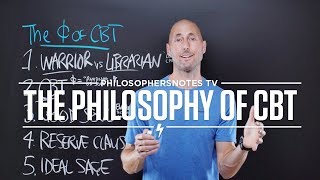
Brian Johnson summarizes and endorses Donald Robertson's The Philosophy of Cognitive Behavioral Therapy, arguing that classical Stoic philosophy (especially Epictetus and Socrates as exemplars) is a direct ancestor of modern CBT. He contrasts CBT's present-focused, change-oriented approach with Freudian past-focused therapy, and distills five practical Stoic ideas: be a "warrior" not a "librarian," cultivate eudaimonia/arete (good-soul living), use a reserve clause (Deo volente) and amor fati (love of fate), and model choices on an ideal sage ("what would X do?"). The episode emphasizes moving from theory to practice and applying Stoic exercises for flourishing.
Chapters
Hi, this is Brian. Welcome back to another episode of Philosopher's Notes. TV Today, another great book, the Philosophy of Cognitive Behavioral Therapy, the philosophy shortened here with the symbol for phi of cbt. Cognitive Behavioral Therapy by Donald Robertson. Subtitle Stoic Philosophy as Rational and Cognitive Psychotherapy So I picked this book up after reading Ryan Holiday's the Daily Stoic. I'm pretty sure that's where he recommended this one. I like to follow Ryan's recommendations and this book is phenomenal. So as the subtitle suggests, Stoic philosophy is the root of modern cognitive behavioral therapy. Going to talk about that a bit. As always, we've got a philosopher's note and some of my favorite big ideas here. So, Donald Robertson, one of the world's leading thinkers on Stoic philosophy as it applies to cognitive behavioral therapies, perhaps the world's expert on it. This book is a great analysis of the roots of our modern therapeutic model as practiced by cognitive behavioral therapists and the fact that it comes from Stoic philosophy. It if you look at Albert Ellis and then Aaron Beck, you'll see that they were deeply influenced by the Stoic philosophers, Epictetus in particular, and that's influenced our culture to a great degree. And just as an aside, again, Stoic philosophy, you may or may not know about it, but it's influenced some great people throughout history, used to be the most dominant thought process or kind of approach to the art of living back in the day when Roman times then obviously fell out of favor with Christianity, etc. But influenced Thomas Jefferson, George Washington, Ralph Waldo Emerson, and then the founders of cognitive behavioral therapy, among others. So we kind of talked about this. I'll actually start with the second big idea here. Then we'll go to the first. Cognitive behavioral therapy, modern psychotherapeutic approach, which obviously deals with both the cognitive side of things and. And the behavioral side of things. You can juxtapose this with a more Freudian approach, which deals with more of the past and all the influences you've had to be very, very general about it. Whereas CBT cognitive behavioral therapy is less concerned about all the things that went into creating who you are. They're less concerned about those archeological digs into the source of your neuroses, supposed from all of these supposed sources, from all the things that happened to you as a child, et cetera. They're more interested in your choices, the things you're doing right now with your thoughts and with your behaviors, which, as we know, are the only two things within our control that Stoic philosophers talk about all the time. What's interesting is that back in the day, a philosopher was known as a physician of the soul. So if you wanted to get your mind right and your soul fully expressed, you'd go see a philosopher, whether that was Socrates or Epictetus or whoever, and they'd help give you an adjustment to your soul. They were a physician of the soul, which as it turns out, is basically almost exactly what a psychotherapist means. Right? A therapist of your psyche, your soul. So that was basically what an ancient philosopher was. And we see that in our modern day psychotherapist. And then again, there's a couple different approaches. You can go the Freudian style or you can go cbt. The research shows that this is a much more effective route. So if you do look for therapy, CBT should be on the top of your list. I'd steer clear of the archaeological digs and get clear on whatever happened to you in the past. Can't change that. God grant us the serenity to accept those things, the courage to change the things we can't, and the wisdom to know the difference. CBT is a great way to do that. And as I mentioned, Aaron Beck and Albert Ellis, the two basic founders of cognitive behavioral therapy, trace back to Stoic philosophy. So that was our second idea. Now we'll go back to our first. I absolutely love the distinction that Robertson makes between the ancient philosopher and particularly the Stoic philosopher and the modern philosopher. And he says that even back in the day there were philosophical schools other than Stoicism that was. And even within Stoicism that was more interested in logic, chopping, figuring out the finer details of logic than in the actual practice. Right. So the most practical philosophers, the Stoic philosophers, were most interested in moral philosophy, in actually applying these ideas in the arena of their day to day lives and not merely categorizing them. Then you fast forward to modern times and you have a philosophy that's in a large part almost entirely divorced from the practice of these ideas of wisdom, which is knowledge of how to live, which is applied. That's not a theoretical concept. So he makes a distinction between the warrior of the mind, the ancient philosopher that was a warrior of the mind, trying to live these ideas in the arena of life, versus the librarian of the mind who is merely cataloging these ideas. So we don't want to merely catalog all the things we cover here and organize them nicely in our minds. We want to apply them to our day to day lives, librarian versus warrior. We want to Move from theory to practice day in and day out. So think about that. Are you more of a librarian? I'm sure there are a lot of strong librarians out there. But. But for this metaphor, are you categorizing and logic chopping and making fine distinctions? Theoretically, but not applying? And the answer is, of course you are to some degree. We all are. But think about one area of your life and one practice that you know theoretically to be true. But you haven't quite made the connection practically yet. Make that connection. Be a warrior of your mind and of your life. The third big idea is the most important aspect of ancient Stoic philosophy, which is to have a good relationship with your inner soul. And they have a word for that. Your soul essentially was known as the daimon, right? So your daimon was that part of you, that highest expression of yourself. And if you had a good, you, daimon, good relationship with your soul, you had a sense of flourishing, a sense of well being, right? So this is what, when modern positive psychologists talk about the science of well being and flourishing, that's what they're talking about, Eudaimon. And I didn't know until reading this book that it literally means good soul, Eudaimon. And every morning I write down my favorite virtues. And I usually start by writing arete first, which, as we know, is the way that we achieve a good relationship with our soul. This is what the Stoic philosophers taught that we talk about all the time, right? And then I write eudaimon, and then I write this. I want to get up to that. I want to live with arete, such that I can experience that highest version of myself more and more consistently. And that is the ultimate end, the highest purpose of Stoicism, the that they say we should be focusing all of our effort on. The other virtues for curious souls that I write down include entheos, which means God within two little Greek words, entheos, which translates as enthusiasm, so radiant enthusiasm. And then I write down heros, another Greek word which literally means protector, right? So I've talked about this a lot. Not tough guy or killer of bad guys, protector. And I love that idea of the word hero. A hero has strength for two. They're willing to do the work, to step up and to protect and to serve profoundly. That means a lot to me. I journal it every single morning. And then I write down euthymia, which we just talked about in our last episode on Ryan Holiday's Daily Stoic, euthymia, this sense of tranquility when I live with orarte to Connect to my inner soul and have a good relationship with that inner part of me. I have a radiant enthusiasm for life. I'm able to live more heroically and serve profoundly. And I experience a deep sense of tranquility, energized tranquility. So Eudaimonia good soul. And they tell us that we'll talk about it a little bit more. But there's always a part of you that's watching you. They call it the other. The other is always watching you. And you want to make sure that you're making the other, your good, your soul, happy with you. It doesn't matter whether other people are happy with you. It matters whether this version of you, that highest version of you, approves of what you're going to do. Always orient toward that relationship when you're at a choice point. Eudaimon Fourth big idea is reserve clause. We talked about it briefly in our last idea on the Daily Stoic. So a good Stoic knows that they never have absolute control over the outcome. So anytime they're going to, they say they're going to do something, they say they will do it. Basically, God willing, unless something intervenes, they will do that which they aspire to do. And the way that Robertson and other teachers talk about it is that they imagined Apollo, right? The patron God of philosophy was Apollo, who was an archer. The archer has a clear target. It's very important. You have a target. But the archer knows they don't have control over hitting that target. Ultimately, the best they can do is shoot the arrow straight. So that's what they obsess about. They set the target up and then they obsess about shooting the arrow straight, not about the result. And again, we talk about this all the time. Systems versus outcomes, right? Process versus outcomes, systems versus goals. We want to focus obsessively on doing our best and letting go of the outcomes. The Stoics did that via what they called the reserve clause. The modern Christian, or not modern, but the kind of medieval Christian theologians would describe this as Deo Valente. God willing, they'd sign everything off. Deo Valente, God willing, same thing. We will do what we aspire to do. God willing, we're going to focus on doing our best. Classic Stoic idea. And then of course, with Ryan's idea in the last episode, we then had the art of acquiescence. So we go for it. We shoot the arrow. We may or may not hit our target. If we don't hit the target, then what? Then we acquiesce to reality. We love what is amor fati. So you put the two together, reserve clause, Deo Valente, God willing. And then I'm going to accept whatever is, I'm going to love my fate, I'm going to love what is, and then I'm going to do the next best thing to make my inner soul as happy with me as possible. And then our fifth big idea is the ideal sage. One of the core practices of ancient Stoicism was to get clarity on the ideal sage. So back in the day, for people like Epictetus, their ideal sage was Socrates. And they would often imagine themselves, what would Socrates do in this moment? And then you had people like Aurelius and others who would say, what would Epictetus do? What would Socrates do? And they would aspire to live in accordance with their ideal sage's virtues, the embodied version of their highest values. What would they do in any given moment? And that's a beautiful practice for us to imagine. So who is your ideal sage? What is the best version of you look like? What individuals do you admire? And how can you bring them into your life and into your mind at choice points in your life today? This is the classic, what would Jesus do? This is an amazing practice for Christians. This is the ideal sage. So what would Jesus do in any given moment? That's a phenomenal question I often ask myself. It's a great exemplar for me. I also like to ask myself, what would Aurelius do? What would Epictetus do? Or what would your ideal sage do in a choice point today? Bring that up, make it a practice. Get excited about connecting with that highest version of yourself more and more consistently. Realize that you never have control out of the outcome. I know we hit on this from different angles all the time. Think about this angle as the archer wind may kick up. Can't have absolute control, but they can do their best moment to moment to moment. We talked about this when we talked about H.A. dorfman's Harvey Dorfman's book on coaching the mental game. He says, you can control the approach, you can't control the result, but then you can control your response. That cycle is what we want to get really good at mastering. And as we do so, embrace the idea of being an ancient philosopher, a modern philosopher embodying these ancient ideals. A physician of the soul is what we now think of as a modern psychotherapist. Lean into the cognitive, behavioral aspects of it. Become a warrior of your mind, moving from theory to practice. On that note, what is one way you can move from theory to practice in your life as a noble, virtuous philosopher living in the 21st century. Get on that and make today another awesome day. See you. Isn't it a bit odd that we went from math to science to history, but somehow missed the class on how to live? For some wacky reason, optimal living 101 never made the schedule. Of course it's too late to go back and change that and you're too busy to read full time to catch up. But if you're like us, you're all about optimizing your life so you can actualize your potential. So. So imagine this. Imagine having someone read the best books on how to optimize your life and pull out the big ideas that can really change your life. You know those sections you underline and asterisks and mark all up? Then imagine that guy me connecting those awesome ideas to other great books and helping you actually apply the wisdom to your life today. Well, that's what I do with something we call Philosopher's Notes and where I've distilled hundreds of great books into 20 minute super practical summaries. Then imagine me taking the absolute best big ideas from those great books and sharing them with you in hour long Optimal Living 101 classes on everything from productivity, purpose and confidence to nutrition, goal setting and conquering procrastination. Helping you optimize every facet of your life so you can actualize your potential. You've got a personal trainer. I'm kind of like your personal philosopher. Ancient wisdom, modern science and practical tools. That's what our Optimize membership program is all about. If you're feeling it, we'd love to have you join us.
More from Brian

Heroic +1: What’s THE Most Creative Act in the Universe?: Turning Around Glitches (#2024)









