PNTV: The Power of Ideals by William Damon and Anne Col (#306)
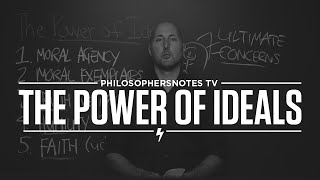
A Brian Johnson PNTV episode summarizing William Damon and Anne Colby’s The Power of Ideals. Johnson highlights moral agency versus deterministic views of morality, profiles moral exemplars (e.g., Nelson Mandela, Eleanor Roosevelt, Dietrich Bonhoeffer, Jane Addams), and extracts three central virtues—truth, humility, and faith—as practices for crafting a morally exemplary life. The video ends with a brief promotion for Johnson’s Optimal Living membership and related resources.
Chapters
Hi, this is Brian. Welcome back to another episode of Philosopher's Nodes tv. Today we've got another great book, the Power of Ideals by William Damon and Ann the Power of Ideals, subtitled the Real Story of Moral Choice. William and Anne are two of the world's leading researchers on the science of moral development. They've dedicated basically their entire lives to understanding and teaching this, literally decades. And they've been married for over 30 years, which I think is pretty awesome. They're both professors at Stanford. I'm deeply inspired by this book. We recently profiled another one of William's books called Noble Purpose. And as I was reading this book, I wrote down to myself, read every book William has written. I've got a couple more in the queue. Can't wait to share. Deeply inspiring this idea that we can be inspired by the power of ideas and the scientific look at the fact that how some of our current views on the science of morality are a little bit distorted. They challenge some of the current notions. We talk about that in the Philosopher's Note along with a bunch of other big ideas. Let's look at five of my favorite ideas now. We'll start with the first, Moral agency. The idea with moral agency vis a vis moral determinism is. Is the fact that we have the ability. Agency is basically the ability to affect change. We have the power to change our lives. And a lot of the new science of morality, as William and Anne describe it in the book. And they spend quite a bit of time intellectually breaking down the limitations of this new science. They tell us that it's based on a sense of determinism where you have a biological and conditioned, kind of environmental, conditioned, deterministic idea that we're basically just a combination of our impulses which are biologically evolutionarily driven, and how we've been conditioned. That's our morality determined by our biology and by our sociology, how we've been conditioned, right? And they say, look, no, there's another way that we can develop our morality. And they say, if you look at what moral exemplars, you'll see that they weren't a function of just their biological and conditioning responses. They chose to craft their character. And they use the research of moral exemplars, six of them, to make this point. They basically say, look, if these people are able to create an extraordinary life, we can too. We need to look at what they did, and then we need to model ourselves after them. We're going to look at the virtues that they recommend we cultivate in Order to tap into our moral ideals. They profile six exemplars unbelievably inspiring, ranging from Jane Addams to Nelson Mandela, Dietrich Bonhoeffer, Eleanor Roosevelt, and a couple of other extraordinary people who lived in challenging times and chose to live a noble life. Now, that wasn't a function of the their biology and their conditioning. They chose to rise above it and to create a life of deep meaning and service. Extraordinary stuff. Nelson Mandela profiled here. He spent 27 years in prison from the age of 43 to the age of 70. And what did he do in prison? He refined his character. He cultivated his moral and political presence such that he could lead his country out of apartheid with a level of big heartedness and forgiveness that is truly revolutionary. Literally changed the world. Eleanor Roosevelt story is amazing. Dietrich Bonhoeffer, a Lutheran pastor in pre World War II Germany as Hitler and the Nazis were rising to power, he was adamantly opposed to it. Yet a lot of the Protestant churches and Catholic churches were basically falling in line with what Hitler was doing. He said, that's not okay. He was allowed and given passages, left to go to New York. So he was free. He escaped Nazi Germany, which was not obviously a good place for someone like him to be at that time. And then he went back. He spent less than a month in the States and he went back feeling that his calling was there to serve. And he tried to get a coalition of churches against Hitler. He was thrown in jail for two years. Then he was executed as part of a conspiracy to assassinate Hitler. He strove to move beyond his biological impulses and his conditioning. Everyone in his culture, all the other churches were kind of falling in line. He said, that's not okay. He was a moral exemplar and literally gave his life in service to an ideal that he believed in. And William and Anne tell us that by looking at these moral exemplars, we too can be inspired. We don't need to focus on a science of mediocre, mediocre morality. We can look at how to truly craft our ideal moral selves. Deeply inspiring. So to do that, there are three virtues we want to look at. Truth, humility, and faith. Let's take a really quick look at each of them. Truth first, virtue. Veritas is the Latin word the Romans used to talk about, what they called the mother of all virtues. They said, you need to shine the light of Veritas on your life, on yourself, and on your life to live an honorable, noble life. The first aspect, they have six aspects to truth and to humility the first aspect of truth is inner truthfulness. It's basically not rationalizing your immoral behavior. When you fall short of your ideals, you could do this, you do this. You need to be truthful with yourself and say compassionately but firmly, I'm capable of more. I just did this. They call them micro occasions, the little occasions of life. I could have done this, I did this. Now, too often people aren't truthful about that and they say, oh, whatever, rationalize it, this was going on, or everybody does it, you know, I'm way better than that person. Not helpful, that's not truthful. These moral exemplars were willing to look at themselves critically and say, I'm capable of more. I'm going to be honest with myself about that. And next idea, I'm going to be humble and actually do something about it. So that sense of truthfulness is key. And if you want to be a moral exemplar rather than a fanatic, you also need to be open minded. You can't think that you have the 100% right perspective on truth. The moral exemplars were able to step back. They had a deep level of certainty and commitment, but they also respected other people's perspectives and were open to the fact that there might be other powerfully, equivalently right, morally accurate moral perceptions that they can look at and integrate into their deeper sense of truth. So that's the basic idea of truth. Check in with yourself and see, are you rationalizing when you make that, here's what I could be doing and this is what I am doing. Oops. Create those gaps. Inner truthfulness, don't rationalize. That is one of the most important qualities in cultivating our character. It was rule number one in David Brooks's Road to Character. Humility in the sense of the willingness to actually see what's not working. So humility in their sense is basically not thinking that you are the center of the universe, realizing there's something bigger than you at work, having the ability to see that bigger perspective. They quote C.S. lewis, who has an awesome line to bring this point home. CS Lewis says that humility is not thinking less of yourself, thinking of yourself less. So it's not thinking less of yourself. You don't need to demean yourself. It's just think of yourself less often. If all you're doing is, hey, another selfie, check me out. Self aggrandizement, self promotion, big me is what it's all about. Well, then we could use a dose of humility and realize it's not just about us. Put something bigger than us in the front, right, and hold that perspective. Which leads us to our next virtue, Our fifth big idea, faith. So if you shouldn't be the center of your universe, what should be? Well, he says that if you look at these exemplars, they had a deep, abiding faith in something bigger than themselves. For most of them, it was actually all of them had a deep religious relationship. Now, if that's what your. Where your faith is, that's awesome. It can also be in something that's just transcendent, Bigger than you, more enduring than you. But whatever it is, you want to have what they call an ultimate concern. They say, check in. In your deepest, wisest moments, what's most important to you? What is it? In your deepest, wisest moments, what's most important to you? That's your ultimate concern. And that takes a level of truthfulness, because you won't ever have the clarity in what's important to you Unless you take the time to make those discernments. Was one of the qualities of truth, right? To discern, you have to actually step out of your current experience to look at yourself and say, wow, this is what really matters to me. And then, of course, have the courage to make a strong moral commitment over the long run, not just at any given moment, but over the long run to a cause that matters to you. So faith, humility, it's not about thinking of yourself less. It's about thinking of yourself less. Not about thinking less of yourself. Tongue twister. But thinking of yourself less. Huge distinction. Really cool. And then the truth veritas. Shine the light of truth on yourself. See where you're falling short. Be honest with it. It's the first rule of all addiction recovery Is you got to be honest. If you're lying to yourself about what's not working, Then you're never going to change it. And then look to these moral exemplars. I'm excited to profile. I'm buying all the biographies of these individuals. They profile and start doing more dedicated biographies. We can look at these exemplars and know that what we see in them, we have within us. It's latent within us. We just need to do the work. Remember that we have the agency. Our morality is not determined by things outside of ourselves. It's influenced by it, sure. But we ultimately have the power to choose our ideals and how we're going to craft our lives in service to the world. This is an amazing book. Like I said, I'm excited to explore some more of William and Ann's wisdom. Thank you both for your work and what I did. Most resonate with what jumped out. How you doing on each of these? Take a little inventory, see what you can do. What little step can you take today in your micro occasions today? How can you live with a little bit more exemplary behavior and dial it in. One step, one day, one week, one month, one year at a time. The power of ideals. Let's seize it. Have another awesome day. See you. Hi, this is Brian. I hope you enjoyed that PNTV episode. A lot of people don't know all the stuff I do beyond these free videos I share on YouTube. So I thought I'd do a quick video to give you an overview of our membership program that you can get access to and get a ton of other stuff. So here's a quick look. 10 bucks a month Join the Optimal Living Membership program. You get Instant Access to 250 Philosopher's Notes on some of the best Optimal Living books out there. Old school classics, positive psychology, Modern stuff, Mindfulness, Peak Performance, Purpose, Neuroscience, wealth, et cetera. And what you may not know is that in addition to the PNTV episodes, I create PDFs on all these great books. So six page PDFs. Let's take a look at one of them. Joseph Campbell, you want to figure out how to live your hero's journey? Well, this is a great place to start. I basically pull out my favorite big ideas, riff on them, connect them to other books and other ideas and help you apply this wisdom to your life today. That's what the PDF looks like again. We have 250 of these on all these different great books. And then I record those PDFs as an MP3 so you can listen to that MP3 while you're on a walk or working out or doing some errands or whatever that is. Philosopher's Notes. A lot going on there. And then in addition to Philosopher's Notes you get access to Optimal living classes. Optimal Living 101 idea here is that all those great teachers come back to the same big ideas again and again and again. I distill those ideas into classes. Super practical, fun, inspiring classes ranging from Habits101, Confidence101, Getting Stuff Done101, Meditation101, instant access to all those classes. And then Future classes include Relationships 101, Energy 101 Purpose 101, Business Goals, etc. Those are our full length classes. And then I create micro classes. Two to three to five minute little bursts of wisdom on my favorite great ideas from these great books across the domain that you want to optimize in your life. So we have dozens of these so far. I create 50 new micro classes every month and 10 new philosopher's notes every month for 10 bucks a month. So we're blessed to have thousands of members who are enjoying the program and sharing some incredibly kind words with us. And super simple 10 bucks a month. Cancel anytime. Would be honored to be a bigger part of your life, and I appreciate your support. And here's to optimizing and actualizing.
More from Brian

Heroic +1: What’s THE Most Creative Act in the Universe?: Turning Around Glitches (#2024)









