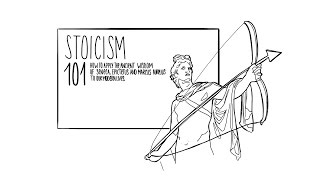
Brian Johnson breaks down ten core ideas from Stoic philosophers like Marcus Aurelius and Epictetus that apply today. You'll learn the difference between what you control and what you don't, how to practice detachment from others' opinions, and what the Stoics called eudaimonia: a state of energized tranquility.
Chapters
Hi, this is Brian. Welcome back to the Optimal Living 101 Masterclass Series. Today I'm thrilled to be chatting about Stoicism101, how to apply the ancient wisdom of Seneca, Epictetus and Marcus Aurelius to our modern lives. As always, we've got 10 big ideas. Let's take a quick look and. And then we'll jump in. Right. Our first big idea is the cast of characters. We'll take a quick look at the founder of Stoicism, Zeno. Then the three primary teachers, Seneca, Epictetus and Marcus Aurelius. The second big idea, Eudaimonia. We need to become best friends with our inner Daimon. That's basically the whole point of Stoicism. Then we'll talk about how to go about doing that via virtues for plus one, the four cardinal virtues of Stoicism and the one essential virtue that gets you all the way to being best friends with your inner soul. The third big idea is the philosopher is a warrior of the mind, not a librarian of the mind. One of my favorite distinctions. We're going to look at the fact that it's not about theory, it's about practice. The fact is ancient philosophers wouldn't recognize modern philosophy. The fourth big idea. The number one rule of Stoicism. Here it is, the first lines of Epictetus. Some things, to paraphrase, are within your control, some things are not. The wise sage is able to see which things are within his or her control and which are not, and they focus on what's in our control. The fifth big idea energized tranquility. These Stoic philosophers were engaged in life, they were energized, yet they were tranquil. The Greek word for tranquility, euthymia. We're going to talk about how important it is to know your path and then to walk it. Decreasing social comparison, decreasing second guessing yourself and playing your role well in service to the greater good. The sixth big idea, the reserve clause. The Stoics knew that not everything was within their control. So whenever they said they were going to do something, they always did so with a reserve clause. If fate shall have it, or God willing. Deo Valente is how you say that in Latin, God willing. We're also going to talk about Apollo, the patron God of philosophy, who happened to be an archer, which will be relevant to our discussion. The seventh big idea is the art of acquiescence. So before you do something, you recognize the fact that, God willing, this will come to fruition after the event has occurred. You practice the art of acquiescence as a good Stoic. In other words, thy will be done. We learn to love what is. We love our fate. As Nietzsche says, amor fati. We'll talk about accepting what is. And in fact, loving it. The eighth Big Idea the Equanimity Game. This is my number one practice. We're also going to talk about one of my new favorite practices, Oms Omms. My new favorite mantra. Obstacles make me stronger. I've been practicing the Equanimity Game for the better part of a decade. This is my number one applied practice from Stoicism. Excited to share more on that. The ninth Big Idea I Don't care. This is a great idea from Ryan Holiday, my favorite modern stoic. Got to check out his book, the Daily Stoic. Basic idea here is I care so much about connecting to my inner daimon, living with eudaimonia that I don't care about things like other people's opinions and news, pop culture, et cetera. I don't care. It's a very, very powerful phrase. We will talk more about. And then finally, the tenth Big Idea. One of the key practices of the ancient Stoics is to imagine the ideal sage. The ideal sage, invite them into your life. What would your favorite hero do in this moment? That's a great way to connect to your inner daimon, your inner soul, your highest self. We'll talk about that as we apply this ancient wisdom to our modern lives.