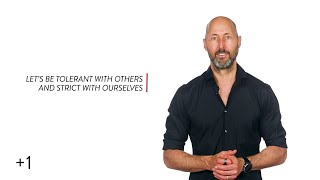
Brian Johnson presents a short Heroic +1 video reminding viewers to focus on self-improvement rather than trying to change others. He revisits wisdom from Cato the Elder, Ben Franklin, Marcus Aurelius, and Jesus—summarizing the shared theme: forgive others, search others for virtues, be tolerant with others and strict with yourself. He advises resisting the urge to coach loved ones unsolicited, using such moments to practice reactive discipline, and suggests personal example is the most persuasive teaching. The piece closes with an energetic call to begin practicing today.
Chapters
Hi, this is Brian. Welcome back to another heroic plus one. In our last plus one, we talked about some Ryan Holiday wisdom from his new book Discipline is Destiny. As you may recall, we brought Cato the Elder, Ben Franklin and Marcus Aurelius to the party to talk about the importance of focusing on all the ways we can get better rather than worrying about all the ways other people need to improve. Cato told us, I am prepared to forgive everybody's mistakes and except my own. Ben Franklin told us, search others for their virtues, thyself for thy vices. And Marcus Aurelius told us to be tolerant with others and strict with yourself. We could add Jesus wisdom to the mix. He told us to quit worrying about the speck of dust in your brother's eye and to focus on the beam in yours. Same thing. This is a really important idea. And it's funny because as I created that last plus one, I thought of what is probably the most frequently asked question from people going through our Heroic Mastery series and coach certification program. It goes something like this. I'm really into this stuff and I can already feel my life changing as I start to move from theory to practice to mastery. It's amazing, says one of our coaches. Then they continue with but then I often know what's coming. The problem is they say that my wife, husband, kids, extended family, colleagues, insert someone other than them really needs to work on this stuff. And I laughed as I typed that. And I usually laugh when I start my reply to our hero. In training, I typically talk about prescribing medicine for your neighbor, which is a plus one. You can check out unilaterality, which is another plus one linked here. And how am I that? Yet another plus one. As I encourage them to avoid proselytizing and simply focus on doing the work, letting our example be the primary lesson rather than the lectures we're all tempted to give when we're on fire with our own self development. Then I tell them about the fact that my own wife doesn't want me to coach her. Trust me, Alexandra doesn't want me to coach her unless she explicitly asks for the support. After 15 years, I'm almost getting that fact. Now I've got another frame to use in response to those questions. Let's be prepared to forgive everybody's mistakes except our own. Let's search others for their virtues and ourselves for our vices. Let's be tolerant with others and strict with ourselves. And let's notice every time we're tempted to do the opposite, then use that prompt trigger cue whatever you want to call it as an opportunity to to cultivate our reactive discipline, stepping in between the stimulus and our old habitual response as we choose a better response and practice our philosophy. Not someday today. Trust me, your loved ones will thank you. And paradoxically, at first glance, but obvious at the second or third glance, this is the fastest way to actually convince your loved ones that you're onto something and that you have wisdom worth paying attention to. Day one. All in. Let's go.