Want to Celebrate Life? Here's 10 Big Ideas from Mastery Series ModuleVI:The Fundies-Part7:Celebrate
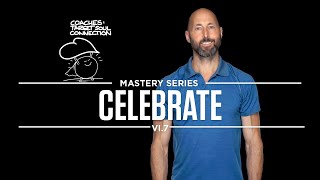
This content was created by Brian Johnson. This content was uploaded by Brian Johnson. This is a YouTube video titled "Want to Celebrate Life? Here's 10 Big Ideas from Mastery Series ModuleVI:The Fundies-Part7:Celebrate" created on December 25, 2020. It features Brian Johnson introducing a session from the Mastery series, part of the Optimize Coach certification program. The session focuses on celebrating life through acceptance, gratitude, and personal growth, with references to various thought leaders and concepts.
Chapters
Hi, this is Brian. I want to give you a little context on what you're about to watch. This is an introduction to one of our Mastery series Sessions. We have 25 classes like this as part of our 300 day optimized coach certification program in which we help people move from theory to practice to mastery so so they can master themselves, serve heroically and empower others to do the same. Now, We've had nearly 2,000 people from nearly 70 countries go through our optimized coach program. About half of the people who go through the program are coaches who want to take their coaching practice to the next level or they are aspiring coaches who want to become full time coaches. The other half, and it's weird because almost exactly how half want to do one or the other, are going through the program because they want to master their lives and become better executives, educators, doctors, entrepreneurs, moms, dads and humans, even though they don't plan to be professional coaches per se. You can learn more about the program at Optimize Me Coach. For now, I'm excited to share the introduction to one of those Mastery Series sessions. I hope you love it and if you're feeling it, we'd be honored to welcome you to our Optimize Coach program. Let's change the world one person at a time together, starting with you and me today. Hi, this is Brian. Welcome back to the Optimize Mastery series. Today we've got our sixth fundamental celebrating. We've talked about eating, moving, sleeping, breathing, then focusing that energy on what's most important right now. And now today it's time to celebrate. It's easy to do all this work optimizing and forget a very important point, which is the whole point is to enjoy the process of optimizing and actualizing in service to the world. So we're going to focus on the fundamental of celebrating, which is going to involve complete acceptance of yourself, reality and any failures you may have experienced in the past. Kind of our base to get ourselves right so we can be grateful and practice profound gratitude and then move on to win or learn all day, every day in pursuit of celebrating the this one precious life of ours. 10 big ideas. I'm fired up. I've been celebrating all morning as I've been getting ready to come into the studio. So We've got these 10 ideas. The first one is the paradox of optimizing. I'm going to call this the paradox of optimizing. This idea that we need to simultaneously completely accept where we are while holding these really high standards and Going for more. Our beingness is in our becoming, some spiritual teachers say. Then we have John Wooden we'll invite back to the party. He's going to talk about the pursuit of perfection, knowing you, paradoxically, can never actually achieve perfection, yet you go for it. And in the process you achieve excellence, potentially greatness, however you define it. And again, you feel good when you close that gap. You feel that eudaimonic joy of living with Arete. But that's again, a key part of it. There's a paradox that we're going to discuss. We're going to pull on some ideas from conquering Perfectionism 101 here as well. The perfectionist vis a vis the optimalist or the optimizer. Guiding Stars, Distant Shores. We're not going to wait until we get there. We're going to enjoy the journey today. So then we're going to spend some time with three ideas on accepting ourselves. I think we need to start there, accept yourself completely, such that we can enjoy the process of becoming the next best version of ourselves. But we don't do that from what Abraham Maslow would call a deficiency perspective. We want to pursue being needs, growth needs, while fully accepting who we are and where we are today. So our second idea will be the first on accepting ourselves, which is we are perfectly imperfect. We're going to talk again about Maslows. There are no perfect human beings. You and I won't be the first. We're also going to talk about soul ulcers and the antidote to those soul ulcers. Socrates says envy is the ulcer of the soul. You don't envy people, you want to celebrate them. And you also want to be really confident in your path. We'll talk about the antidote to those ulcers. Then we're going to talk about that's accepting yourself. Then we're going to talk about accepting reality. We talk a lot about gaps, right? If you're capable of doing this and you only actually do this, oh, bummer gap, close it. Live with Arete. Feel that eudaimonic joy. Here's another gap. If you think reality should be like this and it's actually like that, and there's a gap between what you think it should be and what it actually is. Oh, in that gap we feel pain. You want to close that gap by loving what is Amour fati? We want to love reality completely. Then we say, perfect. It is what it is. Now we do some targeted thinking. What do I want? What needs to get done? That's accepting reality. Yourself, reality, and then failures. We need to step back and realize that failure is inherently part of our hero's journey.
And.
And if we're spending a lot of time regretting past decisions, ruminating on potential mistakes, our failure to actualize our potential because of ba ba ba ba ba. Good luck celebrating life. You're going to be dissipating your energy, shaming yourself. So we need to accept failures. We're going to have fun with this. We're going to talk about the joy of cooking spicy. No, no. Salty Hero bars with Abe. Right? We are going to have the joy of cooking. Preparing hero bars that are salty. Key ingredients to your hero. Blood, sweat, tears. We're going to bring Abraham Maslow back to the party. His wife. When he would be going through a tough point in the process of creating a new theory. He'd be nauseous, couldn't sleep at night, couldn't eat well. He just wouldn't feel great. But then he learned by the time he turned 60 that that meant he was onto something. His wife would say something good must be cooking Abe. So we're gonna do some cooking with Abe. As we accept failures and we accept the process of creating, which is not always sunshine and rainbows. It's tough living the hero's journey, giving ourselves to the world. So with acceptance as our base, we're gonna talk about gratitude. Three ideas on gratitude. The first one, the fifth idea is Gratitude works. The science is unequivocal gratitude. Again, the positive psychologist Arm Russell. What the top strengths are. Robert Emmons, the leading scholar of gratitude, says, gratitude is more powerful than even hope. We know zest is our number one. The other two. Hope. Gratitude. You can boost your happiness by 25% by simply keeping a journal once a week, logging five times that you five things that you're grateful for. For 10 weeks, you'll boost your happiness by 25%. You'll also, if you're grateful, sleep an extra half an hour. You'll work out 33% more than people who aren't grateful. Crazy stats. And you cannot be. I repeat, you cannot be depressed and grateful at the same time. Practice ceaseless gratitude. Radical gratitude for your life. Good luck being depressed. You don't believe me. I hereby challenge you to try that. You can't hold those two thoughts at the same time. So moving on, we'll talk about poisons and antidotes again, this time on gratitude. The poison for gratitude is entitlement. You think you deserve to have whatever it is you have, so you take it for Granted, the antidote is humility. You realize that life is one big gift. You have the humility to take things for granted. We're going to talk about that, and then we're going to move on to the seventh idea, which is practicing gratitude. We're going to talk about the thank you prayer. Meister Eckhart says, if the only prayer you ever said was thank you, you'd be doing just fine. Thank you, thank you, thank you incessantly through the day. We'll also talk about journaling, writing a gratitude letter, and grateful flow, an idea of Phil Stutts's. And we're going to find opportunities to be grateful again. Remembering. Swap out a negative thought for a positive. You can't hold both at the same time. Let's get good at celebrating via gratitude. Then home stretch is going to be number eight, winning or learning all day, every day, starting with a breakfast of champions. We're going to have a 1, 2, 3, and a 1, 2, 3. What did you do yesterday that worked? Right? Do that more. What needs a little work from yesterday? Work on that. And then what are you going to do specifically today? 1, 2, 3. And then we're also going to take the time to appreciate our prior successes. We're going to eat three hero bars or pop three hero pills. Whatever metaphor you want to use looking at your highlight reel of past successes, we're also going to help you see that those past successes had blood, sweat and tears in them. And then we're going to take that wisdom and apply it to your number one challenge right now. Why? Because then we want to. Actually, we'll save that for the last idea to enjoy this process of conquering, celebrating whatever you have going on right now. But first, we're going to do the number ones. Your conqueror is going to bust out a prescription pad again. What's the number one thing you got from today's lesson that you can apply to your life? And we're going to have you practice celebrating, having gratitude for your big three times two. In this scenario, your big three again is energy, work and love. What can you celebrate about your life? Energy wise, work wise, love wise. Today's the day. And then think of the three people in your life who are the most precious to you, important to you. How can you celebrate them today? Write that down and then go tell them how much you appreciate them. Celebrate them. That's our big three times two on that front. All of which leads us to our tenth idea, the optimizer in the arena. We're going to Hang out with Teddy Roosevelt and we're going to hang out with a lot of friends today. I actually have a bunch of quotes that are just so perfect for the themes we're going to explore that I'll be sharing a number of them with you. From John Wooden, tall Ben Shahar, Teddy Roosevelt, getting you in the arena, you're getting bloody, you're getting sweaty, you're getting dusty, you're winning, you're not winning, but you're in the arena. That's the ultimate game, that's the ultimate target, is to express the best version of ourselves. Optimize equals optimist equals best equals eudaimon equals heroes. And to enjoy the process, to celebrate the very challenges we face today and the opportunities we have to grow and to cherish all that we have. That's the overview. Let's jump in. All right, our first big idea, the paradox of optimizing. If we want to accept, have gratitude for and celebrate our lives, it starts by understanding the paradox of optimizing. Getting our wisdom on to know the game we're playing and how to play it well. We're going to talk about John Wooden's perfect socks. Then we're going to talk about Talban Shahar's guiding stars and distant shores. Then we're going to talk about his happiness archetype and realize that happiness precedes and predicts success, which most people don't think about very often. They think it's just the other way around. Oh, when I'm successful, then I'll be happy. Well, of course you're going to increase your happiness spiraling up. But did you know that your happiness precedes and predicts your success? In other words, get yourself happy. Bunch of paradoxes. Bunch of friends we're going to invite. So literally, imagine that we had the opportunity to invite these individuals to join us, starting with John Wooden, then tall Ben Shahar. Now tall Ben Shahar, of course is part of the program. John Wooden. Ah, I wish we could have him as part of the program. Unfortunately he passed away X years ago. I remember meeting him when he was in his 90s. I think he was. Yeah, he was in his 90s at that point. Just amazing human being. 80s 90s. I don't know. He was up there, but just awesome. Still emanated that humble, beautiful presence. ESPN again tells us that John Wooden, number one coach in history, optimized coach program mastery series. What do you say, Coach Wooden? Here's what he says. He says perfection is what you are striving for. But Perfection is an impossibility. There's a paradox of optimizing. However, striving for perfection is not an impossibility. Do the best you can under the conditions that exist. That is what counts. So you're going for perfection, but it's a guiding star. You know, it's not a distant shore you're ever going to get to, but. But doing your optimist best. Closing the gap between who you're capable of being and who you're actually being by living with Arete, living with virtue, striving for excellence. That's the secret sauce. He also tells us, and check out the notes on Wooden. The book is called Wooden. The notes are called Wooden Packed. I often reread these notes and I'm like, what? It's like I'm reading them for the first time. But Wooden tells us, you always win when you make the full effort to do the best of what you're capable. He didn't even think about winning and talking about winning a whole lot. Of course he wanted to win NCAA championships in his sport of basketball, but that's not what he focused on with his players. He focused on helping them and encouraging them to do their best moment to moment to moment to make today a masterpiece day. Starting with those socks they put on when they hit the gym. Right. He tells us the individual who is mistake free is also probably sitting around doing nothing. And that's a very big mistake. We'll talk about that in accepting yourself imperfectly perfect, perfectly imperfect. And then finally, he says, the best way to improve the team is to improve ourselves. Which is why we're always saying, be the change you want to see. Echoing Gandhi. You want to change the world. Well, guess what? It starts with you and me. When? Today. Thank you, John Wooden. Now, if we may, let's bring Tal Ben Shahar to the party. Tal, dear friend, one of my favorite authors and luminaries we've had on board. Of course, he taught two of the largest classes in Harvard's history. Your head coach, Michael took them when he was at Harvard. Tall tells us that this perfectionism and optimalism, which is his word for that, are not distinct. The healthy expression of perfectionism. Perfectionism and optimalism are not distinct ways of being an either or choice, but rather they coexist in each person. And while we can move from perfectionism toward optimalism, we never fully leave perfectionism behind and never fully reach optimalism ahead. He says the optimalism ideal, I would say the optimizing ideal, is not a distant shore to be reached. But a distant star that guides us and can never be reached. As Carl Rogers pointed out, the good life is a process, not a state of being. It is a direction, not a destination. How beautiful is that? Again, the paradox of optimizing. We need to hold these high standards, we while completely accepting the reality of where we are today. And then finally we'll talk briefly about Tal's happiness archetype, which is a wonderful way to kind of integrate the forward seeking pursuit of a goal that has meaning for us and is worthy of us with enjoying this moment and the process of achieving that goal. Again, another paradox. Which one is it? Is it the goal or is it the moment? Right. Is happiness in the pursuit or is it achieving the pursuit? Or is it some hybrid of all? Well, here's Tal's thoughts on it. The rat racer, which is what he calls the one who's just thinking about the end goal. All they care about is the end goal. When they get to that distant shore, they'll be happy. That's the rat racer and his archetypes. The rat racer's illusion is that reaching some future destination will bring him lasting happiness. Then he's going to be exonerated, right? He does not recognize the significance of the journey. The hedonist illusion, the one who's just seeking pleasure right now, is that only the journey is important. That's the hedonist illusion. The nihilist, having given up on both the destination and the journey, is disillusioned with life. They don't have a goal and they don't even enjoy the moment. That's the nihilist. The rat racer becomes a slave to the future. The hedonist a slave to the moment. The nihilist a slave to the past. Attaining lasting happiness requires that we enjoy the journey on our way toward a destination we deem valuable. Happiness is not about making it to the peak of the mountain, nor is it about climbing aimlessly around the mountain. Happiness, Tal says, is the experience of climbing toward the peak. Isn't that beautiful? Happiness is the experience of climbing toward the peak. You have a target, a goal that inspires you, A soul goal with wildly important targets. Energy, work and love. And then what do you do? You bring your soul forces, soul force, energy, time's focus on what's most important right now consistently. And boom, you close the gap. You feel what we're going to call today eudaimonic joy. That sense of knowing that you're actualizing your potential in service to the world. Not that it's always easy. You didn't step out of the arena. You stepped into the arena with wisdom, with self mastery, with courage, and with love. And that's a quick look at some of the paradoxes of optimizing. Hey, this is Brian again. I hope you enjoyed that overview of a Mastery series session and got some wisdom out of it you can apply to your life today. What was it again? You can learn more about our Optimize Coach program at Optimize Me Coach. And here's a fun little video we put together featuring some of our Optimize Coach graduates describing what they got and out of our program and why they loved it so much. You can also check out hundreds of other testimonials at Optimize Me Coach. Have an awesome day and let's do this.
This year, everything changed.
The single best year of my life.
It is the most essential course for living your optimist self, being who you need to be. It gave me clarity what I want to do in life.
If you want to totally change your life, join Optimize. Like, I look at New Year's resolutions every year. I'm really good at making them. But it's funny because I look back and they were always the same goals. Like, every single year. I can actually do new goals this next year because I've put into practice and it's just part of my life. It's part of my routine. It's who I am. And that's amazing to be able to move forward like that. With that confidence.
Through the program, I've been able to see how much more can I improve. How many things I thought I was doing okay or well that were not because I was perhaps lacking the right information or being very conscious about the practice. So totally my energy improved my mood, my vitality. So as I said before, even though I was doing okay, I thought I was doing great. I was doing okay compared to now. So now you can maybe feel it, sense it much more. Life.
It's really catapulted me in new directions and has helped me be a better leader and coach.
I've been somebody who I feel like I hold space for a lot of people, but there wasn't somebody to hold the space for me. Becoming an optimizer was one of those places where like, oh, wow, this is what that feels like. And it was really powerful the way.
That Brian simplifies a lot of the data that he has. Like, he gets the science behind it, but because he uses that every single day in his own life, he makes it really practical and very simple. To apply it very easily. Like, if you listen to something on one day, you could be practicing on that same day, we start repeating it.
Or living it without, like, conscious effort.
Because it just becomes ingrained in who we are.
Everyone has their own story that they're kind of living through. And Optimize really helped me to not play the victim in my story, but play the hero and solve my problems.
But the piece that was missing my whole life was the part about obstacles. And it's okay to think about what could go wrong. In fact, it's necessary to think about those things and to plan for them. And that's been the most life changing thing for me over the last year. I've had multiple sclerosis for 30 years. And this year, the work that I did in Optimize dramatically changed my medical history.
If you've ever wanted to improve and develop and reach a higher version of yourself, but have been putting it off, this is the time. Now is the time. From a person. I'm not getting paid to do this. I would say go and sign up and do the hard work. This will change your life.
More from Brian

Heroic +1: What’s THE Most Creative Act in the Universe?: Turning Around Glitches (#2024)









