https://www.youtube.com/watch?v=EjYVjbT867M
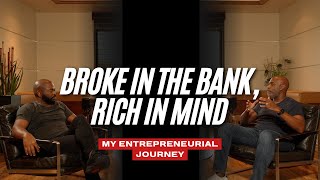
Holton Buggs and another speaker discuss how childhood experiences and family values shape your mindset about money and success. They share stories about growing up, early business attempts, and how scarcity thinking or abundance thinking gets passed down from parents.
You didn't start thinking like a millionaire when you became one. You started thinking like a millionaire when you were broke.
Right?
So. So how. How do people do that? How do you think like a millionaire when you're still broke?
Well, when I look at it, being broke is a condition. Thinking broke is a choice. And I wasn't in control of my financial resources. I wasn't in control of the neighborhood that I was born in. I wasn't in control of the house or the car, the lack or the abundance. I wasn't in control of any of that. I wasn't even control as to the decision to even be here.
Fair enough.
And so in the beginning, I used to think that it was this concept of I'm doomed because you would see other people across the tracks, you know, in other neighborhoods that you ooh and ah and you're like, you know, was there another plan for them?
Right.
And because, you know, I hadn't understood at that time that I was in control. You only see your circumstances. So I knew that there was a condition that I had that was lack of abundance. I never felt poor, but I felt that there was a lack of abundance. And I didn't understand that I was in control early on to changing the circumstances of abundance. But one of the things that I did, and I can tell you I have to give credit to my mom, is I never made the choice to think broke, because like I said, being broke is a condition. Thinking broke is a choice.
So what do you mean by that? You never made the choice to think broke? Because I will tell you this. Growing up in the projects in the Bronx, I know a lot of people who. The majority of people were broke thinkers. They were defeatist thinkers. They felt like they were relegated to a certain situation and that they were never getting out. And like you, for some reason, and it wasn't even for me, I would say it wasn't a conscious decision, but I just never subscribed to that.
Right, right, right.
You said, though, that you made a choice to never think broke. What is that?
That choice was. You'd hear a lot of conversations, and certain conversations just doesn't resonate with me. The energy and the vibration wasn't there. You know, I would hear people, even family members say, I don't have that. I can't afford it. This costs too much. I remember I wanted a. A bicycle, right? And this bicycle that I wanted was a. I'll never forget, it was a redline 102B.
Okay, so you really do remember.
I remember specifically right okay. Because I was in. I was into biking, you know, I was into, you know, trick bikes and stuff like that. And I knew that my parents didn't have the money to get it. So it was. It was. So I never subscribed to. I'm doomed that I can't have it. So what did I do? I built that bike myself. I work. I sold popcorn at school. I sold candy at school. I would take quarter bags of popcorn or bags of popcorn, put them in a little sandwich bag and sell them for 25 cents. Now, obviously, we all know the profit margins when it comes to popcorn, right? Because it's essentially free, right? So. And what I did is this year, I never forget there was a place called Joe Haskins, and that was a bike shop, okay? And then there was another street called 40th Street Bicycle Shop. So I went to 40th Street Bicycle Shop. And I never forget when Z rims first came out. The first thing I bought off the bicycle was I bought. The first thing I bought was the seat.
Okay?
I started with the seat. So I bought the seat. I had a lavender colored seat. This bicycle was white and lavender, okay? The. The frame of it was chrome, but white and lavender.
I know I'm a mess you up when you finish the story. Go ahead.
Okay. So I bought the Z rims, right? Because I saw those, I gotta have them, right? So I sold enough popcorn. And the other thing I started doing, I started cutting hair. Okay, Right. And. And so the Z rims, I don't remember what they cost back then, but I believe they were like $45 a rim. So it would take me about you know, maybe a week or so, four or five days, you know, within the week to go ahead and make that money to buy one of the rims. And I bought the second rim. Then I bought, you know, the seat pole, and then I bought the handlebars. Then I bought the chain. The chain was a lavender colored chain. I had to buy the crank. I had to buy. I built that bicycle with my own hands, all right? It ended up costing me the frame. I never forget was like 175 bucks. But the whole bicycle ended up costing me 376 bucks. Why? I refused to believe that I couldn't have that bicycle. Nobody in my neighborhood had a bicycle like that, period. But in my mind, I. I would always hear my mom. My mom would always tell me that I'm here to be a leader and a provider. She always told me that this mole on my hand was. Was. She said, God, put that mole on your hand because it's a signal that you're always going to come into a lot of money. A lot of money is going to be in your hands.
That's crazy. My story is not like yours. I just want to let you know, right. That I always wanted to be a MX bike.
Okay.
And like your family, I knew my parents couldn't afford to do it.
Right.
But my first summer job ever, which when I was in high school was cutting grass in Central park in New York City.
Okay.
And it was actually a pretty high paying summer job. Okay. Kind of got picked out by one of my teachers because I was a good student, whatever. And so I made a bunch of money doing that, gave all the money to my mom except for the money that I spent to buy my BMX bike, which was white with lavender rims. I'm just like, we've known each other for 20 years. Never known that.
Stories never come up, right?
That is crazy.
Yeah.
That is absolutely crazy.
Yeah.
All right, so, okay, so that's the younger years, right? But then you, you kind of matriculated through school, college, and then eventually you just kind of, you started out doing business.
Started off doing business, right.
When you were first starting out in business, how did you, how did you condition yourself to think abundantly and not fall into a scarcity mindset?
Well, like I said, number one, a lot of it was choices, a lot of it was agreements that I had with my mom, you know, so when she would tell me that, that I was, I was here, this mole is here for me to have money, I believed her. So that was an agreement. And so I had to live that out. And I used to watch the Jeffersons.
Okay.
I was inspired by watching George Jefferson. I used to live right across the street from a laundromat.
Okay.
Right. And they had a cleaners inside. And I never forget watching George Jefferson come home every day in a suit and hitting that button and going all the way up, walking directly into his apartment and not talking about the struggle. So I grew up thinking, one day I'm going to own a string of laundromats. I didn't know the cleaner's business, but the cleaners and the laundromat was in the same spot. So I would see people put these quarters in these machines, and the machines didn't talk back. The machines didn't take a bathroom break. The machines didn't need a lunch break. And so I was there also because we didn't have a home telephone. And I would use the phone Right outside the laundromat. And I would watch the attendant go in every now and then, take this key, pull the key out in all these quarters, and he's emptying these quarters into these leather bags. And he. When he finished, he'd have this huge bag of quarters. And I'd never see any employees in there. In my mind, that represented me living like George Jefferson. And so I used to watch Lifestyles of the Rich and Famous. And so I chose to program myself or allow myself to receive the. The. I would say the vibration of abundance. So I didn't subscribe to that poor thinking. I also wanted to be a professional football player. So I was a good athlete. And so I knew professional athletes made a lot of money. I didn't know what that money was. I couldn't put them. I didn't know what a million dollars would buy. And back then, they weren't making a million dollars, but I didn't know that. But that's what I wanted. And I just wanted big things. And even now I'm wanting these things. Living in the projects in the beginning, until we moved out, and my mom, you know, lived when we had that apartment complex. But I'm in the projects thinking like this. So I'm the only kid in the projects with a bicycle like that. Now, there's other friends of mine had bicycles similar to it, not quite like that, but they didn't buy them. They stole them. They would literally. They would go out on the weekends in the evenings and ride around good neighborhoods. And the kids who would leave those good bikes outside in the garage, in the driveway, those bikes were done. They were gone. They'd come back home and. And it was like the chop shop.
They didn't.
They didn't chop them up right. And. But I wouldn't do that. I was like, no, no, no. So I had the values standpoint, but I just knew that abundance was going to be on my side. I didn't know how it looked. I didn't know what form it was going to come in. I just decided that this is what I want. So when I had this vision of these. Of that bicycle, I was so motivated. And people right now who are not motivated, if a person's sitting at home and they're watching television all day long or on social media all day long or playing video games all day long, they have not caught a vision. It's not that they're lazy. It's something else has been occupying their mind to channel these thoughts of brokenness. And they continue to repeat These over and over and over. But once you get a glimpse of purpose and doing something with a big vision, that is when the energetic work side of you is going to come out.
You know what I love about this story is that I know you now in so much of what you do to program. Your thinking is very, very intentional. But this early stage is inadvertent. Right. And I won't say accidental, but it was unintentional. Right? You unintentionally latched onto a role model. Role model, George Jefferson, you were inadvertently dream building through lifestyles and the rich and famous. And like you said, you were inspired by a vision, but this was unintentional. And so let me ask you a question. What do you think were the things that contributed to you going that way? Because you could have just as easily got caught up in low value television and the wrong role models and not had a vision like you just mentioned, talked about how so many people are uninspired and lacking vision. What do you, what do you think contributed to you just kind of going that right direction?
I, I have to say, number one, my mom and my dad, I didn't grow up with my mom and dad in the, in the same household, but they didn't have a contentious relationship. They had a great relationship, a great friendship relationship. They still do to this day, almost like brothers and sisters. Like she, like, he's her, her little brother, he's younger, but, but I, I do, I just remember, man, I remember the sayings of my mom. We, when we were in the projects, everybody thought my mom was the bougiest lady in the projects because she spoke with such eloquent and intentional vernacular. Her vocabulary was unique. And, and I would always wonder, you know, my mom, why would she use such words? And this is coming out of the project. So the example was there. And now she never made a lot of money, my mom. Most money my mom ever made was probably about 13, 1500 dollars a month. But her example, and then the example of my dad and my grandfather, I didn't know my granddad was wealthy. Let me not say wealthy, wasn't. Well, he had a lot of, he had money. You know, in a neighborhood, you say they got money.
Yeah.
It's all relative, right? It's all relative. Right, Right. So, but my grandfather, it was a good example. So he had, you know, he always kept my grandmother with a Cadillac. If you had a Cadillac, you had money. And my grandfather paid cash for all of me. He. And he owned real estate, owned a lot of homes in ybor City. And so he was a rent collector. And I like that concept as well. And so I'm watching this model and I was just one that I'm very impressionable. If I see something and I like it, I kind of move towards it. And so I was operating on some of these principles that I'm saying unconsciously competent.
Right.
I wasn't conscious that these were principles. But here's the thing I want to share with you. You don't have to be. I don't believe that the universe allows us to come here. And, and we now have to learn the state of vibration, of where wealth and success is. We're already in tune with it. What we do learn is how to move away from our wholeness and, and our. And our attraction to success. And, well, even as a baby, right? As a baby, you know what to do. You learn manipulation as a baby. If I cry long enough, she's going to give me this.
Right, right.
You can't speak a word, but, you know, manipulation.
That's true.
And so I, I believe we're all born. I think we are born with this seed greatness in the seed of abundance. And then we learn how to become poor or broke.
You know, it's. It's funny you should say that because, you know, again, growing up in the projects, we had, you know, we had a station wagon. My joke is, this is a car or is this furniture?
Right, the wood, the wood panel on the side, right? Yeah, yeah.
To have a sock drawer. But in any event, we had some friends who lived in upstate New York, okay. And we pile into the station wagon, and we'd go up there, we visit them. And they had a house on a farm with acreage and a pony, right? And everybody had a bicycle. And I just remember on the drives back, I'd just be sitting there in my seat just thinking about, wow, you know, that's the kind of life that I want to live. And when I think about what you just shared, it just makes me think about the responsibility of parents. Right? Because, you know, we, you know, we'll talk about programming, you know, at some point, but our early programming comes from our parents, society, school, et cetera. And parents have a critical role. And so for your parents to steer you in that direction or to set good examples in terms of their work habits, their work habits, what they believed in, the vocabulary that they use. You know, it makes me think about my mom, too. You know, My mom. You know, so many people tell me, you don't sound like you're from New York. You don't have any recognizable accent at all. And I just remember my mom would always tell me she, she, she'd stay on top of me, correct my speech. You're going to speak in front of thousands one day and they're not going to be distracted by how you speak. They're going to focus on your message. Right, right. So it's just, you know, we're both parents and to, you know, all the parents that we come in contact with is so important that they are mindful of what they allow their children to watch, who they allow them to associate with and what principles they instill in them.
Yeah, with me, I had a lot of freedom. I had more freedom than probably most kids. I couldn't imagine a kid growing up with the levels of freedom that I had. I couldn't imagine a kid growing up with that level of freedom. I didn't have a curfew, mom was always working and I was such a mature kid. If I came in a house at 10 o' clock or 11 o', clock, it was okay.
No, those streetlights came on and we were still outside.
It was hella pace when I was at my grandma's house. That's how it was.
Okay.
But I grew up with such community ties. You know, I had my first car at 14. I didn't have a driver's license, but I had a vision. I wanted a car. Right. Do you know why I wanted a car so bad? Because I saw some of the friends. I used to always hang out with older people and they would have their cars. You know, these guys turn 16, get their license and they get a car or whatever it may be. And I'm, I want a car. I had a girlfriend, Earlene was my girlfriend at the time and I want a car. So what did I do at my dad's grocery store? What I did is set up a barbershop inside. And I was, I was giving five dollar haircuts and $15 haircuts, $15 if you wanted designs on both sides of your head, $10 if you want design on one side, $5 if you wanted a regular cut. I was put on television and everything for cutting hair. And so I saved up enough money cutting hair, bought my first car at 14. No driver's license because you needed even to get a restricted driver's license, you had to be 15. I started driving my dad's car, a stick shift at 12. I was holding his car on my own at 13, riding dirty. Riding dirty. I couldn't imagine a 13 year old even thinking about holding my keys, right? Not even. Not even sitting behind the wheel, just holding the keys. And so I grew up with a lot of freedoms and. But my parents, specifically my grandparents, who had the money, they didn't give me anything. I used to be angry. I was inspired to get that bicycle. Here's why. My granddad, okay, everybody around us, you know, we used to love the BMX trick bikes and stuff. And I told my granddad, hey, listen, I want a bicycle. So my cousin and I, who were living with my grandparents for the summer, told him we wanted bicycles. He was like, okay, no problem. He came home with two bicycles. I was excited. Station wagon there in the back. We go, pull them out. My cousin gets first choice. He gets the nice bicycle. That's like a bmx. They're both used. The second bicycle had a banana seat.
Oh, no.
I'm left with the banana seat bicycle. He probably paid maybe five bucks for those bicycles. And I'm like, no, this ain't happening. So I'm inspired to now build my own bicycle. I'm gonna do it on my own. So I sold candy, sold popcorn, did what I had to do when I wanted a car. I got in there, cut hair, learned how to cut hair. I learned how to do the designs by getting designs in my head and feeling the guy maneuver the clippers in my head and then watching at the end what the result was. And I knew how to do it, and so I did that, whatever was required. I just put that in motion and made it happen. And so. But it had to do with how I was thinking. I never thought lack. I never thought I can't or I couldn't. My mom never told me that. But I watch other people, and I do know a lot of my friends whose mom, we can't afford that. You can't have that. Boy, who do you think we are? Now, some of that language is around, we ain't rich, and all of that stuff. But predominantly what I remember. Maybe this is a choice of selective remembrance as well, because I choose to remember the good, but I remember the empowering thoughts of Mom. And I remember, you know, the empowering actions when my grandparents would actually do. And I had my cousin who I ran with, and his parents would do everything for him. I used to be upset. I go, you know, go to his house. He's got, like, everything. Every time fashion came out, Jordache back then, Sergio Valente, you remember that he had every new everything. And I'm like, I don't have that right. And I never got it because I had to work to get any of that stuff, and it paid off for me.
More from Holton
🔥 The #1 Platform for Network Marketers Who Want Real Duplication — RankUp.io Revealed