Airtable CEO Howie Liu - Excel vs Access, Founder Mode, and the Future of SaaS
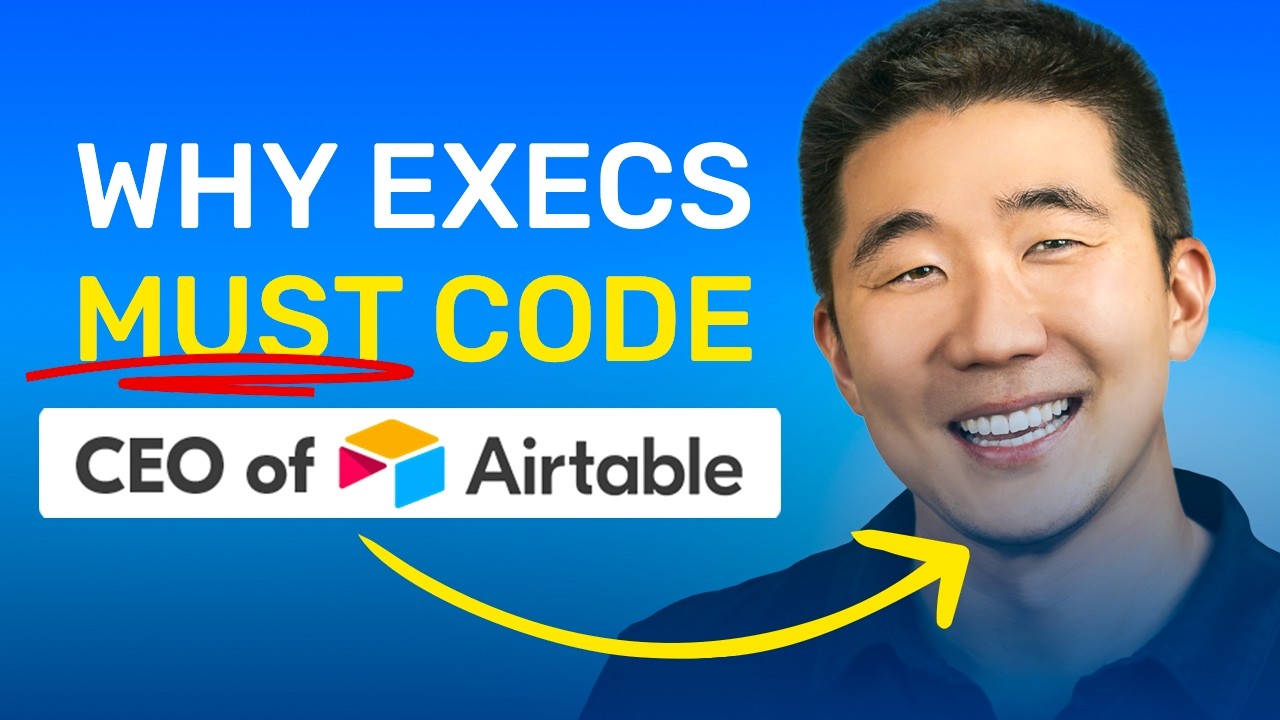
Howie Liu, CEO of Airtable, explains how the no-code platform is evolving into an AI-agentic era where conversational agents build apps via natural language. He discusses pricing challenges with AI inference costs, the historical Excel vs Access rivalry, and why he hires small teams of highly motivated people over large ones.
Chapters
Like if you win at AI, that is worth trillions of dollars to you. But if you lose at it, like you've basically become irrelevant. Like I think we are at this moment where it's not just about hiring up an army of like 100,000 people to work on a problem. It's about finding like the critical people who like really have the combination of like insight, ingenuity, but also just extreme like motivation and intensity to make big, big things happen.
Hello, fellow data nerds. My guest today is Howie Liu. Howie is the CEO and co-founder of Airtable, a collaborative spreadsheet and database platform that has raised over $1.4 billion.
Wow.
Airtable is at the forefront of no-code, low-code movement. Before founding Airtable in 2012, Howie sold his first startup, eTax, to Salesforce when he was just 21 years old. So now we know how old you are now, if you can do that. Howie, welcome to World of DaaS.
Thank you. Really, really good to be here, Oren. And I should do a shout out, which is we first met in the context of your prior company, Wrapleaf, because that startup of mine, eTax, actually was a customer of Wrapleaf. Like, you know, your data powered our product. So full circle. Yeah, exactly.
I mean, yeah, I should have like, I wish I was smart enough to invest in Airtable when it started back then in 2012. Yeah, so by the way, I'm, as you know, I'm a huge fan of Airtable. I use it every single day. Tons of our companies use it. So I'm in it all the time. So I got, I'm like, this is like gonna be an advanced interview because I'm talking like power user here.
Yeah, we can do some live debugging too.
Yeah, exactly. We'll debug live on the podcast. So let's talk about, first let's talk about just like this, the no-code, low-code movement. You kind of promised to democratize software creation. Where are we at on that vision?
So I think it's really interesting because the first wave of no-code, which I like to think that we helped to pioneer, was really about like just taking all of these complicated but powerful app concepts. So data model, logic layer, automations, and then interface. And if you're a programmer, you know that like, Those 3 layers are effectively the building blocks of any application, like model-view-controller, and distilling them into a form that was like really intuitive for any non-technical person to interact with. Right. So in effect, like doing for—
By non-technical, you really mean like a non-software developer. They still could be like relatively technical, you know, person.
I think that it really comes down to like how well-designed the product is, because in our case, like we wanted to make it for like everyone. I mean, literally everyone. So like, and just, you know, as a proof point, like early on we had like just such a broad range of users, cattle farmers, like literally cattle farmers, you know, building cattle tracking apps, replacing, apparently there's like a whole vertical solution category for this, CattleMax and all these other kind of brittle tools.
Oh my gosh.
We had like small, like legal firms, lawyers themselves going in and creating like their own rolled version of CaseMap, which is a LexisNexis product. So they built their own case management software in Airtable. And I mean, the coolest random use cases too would emerge. I remember being on a screen share with a woman who I think was like an octogenarian and going through and cataloging family memoirs, historical kind of letters, and literally figuring out how to drag and drop into Airtable these scanned attachments.
So cool.
So I think it really comes down to a test of how truly easy is the product to use? Because there's been low-code platforms for much longer than we've existed, right? Like, you know, before Airtable, there were all these other products like Quickbase. Even Salesforce itself is technically a low-code app platform. Like, you can configure it to build any app you want. And even before then, like, I mean, there were back in the day, like FileMaker, Microsoft Access, like Lotus Notes, like Ashanti dBase. And so I think what we really wanted to do was like, truly lower the floor to an unprecedented level where it really didn't require a technical admin IT type person, let alone a programmer. It could be like truly anyone could go and build their own useful apps.
Yeah. And then where are we at? Where do you think, how much of that vision is realized? How much of it is still to come?
Yeah. So I think it's a perpetual journey. both in terms of lowering the floor. And we're obviously in this moment where— I like this Bill Gates quote. He said recently, there's only been 2 truly astounding technologies that I've seen in my life, truly jaw-dropping moments. And one of them was the GUI. So when he probably saw Xerox PARC and the original GUI, it obviously sparked the inspiration for both Microsoft and Apple to go do the same. And now ChatGPT, because we actually have, like, we've bottled up intelligence and, you know, kind of broad reasoning capability into an instantly available, fairly cheap API that can be scaled up on demand. And what that means for no-code is like, I mean, literally, if you interpret the vision of no-code not as like, okay, we have to just go and create GUI metaphors for app development, but instead now it's like, you can do it without code, but through agentic conversational app building. And you see some of this with the vibe coding apps as well. Like, you can go to Cursor as a non-developer and type in the sidebar chat, just build me an app, and it will try to do a good job.
By the way, I was in Bolt.new today, just doing that.
Yeah, no, it's awesome.
It was great. Yeah.
And it's so magical too, because I think the range of expression that you can do is just broadening and broadening, right? And the barrier to entry is dropping. Now, I think the vibe coding products, they do have some limitations, right? If you're using agents to generate actual code, it's somewhat unreliable. There could be data issues, there could be security issues. And it's hard to— if you're not a developer, you can't actually inspect the thing that it's generating, right? You can't inspect the actual code itself.
Yeah.
You can only look at the rendered output and hope that underneath the hood, it's all working as it should be. And I think that's where we have a unique take, which is blending this concept of no-code GUI components where you can see and directly interact or edit with the data layer, the automations layer, the interface layer, and literally drag and drop things if you don't like how it was generated, but also add on top of that this agentic conversational layer where you just talk to our new agent Omni to do anything, literally anything that required point and click in Airtable. Now you can just conversationally Uh, talk to this agent to do.
Where do you think, just in general, just if you think of just like a company software stack, where do you think like AI is going to change the most and where is it going to like kind of lag behind the least, let's say over the next kind of 3 to 5 years?
So I think that every software category is basically up for grabs, right? And like, if you think about the disruption of SaaS versus on-prem software, like I actually think SaaS was really important, but not actually nearly as big of a deal as AI and agentic product experience. Meaning SaaS, it's like, okay, great, we massively reduced the overhead and cost of maintaining software, of maintaining this deployment. It was much easier to adopt and distribute, but the software itself, the functionality was kind of the same.
Right.
It's like, okay, now it's just like installed on-prem or it's like—
Or it was easier to collaborate because there were a lot of things where like I would like download to my computer and pay $100 or something before, but I couldn't collaborate with other people. So it's more of like a single-player mode type of thing.
Absolutely. I mean, that's very fair. And the hacks they had to like do multiplayer mode before, I mean, in our space, like think about like stuff like Access.
Yeah.
I mean, like Access, you literally have to save a file to a shared LAN. Uh, disk drive, right?
And then like a network disk drive and then like collaborate by like, you know, before Git, I would use SVN to just try to like, and I would like super hack it just to like share files with people and stuff.
Oh, I see. Oh, not for, not for actual code commits, but just like you would use it for like your own like Dropbox, like.
Yeah, exactly. Like that's what, that was my Dropbox that we use internally in our company before, you know, it was like, it was terrible at break all the time. It was super hacky. Yeah.
I think you've officially earned your uber nerd badge from that. Like, When you use SVN for basic file sharing and collaboration, you definitely earn uber nerd status. But yeah, I mean, it was like, I agree with that. I think the distribution, the sharing collaboration layer was probably the single biggest disruptive force of SaaS. Even our contemporaries, think about Figma versus Sketch, right? It was basically the same functionality, but one, Figma was much easier to sign up for, adopt, and then share. Anyone could open.
Yeah.
a collaborative file, and same with Airtable. But I think to me though, that's still very incremental relative to the massive disruptive change of how product experiences, how software experiences can behave when it's fully AI native to the core, right?
Yeah.
And so when I think about a lot of the current software landscape, much of it is just like we went out and especially in the vertical solutions world, like we built a vertical solution for one category, right? Be it plumbers, be it dog walkers, whatever, be it like small businesses, yoga studios, like mind-body type stuff. And we just like built all of the data model and the business logic rules for this particular use case into our software. And now we have like a sales and distribution channel to sell it. But fundamentally, it's just hardcoded software, right? And I think that now there's this massive disruption of, with agentic app building, first of all, the barrier to building your own truly bespoke software that's quite advanced, not just simple, has radically gone down.
Yeah.
So that obviously tilts the spectrum in favor of custom software. But then on top of that, the software itself should feel and have a different form factor, which is like, it should be agentically infused. So if you build a CRM today, like it shouldn't just be your age-old CRM, it should actually have agents like automatically running within it that go out and do, you know, web research about your customers, right? Or go and automatically listen to call transcripts or use MCP to grab data from other sources. And so I just think like the radical improvement in the product value that you can create with a truly AI-native baked experience, Is so big of a difference that, you know, it makes all of the current incumbents, uh, especially the legacy kind of enterprise incumbents, up for grabs.
And you mentioned MTP, like, how bullish are you on being able to bring in data and kind of collaborate as opposed to just like, you know, you know, or like the alternative is like needing access to the browser to go do it for the user or something?
Yeah, yeah. I mean, well, so I think both will be done agentically. So I think that we've seen what browser use looks like in the context of agents, not just literally scraping the HTML like what Deep Research does, but actually products like Operator from ChatGPT or Manus, et cetera, that now just have literally the ability to scroll through a website, even hand the user back control when it needs the human to go and do a CAPTCHA.
Yeah.
typing your credentials, et cetera. So I think, first of all, browser use doesn't mean you can't do it fully agentically. But I do think it's a huge deal that agents are now able to effectively go and automatically do increasingly more and more, if not all, of what a human would've had to do with a desktop, right? And not just on the web browser or through MCP, but anything on your desktop. And I think It's very clear that we're quickly approaching that point where at least anything that's fairly deterministic or rote, an AI agent can definitely do. I mean, we're seeing this big discussion in the e-commerce space of what happens if people start not going out and doing comparison shopping manually as they do today, where they search for some item of clothing, Google pops up its sponsored results, Like you look through those, you click on them, you examine them. What if you just tell an agent like everything about yourself and like what you like, your style, or it analyzes you and then it just goes out and like looks for the perfect products for you and then can even transact them? Like, yeah.
Yeah. And like, I, I, I by default buy probably most, almost everything on Amazon and, you know, probably 70% of the time or 60% of the time it is the cheapest price, but there's a lot of probably ways I could probably get a cheaper one if I had an agent doing it for me and would just tell me, hey, by the way, you were going to buy on Amazon. You just saved $50. I would be happy to share a percentage of my savings with the agent.
Totally. Totally. And by the way, I think the common misconception I see is AI and agents can only be used for very logical tasks, right? Where it's like, literally find me the lowest price. It's very utilitarian. But I think agents actually can You know, kind of have a certain sense of taste, right? Like, I mean, you can, you see this with like the creative applications of LLMs where ask it to compose a poet poem, you know, about your company in this style with this flair. And it does a very good job, right? And, and so I think—
I use it to pick restaurants, pick hotels, like things that are very, very personal to me. And I try to keep it, okay, here's what I'm doing, here's who I am. And, and, uh, and it does a, you know, maybe it's not perfect, but it does a pretty good job. It does as good of a job as like You know, if I would travel concierge assistant do or something.
Exactly. And so I think that's really interesting where it's like, you, it's not just like a comparison shopper. It can actually be like a personal shopper where it's finding products that it knows you might like, you know, because it understands your tastes and preferences and style in subtle ways that are not just like a keyword match. Right. So I think it gets really, really interesting when you start to look at, you know, the, the, the disruption with agents as not just being strictly like rote utilitarian tasks, like what we could do with like RPA, for instance, where it was very scripted, and instead much more subjective and kind of soft-feel tasks.
Now, back in the day, if you think of Airtable 1.0, it was Microsoft Access.
Yeah, basically.
And Microsoft Access was Like an amazing product. It was so good. It was, it was, it was like, it was so well done. And then at some point, I don't know when, at some point like 20, 25 years ago, Microsoft just killed it for some reason.
Yeah.
And they stopped investing in it. Do you have any idea why? Like they could have been, it could have been amazing. Like why did they do that?
Yeah. Yeah. So, uh, funny enough, like, you know, we, we, um, when we were founding Airtable, We, instead of just looking to the future of where we thought things were going, we also looked to the past to try to understand the existing, the prior art, the Microsoft Accesses of the world. And by the way, Lotus Notes, also conceptually similar and a very successful product for its time, groundbreaking in terms of the paradigm they defined there. Kind of the first collaboration meets structured data type product. But long story short, I ended up talking to a number of people who were literally involved in Microsoft Access, Excel, et cetera, like Steven Sinofsky, Adam Bosworth, who actually created the very first GUI database as his own company and then led—
Oh, I didn't know that. Okay.
Yeah, exactly. Led one of the other leading database companies early on and then later joined Microsoft to run Access. And then Steven was a leader at Microsoft that I think oversaw the Office suite at one point and beyond. But the story that I ended up piecing together was that actually at one point Access and Excel were kind of like effectively 2 peer products that were both like really, really important, right? One's a database, one's a spreadsheet. Spreadsheets more for number crunching, like ad hoc analysis, databases for like structured list data, CRM-y, ERP-type use cases that you build yourself, right?
Yeah.
But if you look at the products superficially, they kind of look the same, right? Like, they both have like this like tabular view, this grid view. And Excel actually had started building more table-like functionality into Excel. So it wasn't just number crunching. You could kind of use it to make a list.
Yeah.
And so literally, like, what I heard was like there was a literal moment where like Bill Gates called a meeting because he was hearing all this consumer confusion. And the head of Access and the head of Excel were in a room together with Gates, and he was like, this is way too confusing. We got to basically decide on one product to be kind of the default product that subsumes both of these use cases. And then the other one will kind of relegate into a more kind of edge case or kind of power user product.
I always thought the alternative history is like Access would be amazing, but potentially the alternative history is that Excel wouldn't be as good as it is today. Because they wouldn't have been investing as much, or they, or, you know, maybe like, because if they, if they kind of like spread their bets, it wouldn't have been as good.
Yeah, maybe. I mean, Microsoft also had like enormous resources at the time. So like, I think they could have made both products really great. And I think it was more of like a, like consumer confusion issue for them. But I mean, I think there could have been an alternate world where like Excel actually got relegated into a power user tool. for like finance geeks, right? And it's mostly, it stayed mostly a number crunching tool rather than becoming like the dominant default. In fact, I remember like as a kid when I installed Microsoft Office, like whatever, like '95, right? Like the one that came with Windows '95. Like, I don't think we got Access by default with the bundle. I think it was like— No, you had to pay more.
It was like a professional to get Access.
Exactly. And so like, what if Access had been the default bundled product? And actually, like, more people need effectively a database than an advanced number crunching spreadsheet that can do IRR. Like, you know, it could have been very vice versa.
Yeah. I mean, the first, like, web application I ever built was built on Microsoft Access.
Oh, no way.
Um, and I put Microsoft Access, like, in the cloud and then I built a whole web application on top of it. And it was like, it was essentially like the database, like, I mean, not a very fast database, so obviously didn't scale that well, but the database running underneath it. And then like, then you have to like upgrade. The other thing is like, yeah, they forced you eventually upgrade like SQL Server back then. Right. And so you had these other kind of— SQL Server was just like a terrible product and really hard to use. And it, it, it— okay. Well, okay. Now another question I have for you. So I'd say like maybe 4 years ago when I was considering hiring like a marketer, my basic question to them was like, how good are you at Zapier? And if you were not good at Zapier, like if you, first of all, you'd never even heard of it. Like the interview would end, right? And then if I would just like, show me your zaps, right? And they would show me. And then if you were, if you had great zaps, like, okay, you're hired. And if you don't, you're not. Um, now today, like, like outside of Airtable, like what, what's the stack that like all good employees should be using?
Yeah, well, so first of all, I think that's really interesting because to me it relates to kind of this founder mode concept, which I think is a misnomer. I don't think founder mode is just about founders running a company the way they want. I think it's actually about saying executives in general should be very hands-on and in the details and be experts at the actual craft rather than just delegators and managers. And I think that idea of ask a marketer, especially if they're, even if they're a marketing leader, I assume like you would've asked that even of like a CMO, like if you can't get hands-on with a modern stack of tools that make you 10x more effective, then you're clearly not up to speed, right? Like you're not in it enough.
Yeah.
I think no time has that been even more salient than now with like all of the AI tools that you can use. So like, you know, one, we use Airtable a lot for everything, right? So like, You know, actually one of the top use cases in general for Airtable out there in the wild is marketing operations. So everything from like managing a content pipeline, like for this podcast, you could say, hey, here's all the upcoming speakers. Like, you know, now I can have like AI agents in Airtable do research on each person, find recent news. Otherwise, we do do that.
Okay, that's awesome.
Yeah, good guess then. You know, but like you can also like have it, the cool thing about what you can do with Airtable is that think of like any one-off prompt that you can go and create in ChatGPT, including prompts that leverage web search, right? So like, let's say you're researching one speaker that's upcoming on your podcast. So here's a specific prompt that in a very, very nuanced way finds relevant details about them and their history, et cetera, using, you know, basically AI web search, right? And once you have that prompt kind of optimized, now like, the current status quo with chat products is like you'd have to go and remember to copy paste that exact prompt and give it the right input contacts. Like if there's more data that you have about your own notes, from your own notes about a speaker, and it's quite like laborious to go and like replicate that same AI use case again and again, right? And effectively what you can do with Airtable now is like bake that prompt into a workflow. Like it's just, define a field that performs this agentic action, in this case, web search, and do it every single time you add a new podcast guest or upcoming episode, right? And so I think that's the really powerful idea that we have with Airtable is take any AI use case, and obviously we're all standing on the shoulders of the giants that are the awesome foundation models that we all now have plenty and cheap and scalable access to, and they just keep getting better, cheaper, faster, right? And on top of that though, how do you build a true application, which is effectively just a container holding the right data model, the right workflow, and the right kind of human interface to be in the loop with the agent and AI kind of application? So we do a lot with Airtable, and I would expect any marketer or frankly any role of person that is coming into Airtable today, If not to be an Airtable expert, of course, like we can't only hire people who already know Airtable that well, but like I would expect them to be able to, including in the context of a, uh, of an interview process, to like whip up a pretty good Airtable implementation for a relevant use case.
Yeah.
So you could be a lawyer or somebody in our legal team. Can you go and build a contract review workflow in Airtable really quickly? Like that's the kind of systems thinking required, I think, to really leverage AI in, in the, uh, the modern, uh, era?
No. Um, if, if you're using like a Zapier or, um, maybe a, a newer version of a Zapier, like a Pipedream or an N2N or something like that, like they charge on a per-action basis. You know, you get X number of actions and you pay, and then if you go above that and you can get your entire team on it. So we have like our 100% of our team using it. And they're all using it and they're all benefiting from it. Yeah. Airtable's still kind of old school, right? It's per user, right? Sure. And it's, and, and so you, it's very limited to, so like, you know, if you think of like Airtable versus Google Sheets, I love Airtable. I way prefer Airtable over Google Sheets.
Yeah.
But Google Sheets probably has, um, over 100 times the use of our company because Google Sheets is There's no marginal cost. I don't have to pay an extra $1,000 per user to go use it.
Basically free.
How do you think about pricing? Because I think you would explode in usage and I think your revenue would go up. It might not, it wouldn't maybe go up relative to the explosion, but it'd go up. How do you think about pricing and et cetera? I'm sure you've thought about this a lot.
Yeah. I mean, look, I think pricing is like, Misleadingly complicated or deceptively complicated, right? Meaning like you want to have a pricing model that is ultimately simple and grokable by the customer, but there's a lot of, it's like multidimensional optimization underneath the hood, right? Meaning like, you know, now especially like if you want to do consumption-based pricing, okay, but like then what's your actual inference cost? Especially since like usage now sometimes correlates with actual hard costs. And it doesn't always correlate one-to-one, right? Like you're not necessarily always like saying like, you know, let's say like you price for every zap, um, in the Zapier model, but some zaps take 10 times more costs, including inference costs in between, because they have a reasoning step with an AI agent. And so are you absorbing that kind of tolerance for like, you know, a variable margin on each of these costs? I think it gets really, really tricky.
And that's the same on a per-seat basis too, though, right? I mean, you, you have, Some seats are just going to cost you way more than others. Some people are logging in all the time, right?
For sure. For sure. Exactly. And maybe even arguably more so with the seat-based model, then you're— I think the seat-based model is effectively on the one extreme of saying, look, we're going to absorb the variability of cost structure and abstract it away from the user or the customer so that they just see a very simple mental— they get a very simple mental model, which is like, Okay, I have people and anyone who wants access to this product, we're going to pay this amount, right?
Yeah.
And of course, there's some sliding scales of which plan do you want to be on and what volume discounts, but for the most part, it's like, how many people do I have that need to use this product and I want to pay for each one, right? And that somewhat makes sense. That makes a lot of sense, I think, to a lot of customers because they still think about the value of software as really an enhancement to human productivity. And I think there's a whole argument around, well, how quickly are we going to see agents actually take over jobs and outright replace humans? In which case, the value of an agentic solution is not correlated to the number of people using it. In fact, it might be inversely correlated. If you can displace 100 roles with one agentic solution, that's actually worth more. You need to do outcomes-based pricing.
Maybe there just needs to be a— I mean, one of the companies that we have, they have about 60 employees. Um, and every month they have between 3 to 6 Airtable seats.
Okay.
Um, so they scale up and then they immediately scale down because like, it's really expensive to have these. They should have 60, right? So they should have 60 people using it. It is an extremely powerful tool. They have 60 people on Zapier, right? Um, or whatever they're using, Pipedream. They have 60 people on it and they're constantly using it. All the time. But like, they— because, because it's so expensive, like, they like, they like scale it. Like, it should be like, maybe you have like these, like, you maybe you have like the 5 expensive seats and then you have like the super cheap seats for people who just need to do a little bit here and there or something. Like, I don't know the way to do it, but like, I think like most of the company is not, not using your product, which is such a great product because it's so— because of, because of that price barrier. Yeah.
No, that's very fair. And I mean, there are like, um, you know, so we do have a free tier and you could add, you know, different people to a free workspace, uh, in the company, right? So like 50 of the people could always just be on a free workspace and they can use like—
But if you have a paid workspace with 3 users and you want someone else to be interacting with it, then you have to pay for that.
That's right. Like everybody in the workspace that's not We do have free read-only users, but if you want them to be like a full editor, they do have to pay at the same plan level. Yeah.
And then even edit like one tiny thing somewhere, then they have to pay, right?
Yeah. So that's fair.
One time.
And look, I mean, I think it is a question that predates gen AI and kind of like agentic or consumption-based pricing around AI. Actually, I recall a really interesting conversation I had with with Zuck where he was giving me some advice about thinking about the business, and he had a radical proposal for me at the time. This was probably at least 5 years ago, and it was basically like, what if you just made Airtable entirely free and just go for mass adoption?
Yeah.
And instead of doing any kind of seat-based SaaS revenue, you have this marketplace thing, and we just launched this effectively like an app platform where third-party developers as well as us could build apps that sit on top of Airtable, right? And he's kind of like, what if you just went all in on getting scale and your eventual revenue model could just be taking a skim on the apps built on top of Airtable?
Right.
That's interesting.
Yeah, for sure.
Totally. And look, I mean, obviously, Zuck is a really smart guy, so I deeply thought about it. And I mean, we actually didn't end up doing that because, you know, I felt like we could get to some hybrid alternative with a combination of freemium and like other pricing factors. And also like, you know, SaaS is like, you know, are we like more of a SaaS business or are we more of like a consumer product business, right?
Yeah.
And then, you know, it's a valid question. Like we could have gone either route, right? And aim more for like a consumer-esque tool. And we obviously, you know, kind of picked the road of more SaaS-y and And we were also moving upmarket into enterprise and able to command really large ASPs in enterprise where we have multimillion-dollar paying customers who are building mission-critical operations on our table, right? Where the value to them is higher than maybe they even get from a Palantir solution in some cases, or a solution built on a ServiceNow or Salesforce. So I think there is some kind of strategic direction and vision that is embedded into the pricing model as well? Like, are we aiming more for like the mass scale, mass everybody using it, or are we aiming to like, you know, go and serve the highest end use cases? Can we do both with some creative combination of pricing? I mean, to your point, like maybe there is an option where like we do have like a more restricted tier of seats so that—
Yeah.
You can just add everybody in the company to that workspace. They still can collaborate, but like if they're a very limited or infrequent collaborator, you charge a lot less. So I think those are all valid questions. You know, things that like—
I just want to get off Google Sheets. Like, I want you to help me get off Google Sheets. And right now I still spend, even though I love Airtable, so like, I love Airtable 20 times more than Google Sheets, I'm in Google Sheets 20 times more time. Yeah. I tell you, I'm just like, and every time I'm there, I just curse you. I curse you, Howie. I'm like, Howie, just let me get off Google Sheets.
All right, well, I'm going to record a Loom of you cursing me and just autoplay it until I finally figure out the fix to this. But I think it's a valid push. And I do think now, especially in the agentic era, we have even more reason to rethink pricing, right? We just did this big AI-native relaunch, and one of the things we did was we actually bundled— before, we had AI as an add-on to Airtable, right? So you have the seat price of Airtable proper.
Yep.
And then you basically had to be on a paid plan of Airtable to then also pay for an add-on of AI, which also then came with some basically inference credits to run AI use cases, right? And we basically now said, no, everything needs to be agentic by default. Even the free user should come in and get a vibe coding-like app building experience that we're going to eat the cost on, right? I mean, inference costs money and we're just going to eat that cost even on our free plan.
Yeah.
And so we've already kind of like made some changes to our pricing thinking and gross margin thinking to be able to support the type of like new product paradigm. Like it wouldn't be that radical or it would be very natural for us to then continue to like think about like, okay, what are new disruptive ways that we can just get more people to get value out of Airtable, right?
World of DaaS isn't just a podcast. World of DaaS membership is a private invite-only community for founders and executives of important data and AI businesses. It's a place for off-the-record, high-trust conversations focused on the biggest questions data leaders are facing. The community is about peer learning, curated intros, and access to private events. Everyone in the group is building or leading something meaningful If that sounds like you, apply to join at worldofdaas.com. That's worldofdaas.com. How do you route essentially the AI requests to the best model? And it's both the model that will both perform the best on that specific topic, but also doesn't like crazy—
Yeah.
There's a lot of models which are super low cost. You can even run them locally. So how do you do that yourself? Like, is there like some sort of layer that sits on top of it and is a routing system?
For sure. So we have basically 2 very different but complementary types of AI in Airtable, right? One I call like AI building and AI at runtime. AI building is basically where you come in, And this is the vibe coding experience. We have Omni, this agent that you talk to and can build or analyze any app in Airtable, right? So you can tell it, build me this dashboard in my CRM, go create me this new app that is a podcast tracker, go add this new object or field to my existing CRM. So it's kind of the app building agent, right? And that one, We basically do have an underlying system where we can choose different models for different types of requests, right? And some we optimize for latency, so we can very, very quickly do a simple request. Some we optimize for quality, where actually it turns out the reasoning models don't always do the best at text processing type tasks, right? So if you give me a bunch of notes and you say, I just want you to extract out the key people referenced in these freeform notes, and then go and update those, those notes into each of those people records in my CRM. Like, actually, we found that like maybe a, um, uh, a non-reasoning model like a GPT-4.1 actually can outperform the reasoning models, uh, with a lot of these use cases. So like, we're doing a lot of, um, our own selection of what is the best model to use for each of these different, uh, types of requests or layers of requests.
Like, you just kind of know based on what the request— like, how do you even know what the request is and how to route it?
So, I mean, that's an LLM step itself, right? So there's like the LLM step of like, and I mean, so one, like evals are super important. I think this is something that like, you know, is probably underappreciated, which is like with these, you know, building an agentic experience is so unlike traditional deterministic coding, right? Like when you think about like your algorithms class from CS, it was like very mathematical. There's like A closed-form answer to the optimal way to do a sort of a list, right? Whereas with these agents, it's like you do have to do some trial and error. And by definition, having a really good eval setup is how you can very efficiently navigate the somewhat stochastic nature of LLMs, right? You don't know predictably like how well they're going to do for any given prompt until you try it. And so you just have to try it. And evals are the way to try them in a consistent, kind of quantitatively measured way. So we have a really good eval stack where we effectively can go and just try lots of these different combinations. We can A/B test, like, okay, what if we use this more efficient, smaller reasoning model to kind of decide whether to call on this bigger, slower reasoning model for this type of request. Uh, I mean, there's literally like, I have an internal kind of like power user config mode where I can actually go in and like hand override the different models we use at different layers or for different types of requests. And like, there's like literally like a dozen.
You have to be continually doing that because like all of a sudden you can be like, wow, we could save like $100 grand a day if we just do this thing. And it's like, it's as good. Sometimes it may even be better for the user.
Well, that's the thing is like, I think we're still at the point where we're not really cost optimizing. I would rather eat as much cost as we can in this moment to deliver the best quality experience. And I have high confidence that cost will come down naturally for any given quality level. I mean, look at O3. Sam Altman literally tweeted a couple months ago, O3, we just 5x'd or decreased the price right now by 5x.
That's insane.
Yeah. Like literally as of this tweet, we dropped the pricing by 5x, right? And so there's a massive race to the bottom and there's like software optimizations to inference. There's obviously the hardware costs going down for like the same amount of like, you know, effectively flops, you know, of a computer.
By the way, he's taking the Zuck pricing strategy, kind of like he's trying to get mass adoption, not trying to optimize.
Yeah, totally. And I think that's probably the right thing to do. in their race, which is, I think there is a huge advantage to the provider that has kind of the cognitive referent or default set of models, right?
Yeah, absolutely.
That not only people use through the consumer product, ChatGPT, but then even programmatically through API. If everybody just learns the ins and outs and the nuances of the OpenAI models and the texture of O3 over, let's say, 4.0 Sonnet from Anthropic, then there's huge long-term strategic advantages to that, right?
Especially if there's memory, especially when they have memory, right?
Exactly. Well, the memory part for sure on a per-customer level makes it much more sticky, but I also just think it becomes a standard, right? It's kind of like Excel, going back to our earlier discussion, Excel becoming a standard. And it means that you're— I mean, I remember in the Windows 95 era, I think my family was poor and we actually didn't want to spend like the $300 on Microsoft Office at the time. And so we bought some like knockoff version of it. I forget what it was called. Um, uh, it was WordPerfect actually, I think. And, and the correlated, uh, and the associated products. And it was just like not as good. And I remember like going into school and like in our school, we had like a computer lab and like we learned Excel and Word and all the, like, you know, the Microsoft products there.
Yeah.
And I learned all the shortcuts and the advanced features and I went, oh, it's like, well, this, the thing that we have doesn't even have all that, right? So having the standard where like people just like learn, developers and consumers alike learn.
You're like sticking by your— this is why I got to get— I want Airtable. Everyone using it.
Okay, you convinced me. Okay, we're going to mark my words. We will do some radical improvements to our pricing model to expand the funnel by far of people using the product.
I'm very aligned on that. We're already here in school using it. Yeah.
Well, I do think, I mean, like on this note of drawing the parallel back to like ChatGPT, I do think in the AI era, like there's clearly some products that have been successful doing an enterprise sold motion. Like, you know, some that come to mind are like, you know, the Harveys of the world, like, you know, very much enterprise sold. Even Palantir's like custom AI deployments model, right? AIP.
Yeah.
But like, but I think by and large, the vast majority of real AI value creation and adoption and even revenue has come through consumer-led or end-user-led adoption, right? Yeah. Bottoms up. Look, ChatGPT alone, I think OpenAI is now like a $10 billion revenue run rate business, right? And I assume the vast majority of that is ChatGPT. And so ChatGPT alone probably is like the lion's share of total AI revenue out there today, right? True gen AI revenue, at least. And so like, not to mention, like you have the cursors of the world, you have the Maddesses, et cetera, that are all like PLG-led. And so I think there is a strong favoring of like, you know, for AI experiences, it's better experience, it's better shown, and like, you know, better yet, like just self-served rather than sold or told, right? Yeah.
And no longer a contract, easy to just, you know, try it out.
Exactly.
So some of these do have much higher churn.
Than others, but but but it's but you know like I'll take a ten x bigger funnel with with two x higher drop off right you know like that's yeah you can now no salespeople to pay and you know all this other stuff right yeah exactly so and I think about lower like if your cacs go down by yeah by twenty x like who cares if your churn goes up by three x like yeah yeah or it's I mean your cac could be zero if you're ChatGPT right it's just like massively viral and like people just talk about it. And I actually, I mean, I've seen the retention first.
I don't know. I bet you their CACs are like insanely high because most of their CACs are like Sam tweeting and Sam's time is probably worth, I don't know, $1 million an hour or something.
Right. That's fair.
Okay. Well, their CACs are probably like insanely high if you put his hourly rate on it.
Yeah. Although you could say he probably derives some amount of like personal entertainment value from the tweeting. So is that actually just like a moonlight job or is that full-time?
Anyway. Yes, exactly. Good point. Yeah.
And at one point, at least, he said he had zero equity in OpenAI. So actually, maybe his time is free at that time.
Right, right, right, right. It's a good point. Yeah. From OpenAI's perspective.
Yeah, exactly. Exactly. But yeah, I mean, I think punchline is, I do think within the era of AI, the importance of getting just more people into the top of funnel to just actually use and try your product is more critical than ever. To your credit, on the pricing model stuff, it's like, I think Palantir, short-term bullish on, long-term uncertain on. I would never bet against them, but short-term, they've clearly found this repeatable motion of selling a turnkey way to just deploy AI into the enterprise. Longer term, I think there's a question of, well, does all of the AI deployment just become self-serve and so easy to spin up that like companies don't need like the current Palantir, like very heavyweight sold model. They send an FDE, you're paying like millions of dollars for a custom build.
I do think when you're dealing with like, when you're dealing with comp— like security type of information, information that is national security related or something like that, you're probably still going to need to be sold to for quite a long time.
Oh, for sure. For sure. Yeah, definitely for that. But like, but you know, Palantir today is actually now already trying to sell downmarket as well, right? Like, I mean, even like smaller companies that are not dealing with like high security issues, doing like, you know, much what would be considered like much more banal deployments. Like, here's like how we're deriving insights from, from customer feedback.
Oh, really?
Here's how—
Oh yeah, yeah. If I ever saw a random company doing that, I'd say, okay, that's not a good deal. Like, you— Palantir is like, you should be paying Palantir at least $5 million for your implementation. If they're trying to sell like a $100 grand thing, that's probably not the right thing for them.
I think there's this near-term windfall that Palantir is getting around CEO-led purchases of Palantir as an easy button to show that they have some AI implementations. It's like the CYA, cover your butt to the board and to the public market, maybe. Even if you're a smaller company and not in security, not in high data sensitivity, to just be able to say, I have an AI deployment.
Totally.
And I think that as the self-serve ways to do that and do that in a meaningful way, not just like a gimmicky or like, toy way. Early on, people were all using ChatGPT for superfluous, fun gimmicky things, right? People were trying the talk like a pirate thing or whatever.
Yeah.
Whereas now I think they're actually figuring out how to use it for more meaningful use cases. And better yet, using the underlying models in a tool like an Airtable to then power a more recurring workflow that is actually high value, right? And maybe it You shouldn't be paying like hundreds of thousands or millions of dollars to Palantir to like do a bespoke build for.
Now, there's a ton of acquihires that are going on in our industry. Back in the day, an acquihire was like a pejorative word. And today, acquihire could mean like you're getting like a billion dollars or more than a billion dollars. Like, what's your thought about where we are in this like weird moment? And how does that— does it continue? Does it stop? Like, is it just like this odd, like weird Like moment in history?
Yeah, I mean, it's totally changed, right? I mean, like, I was acquihired in my first company by Salesforce, right? And at the time, like, that meant like maybe a low 7-figure payout and like some, some, uh, retention plan or whatever. But like, I mean, when you look at like the recent acquihires of— I mean, very, very recently— Windsurf or Scale, etc., I mean, these are like, you know, monetary sums that look like Full business buyouts. I mean, like the scale of $14 billion price tag. I mean, that's like bigger than a lot of public companies, right? Like, I mean, mature—
Acquisitions where the founder gets into the Forbes 400, right?
Totally. Yeah, exactly. Um, and the crazy thing is, I mean, it is truly an acquihire because partly maybe to, to, um, avoid antitrust scrutiny, it's like they're not actually buying the business. They're not buying the company, the entity, the business, the IP. They're intentionally leaving that behind. And in fact, like, Scale, the business, is still an independently operating company, right? And so I think to me, it's a little bit of the key person theory of human civilization, like how much of technological progress or just progress is driven by a couple very, very important key actors who have the unique insight or wherewithal to just really move things forward. And it seems like, and I would generally agree with this, that right now in this moment, given the ingredients of all of the potential things you can do with AI, and especially if you have massive resources like a Meta that you can gain leverage with, if you win at AI, that is worth trillions of dollars to you. But if you lose at it, you've basically become irrelevant. I think we are at this moment where it's not just about hiring up an army of like 100,000 people to work on a problem. It's about finding like the critical people who like really have the combination of like insight, ingenuity, but also just extreme like motivation and intensity to make big, big things happen, right? So like, I think it's actually somewhat rational for these acquihires to happen, you know, not just because like, they have to be done this way to avoid the antitrust issues, but because like, you know, Meta is basically saying, look, like I value Alex and the team that's coming along so much to really accelerate my efforts on AI that like, it's literally worth, I mean, $14 billion is not even that big of a percent of their total market cap, right?
Or cash on hand. But Meta values Alex Um, who is, you know, going to be an executive at Meta, an important person, but not the CEO, not, not anywhere close. Um, they value him way more than Apple values Tim Cook in terms of compensation.
Uh, yes.
I mean, monetarily, like, like, like, like an order of magnitude more they value Alex than, than Apple values Tim Cook, right?
Yeah.
Um, and so like these CEOs of public companies are less valuable Than often the 100th AI engineer at Meta.
Yeah. I mean, I think it's a very valid point. And I actually think it's a good system if you can value talent rationally based on how much leverage they provide the business rather than having some artificial internal reasons or hierarchical reasons for why you can or cannot pay talent a certain amount. I mean, this becomes a whole soliloquy about capitalism, but at least in this specific regard, Ben and Jerry's tried the experiment at one point of the best-paid employee, which happened to be the CEO for them, could not be paid more than 10x more than the lowest-paid employee, who might be somebody literally manufacturing the ice cream in the factory. And of course, I believe in fair wage, people should be paid well and so on. But I think you also need to just hire the best person that creates the most leverage for the most important jobs, right? Or the roles. And so I think maybe an interesting comparable here would be in professional sports, you have some players that probably make far more than the manager of the teams, right? And that's rational because if the player is that good, the team actually wins and then the whole franchise becomes more valuable.
Yep. And the analogy may hold all the way through because it's very possible that this employee is only important in a very brief moment of time. For 3 years, they're going to add value and then they're not going to add as much value. Just like a great professional athlete may only be good in a very A short moment of time, but like, you know, 20 years from now, they're almost certainly not going to be playing on the team anymore.
Totally. Yeah, yeah, exactly. Yeah. And I think like, I mean, this is one of those things that like, I feel like I've really, it's like, you know, a known like best practice or, you know, piece of, you know, kind of managerial theory, which is like, you know, it's a team, not a family. You gotta like think of like, you know, each team member is like being a part of the team in this moment, and you can appreciate them for that and always think highly of them in retrospect. But not every team member needs to be part of the team forever, right? And in fact, like, that includes the CEO and sometimes the founder as well.
Yeah.
But like, it is always about like solving for what we need at this moment in time, because if we don't put one foot in front of the next and like, you know, really execute well in this moment, like, we're not going to have the chance To play a good hand in the next moment.
Yeah, that makes a lot of sense. Now you've been doing Airtable for 12, 13 years now. Like, how do you think about, like, you know, okay, you, you, how do you think about the next 12 to 13 years? How do you think about your future and what you're doing? How does one, you know, obviously build a great company, but like, you know, um, how do you think about this like going forward?
Yeah. So, you know, I remember reading this like HBS article, uh, a while back called like Your Strategy Needs a Strategy, right? And effectively it said like, look, the right way to think about strategy is actually market dynamic dependent. Meaning if you're in a market or a moment with a very low rate of change, like it's a stable environment, and you could maybe call a certain era of mature SaaS as being kind of an example of this, it's kind of deterministic. You can kind of just execute in a pretty known way. And it's really about predictability and how do you build a really durable business and A lot of the PE buyouts are examples of this where it's like, okay, we know what we're getting. We're not going to expect some crazy rabbit out of the hat innovation from this business that we bought, but we're just going to chug in day in, day out. We can probably continue to scale this. Whereas if you're in an environment where there's an extremely high rate of change or a lot of uncertainty, which I would say we're definitely in across all of software now because of AI, I think you have to just be completely adaptable. Agility is much more important than having like a clear, known long-term pathing of we're going to do this and this and this and this, and this is exactly what's going to happen, right? Um, and so like, to me, it's about like playing in the right space, first of all, like, are we picking like the right vision and the right category to disrupt? And maybe the category doesn't fully like look baked yet, right? But no-code to me is absolutely like a category that holds even more relevance and is even more exciting in the agentic era, right? Like, by def— like, literally, if you interpret the words no-code, Like, what can people who don't know how to code do with software or app building? That only gets more magical and like the market only radically expands in the AI era. So are we picking the right space? Are we playing the right space? I feel very confident the answer is yes. And then, you know, it's less about like, what's our, like, let's predict 10 chess moves out what we're going to play. And instead say like, do we have a good hand right now? Like, do we have the right pieces?
Okay. But like, just asking like more of a personal question. Like, at some point, like, like, Zuck's still there, but, you know, he's, he hasn't been there as long as like Jensen Huang has been there forever. Right. He's been kind of doing this crazy, but then, you know, Larry Page is no longer CEO. Jeff Bezos is no longer CEO. Bill Gates like left a long, long, long time ago. Um, and like at some point, like people want to go do other things. Like, how do you think about it personally? Like, they, I'm sure they still have those challenges and those other types of things. Gates left like right when the internet was happening. Like it could have been, maybe he should have stayed, but he decided he wanted to do other things.
Yeah. I mean, that's totally fair. Um, so to me, it's like, there's, there's 2 questions. One is like, do I have the energy and the motivation to keep doing this? Right.
Uh, period.
Right. Or doing anything, right. Versus like, you know, some people go into like semi-retirement, maybe they do like an easier job or whatever. There's a lot of that. Yeah. Yeah.
They're on the wine, their winery, putting around. Yeah.
It's like the hobby projects or, or like, you know, and no offense to anyone, like, you know, who could go into permanent board role kind of state. But there is a path where you go—
Or they become a venture capitalist.
That's the typical retirement path. VC can be hard as well in very different ways. But it's like, do you just not have the energy? And it's fine to admit it, to not be an operator anymore, full-time operator in intense mode. And then 2, even if you are motivated to be an operator, is this no longer a space that interests you? And I can definitively say, On the number one front, I am more fired up than ever before. I mean, look, maybe partly it's a function of age. I'm thankful that I got my start very early. I mean, you cited the math early, but I'm only 36 right now, right? And so I feel like I'm just beginning.
Totally.
And I've just kind of learned the basics of how to be a somewhat effective operator and founder CEO and whatever. So I'm nowhere near ready to retire. And then on the 2 front, is this the right space? I think, um, I will say like, I think if we were reaching this kind of mature, like, you know, this starts to look more like a PE type of business where like you just kind of do the same thing year in, year out. And like the margin of difference between me and some other—
And you no longer got the ego higher.
Yeah. I mean, it's like, okay, like I would no longer be that fired up about it, nor would I probably be like Six Sigma better than, you know, the, the, the median person at it. And so like, there's probably somebody else who could do that equally well or better. Whereas now it's like, this is really a refounding moment. And like, I get to do something that I'm really excited about, which is like, start with technology-first innovation, which I think is really important. Like, you know, in the mature market environment, like it's no longer about like finding disruptive tech innovation. It's more about saying like, okay, like SaaS is kind of mature. Anybody can build a database, like, or a hard-coded database with like application logic on top and create a CRM for X, right? Like, and then there were so many different permutations of X. like, here's the CRM for this kind of doctor or this kind of dentist or this kind of plumber, et cetera. You can build a good business that way. But what fires me up is I think I'm a technologist at heart, and I've always found that really understanding the cutting edge of what's possible technologically, and maybe in the beginning of Airtable, that was building our own robust single-page app framework before there was good prior art. React didn't exist, Backbone even didn't exist.
Yeah.
We had to roll our own rich frontend experience. We also have to build our own backend and create a real-time database engine and a real-time collaboration layer, et cetera. All these things were actually hard technical problems that we also combined with a creative sense of taste of how do we not just build tech for tech's sake, but make this an awesome and delightful product experience? And we're going to learn a lot while doing it, right? And so to me, it's like the new Airtable has every bit of that and more that we had in the beginning. And so it's like I get to go and play with all the cutting-edge tech. How do you build agents? How do you build new things with models? How do you go and use existing products off the shelf? And then how do we creatively think about reproductizing that into a new form?
Now, a couple of personal questions. What is a conspiracy theory that you believe?
I don't really have that many conspiracy theories. I guess I would put it this way. I generally think I actually hold the world as a— I hold a very stochastic view of the world, which is like, I don't think I know how everything works perfectly. I don't think anyone knows how everything works perfectly. And I think there's almost this certain level of randomness and just known unknowns. And so therefore, I think to me, it's never about, was the lunar landing definitely real or was it faked? Well, probably given my priors, it's like P99.9% likely real, but 0.1% maybe fake.
I'm in the same place as you are on that one.
I just watched that comedy movie, Fly Me to the Moon, with Channing Tatum and ScarJo. And, uh, it's, it's literally about this. And obviously the whole thing was like meant to be comedy, but like, I found it like to be a really, like, I just love to like think about the what-ifs or the possibilities.
Yeah.
Not because like I then come away like thinking, oh, it's 100% faked, but just like, it tickles my fancy to like imagine like alternate realities and then hold both those things. But I mean, um, I don't know if there's a, you know, a big, uh, a big All right, well, last question we ask all of our guests.
What conventional wisdom or advice do you think is generally bad advice?
Well, I definitely think the stuff that Brian Chesky talked about in that now famous founder mode talk resonated very deeply with me, which is like there was an era of Silicon Valley, and this was true for Airtable as well, where the conventional wisdom told to us was like, hey, you got to go and like apply all these traditional ways of running this company, hire traditional leaders who have a traditional skill set, and so on. And there's probably some truth to that. Like, I mean, look, like you can't just like run fast and loose in every way, like a 2-person company, like, you know, even as you reach maturity and need to be like public ready and so on. But like, I also think if you lean too much in that direction, which a lot of companies, including us, did, then you lose the ability to have that agility, which is especially important now.
Yes.
And also you lose the unique alpha that I think these highly innovative companies that by definition, if you innovated well enough to get amazing product market fit to begin with, that's your alpha. That was your alpha at that time. And if you can keep doing that instead of just maturing and milking the original innovation for a really long time, if you can go create new innovation, and reinvent yourself. I think that's both profoundly valuable, but also requires a radically different approach to running your business, running your company. And Brian would call it founder mode. I call it just like kind of high agency, being in the details, being radical, being high agility, and disrupting yourself every, at least couple years.
What's the biggest, or what's the the biggest kind of conventional one that you just like, you took out or you stopped doing or whatever, and it just had the most impact in the company? Was it like, okay, we don't need all these weird HR rules or something?
I mean, some HR rules you still definitely need. But no, I think it's like one, like how I hire. So, you know, we touched on this a little bit earlier, but like, I think, like when I think about exec hiring, like execs are not just about like managing people and process. They really need to be experts of their own craft, right? So if you're a marketer, if you're a product person, you actually have to be good at product. You have to be good at marketing. And especially now, like, you know, you have to be like highly fluent in like getting hands-on with like real AI use cases and building things.
And like, you can't just be a manager.
Yeah, exactly. Because like, first of all, it takes fluency with tech and products to be able to talk about those products and to be able to make decisions about them. And now more so than ever, it's all So nuanced and so fast moving, you have to be in it. So detail-oriented and in it experts of their craft as executives, I think is one big shift for me. 2 is like, I think that like, I just, you know, kind of accepted as common Silicon Valley wisdom that like, you have to have all of this process and structure in general in how you do things, right? So like, You have to have these, first of all, we used to use a lot of the RACI model, which is how you define different multi-party responsibility and accountability, right? I mean, literally, that's what it is. And I think anytime you have a really complicated matrix of, well, these 5 people need to be informed about this thing, and this person needs to be accountable to this, but that person's responsible for this. Like, you're probably overcomplicating it. And what you probably should be doing is like picking one person to be the DRI with a small lean team to just go spike on this rapidly, move and like, and do as much in a zero dependency way as possible. And, and just like try to ship it fast.
This is the, you know, like the HR innovation that Amazon had was the 2 pizza rule, right? It's just like we're going to do 2 pizza and then somehow you just API it to everybody else, whether you're the HR team or whether you're a product team.
Totally. And I think it sounds simple, but the implications are quite profound because it means that sometimes structurally it actually changes the nature of work that you take on, right? I mean, there are certain types of projects that you can't do this way. And in fact, if you prioritize this style of execution, it actually shifts how you execute and therefore even how your product or business model starts to look over time, right?
Yeah.
You become an accumulation of lots of rapid, learnings and quick hits rather than trying to make these huge, slow single swings that either have to be right or you fail.
This has been amazing. Thank you, Howie Liu, for joining us at World of DaaS. I follow you @HowieTL. What does the T stand for, by the way?
Just my middle name, Thomas.
Okay, great. I follow you @HowieTL on X. I definitely encourage our listeners to engage you there. This has been really awesome.
Awesome. Uh, this was really, really fun. Thanks for having me, Oren. And, uh, yeah, happy to chat.
Thanks for listening. If you haven't already done so, please subscribe to World of DaaS wherever you consume your podcasts— YouTube, Apple, Spotify, and more. And please help us get discovered by leaving a review. And check out worldofdaas.com. That's worldofdaas.com. And of course, connect with me on Twitter, @Auren, that's A-U-R-E-N. Would absolutely love to hear from you.
More from Howie


How we restructured Airtable's entire org for AI | Howie Liu (co-founder and CEO)
