eConnect Youtube Webinar Ep 2 - Short change scams
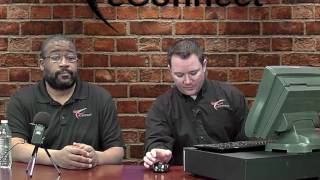
Robert Conde and Marcus Kelly demonstrate how short change scams work against cashiers: money switches, coin distractions, and two-person team plays that exploit open drawers and confusion. They show how to find suspicious transactions using eConnect's query builder and offer prevention tactics like closing the drawer between transactions and calling a manager when a customer gets too close.
Chapters
It's.
Sam.
It's sa.
It.
Sa.
The.
Sa.
It's.
Yeah.
Hey, marcus.
Good morning. I'd like to welcome you all to this month's webinar from eConnect. My name is Robert Conde. I'm the director of investigations here at econnect, joined today by Marcus Kelly, investigations manager here. Dknik.
How's everybody doing today?
And in the back running all the technical stuff in case anything fails is Dave McCormick.
Are you gonna touch on Dave, how we're streaming.
You guys?
Go ahead.
I've put the YouTube link in the chat. Okay. So we are broadcasting live on YouTube. So if you are in our gotowebinar and you're having a any issues seeing us or hearing us, go to our YouTube channel and you'll be able to see this stream live. Bottom of your screen, you'll see a phone number. If you have any questions as we're going through this, please feel free to call. We'll take your call right here as we're talking. Just make sure you turn on the volume on your computer so we don't get any feedback. Today's webinar, we're going to cover a scam that's pretty prevalent, prevalent in our industry, known as the quick change or short change, depending on where you're from. They have different terminology, and we're going to cover a handful of scams that have been coming up recently. We have noticed probably about six transactions in the past eight months.
Yeah, sounds about right.
Just our customers that we analyze over here have had happen and they're all the exact same transactions. And so we want to make sure we cover that today. We're also going to cover some of the more common ways of quick change, and we're going to replicate it, show you how it's done on the POS system. Unfortunately, with E Connect, we're not able to prevent it from happening. But one way you'll find out that it's happened is if you get a variance report from your audit department. And that will let you know that someone's short 80 bucks, 100 bucks. And we'll show you how to look in E Connect to find those transactions so you can help protect your employee and realize that your employee wasn't in fact stealing. It was a customer that was taking advantage of the employee.
One thing to keep in mind with Quick Change, I do understand that you guys do have policy and procedures in place where an employee might be suspended immediately if they're $50 are more short. But it's one of those as investigators, as the audit department, we need to do our due diligence and try to prove them innocent. And if, if they're not, if it's truly a mistake, it might be a coachable moment where you can just write them up versus saying, hey, you know what? You're eight all short. It's time for you to separate from the company. So it's. It's just another thing to make sure that you're looking for through all the information and you're understanding what happened versus just jumping to conclusions.
So throughout today's webinar, we're going to talk about the scam, what the scammer will do, some of the signs you should look for if you believe someone might be trying to take advantage of you. We're going to talk about ways to prevent it from happening on your property and how to protect your cashiers and your business from it happening to you. So we're gonna go ahead and get started. We're gonna do a few examples for you. We'll talk about those examples once again. If you have questions, numbers at the bottom of the screen, please feel free to call in. The first one we're gonna do is just a money switch.
Yeah, this is a pretty common. It's an old school one, but it's still out there, and it still does happen. Hey, how you doing today, sir?
Good.
How are you? Not bad. Can I get a large soda?
Sure thing.
Hey, so who do you got in March Madness? You got anything good?
Oh, I think it's gonna be Kentucky.
Kentucky. What about you? Are you from Kentucky?
Nope.
I'm thinking Gonzaga maybe.
I can't win 275.
Okay. Here you go.
Kentucky. So, hey, you guys are in Vegas. So is it gonna be a good payout if I take them straight up?
I honestly haven't even looked at that yet.
So you got a. Or a pool? Pool going anywhere? You guys got anything going out here?
Yeah, we got a little something going on here at work.
Do that.
Wait, wait, wait, wait, wait, wait, wait. You only. You're shorter than 20.
How much did you give me?
I gave you 50.
Should have been 47 and change.
Sorry. There you go.
Okay.
Thank you, too.
S. Oh, go ahead.
So that was pretty simple. It's as the cashier is going back to the register to do something, their PM a bill off. They're taking a bill away. This one is a real common one that happens in a lot of places, and it's easy to do. You know, unfortunately, I'm not a trained cashier and I did some stuff backwards. What I probably should have done is put the bill on top, which is what most sops say to do. And then after I've given change, then I take the bill and I go to put it in the cash drawer, which then does give him enough time to, you know, sneak a bill off the top and put this pocket.
It's one of those you have to keep in mind with some of your cashiers, they might be a little timid and might want to correct the mistakes themselves. But if you have procedures in place to say, hey, you know what, if there's any discrepancy over $20, get a manager involved that takes the responsibility away from the cashier having to make a decision on the fly. And so it's one of those you might want to review your policy and procedures or you might want to add something to your procedures to prevent this from happening or prevent the cashier from making making the decision to proceed with the transaction or not.
Okay, so what we'll do now is we're going to go ahead and we're going to show you in E Connect how you would find a transaction like this. Because obviously my drawer is now short $20. And so we're going to show you guys the scam. I'm going to show you how to search for it because right now if you get a variance report, it's going to show that I'm short $20.
Yes.
So we're going to start by looking for transactions greater than 20 to see if anything ever happened with the change.
And it's one of those with the majority actually with all these scams, they usually include large bills, large denomination. I know in the casino industry, nightclub industry.
It'S probably not feasible to not allow $100 bill or $50 bills. But in the same breath, if you're a convenience store or just a local grocery store, you might say, hey, you know what, we only take $20 bills or smaller.
So let's go ahead and switch over to the software. E Connect software.
Alright, so here in the E Connect software, I've gone ahead and gone to the query builder. In the query builder you can do it multiple ways. I just did it this way because it's quick and easy and I'm looking for basic data of cash and I'm looking for the amount to be $50 greater than or equal to. And when I query these results, we can see we have one transaction.
And we take a look at the check. And the check shows that Coca Cola is running for 250 changes 4725.
So now we take a look at the video.
And the one thing to remember with this type of transaction, you're going to see as soon as I receive the change, I'm going to try to take it out of his line of sight, which is going to allow me to pull money off the bottom. And the other thing you're going to notice, you try to keep the conversation and this one, not so much as some of the other transactions, but they're going to want to try to take control and run the transaction versus letting the cashier run it.
They thrive on being able to take control to put to take you off your game, make you second guess yourself, and by building a rapport with you, you almost trust them.
So register for the next one. So with this one, this, like I said, this one's an oldie but goodie. But it still works. But it's one of those. It's something always to keep in mind. This one's usually done by one person.
As we. Once we get to the last one will show you. We'll explain why team play is so important. But this one and the next one we're going to cover here shortly. It's. It's usually done by one person, but you'll notice that in the casino setting, they'll probably hit multiple locations and just different cashiers. They're just looking for the cashier that they could throw off, make a quick 20 bucks and move on to the next one.
Okay, so let's go ahead and let's show them the second type of change up or color up.
So this next one. Yeah, like Bob said, it's for color up.
How's it going today?
Hey, pretty good. New good.
Can I get a cookie? A small cookie?
Okay. Yeah, sure.
Yeah, that's gonna be $1.
Busy today.
Oh, yeah, yeah, they got me going. I will be 19 change. How you doing today?
Not too bad. Oh, man, I gave you 20. I've got all these ones. I should have just gotten rid of them. Just keep going there. Is there any way I can get.
A 10 for 10 ones?
Yeah, I can do that for you.
So there's 19. And then you also wanted a 10. Yes. So there's your 10. There's your 19.
Beautiful. Thank you. So there's. There's 10. So you can go and count that for me real quick. That'd be great.
Dude, you're short of me, man.
Are you sure?
Yeah.
Here, let me see.
1, 2, 3, 4, 5. 1, 2.
Yeah.
You only gave me nine, man.
Okay, so let's just. Let's keep it simple. Okay, so one more makes 10.
Yeah.
And 10 makes 20. Just give me a 20, we'll call it good.
Okay, cool. I can do that for you.
Thanks, sir. Have a good one.
You too.
As you see with this scam, again, we're not cashiers, so it might look a little bit awkward, but it's one of those. He just made a quick, quick, quick little bit of change off of me. Yeah.
So I left $10. Basically, the way this works. And this can work with 20s, this can work with 10s or 5s. The idea is to get everything to go opposite of what cashiers are trying to do and even what you as a consumer are trying to do. When you go to a store, you know that if you go to a store and you're buying a bottle of water, you put the water up on the counter, they ring it up, you hand them money, they return change to you. The idea behind the scam is that while the cash drawer stays open, that I get you to give me money out of your cash drawer, and I'm going to shortchange you and only give you $9. Or you can do this with tens and say, okay, can you give me 50? Give them four tens. But because they're counting it and they've already given me the money and I've shorted them, now I'm going to add to that, making a whole other change transaction to make it even more money, which means I get more money out of you, the cashier.
And what we've seen with this one, we didn't want to prolong it and confuse everybody. But these are usually multiple transactions where it starts with one. They shortchange you once and they shortchange you a second time. We've seen videos where they've pretty much emptied out a cash register, and next thing you know, your cashier is 2, $300 short. But it's a progression. It's as the scammers getting more comfortable and realizing how far they can push. If it's a busy location, they know there's not a manager there. They're going to keep going, keep going. And it's kind of the greed issue. But at the same time, they know when enough's enough and they've taken enough money out of the register.
So let's go ahead and switch over to the E Connect software so we can. We can show you something in there.
So you'll see here he's already getting the change out for the cookie that was purchased, and I'm counting out money. He's going to give me my change, plus the additional $10 that I asked for.
And as you notice, he hasn't even given me the $10 bill yet.
So I tell him to verify. And while he's verifying, it's important that I'm gonna. He needs to put the money down on the counter, keeps it in his hand. It's harder for me to scan him because if I give him a dollar now, he knows what that is, his cash flow. If I have him break it down for me, say, are you sure? I could have sworn I gave you 10. And he breaks it down dollar by dollar. And I say, okay, well, you know, let's make this simple. Well, one more makes 10, 10 makes 20. Just give me a 20. And they'll keep pushing this scam as long as they can. And they'll keep changing stuff. Up they go, oh, you know what? Now I got too many 20s. Can I just get 100? And they'll shortchange the other 100, and they'll just keep rolling this as long as they possibly can.
Yeah. So this one's all about the confidence level of the scammer and then also the, I guess, naiveness of the cashier and how far it can go with it. Because once they get them confused, they're going to keep pushing, keep pushing. And like I said before, they're going to go until. Until they realize how much money is left in the cashier. And at that point, or actually the cash register, and at that point, they're going to say, enough's enough. It's time for me to go. And once again, this one's also done by one person. So. But some of the things that you'll notice is the scammers taking, taking control of the situation. They're getting the cashier to break their known procedures. And it's just those little things. As long as they can keep the drawer open, they can keep the transaction going.
Okay, so once again, if you guys have any questions, we'll have the header number come up at the bottom of the screen so you guys can call in. Please feel free to call in with any questions or comments about the topic of today's webinar. And so moving on to the next one, this is the one that we've started seeing more frequently. We had a good idea of how the scammers were getting the cashiers to do this. I had an opportunity to talk with a young lady yesterday who was hit by this and she was able to give me a little bit of insight into the conversation that took place. And so this time, we're going to change it up and we're going to actually show you a video clip of one of these transactions taking place. We'll talk through it. We're going to recreate it with, from what we're being told and what we believe is being said to help the scam work. And we'll recreate it. We'll show you how to find it within E Connect, which is how we've come across it using our software. And then we'll break down, you know, how to prevent it from happening on your property. So if we can, let's go ahead and roll clip one.
So as you see this guy with the shirt on, he's already ordered his items.
He's ordered his items, paid the cashier, and at this point, he's getting the cashier to give him back his $100 bill.
So you see the $100 bill in his right hand. She's already relinquished it back to him, and he's convincing her that he's already placed. She already placed $100bill in the cash drawer. Now in his left hand, you can see coins that he pulls out. And coins in this type of transaction plays a huge role as a distracted.
Yeah, this is the one where they're coming prepared. They have multiple change, change ready. And as you see this employee has called somebody over to help them. This is where team play is going to help help this situation. Because now that you have two people involved, they can kind of correct. Correct the issue. The thing we noticed with this transaction is this guy is fairly new to running the scam, but he's. He's pretty good at it. And as you see, he just handed the coins over to him saying, hey, you know what, Just give me an even dollar amount. I don't need any more change. And by the way, hey, you know what, just give me 93, $94 back.
And his, his partner, who's the blocker, I don't know if you saw throughout the shot, he's down at the top of the screen in that gray shirt walking out the door. He was the guy that came around and blocked the other customers from hearing what was going on or what was being said. And the team play. You'll see a lot more in these video clips as we go through it. So basically the scam is they're going to give $100 to your cashier. The second that cash door opens, they're Going to almost invade your space, jump and jump in on you and say, you know what, hold on.
Yes. And then that's when they're gonna. For the scam to work, they have to get that hundred dollar bill back in their possession. As soon as that does, they want to take it out of your line of sight. Either put it in the pocket, put it back in their purse, whatever they're using. And then the coins are used as a distraction. In some of the other clips we'll show, you actually see them shaking the coin, trying to get their attention, saying, hey, you know what, pay attention to this hand, not my other hand.
Okay, so let's go ahead and let's run it real quick so they can see it.
Hey, how you doing today? Hey, not bad. Hey, can I get a club sandwich?
Sure thing.
Club sandwich will be 825. Anything? Drink?
No, I'm good. So how you doing today?
Oh, too bad.
825. Yeah, there you go.
100.
Is 9100.
Wait, how much was that? How much is that again?
9175.
You know what, let me get that back, cuz I got, I got exact change for you. Okay, so how much I owe you? 75 cents or how much dollar are you? I need a quarter, don't I?
Yep.
Let me get rid of some of this small change. I, I hate carrying change around. You know, you ever get that feeling when. Yeah, when it's just. Yes. So there's that.
So yeah, so that's gonna be what eight dollar session be. Yeah, just $92, right?
Well there's 30 cents so.
Oh, oh, thank you. You're on the side? Yes.
20, 40, 60, 80.
It's pretty hot out here in Vegas, isn't it?
Yes, it is.
Okay, cool. Where I took my food at?
Right over there.
Okay, thank you. Hey, you ever get to myself?
So we know that's a bit rough, but it gives you a, an idea of what the conversation is like. And in these, you know, future video clips we're going to show you here in just a few seconds, they're going to place the order and they're going to find a way to get that hundred dollar bill back. There's going to be coins going back and forth. There's going to be shaking of hands and coins and it's all to get them to revert back to the way they normally think. They know that typically they take that bill and they put the bill in the drawer and they start getting changed. If someone goes, oh wait, I got the color for that or the coins for that, they'll add another dollar, add another five or whatever it is to it.
Yeah, it's one of those. The other thing is, like my Bob was saying is if the cashier ever gets confused, the scam artist is going to pay attention to what's in the terminal. And if they say, wait a minute, where's, where's the hundred dollar bill? You, the scammer is going to point, hey, you just put it right there on top. Or if they've paid enough attention and done enough scouting and research, they're going to say, oh, you already picked up the drawer and put it underneath. The money's already in there. And they're going to try to get off the topic of $100 bill as quick as possible and then say, hey, you know what, I already gave you the change. Just give me my $92 and we'll call it even.
Yeah, the girl that I talked to said that she didn't even remember the hundred dollar bill being taken out of her hand. That it was so confusing and so fast. And the way this lady talked it just, she was looking at the change and focusing on the change. Didn't even realize $100 bill left her hand.
And it's one of those, this scam, they're going to practice it a lot. Don't be surprised if these teams, if you can ever bust them and get them to confess they don't have a cash register set up at their house or their apartment where they'll spend hours, if not days or weeks practicing and practicing. And once they get the lingo down, get a smooth flow to the transaction, that's when they're going to go out and venture into the real world and try to put their new skill or scam, basically a scam to work and try to hit cashiers.
So let's go ahead and take a look at our second clip that we have. Most of these guys all hit at the same.
Venue, just different people. So in this one, you see the hundred dollar bill was given to her in her right hand. She puts it in the cash drawer. Now, this guy can't really invade her space or really get into the size of the window, but he still manages to reach around and say, well, wait, just give me that hunter back. So the hundred dollar bill is now in his possession.
And as you see, the $100 bill is out of her line of sight and the conversation probably was, hey, you know what, I'm sorry, let me, let me try to break this down.
And give you exact change. And that way we can just get whole bills and I can get rid of some of this change. I'm probably helping you out in the process so you don't have to replenish your own coins. And as you see, he's shaking his hand, letting them know, hey, I'm getting ready to give you change once you give me all the money back.
But this guy is probably this, this, this one is one of the more impressive ones because in another one, you'll see he does invade the space. He gets over top of the register, he points, he does stuff. In this scenario, he can't even see the cash drawer. He's doing everything almost blind, with almost no room to reach in to interact with it.
Yeah. And as you notice, it seems like with every single one of these that we've seen, when they give change, they always give too much change. And then they give a compliment to the cashier. Oh, you're so honest. I didn't even realize I gave you so much. Again, it's getting them off the thought of the hundred dollar bill and more about the coins.
So once again, we're getting close to the end. So if you do have any questions or if you've actually encountered this transaction type happening or even talked to anyone who's been involved in it, please call in. We'd all like to hear any experiences you've had with this.
The other thing to keep in mind is these few clips we actually had. Was it five in one day and four? Four were able to occur and one was stopped. But it's the fact that, hey, you know what? This cashier is $80 short. This cashier is $92 short. This cashier's 92 $75 short. Again, like we showed earlier in the webinar, if you do a search for all cash transactions where the payment was $100 bill, it's gonna narrow it down because we all remember the days of, hey, I got a variance. Let me hit play and watch the shift for the next eight hours. The econnect software is going to allow you to pinpoint certain transactions to speed up the time and efficiency that you have to do for the investigation.
So we're going to take a look. We got two more clips to show you. And the first one we want to go over is another one of these same transactions, but you get to see the blocker really jump in and help prevent the supervisor from seeing what's going on. So this is our same guy in the gray shirt you saw earlier and he's ordering a. Believe it was a pretzel. The cashier takes a hundred dollar bill, goes out of sight. We believe this is to verify the bill is actually 100.
So whether if you're using a counterfeit pen or the UV light, you might not have them at all locations, but it's a good check.
So the hundred dollar bill is underneath the gun on the right hand side of his register, the scanner.
And as you see, he's engaged in conversation and the manager steps in.
So the manager is now walking away to go get the pretzel to the. If you're looking at the guy in the gray shirt to the right of him, you see another guy standing there. When the manager comes back, he's going to end up getting involved in getting, I think a drink, a glass of water.
And this is all about distractions because you want the one cashier. And actually the reason why he went away is because he hasn't even opened the drawer yet. He hasn't even started his scam. He's thinking about it. He has this prepared. This cashier already looks lost to begin with, so he just needs the time for the drawer to open. And now he's going to jump into action.
So now you see the guy comes back with the two pretzels. Now the distractor comes in, starts asking for water because he's, he's just now getting his hundred dollar bill back. He did his job in distracting that.
Manager and as you see, he just pointed to him saying, hey, you know what, the hundred's already in there. Let's just make this even amount so I don't have to carry around any change. And as you see, he keeps leaning in, getting further and further. He's getting into his personal space. And this is where the scam takes place, is the scammer is taking over the transaction versus the cashier running the transaction.
So he gave him all the change. The guy says, well, I didn't get any money. So he takes a 10 out of the change which is given to him to pay for his pretzel. And this is going to go on for a few more minutes. We might not watch it all because he'll end up going to the other side of the register, giving more coins, taking coins back. But eventually he does leave with around $70 out of this kid's drawer.
Plus the $100 bill that he initially.
Paid with and the product, the two pretzels that he purchased.
Yeah, so it's one of those. This one, this scam artist has definitely done this scam, more than once he was more fluid than the guy that we saw in the American flag tank top. But it's one of those. It's all about practice. It's all about confidence. Confidence, Lobo. And the biggest thing is it's all about the scammer taking over the transaction versus the cashier running the transaction.
Okay, so we're going to show you one more clip. And the reason we want to show this is this cashier really takes control of the situation. She won't let the scammers do what they want to do. And is it playing, Dave?
Okay.
Yeah. So this is our new format. We're still working out all the bugs and kinks, so bear with us as we get this video ready.
So let's go ahead. Let's talk about the, the scam itself and how to prevent it from taking place. So the first thing they need is they need the cash drawer open. So if your cashiers do a transaction. Okay, we got the video back up. So you see the hundred dollar bill come across the water just went out to the customer and she's going to ring in that water and just like before, as soon as the cash were opened, you're gonna see that hand jump in and stop, stop, stop. Wait a minute, wait a minute. And he's trying to get the hundred dollar bill back. So he does get the hundred dollar bill back and you'll see the coins come up once again. And he's pointing it to the drawer.
And as you see, he's already folded the bill, bill up and hid it from the cashiers line of sight. And he's trying to convince her, hey, I gave you your hundred. You already put it in the drawer. But she's not falling for it. She, she knows, she knows what happened and she's sticking to her guns.
And this is what I mean by taking control of it. That cash drawer is that employee's responsibility and they need to take control and, and know what's going on and keep track of the entire transaction. If they get confused, it's not. There's no shame in saying, I'm confused. Let me start over. Close the cash drawer up, call manager over and start over.
And as you see that he's still trying, he's trying with the change, he's trying to convince her. And she's still saying, hey, you never gave me the hundred dollar bill.
And so here in just a second, he's going to return the water and he's just going to walk away. Whenever we were doing the search to find these variances, we just looked for any transactions where there's a hundred dollars presented. We found several other ones. And we came across this one where he attempts it and fails. And we can tell it's the same guy. And so this cashier did the right thing. So we're going to talk about how to prevent this from happening at your property.
And it's one of those because basically for the scan to take place, they need the drawer left open. There are always a very talkative, charismatic personality. They want to be in control of the cash or the transaction.
They're always going to be well prepared. They'll have the correct bills, the correct coins or everything they need in their possession.
The other thing they're going to do, they're going to change the way a transaction should happen. It's one of those. When we were preparing for this webinar, we're so used to presenting the item, handing the money over first and then receiving change. But the scam artists, they're going to want to take control of the item. They're going to want to take control of the change even before they pay.
They're also going to rush along the transaction. They're going to come up with a reason for you to push it along. A lot of these places, they will target busier locations or locations that have weak cashiers or cashiers look flustered because of how busy they are because the busier you are, your mind's less on, on this transaction. If I can distract you a little bit with how flustered you already are, now I've taken control of the situation.
Yes. So ways to prevent this in your pre shift or even during your training and it's something worth maybe mentioning maybe once a month to all your cashiers. Close your drawer as soon as the transaction is done. Don't let them say, hey, let's do transaction X. Now let's do transaction Y and let's do transaction Z. Close your drawer.
Take your time. Don't be afraid to say, hold on a second, I'm confused. It's your cashier's money. They need to verify what they're giving out. What's going on.
Another thing to keep in mind, like I said, the scammers going to want to change the way cash comes through. Make sure your cashiers know, don't give out any change until they accept money. Verify money and then they give out the correct change according to what was handed to them.
Don't do multiple transactions. And the one that we did where we handed over nine ones and then determined it was wrong. I then commingled the funds that were given to me and the funds that I was giving to you for change to make even more money.
And pardon me, the biggest deterrent of all is if you place your cash on top of the register. There's no argument as to what was given. Was cash ever given? The money is going to be right there and everybody's going to be in plain sight. Also, let your cashiers know that if they if a customer reaches into their personal space and their drawer is open, immediately close the drawer and either a call a manager or super supervisor over or you know what, just restart the transaction, re ring it again and depending on your policy and procedures, either you void it right then and there with the manager present or you avoided at the end of the night, but the cashier is in control of the transaction at all time.
Well, if we don't have any callers, Dave, we have any anybody calling in for anything.
All right.
So hope this has been informative for everybody. We will have a webinar the second Tuesday of April. We haven't determined what that's going to be. If you have anything you'd like us to cover, please feel free to email us or give us a call and we'll be happy to do a webinar on that if we get enough requests.
If anybody ever wants to share any stories or tell us about new scams or new fraud methods that they've seen, you can always email us at investigationsconnect TV and pass on the information. Or if you want to call, just send us your office number and we'll reach out to you and communicate and potentially do a webinar that situation in the future.
Thank you guys for attending our webinar and have a great day.
Have a good one, guys. It.
More from Henry
Skip the line, not the security: Facial Recognition for Guest Experience & Safety





eConnect’s Red Light Green Light – The Most Advanced Facial Recognition Tool for Casino Entry



Skip the line, not the security: Facial Recognition for Guest Experience & Safety