Skip the line, not the security: Facial Recognition for Guest Experience & Safety
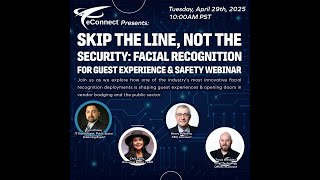
A casino deployed facial recognition to speed up entry while catching self-excluded players and banned patrons. Henry Valentino and Travis Whitten from eConnect explain how the system works across rewards, ATMs, and cages, and what happens when twins show up or the camera angle is wrong.
Chapters
All right everyone, it's Chris Faria, Executive editor of Tribal Gaming and Hospitality magazine. Welcome to the webinar. Skip the line, not the security. Facial recognition for guest experience and Safety sponsored by EConnect. In today's webinar, we're going to sit down with the innovators behind one of the most forward thinking facial recognition deployments in the industry. You'll hear how frontline feedback from the field drove development of econnect's red light green light system, an approach designed to get the right guests in faster without compromising compliance. Today we have Henry Valentino, CEO of econnect, Travis Whitten, CTO of econnect and our special guest, Evan Proyos, IT technologist and public sector and gaming expert. Evan and the team, thank you so much for joining us this morning.
Morning Chris. Good morning.
Thank you.
We're going to start off. Evan, you are really have some interesting background. Can you introduce yourself to the audience and tell them about your experience in the field?
So I've been mostly in the public sector. I spent the last 26 years in local government moving around different sectors and then also in education. I did 15 years at a community college.
Recently, I guess I had the.
How would you put it, the unique experience to move into the gaming world. But still in the government world where I am now, we have one of only two government owned casinos in the country in which we took ownership of an existing casino that was contracted out and we were running it as a government entity. So we are a, a public benefit corporation and we now run the ownership and management of a $4 billion a year casino. So it's, it's been, it's been very interesting. Also being in the New York market.
You know, laws are, are very different and very strict in New York. So bringing the two entities together, government and gaming, has, has been interesting to say the least. But it's been a lot of fun in working with companies like Travis in and bringing innovation through gaming, but also in the public sector realm.
Henry, talk a little bit about econnect and also some of the wide ranging applications to what we're talking about today.
Sure.
So I'm Henry Valentino, I'm the President and CEO of eConnect. And right next to me here we've got Travis Widden, our cto. We recruited Travis because Travis and Evan have created a solution for the front entrance of a very busy casino to talk to us about how they conceived the idea, what the problem was they were trying to solve and a little bit about the technology of how they made it happen.
Yeah, it's actually quite fun. And the reality is Evan is actually like this. This brain and he has a ton of ideas. So I think he looks at. He looks at issues in the casino and thinks out of the box. And we had already been sitting in there with some existing solutions for facial recognition. He was like, you know what I think, I think this can actually solve another problem that we have. Actually, I would. I probably should lean on Evan on this and have him just. Yeah, yeah.
Tell us about the problem you were experiencing there, Evan, and what you guys were trying to solve.
Yep. And I must feel like the problems have never changed. Right. The technology has just gotten better to. To deal with them as we move on. Right. What are we always looking for in the hospitality experience in serving our constituents in public sector? Whatever it is, it's safety, speed, and efficiency. Right. We want to be able to, especially in hospitality, get people to what they want as quickly as we can without jeopardizing, you know, safety. And at the bottom, you know, continuing to make our revenue right. In business, we need to. Need to produce the revenues. We need to keep people safe, and we want the experience to be great. So to the red light, green light effect. One of our biggest issues is. So the casino we're in is in a 1984 Marriott. So you can only imagine what building was like in 1984. And this was a Crown hotel as being the first one in the area. And they wanted to finish it in under two years. So it's a prefab, concrete 1984 Marriott that, you know, nobody saw gaming taking off in this area. And we funneled a casino into it. You know, fast forward. We're doing $4 billion a year out of this little tiny 1984 Marriott. So we're undertaking an expansion which was, you know, greatly needed in that time. We're busy. We need to make money. We have gone down. We started this red light, green light before this point. But at the point we had to deploy. I have a single entrance in and out of this place, and I need to get people in. And being in the New York market, anybody who knows New York gaming, I need to check a license for every single person coming in out of the door. You need to make sure your age. You're not allowed on the gaming floor unless you're 18. Different than other places where children can at least be near the floor. And we have to make sure that we're complying with, you know, certain band rules for people who are not allowed to game in the state. So I need to check a license for everybody, and I have one door coming in and out of a property that's doing close to, you know, $10 million a day in gross revenue. So. So how do you solve that? And that's where Travis and them came in. And taking something that everybody has, which is your face, and finding a way to funnel them through a single line so quickly and so efficiently that.
The patron doesn't even really realize it anymore.
Let me ask you to stop there for a second. So give us an idea of how many people that is on a. Let's say, busy Friday.
What are the numbers, Travis? I don't even have the numbers in front of me, but I. I can tell you, before the red light, green light system came on, and we still had two entrances, two lines on one side and one on the other. So effectively three lines. We used to have a line on a Friday night that would go outside of the vestibules and go almost halfway down the parking lot to get into the building. So, I mean, I don't even know what the thousands of people. But on a Friday night, we're moving a couple thousand people through that front door.
Okay, and you were scanning everyone's id?
Yeah. By law, we need to check every single person's license before they can come in.
I guess maybe a little. A little knowledge to the people that are listening here. So the idea of this red light, green light was once an individual's known to the property, there's no reason to have them stop for a full ID check every single time that they walk in. So the idea would be, is that we would use facial recognition. So they would walk in, they would look at this device, and it would actually indicate with a red or green light and some other lights for some other purposes of if they've already been there and that they pass the rules that are allowed to be in there, then they don't actually have to scan their ID because they've already scanned their ID at the property before. That removes this. This weight where you have to, you know, pull your stuff out of your pocket, out of your purse, and they're fumbling around with, trying to get that id, Handing it, the security guard, waiting for it to do the scan and the check. Now they just look at this device, and within milliseconds, it indicates that they're good to go. They send them off new people. The system recognizes that they're not. That they have never been there before. That gives them a red light. They send them over to security, security guy scans it and the next time they come and they don't have an issue.
So let me, let me get this straight. The customer comes to the property for the first time, they use their id, they get registered, then they come back to the property. The next time, they don't need their ID because their face is matching at the entrance.
Exactly. And even that piece of the technology, as simple as it sounds to explain it, is very intricate and amazing because I come in for the first time, I have my ID out. It's going through an automated scanner. You're dipping it in the background, it's taking that license, it's taking all of the data off the license. It's databasing them. Econnect is creating them an account. It's taking the face from that license, you know, as a trigger face. It's then also adding the face from the camera because they just walked in and creating them a profile on all of their pictures. So the next time they come in, they've already have a profile with all of their information set up. And next time, as long as they're clear, as soon as they walk through the door light's going to turn green, they're going to make a left turn and just go straight in without stopping at security and in the background as well, that's now taking all of that info and checking them against a New York State gaming bands list to make sure that they are allowed to play as well. So I, it seems very simple, like we're just getting licensed the first time, but in the background it, it's doing a ton of work as well and then giving us everything we need time and date stamps of when they came in. We can now track a player when they came in, you know, every bit of data from their licenses there. And I'm not sure if we're past the red light, green light yet. But we, we have implemented many other systems now throughout. When they go up to an ATM machine, I'm tracking exactly who they are at the ATM machine. If we have any type of fraud on the atmosphere, I already have a profile for this person. I have. As soon as they walk up, it's linking their ATM transaction to them being at that machine. Same with cashing in at the cage. As soon as they walk up to the cage, we have another facial stream that's identifying who they are another time to make sure they are who they are. And if there's ever an investigation, I can see pretty much without a doubt who was standing at that window.
Evan I know there was another idea that we're working in the works for, but I thought was really unique was you guys have a rewards desk also. And now that they're already known to the environment or the system, you could actually use it to be able to give out the rewards faster. Is that how that worked?
Yeah. So once you develop as much as we did, it's amazing because now I have who you are associated to your face. And you may have some people saying, well, is that intrusive? Not really. It depends on how you're leveraging this data. What we're doing is leveraging the data we have in house to make the patrons experience better. So we do a ton of giveaways here. We're known for our marketing department. You know, our point system is great big thing. We come up with great giveaways. But to award somebody, we need to know who they are, right? So you play, you earn your points, you earn your giveaway, you go downstairs to get it. And like we said, we're very busy. So as much as we have that line at the front door, you know, when we're giving away a cooler or a pocketbook or whatever it is, sometimes there is a line. It could be 20, 30, 40, 50 people waiting to get. The biggest thing is they need to walk up and identify who they are before they can get their award. So, right. Travis and I get the thinking, well, we have their face already. We have their info. What can we do? So what we created was a stands camera that will sit right at the marketing line. And as soon as they walk up to the person in marketing, right, on an iPad, all of their information shows up. So right now, they hand them the ticket that they printed out. She just looks down, the names match. And handsome, instead of having to show an id, have to squint, look at the id. And my population here of players ticks to the older side. We're in a, you know, a baby boomer generation area. Our players are more in the retirement phase. They're more commuter players. Right. We're not Las Vegas. We don't get a lot of travel. We get a lot of. Of locals. And we watch them. They struggle. They have to fumble for their license. They have to go through their pockets. It was. It made life harder for everybody. Now they don't even have to think about it. I just walk up, I grab my. My giveaway, and I walk away, you know, so again, we're satisfying all those things with satisfying the business need that I'm not giving away items. I'M not supposed to to the wrong person to maximize profits on my side. And I'm maximizing the experience for the patron where they don't have to fumble for their license, they don't have to prove who they are. All they have to do is grab their item and go. So again, these are technologies that everybody wins.
So question now about the technology. Some of our customers and prospects have expressed a concern that maybe the match rate is not good enough and they end up being unknown or they end up being slowed down. Since you have the id, how, how good are you finding the match rate and what is it? What did you have to do at the entrance, if anything, to make it work?
The match rate's actually been really good and better than we thought. We had to turn it down. It was a little too sensitive at the beginning that we were having people who weren't people that it was questioning. So once we had it fine tuned in, right now we have two issues that led to investigations here on people and both of them ended up being identical twins. You know, the laughable part of it is that Econnect picked up on it, so it knew something was wrong. And one of the major issues on why it didn't do it was supposed to is the identical twin actually showed up for the first time with the other twins license and created a profile with the wrong picture. So it's funny because the security guards and nobody caught this because they're identical twins. And that actually threw off our system because this person came in and created a profile with a picture that wasn't them.
That's crazy.
In both cases it set off enough alarms that it triggered an investigation. And yeah, it took our security team a little while to figure out what was going on before we figured out that there were identical twins and they were swapping IDs.
But such an edge case. It's such a crazy edge case.
Yeah, yeah, but that's really the only. We've had a couple issues that Travis has helped us out with that more ended up with camera angles. And you know, in the beginning we were databasing every camera that was around, which we turned out to be a problem because we have ones on angles that are not the best and they might have a line in the face or something that was creating bad accounts because they couldn't identify the person. So we fine tuned that that only the good cameras are being used as images we save and the other cameras we could use to identify people if we had to. But we're not saving those images into the accounts. So we want to. It is something that we learned along the way is that we only want to database and save images that we know are clean images because. Right, Travis, remember we had one in the cage. The camera got moved, that the glass was splitting the lens and it was causing a distortion that made people look like somebody else.
So created a lot of garbage out of that. There was another. Like I say, Evan's an idea guy for sure, because one of the things he said is, hey, you know, Travis, we're already scanning all these people's ID and then they're walking 20ft to the. The, the front desk to get their room. Can't we just use the same system to identify them as they're walking up? So that was one of the things he wanted to implement was, you know, they can greet the person by their name as they're literally entering, you know, the walkways coming up the. Right up to the desk. And they could say, hello, Mr. Smith, or, you know, whatever it might be. And, you know, they were just detected. So we have all their information and if there's problems, you know, they could just, you know, put in the information right there and probably in the future, potentially even pull up the, you know, reservation as they're entering in the scene. We haven't actually wrote that kind of a code, but I mean, from a guest experience, that's pretty slick. I. I thought that was really rad. Yeah.
Yeah. So we, we added tower cameras that we haven't gone straight live yet because we just haven't had the time. But they're almost airway. There's going to be one at every single line at the front desk. And there's a little iPad and just displays all of their license info. So again, as they walk up, we know exactly who they are, which is nice. I mean, if you go one step, I don't know if we're getting into even our. Our food and beverage. Right. We're about to go live on our new POS system. But econnect is also used in our surveillance department to identify our food and beverage workers and link them to every transaction that they're working on on the pos. So if we ever have to investigate something going on the PoS, all of our PoS transactions are actually databased by face, and we're able to, you know, see the receipt and the food service worker at the same time simultaneously while identifying that person using the system. So it, I mean, cuts way down if you need to look up a check or anything investigated with money in POS world. So another integration that's based on facial rec. We have a camera stream above every single register, and it's linked to an API, to the POS system itself.
So question on that. I know in some jurisdictions.
Surveillance is really in their own room with their own, you know, video system.
In your case, I know you're already outside the room with the IDs. So does new York have any kind of restrictions between, say, security and surveillance and what you have to stay on top of?
Yeah. So here probably as much as anywhere else, if not more, is your surveillance is a completely separate operation. They have to have their own MDFs, their own IDFs, their own employees. Their networks don't touch ours for the most part, other than through the APIs. And they run everything on their own. So it's. It's been a bit of a challenge to get everything going. Travis will tell you we have servers that are running in two different rooms that have to.
Connect these things together, but we've made it work for the most part. Even, like with the E connects that we've connected RPOs, which is my data, all those investigations that have to be done are done by surveillance only. So we facilitate the data getting in if something has to be done. The only people who can see these streams are surveillance. Same thing with the red light, green light, the identifying people. None of these people are seeing the video streams because that wouldn't be allowed. Surveillance has to be separate. The security guard at the front door only knows who this person is. The light will change the color, or the iPad will pop up with their data. But at no time are the front desk marketing the security actually seeing the live streams of these cameras. They're just manipulating the data through the APIs. So it allows us to keep surveillance separate while providing information to the front end workers who need it.
Yep. Yep. I wasn't sure if we were bringing it up, but another thing that they're working on was pretty slick, was they have their big expansion coming, and they have to. There's. There's laws in New York that allow their users to. Or their. Their workers to only have so many days.
That are permitted to work surveillance. Yeah. And one of the. One of the, you know, use cases that Evan had came up with, and I thought this was really cool, was like, hey, you know, we're going to have hundreds of workers that are going to be trying to come into the. The job site to work on our expansion. How can we help improve this? With facial recognition. And he kind of worked through a Workflow where they would, you know, first time that they come up, they. They get enrolled. And the next time they come up, it just prints out the badge using facial recognition. So we. We put that together for them also. And it'll essentially print out a badge with the person's face, how many times they've been there per calendar year, per the rules they want. That I thought was a pretty slick use case for it too. I think we're working to get that turned on here. Once they're. The workers start flowing in. I know your expansion is huge.
Yeah.
And Travis underplays his role in all this, so I might think a lot of these things up, but it's because you have somebody who just never says no. Because again, here we are. I'm being told within months, we're going to be signing in 30, 40, or 50 people at the front desk every morning. Right. Once the unions get in here, I mean, when Spackle starts going, it's going to be, you know, 30 people every morning coming into Spackle. And right now we're signing people in manually and handing them temporary IDs. So obviously I'm told, can I get an ID printer to make this go faster? And again, Travis explains that part, right? I'm like, okay, let's see. Why can't I use face? Why can't I associate him to a business? But as quick as I can fire off, how about as soon as they walk past the camera, you know, a printer prints out a sticky badge with all the information on it and does this, and never will Travis even think about it. He's like, oh, yeah, absolutely. The next day, he overnights the printer to himself, and he's writing the code as quickly as I can think up ways to use the technology. Here is Travis in the background actually coding it and making it work, which is this thing is amazing. Having a partner that will custom tailor it to you helps a lot. Because. Because we make it. You walk past the camera, it prints out a badge. But then the problem is they walk back out of the room, it prints out another one. So here we are going back and forth. Okay. When it sees your face for the first time, it's going to print it. When it sees it for the second time, within 30 minutes, it's not going to print another one because I already printed one. And it goes by calendar days, not by how many times they've been here. So, Right. I have to link how many calendar days they walked in. So I have to reset that. And it's calendar days per Year. So I need to know to reset their total count on January 1st, not 365 days later. So all these little nuances to get in there.
It'S definitely fun programs it and it is now you just walk past and you get a page just prints out with your picture and your company name. And it's, it's just completely automatic. It's so easy. And now if we need to audit any of these people, we can. And once they only have five days left, they can be in the building. It's automatically sending an email out to say, hey, look, this person only has five days left. You better give them a gaming license or we're not going to let them in again. So really slick stuff. And yes, I think it up, but Travis somehow makes it all work.
No, no, we have a team here. So we busted out pretty quick. And again, like I say, Evan is really like. I get a lot of good ideas from him. He's the one that's coming up with this stuff. He, he, he called me up one day, was like, I have employees that might have badges that are expiring. How would I know? You know, we can use facial recognition for it. You can have the badge expiration for each one of their employees. And the moment it starts happening, it could be messaging, you know, their HR department with that information. I mean, it's just small use cases that can be hugely impactful, especially to get around, you know, big fines from the government agencies that will bill you for having an expired, you know, individual on the property. You know, so like, he's using this as a tool to solve simple problems. I mean, maybe they're not simple. They're simple from a technology perspective, but they're complex issues. When you have a lot of people and, you know, there's responsibilities of others and, and this puts accountability there. So anyways, using your eyes. Yeah, right.
We got, we got in trouble because somebody had an expired gaming license and we have a gaming representative here. And if you're on a secured area and your license expires, we get fined. So how do I see you before, you know, she sees you? Because she's always watching and she'll find anything we do wrong the second we do it wrong. And that's her job. But yeah, now the cameras, before you even walk on the secured floor, I can check and make sure your gaming license is up to date date. And normally nobody's doing anything, you know, nefarious. This isn't. It's just hard to keep up with all these different things. You know, so far, you know, a lot of what we've done haven't caught anybody trying to do something criminal. But it's picking up on. We don't realize that it expired. We didn't realize that this person was here more than 30 days. It's just, it's a huge operation to manage and this is just making our life easier for again, some things that are somewhat nominal tasks but become cumbersome. This, this kind of streamlines it all.
So, Evan, you're, you're on the IT side of things. And one of the challenges that we see really throughout the industry is caused by this, you know, heavily regulated environment. And, you know, it trying to live up to all the gaming regs and what you can do. Surveillance has its own set of regs. When you guys ultimately deployed this, did you find it? How did you get around those technology challenges?
I don't know. The regulations are almost, I don't see them as a detriment to anything. I almost like how regulated because your lines are very clear, your guardrails are very much in place. The biggest issues are dealing with people's interpretations. But the good thing in gaming is they don't leave a lot of room for interpretation. It's so written out, it's so spelled out and in it. As long as, you know, we're process based, right? We, we make things work based on processes. We're used to programming guardrails as it is. So I don't find it too detrimental because we just write it to make it work. As long as there's. It's getting past that mentality of we can't. Some people say, well, the regulations say we can't. Well, no, that's not true. Let's, we have to sit down, we have to read the regulations and we have to make it work. And so far, and maybe Travis can speak more to this, what we did with New York State and bringing the ban list into the 21st century here is helping. And I, and I think from the gaming side and the regulations, I can't speak for them, but from my interactions with them, they're happy with the things we're doing. You know, they like it when we're able to follow their regulations and do it in a more effective manner. You know, some people like to look at it, it's us versus them. And these regulations are here to hurt our business. But no, same thing. They're here to keep us safe. And the lucky part about people like, you know, Travis and I and people in technology is we get to take what other people see as roadblocks and turn it into, you know, a positive. We're taking these regulations and making it seamless for the customer. Which means look at what we just did. We made them safer, you know, better reporting, complying to the regulations, but seamlessly so. I don't know. I see this extreme value and pride in doing that.
I would have to agree. I think the self exclusion is a great example. If you can head off a self excluded person when they're trying to get in versus when they've already been playing for a while and maybe hit a jackpot, it ends up creating a much better environment. But if I could drag you back to the technology for a second.
Does the IT group. So we.
Forgive me for not knowing the exact details. I should really ask Travis, how many servers are involved in this and how much of an IT lift is it to keep it running? And has. Has it ever gone down? I mean, that's kind of a crazy question for me to ask because especially on a webinar. But what do you do?
It's gone down a couple times, but nothing major. I mean, tech support answers quickly. We're trying to get around any types of outages because we've gotten so dependent on it. Not a heavy lift from my side. IT supports virtualization, so I'm great. My surveillance people are still not 100 in tune with things being virtualized all the time. So it supports standalone servers as well. So I'm running one virtual. I'm wanting to run standalone. It takes a couple of servers, a couple of connections out to the web because it's got to check databases that I'm not holding here, which of course then have to be extremely locked down. So.
Right.
Encrypted tunnels.
Nothing really heavy lift. And then really our biggest issue and what caused a lot of our outages is equipment on the floor. You know, there's a camera there that they have to walk past in the front entrance. I mean, things that you don't think of until you have, you know, 10,000 people walk through your doors in a weekend. Like, it swivels and depending on the security guard you got, he only likes to swivel it to the right. So we had one that they swiveled it so many times, they literally twisted the wires right off. It was so tight that it just broke right off the top of the stands. So things you don't think of, you're like, okay, well, you know, we had to add stoppers. So it can only turn so much in each Direction.
A big piece of our issue here was just the wear and tear on the floor. And we deal with that with. I have spares now. And we came up with a way of. Before we would name it by which entrance it was and it made it a little more difficult. Now I have spares. I just labeled one through five. So if one goes down, I could rip the whole thing off the floor and. And plug in number three in the same spot and it'll. It'll perform the same work because really with outages that. Other than a couple little things here that might be server related, but 99% of the time it's just front end equipment going. So I. We've managed it mostly with having spares and training people on what to do. You know, our front door is so busy, there's a second one standing by. At any time the first one goes down, they just shift the line over two feet and they keep going.
So I say there's one other thing that, that everybody seems to have some real interest in. We haven't. We haven't done it yet at the property for them, but we've talked about it is since we know who everybody is in the property, we could technically tie their player information like their player card number associated to it if we wanted to. They'd be able to then find who's carded versus uncarded players that are coming back and forth, who's new, you know, how many signups versus how many you know, didn't have a card when they first got started. There's a whole bunch of ideas that might help the casino get a better handle on how many people are new or return players that don't have a card versus, you know, when did they get them signed up, how long they've been here before they finally signed up for the players card. I mean, that information is available to be done. It just is just another integration into the system. That was also an Evan idea too. Was.
Yeah. A lot more of that is social. Unfortunately, the data is here. We can mine it however we want. It's. We're in a very unique market. You know, we're running at like 30% carded. We're lower than most casinos. We're in an area where nobody trusts the government and nobody wants to give an id. You know, people, no matter what, they get free. As much as. It's funny because we have so much with our. The people who do the points and who love it here, I guess because we're just so busy. I mean, they're so engaged. And our points program is second to none. And the people who do it love it because our giveaways are great and they. Absolutely. But there's just this whole undertone of people who will never put their name on a card. So we do know all of the marketing benefits we could have. It's now muddling through to see what would be welcomed and what some people might not like, but simple things is just knowing that, you know, the towns and the villages that the people live in and how far they're traveling. I mean, we can run that report in seconds from the front door and heat map how far people are traveling to get here, which that in itself is great knowledge.
Yeah. I was surprised to see that Florida is your second busiest state.
Evan, you haven't seen it yet, but our next version actually has a whole demographics component that we designed for another property. Doing the exact same thing you are. And this will be able to give you full out. It could be, you know, a PDF report that goes out to the people that matter in the organization that shows you, you know, unique visitors by, you know, the whole day compared to previous days. Also.
Information like demographics, you know, gender, age groupings, the age. Even if they don't scan their id, now that we know who they are, you'd be able to get that report to see what the average distribution is for each age group, you know, rounded by five or ten years or whatever you guys wanted. So that's in our next update. I know that there'll be something you guys might be interested in because you already have that data going into the system already. Now you can get an automated report to, you know, you know, the sea levels that care about it.
Yeah. And, you know, and I don't want to, you know, ruin the surprise on some of your other customers, but. Right. I met with a venue recently who's doing some research and they came up with great ideas that I didn't think of because again, I'm not in their business model. But the idea of the bracelet for VIPs in and out of different areas. And again, we saw this as a. Go back 20 years. Braceleting people was a great idea to say, okay, I got to figure out who they are once. And now I put a bracelet on them to make it easier in and out. But in some of these venues with different levels of stage access and different levels of VIP areas mean you go to a Yankees game now, there's at least six or seven different things you might have access to or you might not.
To just check in with your ticket once and automatically have your face assigned to all the different places you can go and to move seamlessly in and out of them. And unfortunately I don't have Yankee Stadium or a big venue like that. But you know, there are people who are doing this research and with Econnect right now on making the VIP experience seamless. And it's going to be, it's going to be great to see that. And I already know Travis has put my face into all of their databases. So I can't wait for unlimited VIP access forever.
Perfect.
Perfect. Yes.
I mean, unfortunately you don't have that contract. But anybody who goes to Universal Studios, their Fast Pass lines are now run on facial recognition. So because their big issue is that's a huge moneymaker for them and it was so easy to scam. You know, take it from somebody who's been scamming their Fast Passes forever. I mean, it's kind of horrible now. There is no way around it. But they are now using facial recognition for Fast Pass on, on their ride queues. So I mean, the more we embrace this technology, I think the better it's going to get. You know, how we safeguard it. That's probably a whole nother webinar because, you know, it's a lot of data we're holding and we're going to have to, you know, discuss what the data security side of this is. But the benefit to it is, is just, it's just immense. You know, I want to have a, we're going to have a talk soon on, you know, you talk about thinking up ideas. I want to talk to Travis. I start thinking about all these things we're doing in hotel entrances. I mean, we have the capabilities probably of disrupting the entire child human trafficking trade. If you think about what we're doing and how we're able to do it. And you know, I watch these posts go out there and I look and I say, well, we had strategic cameras in certain places. Think of how well we're doing with the banned list, what we could do if we start tackling other huge real world problems like that. You know, tracking train stations for child spaces who are being trafficked. I mean, there's just unlimited possibilities. And like I said, maybe right now we're solving issues for gaming. But I come from the government sector. The more there's money in gaming and that's the greatest thing. But the more we develop these applications that are going to make the customer experience better, the more we're also developing these to solve other real world Problems that are out there, which is great.
Just to get a frame of reference. How big is your IT team?
You don't even want to know. Very hard to get qualified people right now and we're always starving. I mean, we're running on a team of nine right now. And I just went to visit a casino in New Jersey and they couldn't believe because I also don't have a corporate structure and know they're like, okay, that's good as long as you have other people to talk. We do everything in house other than our security sock. We are handling all the system development now in house. We are doing all of the infrastructure, all of the networking. You know, we're doing all of those services now in house with internal employees. So it's a lot that we've been biting off, but it's given us immense control over the systems and being able to fine tune and deliver it the way that we want.
So it's fair to say modernizing it doesn't always mean you're going to need, you know, twice as many people to do it. In fact, if it's done effectively, modernizing could help you be more efficient.
Yes, yes, definitely. I mean, on this side, it helps everybody be more efficient. Yours, I mean, the IT side of this has been relatively easy for us, which is nice. Your team puts it together well and the platform is more mature than some other ones. I've branched out into doing everything myself and first time in gaming, I have some other things I've implemented that aren't quite as mature as you guys, which is a lot more challenging for me. Your platform is, is very straightforward, which doesn't really add a lot. It's more the thinking things up and developing side. But yeah, it hasn't added much, but it saves quite a bit down below. And I'm. We're a full union shop, right? We're in New York, we use union for all our front end employees and none of this is about replacing them, but it makes their lives easier, which is great. So it hasn't made people more stressed. It helps the restaurant run better. I mean, our security team is beyond grateful for this. It makes their lives a million times easier. So again, none of this has been about getting rid of anybody, but it has made everybody.
A little more relaxed in their job because it has helped.
Them a lot more efficient.
Good, good.
Very good. Chris, did you have any feedback for us?
Yes, we have questions. It looks like.
Over.
42% of our audience does not have facial recognition, but about 37% are planning to use it. And we've had numerous webinars and. And what we're learning is it's facial recognition. It heightens security, helps guest service, the speed of getting people on the floor. So I don't know if this is a you question or audience question, but what are the barriers of entry? Is it so complicated to get permits? What do you think is the stall here for more folks not having this in their casinos?
On my side, I don't know what your experience would be, Travis, but what I've seen in other places on technology like this, luckily it was started as I walked in, so I didn't have to do the hurdles. I've seen hurdles on things like this one. Legal. If you have a good attorney who supports what you're doing, can understand that, it's great. I've been in other entities where you have an attorney that doesn't want to look at anything, and automatically something like facial recognition could scare away people because of privacy issues, and they don't even want to look at it. So I would say, obviously, we know it's everywhere. The TSA has it now. I mean, it's been tested, it's true. But if you have a legal team that doesn't want to explore that, you know, you're going to hit a roadblock there. Cost is always there, but I find the cost to be very minimal, especially if you take the benefit into account. It. This costs a lot less than I would have expected it to. So, I mean, that's always a barrier. Privacy concerns. I was on a think tank call this morning talking about school districts and where I think this would be one of the greatest things school districts could ever implement. The ability is to track parents in and out where we have abductions in schools, the ability to track students that might be troubled. And I mean, I think this could be amazing. But I know the pushback there because of the privacy concerns are going to be huge. So we were just talking about today, and I don't know if facial rec is ready for the K12 space yet. But the lucky part, in casinos, you don't have to play. You're coming here at your own free will. Especially in New York, you have to show your id anyway. Yep, I know who you are. So a lot of those privacy concerns are a null and void right there. And when people ask me about facial rec now, I just tell them, you know what? The TSA implemented it. So you've ever flown on a plane, it's too late. The government knows who you are. You Might as well just give up now and make your life easier by using the technology, because there's no hiding from it anymore. And I think it's so common. People need to learn that there's no way to use it against you. And I think that's coming. People are getting more at ease with these emerging technologies right now.
Well, it's also important that it be accurate. And you described a scenario where it's been extremely accurate, but you did also come across a couple scenarios where it wasn't. And your people had to work through that with the patrons, and ultimately you discovered they were twins. And so that was super interesting. But if you weren't, you know, like any problem in a busy environment, if you have people that are trained properly to go up and politely and professionally discuss the issue, then usually it's resolved right there. Chris, I think one of your answers is just timing. In our industry, everything is typically an annual capital purchase that ends up getting planned once a year. It's rare that something come in the middle of a year that's already been planned out. So I think you see last year when we did the survey, we saw that 70% of the casinos still didn't have it. Just the results of the simple surveys indicating that more and more are getting it. And I think Evan describes beautifully all the reasons and benefits. Why I think the other thing people don't realize, and I know I.
More from Henry
Skip the line, not the security: Facial Recognition for Guest Experience & Safety

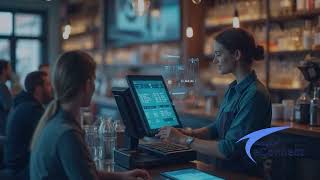


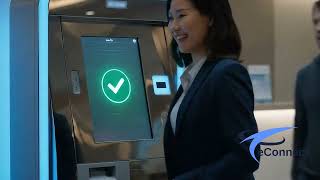
eConnect’s Red Light Green Light – The Most Advanced Facial Recognition Tool for Casino Entry