AMA: How Kava is building a safe and powerful DeFi earning platform
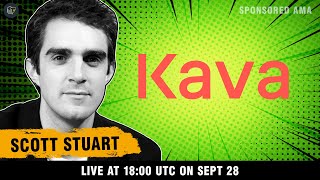
Scott Stewart, Kava's co-founder, explains the Cosmos-based DeFi platform offering lending, borrowing, and swaps. The BNB bridge has processed $1.8B without faults. Kava's roadmap includes ETH and USDC support by late 2021, plus a robo-advisor product in early 2022.
Chapters
Hey guys, what's up? It's your girl Rachel here. Thank you for joining us today for another awesome ama. Today I am with Scott Stewart. He is the co founder and head of products at Kava. Hey, Scott, how's it going?
Hi. It's going great. Good.
Thank you for joining us. It's good to see you.
Yeah. And thank you for having me on.
Of course. Okay, so we're just going to get started with some basic questions, but I just want to remind the audience. Please send your questions our way in the chat. We're here to answer them. But before we answer your question, Scott, I have a question for you. If you could just give us an overview of what Kava is and the different services that Kava provides, that would be great.
Yeah. So the Kava platform is a layer one blockchain network that services specifically Defi protocols. So built from the ground up, exclusively for Defi and Defi products. And we're. And the differentiator around Kaaba and what we're offering is really the security. So for us, we put an emphasis on having a safe and reliable experience for the protocol developers on Kava as well as the end users and a streamlined UX for those users. And we can kind of get into that philosophy a little more later on.
Sure, yeah, definitely. But just going back, what are the services that Kava provides?
Yeah, well, so to date, you have the ability to borrow through a facility called Kavalend or Kava Mint, and then you have the ability to lend and borrow through a facility called Kava Lend, and then the ability to swap tokens through a service called Kavaswap. And then we can also talk about how other protocols are now being built to allow users to do more Defi actions.
Got it. Okay, great. We've already got some questions from the audience coming in, so I'm going to take one real quick. Classic Panda BTC is asking, when can we expect to see Swap Token on Binance and Trust Wallet? I know we're jumping right into the. Into that.
Yes. So I believe Swap Token is available on Trust Wallet. I have to check my Trust Wallet, but they interface with us pretty easy. That's an easy thing to do. Binance is right. So we can't really talk about the interaction, the listing path for tokens for different exchanges, but it is a process. One of the nice things about Kavaswap, the ama, the AMM itself, is that it's much easier for different projects to be able to list similar to Uniswap than centralized exchanges with Centralized exchanges, there is an entire process. You're dealing with the business, they have business needs and they have all the various things that go into that. So, yeah, I mean, over the years we've built up an expertise and basically relations dealing with them. It's a slower rollout, but yeah, the goal for any of the tokens, at least that have been initially released is to continue to build up liquidity, to provide basically more utility for users as they're using the coins, being able to trade them, receiving the rewards, being able to trade them. And we've had, we've had a pretty good history of that with the first two tokens. So we anticipate, you know, swap will look pretty well.
Right, right. And let's talk about the tokens real quick, because now that you've mentioned them. So there are three native tokens on the Kava chain, is that correct?
Well, so there's one native, so there's kind of. There's Kava. Right. So you can think of Kava as basically Ethereum, but Kava the blockchain is built on the Cosmos SDK. It's probably one of the most extensive Cosmos SDK blockchains out there in terms of the amount of sort of software and things that have been built on it. And so Kava is the thing that drives that blockchain, similar to Ethereum, Ethan Ethereum, except that the Kava blockchain is a proof of stake system. So Kava is a proof of stake coin. And actually Kava has pretty high rates right now for staking. It's been pushed up to about 20%. So users can go obtain Kava and they can stake the Kava to secure the network, and they receive something like 20% APY right now, which is variable, sort of based on the amount of stakers.
That's awesome. And then can you also discuss Har Token and then the stablecoin usdx?
Yeah, yeah. So the kind of like backing it out to give users a sense of what Kava is doing differently. So. So we're coming out basically to the market and saying that there's this opportunity in defi, right, where you have about 100 billion or so assets that are currently being used in the Defi space, resulting in these protocols being worth tens of billions of dollars. But despite that success, we're still in this early phase of the crypto maturity cycle. We're in what we call the early adopter phase. And there's this like, popular thing, I don't know if you guys have seen, called Crossing the Chasm where with any emerging technology, there's this chasm, there's this difficulty of being able to move from early adopters to the majority, or what people in crypto often call like, you know, the mass, that sort of public. And so Kava's uniquely positioned to be able to capture that early majority user segment. Other competing products tend to have. Have been built to serve these early adopters. We've spent the last few years building from the ground up the ability to serve the early majority. And this is because that early majority user is a completely different user. And this is what I was mentioning before. We're going out to the market and we're saying that to get to that destination, we need to have streamlined user experience, needs to be safe and there needs to be. And it needs to be a reliable service. And then there needs to be a community of individuals who are committed to taking us there and have the ability to deliver that. So when we look at what's available today on Kava, we've been able to deliver the platform, which is the Kava platform, Kava Mint, which allows you to draw stable coins from the world's largest crypto assets like Bitcoin, XRP, BNB, and we'll have Ethereum coming in Q4. You can take those stable coins or other assets and put it into Kaba Lend, which is powered and governed by the hard protocol, by the hard token, and you can supply those assets and borrow other assets in that money market facility. And then you can also take these stable coins and put them into Kavaswap, which is powered by the swap token. And so the major innovation there, and the thing that we've seen that's really sticky for users, is the ability to earn higher yields by composing these different protocols together. So you can put these protocols together, you can earn a higher yield with the same amount of safety. And we think that's the thing that has shown to be really quite sticky.
Got it. Yeah, that's super interesting. I'm going to take a quick question from an audience member. Manaf is asking, when will Kava enable USDC and ETH?
Yeah, great question. So we're releasing that in Q4. So in. Yeah, so about mid Q4, we'll have the ability for users to be able to deposit USDC and ETH tokens directly to Kava. And actually this is an example of what we mean by streamlined UX and the ability for users to easily interact with this platform instead of kind of talking about it in this like sort of cross chain, like Difficult technical way. We want users to be able to deposit coins, Ethereum and USDC onto Kava as easily as they'd be able to deposit coins onto any exchange. So basically from your Coinbase account you can take usdc, send it, simply send it over to the Kava platform, it shows up there in your Kava wallet and then you can get to work doing whatever sort of yield activities you want.
Got it? Yeah, I think that's great because a lot of the times with Defi platforms people are confused. I mean, if you don't know much about Defi, you aren't going to know how to use these platforms. And I think what Kava is doing is really bringing Defi to the mainstream from what you were just saying, which is so important because I think there's just too much confusion still in the Defi space because it's so early.
It's, it's so, you know. Yeah, and it's a good point that you bring up. And I think that, you know, we've had a lot of, we've had experience with this. So for us it isn't just like abstract. So we created a bridge, the ability to deposit BNB directly onto Kava and that went live a little over a year ago. Since then that bridge has processed over $1.8 billion in transactions without a single fault. And that's like, I mean, I can tell you guys that is a lot of sweat. It is a lot of effort that goes into actually doing this in a secure, a lot of process that we've built up as an organization to be able to deliver software that can sort of do that. And even with that success, we learned that there was a significant, we got significant drop off because what it required is a user had to move their funds from Binance to Binance Chain and then do this like special cross chain transaction. So it's difficult for us to know how much drop off there was because we're not Binance and we don't get to see the users directly. But there is definitely significant drop off that learning. We're continuously learning and building better and that learning allowed us to then have this bar that it needs to be for users as easy as depositing on any of the other central offerings out there.
Right? Yeah. You also bring up a really important point when it comes to Defi security because we've seen so many Defi hacks happen, just so much money lost. So what is Kava doing differently to ensure that its platform is safe and secure? Like what's the, what's the secret, secret sauce here?
Well, there's not a secret sauce. It's. It's not. There's that, it's. Yeah, I mean, and I think that again, that point that you're bringing up is really good. Like the today sort of the competing Defi platforms, they are really geared towards that early adopter. And from the perspective of this majority user, that user experience is actually broken. So it's not just the security part, it's that the offering is fragmented. So it's basically it has all of the things that are that what you would expect to see in the early adopter phase of any emerging technology. The offering is fragmented. Right. You have all of these different protocols and you don't exactly know how to put them together. They're technically difficult, time consuming, they're often expensive to use and unsafe in the sense that I don't know if the product that I'm interacting with is the next big hack. And this creates a massive friction for users. So there are people who are able to generate higher yields by composing applications, but it's really kind of today only the wealthy and technically savvy. And so what we're about doing is broadening the ability for users to be able to access higher yields by composing applications, by knocking down those different barriers. And yeah, I mean, I guess like to directly answer that question like it's hard. Like there's probably only, I would suppose there's probably only like 10 projects in the world that have a shot right now at least of being able to deliver this stuff, you know, with security at a scale and particularly when we dive into security. I mean what that really means is that like for instance, being able to have your platform built on something like a robust golang based architecture that is slightly more technical, but these are some of the things there. Something that has up to 10,000 TPUs transactions per second throughput also ensures safety. Being able to have a process built out so that when software is built and distributed it goes through these series of checks. So we actually have. So for the software developers out there, there's this idea of sort of test driven development. So you kind of like I build my software with the sort of tests that I want to have ahead of it. We actually pioneered this thing for Kavaswap and it worked really well, this notion of audit driven development. So from the perspective of an auditor, we're going to create the bounds for what we think is possible, what is possible to be safe and then we're going to develop within those bounds. And so Yeah, I mean, if you. And like, just like as a thing that's millions of dollars go into the creation of that process, but we think that that's well worth it when these things are securing hundreds of millions and billions of dollars. I won't name any names, but when you contrast that to other, some of the other projects out there, it's actually not that hard to kind of take a look at what they built and say that's relatively riddled with like gotchas. And then it's kind of for the more technical teams, unsurprising that, you know, problems, problems come up. But the point is that, you know, when we're trying to open out this technology to a broader base of users, they don't have the time or sort of like, you know, technical acumen to go in and assess these things themselves. This is why we think there's such a premium on being able to deliver a safe and curated process over time to allow that trust to build up so that a larger amount of users can actually come on and access the services safely.
Right, Definitely. And I think the only way DeFi will go mainstream is if, you know, when we have better security measures. Because what we read about in the media with the hacks and all of these problems coming up, I think it scares a lot of the mainstream users away from it. So I think it's great to hear what Kava is doing to ensure safety and security.
Yeah. And actually kind of we bake that into this notion of scale or this idea of true scale. So everybody's going to talk about scale, like, oh, scale that, that has to get there. But I think that you're still not going to get that. Basically we have this, we just released this thing is sort of beyond speed. Right. Like being safe enough or being fast enough isn't going to, isn't, isn't. That's not enough to get this new type of user onto the system. Really what, what you need to have is it need. It does need to be secure, basically by what I was describing there. It also needs to be simple. So you have to have this streamlined ux, the ability for users to put their money into the system with a minimum amount of be able clicks, be able to get done what they need to get done. And then we also think this, this idea of multiple on ramps, the ability for Kava now to go and access the Ethereum network and then eventually Bitcoin network Cardano XRP and have users of those networks be able to easily deposit their funds onto Kava and Use that is huge to enable that type of cross chain composability. And then we think that it's also this final part of selection, so this curation process. And you can kind of liken that sort of to the Apple or iOS like the Apple Store. So previously before this I had founded like an ad tech company and this is for mobile applications and this was kind of right as phones were becoming very popular and you had Apple coming out and saying how are we going to get a bunch of high quality users onto this platform and have this sort of trust to be able to use this? And they had this curation approach. So you can ask a developer of iOS software like oh, it's kind of lame, I have to go through this process. But what they did is they enforced a bar for usability and they enforced a bar for security and that backed out to an increase in the amount of trust from those users using this mobile operating system and platform built at the top of it. I think the exact same thing is true for Kava. We're building financial operating system and we have a community that curates the types of products that can be offered to users on that platform. I think that's basically unique. I haven't seen anybody else really doing that. And we think that for all of these reasons mentioned, I think that's going to be a really important differentiator as we get to onboarding these newer users.
Right? Definitely. It's a game changer. And I know that Kava has some more news, very recent news that an audience member is also asking about. So I'm just wondering if you can discuss the Ignition Fund and the whole new ecosystem news that Kava just released. Everyone's dying to know more details so tell us as much about it as you can.
Yeah, so I mean we're actually pretty excited to that we recently released or announced that we're basically taking. The idea is we basically took this model and we kick started it. The idea is we were able to say hey let's from the ground up build a platform that allows this early majority user to come on and let's show that we can make composability easy with this Kava Mid Kava Engineering and Kavaha and be able to have these products, I guess we didn't mention that have these products be directly integrated into some of the largest players in the space like Binance, Huobi, Kraken, Ascendex so that users on Binance can interact with these products and never have to leave their. Never have to leave the binance.com and so now we're taking this model and we're opening it up to other developers and so, and then we're accelerating that with this, this Ignition Fund. So, yeah, and I think that this is quite, this is really exciting for us because each new developer that comes on is going to benefit not only from the scale of that, that layer one and the simplicity that's built in there, but other measures like this Kava Seifu Fund. So we have, it's about, I mean, it ranges based on price. It ranges about 70, $80 million fund, which basically the community created, which serves to underwrite any unforeseen things that could happen with these protocols. And this is why that interplay of safety and curation is so important. If we just let any project just release their software on there, we couldn't underwrite it with a large Seifu fund. But if the Kava community can look at that project, approve it and have that software be published now, it's automatically eligible for all of its users to have that be underwritten. So each new protocol or developer that comes onto the Kava platform gets all of this stuff baked into the protocol that they release and then, yeah, the Ignition Fund is really just to throw gas on, that is. And so the major things that will be deployed into that are going to be protocols themselves building out. So we can't, we have a. We'll have another announcement coming up pretty soon, but building basically services that are allowing it to make easier and safer front ends to access the services built on Kava, strengthening the Validator network. And then there'll be also liquidity incentives. So we'll provide liquidity to kickstart some of these protocols to allow more users to come in and to feel safe about using it. And yeah, we just had announced earlier today that Cosmo Station is sort of the, the first like marquee project to come on and join and they'll be releasing so. So cosmostation is basically the most used front end in the Cosmos, in the Cosmos ecosystem. They decided they like what we're doing and they're going to come on and build a stable swap protocol similar to Curve Finance on top of Kava.
Got it. Yeah. Well, Sergio Marin, he's an audience member, he's also asking about the Cosmos Station stable swap protocol. I guess he wants more details about how it will help Kava's ecosystem and in the other details you can share about that would be great.
Yeah. So, I mean, what we're particularly excited about with cosmostation is that they share that same philosophy of being able to present DEFI to users in a way that is easily accessible. Right. So I think that with the raw numbers they're up there, if they're not the most used, they're top two most used front ends to Kava. And I think they're the, they're the most used front end for the Cosmos ecosystem at large. And so from our perspective, they're a natural fit to embody that, to embody that belief that it is streamlined UX that's going to get that majority user onto the platform. And so we're really happy to be working with them and build around that. The Stable Swap, I mean you'll have to go like, have hear what they have to say and like the AMAs that they're doing. But the Stable Swap will, will be servicing stablecoins on Kava. So that's, you know, you, I think I saw somebody put Terra Terra's USD, so that'll be serving USDx. BUSD will have USDC on through Ethereum Q4. I don't know in chat if you guys have seen. But Circle, we, we struck a deal with Circle where they'll have a direct integration of USDC on top. On top of Kava. So users of the Stable Swap will be able to interact with that as well as usdt. And then when, when Kava does integrate ibc, we'll likely have your Terra UST on there as well. And so users can basically swap between those tokens at very low costs. And then the liquidity providers can also provide liquidity and earn the Cosmo Station Stable Swap token for doing that. And so the stablecoins will be a major use case. And then the different forms of btc. So we have Binance btc, we'll have WBTC and then a direct bridge to btc. Users will be able to swap between those easily as well.
Got it. That's awesome. I'm going to take another question from the audience members and keep sending questions our way. Guys, these are really, really good questions Alejandro is asking. Kava plans to become compatible with other virtual machines such as neos. It is already compatible with evm, but is it possible that in the future it will be integrated with others like Polkadot or Sol?
Yeah, totally. So, and this is, and that's a great question. So for us, like we, you know, our destination is crossing that chasm and unlocking the ability for the majority users to come on and use Defi products. If you think about it as kind of this Venn diagram. Right now we have the user experience of centralized offerings like Blockfi, Coinbase, whatever, Gemini, et cetera. And then we have the Defi offerings. Kava's goal is to bridge that and allow users to be able to consume financial services with the same level of UX that you can have with decentralized services using the benefit of decentralized Rails. And so for us, that bar is, you know, if you're a user of Solana or you're a user of Polkadot, you will be able to deposit your, your dot and your soul onto Kava and use Kava service. As easy as it is for you to deposit those coins onto Coinbase and use Coinbase as services. So absolutely we'll be supporting those. It's just a matter of kind of rolling them out in terms of sort of like a priority and efficiency. Right now, Ethereum is kind of the biggest, most obvious network to do it and you get a number of ERC twenties for it. So we're kind of working and focusing on that and then we'll move out from there.
Right. So I mean, just simply put, Kava is about DeFi meeting CeFi, bringing those two worlds together and, and making it, you know, them easy to use. Right.
As one. Yeah. And I mean, you know, also sort of, we think that that's a better end game anyways. Right. If all crypto ended up being was these sort of centralized parties kind of collecting rents on top of crypto, we didn't actually open up or expand. We didn't achieve kind of what crypto set out to. Really what Kava is doing is we're building the financial infrastructure for a generation. Like basically each generation kind of redefines the way that it interacts with money. Sort of had banks, then you had these services like PayPal, now you have neobanks. And what we're building is the Rails for another generation of users to be able to come on and do their financial services anywhere in the world at any time with no limits and no kyc. And so this is really what we're trying to deliver with a better user experience than the financial offerings that they have today.
Got it. So my question is, what users does Kava cater to? Because it seems like a lot of this is Defi related, where you earn rewards, where there's a lot of these functionalities that may or may not appeal to enterprise. For instance, does Kava focus at all on enterprise Defi where enterprises could also use Kava?
Yeah. So we'll so kind of like, as you've sort of seen like we, we will be, we will be rolling, we will be rolling that out. The first, I mean, we're kind of, the first thing that we're doing is taking the offering that we have and exporting that to users of different networks like Ethereum, as well as the large institutions that are closer to crypto. So, like, Binance is a good case study there. Right. So, you know, it's, they're already like, their business is basically based in crypto. Their users are, you know, basically entirely crypto based. So those are the first folks that we target to show them the offering, show them how they give them support for how they can integrate with the offering and how best they can show that to their users. And so these crypto exchanges we've had success with, we're going to continue to sort of double down and get more usage around them, but then we will be expanding that out. Yeah, we will be expanding that out accordingly.
Yeah, got it, got it. Okay. Manaf is asking, I mean, Binance has.
15 million users, so they're not small.
Right, Exactly. Yeah. Obviously Manaf is asking why after all this time, there are only five assets on Kava.
Yeah, good question. Yeah. So there's. Well, I think there's seven right now and there's more to come. But basically, you know, this is, this is that difference between, this is that difference in approach. So this, this curated process means that intentionally, Kava is going to offer you products at a more controlled cadence with the, the ecosystem fund. We expect to increase. We expect to increase that cadence. The CUB is not trying to compete with something like Ethereum in the sense of. Or Binance Smart Chain in the sense of spraying out a bunch of products and having you, the user, decide if it's safe or a good idea. Kava is about having its community curate a level of user experience and safety for you, the user, so that when you come on, you already know that there's a guaranteed, there's a floor, there's a bar for the level of safety and reliability that you can have for the products. So what that means is that it does move slower and in the sense that there's less variation on the offering, but the quality is higher. And so, yeah, today there's three core protocols on there we'll be releasing in Q4 as well, an EARN product which a robo advisor, which allows you to access these strategies more safely. And so we'll have more coins, we'll have more protocols. But the idea is that each protocol that gets released has the stamp of a guaranteed bar for you, the user. So you may have less coins, but every coin that you interact with is going to be of a higher quality.
Right. Quality over quantity in this case.
There you go. Exactly. But well said.
Yeah, right, right, exactly. Simply put, classic Panda. BTC is asking a really great question. He's asking or she's asking. Due to recent regulations on some exchanges. Do you think we're going to need KYC on Kava and then near future. It's a really great question.
Yeah. So there's, I mean, well, so first off, nobody knows if you ask any lawyer, you know, that we don't know. But just to be clear, there's. And this is why I think the decentralized Rails is so important is there's a distinction between the, the underlying blockchain or protocol and the front end that interacts with it. So you know, you can be interacting with Kava through Trust wallet, through Cosmostation, through Kava I.O. and that, that front end can go down. Right. So it could be censored that that team could just leave and you could still take that wallet from the perspective of the blockchain and the protocol, go put it on another, you know, connect the wallet to another front end and be doing the exact same service. You obviously can't do that with Coinbase. Your Coinbase wallet is your Coinbase wallet cannot go to Binance and then all of a sudden the coins appear. So I think in the worst case, where in particular regions like the US they really crack down and impose kyc, that KYC is going to be on the front end. So the front end, the team or project or group of people who are presenting that front end may be required to provide KYC in that jurisdiction. The benefit of a decentralized Rails is you, the user can then go to a different offering in a different jurisdiction that may not require KYC and you can interact with the Kava blockchain in the protocol using that service. And so I mean, again, that's like this is. I think that's a. It's a good point. It's a good example of one of a key benefit of these decentralized protocols is that you can really only a regulator can really only impose KYC on a particular layer of it. They can't do it all the way down.
Right? Yeah, I mean, it's just, it's so it's a great question because they have been cracking down on KYC and aml, especially in the US So yeah, I'm just curious to see how that plays out. I have a question for you, Scott. So back in April, Kava launched a protocol upgrade called Kava 5, which, which I guess was used to convince institutional investors to stake their Bitcoin holdings on Kava. So was that, how exactly is that, you know, going to be achieved? And are the results that you can talk about from that?
Yeah, so Kava 5, I mean, I have to remember which one. There's. There's eight. There's been eight already. So which one was ka5? So I think kava5 was the lend protocol. Yeah. And so what we really like about Kava Lend as a product is it allows users to lend their assets. So let's say in this case Bitcoin and they can earn a yield in native btc. So because some people are going and borrowing the btc, they'll earn an actual yield in BTC from the users who borrowed it on the other side. This is basically the exact same mechanism as what something like BlockFi does, but it's just done on chain in protocol for Kava. Then too, you additionally earn hard tokens that are just used as incentive to drive more usage. And so, yeah, I mean, I think that's gone pretty well. And then this is this idea of composability where now we have Kavaswap, where on chain you can earn both native BTC and hard tokens. And then if you want BTC instead of hard tokens, you can swap those hard tokens on chain for btc. And then when we'll be launching this Earn product, this Robo Advisor in Q1 of next year, you can then automate that strategy. So, so you can, through the Robo Advisor, you can just say, okay, I want to earn BTC on my BTC, just like BlockFi, I'll put my BTC, that's it. I just click that, it executes that transaction, it will put that BTC into Kava Lend and it will take the hard tokens that you earn and convert them automatically on Kavaswap to BTC and deliver that to you. So then, so this is like, this is really, you know, this is a good example of the just like sheer efficiency and improved user experience of being able to use these composed products on a. On a Defi platform, which is basically, you know, there's no equivalent to that in like the CEFI space. And really, like I'm saying the exciting part is people are doing this today and people are having a great time doing it. They're just sort of like on Ethereum, wealthy people and because the transactions fees are so high and technically savvy. Knocking down those barriers to allow any user to be able to have access to that, we think is really. That's. I mean, that's what's going to get us to our destination, right?
Yeah. I mean, it's reaching the mainstream, which is what we need. I'm going to take a question from Ercon Sovsi. They're asking, is there any internal dynamic that has an effect on the price relation between Kava hard and swap?
I'm not sure what he means by internal dynamic. Yeah. So one thing that I think would be fun in the future, so the market does. The market trades and does what it wants. One thing that I think could be fun, though, in the future is we could have on Kavaswap, an index race, basically something that tracks the value of basically Kava, like ecosystem coins, and then a user can buy into that. Actually, an interesting point there, and it's kind of been designed this way, is Kava. The token serves as effectively an index. So what we've done so far with the protocols that we've released, and then we'll heavily sort of encourage other protocols to do this, is because Kava staking this POS coin is providing security both for the platform and these protocols. We ask that new protocols on Kava apportion some percentage of their inflation to Kava stakers. So today, when you buy Kava and stake it, you get staking rewards from Kava, which is true of basically any POS network, but you also get a cash flow in rewards every block for hard tokens, and you also get a reward every block for swap tokens. And then when the Robo Advisor comes on, you'll be earning from that and other projects. And so the idea, and this is also a unique mechanism to Kava, which you can kind of get from this curation process, is that owning Kava and staking it over time gives you an index for all of the projects that are built on top of Kavana Kava. So you kind of get index exposure just simply by buying Kava and staking and securing the network.
Got it. Yeah. That's very interesting. We are running a bit low on time. I want to remind the audience, keep sending us your questions. Be sure to subscribe to the channel. We do these amas all the time. But, Scott, I was wondering, are you able to kind of talk a little bit about roadmap and plans for the future with Kava?
Yeah, so. Yep. So I think that in terms of Roadmap, We've basically, I mean, we've built a solid foundation to date, but there's so much more to do. I think we have a huge opportunity ahead of us and in order to get there, there's kind of three core things that we, that we need to get done. We want to improve the offering by making it easier and safer for users to have access to high quality yielding opportunities via these. This composed product usage, you know, with added layers of simplicity around products like the Railroad Advisor. We want to grow the breadth of offering by opening this up to onboarding best in class teams like cosmostation to be able to build better protocols on top of the Kava platform. And then a key for us is that ability to tap into the largest markets in these untapped markets with our differentiated product offering and be able to grow usage there. So kind of as I was excited saying, we're excited about the like $1.8 billion that we've been able to move on from Binance. That's great. We're really interested to see what happens with Ethereum in Q4. The goal is basically for us as quickly as possible, open up to these new networks and allow those users to be able to use the Kava offerings in a safer, more reliable, cheaper and better user experience.
Right, yeah, wonderful. Well, if the audience. I'm not seeing any more questions come in, I will wait another minute or so in case anyone does have further questions. Scott, if anybody wants to reach out to you or to Kava, if they have questions or concerns, what, what are the channels that they can reach you guys on?
Yep. So we're on Twitter. We have a large presence on Twitter. We also have a large presence on Telegram. And then for users of the application, at least in Kava IO, the front end that we provide, you can just, there's a bot in there, a chat bot that you can open up, ask questions directly, get in contact with somebody. If you have any questions around using, using the product. I think somebody is saying, wait, no Cosmos IBC on roadmap.
Yeah, I was going to ask you that also.
Yeah, I'm looking at the chat too. So yeah, I mean I could, yeah, I could talk about that too. Yeah, no, so definitely, I mean, you know, when we think about kind of, as I mentioned, it's true. What's key for us is being able to tap into other markets. So the ability for users of other markets to be able to deposit their coins on Kava, we think is central to how we grow, grow usage and grow the offering. And so, yeah, we're absolutely intending to include ibc, which is. It's called Inner Blockchain Communication. This is kind of like the default way for the chains on the Cosmos that are built with the Cosmos SDK, Kava being one of them, to be able to interact with each other. So notably like Terra and Kava and a few others haven't integrated it yet. So we plan on doing it. It's just, it's a matter of sort of priority. It's sort of like cost. And so for us, we have. Kava kind of ended up building pretty far ahead in terms of things on top of this Cosmos SDK. And so in order to do the upgrade for us, it's actually a lot of things to upgrade as opposed to a more vanilla chain. And as I mentioned, we have a pretty extensive process for any changes that we make, auditing around changes that we make. So it's just, it's a really long process for us to be able to do this upgrade. We will do it. We might make it into Q4. If it doesn't get made into Q4, it'll likely be with the Q1 Release 2022, but you will, as a holder of Atom and other coins, you will be able to move that onto Kava, borrow USDX from it, use it in Kaba Land, and be able to trade against USDX and other stablecoins in Kavaswap.
Great. Awesome. Lots of exciting things to come from Kava. Scott, do you have any final thoughts before we end the interview here? Did we cover all of our bases?
Yeah, I think that that's pretty much it. I guess the, you know, it is like, I think for us it's just a. It's a particularly exciting time that, you know, we have had this amount of usage in the space and looking at that amount of usage in the space, you know, we're still really only in the early adopter phase. And so I think that, I mean, our goal is, we think that the team that's able to like crack that, that adoption nut and be able to take this technology, which clearly has legs for users in the. In the tune of, you know, $100 billion. Now when we open that up, I mean, you're going to see, you're going to see a significant multiple, like an order of magnitude multiple in the amount of usage on these things. And we're just, we're excited that, you know, we sort of from the beginning have built for this, this state and we feel like we're uniquely positioned to capture this. And I hope that anybody who is watching, if you guys are interested, feel free to join any of our communities and give us feedback on the products we're continuously building and improving and trying to make a better, safer offering for you guys.
Great. Wonderful. Thanks so much for joining us today, Scott. And thanks to the audience for tuning in. Remember to subscribe to our YouTube channel. And yeah, thanks again, Scott. Thanks again to everyone and we will see you guys next time.
Yep. Thank you. Take care. Bye. Sat.










