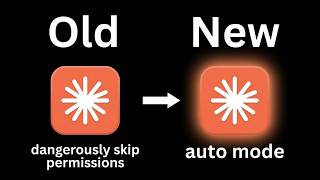
A demo of Claude Code automatically processing 36 YouTube transcripts into a tagged, linked knowledge base in Obsidian. The system discovers patterns like the WAT Framework and bypass-permissions mode without manual effort, creating a searchable graph of concepts and techniques that Andrej Karpathy recently highlighted as a model for LLM-powered research.
Chapters
What you're looking at right here is 36 of my most recent YouTube videos organized into an actual knowledge system that makes sense. And in today's video, I'm gonna show you how you can set this up in 5 minutes. It's super, super easy. You can see here how we have these different nodes and different patterns emerging. And as we zoom in, we can see what each of these little dots represents. So for example, this is one of my videos, $10,000 Agentic Workflows. We can see it's got some tags, it's got the video link, it's got the raw file, and it gives an explanation of what this video's about and what the takeaways are. And the coolest part is I can follow the backlinks to get where I want. There's a backlink for the WAT Framework. There's a backlink for Claude Code. There's a backlink for all these different tools I mentioned, like Perplexity, Visual Studio Code, Nanobanana, and 8N. It also has techniques like the WAT Framework, or bypass permissions mode, or human review checkpoint. So as this continues to fill up, we can start to see patterns and relationships between every tool, or every skill, or every MCP server that I might have talked about in a YouTube video, and I can just query it in a really efficient way now that we have this actual system set up. And the crazy part is I said, hey, Claude Code, go grab the transcripts from my recent videos and organize everything. I literally didn't have to do any manual relationship building here. It just figured it all out on its own. So Andrej Karpathy just released this little post about LLM knowledge bases and explaining what he's been doing with them. And in just a matter of few days, it got a ton of traction on X. Something I've been finding very useful recently is using LLMs to build personal knowledge bases for various topics of research interest. So there's different stages. The first part is data ingest. He puts in basically source documents, so he basically takes a PDF and puts it into Cloud Code, and then Cloud Code does the rest. He uses Obsidian as the IDE, so this is nothing really too game-changing. Obsidian just lets you visually see your Markdown files. But for example, this Obsidian project right here with all this YouTube transcript stuff, that actually lives right here. This is the exact same thing. Here are the raw YouTube transcripts, and here's that wiki that I showed you guys with the different, um, folders for what Cloud Code did with my YouTube transcripts. If you wanna watch the full breakdown, then click on that play button right here, and I'll see you guys over there.