Billionaire Bitcoin Bull Reveals Vision of Free, Global, Decentralized Future | Tim Draper
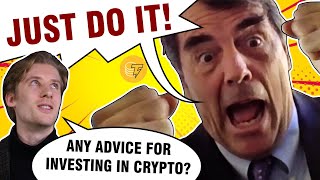
A recorded interview between host Jackson and venture capitalist Tim Draper in which Draper argues that bitcoin and related crypto (e.g., Maker/DAI) will bridge the legacy banking system to a global, transparent, decentralized economy. He criticizes banks, insurance, and heavy regulation as providing poor service at high cost, advocates market-based temporary regulation, and promotes bitcoin as a tool for financial freedom (including for refugees). Draper also offers investment guidance (look for industries with bad service/high cost, strong teams, and positive societal outcomes) and expresses skepticism about privacy coins and long-lasting socialist regulation.
Chapters
We can keep our power, hold on to our power.
I guess I've been playing wrong this whole time.
You have been playing Monopoly wrong.
What's up, YouTube? My name is Jackson and today I'm here with billionaire venture capitalist and bitcoin bull Tim Draper. How are you doing today, Tim?
Doing great. Doing great. It's a beautiful day, wonderful feeling. Everything's great.
Awesome. So I've watched a lot of interviews with you and I've noticed that you're.
Oh, I'm so sorry.
Well, what have you noticed? I've enjoyed them so far, so don't worry, not a problem. But I've noticed that you're always in this location and I haven't seen anyone ask you what's on the whiteboard behind you.
I never know. It's always. It varies. I use it for sort of brainstorming. So it could be anything. It's plans. A lot of interesting things I'm thinking about up there, but probably things I thought about two or three weeks ago and now either I've done them or they're out of sight, out of mind.
Anything you're particularly excited about? I noticed just from looking there, it looks like you've got DAI on there. Is that in reference to Makerdao's cryptocurrency or is that something different?
Yeah, I'm actually an owner of some maker and a big fan of it. I'm excited. Brings, you know, bitcoin's really the. The ultimate solution, making it all crypto and all. But this is a nice bridge that allows us to kind of bridge our current banking system with the post banking world. Once the banks are, you know, have. Have either transformed themselves or gone out of business, This is what will allow the consumer to move from that old world where it was fiat currency and it was all tied to governments and tribal and all that, to this new world that's global, transparent, decentralized and open. So I think it's exciting and I think Maker has figured out a really nice model for how they're going to match the old world with the new world.
So I was watching, ultimately, down the.
Road, I see this as a bitcoin economy.
Yeah. So I was watching an interview you did with Bloomberg where you said that when you're investing, you look at industries that have the worst service for the highest cost.
So at Draper Associates, the way we look at the next big thing is we look for industries where you're getting really bad service at a really high cost.
Is MakerDao is Dai an example of a Solution, you see, to an industry that gives a poor service for a high cost.
Yeah, yeah. Banking and finance. Finance. I can say that because I'm in the finance world. I believe that banking provides bad service at a high cost at this point, because, I mean, they're charging 2.5 to 4% every time you swipe a credit card. And we're not getting real value for that. It can be done with Bitcoin for almost frictionlessly, almost free. It can be done in so many ways in a better way than it's being done. And the banks are getting more and more where they're charging fees for things that they never used to charge fees for. So I get the feeling that this is like the roar of the dying lion. They're trying to hold on, they're clinging to their past glory, but really the world is moving in a new direction and they either are going to get on board or they're going to become extinct. So this is a really exciting time. And yes, they do provide bad service at a high cost. And there are very few of them. And they have sort of monopolistic moat, because if you wanted to start a bank today to compete with them, it would cost you $50 million. That's a huge moat. No one really wants to start a new bank today, or very few people do. And, and I think if banks, they have that moat, they have this oligopoly. And so we all have to deal with whatever they all start throwing at us. And if one group charges, decides, hey, instead of 2.5 to 4%, we're gonna charge 3 to 5%. All of a sudden we're all paying 3 to 5% or the merchants are, and then we have to pay by osmosis. This is a very. It's interesting, but banks aren't the only group that are providing bad service at a high cost because they're an oligopoly, because crypto, bitcoin, blockchain, smart contracts. You combine them with an actuary and you have an insurance company. And insurance also provides bad service at a high cost. And that's why you see all these ads for insurance companies trying to get your business, because they're clearly making a fortune off of you actually using a smart contract and using an actuary and some AI. You use AI to check out fraud. You can actually create a really great insurance company for very little. And what is government but a bunch of insurance companies? And so I think government is probably the industry that provides the worst service at the highest cost. And that's True throughout the entire world. And they're all going to have to start competing for us, at least at this virtual level where a government can provide better insurance than they do today by using bitcoin, blockchain, smart contracts, artificial intelligence and just a good actuary. So all these huge, huge industries are about to go through a complete metamorphosis because we now have a decentralized world. And this whole we were always tribal and this tribalism is now global. We can be global, we can operate globally. If one government is not performing, we can actually move to another government and we could move virtually to a new government. Estonia, Malaysia and Kazakhstan are all working on e governance which could be provided to the rest of the world, not just the people in those countries, to the rest of the world without having people have to live there. And so that creates this sort of virtualization and competition amongst governments. And it's a whole new way of thinking. And I think in their guts, the governments and the politicians all understand that they are losing their old world. And in some cases those governments are saying, hey, we're going to be the leader in this new world. And that's like when Japan says Bitcoin's a national currency or when Malta accepts all of the blockchain and crypto companies through Malta or Estonius creates this virtual residency program. They're realizing that this is all changing and they are okay and they are going to lead that change. Other countries are saying we're going to control it all because we like the old way and we're going to live under the old way so we can keep our power, know, hold on to our power. And they, they're a little bit maniacal about it because there are vested interests that really don't want to see this future, at least until they're retired. But there are also this new generation. You know, if you ask the average 30 year old if they'd rather have a Bitcoin or $10,000, they'd all take the bitcoin. If you ask somebody who's 45 or older, except for me, 45 or older, they'd always take the dollars because they're living in different worlds. The younger people are saying, whoa, this is a global world. We're open, we are transparent. We like the openness of the world. In fact, that old world of currency put me in debt of $200,000 because I went to a good school. That's not my currency, that's their currency. I don't like their currency. I want my currency. I want to move with Bitcoin. And I want to be on the blockchain, and I don't have to be tied to an existing tribal government. I can be open to the world and free. And all the transactions will be very honest because they'll be on the blockchain, and there won't be that friction that's created by regulation, where regulators kind of create friction, and that friction creates corruption, ultimately, because if someone stands between you and getting and you getting what you want done, that's always some weird form of negotiation. And if they have a regulation that they can cling to that says, you can't do this until you get past me, then they have this extra power over you, and that breeds corruption. Fortunately, in the US it has been very little corruption, but that's because it used to be a relatively unregulated country. Now we have extraordinary regulation here. It's very high regulation, and it is breeding more corruption. And that scares the heck out of me because I've always loved the land of the free in the home of the brave.
It reminds me of a quote that you made in an interview with us a couple years ago where you said, freedom equals prosperity and regulation equals poverty.
Freedom equals prosperity. Regulation equals poverty.
Do you think that any sort of regulations are necessary to protect consumers? I mean, where do you draw the line here between.
Well, I think you need regulations when people are at that point, not creative enough to create a market system to solve a problem. So regulation should be an interim step, and they should be temporary until there's a market system that solves the regulation. Cap and trade is the market system that solves for carbon emissions, where regulation is just. You can't pollute. And I think what really. I think in a perfect world, the regulators would allow for innovation to happen until there was an outcry that was a really big outcry from a lot of people saying, this is not fair for us. And then the regulators can come in and say, should we regulate, or is there an entrepreneurial solution? Is there a market solution that we can create that allows. That will incentivize people to do the right thing, do the thing we want them to do. I think what's happened, though, is there are regulations from 1933, 1940, they're 80 years old, and somehow those regulations are dictating what happens with the ICO market and the airdrops and whatever else, and it's all dictated by something that happened 80 years ago. It makes no sense. That should have all been sunsetted after. I mean, I don't think any regulation should last more than 20 years. After those 20 years, if you want to re up the regulation, great. You think it's still a good thing, great. But during that time, a lot has happened and a lot of different market systems have evolved. We don't have to live by some just because somebody wrote it 80 years ago. We don't have to live by that. We can rethink it. It can be a market system. And so, yeah, I do think the higher the regulation, I mean, you're going to see you heavily reg. China, they're getting heavily regulated now. Their economy was booming and now it's flattening off. I mean, the ultimate is socialist economy. Russia, everything's regulated, right? It's all determined by government. They tell you, you're going to be an ice skater, you have to become an ice skater. You're going to be an engineer, you have to become an engineer. And it's all done by the guys at the top. And the guys at the top determine what everybody else has to do. And that was Russia. For many, many years, their economy was total flatline. Meanwhile, the US Economy was booming and finally the wall fell down. They recognized that they needed a market system in there. They built their market system and now for some reason they've got leadership that's saying, let's go back to this socialist economy where we can control all of you people. I think that hubris. Anybody who says, yeah, socialism works. It's never worked. Capitalism hasn't worked everywhere, but socialism has never worked. The fact that we have two presidential candidates, two who claim to be socialists, and they're doing okay in the polls, makes me think like, does anybody study history? Does anybody understand what has happened in the past? This is ridiculous. Socialism creates poverty. That whole, all that regulation, all that government control creates poverty. The closer the decision making is to the top, the worse a country does. Socialism doesn't work. They don't understand human motivation, the drive of humans, the incentive to allow a human to achieve what they want to achieve is so powerful. And by subverting it with regulation, saying you can't do this actually ruins motivation. And people in Russia used to say, they pretend to pay us and we pretend to work. Is that really the economy you want? No. You want an economy where people are driven and motivated and they know they're going to make big money if they're successful, make huge sacrifices to get where they're going, all those things. I think those are really critical for a big economy.
So you clearly seem to Have a lot of faith in the free market and the positives of competition. Do you? Do you see bitcoin as the ultimate form of capitalism?
No, but it frees up bitcoin, frees up the world. It allows us to do business anywhere in the world without friction, so that we can pay employees somewhere else, we can send money to our relatives somewhere else, we can operate, we can hold money anywhere that we can pull down anywhere in the world. I mean, imagine being some Syrian refugee and you had a lot of money in Syria and now you are going and you're in Greece and you have nothing and you're a refugee and they don't accept Syrian money. You're screwed. But if you had bitcoin, you would just go to Greece, you pull down your bitcoin, you buy a house, you start your life over, everything's fine, and you go get a job, you get it all going. The world doesn't end well. You know, there are military dictators out there. They make life miserable for some people. Some of them push people out because of what they believe. Some people push them out for one reason or another. Sometimes they have just horrible ways of operating. And so people have to leave those countries. Well, if they're stuck with currency in their own country, they're stuck. Nobody's going to take that currency, the dictator's currency. Who wants that? So why not have bitcoin?
But my original question was, is bitcoin the ultimate form of capitalism? And I think you said no. Why don't you think so?
Well, because it's not the whole system. I mean, I'm just saying bitcoin is a currency that's global and open, transparent, wonderful. Everything's great, frictionless. It's not the whole capitalistic system. You need buyers and sellers and suppliers and customers. There are a whole bunch of things that make up capitalism and a fair market system. Free and fair market system. There are a lot of things that make up capitalism, but bitcoin can actually help spread good business around the world. And I guess that would spread capitalism around the world. But, yeah, ultimately it's a better form of government. And. And for some reason, there are people who still feel like the socialism or some other form is going to work better. I just don't see it.
I'm kind of curious.
It never has. I mean, you go back in history, it never has. Zero.
I'm kind of curious. Do you think you could give me a ballpark of how much bitcoin you own?
Why would I do that? You ever play Monopoly? Do you tell everybody how much money you got when you play Monopoly?
Well, you got to show it, right?
No, you don't? No.
I guess I've been playing wrong this whole time.
You have been playing Monopoly wrong?
If there's.
Oh, you never show your cards.
I'm going to remember that for next time. That'll make my friends angry for sure. So if there's one piece of advice you could give to someone looking to invest in crypto, what would it be?
Do it. Do it. It's the future. It just makes perfect sense. It's the future and it's a positive future. It's a future of peace, love and openness and transparency. It's a future that we all want.
How do you feel about privacy coins?
Honestly, I don't think that they're gonna be private. I think people will figure out how to, how to find out who's on that blockchain. And it's a little bit like, hey, oh, there are all these criminals and they're using crypto to do their crimes. If you're a criminal, you should be using cash because there is no way you're gonna get away with it if it's on the blockchain. There is a perfect record of every transaction that sits there on the blockchain. It doesn't make any sense for a criminal to try that.
Throughout this interview and other interviews that I've watched, you have this very forward thinking mindset. How do you cultivate this mindset in order to spot opportunities that other people may not notice as much?
I don't think it's necessarily just inherent in me. I think anyone can do it. Everyone I meet is telling me about what their future is. They're all saying, hey, I got this new deal, I got a new company. This is what we're going to do. This is what it's going to look like. So I meet with all these people, it can be as many as 15 in a day. I might hear 15 pitches in a day. It starts putting pieces together for me of what that future might look like. And then I can make my judgment as to what investments I might make based on the future. I've learned from all of that. And then I also have lived a long life, so I get to look back in history and say what has worked and what hasn't over all that period of time. So it's, I guess just because that's what I've been doing, that's what I'm better at. Like, if I were a journalist, I would know Much more what's going on in the world right now, right today. But I wouldn't really have a sense for what's going to happen tomorrow because it just happens and then I bring it in and it's a part of my life. But if I'm a venture capitalist, all I care about is what's going to happen in the next five to 10 years.
I see your point. And being a journalist in the crypto industry is particularly nuanced, I think, because all the topics that we deal with are all about the future. We get a little bit of both.
But you're a little bit of a combination because you're crypto and you're a journalist. So you see what's going on in crypto today and you get what crypto is going to be bringing to the world tomorrow. So you have that good sense.
Yeah. Everything going on in crypto today is about what's going to happen tomorrow at least, right? Yeah, at least. It seems that way to me anyway. And I guess one final question, because I'm still curious about what kind of criteria you use to evaluate these pitches. And I guess crypto companies specifically, are there other things you look at besides these worst service, high costs when you're really reviewing a company or a coin, when you're deciding whether or not to invest in it?
Well, I'm evaluating the people who are working on it as much as anything and the market size of what they're going after. And then my biggest question is, what if it works? What if you're successful? Have we created a happier, more peaceful, loving, open, wealthy environment or have we created a military dictatorship? And I think you look and you say, I want an open, free, peaceful, loving world. And that's what you'll get if you back this entrepreneur. And if you. And then if, if they're successful, it happens. If they're not successful, they at least push the ball forward in that direction. So yeah, so that's. Those are the things I look for.
What if? The big question. What if?
Yeah, what if it works? No, what if it works? As opposed to what could go wrong?
Uh huh. What could go wrong?
There's plenty of things can go wrong if you're a startup. You're gonna go through a lot of things that go wrong for sure.
Okay, well, thank you so much for taking the time to talk to us. That was incredibly interesting and I really enjoyed our conversation.
Thanks for having me on the show.
Thank you everyone for watching. My name is Jackson and that was Tim Draper. And guys, always remember to like subscribe and Hodl.
Cointelegraph like subscribe and Hodl.










