Blockchain Games: Fad or Future?
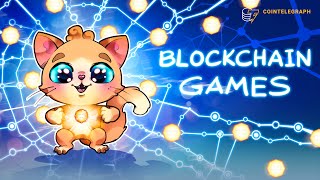
Dr. Violet Howard examines blockchain games like CryptoKitties, exploring whether they're a passing trend or lasting innovation. The video analyzes how digital scarcity and economic models work in these games, and what makes them attractive to investors.
Chapters
For the love of God by Damien hirst sold for $100 million. A de Kooning for 300 million. A da Vinci for a record 450 million. Since the dawn of time, whether it be for survival or social capital, people have collected things. It's just that nowadays things are exchanged for money, and some things for a lot of it. A diamond skull you can hold in your hand or a painting you can hang on your wall. Their value is determined in part by scarcity, but also by the fact that they exist in the material world. How then is it possible for a cryptokitty, which isn't even a physical object, but just a code written on a blockchain, could sell for $140,000, and it has sold for $140,000. And this CryptoKitty isn't the blockchain collectible to be sold at such a ridiculous price. This cryptopunk sold for 16,000. Homer Simpson meets Pepe the Frog was sold for a jaw dropping 39,000. And with CryptoKitty's total sales bringing in $25 million, they are by far not the only game that's trying to turn code into gold.
Everything in blockchain games costs real money.
You have to make a decent investment to begin with.
It's accessible to everyone.
So what blockchain games and why do people invest so much time and money into them? Blockchain games are built using distributed ledger technology. And most of them, like cryptokitties, are being built on the ethereum.
Blockchain objects that are written to blockchain has an objective history to them. It can't be faked. Like, for example, you have a gun in like blockchain version of CS Go, and somehow you managed to ask Arnold Schwarzenegger to play the game at your computer with your gun, and he shoots somebody. And this thing that Arnold Schwarzenegger played with your gun is written to blockchain on your gun. And this gun also automatically increase in value because it's a celebrity gun.
Right now, each cryptokitty is what's called a non fungible ERC721 token. Non fungible means that unlike Ethereum or Bitcoin, each ERC721 token is one of a kind. So each kitty you own is a unique kitty, making it rare and scarce. And most importantly, owning the token means you own the cryptokitties code. For this video, we decided to play two recently released blockchain blockchain cuties and 0x universe. But before we could start playing, first we had to top up our crypto wallets.
Everything in blockchain games costs real money.
They are not free. In order to play you need Ethereum, but think of it as an investment. But more on this later. So here are the blockchain cuties. Think cryptokitties, but cuter possibly. Each player receives a free trial cutie, but this disappears once you breed your first one. The real serious players want what's called a generation zero cutie. These are the rarest of the rare in terms of cuties. The starting price for one of these 0.1 Ethereum, which is about $30 at the time of recording. There are two options in the to breed your own cutie with a unique genome or to send it on what the developers decided to call adventures where it will fight with other cuties. Though don't expect anything like Zelda or Mortal Kombat. We put our cuties on the battlefield and they fought surprisingly well. Winds strengthen and give experience to the cuties which increases their so later on you can sell them for a profit. We also played Zero x Universe. The idea of this game is to collect planets and build your own universe. Without going into too much detail, we pretty much just launched a bunch of rockets to go and look for new planets with a few of them never returning apparently lost in space. But since we didn't discover any planets, we decided to buy the coolest looking planet we could. Blockchain games are all about money. Every action you make in these games you pay for it in exchange. If you are lucky, you might be able to make a positive return on investment.
People who are collecting in a digital space, they're good at staying focused. They have some kinds of critical thinking because they're making comparisons.
Even though we were just breeding cuties when we played it, it gave us a sort of sense of achievement. Turns out this makes total sense.
When you actually make the purchase, you have the reward center triggers right in your brain. You've accomplished the same when you're playing a game with any kind of reward. So your brain responds with the reward neurotransmitters. It feels good.
So what drove players to these blockchain games in the first place?
Blockchain games allow them to earn money. Average gamer is not like a gamer at all. It's more of a trader. Usually a male of age 25, 40. They can buy an asset, do something with it and try to sell it for a higher price. I personally know people who a guy who made €40,000 by playing CryptoKitties in December.
So if the Average gamer is not actually a gamer, but really more of a trader. Can we really call it a game? Well, the answer is both yes and no.
And the breeding aspect is really interesting to me because, you know, trying to decode the genome, you know, it really, it does require you breeding constantly to kind of get more data points to figure out how the genome works. And that portion, that puzzle of the game is one of the most intriguing things in blockchain cuties to me.
But what really makes these games popular is the fact that these blockchain cuties or kitties or planets or whatever else, they are essentially a cryptocurrency which you can buy, sell, or hold. And as cryptocurrencies are extremely volatile, so are the games that use them.
If crypto completely crashed to the ground, yeah, I would probably stop playing blockchain cuties.
And that is what happened to blockchain games. Since the release of CryptoKitties in 2017, the number of daily users has dropped by 96% from 14,000 to around 500 less than a year later. These collectible games obviously resemble gambling, and like a casino, the house always wins. There might be a few lucky success stories, but there are certain behaviors to watch out for.
Electronic funds are quite hard to keep track of mentally for people when they're doing their mental accounting. When you then put that into cryptocurrency and you're gambling at decimal points, it's very difficult for individuals to really easily track how much they're winning and particularly how much they're losing. When it starts to become problematic is when people are gambling more than they can afford to lose, when it no longer is just a fun, entertaining leisure activity.
But on the other hand, these games are about collecting, not about betting. So what compels people to play?
These objects are now a part of how they see themselves or a part of their identities. People collect because these objects have meaning to them. And by accumulating them, it also gives them a sense of competence or self efficacy. And it gives them social capital. It gives them something to talk with other collectors about, to show that they're knowledgeable, that they have these assets.
Although we were not constantly breeding like Risco, it was fun playing both cuties and zero X universe. It is hard, though, to justify spending $40 on a digital planet and even more on the cuties. Furthermore, over the time we spent playing, the crypto markets had dropped substantially, and the value of the cuties, planets and most of the collectibles have followed suit. Blockchain created digital scarcity While it is true that the code behind the pixelated character is unique, something almost completely identical is so easily reproducible that the idea of uniqueness is almost meaningless. What is really being created is just artificial scarcity. So far, these collectible games don't offer very much to gamers. Their survival, it seems, depends on whether they can offer gamers more than just a trading platform.
The relationship between player and developer will be more like an open market relationship rather than it is a closed ecosystem relationship.
Right now, as long as blockchain has to, we have a system where I'm going to have to pay gas to write to it and it's going to take a decent amount of time. I don't think that that's going to fit into something, let's say World of Warcraft.
This is the first generation of people that are collecting digital objects, right? If you collect paintings or sculptures or Dresden dolls or whatever, then you can pass those down. How does this pass down?
So whether or not the idea of blockchain games appeals to you, their existence raises some interesting questions about value, scarcity, gaming, and even ownership. Tell us your thoughts and your gaming experiences in the comments section below.
Cointelegraph like subscribe and Hodl.










