Blockchain Island | Cointelegraph Documentary
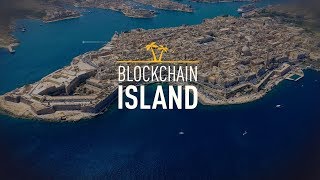
Malta's Prime Minister and Binance executives explain how the island nation became a crypto hub through business-friendly tax incentives and forward-thinking regulation. The strategy attracted thousands of blockchain companies, though locals worry about scams and whether regulators can actually keep pace.
Chapters
When the Prime Minister of Malta, a tiny island nation in the Mediterranean, addresses the United nations, the world rarely stops to listen. But Prime Minister Joseph Muscat's speech in September broke some new ground.
We are currently in exciting technological times. This is why in Malta, we have launched ourselves as the blockchain island by being the first jurisdiction, jurisdiction worldwide, to regulate this new technology that previously existed in a legal vacuum.
We traveled to Malta to see this blockchain island and were amazed by its beauty. A speck in the Mediterranean between Europe and Africa, Malta is one of the smallest countries in the world, with a population of less than half a million. For almost 500 years, the only thing that resembled crypto here was the crypt of Saint Agatha, a virgin martyr who died in a Roman prison in the year 251. Today, however, there are dozens and perhaps hundreds of crypto businesses on the island. But we were wondering how aware the local Maltese are of their country's new crypto and blockchain identity. We figured that if anyone would know, it would be students at the university, one of the oldest in Europe, blockchain islands. No, no, no, no, no, no.
I don't know anything about that.
No, I haven't.
I don't think so.
No, I think most of us don't know about it. I might be mistaken, though.
Personally, I didn't know about this. So I think we need more awareness about it, especially if it's growing. So is Malta really a blockchain island? And why does it want to become one? Let's take a closer look. Malta has a very exciting history. First, it was colonized by the Phoenicians in 700 BC, then came the Romans in 218 BC, followed by the Byzantines, Aglabids, the Norman Kingdom of sicily, Order of St. John the French, and finally Britain, which colonized the island until 1964, when Malta finally gained its independence. To grow its economy. Malta has always been innovative. In the early 2000s, it passed legislation that allowed it to host online gambling companies, which turned out to be a huge success, now accounting for 12% of Malta's gross national product. So it does make sense for Malta to welcome another new technology, crypto and blockchain.
We could tell there's going to be revolutionary. And Malta, because we don't have natural resources, whatever idea, we're ready to listen and grab an opportunity and run with it. But the turning into reality, into implementation in such a short time, small countries like Malta are able to do it. We don't wait for tomorrow. We just try to do today.
Malta has leapt into the business of hosting crypto conferences. These events, largely supported by the government, attract major crowds. The recent blockchain Summit drew almost 4,000 people, a number close to 1% of the total population of the country.
What we really love about Malta is it provides a balanced and robust regulatory framework. The second group that's very important are the regulators because they need to enforce and implement those laws and regulations.
In November 2018, Malta became the first country in the world to introduce 360 degree crypto regulation for engineers by engineers. Other laws protect investors by regulating crypto service operators, exchanges and ICOs. Crypto advocates welcome this, although some point out the irony of a government supporting a currency that is designed to to be independent of all governments.
I think it's great, I think it's absolutely fantastic. But in the long run it's meaningless. And for the simple reason. If we use cryptocurrency for its intended purpose and if distributed exchanges come along, what does it mean to be crypto friendly? Who cares? Because whatever legislations you wish to enact or not enact cannot be enforced. So in the short term, that's great. We're getting support from the government, we get some validity, we get exposure. People feel secure in it. But in the long run, we will have control from no one.
No government.
And all of the welcoming arms in the world mean nothing when you're welcome anyway.
Meanwhile, right now, crypto businesses are happy to be welcomed by Malta. It has received more than 1,000 applications from crypto companies attracted by the new regulations, the ease of registering a business in Malta and a lucrative tax refund mechanism that can lower the nominal 35% corporate tax rate to as little as 5%, the lowest in the EU. One blockchain startup that decided to make Malta its home is Chili's. Its business is tokenizing sports teams like Evantus. It is also betting on Malta's future as a crypto capital by building a so called blockchain campus.
We developed this campus in Malta because we believe that there will be a lot of companies that are going to need help and resources to help setting up their operation here. And for us, because we were based here, it's good for our company, for Chile's for a couple of reasons. One, it's going to help us to be at the epicenter of the ecosystem here in Malta and it will also help us to grow our name and become more like an authority globally in the blockchain space.
The blockchain campus is intended to host up to 50 companies law firms, VC firms, and even ordinary hodlers. They will pay for their spaces with Chili's Token and have access to a network of incubators in locations as widespread as Tokyo, Singapore, Berlin, Tel Aviv and Paris.
Malta has been at the forefront of many regulations in the last 15, 20 years. And because they are European countries, so whatever you do here in a regulated way, you can provide your services in the rest of Europe. Right now, you know, if you create a blockchain or a crypto company, there are some countries that could shut down your business from one day or another. Here, you know that you are welcome. The Prime Minister is welcoming you, the President is welcoming you.
And these are not just words. We were invited to a private event hosted by Binance and the President of Malta at St Anton palace, the President's official residence. We were the only media company that was invited.
So good evening and welcome to St Anton palace and welcome to Blockchain Island.
Why are you wearing a Binance shirt? Oh, it's a Binance event. Is it true that Binance is going to announce its office tonight? No comment.
How many of you have ever attended a blockchain event at a presidential palace? I think this is the first one in the world. I think Binance got really lucky, and I think as an industry, we got very, very lucky with Malta. Malta came at a time where regulatory clarity was very much needed and we needed a government to support our industry, and Malta took that lead. So let's give a round of applause to the.
It's not just the business. I have come to know that this, this new technology will be a whole revolution of how humanity will be dealt with. We need to be one human family for each and every one of us to be successful in whatever we are doing.
Thank you. Enjoy the evening.
I first came to Malta in January this year. When I met with the regulators here, they were already very, very knowledgeable on blockchain industry. They understood it completely, not only the technology, and they also understood the potential impact both technology wise, financial wise, economically. They understood everything. And they already had a draft legislation before I even talked to them. They presented that to us for review and for comments, and I was like, wow, that's fantastic.
Malta's attitude toward crypto and to new technology and business in general is paying off big. Its economy is growing at an unprecedented rate of 6.6% for the last three years. It has been the fastest growing economy in the EU and one of the fastest in the world. Decades of budget deficits finally changed to a surplus two years ago, the economic.
Growth in Malta is so high, it would have hit a ceiling long time ago, just like Luxembourg. If we were to rely on the Maltese labor force, we realize, and the government makes it very obvious with the people and tells them, look, it's a deal. If you really want to grow and your standard of living, you want to increase, and for you and for your children, you have to have people coming from abroad. Now they make up 20% of our labor force and is growing.
And people do come from abroad. Some of them come to work in the new businesses. Others pay to become citizens of Malta. The country has collected 600 million euros through a controversial immigration by investment program, enabling foreigners to buy Maltese passports. So if this has all made you want to become Maltese, save up a million euros or 340 bitcoin. Be aware, however, that your new home is not perfect. A history of lax regulation, low tax rates, and the Cash for citizenship program have not attracted only good guys.
Like every industry, blockchain industry and cryptocurrency industry probably has some actors who are perhaps not as honest as you and I might be, or others should be. But I do think Malta needs to be a little bit cautious about this because it's put up the banner to say Malta is open for business, for cryptocurrency and for blockchain, and is promoting itself as a blockchain island. And what I'm looking for, I think, as a next step, is to see the VFA and the MFSA come in to put some legislation in place to show how operationally there can be safeguards to at least make sure that the actors that are coming in are deploying good tools that, for example, allow solid KYC and AML so Know youw Clients and anti money laundering laws to be put in place and those checks and balances to be present using tools that are appropriate for this new industry.
Bitcoin digital assets. It's still an experiment. I'm confident that it's going to go far. It's not going to disappear overnight. A question that I just had on the panel, whether blockchain and Malta is a fad that's just gonna evaporate? I don't think so. It's gonna be here to grow and become, hopefully a budding industry for Malta.
Of course, nobody knows where the future will take you, but it's the approach that you, rather than, you know, pluck your nose, so to speak, and think that it's only, you know, for kids, we don't do that. We take things seriously. We hate bureaucracy here and we respect the private sector and their ideas. And that's the future. That's where our future lies.
So will Malta really become a blockchain island? It's off to a fast start. Its formula of regulation first seems to be working. Capital, startups and talent are leaving less friendly jurisdictions to come to a place that welcomes them. Clear legislation, low taxes and an open minded government make for a stable and healthy crypto environment. The warm weather is just a nice plus.










