BTC crash: Why did it happen? Macro analysis, SOL, IOST | The Market Report w/ Sam Bankman-Fried
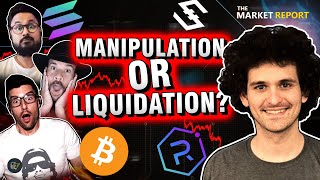
Sam Bankman-Fried joins Cointelegraph to break down Bitcoin's recent flash crash, weighing liquidations and leverage against macro factors like the US debt ceiling and China. The team analyzes Solana and IOST, plus FTX's approach to marketing and DeFi products.
Chapters
Welcome to the Market report with cointelegraph. We are back at it again and have some juicy, juicy topics to be diving into this week. Absolute chaos in the markets. And we also have a huge guest, Sam Bankman Fried that you do not want to miss. I am your host Benton and we are joined again by by our resident experts Jordan Finisath and Yashu Gola. Jordan has used his background in psychology and human behavior to spot emerging trends in the crypto markets. And Yashu is a financial analyst who has been covering the crypto industry since 2014. Prior to his career in journalism, Yashu was a security analyst at Premier Shield and a copyright at App and Technology. What is up guys? How we doing this week? Crazy, crazy, crazy markets.
Yeah, it's been a wild week. Looking forward to just wild charts.
We have so much, so much to get into. Bitcoin, the dump, the pump back up. The markets just going sideways now. I, I don't even know where to start but we have a lot lined up. We're going to break things down, get started with our markets pro segments and then we're going to get into all of the other segments experts and we're going to have our huge guests. Make sure you stay tuned if you haven't like and subscribe our channel. We're here every Thursday, 12pm smash that subscribe button. Make sure you turn on those notifications so you know when we're going live and we have the biggest guest in the game. So let's go right into our markets news this week. Danilo, let's run it. So guys, bitcoin talk is here. Who is selling what happened this week? Giant flash crash and we saw like remnants of like March 2020. We saw the huge dump. A lot of people on social media were buzzing about this saying the market crash because of manipulation. Jordan, what happened this week? What's your take on why bitcoin crashed?
Why did bitcoin crash again? Like there's lots of different ta out there and all that stuff that this is why I didn't, I don't know. It seems like it was part of a natural market cycle. We were getting hot and heavy. Prices had run up quite a bit since they bottomed out. What was around July 20? I think it was a healthy correction in my opinion. What do you think, Yashi?
Well, I do think that we had plenty of catalysts behind this new dump and one of the primary ones I actually noticed was from China and somehow it rippled through the US Dollar market and through the gold market and to the bitcoin market, there's like a plenty of chart based evidence to prove that thing. So I'm going to show you guys later.
Yeah, I think we're going to dive into some of that stuff. But I noticed a lot of other outlets Altcoin Daily was citing conflict between Coinbase and the sec. Crypto banter was calling crash of the biggest manipulation in crypto history. I think there was a lot of stars aligning here between countries, institutions, whales and there was some manipulation happening. Whether we can connect those dots or not, I think time will kind of tell us extremely weird kind of stuff happening though inside of that Bitboy was calling for manipulation as well. Was any of this, like you both kind of said this was like a natural cycle. When we have these types of corrections, what's stopping it from sliding Even lower beyond 42k is that retailers or institutions kind of jumping in and setting that support level at that 42K. Mark Yashu, what do you think?
Well, like always we are excessively leveraged, you know, when we are betting on our upside positions. So even a small movement in the market, maybe it's not that small enough, but even a 5% downside movement, it can just trigger a long liquidation event. So we just have to de accelerate a bit when it comes to really leveraging the positions. And that's how we can de risk ourselves from facing such crashes. I mean in March 2020 some said that we almost crashed to zero because of Bitmex. So these kinds of events are becoming the part and parcel of our bitcoin life altogether. I mean the same kind of crashes we have seen in February and May, but we are bouncing back because you know, sense prevails and sense comes from those retail investor you were talking about who bought the dip. And now I think they are sitting on a very good profit. So congratulations guys.
Yeah, there's a lot of over leverage in the market. It seems like every time this gets over leverage it was almost back up to where it was earlier in the year. And every time that happens they come out and just dump it on the market, I think. And if you go back way just to 2018, 2019 when they crack down on ICOs, if you noticed all these exchanges launched their derivative projects because that's how they make money now. They don't make as much money as they used to launch a new project. So even just from trading fees, so they launched derivative platform so they can short or like liquidate people and that's what happens. And this is like it's Crypto, it's still, it's still not this like well established global thing where like it can't be manipulated. And so as such, and it does. And I don't know, I just think that that's all part of the game that we go through. And if you look at how quick the whole market has bounced back, I'm sure bitcoin's still kind of struggling, but a lot of the altcoins are starting to take off. I'm bullish now. This is a good sign for me.
I also want to note though, like, who was selling. We know this was kind of a little bit of that derivatives market where it was getting overheated and we're talking about this healthy cleanse data appears to show that it was not hodlers who were selling. It was some big whales in the market who just accumulated their bitcoin most recently. So Yashu, what are your thoughts in regards to actually who cascaded the sell off?
Well, on chain data showed that most of them, majority of them were like new holders. They were not even holders. They just entered the market and they just saw an opportunity and they sold off. We cannot actually call them whales or any kind of serious institutions. But my guess is that all of these people, they were very much exposed to the gold market as well at the same time. Because there was a slight correlation between what happened with bitcoin and the gold market at the same time. The crash was very, very, you know, mirror like. So yeah, there is no point of guessing, but they were actually short term holders. Definitely.
Yeah. I had friends and people calling me that I had gotten into crypto, like, should I sell? What's going on? How did this happen? So to me, yeah, the, the people that aren't really used to cryptocurrency and the volatility that exists might be the ones that are more kind of like dumping things that the things are going really south.
And I do want to kind of circle back here to that, to that manipulation. Is it possible that countries were doing this manipulating? We had the news of El Salvador releasing that they are now accepting bitcoin as legal tender. Was there manipulation in the market, yes or no? Yashu, what do you think?
We have seen similar crashes in the past and we cannot just go back to the same point all over again that it was manipulated. It happens. I mean, we have seen it before and it was not much of a big crash. You know, after this much rally you have seen since July 20, there has to be some profit taking. And because of that profit Taking. There has to be some liquidations against the people who were betting on. On. On a higher bitcoin prices. So what's there to guess? I mean, I think manipulation is just a rant.
If you heard the reserve currency or you like something like the IMF that controlled the monetary system of the world, would you kind of want to like, slap the hand of a. Maybe a rogue country that did something you didn't like or. I don't know, like, I don't see it as just a country. I see this like we're in the. The midst of a financial shift, like a paradigm shift, and it's not just going to go easily. The people that used to have all the control and still have most of the control are not going to let that control go. So, yeah, like, there. There's. Every market on our planet is manipulated, if you ask me. Like, I don't see anything that's not. So this is all part of the game. And just so happens on the day that El Salvador is like, we accept bitcoin as legal tender, the market tanks. Yeah. And back when Elon Musk was like, you know what? Bitcoin mining is bad. It's. And like a week later, China shut down its coal mining. Like, yeah, there's no. No, there's no collusion here. There's no coordination.
I think that countries have a vested interest, and there's a lot of people going after bitcoin. And I think countries were partly behind, whether it be China, whether it be countries in South America who may be starting to shift to a bitcoin reserve currency. I think there's a lot of people who want to start trying to get in cheap, and those are going to be countries. This was the first domino we've seen. El Salvador, we now see the Ukraine taking steps to adopt bitcoin. You're starting to see more and more of these countries start to chip away at that US Dollar standard. And I think countries are going to start kind of teaming up and especially those that feel like they have been left out of the traditional system. And so I think that's partly this kind of movement that we've seen. But as we've seen, though, with the over leverage, that's definitely a part of it. It's just a lot of things are kind of starting to line up, and this is part of that natural cycle. So very interesting stuff happening this week in the markets. We're going to start to dive into a little bit about that gold and US Dollar, which I want to roll into next so let's go right into Yashu's expert segment for this week.
So I'll just begin. I should always wait for my turn before speaking. So actually the reason I was telling you guys that it might not have been a manipulation is a simple correlation between bitcoin and gold and the US dollar index. So I'm going to share a screen with you guys so that I can just like present this thing. Just a moment. And here we go. So if one sees the screen, they can, they can see that bitcoin market was more or less reacting to the price performances of its top safe heaven rider. I mean gold in the US dollar that was very much, you know, like instrumental in driving the bitcoin prices downward. If you, if you focus on these big red candles, it's an hourly chart. So there's green and red candles, you know, that belong to bitcoin. The black and white one, they are gold and these blue and yellow ones, they are US dollar. So you see at about this, this red candle, you know, that arrives at 10. So Bitcoin falls at this time about 20%. Gold falls by about 8%. At the same time, US dollar index rises about, you know, 3.0.37%. So this is the first, first trigger, you know, that we are looking at that all of this, you know, market crashes, they were entirely correlated. So there was something macroeconomic happening, you know. So that's one thing I really wanted to flash out that what started it meanwhile, like, like I discussed in the previous section, that there was a long liquidation event triggered by this, you know, small, this basically minor correction and it turned into be a bigger correction. So which is why we were looking at crypto price crash at the first space. But we, we really have to see that why the US dollar was rising.
So this rule out manipulation though, because like to me this kind of looks like when the market dump, the crypto market dumps, all the dumps in the stable coins go up though. I think our world financial markets are so intercorrelated now because I don't know, everybody's shoving their, their money into these assets, trying to get out of these fiat that are losing money, that yeah, when any asset starts falling, everybody rushes to the stable coins, to the dollar, so it does rise. But I don't know, like that doesn't necessarily rule out speculator or manipulation in my opinion.
Well, you might be right about it. But see, I really have to define one thing that people are exposed. Sometimes a portfolio is completely, completely exposed to two different assets at the Same time, maybe it can be a portfolio or it can be gold and bitcoin portfolio or a bond. So again, you feel you start losing money in one asset, you try to offset that loss by selling some other asset that is sitting on a good profit. So that is how you protect your money. You just turn back to cash. So which is why I believe it's not actually some kind of manipulation, it's simply a market reaction. And I mean if that answers. Well, I mean I would like to actually tell that why it was happening because there was an article I read on Bloomberg which actually noted that China's annual interest expense right now is greater than the yearly increase in its nominal gross domestic product. So therefore we are looking at a potential inflationary shock in China right now. And which is why we are seeing some, you know, real growth concerns there. And the foreign investor as a result is putting now money in the US markets. So it is pushing the US real yields and US dollar index price higher. So that's one, one thing. I mean, and whoever they are, I mean they could also be putting money in the gold and bitcoin market. They can, but probably they are, you know, as we speak here, they are buying bitcoin. But this week's actions show that how far bitcoin has come insomuch that its price declines are matching steps with traditional assets like gold.
Do you think this.
I'm sorry, do.
You think this is going to be more short term pullback or what do you think is going to be up ahead for bitcoin?
The best thing about this correction was, you know, the buy the knife strategy by retail investors. I mean we have seen it before, it fell to 42k. Somebody or an army of retail investors just jumped in and bought it. They don't want to the price to go down because they know that what they are facing ahead in the market. And which is why I would like to actually discuss that what can prompt people to stay invested in bitcoin. That is the uncertainty. A very, very scary fundamental in the form of what Janet Yellen, the US Treasury Secretary said told the lawmaker and I would like to actually press on that with your permission, that she said that she warned lawmakers about a potential financial Armageddon. By the way. Just a moment. Yeah, an Armageddon sounds ominous.
That sounds dark and ominous.
Yeah, dark and ominous. So basically what she's saying, I mean you really have to listen to this one because it's interesting, it goes interesting, she said that the U.S. treasury will run out of cash by next month, by October 22, maybe they will run out of cash. So as a result, Federal Reserve, federal government, the US Government, they won't be able to respect their debts. I mean, that is the warning that is coming from Janet Yellen herself.
If that isn't the case for Bitcoin, I don't know what is exactly, because.
Because you, I mean our viewers also need to understand that what, what is happening exactly. In short, a federal, you know, government default basically would be an economic catastrophe because you know what it does, it actually increases the interest rates. And because of that, the stock market also suffer. They go down all the retirement account you look at, you know, they also take a beating. The value of the US Dollar erodes. And the financial reputation of the country, one of the, you know, not actually the one, the only superpower right now, you know, the financial reputation of the United States, which also drops hard. So basically Yellen tells congressmen in a letter that they are basically wasting time, you know, bickering over each other. That should not be happening. They should raise the debt ceiling. And the time they are wasting in, you know, by just doing some really political cat fight, they are actually pushing us to the brink of a financial disaster. So why, why, why would one stay invested in the US if they really like default on their debts?
Could this be worse than 2008? Like, is that, is that kind of what I'm hearing?
Well, I really don't know because in 2008 we were looking at a house market collapse basically altogether. And this time we have a debt collapse more likely because we are already sitting on a 29 trillion dollar debt.
Yes, it's going to be worse in 2008. Yes, it's going to be worse. This is a global bad. Like China, China's biggest, one of China's biggest companies is going bankrupt. Evergrande, they're the largest property holders, they're the largest foreign property holder in Australia and the United States. What's that going to do the property market in the United States and Australia if they go bankrupt? Like this is like we've been, we've been living on borrowed time probably since 2008 and like politicians have been kicking the can down the road, not actually offering any kind of solutions to changing our world. And now we just printed how many trillions, 4, 6 trillion since the start of COVID and we're acting like we can keep doing this. No, that chart is starting to go parabolic just the same as crypto charts go parabolic. And that voice inside me is like Jordan Take some profits. That's happened. It's not a good parabolic.
Jordan is absolutely right, you know, because even if they raise the debt, I mean imagine they just take the chance and they really raise the debt ceiling, you know, okay, they can now borrow more. Even then we are looking at a good prospect for adoption for Bitcoin because man, you are just creating a very big debt bubble because of that.
And every, it's. Every person on the world is starting to realize like all these central banks are just printing money. We have to work. We have to dig stuff out of the ground and create things and they're just printing money. And people are. Countries especially are not El Salvador's. Like, we're out of that game, man. This whole, this is just a start to like a whole transformation. And it's going to be painful.
Exactly. And it is already painful, guys. I mean, because U.S. treasury, it has already said that they're running out of cash. It simply means that they will. They would have to sell their investments already. I mean, these guys invest in some place they have, they pay the retirement account, the Social Security benefits, they have to cut down everything. And how would it impact the, you know, normal man? I mean, where would he go after such a drastic thing happens? He will have to find some safe haven. I mean, if Bitcoin is the solution, yeah, go there. If any, anything in defi is a solution, yeah, go there. But you need to get out of that system altogether because what they are doing is like they're playing chickens with each other and putting the entire financial market, the global financial market at risk because of the default things.
I mean, and I think a lot of the responses are trying to keep people like the SEC is cracking down on Defi and Uniswap. They're like, don't let people escape the system. Stay on the sinking boat. Like, no.
It'S going to be an arduous six months to a year ahead to see kind of what shakes out here. But I mean, you highlight some dark and ominous points like we talked about earlier. I mean, that's scary to think about, but I think it is reassuring that the solution sitting there in front of our face, it's bitcoin, it's defi, it's all of the systems in front framework being built in front of us right now that I think could possibly be that solution for our future. So I think there is light at the end of the tunnel, but that is a dark picture that you paint, Yashu. So I appreciate you walking us through that and showing us those correlations of what could possibly happen ahead. Scary times. But if you haven't liked and subscribed, make sure you do that now. Our Cointelegraph channel is here on YouTube. We're live. The market report, 12pm Thursdays. So let's roll this over to Jordan segment. I know he's going to be talking about some defi today because he is our resident defi expert. So let's jump right in.
Oh yeah, so we got some of that bad news out of the way. Let's jump into crypto and see like good news. If you can go ahead and share my screen, Danielle. One of the hot projects for everybody if you've been paying attention, has been Solana. I mean it's up over 200 now and like it's really starting to bring back this discussion of is Solana the Ethereum killer? And a lot of people are really starting to compare the two and even I'm like for the future price target of here at 500 is I think the Solana circulating supplies about 292 million compared to about 117 million for Ethereum. So that's if it kind of reaches the same parody. But what's really attracting people to Solana is it's growing defy and NFT marketplace or ecosystems that have, have they exploded on Ethereum? But if anybody that's been trying to use Ethereum lately knows like it's really expensive to transact on Ethereum. If you got people in other countries like Venezuela or anywhere where even a five to ten dollar fee can feed your family for a week, that's not really feasible for them to be using Ethereum. And I think Solana has really kind of stepped up to the plate here. A lot of it's also because of the people that back it. I know we're going to be talking with Sam a little bit later and ftx, the, the exchange that he runs has been a big backer of Solana. They just launched a NFT marketplace for Solana. So they're selling NFTs that sell on Solana. I can pull that up here. Yeah, there it is.
So Jordan, while you're pulling that up, I want to break this down for our viewers today. Why is Solana's ecosystem absolutely surging? You mentioned NFTs, you mentioned DeFi. But what makes it different than some of these other blockchains like Binance, Smart Chain or Phantom that we've also seen grow in Polygon? What makes it different? And why is this absolutely skyrocketing right Now.
Well, a lot of it is the low fees. I think it's like, it's really super low. Even lower than Binance Finance came along. It's connected a lot with. It's just the older world and Binance got a lot of its own. A lot of people have concerns about the Binance Smart change. Whether it's, it's controlled, is it decentralized, lots of different things. I think the, just the general public feel about Solana is a lot more positive. Doesn't have the back history that Binance does and it's, it's super fast like and cheap. I don't know if anybody's ever, if you've jumped on Salon and try to use it, even compared to the Binance Smart chain or anything, it's quick. And that's like the first thing I really looked for after I got into crypto. Everybody gets into crypto. You buy bitcoin, you're like, you try and send it, you're like this hour long wait ain't working for me. So you move on to something maybe like a litecoin or the ripple, those kinds of things. But then you're like man, those are legacy. They're getting boring now. Solana is launching DeFi. It's launching NFTs. It's launching DeFi NFTs with the GameFi. Like the, yeah, I think GameFi just, just raised 4.1 million. So it's, it's captured the, the, the NFT and D5 energy and, and solves the problem of high fees on Ethereum. So I think that's.
But it was surging when bitcoin was dropping. Like is, is that just money moving over from different chains or like, you know, what are you kind of seeing? Why was that surging when bitcoin was dropping?
That's really good marketing, man. Like talk about releasing good announcements and catching a wave right at the right times. Like it when, when the market's dumping but one coin starting to move, then people are like let's show. If I've watched it so many times it's where the whole market is something. But there'd be like three coins that are just like shooting up. And it's like people, either they go to stable coins or they go into an altcoin and right now it's actually, they're actually choosing altcoins that have a long term validity and like strong use case that have like it's going to go up in value in the future so why not catch it now on the dip and people I think took advantage of that and along with like multiple good big announcements coming out of both Solana and ftx.
But Jordan, don't you think that Solana is also facing stiff competition not only for from Ethereum but also from other competing chains like Cardano?
Yeah.
What do you think that. How much, how much they mouse trap?
Yeah, I think Cardano is gonna be good luck too. But right now you can't jump on Cardano and do defi. I'm sorry, like if the capabilities will be there. Right now Solana has like first mover advantage in this current bull run as far as like catching the, the hype of what's happening on Ethereum but offering a better, a better environment for people to do it. Like I, I try.
My argument to that, Jordan, is you see chains, you see chains with low transactions and fast speeds, like, that's nothing new to the Defi space. So it's like for me, it's like, are these changes doing a much better job of marketing themselves and that's why they're getting in front of more people and more audiences or they do it. Are they focusing on education, how to get people set up on their chain? Like what is the secret sauce?
A lot of it's all those things and a really strong community. You'd be amazed at how much like word of mouth and like good market, go back to 2018 or 2017. Good marketing. Ask Justin Son, like, what does good marketing do for your project? You know, part of it's that you got a really hyped up community. People love Sam, which he's a cool, awesome dude. And like I think that even just having a good figurehead is like at the top of this brings new energy. Like people are going to support him over a cz in my opinion, kind of a thing, you know, because if he's in that like that benefits the project. But it's, it's. They've been doing like the right steps this whole time. Like I haven't seen a whole lot that I haven't appreciated from Solana over the last year that has made me kind of had any kind of negative feelings towards the project. And that goes a long way with people.
Where do you see Solana going in the next six months to a year? If you had a price target, what are you kind of looking at for the asset itself?
I don't think five, six hundred dollars is unreasonable. Again, if it's Ethereum's 117, Solana is 292, that's like two and a half times. So take the Ethereum price divided by two and a half. If it can keep reach parity with like Ethereum and, and keep building its momentum it could easily get up to that like a, to a multiple of the Ethereum price. So even a thousand dollars isn't without a range. Like again we're headed what we were just talking about like the world's economy is crashing. There's gonna, if people actually start onboarding into cryptocurrencies, Solana is going to be one of those top projects. We're not, we're not going to be investing in train cars. People are going to be investing in train tracks. And Solana is a really good train track.
But Jordan, I was looking at Solana's technical indicators and I happened to come across RSI which was like completely, completely overbought. And I'm actually, I know that it can actually go up because of all the promises it is doing right now. But at the same time for investor who want to enter the market. When is the next step according to you in Solana markets?
When the next what sorry?
Next step?
Oh, it could happen right now, man. It's gone up again. It's one of them. I wouldn't, I personally would not be jump dumping a whole bunch of new money into Salon right now just because it's gone parabolic like all time high. Do not buy. And even the other one coin, I like Algorand like it's, it's, it's being chosen by El Salvador to host a lot of its actual blockchain stuff but it's at a new all time high too. These are really the algorithms and Other Good solid layer 1 blockchain, pure proof of stake, low transaction speed fees but they're at all time highs now. So I wouldn't, I wouldn't personally recommend buying any of those. Like the dip will come but once it does and I don't know maybe the difference Solana was when Bitcoin just took a shit like this past week.
The one thing that gets me with Solana is, is token supply. I mean right now it's sitting at number six in regards to market cap. The token supply is almost double of Binance and Ethereum. So there's a lot more circulating supply and there's actually supply I believe that hasn't hit the market yet. So I do think there's a little bit of that ceiling below 500 in my opinion. I feel like when it comes to that supply and demand aspect, I don't know if Solana has A burn mechanism. Is that something Jordan, you, you have information about?
I don't know. I mean you say that, don't have it off the top of my head, but it's something I could look into. And again, that's all I love about the beauty of this. It doesn't mean like if you, if you as a person that's in the community see that as a valuable thing, that's something that could be added in the future just the same way that it's been added with Ethereum with the, the London upgrade and EIP 1559 and the new burning mechanism. That, that was why they added that because people had a lot of concerns about the emission rate of Ethereum and inflation and all that stuff. So those are all things that can be addressed later on in the future. But right now it's about building that ecosystem and building the community behind it. But yeah, the price will eventually cap out and have a pullback.
And I also want to note like there's, there's a difference between, you know, buying the asset as a play or an investment versus actually utilizing that asset inside of their ecosystem to get around and navigate through those defi protocols. So there is a use case for Solana. It's not just buy and hold that asset. That's one direction you could go but you could also use it and utilize it for gas fees, getting in and out of pools or whatever kind of ecosystem buying NFTs those kind of things it sounds like on their platform. So I'm always a big fan of projects that have use cases for their tokens, especially inside of Defi ecosystems. But awesome, awesome if you want to, you want to close out the segment.
One last thing. It's also the staking mechanism. The sticking mechanisms are the ones that are doing the best already have launched sticking mechanisms full like finance smart chain doesn't have easy to stake Solana does, Algorand does. Cardano does.
So good stuff. Well if you haven't like and subscribe that YouTube channel for Cointelegraph we're here Thursdays 12pm make sure you are tuning in. We're going to shift over to our Markets Pro segment so let's go ahead and dive right in. All right. Breaking news is what moves the crypto market and the Newsquake service by CT Markets Pro helps traders stay on top of important news. Newsquakes are automated alerts that instantly notify users when market moving events happen. We are going to look at a chart today in particular Radium. I don't know if you Guys have heard of this particular token, but this was yet another case of Binance Staking announcement. Anytime you're seeing those announcements, staking announcements, exchange listing announcements, our platform, Markets Pro is able to catch it. And it was able to catch Radium, which had a super surge after that Newsquake. You see there on the lower side of this chart, you'll see that red circle that is going to indicate when that newsquake happened. And that white line is the price line. And that middle yellow and green line is the vortex where we see what happens after a newsquake. That priceline absolutely just went parabolic. And that's the power of the newsquake. So when it comes to Markets Pro, that Newsquake feature is super, super awesome to keep track of. But I do want to move over to the next token that we're going to be highlighting this week, which is Iost, we're going to be looking at the Vortex score for this particular token. And for those of you who are not familiar with the Vortex score, it is a comparison between its current market condition and the social conditions of those in the past. A high score for a Vortex score means that judging from historical data, the asset's current outlook is bullish for the next 1272 hours. So a vortex score of 80 or higher is considered confidently bullish. So on this chart you see for iost, that first red circle in the middle of the chart is that Vortex score hitting at 80. You will see nearly days later and hours later, that price line of the white line actually surged up after that. So that high score of 80 or higher, that 12 to 72 hour window is typically when we will see a little bit of price action according to historical data. So that score has been in the green zone. And like I said, that Vortex score, anytime it's green, you just love to see it. So it took that IOST price from 0.5 cents all the way up to 8 cents. So that historical data has been clearly instructive here. So super awesome stuff with our Markets Pro platform. If you haven't checked it out, make sure you do. You want to make sure that you are staying in tune with the markets and the markets Pro Platform is the best way to do that. So we are super excited for our special guest here and I know we have Sam Bankman Fried coming on next. So make sure you like and subscribe our YouTube channel for Cointelegraph. Let's jump right into our interview with the man, the myth, the legend, Sam Bankman Fried. All right, we have Sam Bankman Fried, who is a pioneer in the decentralized finance space, and he was named Forbes 30 under 30 in 2021, runs FTX, a global cryptocurrency exchange specializing in derivatives that he began in 2019. FTX is one of the largest cryptocurrency exchanges and routinely has daily trading volume in the tens of billions of dollars. He also manages $2.5 billion of assets through Alameda Research, the quantitative crypto trading firm he founded in 2017. Welcome, Sam. We are super excited to have you on the show today. How are you doing?
Well, thanks for having me.
Yeah, awesome stuff. I know I have been seeing FTX just absolutely everywhere. Man, you guys are crushing it with the marketing. From MLB to celebrities, athletes, all that kind of stuff. I want to start things off here, like, where is your team heading next with kind of the marketing. I'm absolutely loving this.
Yeah, I mean, you know, what we're really looking for are what are the things that can reach tens of millions of people without diluting our brand. And, you know, we're really excited about the partnerships, you know, with, with Tom Brady, Good luck tonight with Steph Curry, with, you know, the Miami Heat, with Major League Baseball, tsm. And, you know, I think that we're going to keep, you know, on the lookout for, for things that can really move the needle there. You know, I also think that we've, we've done a lot already in that space and, you know, we're in a fortunate position to be able to. But in the end, endorsements can only get you so much. In the end, it's all going to come down to our product and our execution.
How much has FTX spent on, on your marketing this year so far?
I probably end up somewhere between 50 and 100 million. You know, it depends on exactly what ends up coming through, but that's going to be the ballpark. And of course, those numbers seem, you know, big compared to what even, you know, we were thinking about a year ago, but, you know, we're in a fortunate position where it's not, not that big compared to, you know, what our budget is going to look like this year.
So good deal. Well, I want to do kind of roll over to the markets and I know we saw a little bit of chaos this week. So I'm curious to hear your take of what you saw happening in the markets and why we saw that bitcoin dip this week.
Yeah, totally. I mean, I think it's a classic thing where, like, you know, there's a ton of Bullishness in this space. There has been for a while. We'd sort of recovered sentiment, you know, from, from the crash back in May. And you know, what you start to see was all the signs of people getting leveraged long again, the space getting really long, the space getting bullish, premiums going up, USD bar rates going up, sentiment very positive. And you know, I think that an important point to make about that is that sometimes that just leads to more run ups. Like sometimes there's just a straightforward effect where when people are bullish, things go up. But there's also sometimes an effect where if things start to go down, you get some liquidations, you know, you get some margin calls, you get some people cashing out and de risking, you get some of the hot air leaving the space. That's what we saw over the last few days. Open interest is down a lot. You know, I think it's probably 5 billion or so of liquidations. And you know, I think that that was what drove, you know, two thirds or so of that, that, that decline. But I think another thing to note is if you sort of look at like March 12th and then, you know, May 19th of last year, May 19th of this year, and then you look at the last few days, each time, like each time that happens, it's a lot less of a show for the space. And I think for people who are around in 2020, you know, it was a really scary moment for the space when, when markets crashed, when bitcoin went below 4k. That's really, really different than how it felt, you know, a few months ago in May, you know, and, and I, I think he felt like a lot of cooling off in this space, but it's still a lot of hope. And I think now you look at, you know, the sort of crash a couple days ago, frankly, we're already halfway back up. And you know, I think market sentiment is already fairly positive again. I think each time the liquidity in crypto markets has gotten deeper, the hot air has gotten less overheated and it's been more sustained inflows. And so I do think that it's been, you know, a healthy trend for markets.
So do you suspect that we'll see more of these kind of shakeouts like before the end of the year or before kind of bitcoin kind of keeps going up.
You know, we're always going to see these time again. Like you can't go up if you don't go down. You can't go down if you don't go up. Like there's, there's always going to be both movements. And you know, I think it's important to keep in mind that like bitcoin is up, like what it's like up 200 on the year or something like that. Whenever you see an asset with that level of up moves, you're gonna see 20% down moves. If not, you just have an implausible price graph which is just like a straight line up. And, and what happens, what you know, if people are expecting that is you get people buying in anticipation of the future, the future increases, you get sort of speculation. And that can be good for market health and efficiency because it can realize price movements earlier. But it also means that there's a bit of a speculative buckle bubble that, that can cause a mini crash. They come hand in hand with each other and it comes hand in hand with trying to have efficient markets.
Yeah, I want to kind of shift this over to like the altcoin coin world and I am curious to hear your take in regards to maybe some, some altcoins that you feel have the highest potential. Are you looking at Ethereum to continue its surge and could we potentially see a flip in the future of bitcoin?
You know, anything could happen and I would be surprised if there is that flip. But, but it, it's not impossible. I, I think that like, if it were to happen, like you came and told me, look, Sam, two years from now, Ethereum had a higher market cap than, than Bitcoin. Predict what happened? I think my prediction would be that there is massive institutional inflows. You know, my prediction would be that what happened, you know, over the last year was that, you know, institutions really got involved in, in buying Ethereum for the first time. And, and I think that could have massive impact on, on token prices. You know, of course you could see a crash as well. Like, you know, I don't want to say that will happen, but if it does go up, I think that's likely to be the cause.
We were talking about Solana in their ecosystem earlier. Is that an ecosystem you've had your eye on and what are you most bullish about in the development of that, that ecosystem?
Yeah, I mean, I, I've been, you know, sort of a fanboy of the project for a while. I think that it's really exciting and I, I think that it sort of is, you know, I, I think it's basically the only, one of the only blockchains that is really trying hard to scale as much as it can and, and to get to the Point where I it can support just massive, massive operations on it. Almost no other blockchain is even trying. I think the world is starting to come alive. That I think is institutions are starting to come alive. That I think that the crypto community is, you know, as well. I sort of want to, you know, I don't know about price predictions obviously I was fairly bullish on it's up a lot. I'm still really bullish on the project. I don't know what the right price is for it. And a lot of that's going to have to do with crypto sentiment overall.
Sure. And so what areas of DEFI are you most interested in and why?
I think that one piece is just building really great user experience experiences across all products. It just hasn't happened enough. I think that like a second thing is I starting to see real existing businesses back end into DeFi. Businesses that were not natively decentralized start to use it as a show that it's not just cool, but it can in fact be better than existing other authorities opportunities for some businesses. We haven't seen that much of that yet, but it could happen. And then I think, you know, I think social networking is something that hasn't really made its way on chain yet. I know we've seen a few kind of attempts at it and I think a few people are working on it but, but I think that's something else where there's a lot of ground left to cover. But it's a pretty natural thing.
And so like what would be your vision for the future of Defi and how that could coexist with a traditional finance system or mesh with that traditional finance system?
You know, it's a really complicated question and I don't think anyone knows the answer. I think that you'll hear some people who give the answer like, you know, DEFI is about to flip banks. That's not about to happen. Maybe it'll happen at some point in the future. We're not, we're not close to that point. There's a lot of progress that needs to be made and I think that you know, you'll get other people who will sort of speak confidently about the future of the regulatory landscape for, you know, for defi. And I think that's also not, not right because the real answer is, is we don't know is that that serves as a really important open question for the future of the industry that just, you know, is going to take time to resolve. So, so I, I don't know the answer for sure. And, and that's my strongest belief is that I don't know. But, you know, I think sort of outside of that, like, I, what are the things I think I, you know, are going to be the biggest touch points. Figuring out how custody works, figuring out how institutions can get comfortable storing assets on defi, figuring out what AML regime it fits into, and, you know, figuring out what happens when you have part of the world on a blockchain based system and part of the world on a non blockchain based system. How do you interface between the two of those? And I think stablecoins are sort of one attempt at an answer there, but it's not the only possible answer.
Earlier in your career, you made a name for yourself by doing a lot of arbitrage trading. Can you kind of break that down for our audience who maybe are not as experienced with that? And how did you get so good at doing that?
Yeah, so one of the interesting things is how easy it is sometimes to spot an arbitrage. You just see two markets for the same coin trading at different prices. And it's like, yeah, what if you like, buy on the low end and sell on the high one? You know, do you make money? And in theory, the answer is yes. Right. And, and sometimes you see that in crypto you'll see two exchanges, same token, different prices. That's an arbitrage opportunity. And then you can ask like, okay, well if it's that simple, why is an effort to do it? Why, why are those opportunities still exist? And the answer is anyone who's really tried to do large size trades on quick time scales in the crypto ecosystem globally has quickly learned how difficult that is operationally. And it's gotten easier over time. And that's coincided with efficient, with, you know, more efficient markets. But I, but you know, the number of problems that you run into from, you know, withdrawal limits, jurisdictional limits, banking issues, exchange issues, deposit withdrawal issues, it's just like the problems compound really quickly. And it can be operationally quite difficult just to kind of like send assets to an exchange, buy a token there, send it to another exchange, sell it there, send those assets back, send it back to the first exchange.
I gotta jump in with the questions, Sam, if I may.
Yeah.
How do you actually like spot these opportunities? Because it sounds like a pretty like humane task. I mean, if you get, and if you just keep looking at different computers, do you have like a special tools you have created to quantitative computing tools maybe to spot certain arbitrage opportunity and how legal Is that, I mean in some countries I have heard, heard that arbitrage trading is kind of like an illegal thing. How do you answer that?
Can you name one of those countries?
Well, I can't really, but I will get back to you about it. But yes, I have.
So there's some like things that might be helpful for doing some arbitrage is that might be restricted in some jurisdictions. Short selling is an example of one where in some countries it is difficult or impossible to short sell some assets. Speaking even outside of the crypto regime, this is often true. Arbitrage does not tend to be outlawed. It sort of is the fundamental principle of providing liquidity in markets. But I, you know, putting that aside for a second, you know, I don't, I, I mean I, I'm not sort of actively running anymore. I, if, you know, step down as CEO there and focusing on ftx. But you know, I can talk about what, you know, what, what it was like and I think that like what's this sort of, you know, stupid simple version of this, right? Just pull up Coingecko, right? Like I don't know, pull it up, type in your favorite token, right? Like click on like the markets tab and it'll tell you what it thinks the price of each asset is right on each exchange and just be like, are those the same number? You know, and like right now if you type in Bitcoin and sort of I'm doing this as we speak, you know, and you click it on the markets, what you're going to see is I, it sometimes it's, it's has bad data but when the data is correct, you're going to see every market pricing. This is basically the same price price which is, you know, about 47, 200 right now. And there's some variation here, but that variation is mostly because I think Coin Gecko doesn't really know how to price euro and stuff. But if you put that aside for a sec, it used to be that if you type that in you would just see wildly different prices. And, and part of the point is that this really is part of an answer to like what, what a scheme could look like there, you know, to be able to identify arbitrage opportunities. Literally just pull up Coin Market Cap or Coin Gecko, pull up the page for a token and see on which markets you get different prices. And I'm being a little bit glib here but, but it is really true that even something that simple can get you some of the way there. And then what sort of work sophisticated tool well, you can build something that alerts you when there's a difference. You know, you can build something that highlights when there's a difference. You could build an automated trading system that actually does those trades based on, on those prices. But I, you know, I, I think that like I, a lot of the tools that you might want to use there are actually surprisingly straightforward and simple and rather than being like incredibly complex mathematical formulas, it's sort of like alert, this price is bigger than this price. They're for the same asset.
Can I go maybe get your opinion on like the growing NFT space? I know you guys just launched the NFT Marketplace for Solana and in my opinion it's almost attracting more people than Defy is. So I don't know, like, it just seems like one of the biggest things that the whole crypto industry gots going for. What's your opinion on NFTs?
Yeah, I think that like the amount of excitement we've seen for NFTs, not just from people in the crypto ecosystem, but you know, more generally from businesses all across the world, is unbelievably strong. It's like, it's just like, it's something that we've almost never seen through this quickly. It's not, this is not just a bubble internal to crypto. If it's a bubble, it's a global bubble. And I think that there's a huge amount of long term interest in them. I think that there are a lot of areas where they make a ton of sense. I think ticketing is one obvious example. I will also say that I personally am really, really bad at judging aesthetics. It's just like, it is not what I'm good at. I don't know what pictures are pretty, I, I don't know. And so like when I try and say like what's a good nft? I'm sort of like, dude, I'm not the target audience here. And we, we have a lot of other people on our team who I think are better at that. But, but, but I think that sort of the, the goal of the platform that we built rather than trying to decide which NFTs are good and which are bad, it's to be a platform, you know, that's at the end what we're best at is building platforms and, and you know, our NFT Marketplace is a place where Anyone can mint NFTs, anyone can list their NFTs, anyone can deposit and withdraw NFTs between Ethereum and Solana Cross chain. And you know, we just want to be. We want to be facilitating that and making it really easy for people to, to distribute their work.
I was wondering how you guys are gonna like, one up yourselves with this marketing thing. Yeah, Steph Curry. Are we gonna see like, space FTX next or something? You're gonna do your own space Space brand?
Well, we'll. We'll see.
I. I'm gonna take us into the fire round where we have a couple fun questions, kind of get to know you sbf. So let's kind of jump right into this. So I have one question here, and it's if you had a superpower, what would it be?
Oh, boy. I mean, can I make up anything like you can.
Anything goes?
That'd be pretty powerful.
I don't know.
Yeah, why not?
All right, and when was the last time you didn't look at a computer screen for more than 24 hours?
Oh, boy. I mean, there's a mobile screen, like sometimes I travel and like when I'm traveling, like, I'll use my, my, you know, phone, but. But I sometimes won't use the computer for a day. So. So I guess my answer would be, you know, three months ago, when I was sort of last traveling.
Okay, and now what would it take for you not to look at a computer screen or a mobile device for more than 24 hours?
I mean, you know, it would be painful, but I could do it. Like, I think it just meetings maybe, is the answer. Like if I had some incredibly important in person meetings for a day, I could imagine it'd be a little weird if I weren't checking, like, slack in between meetings. Right. But, like, I could do it. Wouldn't be the end of the world.
Yeah.
Now, with FTX's recent marketing blitz, do you have a favorite sports team?
I grew up watching the San Francisco Giants and I gotta say I've gotten lucky as fuck this year with that. I have no idea how they have the best record in the league.
Very good.
And last question and fire round. What is your favorite planet and why?
Earth?
Fair enough. I mean, we're all here, so it makes sense. Yeah, good deal. Well, no, we appreciate you joining for today's show, Sam. Awesome getting to know you and chatting with you about your insights regarding the market. We would love to have you back in the future and we appreciate you joining.
Thank you, guys.
All right, take care, Sam. All right, that was fun. Getting to know svf, the man, the myth legend of ftx. His name's in the space. It was, it was super fun to chat with him, but we are going to get into our questions from the audience today. We're going to get you guys involved. Give us your burning questions. We want to know what they are. We want to answer them. Anything goes. Answer all the questions that we got. We. Let's, let's go ahead and get started here. All right, folks, tons of questions are flooding in. Let's see. Can you quickly pump so no, Wrong question. All right, let's see. Give us your questions, guys. Let's see what we got out there today. No shot. You have the most. Do you guys have any questions.
While we're waiting? I just like to Read like again, NFTs are the biggest thing on the planet right now. Look up a Google searching, even compare it to maybe even Bitcoin. I need to look up that one. I know it's bigger than DEFY NFTs. They're, they're the thing that's bringing the mass adoption.
All right, I got one question here. Let's see, we have. What is the next Solana? I will let Jordan jump in here first.
Well, I'm gonna go with Algorand right now just because it seems to be really hot. Next. I haven't been too impressed with Avalanche when I've used it. Yeah, I've, I've kind of liked Algorand since it first launched a long time ago. And they, they've put some, like, they're starting to launch some CBD Cs and kind of host those. So I think that that's a good one to watch in my opinion.
Yashu, do you have a, a next chain that could top Solana?
Ethereum, of course. I mean, despite, okay, I'm going to get a hate mail again. But despite all the drama that there's going to be an Ethereum killer, why do we forget that Ethereum is still the largest chain available? It has mousetrapped the markets and it is also developing, it is also building its product. So let's not forget that Ethereum is still in the game. I think Ethereum and Solana are pretty much two really good projects. And yeah, in the, in the previous session I also said there is enough space for everybody. So there is no Next or previous. They can just coexist together based on what they're offering.
Yeah, the way this is all developing, Ethereum's like, we're gonna, we're gonna scale. We're gonna scale for how long now? And like I think all these networks, they haven't figured out the magic blockchain bullet yet that can host 7 billion people, so it's gonna have to be a mixture of networks probably for like decades until we get this all figured out.
I think if we're talking highest upside potential. I have heard a lot of chatter about Phantom chain, so I think they're relatively new in the space. We've seen Polygon around for a while. We've seen BSC around for a while. I know they just had their one year anniversary. I would say if there is a next chain, and I'm a betting man, I would probably take a look at Phantom as possibly being that chain. I was playing around with a lot of their, their projects on that chain last night actually. And I really like the UI and feel of what they have going on. Let's move on to our next question here. Which do you guys prefer, Invest or trading? Yashu, I'll kick this one off with you.
Yeah, well, invest, actually I'm more sort of an investor. I like to play it safe and trading really comes to me when it really has to be, you know, buying the dips. I mean, I'm always looking for some good support levels and so I read charts and I invest. And based on what I actually want in my real life, you know, to pay for my rents and everything, I trade accordingly because I want to live free for the rest of my life. So my goal is to make thousand dollars trading every month and that's it. So trading comes later. But yeah, I'm more sort of an investor.
Yeah, I'm focused on investing too. There's a, like a psychological principle. Like if you give a person an option to pick a thing and they just have one option, they like this thing. But if you give them like three different choices to choose from, they'll pick one and later on they'd be like, oh, I should have gotten a different one. Like they'll be less happy with their choice, giving more options. And that's kind of like what trading is for me. Like you can go and you buy and you're like, yeah, I got it. Good. Then the price dips. You're like, no, I went down. And it's such a like psychological game to actually trade daily that I'd say 95% of people should stay out of that game and just invest. That's just my personal opinion. Like trading is maybe if I'm trying to get some side income or instead of going to the casino, I'm like, let's go to the, let's go to the markets. But like investing long term, hodling dollar cost averaging, it's my Way, all the way, man.
Dca, I will die on this hill. Dollar cost average, start with investing. Dollar cost averaging is your best friend. Trading is playing with fire. It is a fight for survival. The way that I see it, when you get involved with trading and yes, it could be an absolute thrill ride sometimes, but it can absolutely be a huge bloodbath. This is not financial advice, just want to also reiterate that. But if you are interested in exploring getting involved with crypto, I would look into dollar cost averaging. So our next question from the audience is from Kaltoro and how do we pick the right NFTs? Jordan, I'll kick this one off with you.
That's a good question. I don't talk to my editor. He's the one that likes the NFTs. That's the one area of crypto is like, I'll get in it now. NFTs. I start staring at all these things on OpenSea and I'm like my half my brain falls asleep and I'm like, nah, like that's just not my game. What do you think, Joshua?
Well, like I said in the previous session actually, because I'm a Dino collector myself, so I can really understand that when you're collecting something, it should be very unique, you know, or it should come with a certain offer or from somebody who's quite famous. So you cannot just go into the market and buy an NFT from some random dude who's not famous enough or who's not known enough. That is not a collection. If you really want to buy an nft, it has to be from a very good artist, somebody who's known. So this thing will always have value or it should belong to some, some brand value, you know, like Harry Potter maybe if Harry Potter reads this car I'll buy next day for sure. But it should be, it should be. You should be able to sell it later, you know, because you're also like investing in a way like baseball cards. So you should always buy an NFT when you know that you can sell it at later at a good price in your tough times.
Yeah, in this game, especially if it's not a famous person or famous artist. If it's one of these newer projects.
Look for a rare.
The more rare it is, the more likely it's going to worth value in the future if it goes up in value at all. I know that's one thing. Look for the rare things, certain unique features or things that is hardly any of because that's just again, we're in the scarcity aspect of it. Seems like the scarcity thing is what's biggest in the NFT game.
I.
The way that I see NFTs is like art. It's. It's very subjective. And granted, like, you know, I think a lot of people are in it to make money and buy low and sell high, but for some people out there, they just like art. And it's like if something looks cool and you like it, it's like. And you're into collectible stuff, you know, it's, it's very subjective. So I think it's, it's a challenging question from Cal Toro to pick the right nft, because I don't think there is a right NFT for one like broad sweeping kind of statement there. So let's give one more question for the Q and A segment today from the audience. Let's see what else do we have here from. Looks like we had one from GH Crypto Guy that I'm trying to, to find here in the comment section. We have so many people today just asking tons of questions. It's so hard to go through this. We appreciate everyone for, for chiming in here. And last question is another NFT question. GH crypto guy chimes in and says, what NFTs are you minting? Are you guys minting NFTs?
Not currently. I was looking at a few things actually. I think Evermore is one I was just looking at. And this isn't financial advice, this is just me searching around the NFT game. Like that one looks interesting. How about you, Yashu?
Man, I don't have money to mint NFTs. Really. And if not, but, but personally, I'm actually trying to mint this meme collection. You know, I, I've made it after my friend, my best friend, so I just wanted to make fun of him. So on his birthday I'm just gonna release an nft. That is the plan. Don't tell him, but. But I hope it's cheaper. So let's see.
Good deal. I've used to mint a lot of NFTs on Rarible. I've got it. I got out of the NFT game a while back. I was on that fad last summer, so I think I was an early adopter and kind of like fizzled out. But I haven't really been paying attention FT as much. But anyways, that's going to wrap up our questions and answers from our community today. Guys, do we have any closing thoughts for today's show? What do we have cooking in your heads? Jordan, kick us off with your closing thoughts.
Nothing has changed in my perspective on crypto, especially now that even with this recent dip like as Yoshi was talking about and if you go search the the world's economy is kind of like it's not looking so hot. Like people are starting to not dig the fiat currencies that they're just printing left and right. And cryptos, I think they're about to come into their own. I don't think we're quite ready to onboard the whole population but we're as ready as we can be at this point because things are about to get a little, little bumpy.
I would like to add that. Yeah I would like to say that we had plenty of healthy corrections this week throughout the, you know, top token brass. But for the people who still wants to buy Solana, I would like to say please try to wait for the dip. Again, this is not a financial advice but please try to wait for the dip because when I was looking at the chart it's like completely, completely overbought. So I still see your top out risk. So just watch your back, that's all.
Buy the dips and dollar cost average. I'll leave you with those thoughts. Guys, this was an awesome show. It's super excited for next week. We appreciate Sam Bankman Fried joining us today from ftx. Super awesome day. I hope you guys have an awesome one. Thank you for tuning in and make sure you like and subscribe smash the notification button so you know when we are on. It's Thursdays at 12pm Eastern. Thanks for joining us. Until next time, over and out.










