Cointelegraph China Blockchain Week DAY 1 - Da Hongfei, Mike Novogratz, Andrew Tang, Jianing Yu
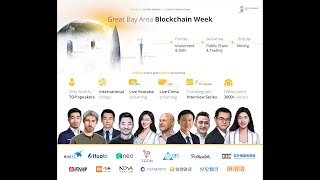
Video of Cointelegraph China Blockchain Week (Day 1) containing interviews and panel discussions with industry figures (Andrew Tang, Jianing Yu, Mike Novogratz, Stani Kulechov, others). Topics include DeFi, CBDCs (DCEP), enterprise and public blockchains, mining, BSN, and investment trends in crypto. Speakers discuss technology adoption, regulation, user experience, and ecosystem developments.
Chapters
Hi, Andy Tang. Nice to meet you.
Hi.
It's very honored to have you be our guest to the summit. And so would you please say hi to everybody and make yourself a short description?
Hi, good morning, good afternoon, wherever you are. My name is Andy Tang. I'm a partner at the Draper Venture Fund. So we have both traditional US dollar equity funds. We also have crypto funds that invest in blockchain projects. And I've been with the firm since 2006.
Okay, we have five questions, and the first one is defi seems to be leading the next bar run. Are crypto funds interested in investing in Defi projects? What are some of the risks involved in investing in these projects?
Yeah, so we have, we've been investing in the blockchain space since the late 2013 timeframe. Started with bitcoin, and then we got into many different public chains and now we're spending more time on the application side. So Defi is for sure a natural evolution of blockchain. I think blockchain is such a horizontal technology that you could apply to many different sectors. The most obvious sector most people think about is finance. Because people think of bitcoin, great, it's a form of payment. People think of now Ethereum, it's a smart contract, and people think about Tezos, it's payment, it's smart contract, it's governance. So it's evolving and you could apply these things to different things and finance seems to be the most obvious and some people call it low hanging fruit, the most natural first application. But sometimes I think if blockchain is like Internet, it's a horizontal technology. If you look at Internet, Internet changed different industries and it took different amount of time for different industries to adopt Internet. The first industry to adopt Internet was telecom, and then it's media, and then it's retail commerce, and then you have corporate productivity and then you have share economy and then you have financial services. So financial services is actually one of the later ones to adopt Internet. In other words, in year 2000, you have all kinds of Internet companies. You have telecom Internet companies, you have E commerce Internet companies, you have. Media Internet companies, you have finance Internet companies. And guess what? It took finance Internet companies the longest to reach consumers. Why? Because it's a sensitive sector. Governments regulate, I don't care if it's China, us, eu, Japan, right? Retail, E commerce, not regulated anywhere on earth. So. So it became one of the first area for Internet to adopt. So that's just now general knowledge, facts. If you apply that to blockchain and you Say because of the technical nature of blockchain, it seems like defi finance is the first sector to adopt. I would agree with that.
Okay, so as a big venture capital, what are some of the enterprise blockchain projects you are looking into investing? What are some of the criteria you will consider when interesting?
So as you know, we look everything, right? We look at, we look at blockchain. First of all, we are strong advocates of blockchain. Everything from non fungible tokens, defi payment, stablecoins. We look at everything, right? What we realize is that this is such a horizontal technology. We're listening to what the market is telling us, where to go. We don't know. All we could do is we back good people with strong technology, we partner with them and we let the market decide. Okay, so this is what the consumers want, this is what the enterprise want. So at the moment we have backed enterprise applications like Vechain is one of our most popular investment. Great founding team, great application, great customer set and have a very good value proposition for everybody. We think, you know, for supply chain, they are the best, right? We're also investors in Tezos, they are in many different applications. Payment, non fungible tokens, smart contract, everything. We're also investors in Metaverse, another great public chain. You know, very versatile, you know, smart contract, smart asset management. You know, we're also investor in what I call the picks and shovel companies, right? Basically I don't care which blockchain company wins, I think the exchanges are going to win. So coinbase, we're investor in ledger, right? So those are two investments we have made that essentially makes sure they power the blockchain. So we're very active, we're looking everywhere. One area I think we as a blockchain community need to solve this year in 2020 is that the user interface has to be better. I think we have some great blockchain projects that get engineers like myself very excited. Very excited. But it takes login long passwords, downloading this, downloading that, writing code. That stuff is not going to fly, right? That is great for proof of concept for early adopters, but for blockchain technology to become a mainstream technology like Internet, we are still waiting for the Mozilla browser or actually it's the Netscape browser or the NCSA browser. Internet by itself is actually useful but very difficult for common people to access, right? So Internet truly took off when good browsers came on board Netscape or ncsa, right? So I'm still waiting for that. It's not clear to me what that is in blockchain, it could be as simple as just a great user interface that sits on top of all public chains. All these chains are very powerful. You could complain. Okay, so Ethereum, the transaction is too low. Bitcoin, transaction cost is too expensive. But they all serve a purpose, right? Bitcoin, very expensive. But for large transactions it's the safest. So if I want to wire a million dollars, I use Bitcoin. If I wanted to pay somebody, I might use Open Node, another one of our investments. I use Tezos. It's a nice payment, it's much cheaper. If I want to write an insurance policy, I might use Tezos. You know, I could use Smart Contract and I could have people vote to change the governance.
Right.
But you could say all of these are somewhat specialized in a few areas. So maybe we need something that sits on top, like a browser. That's common for my parents, let's say 70, 80 years old. They shouldn't know about blockchain technology. They should just know that when they use this special application, they could get cheaper insurance rates, they could get cheaper payment terms. They can look up information for free on the food that they buy or the car they drive, where the production happened, these things. It should deliver a very tangible benefit to the end users without them having to become a blockchain expert.
How important is it for regulators to step in, in regulating the whole crypto space? Where are we heading to in terms of regulation?
Yeah, you know, the founding fathers of blockchain, we don't need to who it is, but basically, let's say the first 100 people who started blockchain crypto movement, right. I think their spirit is they want to drive a self governing economy, right. For better efficiency. So, so my suggestion to regulators, always regulate to get rid of the bad actors, but allow the community to self regulate first. So for instance, fraud 50 years ago was very bad fraud. Today are very different. There are certain things on the blockchain, you know, you have bad actors doing bad things very quickly. Community will know, all right, that's a bad actor. We don't want him to do that. Right. We don't want to support him. And it naturally kicks out the bad actors. Right? So I think regulators should wait and see where some of the things the community themselves cannot do it. Right. They should come in and regulate.
Right?
So I would say that's probably the best approach. I mean at the moment I feel like if we could have less regulation to allow the space to grow up a little bit, it's actually better. Right. The traditional idea that regulator need to protect the retail investors, I feel like that is, that might be too much babysitting. Why not let the retail investors protect themselves? Because information is all available. So it's about education, it's about disclosure. Make sure all the blockchain people disclose all the information and let the retail let the institutions figure out themselves. Now if the blockchain projects provide fake information, okay, go after them, right? You should go after them because that I think it's a good example. So I think things are. The world is changing and I hope regulators can adopt a new view and say that sometimes it's better to let retail investors to learn things on their own and let the community get rid of the bad guys because it's very difficult to keep protecting the investors and don't let make a decision for them because as you are making a decision for investors, you're kind of playing God. The problem playing God is that you may inadvertently keep a very good project, a very good investment opportunity away from the retail investors you're trying to protect. What if the regulator said, hey, I think selling products on the Internet or selling books on the Internet sounds like a scam, maybe you shouldn't do it. There would have been no Amazon. That would have been a big mistake. So with blockchain, we don't know what the blockchain Amazon looks like. Why not let the market and let the entrepreneur try it and figure it out. Of course, if some entrepreneurs lie to people online, regulators should come in, catch them and put them in jail, no problem. But other than that, I think you just let the market decide what the consumers want.
So the last question, as China and the USA's attention rises, business firms exporting and importing to finance and currency exchanges are being affected. Is technology investment being compromised post coronavirus as well? If so, how is being affected? And how can investors deal with the changes?
I was born in Taiwan. I moved to the US when I was 13 years old. I moved to China in 2007 to start a venture fund, the Drip of Dragon Fund in China. We've been there for the last 13 years. I've seen the up and down. 2007 was very hot and in fact it was very difficult to get US dollars into China. But now we have problem getting US dollars out. I think this kind of tension comes in cycles. Granted, right now two very large economy in the world, there's no way they could be decoupled. No way. Right now it's like this. Maybe you separate a little bit but eventually it comes back. So it goes in cycles. So I think the key is for what we do is we add value to US companies wanting to go sell products in China and we add value to Chinese companies that want to sell products in the us. So fundamentally we believe these two types of companies will require our service. We provide capital, we provide service to help them. So we believe that that fundamentally is not going to change. It may be tougher this year than 2007, but I actually think. For our fund this is the best time to invest in cross border companies. They're actually more similar today than 2007. When I first went to China, you see many examples. 2007 you need to have two search engines, Baidu and Google, they're different today. Like you know TikTok Douyin, right? You have Instagram, you have YouTube. These things are kind of merging together, all kinds of things. These things will come and go. At the end I think it's the consumers getting what they want. And rest assured, right, today's 15 year old is going to be tomorrow's leader. Right? And these 15 year olds have more in common in different countries than they want to fight. Right. So I think the world is a better place and what we're seeing here is a transient effect.
Okay, welcome, welcome, welcome. It's our honor to invite George Yu to be our guest to join our cointelegraph China summit. So George Yu. So would you please say hi to everybody and make yourself short description.
Okay, no problem. Okay. Hello everyone. It's my pleasure to participate this program and my name is Yujiani and you.
Can call me George.
Nowadays I'm the president of Huang University. Hubin University is a China educational institute focused on blockchain. We study and educate the distribute business model, digital finance and blockchain technology and its applications. I'm really glad to have a chance to share my opinion about GCEP and some new trend of digital. Call me in China with everyone.
We are going to focus on DCEP topic and we're going to have five questions. Okay though, so let's go into the first one. The first question is using cash is not the mainstream choice after the outbreak of coronavirus. Do you agree with the opinion that the pandemic will speed a shift towards digital payment around the world? Especially cbdc? So. And what are the advantage of central bank digital currency over traditional forms of money? Okay, please.
Okay, thank you. That's a very good question. The COVID19 breakout manage the process of global CBDC according to a report of titled COVID19 cash and the future payment issued by the bank for International Settlements point out that number of Internet search for cash and virus hit a high record and COVID 19 has aroused public concern about the separate virus through the cache. At the same time, BS also concluded that the flexible and easily accessible central bank payments infrastructure may emerge suddenly such as the central bank digital currency. Of course this is the only direct sensitive and there are some more fundamental reasons for the acceleration of CBDC during the pandemic. Many government issue inclusive cash subsidies to people. In this process, many country government realize using traditional paper money or checks in kind of is a kind of low efficiency, high cost and high risk payment method. But most of countries do not have electronic payment system commonly used in the society which also increase the demand for digital currency in long term. The digital currency can also help the central bank better manage social credit and formulate rules for currencies accumulation. In the future, the pace of digital transformation in all industries will accelerate and the contactless business model will become mainstream. In my opinion, the development of digital economy requires digital currency for these reasons. First, comparing with the paper money and bank account based payment method, digital currency can achieve digital deeper integration with the Internet online business which can effectively reduce the cost and risk of company's online business financial management. Second, the payment efficiency and cost of digital currency will be significantly better than traditional payment method especially in the field of cross border payment which will be helpful for international Internet business. Third, digital currency have programmable properties which enable automate settlement and fully automate transaction modes which are similar to DEFI but applicable to all industries, thus reducing credit risk, optimizing business process and enhancing economy efficiency. Okay, that's all for this question.
So the number two question is since 2019 PBoC released CBDC called DCEP in China technology and pilot progress frequently. In your opinion, why the Central bank of China attached so much importance to the development of dcep and what are the notable feature of dcep? What problems does the People's bank of China hope to solve with dcep?
Okay, that's very important question. DCEP is digital currency and electronic payment instrument in China with the value characters that exactly the same fundamental attributes as paper money expect in the digital form. In my opinion, there are five main reasons for China to issue DCEP. First, to meet the challenge of new technologies in 5G era, self driving car IoT device and the industrial Internet will be widely used and the demand for transaction between things without human involvement will increase which cannot be met by the current currency and Financial system. The currency must be upgraded to meet the potential demand for these scenarios. According to the logic, the Internet of Things and DCP could be the perfect commendation in the future. Each smart hardware will have his own digital identity and digital wallet. The transaction mechanism must be decentralized, centralized and programmable. And the corresponding payment method should be real time clean. Therefore, it is likely to be based on the blockchain and digital currency. Second, reduce series of costs related to current currency circulation. As of December 2019, China's circulating AM0 was almost 8 trillion up to 5% year on year. The cost of printing, issuing and the circulating currency are very high as well the cost of processing inventory delivery by financial institute are as high are very high. Third, promote financial inclusion and protect user privacy. DCEP will bring a richer choice for users who want to use the very advanced payment method, Especially for the people who are not willing to use the smartphone or smart device. And this can ensure those people who are poor or less educated have opportunity to use the efficient and convenient electronic payment service. In addition, comparing to mobile payment not very popular China DCP can better avoid personal information leakage and effectively provide protect privacy. Fourth, the transparency of economic transaction will be enhanced reducing money laundering and other illegal and or criminal activities. The traceability and programmability of digital currency can allow central bank to track and monitor circulation of digital currency after insurance. Fifth, how internationalization of the Chinese Yuan the popularity of DCEP has positive impact on the internationalization of Chinese Yuan providing digital form of Chinese Yuan cash and simpler, more convenient and high efficient cross border payment system based on the digital currency and foreign traveler can use CCP more efficiently and without using through a kind of the digital wallet. Although it's really difficult for them to use the mobile payment like Alipay or WeChat Pay nowadays. So to conclude, DCP is actually a future oriented form of currency that hopes to solve the serious financial challenge and brought about new technologies.
Wow. Thank you. Thank you. Thank you for all these good points that made me think that DCEP really make the future. Thank you. And the third question is what is the relationship between CBDC and blockchain technology? What are the new opportunities will the blockchain has in the CBDC area? Would you share your opinion on the possibility of combining CBDC with blockchain in the future and how to combine it? Thank you.
DCEP does not completely use blockchain technology but brought some key technical elements. There's a high possibility that utxo, which means unspent transaction output mode from Bitcoin may be used on TCP model and.
Other.
Elements like smart contract technology are possible used but in fact from prospect of internal management. Although some distributed system characters may be used inside the bank but if we outlook locate from the outside of the central bank DCP system is actually centralized system instead of a distribute or blockchain system. So that's what we should pay attention to. However, in previous statement of the central bank officers it is emphasized that management mode of DCEP will be kind of the two tier operating system with the second tier that is the commercial bank and other commercial institute they exchanging digital currency with end users such as resident and business and the adoption of the technology at Tier 2 could be kind of used blockchain system or centralized.
The.
Central bank do not see what should.
Be.
What kind of technology should you? MADOS was called the kind of the technology mutual and as a result, the second tier commercial organizations may choose to exchange DCP on blockchain basis which means that on chain fuel currency in China may merge in the future. And all of this will bring new opportunities to blockchain industry. DCEP can use the advantage of blockchain distributed ledgers to improve the data and system security for confirmation and inquiry. At the same time, it provides an interface in conjunction with more blockchain related applications. At present, the problem with some blockchain system, especially some alliance blockchain system, that is they can indeed provide distributed accounting platform, but it only has function that can provide information requests such as electronic evidence storage or kind of the traceability of food or medicine or so on. However, because there's no way in alliance TRIM system to effectively realize the transfer of value, it is also difficult to introduce a stable coin system recognized by all the parties parties. And so it is hard to effectively realize the function of value transmission. But with the dcp, when the DCP widely used, the problem may slow DCEP will buckle key link in blockchain applications allowing blockchain, especially some alliance blockchain projects to upgrade from the current information shortage function to value transfer function which will drive full explosion of the blockchain applications. That's what we expect.
What are the typical applications of DCEP in the future? What changes will it bring to the society economy after being combined with the blockchain? Yeah, just follow up with the up question.
Okay, thank you. That's very important. The launch of China's DCEP will completely reshape the financial industry and realize the kind of fusion of capital flow and information flow in the true sense, which will accelerate the industry speed to Transfer toward to a new business model called kind of the new intelligent economy model. Let's take example. I will take the poverty elevation as an example. The tracking of fund flow from the current property elevation authorities is mainly to summarize the payment required in different commercial banks to analyze the link and drive to the flow of the funds. But in the DCEP error the central bank can authorize to open a tracking function to related funds to the poverty alleviation department through programmable script of the digital currency stream. No need to link more commercial bank entirely. If the almonds blockchain are added from the insurer from the issuance of DCEP to circulation between all level of governments and the use of specific property elevation project as well as the specific expenses of poor household all chain will be clearly reflect on blockchain. So DCEP and blockchain will completely change the model of public warfare and public service. Obviously the business model will change as well. There are so many examples but I think the effect will be very significant. So I would like to end this question. But people everyone can imagine how to use DCEP in your own industry. Thank you.
Awesome. Awesome. And the Last question is third party payment platforms such as WeChat, Pay and Ali has extremely large users and very popular in China, you know and do you agree? Do you think those payment platform will become competitor with DCEP in the future? After DCEP gets widely used, will you believe DCEP and third party payment platform will co exist?
Okay, okay, okay. That's a very interesting topic and I think this question confuses a lot of people. Let me explain this question. DCEP is the failed currency and WeChat Pay and Alipay are the kind of payment method so they have different effectiveness and function. However, the disadvantage of the electronic payment or the mobile payment are also obvious. The current mobile payment is in existing bank account is based on the kind of the tight coupling which often cause leakage of personal privacy information and it could not meet the public demand for anonymous payment. Beside, mobile payments platform can only cover part of transaction scenarios. For example the C2C transfer and C2B small amount of payment. But scenarios such as B2C salary payment or B2B transaction settlement cannot be covered by the current mobile payment system. DCEP can solve the bow mentioned problem. DCEP and mobile payment platform have their own advantage and disadvantage in different use scenarios. You see the users will different user with different needs may choose different payment method in the future. DCEP and mobile payment platform may coexisting in the in the next few years. But I think in the long run they will gradually merge, gather to one system. Okay, that's all for this question. Thank you.
So hi everyone, this is Kevin. I'm from Conscience Lab. I'm the founding partner of Conscience Lab. Also I'm the co founder of Nova Club. It's very my pleasure and very happy to be here to join the Cointech graphs, big events. Beside me is the partner of Defund, David Young. Please say hi. Yeah. Okay, so we are also belongs to the. We are both belongs to the Nova Club. So Nova Club is actually a global crypto investment institutions alliance. So there is Currently there is 25 institutions in this Nova Clubs. So later on I'm going to introduce each of them in here and they are going to share their insights. So from my side, from consensus lab side. So we are basically institution for crypto. So I'm going to only share like three numbers to you. Okay, Three items actually the first one is about the total investment. So talking about the first half of 2020. So the total investment number for the projects, for crypto projects is around 156 projects globally. And when we are talking about the investment amount, so it's around US$1.5 billion. So it's to compare to the traditional projects. Okay, maybe it's minor, but it's growing. For the crypto side on the second point I'm going to talking about what is the favorite projects chased by the institutions. So we have to say that top two, the first one is almost like half of them is like a 46 percentage which is exchanges. So still institutions keep on investing. Exchanges, Exchange, exchange, exchange like future exchange, sport exchange, stablecoin exchange, et cetera. And the second place is about assess management which is 21%. So assess management is like we are managing the assets. So there's a lot of investment in that site. And there is one which is very interesting is DeFi, which is only 5% in the first half of the year. But I'm sure it will increase sharply in the second half of the year. Okay. And the third one I want to share is comparing to the western country and the eastern countries. So for the United States, okay, it has around 46% of the investment happened in the western countries, especially in U.S. but China is leading the second place. I keep on going. So China have a 22% of the investment here. So in summarize, I want to say three. First is for the investment side, I have to say the western country is still leading the investment as well as technology. And this Trend is not going to change within this year. I do hope Chinese is going to catch up some of them. But still we can see like, define like polka, like Cosmos, etc. Like Filecoin, IBFs, these kind of things is still coming from the western countries. So and secondly is very luckily we can see that is industrializing for the blockchain. So for the new ball startups, those blockchain companies, they're starting to make the applications for the real practical use. And on the other side for the traditional companies, they're starting to using blockchain to build their traditional business. So it's coming to the all blockchain world already. And the last thing, but not worse is we are doing a globalization things. So which means from the western countries they're providing more technology leading and more capital funds investing and from the eastern, like for example, especially China, they're providing more industrializing things. So it becomes more and more useful in this global market. So that's all of my sharing. So I'm going to give it to David Young from Defi. So I'm going to hear what he thinks about. I think he most probably can talking about something about Defi. I think. Yeah, please, yeah. If we see Defi as a car, the stablecoin is a gas and the lending system is the engine and DAX is a gearbox. And last year we see the locked value, total lock value of Defi increased gradually to around 1000 million dollars. And this year March 12th it drops sharply to around 4 million. While in the next three months it recovers soon and after July it's increased sharply to around 10 million and it's still going on. And another thing is yield farming. I think yield farming is one of the little formal tricks of Defi. And as we see most of the users, main users of yield farming are still the, are still the arbitrary traders. Sorry, I need my little paper. Yeah. So they are trying to gain the reward from the liquid pool. And another thing is that I think CEFI and Defi, they are not enemies, they are even not competitors and they are working more and more closely to build ecosystem, a total ecosystem of cryptocurrency. And they work together to move to accelerate the process of transformation from the fiat fiat system to the cryptocurrency. Yes, I think that's almost all what I want to say. Thank you. Okay, thank you, David. Thank you.
Hello guys, this is Yu Shan from Water Drip Capital. I'm the founding partner of Water Drip Capital. Water Drip Capital is a China based token fund that is focusing on blockchain projects investing Also Water Drip Capital is the founding member of Naha Club. So today I'm very glad to be here to share some viewpoints about public blockchain or that is called permissionless blockchain. So we know that Ethereum is a key player of this area, especially for the coming Ethereum 2.0 and Ethereum 2.0 is going to deliver a lot of new features. For example the sharding, the PoS consensus, the new virtual machine which is called Ethereum virtual machine which is called Ethereum Webassembly and also some other new economy mechanisms and rewarding mechanisms. However, Ethereum 2.0 has not been verified to be successful. So if we ask ourselves will Ethereum be like MySpace? We know MySpace once it dominated the whole world but it was crushed by other projects or will Ethereum be like Apple, it go back to the top after a few years, disappointing results? Or will Ethereum continue to lead the whole world until the end? So I don't have the answer for all of these questions, but I do believe that it's worth mentioning a few of the challengers or competitors of Ethereum. In my opinion the biggest challenger of Ethereum is Polkadot. Not to mention the contribution of Gavin Wood to Polkadot. Just look at the Polkadot ecosystem even before the Mainnet is up you can find almost everything that Etherm. You can find it here on Polkadot. There are Stablecoin, there are Dex, there are Defi and so on. So I just want to name a few projects but you can search more details on Internet. The first project I want to mention is Darwinia. It is a substrate based cross chain bridging blockchain that is focusing on games and nft. And the second product is called Phala. Phala is also a substitute based product that is for protecting privacy of data and also it is around trusted environment TEE technology. A third project is called bfrost. Bfrost basically provides a series of defi functions especially for these staking users. They give those users more options for staking and Mantra Dao. Mantra Dao is also a defi project on Polkadot. So it has many functions like lending, like staking, like arbitrage and so on. Also for the last product is Crust. Crust is a product, it is for storage network just like ipfs. So all of this product they are very close to Mainnet. I believe that they will greatly enrich the whole ecosystem of Polkadot. And of course Polkadot is absolutely not the only challenger of Ethereum 2.0. There are many other new project that are doing better than Ethereum at least on some points. For example Casper Labs. Casper Labs is also a new project that has achieved CASPer CBC protocol. That is a protocol that was designed to be achieved by Ethereum in the coming years. But Casper Lab has already achieved it and also Casper Lab provided a solution for DAPP of Ethereum so those developers can easily migrate their DAPP from Ethereum to Casplabs blockchain. So that is seeing if Ethereum 2.0 is delayed again. So it will got a lot of pressure because we can expect that a lot of developers might migrate their DAPPS from Etherm to Casper Labs. So yeah, that's amazing. This is all what I want to share. So yeah, I'll give microphone back to Kevin. So thank you very much. Thank you everyone. Hope to see you again.
Gary Gabri. Yeah, the very famous miner in China. Okay. So he's going to share some of the mining experience.
Yeah.
All right, thanks. Thanks Kevin. My name is Gabriel Shah, I'm from Spark Capital. Spark Capital is one of I think one of the biggest mining fund in China. We are focused in mining industry no matter like ASIC or hard drive mining or GPU mining. So since we don't have the that much time today so I just have a short introduce about the mining in the market and mining industry in China right now. So as we know this is like 30% hash rate. This is 30% harsh rate of the whole world is based in China and this is 30% of the harsh rate in China and based in Sichuan. Basically the reason is there's lot of cheap electricities. Right. So after the bitcoin offering, the bitcoin the production has reduced to half. But as the raining season comes the electrics is the price is down to about 3 cents. So this is still a lot of hash rate. At the end of June the harsh rate goes down to about 30% but after that it's because the raining season comes. So the harsh rate comes back to the game. But when I guess that's a prediction from if going back go to end of October and then the winter come and the electric price is going to raise again. So I think the harsh rate go down back again. So it's really significant for mining industry. And the thing is the miner right now is going to take two years to break even. So that's really important to the early miners. Imagine that for some people they experienced for three months breakeven, six months breakeven or to one year break even right now. People need to take two years to break even. So for early miners they're looking for some new way to invest and a new area to mine to new coin to mine. So right now I think that's one of the reasons why farecoin mining and POC mining is really you know popular right now in like extremely hot. POC is very hot. Yeah. And one fire coin and MassNet. Yeah we all know MassNet very famous. Yeah. Mass option that Mass. MassNet. Yeah. So I think hard drive maybe because the bitcoin halving so hard drive mining possibly have a very big chance in the future because anyway you won't be take longer than two years to procure. So yeah we have invest in this hard drive mining area and we are really looking for the potential of this area. So yeah, that's pretty much it. Thanks for taking your time. Attend the cointelegraph China and cointelegraph event here. Thank you. Thanks. Really really appreciate it. So we've been collecting few questions from our communities and I really want to have your voices here. So my first question is what's new goal in the I mean year to come? Tell us about the big plan. Yeah, the new vision is very simple. We want to be the open network for smart economy and we will be focusing on digital assets. But to be more specific for the next year for 2020 and 2021 our goal from the technical perspective we would love to launch Nio 3, the new version of Nio in the next six months. So that's the our technical goal and from a business perspective we would like to deeper our understanding of tokenization and we would like to work out a framework to do tokenization in different crypto friendly jurisdictions. So that's two main goals of nio. Okay, sounds awesome. So my following questions as we also had a guest here talking about bsm. So I heard like NIO recently just announced the joint effort force with BSN Network. Right. So just want to ask. We see the blockchain mainstream adoption still a problem so could you just elaborate more on what they. I mean the main challenges in preventing the blockchain adoption in the mainstream. There are too many challenges to mention. I don't think we have enough time to go through every detail of them. My understanding of bsn, the blockchain based service network is they are like the AWS for blockchain, like AWS for Internet. BSN is the cloud computing platform for blockchain. So they are a blockchain as a service platform. They will simplify the deployment and development of blockchain and smart contracts, decentralized applications to a new level. So I believe the launch of BSN is an effort especially from China. So the Chinese developers and Asian Pacific developers have a better infrastructure to run their decentralized applications in a, in a more compliant way. So BSN is initiated by some major players in the Chinese economy. You can say that they're initiated by the China Reform and Development Commission, they're initiated by China Mobile, the biggest mobile network operator and also initiated by China Union Pay. So that's the biggest settlement network within China and now they're expanding globally. So these are huge, huge developers in the Chinese economy and I think that they're joining into the BSN will be a very positive sign to show the world that the Chinese government, the Chinese entrepreneurs are very serious about the blockchain industry. Yeah, I've heard lots of things about bsn but very happy to know like Nio also part of this awesome competition. It's our glad, it's our pleasure to, to join, to join them.
Yeah.
And another challenge, I'm. I'm thinking like as Tencent and Alibaba they also tapping into blockchain industry. I mean they are more focusing on technology side. Right. So what's your perspective like the blockchain technology company like Nio in China to compact compete with those companies? I mean they are. That's a very, very good question. I've been asked a lot recently. To be frank. I don't think Nio and Tencent Alibaba are competitors. I think Tencent and Alibaba probably are competitors, but Nio is not their competitors because we're focusing, we're dealing with different market with different approaches. Tencent and Alibaba are the two biggest Internet giant in China. They are holding a lot of financial licenses and they have a lot of burdens on their shoulders. So I think they are, I think Tencent, Alibaba and maybe Nio. I think the final goal could be similar but we started from different starting point although we're aiming at the same direction but we will work through a different route. So I think they will be more enterprise focused, they will utilize their existing ecosystem and they were trying to find some middle ground between their current centralized business model with a decentralized or distributed ledger model. But for neo we're different. We are a open network like I mentioned before. So open means transparent means permissionless, so everyone can join our network. But for Tencent and Alibaba they are more focused on the permission ledger. So that's more Emphasized on the the enterprise market. So I think in the future we may meet at some middle point. But we are coming from different directions. Great. But we see lots of players here also very good for market, right? As long as the tencent Alibaba here playing with us. I mean it seems like a mainstream thing, right? They are here with us. So my following question is. I mean many plans, any plan for eel to jump into some defi projects. I mean defi is a new formal as I would say thousands of projects may be on the way called so called defi project. So what's your perspective? I agree with you that they are formal within defi thing. It's more or less like the ICO formal in the past. But I'm not saying that ICU is first of all ICU is banned in China. It's illegal in China. So you should not do ICU in China. But there are some jurisdictions they have so called regulated or compliant ICU where you can register with their security insurance authorities to do a ICU or IXO or STO similar things. There are many speculative aspect of ICU but there are also very positive new paradigm model or paradigm spirit in the conduct of ico. So I think that's also very similar with defy. Although there are formal factors in defy, there are very speculative factors in defy. But it also demonstrates a new way to build a financial products integrated like a Lego style financial products. So my understanding of define is it's highly speculative but it has a more symbolic meaning for the financial industry. So half, Half. Okay, so what NIO is doing to also involve in defi industry. You have any plans? Actually NIO had been doing define very very early. We have two decentralized exchange running on top of new. One is called nash, the other one is called switchu. They are dealing millions of million millions dollars of transactions. So there are quite popular within the blockchain industry. But we are missing some essential pieces like a really working stablecoin, like a automatic market maker, like synthetic assets. So these are the missing pieces of define on Nio. And for the next six months or so we will be we will be attacking those factors. Great, keep tuned. So NIO already been the early player in defi industry, right? Since a while. So my next question is what are some of the most important applications you think in neo? But you mentioned before, right? Just two applications. But can you point out more so that people can know more about it application on LEO and why give us reasons why you think they are very important applications? Yeah, I, I think we're still years away from mass adoption. Okay, so if you look at, if you look at those defined applications on, on Ethereum, their, their combined daily active user number is around 8,000. So that's very, very small comparing to any Internet companies. So we're still quite early for nio. We still lack of many essential elements for the to be the most popular digital asset protocol. So we were focusing on building those elements. Like I said, automatic market maker, a workable stablecoin and also synthetic assets and things like that. And also from the technical or infrastructural perspective, we need a decentralized or digital identity. So Neo ID with new 3 is a digital identity solution for Nio. And we also need distributed storage and we have new FS for that. Okay, so these are, it's not exactly applications, it's infrastructure and applications that we are, we're looking to bring on to Neo 3. Great. So sounds like NIO ecosystem already. Very, very bring lots of applications. We're working on it. How many? I mean, tell us the numbers just to, to impress people. How many real communities are playing community members in the NEO ecosystem? The honest. Some people say the honest answer is I don't know. I think there it's, it's somewhere between half a million to a million. Is this smallest? I guess, I don't know. Say some big numbers because it's a decentralized, decentralized thing. It's difficult to calculate. I think it's somewhere between half a million to a million. And we have some developer communities that are sponsored or given grant by NIO Foundation. We have around a dozen of them and they're located in different countries. I would say about 10 to 15% of them are from China and the other 85 or 90% are outside of China. And our working language is English and people use GitHub to distributely develop the Neo3 protocol. So it's a highly global project, although it's initiated from China. Awesome. Very happy to have your voices and I think personally I've learned a lot about NEO right now. Thank you. And I'm very happy to have talk with you. Thank you. Thank you again for your time. Thank you. Thank you. Good talk to you.
Welcome to our interview with Cointap for China. So could you tell us a bit about your investment portfolio? So how did you first get into cryptocurrency? What made you move from formal partner at Goldman Sachs to become a savvy crypto and blockchain investor?
Sure. So I spent most of My career as a macroeconomic investor. So macro investors try to bet on big trends in currencies and interest rates in equity markets, usually based on macroeconomic fundamentals of the different countries they look at. And so I lived in Hong Kong for seven years back then the Asian crisis. So we bet lots on the Asian currencies, first appreciating and then appreciating. Very familiar with the Chinese market. And in 2012, one of my partners called me and asked me if I knew what Bitcoin was. And I hadn't heard of it. So I googled it. And at the time we had already had the great financial crisis and we were in the European financial crises and central banks had moved into very aggressive monetary easing, like quantitative easing. QE2 was just happening. And I read about Bitcoin and thought, this is a really interesting technology and there are groups that really support it. You know, people that were sick of the government that said, enough, I don't trust the government anymore. People that wanted to live off the grid cipher libertarians. And so I thought, well, it's getting a constituency. And at that point the Chinese had started buying it. And having lived in Asia, I know just how much the Chinese love to gamble. And so I bought it originally as a purely speculative bet. It was trading around $96. And as it started going up, I made the mistake maybe of talking about it publicly. And next thing you know, I was on the COVID of the Financial Times predicting bitcoin would go to a thousand. And ever since then, it become kind of the, the guy, the news, you know, the newscast called to ask me about bitcoin. And so because of it I had to learn a lot more because you don't want to be on TV or in front of an audience and look stupid. And so as I researched it more and more the bigger appeal it, it showed up with. But it really wasn't until 2015 with Ethereum, I actually walked into my ex college roommate Joe Lubin's office called Consensus, and he was one of the original founders of the Ethereum project. And then I really realized that the group at the core of building this were really revolutionary, that they wanted to kind of disrupt everything. And that there was such a spirit, a revolutionary spirit, a systems change spirit of the group that it got me very excited. I bought a bunch of Ethereum and started making lots of investments in the ecosystem, in exchanges, in wallets, in custody businesses, in new protocols, and watched the excitement of the possibility of future change happened in 2000, 16, 17, where we had this crazy bubble. And, you know, bubbles happen around things that usually change the way we live in life, right? The railroad bubble happened and railroads changed the way we live. The Internet bubble happened, and man, the Internet's changed everything about our lives. There's not a thing in your life that the Internet hasn't affected. That didn't exist only 20 years ago. The Internet bubble was 1999. The prices were crazy. They collapsed 75, 80, 90%. But 20 years later, the Internet changed everything. And I think the same is going to be true with crypto. We had a stupid bubble in 17 where bad projects got priced at crazy prices, and then we had a crash. And now we have real work that's been done now. 10 years in Bitcoin, 5 years in Ethereum, or 11 years in Bitcoin. And you're starting to see the fruits of that. It's exciting because this place we're in in the world right now, financially with COVID with giant budget deficits everywhere, with deteriorating relationship between countries like China and the US which is sad to me, but it's the reality. All of that plays into the narrative of why crypto is important. And so that's kind of been the journey. I'm more bullish crypto today than I ever have been. But it was a long answer to your question.
Fantastic. That's what an exciting story to hear. You got into the bitcoin very early as an investor first, but actually realize later that it has full potential, revolutionizing everything. I would like to follow up on that question. How would you see the current financial crisis we're in right now? As you said, crypto is becoming much more important than ever before. In your own personal opinion as well. But for me personally, I still see majority of the people globally, they don't really recognize the potential of crypto. And why do you think what's missing?
Let's separate for a second. Listen, change takes a long time to start with. If you think about the Internet revolution. The Internet revolution, we didn't have the iPhone right until 2000, I think 6 didn't have Facebook till 2005 or 2006, even though you had the bubble in 1999. So six years after the bubble popped, you started getting the products that consumers used. You couldn't watch a movie on the Internet. You should dial. You're too young to remember this, but you would dial in and go, E. That would be your Internet connection, you know, or it would say buffering. And you would never get anything. So it wasn't until we had high speed Internet that you could watch movies on devices. And so it took a long time. I think you can separate crypto right now into two buckets. There's bitcoin, which is already a finished product. Bitcoin as a digital store of wealth, as a, a digital gold, it doesn't have to change, it works. And so you're going to see fast adoption there. And you're seeing it right. There's always already over 100 million people on the planet that own at least a piece of a bitcoin that's the single most distributed security ever. And so it's an amazing social experiment in some ways, right? Bitcoin gets its value because you and I say its value. It's not the code, right? Satoshi's code. We could relaunch it, we could fork it and call it Anastasia Coin and maybe it wouldn't be worth so much. It's valuable because of the social construct, because we say it is. And that lane, that rocket ship is taking off and I think it's going to continue to expand. It's hard to buy still. If you're young like you, it's not you got it on your phone, on one of your apps and you buy it. But if you're 50 to 80 and you're not a coinbase user or a wobe user, if you don't have a, you know, the agility around your smartphone that the younger kids do, you want to call your broker, they don't have it yet. And so the next few years is all about more and more on ramps, more and more adoption. And I'm seeing that we're seeing hedge funds in the United States buy it, right? Paul Tudor Jones, one of the most famous hedge fund managers, recently bought it and put out a. And he not only bought it, but he bought a new fund. And our business, we're seeing lots of new customers. And so I'm very optimistic that bitcoin the future is now the rest of crypto. You know, the Ethereum project is growing fast, but it's not really going to be ready for scalability for two to three, four more years. Just like it took five, six, seven years in the Internet to get real products that you use. This is a 10 year journey where everything becomes put on a blockchain, right? Decentralized finance defi right now it's a fascinating little sandbox of experimentation, but I would bet in five or ten years the whole financial system might be built on defi rails. It's fascinating that we now have a decentralized spot interest rate market with compound. It's so early, working out the kinks, how it works, plugging people into it. And so I look at everything outside of bitcoin as a venture bet as almost like venture capital. Got to be willing to lose it. And if it works, it's going to be very, very big returns. And so I separate, separate the world in kind of two boxes. Listen, so the macroeconomic environment we're in right now is like nothing any of us have ever seen, right? Last month the United States printed more dollars than they did in the first 200 years of its existence in a month. And so we have this money supply accelerating at a rate we've never seen. And it might be appropriate given Covid, but it's putting us in an environment where we just don't know, like the future becomes more uncertain. And so why the price of Bitcoin is going up is the possibility. And the probability of us having much higher inflation than we ever thought we would is getting higher. That doesn't mean we will have it, it doesn't mean it's the base case, but the chance of it happening is getting higher. The possibility that the US won't be the reserve currency in five years or 10 years was unheard of a few years ago. It's getting higher. The possibility we could have an election where Donald Trump loses and says I don't believe the results and I'm not going to leave. That's not the base case, but there's a possibility of it. And if you had told me that four years ago or eight years ago, I would never have believed you. So the possibilities of really dramatic bad outcomes is a lot higher. We've had budget deficits that are, you know, we had a GDP number of -36% in the United States last year was the biggest drop in GDP ever. Yet we have stock markets on the all time high because the governments are putting so much money into the system. And so when you put all that together, it's a perfect tailwind for bitcoin and for crypto.
Okay, regarding the defi that you mentioned earlier, when did you start looking into investing in defi or have you ever invested in any of defi projects? And as you mentioned that it's going to be everywhere in your recent Twitter Tweet that in five to 10 years it's going to be everywhere. What about regulation? Wouldn't government also trying to tap into this space? And how would that preventing.
It's a great, great question. And that's still to Be determined.
Right.
One of the reasons we, we've been. We have some investments in DeFi, but we don't have nearly as many as I probably would have had if I was younger and not as established. You know, when you're older and established and you have a public company, you got to be very, very careful about regulation. I used to have a little sign, you know, like, we've already made it. We can't afford to go to jail. When you're younger and you have less to risk, you're willing to take more risks, both market risk and regulatory risks. The DEFI platform and how it fits in in a regulatory environment is still to be determined. What's fascinating to me is how fast it's growing. It went from $300 million at the beginning of the year to, I don't know, a billion and a half dollars already. That's still tiny in financial services place, but it's the pace that it's growing at and how many smart people are spending their time building, working on these projects. And so whenever I see huge amounts of brain power putting their heads together in small market cap, I want to invest. It was my original thesis for Bitcoin. I was like, the market cap of Bitcoin was so small relative to how many smart people were working on it. I was like, that makes no sense. And I kind of feel the same with DeFi now. When I look at people in the crypto space, and if I lined up a thousand people in the crypto space, the thousand smartest, the thousand smartest engineers and entrepreneurs and coders, the lion's share of those are working on things in and around the Ethereum project that are built on top of it. They're not working on Bitcoin or Bitcoin cash or. Right, they're working on now. It doesn't mean Ethereum will be the only protocol. There's lots of other brilliant people working on other protocols. It's just that's where the lion's share of talent is going. And plenty is going into DEFI right now. And so listen, it's hard to invest in because by the time it becomes public, often the coins have zipped up. And so you want to be a venture investor in those projects.
I think.
Because it's too early to say is it going to work or not, or which one is going to work. Listen, compound probably becomes a winner. And so I don't know where you buy the token. The token went way up and way back down. If you have a long horizon, it's Probably a very good investment. But I'm digging in deeper now that it's taking off. Our firm is big enough that our bets, the public market bets, are mostly in Bitcoin or maybe Ethereum and some of the other bigger tokens. And then we have venture bets and the other stuff.
Okay, how do you see DEFI itself? Correct me if I'm wrong when I see Defi, it's more about trading, swapping, those cryptocurrencies, you know, in a swap exchange. How would that relate to real economy in the future? Or is there any plans for those?
I mean, if you look at what compound is, it's creating a decentralized interest rate market. And not just an interest rate market overnight, it might be a one hour interest rate market. You know, it's a perpetual interest rate market. That's a fascinating innovation in trading that you could literally have perpetual pricing. I could see that happening in derivatives in volatility space. Again, there's no liquidity there. Now, this is early on, but the experiments, what I call the sandbox, is really fertile and it's working and it's growing. And so it's certainly an area that you've got to watch. You know, the Uniswap exchange, I'm getting the name right already. The volumes are picking up on it. I remember when my friends came up with Bancor originally it was a fascinating intellectual property and all of a sudden it's getting new life now. I never really understood why I needed the Bancor token versus why we have so many different tokens as the mechanisms of stability in these things. But all of this, I think all of this innovation and experimentation is going to come out with something that the world uses now. What will be interesting to the people that are building it, when it really works? The consumers won't even know they're using it. In a lot of ways, it'll be the back of the television set. You watch television. You just watch television. You know how it works. Or when you send email, you don't know how TCPIP works. Right. It's just email. And so it's up to the builders of these projects to make the consumer and the business interface so simple that people don't even know they're on blockchains or decentralized systems. And so that journey for the people in the business of building it, it's all fascinating how you're reconnecting the pipes and recreating the structures to be more fair, to be more transparent, to be more efficient in the long run. Hopefully Consumers don't even notice.
I see. So as blockchain and cryptocurrency, we consider them as disruptive technologies these days. And is there any other investment directions you're looking at which are similar to these disruptive technologies that we're talking about?
So I became a big investor in psychedelic compounds, plant based medicine to disrupt the mental health system. So psilocybin, magic mushrooms for all your young viewers, used in the right environment, in the right set and setting, have amazing applications around depression, around addiction, around trauma. And so we've been investing a lot of money in different therapies, different drugs for these therapies. So there's a company called Compass Pathways that I was one of the initial seeders of, another called the Thai Life Sciences. And it's the same idea. It's like, how do I disrupt the mental health system? Right. Depression is a huge business worldwide and it's a huge sickness and problem worldwide. And if we can come up with a far better depression cure, a far better depression treatment than Prozac or Wellbutrin or all these SSRIs, I feel I go to bed with a smile on my face and make a whole lot of money in the process. I do the same thing with my philanthropy. In criminal justice, it's how do we have systems change? How do we invest in people and in NGOs or organizations that can help change the system? In the United States, we have a terrible, terrible criminal justice system and it needs to change. And you saw this summer with all the black or this spring with all the Black Lives Matter protests, the protest all over America and all over the world, quite frankly, people have had enough. And so investing in systems change is kind of what the way my brain works.
Thank you for the sharing of your thoughts and your vision and your advice for taking the time for yourself for our listeners. And I hope you'll join our session in the near future soon again and hope to have a different talk when the industry is growing even further.
Okay, thank you so much.
Thank you so much.
Okay, the first question is how the BSN begins. So actually it was two years ago. And so our company is doing a project with China Mobile and China Union Page regarding the Smart City. And in that project there's a requirement for the blockchain application. So that's when we did a lot of research on the blockchain and our DRT technology. And after the research, we come up two conclusions. And the first one is we really like the technology. Okay. The distributed ledger technology. We think it's a upgrade from Internet regarding the data, how data transmits. And we think it's definitely a revolution of information system. But the second conclusion is to use technology it was too expensive.
I mean even for the big company.
Not mentioning small and medium company, it's way too, way expensive for them to even use the technology, to adopt the technology.
So based on those two conclusions, so.
We think the blockchain technology will just.
Like Internet how it progress.
So at that time we think okay, there should be a big network, a big environment and all the blockchain should.
Be, you know, deployed on this environment.
And all the blockchain depths and the blockchain itself can communicate with each other and easily and you can deploy any depth to any location in the world to any data center. So that way we actually the cost for the deployment and operation should be very, very low. And also, also all the dapps should able to call each other and that will make the environment, you know, very, very flexible and really, really the innovation can begin. So we look into the market and we found out there is no such environment and nobody even doing the same project. That's when we decided, you know, nobody does that. Then we last do it. That's how we begin the BSN project two years ago. And so after two years we launched BSN in early July last month we actually divided the governance of BSN into two entities. One is BSN China and another one is BSN International. It's just like the Internet. Like in China there's a Chinese agency to regulate Internet in China and in the United States there are also agency to regulate Internet. You cannot use the Chinese agency to regulate American companies in America regarding the usage of Internet. That's the same reason because the BSN.
We position the BSN as a global network. So in each region there will be.
A governing body and to comply with the local laws and regional laws, regional regulations. That's why we divided into BSN China and the BSN International. We think in next one year or two year we will also divide the BSN International to BSN American, BSN Europe and the BSN South Asia. Okay? It's, it's, it's very, very likely.
Hello everyone. Hello, good afternoon and welcome to to the Cointegraph China Summit. And so we are going to have a short interview with Mr. Jack, Jack Lu and. Hello Jack. Hello. Welcome Jack Wu and would you please say hello to everyone and make yourself description. Thank you.
Hi everyone, I'm Jack Lu, founder and CEO of Wanchain. Yeah, I've been the Space for quite a while. I started a project called Factum back in US it was in 2014 as.
A co founder and CTO and I.
Came back to China around 2016 and you know, later on started the Wencheng project. So I've been traveling around the world, world, but spend a lot of time in China.
Wow, amazing, amazing. And I would like to ask Jack, the question is the crypto space is changing very fast. What areas should we look forward to in 2020 and the years ahead? Thank you.
Sure.
The crypto space have been here for.
Quite a while while since 2012, you.
Know, it goes up and down but every time the cycle, you know, is.
Getting bigger, you know, and I think.
Better, bigger community and more enthusiasm.
And also I think many different countries with a stronger support like China see.
Since end of last year with very strong support from China's government. So I see a lot of doors will open for WAN chain. I think in 2020, you know, things will get a lot better. Big thing is happening.
Of course, you know, it's even too.
That everybody's paying a lot of attention to. As an early investor of Ethereum, I spent a lot of time in the.
Area and of course Wencheng was a.
Fork of Ethereum in the beginning, of course.
And we follow up with Ethereum on a lot of technology advancement and also.
Potential integration as well.
And of course the big topic for today, I mean for the conference is Defi.
I think a lot of Defi projects.
Are coming up in both Ethereum and other areas. But I think for regular investors in community, you need to take a look at it.
After the bear market now things are getting better. We need to look at the survivors.
And make sure that you look at the right ones and Wangchain is certainly one of them and will become a winner.
Hello everyone.
Welcome to our cointelegraph China Hub. I'm Vadim, CEO and co founder of cointelegraph China. It's very nice to meet all you here. Cointelegraph China Hub is online interview program initiated by cointelegraph China. Inviting the leaders of the blockchain and cryptocurrency world. We discuss the development opportunities and challenges of the industry segment today and how businesses can break through the current situation and lead the future. Now I want to say a couple words in Chinese to our audience. Okay, so today Hub shifts our sites into the DeFi, which means decentralized finance. We invited several interesting and fast growing projects in this field to share their ideas and views with us. Recently Defi is one of the most attractive directions in the whole industry. Let's try to understand if we're facing the short term Flash or Defi is the new reality and framework of the industry.
Today.
We have steady sale of 8th protocol. Chadwick, VP of Scale Labs, Anna, founder of the Acropolis and Paul, co founder of the DIA Association. Guys, please make a self introduction to yourself. So we start with Stani.
Yeah, I'm Stani, co founder of aave. AAVE is basically a money market protocol where you can deposit funds and earn interest and then you can borrow against a credit line. Yeah.
Okay, thank you. So, Chadwick. Hi Chadwick Strange, I'm VP of product at Scale Labs. Skill Labs has built a fully Ethereum compatible scalable blockchain that allows DAPP developers to get the resources that they need to build scalable DApps and operate on a blockchain at Scale. Happy to be here. Great, thank you. So, Anna, hi, my name is Anna.
I'm founder of Acropolis. We focus on offering synthetic savings and high yield accounts. So essentially an opportunity to earn yield not just through. Money markets but also a variety of other ways that we're going to be introducing shortly. We just launched built on our framework, a beta of Telephi, which is essentially sort of DeFi yield aggregator plus first DCA tool, broadcast averaging tool. So essentially the best way to think about it is a synthetic savings and investment account platform and Sparta which is under collateralized lending platform.
Okay, thank you Anna. So Paul. Yeah, hey, hi there, my name is Paul, one of the co founders of dia. DIA is an open source platform for transparent community verified price oracles. I'd say we differentiate from the great products out there by our decentralized design in the governance and also in the product. And this leads to high transparency and scalability. Super excited to be here on the panel. Thanks Vadim for having us. Great, thank you so much guys. So now we are going to our questions. So the first question I have, will Defi liquidity mining be in Flash or it will last for a relatively long time. So Stani, can you please go first?
Yeah. I think liquidity money does have like its benefits. I mean you basically are kind of like giving out a bit of equity to reward the liquidity providers. I think the kind of one issue is that the more we have this liquidity mining schemes, the more they are dilutating, kind of like themselves and less unique they are. But also another aspect is that it's an incentive and I think incentive drives basically the adoption, but I think the incentives should be also More focused on different kinds of behavior such as trying to secure more the protocol. And I probably think that liquidity mining itself we will see continue but it becomes over the time more meaningless because there will be too many liquidity mining programs and basically they get quite dilutated. And I think more important or more interesting is basically this kind of a way of getting token holders to stake into a protocol and secure it for depositors and making DEFI more secure. I think that's more interesting, at least for me.
Okay, interesting. Thank you, Stanley. So Chadwick, what do you think about it? Yeah, I think we're just beginning to see sort of the start of liquidity mining. So I think this is not going to be over in a flash. This is going to probably continue. It's probably going to be over time it will probably become more specialized just like Stani articulated. There's a lot of protocols to choose from and I think that's going to be totally spread out and diluted and there'll probably be some consolidation at some point in the future. I think it'll become specialized over time. But it's a really great innovation that a lot of participants, not specialized participants can actually participate in a liquidity mining pool. I think this is really interesting. It's giving a lot of breadth to innovations about how people can participate and provide liquidity to different market participants. I think over time it will be less of a experimental role but it'll be more specialized by different participants over time. So that's my view, this will be around for a while. There'll probably be consolidation in the future. Right, right. Thank you, Anna.
So yields will inevitably compress. Right. Liquidity mining is not a new thing. It's just that now it became a meme and people have been making more money with it. But it's certainly not new. So apart from liquidity. Sorry, apart from the yields inevitably compressing, the feature will exist along as POS networks have users and need to bootstrap.
Right.
But it's dilutive so I think there's no discussion around essentially the cost of acquisition. So you know, you're trading off essentially additional issuance versus let's alternative ways of acquiring users and in many cases as Stan correctly said, giving away equity but not necessarily much in terms of medium long term gains. So it's important to think through those incentives to make sure that you're not literally just throwing money at the traders that are going to just sell your token in the open market. So authentic designs are very important. Security or insurance pools then securing the liquidity of the network are very important use cases where we can see, let's say, a more productive use of those assets, but as a way to incentivize adoption, of course. I mean, it's effectively a giveaway. Right. So the details and its economics will change, but as a tool, as a growth hack, it will stick around for sure.
Okay, great, great. Paul, what do you think about it? Yeah, I mean, I think it worked extremely well to pull people into certain applications. The question is how long can you remain such incentives and when you see for sure that different applications were competing with higher incentives. So question is, how sustainable will this be over a longer period of time. But I think what's interesting is to see how the incentive works and can you translate such a mechanism also to use this liquidity for other use cases? So can you for example, use the liquidity mining as a replacement for, let's say traditional market making bridgeless liquidity connected to centralized exchanges? So I think the question is.
On.
The user side, it's a clear incentive that works well. The question is who's providing the incentive over the long run? And I think we need to find here different use cases to make this work and to maintain these incentives over time. That sounds interesting. Okay, thank you so much for answering the first question. And second question I want to ask all of you guys. So nowadays there are lots of derivatives, including mortgage stacking options, etc. Either any defined derivative that has not been developed in defined derivatives. So Chadwick, can you please start with this question? Sure. I think there's been a lot of really interesting projects in this space developing different derivative products. We've seen a lot of protocols that provide these products. And I think on a basis, you know, we have most of the, the three main types of sort of derivatives. We have futures, we have options, and we have sort of these swap instruments that are like hybrid instruments. I think these can be applied, you know, from the more financial world into like the defi blockchain world. They've been applied to these ecosystems in a unique way, but in essence, like they are pretty much the basic structure. I think what we're going to be seeing now is sort of repackaging of these derivative assets to different products, or at least going down a couple layers from a protocol level to more of a productized level perhaps. What I mean by this is, you know, productizing derivatives to like a specialized market and not necessarily like providing security to a protocol themselves, but providing security to like a particular industry or a particular product or an ecosystem. I think that's going to be interesting in the future. But for now I think like there's a ton of great protocols, there's a ton of great instruments that are there. I'm really excited to see what happens once people start recombining or taking parts of these protocols and recombining together. Perhaps there's new derivatives that we haven't even thought of yet. But I think this is like a really rich area for innovation of what might be crypto centric derivatives that might be different than from the financial world. But that's my view. I think there's, there's a lot of interesting experimentation, there's a lot of great protocols that are out there and it's just interesting to see what might be the next recombination of these instruments and these protocols. Right, right, interesting. Thank you. So Paul, can you please give us the answer about this question? I mean, agree with Chadwick here. I think we still agree. The beginning of an ecosystem. So I think derivatives, the handful, mostly everything is centered around lending as of now. And I believe we will have a much more broader offering than in the traditional markets. So where it always requires a regulated issue of such a product in defi, you basically need adapt a protocol to deploy. So I think in the not too distant future we'll see this being issued and created by the individual and not the protocol DAPP level curating such products. And this will lead to an extremely broad offering. And I'm quite excited to see derivatives and product move away from a centralized issuer. No matter looking at it from a traditional perspective or from a default perspective, which is predefined products and curating them, possibly to really have end users choose underlying assets and build such applications that really enable you to freely structure whatever product you want. And obviously this will require quite a lot of transparency. I mean there's good reasons why products are regulated and maybe you don't see everything that's potentially possible on the product level. But I think if we provide the necessary transparency, what a product actually does and also obviously relevant for us, what pricing information is being used as we provide Oracles, this transparency I think is vital and I hope we might, I don't want to say to come up with an industry standard, but maybe define some common standards so it's just easy for an end user to identify risks. I think a space will see a lot of products. Right. So you also think that Oracles is very important. I understand, thank you. I'm biased I guess here, but I think they're quite critical in the product. Okay, Stani, so what's your position about it?
Yeah, I think in general in Defi there's basically if you look traditional finance there's still a lot of things to be built like credit default swaps and forwards and whatnot. But also looking at the current infrastructure I think we, we should put a lot of work and just improving things. And as Paul said basically Oracle is one thing. There is basically quite a lot of work on creating better Oracles and securing the whole space because that's what is Defi basically relying upon. And of course building in, in Defi is a bit slow in the sense that you have to always build security in mind and that basically slows a bit down. But end of the day you're deploying something that will have hundreds of millions so the development can't be any quicker. And I think just basically besides kind of looking at traditional finance and a bit like copy pasting, I think there will be still like very interesting defi primitives built on top of basically those traditional financial blocks. And what I like to see now is there's going to be more and more this flippening where there's going to be more volume in Defi in terms of trading lending compared to centralized systems. And that is something that is very, very cool.
Thank you so much. I think this is one of the interesting question because you know a lot of people, they focus on what they need to work on, how to make new products on the defi and yes, thank you for these ideas. So my next question to all of you guys. There are many new ways to operate Defi Mortgage and loan. What is the situation of them? Is there any new way and opportunity still exists in Defy mortgage and loan? So Anna, please listen.
I mean the main thing here is not the tech, of course it's illegal. And this is why the only example that I can put, which is fluidity is a hybrid example where they effectively use attack on the back end. But ultimately it's not a fully on chain solution because a full on chain solution would not be a possibility right now. A lot of legal and regulatory reform needs to happen first and obviously there's always a substantial lag. So this is the space where it's not really about the tech. You know the tech can actually get quite commonplace. Right. And lag is still quite substantial. Right. You know, you wouldn't be able to like the changes that need to happen in terms of. You know, let's say putting ownership on chain in a revocation of Claims and cash flows and so on and so forth. You know, putting credit on chain and identity on chain if you want, if you even want to do that. Right, but this is what let's say Maximus to you will be. It's, you know, it's quite a way out but it's not about technical innovation in this particular matter.
Right, right, right. Okay, thank you. It's very interesting.
So yeah, I think the kind of like if you look at under collateralized lending and basically blockchain, I think we have a lot of potential there. What we are doing at AAVE and what ANA is doing basically I think kind of like there's different approaches, different directions and I think that the kind of like goal is the same to basically be able to. Well there's two goals. One what we are doing with the credit delegation is that basically we want to take liquidity that's in defi the Tsunava, basically non utilized and basic value in the smart contracts and we want to basically make it possible to borrow and well kind of like source the liquidity into centralized lending desks and also like traditional finance. I think like that's like the first, first thing and the, the second thing I think what everyone is trying to solve is to get traditional loans into blockchain like via tokenization or some sort of a system. That's something that we're looking into but it's not like or short term goal now but I think like at some point you will see more tokenized assets and values and you could basically use them in defi the same way we're using basically crypto dollars. We could use any value in defi.
Right, right. Thank you. Paul, what do you think about this question? Yeah, I mean I think there was a reason why one started with collateralized lending. So you're abstracting away the counterparty risk. So if you know that this can't default that's a great way to start. But obviously it reduces very much to a singular use case on the borrower end. Why you would lend against something you would need to collateralize over collateralize in the first place. So the question I think is what mechanisms can we create to get to reduce or at least a very transparent counterparty risk. So as Anga said this is, I mean you can just look at how this works in the traditional world. So usually it's just enforcements on a legal basis without building blocks self sovereign identity and so on this really hard to implement. So I'm really excited to see different mechanisms as the delegation as mentioned for example, to create or to reduce this counterparty risk, for example, basically by vouching for others. But it will take some time, but it's essential because otherwise I think we're limiting very much the use case. So this was, let's say, just an experiment where you're reducing the complexity to a minimum. Now the time is to broaden the usability on the borrower side. So this makes actually sense to really take a loan out because you wouldn't want to pay 10% and collateralize it as an end user. So I think we're getting there. And yeah, we obviously hope to provide the information to make these assessments more transparent, but also for us very much at the beginning here.
Right, right.
Chadwick? Yeah, my view on this question is more from a usability angle and kind of mirroring what Paul is kind of going into. Operating protocols in this space have done massive advances. They've done so much interesting work in providing onboarding, providing better usability mechanisms, not for just people who are knowledgeable in the defi space, but, you know, gaining users from outside the defi space. So I kind of view this question as like, how much further do we need to go? I think we've, the projects in this space have done a lot of great work in terms of that onboarding, in terms of education, but I think there's still huge gaps in terms of when you use these protocols. It's clearly like a different, you're using Web 3.0 technology, it's very different than Web 2.0. There's not seamless integration, there's a lot of terminology, there's a lot of usability differences than what you're used to using in a traditional web 2.0 world. So I think there's a lot of opportunity there for people to explore these areas around usability as defi space is going to attract many, many new users from different ecosystems. I think that's going to put a huge strain on how do we get these systems to be scalable, how do we get the contracts, the onboarding to be so seamless that you really wouldn't know the difference that you're using a crypto asset or some loan that's based on a defi protocol. I think there's a lot of opportunity there in terms of like scaling, providing better usability, providing seamless transactions, basically obfuscating this idea of gas required transactions, and just providing more frictionless layer of how users can use and leverage these defi protocols. And I think that's going to be the next huge Tranche of sort of innovation that will carry us through the next couple of months and years. So mass adoption.
Right?
Okay, great. Thank you so much guys for answering these questions. It's very interesting. Now I have several customized questions for each of you. My first question goes to Paul. Just yesterday TI launched its bonding curve. Can you tell us how it's going? What's the community feedback? Have you received a lot of support or some concerns? Yeah, thank you. Was indeed a short night. We started on Monday which was the first of a two week sale in which people can buy and sell back, which is quite unique I guess the dear governance token in a so called bonding curve mechanism. And we chose this mechanism because it provides in our view the best price discovery and efficient distribution and it also reduces investor risk as they can also sell back during the period of time. And for us it's important as we are decentralized Oracle provider. So the decentralization not only on the product level but also on the governance level. So it's our goal to bring these tokens in a lot of hands. So the governance processes are decentralized but obviously at the same time people want to acquire the token for economic value and we think we can align this quite well. So to be honest, extremely happy about the great feedback from the community and the demand we saw so far. I mean this is driven by the high interest in the market and I think also the success of other Oracle providers who have a more centralized approach in this space which performed well. Yeah, what can I say? Another thing which excited us a lot is actually to see how Diya is getting in the last days in the Chinese community which wasn't very big in the beginning but this growing really exponentially day by day and I expect this to be possibly the largest community in the days to come. So I'm super happy about that. Great, great, thank you. So my second question to Anna. Your project is already well known and here is in Asia as well token listed on several major exchanges for more than a year as we may see here. Recently Acropolis launched two products, Sparta and Delphi. Can you please provide us more details about your product and development plan?
Sure. Sparta focuses on adicolaterprise lending. It's essentially centuries old slightly improvement model of a community bank where the basis for the credit functionality is actually something quite similar.
That.
Yeah, the sun is steamshipped. So in our case we need to. The users have to stake for the borrower.
Right.
So from the perspective of the pool, the loan is collateralized. From the perspective of the borrower it's under collateralized so the risk is removed. From the capital pool's perspective, there's an automated treasury as well. So effectively the best way to think about it is as a source of unclateralized lending for a variety of use cases which we're exploring right now. Delphi wasn't on our roadmap originally. That's something that we started to initial accountability for ourselves and our friends just to improve the user experience and usability for yield towering purposes. We got accepted into Idea Collaboration Product Validation Day run by the IDEO team out of San Francisco, got really good feedback and we decided to iterate on that because the feedback from the community was really very, very encouraging. So we just run with it, shipped it to Mainnet in effectively less than two months. So it's going to be on Mainnet sort of August 20th to 24th slated days and that's effectively. Really a really easy way to capitalize on the yield farming opportunities right now as well as to be able to, let's say dollar cost average into a variety of pools and also including in BTC and BTC baskets.
Right.
So we're hoping to attract not only, let's say DEFI curious users that exploring Ethereum economy, but also some of the some of the members of the Bitcoin community that want to benefit from the composability of Defi but still want to.
Have.
Recurring compounding savings into PTC proper, which we'll be able to offer thanks to integration with the RUN protocol.
Right, thank you so much Anand. So my third question to Chadwick, what is the scales Defi ecosystem allocation and which part would be the main focus in the future? Sure, yeah. DEFI is very, very important to scale. We've been focused on this market and other markets in particular at scale. We believed really deeply in Ethereum. Ethereum is the killer protocol. But currently in the past week, as we all know, gas prices have just skyrocketed. The use cases, the development on Ethereum is just incredible. There's a lot of incredible projects, there's a lot of incredible users and adoption. This run up in gas is now creating frictions around people using DEFI protocols. For example, a protocol that I was experimenting with just to do a single Transaction costs probably US$7 equivalent in gas just for a single transaction. I think what we're seeing now is there's a lot of great innovation. The complexity of contracts that are deployed on Ethereum is increasing. There's a lot of interoperability that people are creating between one Protocol and the next, in terms of the DAPP layer, people need, DAPP developers need scalable resources. So Skale is providing that opportunity for DAPP developers to offload or basically be able to leverage a scalable blockchain that's fully compatible and connected to Ethereum. In order for you to bring down this, those GAS transaction fees, which I think will do a couple of things. One, it was, we will drive further innovation in this ecosystem by sort of creating, you know, reducing the constraints that DEFI developers will have on developing more complex protocols and more interesting interactions. And two, it's going to like open up the adoption curve around more people getting integrated and experimenting with DeFi. You know, $7 transaction fee in gas, that's a huge impediment to certain people to at least experiment. It also creates, you know, reason for people to put up more money onto the DEFI protocol. So there might be more security guarantees. If you reduce the GAS cost, you sort of increase transaction throughput. So scale, this is very important to us that app developers and Defi, they can leverage, you know, for example, AWS if they would for Web 2.0 technology. Whatever resources or compute resources you need to operate your Oracle or your lending platform is available to you and can grow and scale with you into the future. But not only scaling, but you also have a dimension of how can you disperse or how can you decentralize your risk over time. One of the unique features of scale protocol is that you can choose any number of nodes to basically operate your scalable resources on. So you decentralized not just from one validator, but you decentralized across maybe 16 validators or 32 random validators out of the network. So at scale, we provide a highly configurable layer that can match the security model of the DEFI protocol that might be leveraging those compute resources. So it's very important to us and we built scale in that modular way, taking the best from Ethereum and adding a bunch of features, new features that make it Ethereum compatible, resource intensive compute power that can be leveraged for DEFI protocols. That's very important to us. We see huge traction in this space and of course, a greater need for scalable resources. Sounds great, thank you. So my fourth question to study. Yeah, so AIF has built its own security model now and it said that users can also make profits even where there is a risk. Could you describe the operation pattern and what are the advantages and the disadvantages of it?
Yeah, that's an interesting question. So kind of like what, what we see in the DEFI protocols kind of like the depositors are taking quite a lot of risk when they're depositing their assets. And especially when we are in this kind of like liquidity mining era. And kind of like the risk of the protocols, smart contract risk, the financial risk, it's something that has less focus upon when people are excited about the yields. And the idea of the security module is basically that our token holders can bear the risk of the protocol and provide safety nets. And it happens in different levels. The very first level is that the token holders can deposit the AAVE token, which is the migration token from lend to aave and they can deposit into this safety module. And that safety module is basically a pool of funds which are used in case there is some kind of like protocol shortfall event, for example a smart contract bug, a hack or failed liquidation. So those pool funds could be slashed up to 30%. And basically the idea is that we compensate the deficit and if there isn't enough slashable funds in the stake, basically then we activate the minting functionality which is quite similar, call it protocol recovery incentives. And basically it's quite similar to MakerDAO system of minting. And our third module is the built in backstop module. It kind of resembles a bit the Black Thursday's Backstop syndicate where you can deposit stable coins. And basically the idea of the backstop is to have ongoing market bid on the slashed or minted tokens to get them out of the market. And that's kind of like the idea of in hall. And the idea is to kind of transfer a bit risk from the depositors to token holders and basically allow them to earn by staking. And that's kind of like the our goal. We do have a small liquidity, well kind of like ecosystem incentives as well. And the idea of those is that if you provide liquidity and you get those incentives, you could stake that earn AAVE also straight to the security module to compound more yields. So that's like the kind of like a idea. The idea is to just transfer risk from depositors to token holders. And I think maybe the downsides, I would say of course that we're protecting the kind of like protocol with the market capitalization of aave. I mean the token. But it already happens in the same way if people are kind of like buying shares. So you're usually taking the risk and bearing the risk that that company does good products, for example, good cars and cars that doesn't malfunction. So it kind of already happens, but it's just an interesting concept and Maker was a good example that even when you have this kind of like a shortfall event, basically you can still recover the protocol.
All right. It's a great pleasure to have a conversation here with you guys. I think today, myself and our community, we know a lot more about the DEFI ecosystem, how it works and what should we expect soon. We will keep in touch with you for more developments that come from your side. So. So thank you everyone for watching us today. It was my pleasure to be the host of Current Telegraph China Hub today and have such an interesting guest here. Thank you Stani. Thank you Anna. Thank you Paul. Thank you Chadwick. If you like the content, please follow Cointelegraph and cointegraph China on YouTube, WeChat, Weibo, Twitter, Facebook and all our social media platforms. Have a good day. Thank you so much. Bye bye.










