Crypto Leaders Clash in New Bitcoin Documentary | Interview With Award-Winning Filmmaker
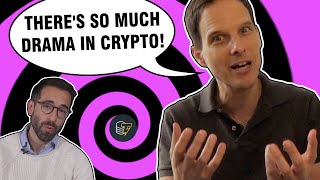
Filmmaker Thorsten Hoffman discusses his two crypto documentaries, including rare access to XAPO's Swiss bitcoin vault. He describes the space as fractured into competing factions and notes that 50 million people now own Bitcoin, up from his first film in 2015.
Questions this video answers
Bitcoin Blockchain and the Future of the Internet
2015
50 million
About 11 years
Five or six people
Chapters
These people want to sell us their story, they want to sell us their coin, right? They want to sell us their ideology. And when they get an opportunity to spread their message to millions of viewers, they're usually keen to do it. We don't need these people to give us information. What we need these people for is for their personality, for their emotion, for the drama.
What's up, everyone? I'm Giovanni, and today on our show, I'm joined by award winning filmmaker Thorsten Hoffman. How are you, Thorsten?
Thanks, I'm very well. Thanks for having me on your show.
For those who don't know, Thorsten is the author of two documentaries about cryptocurrency. The latest one just came out and it is called Bitcoin Blockchain and the Future of the Internet. Your first movie about crypto, the End of Money as we Know it, premiered in 2015. Is Bitcoin, the currency of the future, a godsend for criminals or a recipe for financial disaster? Why did you decide to make a second one?
Yeah, Look, I mean, 2014, when I made that film, that's six years ago, right? So a lot has happened since then. The price of bitcoin has increased by 100. The amount of projects out there has increased by a factor of 100. And there's so many interesting things going on, the narratives have changed. And maybe most interestingly, back then everyone was only talking about bitcoin and how it's going to revolutionize, you know, money. And everybody was fighting against the bankers and the central bankers and the governments. But now it seemed to me there's a lot of drama within these different groups. So instead of fighting against the establishment, now they're kind of fighting amongst themselves.
And that's going to lead me to my second question. So you pointed out that when you started covering the crypto space, it looked like everyone was united in the struggle against the establishment. But now the industry is largely split into competing factions, each one trying to impose its vision on what the future of crypto should be. A lot of people were not willing to learn and were not willing to admit they were wrong.
Why is this drawn allowed to speak at this conference? If you don't support free speech, you don't support bitcoin.
You're an enemy of bitcoin. Do you think that by losing its unity of purpose, the industry has taken the wrong path?
Yeah, that's a very deep question, isn't it? And to be honest, I do not think so. And first, first of all, as a filmmaker, or you as a journalist, Right. We shouldn't judge. Right. We're here to tell the story, to cover the entire ecosystem. So it wouldn't be right of me to say these guys are wrong and these guys are right. I think it must be presented in a way that everybody gets their fair kind of airtime to speak about what their vision is. So having said that, though, I think it's very natural for humans, right. In society, the larger we grow, the more political parties there are. I think it's just a natural step in an evolution from just being a small startup to being now a big, big, big movement. And there will be different opinions.
So from my experience, I know that getting in touch with these cryptocurrency leaders can be challenging as they are often quite busy. Was it difficult to to them and getting them to talk?
Well, to be honest, I don't think it was very difficult. Maybe because we had the traction from our first film. And also, I mean, you know this maybe better than I do. These people want to sell us their story, they want to sell us their coin, right? They want to sell us their ideology. And when, when they get an opportunity to spread their message to millions of viewers, they're usually keen to do it. So it wasn't difficult. But, you know, my co director always tells me, look, we don't need these people to give us information because what they can tell us in, let's say, a 30 second sound bite, I can maybe summarize even better in six or seven seconds. Voiceover. So what we need these people for is for their personality, for their emotion, for the drama, to basically tell a better story. So it's important to have these big brains and big egos. But what I'm really trying to capture is those moments where they get really passionate about something.
You said that the main purpose of your movie was finding out whether cryptocurrency and blockchain can really provide an alternative to the existing system, or whether they are as easy to manipulate, unequally distributed and dangerous as the current one. Did you find an answer to this question?
Yeah, that's the trillion dollar question, isn't it? So, first of all, as a filmmaker, I'm not there to tell you what to think, right? I'm here to tell a good story and to show you the most interest and the most interesting or controversial people in this space. Some of the audience might go away thinking, yes, this is it. We finally found a way to decentralize money. We finally found a way to decentralize the Internet. And others may still think, well, this is still early stage. There's a lot of drama going on. These people haven't settled on the right protocols yet. So I think it really depends on who you ask. And to be honest, I'm not very strongly pro or con. The only thing that I will say is that that Clearly Bitcoin, so BTC has kind of an 11 year track record. Right. And it is the most decentralized of all these projects. So I'm a fan of the entire technology, of the entire space, but bitcoin kind of stands a little bit above the rest, I would say.
But if you had to mention one of these characters that somehow fascinated you the most or struck you the most, who would that be?
Yeah, I think the most fascinating to talk to was Wences Casares because he's just a very legendary, very early figure in this movement and he doesn't do a lot of interviews. He's a little bit media shy. And to get him in the film was a real big score for us. And I hope you agree he's really good on camera. His stories really resonate and he's a very important figure in Silicon Valley as well. But you know, all these people are super interesting. Some are very rich, some are very smart, some are very clever. And personally, I just loved working with Laura Shin. So she's a journalist as well. She's covering the space for a long time. She's highly respected among all these different groups. And that's kind of like an inspiration maybe for me as well.
During the movie, you show the XAPO secret vault in the Swiss mountains where the company stores bitcoin for its private customers. So that was a military grade bunker. How did you get access to the vault? And how was the experience of filming it?
Yeah, I mean, that was just a crazy story. So after meeting Wences in Silicon Valley, he kind of described this bunker and this super high secure facility. And I'm like, I have to just go in there, I have to get permission. So I asked him a million times and then finally we got permission. Then we had, I think five or six people in and all these passport clearances. It was like a spy novel or like a James Bond movie almost. And then taking the entire crew down to Switzerland, to a remote part of Switzerland, going down into that military installation. Nuclear grade doors. I don't know how many. I think in the film you see five or six of these doors, but there were many, many more. There's a labyrinth and then you take an elevator even further down the mountain. It was just a Crazy experience. And the funny story actually about this is we went all the way down there and then they show us these servers, right? And then the guy says, well, actually these aren't Zeppel's servers. I'm like, what? We came all this way, but these aren't the actual servers. I said, no, no, those I can't show you. So they were even behind even more security features. And we scripted it in the film to make sure that, look, these aren't the actual servers, but it's sitting somewhere down here. So just to make sure we're 100% accurate in what make people believe.
Watching the movie, I noticed that there is a contrast between the crypto gurus fighting each other on what the real vision of crypto should be, and then other people who are building real use cases and applications for blockchain technology. So was it your intention to create that kind of contrast? And which of these two sites best represents the industry nowadays?
Yeah, look, yes, I did really want to show the entire scope of the industry, like everything that's going on, which is impossible, as you know, because it's so big. But I think we did capture a lot of these cryptopian ideas and we even have these bullet point lists. But to answer your question, look, I think you do need the politicians, the leaders, the influencers on the one side, and then you need the programmers and the startup entrepreneurs on the other side. I think it's just a natural thing. It's just a natural part of the evolution of an industry from being something very small, just a white paper, right, with five people working on it, to now 50 million people owning Bitcoin, and I don't know how many thousands of startups working on it. And that's just Bitcoin. Ethereum is even more impressive in kind of the developer community around it.
Thank you, Tarsten. That was very interesting.
Well, thanks so much for having me. And thanks again for supporting independent filmmakers. Cryptopiafilm.com if you're interested, I would love to hear your opinion on Twitter or LinkedIn or anywhere else.
Yeah, and you guys, if you want to watch Thorsten's new documentary, it is available online on the website cryptopiafilm.com by the way, check out the discount code below in the Description. The first 20 people who will use it, they will get to see the movie for free, so hurry up. Also, if you like the interview, don't forget to hit the like button and subscribe to our channel, Cointelegraph.
Like subscribe and Hodl.










