Did Crypto Help Reelect Donald Trump? | Behind the Scenes
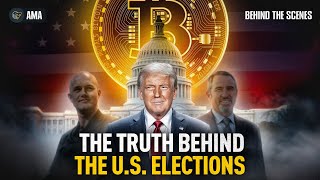
Cointelegraph producers discuss their documentary "Bitcoin for President," which found that crypto donations to Fairshake materially influenced congressional races and helped mobilize pro-crypto voters in 2024. The film examines how major players like Coinbase and Ripple spent heavily on elections, with interviews shot at the D.C. inauguration and Davos.
Chapters
Sam. Hello, bitcoiners.
What made Trump president?
We will make America the undisputed bitcoin superpower and the crypto capital of the world.
Was it the assassination attempt, his appearances on Joe Rogan, Biden freezing up, or the crypto industry?
Crypto literally could have helped decide the presidential election. There were no anti crypto voters.
But if you were pro crypto, there.
Was a group of people voting for you.
There's no doubt that the effort of.
This lobbying group that we backed, Fair.
Shake, along with some other leaders in the crypto space, had a big impact. Did crypto help elect Congress?
Their support definitely played a substantial role in my victory.
I am a Democrat who is a serial entrepreneur. I support the crypto industry.
The funding from the crypto industry in.
My particular race was actually decisive.
Who holds the power?
Who holds the power indeed. Good afternoon, everyone. Welcome back to the Chain Reaction. My name is Gareth Jenkinson, the head of multimedia here at Cointelegraph. I'm joined today by my co host, Robert Baggs. But we've got a different show today. We're on video, which is always fun. And we're joined by two of our colleagues. We've got Celine Tan, who's one of our video producers at Cointelegraph, and of course, Maxwell Coopson, who many of you will recognize as one of our video hosts on the Cointelegraph YouTube page. And he also hosts a load of these AMA sessions. And today going to be chatting about something I think all of us are really proud about, our documentary that we filmed back in January in Washington D.C. some of it filmed in Davos at the World Economic Forum as well. And of course, we were exploring everything to do with the US Elections. Bitcoin for President is the name of the documentary. And today we're going to be chatting to the people that made it all happen. Max and Celine, it's great to have you guys joining us. And before we jump into any questions, please do go like and retweet this live video so we can get this out there and get people to hear a little bit more about the behind the scenes. What it took to create this fantastic documentary telling a very important story about crypto in the U.S. but yeah, I think let's start with you, Max and Celine. Welcome to the show. Finally not having to ask all the questions, but being asked the questions. Max, how's it going?
Yeah, good, good. It's a bit weird to be on this side of the, of the desk, but, yeah, happy to be here. You know, I think Celine And I, we both put a lot of work into this documentary over the past few months, and we're really excited to share, you know, some of the findings that we had, and just really excited to show, you know, all of the fruits of our labor. So if you haven't seen the documentary yet, definitely bookmark that. Give it a watch. But thanks for having us, guys.
Yeah. You can find the documentary at the top of the Cointelegraph's X feed. We've pinned it there. We'll keep it pinned for a little while longer so people can go and watch that. It's Also on our YouTube channel, Celine, how's it going? We finally got to meet in Paris a couple of weeks ago, and you've been working here for a little while now. You must be excited to be chatting about the documentary now that it's been out for a little bit.
Celine's muted.
I think she's on mute. Great start.
Yeah. So this is my second live, so I'm still not really used to it. I was hosting my first live for Cointelegraph, but really happy to be a guest today and obviously to share a documentary with everyone. A lot of behind the scene that we are really excited to share with you guys. So, yeah, let's throw the question and we're ready to answer to everything.
Amazing. Rob, how's it going, man? Another live video.
Yes, we like the live videos selfishly, because they do much better on listeners than the non video. But I'm excited to talk about this. I really enjoyed the documentary, and I think the documentary will serve in the next five, 10 years as something of a time capsule of a really singular election. And crypto played. I'll admit I wasn't sure the role crypto played in electing Donald Trump. I wasn't sure whether it was because we're so in it, aren't we? All of us are so deep in crypto that it feels like the biggest topic of the election, but only to us because we're in it. So I wasn't really sure of the true extent. So the documentary was illuminating on that front, and I have many, many questions. Gareth, do you want to kick us off with the questions?
Yeah, I will do. Max, Celine, maybe you guys can just talk a little bit more about your roles and how you divided and conquered to make this documentary a reality.
Yeah. So I was like mainly the video producer and the videographer on this documentary. So my role was to obviously the whole visual storytelling. On the one hand, for the video production part, I was making sure that we were able to secure all those high profile politicians and also like the Web3 leaders, which took us some time, but we can talk about it later. But also, like, you know, overall, like, just making sure that the story goes smoothly. And on the other hand, I was also playing the role of the videographer. We were in D.C. with Max. I was filming the interviews with politicians with crypto leaders and also getting some key moments of Max stand up and just filming Max from one place to another. So, yeah, you know, like, overall, just making sure that we were able to bring this vision and this project to come to life.
Yeah, yeah. And I might say, yeah, well, definitely. As an American, myself, as a US Citizen, obviously the election was just all over. It had impacts on me personally and I think the industry as a whole. So seeing it play out in November, I started thinking, okay, I started hearing about how the industry was the largest spender in corporate donations. Larger than big oil, big tech, big banks, big pharma. Like, I mean, it was the largest. So that really kind of like threw me. It's like, okay, wow, like, I mean, who's. Who are they actually funding? How much impact is it having? So I think the kind of idea came to me shortly before the inauguration. It's like, oh, we could go there, we could talk to people, we could see, you know, what this is all about. How much of an impact did it play? So from there, you know, we kind of just took the story, like, took the idea and, and it developed as we were actually, you know, researching it. So it was really, really great working with Celine. She kept, you know, kind of everything organized. But I guess then I had to be the one who was like, okay, what questions to ask, you know, follow the threads, everything.
One question I have is with this, did you go into it with an idea of the story beforehand, or is it something you kind of discovered as you went along? Because obviously the bit. The bones were there already. You knew crypto is going to play a big. So did you have a sense of what direction you were going to take it and. Or did you find it along the way?
I'd say we found it along the way. I mean, I came with the question that, you know, it was a provocative question, definitely. Like, did crypto elect Donald Trump? But, you know, for me, as an American, like, there were a lot of different reasons why you could say, you know, hindsight 20 20, it could be this, it could be that, it could be this. So I think the question of, like, did the crypto industry like, Donald Trump was Kind of the initial starting place. But then as we were researching it, it was like, all right, maybe the crypto community had played a role, but where the crypto industry and the spending, you know, really led us in our investigation, we found it played a major role in the congressional races. And I think that's where we kind of like, as we got on the ground, as we started talking, you know, with, with, you know, industry leaders, with, you know, senators, with representatives, we really saw the impact there.
Look, let's talk about the why behind the documentary and what made you want to tell this particular story. I think you kind of touched on it a little bit, Max. You know, the story evolved as we started speaking to people in the industry, but the real why was just simply the amount of spending that the cryptocurrency industry had made in lobbying, both for Democrats and Republicans. We're going to play a short clip, which I think really sums up a lot of what happened behind the scenes to make us want to explore this and really answer the question before we dive into the details of it.
Among the top corporate donors in the 2024 elections was Coinbase, the largest US crypto exchange. Though other reports showed Coinbase's contributions to be around $50 million, we looked at the FEC receipts ourselves and discovered it was actually twice that. A whopping $104.5 million to the Pro Crypto Super PAC Fairshake and its affiliates. Their backing was crucial in key races like Ohio's Senate election, where Bernie Morano defeated crypto skeptic Sherrod Brown with a massive $40 million in support from the crypto super PACs. Ripple also made a major impact, donating $20 million to FairShake and then another 25 million. All this money from Fairshake also helped Electric Pro crypto leaders on the Democratic side, including Alyssa Slotkin in Michigan, who won with $10 million in crypto industry support. In addition to their election spending, both Ripple and Coinbase contributed to the presidential inauguration. Ripple donated $5 million in XRP tokens, while Coinbase gave $1 million to the Trump Vance Inaugural Committee. Ando Finance, another crypto firm, also donated $1 million, although they stayed out of the election itself. Itself.
That's a crazy amount of money for, for an industry to be putting in. I mean, like the simple fact, Max, that you said it, it outspent, you know, the petrochemical industry and, and a few other major industries in the US Says a lot. Were you surprised when you put together the numbers?
Yeah, I mean, definitely. We all know that there's money in politics and US politics. But you know, when we were actually following this and seeing, you know, kind of the follow the money, it was really surprising and just to see, especially in certain key races like Bernie morano, I mean $40 million, we, it's a huge percentage of the overall, you know, money raised and money spent, but putting that much money into a kind of a swing state in Ohio, specifically where Sherrod Brown was the chairman of the Banking Committee. And just, you know, really, as Bernie Morano says in the documentary, you know, he kind of phrased it as like he's a two for one sale. I mean on one hand you had Jared Brown being pretty aggressively against crypto and then him, you know, a kind of a blockchain entrepreneur himself, made him a good fit to go against him. So just seeing $40 million go to that specific race, you know, it's just, it's, it's kind of astounding.
Was there any. Go for it, Robbie.
Sorry, sorry. I was just gonna say it was, it was way more than I thought it was going to be. That figure. And like you said, they, they were. There were reports that Coinbase did fund half that, the. Half the amount they ended up funding. Celine, I wanted to ask you from the production side of this, was it, were there difficulties that you were having to wrestle with from, you know, the get go really? Because anecdotally someone I know that is loosely connected to US politics suggested to me that it's still an uncomfortable topic for some people and some people won't talk about it. Did you run into that at all?
Yeah, but I will say like, you know, mainly and I will speak like, you know, from a video production point of view. I will say like one of the biggest challenge I have encountered in this documentary was mainly the timeline. Because when you're producing a documentary it takes a long time. You have the pre production, you have all the research securing all those high profile politicians, you have the production going on site for five days in D.C. and you have the post production. And especially for this documentary and this project, I will say the topic is sensitive. I mean I think we are one of the few who are able to investigate about this topic like money in politics, crypto and politics in this case. And you know, like we are working in the crypto industry and you have like literally a news like every single day, every single week, Trump announcing a news, you have the SEC announcing something new. So you have to keep those news on the dates and you know like we have an initial story, this is story that we want to tell our audience, but you also have like some news that keep popping in. So this thing like, was quite challenging because at some point we were like, okay, Max and I, we have to stick to our story and maybe like, you know, we will produce like a part two or, you know, like a chapter or two. But yeah, I think these are. We wanted to make this documentary as rich as possible with all the information we could collect and just, you know, being really truthful to our audience. But yeah, that's why, you know, like we produce. We ended up like producing the documentary until end of January and it's now online and we finish around beginning of April. But we also, you know, had some last minute guests that we really wanted to talk with. And that is why, you know, it took us some time to get everything together. So, yeah, mainly the timeline, I would say, because the topic.
Yeah, yeah. And definitely the weekend that we were in D.C. was, you know, quite busy for all of the people that we wanted to speak to. So it was really great that we were able to get, you know, some on the ground interviews there over that week. But, you know, there were definitely, you know, I think one thing that we wanted to include more in the documentary was the Democratic side. We were able to speak with a Democratic representative after the fact. But, you know, during that kind of time, it seemed the Democrats really didn't want to speak at all. They were kind of taking a step back, letting the Republicans, you know, kind of whatever, do what they, you know, the attention was definitely on them. And I don't think the Democrats maybe even still haven't quite developed their narrative for how they want to approach this. So we did reach out to, you know, Alyssa Slotkin, Ruben Gallego, and like, you know, a whole list of, you know, senators and representatives that received funds from the crypto industry, yet didn't. They didn't really want to come out and speak about it, at least not yet. You know, Robert, back to your question about it being an uncomfortable topic. I did feel that in some of the interviews, you know, we definitely talked, you know, we went there with the intention of saying, hey, we want to talk about the election, the contributions, you know, what that meant. But it's kind of. It's a very touchy subject in the U.S. you know, we talked with Americans, you know, on the ground and, you know, we always ask the question, what do you think about all this money in politics? And like, unanimously, everyone is sick of it. You know, everyone thinks there's too much money in politics. And so the politicians, they're quite good at spinning this. They say, yes, people are frustrated, but that's our system and this is freedom of speech. This is what the Supreme Court said. So I think they were able to address it, but didn't really want to get in too much of like, you know, oh, does this mean that I owe them? Are there strings attached, things like that? Oh, Gareth, I think you're muted.
Gareth, it's your turn to unmute, mate.
Rookies, rookie era, man. Yeah, I just wanted to weigh in there very quickly because I conducted a couple of the interviews that we did while we were at the World Economic Forum and there definitely was a bit of a reluctance to talk about when the contributions went to specifically the Democrats and what their view was. And like you say, they're still pretty mum on the subject altogether. So I don't know if it was a top down thing, but basically don't talk about crypto, don't say much about it. You know, if money came in from that industry, it's just part of what it was. And it definitely felt like there was this, this hesitance to talk about it. You know, I spoke to one of Ripple's VPs in Davos and off camera kind of said as much. They kind of put money both ways. And the other point that you made was really pertinent, Max. Money buys something. When you have all these donations, I guess there's some sort of acceptance that there's going to be a favor down the line. And that's definitely been the case after Trump took office. And some of the, some of the laws and movements that we've seen in the United States are favoring certain businesses and certain protocols that put money on the table before the election. So let's call the spade a spade and be honest about that because I think that came out really clearly in the documentary as well, that this money went somewhere. It's great for the industry overall, but there's quite a few companies that stand to gain from it and that was a really interesting takeaway for me. I'm really interested to hear from you guys the stories on the ground in Washington because that was a pretty cool, cool time to be there. It was really unfortunate about how cold the weather was because they took the inauguration indoors, but that didn't really stop anyone. Tell us what it was like in Washington.
Well, it was cold.
Yeah, it was really cold. Kind of have a very fun fact that I can walk you through during that day. So I'm Going to try to make it fast, but during that day. So it was on Monday, January 20th. You know, like, it was like the big day, was like, Trump inauguration. We've been like, all waiting for that for such a long time. So Max and I, you know, like, woke up super early. It was like 5am we were so ready for it. We went down and we were like, looking for a car to drive to the trunk inauguration. And, you know, eventually we're like, oh, my gosh, where is the car? And basically, like, it's not our car, it's Max cousin car. And we found out that our car got towed away. So because simply, like, long story short, the car was parked on the wrong line. It was like a private line. And, you know, like, it was my second time in the U.S. i'm from Europe, France, and this is not something that will happen in Europe. Right? But apparently, like, Americans are quite strict on that. But anyway, like, you know, that was like the beginning of our day. So we were like, okay, Max, let's focus and let's try to figure out that about later. So we took our Uber and we went through Trump integration. Sadly, we didn't get like a VIP pass, so we had to line up for six hours in the cold, and it was like minus 10 degrees. So eventually we arrive, you know, at, you know, the security guard after six hours, and the security guard told us that no bags, nothing that you can carry, no umbrella. You have to, you know, either get it away or you have to, I don't know, find a solution. And I think we have a picture of that that I took on my iPhone, but literally, like, people just, you know, drop their bag like some branding bags away. It was like such a mess, you know, but they were like, just so ready to get into this Trump integration.
And.
And for me, I was carrying 4K 5K camera gears, so there was no way I was dropping that. So we talked to the security guy and we tried to convince him, like, hey, we are from media. Is it possible to just run away to our hotel, drop our stuff and go back? And he was like, sure, you can, as long as you are able to convince every single security guy along the line. So there was like 10 of them. And we were like, with Max really trying to beg them, like, hey, we're just going to drop our bag and we're going coming back very fast.
And.
And he was like, yeah, sure, sure. So we drop our stuff at the hotel and we run really fast the line. And then the security guy told us that, okay, I'm sorry, guys. The integration has started. It's completely full. Like, we're not able to let anyone in. And there was a guy next to us, and he was like some sort of important VIP guy who's like, you have to let me in. I'm a super important person. I'm a VIP person. You really have to let me in. And I was looking at Max and I was like, if this guy can't get in, there's no way we're getting in. So. Well, eventually, the bottom line of the story is that we were not able to make it to the Trump integration, but we did go to the Lincoln Memorial and we got some really nice interviews with all the American citizens. But that was such a crazy day. And I think this was my best memory of this filming shoot.
Yeah, and just to add on that, too, even the day before, we were going around conducting some interviews, and all of the logistics of the inauguration were changed last minute, if you remember back, you know, they decided to move it inside. And like, literally the day before, they're moving porta potties, they're changing barriers. We were, you know, talking. We were essentially, when we got back to the line, they'd air gapped it, and we kept asking like, oh, is there a place that we can still cross? And even the National Guard, even the police were like, well, maybe you can try that way. Maybe you can try that way. I looked at my step and I think we walked like 30,000 steps that day, so. In the cold. But it all ended up being a blessing in disguise because, you know, looking at the footage and what was happening inside the arena, it wasn't really what we wanted to do anyway. You know, what we wanted to do was talk to, you know, the voters and the people who'd shown up to the. To the inauguration to interview them. And so we were able to find those people on the National Mall, near the Lincoln Memorial or the Washington Monument, and we really got. Got some great interviews there. So it all ended up working in the end, but very stressful day. You never know what you're going to get when you're making a documentary.
Yeah, that's. It's a shame. I was going to say, oh, the VIP person losing their mind. That'd make for a good clip. But you'd taken your camera back so you couldn't film.
Exactly.
One thing I did wonder, as you're doing this, obviously, so it feels a little bit arrogant because obviously I work for Cointelegraph, but Cointelegraph has a lot of Reach within the crypto industry. Right. We can get crypto people to talk to us because we're a big deal in crypto. Like, it is a bit arrogant, but I mean, it's true. One of the biggest. So we do. But outside of crypto, it's a different story. It's not always easy to secure the big interviews. Celine, how did you secure some of the, like, political figures in the US that might not be that familiar with. With Cointelegraph? Like, how did you get that sort of pull?
Yeah, I'm gonna be honest with you guys. It took us quite some time to secure interviews, like, up until, like, three days on to D.C. like, we were not able to do any interviews between no one. Like, I got either zero answers from them either. They will decline it, but mostly like the Democrats. So I also, like, I tried to reach out to them with a lot of cold emails, trying to explain the excitement of this documentary, that we are, like, really trying to be authentic and honest about putting out this story. And eventually, you know, I think, you know, quite telegraphed the reputation. It played out quite well. So they wanted to get involved in that. You know, like, one of the first big name we got was actually Bernie Moreno. And we were, like, just so, so excited to talk to him. And he just, like, agreed to meet us. That was a quite strict, you know, like, it was 20 minutes, no more, no less. But, you know, like, it was just so fun. Like, we went there to shoot at the Senate office. It was just so beautiful. But I would say, you know, like, overall, it was quite tough at the beginning because I think it was during the Trump immigration, so everyone's schedule was just so busy. But eventually, like, you know, the more we got, like, you know, we were able to take Barney Moreno, William Timmons, and after that, once they see that, okay, you guys talk to Bernie Moreno, then I might want to talk to you as well, guys. So it kind of evolved quite well. And funny enough, after we finished the documentary, actually, we also got an interview with Senator Ted Cruz, who was super, super happy to be part of this project with us. It was another standalone interview, but they were just happy to talk about the crypto industry and everything that's going on. So I think making this documentary about crypto and US Politics, it's an open door for us. Now we know that there's definitely other projects we can do with them. We are quite related right now, but I think overall, just to wrap up, I think it was quite hard at the beginning because we weren't that much related crypto and US politics before, but now that we have done this project, I think we just became closer somehow.
Yeah, yeah, you make a good point. I mean, I also reached out to a lot of people through my network of contacts and it was more kind of focused on some of the cryptocurrency industry figures. You know, I was at the World Economic Forum in Davos while you guys were in Washington, and I managed to get Eric Van Moltenburg, who's a VP at Ripple, and Anthony Scaramucci right after his panel inside the World Economic Forum that I covered. We also, we made a short video about that on Cointed Graph's YouTube channel. But I also tried to get Brian Armstrong from, from Coinbase and that was just a flat out no, which was really surprising and actually quite disappointing just because they donated so much to Fairshake and it would have just been amazing to speak to him about that. But the Coinbase team said no. And to be honest, you know, I'll be frank on this live stream. I think that they've really been quite clear that they only want to speak to tier one sort of mainstream media. And that's really disappointing for the cryptocurrency industry because Cointelegraph, CoinDesk, decrypt the block. I think we're all making really big strides in the industry to do great journalism and no one should have a closed door policy to us because as soon as you do that, it means that it makes it very difficult for us to do our jobs well. Give us access to Brian Armstrong. Give us access to your VPs. You know, we want to tell good stories and if you don't give us access to these people or you only gatekeep it for mainstream media, that does everyone a disservice. So I'll be honest, I was really disappointed by that because I was there. I asked Brian Armstrong a question from the floor inside the World Economic Forum, but he didn't have the time to speak to me in person while I was in Davos. That was pretty disappointing. So, yeah, I'll call them out for that quite, quite openly and honestly. And that really is the difficulty when you're trying to do these things, is getting the right people to speak to. Max. I'm sure there were a couple of people that you wanted to speak to as well that you, you, you perhaps just couldn't, couldn't get to.
Yeah, yeah, definitely. You know, as I mentioned, some of the Democratic senators that received funds, you know, we even wanted to talk to, you know, the man who Set up Fair Sheikh. He was unavailable as well. Brian Armstrong, Matt Garlinghouse, like Brad Garlinghouse. We wanted to speak to kind of all the key figures. But as you said, you know, I think they look for mainstream media because also they can kind of go in and spin it in their own way. I mean, we're much more connected to the industry. We understand a lot of the nuances and the technology. I see sometimes reporting from mainstream media or, you know, a documentary will come out and, you know, you face palm sometimes because you're like, oh, man, okay. Like you're asking about that. Like, that's not. That's not what the important thing is. Like. And so if you just take this as a political documentary, I'm sure there are outlets, you know, that, that can do political reporting maybe even better than us. They have, you know, contacts in Washington like this. But we have a perspective coming from the crypto industry and, you know, kind of the being here for so long that we can actually be subject matter experts in this particular field and ask about things that mainstream media journalists wouldn't necessarily think to ask. So definitely, yeah, there is a list of people that we would like to speak to, hopefully. You know, I think definitely when the midterm elections are coming up in 2026, I don't think that crypto is going to sit it out. You know, we spoke with, you know, kind of everyone. We were asking about, like, oh, what's going to happen next? Everyone seems to be under the impression that crypto is here to stay, that they are going to be players in Washington. I mean, they're not. Just. Maybe Matt Hogan was the only WHO one who said maybe he's naive and maybe this was the election for crypto. They come in, get the regulations they want, you know, get the market clarity, and then just like, go ahead, you know, ride into the sunset. But knowing what we know about, you know, the industry and, and just how. How these things work, it's likely that 2020, 26 will be another opportunity to crypto kind of for. For it to throw its weight around. So we definitely, you know, will be interested to follow that and cover that. Speaking with people in Washington and obviously the crypto industry leaders.
Yeah, just on that. But I've got a question I want to ask Celine. But on that note, the midterms, I think, is going to be a really interesting one. And in the documentary, John Deaton made a really good point about it, that if the Senate were to flip back to Democrat, the chairperson of the Senate Banking Committee, which Oversees like the sec. The CFTC would be Senator Elizabeth Warren, who is, I mean, infamously anti crypto. I think that would create a real area of friction between, you know, what Donald Trump's trying to achieve and then obviously what she would like to see happen to crypto, which, I mean, under the Biden administration, she said the same anti terrorism sentence about 50 times, so we can expect more of that. Celine. I wanted to. I mean, I have a small background in photography and videography, so I wanted to ask a question about the production side a little bit. I know. I mean, anyone who's ever written anything will know the saying, kill your darlings, where you have to. You have to get rid of stuff that you love because it doesn't quite fit. Did you have to make any of those tough decisions with scenes that you were like, oh, I really want to keep this in, but it just can't make the cut?
Yeah, actually, I think there. I mean, we. We have filmed so much, like, you can't imagine, like, the. The amount of content we have for this documentary, like, to make it short to 30 minutes, which is already long, you know, like, compared to the usual videos we. We are doing. But yeah, there's like, you know, like, it was quite funny. Like, we were filming at the Library of Congress and we ran into this guy. Like, I can't remember, like, all the details, Max, but maybe you can help me on that. It was like a guy working at the lobbying group and, you know, like, he was at the beginning, like, okay, guys, I'm gonna share some information with you, but please don't record it or don't share it, you know, like, on the final documentary. So we ended up, like, not filming it and not recording it, but it was, like, such a pleasure to talk to him, just to know more about what is going on, like, with this loving thing, the Super Pack thing. Like, he knew a lot of stuff, but it was something that we definitely couldn't share and put in the final product. But yeah, I mean, overall, we just wanted to keep it concise and just make it as clear as possible for everyone. Because I think crypto and politics is just a topic and the story we wanted to tell just simply because we felt like it was not really explored and understood by most of the people. And we just wanted to, you know, make it a clear story so that everyone could understand, like, all the behind the scene. But definitely, like, I mean, we worked so long with the editor and Pasha, which is our amazing editor, who did, like, a fantastic job on his documentary I really want to shout out to him and just send him like a huge congrats because he did like such an amazing job. We spent so much time on the edits and we are super happy with the visuals and I hope you guys are enjoying it as well. But yeah, I mean, again, Pasha, you did an amazing job and congrats on that.
One thing I'll also add, you know, we did a lot of on the ground interviews, speaking with, you know, people there at the inauguration. You know, because the scope of the documentary, you know, was starting to get pretty big. You know, we decided not to include all of the questions that we had for the, you know, kind of average Americans that were there. But we did clip together after the fact, some of their responses, you know, getting some more people that we interviewed getting their responses to, you know, money and politics in general. And everyone seemed to have, you know, pretty nuanced, pretty sophisticated answers, you know, and we just wanted to share that as well. So we clipped that together and we did post it a couple days ago, so it's on our Twitter. Definitely go give that a watch because, you know, the people that we spoke to definitely had their opinions about all this money being spent. And just one other thing that I remember, we didn't make it into the final cut. We were walking on the National Mall right at sunset and the lake like the reflection pond had totally frozen over. So we were walking on that and these two ice skaters were ice skating on the reflection pool. It was very beautiful. It was very great. I think Celine took a really great shot, but I think we cut it because it was like, okay, this is, it just, it's too romantic. It's too beautiful.
Yeah, we just filmed so much and I mean like, like Max did, you know, like we're also passing like some behind the scene on X, so just make sure to check it out so you get everything.
I think we'll try and make the the most of it as while we can. And while we have the documentary pinned, I, I, I covered the rugby World cup in 2019 when I was still doing sports broadcasting. And I also have a hard drive just full of unused footage. And I'm just like, what do I do with this stuff? You know, it's so great, but it's kind of not relevant anymore. So it kind of just ends up gathering dust. But it doesn't mean that it's not meaningful. And yeah, unfortunately we couldn't publish an hour long documentary. Even just chopping it down to 30 minutes was pretty tough. I'm Just going to steer the conversation towards crypto and politics. And this question is for both of you. I mean, I want to ask you if you uncovered anything that genuinely shocked you or changed your view on crypto's role in US politics. And I just want to start this one off. I spoke to Anthony Scaramucci for the documentary as well, and the point that he made about Democrats just not taking any position on crypto couldn't be more pertinent in the impact that it had in the outcome of the election, because Trump and the Republicans very clearly identified the size of the market and probably the type of voter that was out there that was either a bitcoin holder or a crypto holder. And I think Coinbase has put stats out there. There's like 50 million crypto users in the United States. So if you talk to this group of people, it's 50 million people that you might win over if you at least say something positive or have some sort of an understanding of what the industry is and you just have a clear stance on it. But the simple fact that Kamala Harris and the rest of the Democrats just didn't say anything meant that they alienated a huge group of people that have a keen interest. I mean, especially bitcoiners and some cryptocurrency holders are just libertarian by nature and they believe in certain things. That, for me, was the biggest thing. It's like if you don't say anything on something important, that's even worse than just saying something, even if it's not that clear. So that was a big takeaway from me. I'm curious to hear what. What was the most important thing for you guys.
Yeah, I think one interesting thing, you know, we definitely see the Republican Party being, as you said, much more, you know, as much more in support openly for crypto. But a lot of the spending, what went to Democrats, I think even as far as, you know, the corporate spending more went to Kamala Har than it did to Donald Trump. Now, Donald Trump had Elon Musk, you know, pretty much bankrolling a lot of the campaign. But it was interesting to see, I think around $12 million went to the Kamala Harris campaign from the industry. And I think there was a pretty big disconnect, like you said, between, like, the industry spending, which was supporting both sides, but then the crypto community definitely coalescing around Donald Trump. And I think that that's where, you know, when John Deaton spoke saying that, you know, it could if, if. If the crypto was a major, you know, issue, and it could have been 2 to 3% in the key swing states. It really could have had a huge impact. Now, again, there were other issues that could have also, you know, going back and, you know, butterfly effect, if you do this thing, if you go on Joe Rogan or if you, you know, respond differently at this debate, of course there could be differences. But I think that, yeah, I think, you know, your point about coming out and just saying something is, is really, really worthwhile.
And also, maybe something I could add is that, you know, Gareth, when you said, like, if there's anything shocking or surprising during this investigation, I will say that, you know, when we interview Jared Setzer, who is like a Republican that lost his race, you know, he was really genuine about the fact that he's really interested about crypto industry and how it works. And even today he's writing to me, he's like, hey, Celine, I really want to get more involved in the crypto industry and I want to get more into crypto events and do you have any recommendations? And I'm like, hey, Tokens is happening in Dubai in two weeks. You should go there. And he's actually there. He's going, and I think he's in Dubai, right? And he's like, hey, can you connect me to anyone in the crypto industry? I would love to talk to them. So I mean, that's like a genuine step and just genuine interest to know more about the crypto industry and what is going on. So I think this US election in 2024 really opened the door for the US politics.
One more thing I'll add to Celine, you reminded me too. So just for a little bit of background, I am a US citizen, but I haven't lived in the US for some time and I hadn't been back to the US in some time. But when I went, I was, you know, had the intention we were going to go and we were going to interview people and in my mind I thought we would find some people that knew about crypto. But I didn't expect like everyone we talked to essentially to have some opinion on crypto. It has just become so, you know, kind of spread throughout America that everyone, everyone either has some investment or something. We were, we were filming a stand up the day before the inauguration and you know, a man and his wife, I think in his, you know, mid-50s, late-50s, kind of like stopped us and said, oh, are you, are you guys talking about crypto? And we're like, yeah. And he's like, oh. And it was just Someone that I wouldn't have expected, you know, a couple of years ago. So I do think that, you know, as it. As crypto becomes more and more mainstream in US culture, it will become more and more pertinent in US Politics. Like Celine said, politicians are actively looking now how to get involved in the community, whether it's for funding or whether it's just. Because I think that Jared Sesler is really interested in the technology itself. It aligns with his ideology, his political ideology. So I do think that now there is a kind of a call in, you know, the crypto community to. To actually go and find these people and meet them and say, okay, here's actually what we can do to move this forward. And I think there's people that are keen to listen.
I want to sort of. I've got two questions for you. Firstly, following on from what Gareth said, it always struck me a bit as a bit strange that Democrats didn't say anything, and it just seemed like a. Like a free, uncontested portion of the voter base just going toward Republican. If they were single issue or primarily single issue. Did you talk to anybody that was perhaps voting away from Donald Trump because he was pro crypto, so they were anti crypto. And because Trump was pro crypto and aligned himself with this industry.
Did you.
Did you speak to anyone that was like, well, no, if he's pro crypto, I'm not voting him.
I don't. We. We did not talk to anyone on the ground that.
But.
But of course, we were there in D.C. for the inauguration, so most of the people that we were speaking to were Republican Donald Trump supporters. You know, it was something that, you know, we really. We tried to get some other voices, but in D.C. you know, during inaug, liberals kind of locked down. You know, they. Or they left the city. And so it was hard to find that kind of counter, you know, the counter perspective. I think that if we were to do a series like this in the future, I think we would definitely need to widen the net a little bit. You know, talk to people not just that are coming to the inauguration in D.C. but to go, you know, outside of. Of the Capitol and talk with people about how they voted. Now, that's a completely different production that we. What we were trying to do, but from. Yeah, from my memory at least, I didn't hear anyone specifically say, no, we didn't vote because of this.
Yeah, I didn't. I didn't think you would have, but I'm sure there were people out there that did. My Second question is the $104.5 million question. Although that was just coinbase. It was a pithy, pithy opener. Did crypto help elect Donald Trump? Like, is that statement true or false? What's your opinion?
Can you clarify the question? Just the crypto.
So.
So I will say. I will say, did the crypto community help elect Donald Trump? I think yes. Did the crypto industry helped elect Donald Trump? I'd say probably not. I'd say that the crypto industry was strategic in their approach. They, yes, they did invest in both sides for Kamala Harris and for Donald Trump, but the weight of their impact is in Congress, and you can see that now. You know, Ted Cruz, when, when I interviewed him just recently, you know, he talked about his DeFi rule CRA over, over turning the kind of midnight rule from the Joe Biden administration. And he had, I think, 28 Democrats supporting, which, you know, you can see the impact there. I don't think that, again, that crypto necessarily wants to be so tied to one party or the other. I think it's strategic that they went bipartisan because crypto as a technology, as an industry, really shouldn't be partisan. And I think Eric Van Mittenberg said the exact same. And I think when we spoke with the congressmen and senators, we wanted to push on this, as well as saying that, okay, you know, what are your plans like for. For crypto, and is this bipartisan issue? And almost everyone said that, yes, there are people on the Democratic side that we can work with. They took the opportunity to, you know, slide their, you know, political attacks against the Democrats as well. But definitely, I think there's. There's a willingness to work together on these things. So, yeah, in, in. In the short answer, I'd say the crypto community, individuals definitely had an impact. But did the crypto industry weigh in on one side versus the other? I'd say no. I'd say it was pretty bipartisan.
All right. So, I mean, Robbie touched on it very quickly. A lot of money was spent by Fairshake. I mean, did its strategy change the game? I think you guys answered this in the documentary, and we have another clip to take from that. So let's have a look at that.
I think the regulatory battle in the crypto industry has already largely been wonderful based on the new administration that's coming in, but there's still some final stages of kind of crossing the T's, dotting the I's, finalizing what a good regulatory framework looks like. But now in a very positive environment, rather than a negative environment. So it's actually very good that nothing got super finalized in the negative environment, and it's going to get finalized in this positive environment.
I know there are a lot of people who find it ironic that this decentralized technology that was all about getting away from the government needs some level of government relief in order to thrive to the degree it can. But I think that's false binary thinking.
Right.
Governments are powerful forces. If they want to put their foot on you and keep you down, they maybe can't deny you forever. And to be sure, bitcoin grew over the last 15 years. It wasn't stopped. They can't deny you. But to imagine that they can't slow down your industry if they're aggressively hostile is just naive. So all we're trying to do is go from aggressively hostile to neutral. And if we do that, crypto can achieve all the things that we love and that we talk about.
Yeah.
So there we go.
I was just gonna try to answer your original question is, did crypto change the game? And I think, you know, I think that is something that is still, you know, we haven't. We can't clearly say yes or no, but I think over the next four years we will see a lighter touch. Regulation, we will see, you know, definitely market structure and maybe a bill for stablecoins. And, you know, I think that there is going to be lasting legislation that's put down in the next four years that will positively impact the community going forward. And again, as Sergey from Chainlink said, you know, it's kind of like, it's good that we didn't have everything set down in a negative environment. You know, if we can put things down in a positive environment, you know, and especially through legislation, it will be more difficult for, you know, kind of a stronger approach in the next administration if it were to be Democrat or, you know, at least anti crypto. So, yeah, I think it's still, you know, we saw a lot of excitement after, you know, Trump won the election. Bitcoin hitting a new all time high. It's maybe died down a little bit now because of macro factors, but in the long scheme, I do think that this is very positive for the industry.
You guys spoke to a lot of people, right? Sorry, Rob. You guys spoke to a lot of people, obviously politicians. And I mean, I've spoken to a few of them in the past, and I don't think a lot of them actually understand bitcoin or cryptocurrencies. Do you think that's the Case with some of the politicians that you spoke to for this documentary and was it a lot more just about getting campaign funding and not understanding the industry very much.
Celine, do you want to take this? I can take it.
I think, you know, like, most of them are very well prepared, like in terms of talking to media and especially like Bernie Moreno, I think he's a very high profile politician. We do, I mean, Max did an amazing job on asking questions and trying to, you know, get to the bottom of it. And you know, I'm trying to, to, to have some, some answers that wasn't like prepared. But, but I think like, you know, overall they do like, know a lot about crypto industry, like maybe a little bit more than I would expect, to be honest. But. But yeah, I mean, I think overall, like, you know, yeah, I think they're quite prepared to it. So. Yeah, and I would say.
Yeah, yeah, I would say it Also, you know, we have a very small sample size, you know, from the interviews that we did. And obviously there was a bias for those who we, you know, were able to get interviews with. They were interested in, you know, they had some connection with crypto industry. Now overall, Congress I still think has a lot ahead of them in far as far as education goes. It was something that we heard from Ted Cruz on the Republican side and also for Sri Thanadar on the Democratic side is that education is very important, especially when, you know, Congress is quite a, let's say older than average institution. So, you know, the people that are running it and are elected officials, you know, definitely need some technology literacy. But that being said, I think that there is a political, you know, for, for approaching the crypto industry for campaign contributions. You know, I think we had one final clip and I think that William Timmons says it says it nicely in this clip. So if we want to play that one, I think it'll kind of sum this whole up.
When the election ended last November 5, all campaigning and fundraising, of course, completely ended for about 24 hours. In the United States, it's always election season. The 2026 midterms are rapidly approaching.
And here we go again.
One thing that we learned last election cycle was that if you understand crypto and you take a reasonable approach to it, you have some friends that might be willing to support you. But if you're going to be an obstacle to the much needed change, you might have a difficult election coming up. And I don't think there's anything wrong with that. I mean, that's our system. And you know, if the crypto community wants to spend money to get Congress to pass legislation to give them the certainty they need. That's their prerogative.
This is such an int.
Almost like a thinly veiled threat. You know, it's like if you oppose them, look out, you know, like.
It'S crazy. I thought a lot about this after watching the documentary from a few different directions. So, one, I wondered if new industries may be inspired by what crypto has done in getting regulations passed and basically funding its way into the conversation and whether we may see, like, new unregulated industries like AI maybe they'll see in 2026 or 2028, maybe they'll see a window to try and influence that. One question I want to ask you guys is when it comes to the next four years and the midterms, we're likely going to see a lot of regulation passed for crypto. The stablecoin bill and so on. We've got the strategic Bitcoin reserve. Do you think that crypto is going to establish itself so much in the US in the next four years that crypto is going to become a bigger issue in the next one?
You know, that's interesting. I asked this question to Ted Cruz, Senator Ted Cruz, and you know, the way that I phrased it was essentially we have politicians on both sides that are kind of strapping themselves to the industry. But through the history of. Of, you know, crypto, we've seen these kind of like crashes or frauds or scams, you know, and so if there is some catastrophic loss, you know, it almost seems like it could be, you know, a political vulnerability. Now, I he. The way he answered it was essentially to double down and say that Democrats, you know, they. They're not as tied to we are. Republicans were, you know, we're the big supporters of crypto. And so I think, you know, the way that he answered it made me kind of think like, okay, they're really going all in on this. And, you know, if it does backfire, I think there could be political ramifications for the Republican Party now. I think there are more safeguards, you know, put in place. I think that with regulation, there will be even greater safeguards. So, you know, I think we're all hoping. No, no one wants another, you know, FTX crash or anything like that. And I think that when we bring the industry onshore into the U.S. system, I think that there is going to be more transparency, more oversight that hopefully isn't stifling, but is at least going to keep out bad actors.
Yeah, I think you make a really great point then. And one of the other things to consider here is that pendulum swing, right? And for the last four or five years, it's been a really harsh environment for anyone doing anything crypto related in the United States. So the pendulum has swung in the other direction, but then does it swing back in the other direction again when the Republicans lose some power in the United States? It'll be really interesting to see where that goes in the next six months to a year for both of you. If there's anything that you hope people take away from this documentary, what is it? I mean, it's pretty clear to me to see that crypto is changing finance in many different ways and money talks and it has influence. And I definitely don't see it having any less influence in the next election cycle or two or three election cycles just because of how much value and financial tools are just going on chain. It might not be as much as it was this election cycle, but I do think that that's going to be a big, a big sort of narrative that we'll see in the next, you know, two decades. Yeah. For you, Max, Celine, what do you hope people take away from this?
Yeah, you want to go first? Overall, I just hoping that people will have a different vision of the crypto industry that, you know, the crypto industry is not left over, not on the sidelines, but it actually has a voice and the power to say, yeah, just encouraging people to, to give it a watch if they're not aware of what it's like to, to work or have a product related to crypto industry and happy to make a part tour about that as well. This is something that we were thinking about with Max and also going to step in as a producer, but if there are any sponsors watching that, we are more than happy to welcome them on board for the chapter tour. We always need sponsors. So, yeah, the more money you have, the more production and good stakes we can do.
And I guess I'll just say, you know, I think that the 2024 election was really the breakout moment for crypto, really touching people outside of the industry in a way that maybe the industry hadn't before. You know, like as a, as a very poor analogy, you know, just imagine if someone came to you and said, you know, the crypto industry was the, you know, behind the JFK assassination. You know, it's like, oh, it changed history because this one industry did this thing.
Now.
I think the industry itself was very focused and was like following this, you know, I think we tried to get in depth into that, but I think that this documentary really is approachable for people outside of the industry because, you know, again, it has real world impacts on every single American's life. And honestly, America still in its position in the world, it really affects world politics and, you know, just anyone living anywhere. So I think that this past election really just showed the weight and the muscle that the industry has and now we need to come and say, okay, we need to be sure that this is, you know, transparent, that these things that are happening are, you know, doing good in the world and, you know, really trying to just kind of bridge that gap between it being a industry that, you know, you can dabble in or kind of, you know, you can play with, with your extra money and then it being like, oh, this is now impacting me on a, on my daily life. So I definitely think that this was that breakout election and going forward, you know, we'll have to wait and see. But I do think that the crypto industry, for better or worse, can't be ignored. It is here to stay and we just need to be paying attention.
Yeah, I think there's a lot of scope for follow up documentaries from this just by how significant it has become. I want to, we're, you know, coming to the end of the time allocation for this, so we are going to start wrapping up. But I want to give. There's so many good things about this documentary. I genuinely really enjoyed it. I thought the production value is brilliant, presenting was brilliant. But I want to give credit to one thing, one very specific thing, and I need to know who to give the credit to. Right towards the end. Max, you say for the first time, crypto wasn't fighting the system, it was funding it. And it's just such a beautifully crafted mic drop line. Who's behind it?
I believe that one was me. Yes. Oh, bravo. Thank you, thank you.
It's a great, like, that's a properly hard hitting line. I loved it.
Yeah. Tried to go hard at the end, you know, that mic.
It is a really good, it is.
A really great line, I, I must say. And maybe, Max, you can also just tell our viewers about our scriptwriter in the background, someone very prominent with a fantastic pedigree that helped us craft this story.
Sure. I don't know if we cleared it with him that we can acknowledge him directly, but. Okay, we'll, we'll ask forgiveness later. So, yes, we did, we had our screen. The, the screenwriter Ed Zuckerman, who had worked on Law and Order, has Emmy nominated and was really just fantastic. He's very clever, very witty. So a lot of the. Kind of the tone and obviously, you know, just shaping up the structure of the documentary. We really have to give some credit to Ed. He was fantastic. And, yeah, I think we worked together pretty well. You know, he was able to, you know, write out some ideas, and then I was able to craft it a little bit to my own personal voice. So, yeah, thank you so much, Ed.
He's going to be furious that the only line I picked out wasn't him.
Yeah, yeah, look, shout out to Ed. He definitely helped craft the narrative, but nothing takes away the hard work that you and Celine did to make this all possible. It was a great pleasure to see this come to life and, you know, finally be. Be published. Really fantastic. I'm really proud of the work. I was. I was so happy to put it out there online and get so much good feedback. And I do hope that it kind of just sets the standard in the industry that, hey, listen, there's some fantastic media houses out here, some fantastic journalists and video producers that are really great at their craft, and they're willing to go far to make great things happen. So if you're watching this live stream, you can go and watch Bitcoin for President documentary. It's pinned at the top of the cointed graph X account. You can find it on our YouTube channel as well. Please go like and retweet that documentary. I think we're close to nearly 300,000 views on X alone, so it's doing fantastically well. And I would love to see that get to half a million views or even a million views, because I think it deserves it. It's well worth the half an hour of time that you'll spend watching it, and it really gives you a great appreciation for how far this industry has come. Max and Celine, thank you so much for chatting to us today. It's a. It's a great pleasure to work with you guys every day. I'm very proud and happy for you that this documentary came to life. I enjoyed watching it, and I will definitely watch it two or three times more, and I hope everyone else does. But, yeah, once again, Gareth, thanks for taking the time to chat to us.
I got to say, also, just thank you to you as well. You know, your support in this documentary was also just fundamental. You being in Davos, being able to conduct interviews there, you being in our corner, you know, pushing for this documentary to come to life. So just want to say thanks for your support. And management as well.
Thank you, Jared.
I'm proud to have played a part. All right, well, there we go.
Sa.










