Digital Dollar, CBDC & Regulation With “Crypto Mom & Crypto Dad” | Unitize Day 2
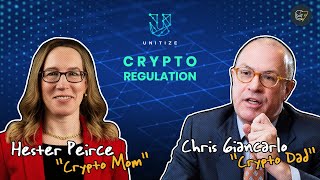
Legal and banking experts discuss CBDCs, stablecoins, and crypto regulation. CFTC Chairman Heath Tarbert outlines a principles-based approach and treats Bitcoin and Ether as commodities. Coinbase, Fidelity, and Deloitte leaders highlight gaps in IRS guidance on reporting, staking rewards, and cross-border compliance.
Chapters
Sam, California Western School of Law, one of the principals of GlobalLab at GlobalLab IO I want to thank Unitize and the Unitize team for being kind enough to have us host and co host the Regulatory Day here at Unitize Online. I've got a really spectacular lineup for you. We've got four panels that we've curated that we think you're really, really going to enjoy. This is Regulatory Day. So we're looking at the regulations or the lack of regulations in some jurisdictions and we're also looking at not only private crypto and blockchain projects, but also central bank digital currencies as well. Our first panel is on the dcep, the Digital Currency Electronic Payment Initiative from the People's Republic of China that when it's coupled with the One Road, One Belt, One Road initiative, which is a 71 country wide trillions of dollars investment and infrastructure development plan that's linked to the People's Republic of China, you can see the powerful potential and reach that the People's Republic of China ongoing work to be the global powerhouse in not just blockchain and crypto, but also artificial intelligence, 5G supercomputers, quantum computing, all sorts of technologies. Increasingly, we're seeing the made in China 2025 policy being a real game changer and will change the way that we understand currencies. As we couple that with the Digital Currency Electronic Payment Initiative of the People's Republic of China, you'll see the incredible power that this new initiative will bring to the global economy and the integration of different supply chains and data informatics. When we hear from Professor Douglas Arner of Hong Kong University, an expert on DCEP and digital currencies generally, we'll learn more about that. Likewise, one of the two co founders of the FinTech Study center at Fudan University in Shanghai, China, Professor Michael Sung, one of the leaders behind the Blockchain Related Services network that's being paired with the dcep. We'll learn more about how commercial industries can participate in the DCEP and how that's again going to be a game changer. And and when we hear from our good friend Dr. Henry Arslalian of Pricewaterhouse in Hong Kong, we'll learn more about how digital currencies at a sovereign state backed level will change how crypto generally will be accepted throughout the world, especially with this new RMB backed dcep. It's an incredible game changer as I mentioned, but also has an ability to displace the US Dollar as a reserve global currency or the reserve global currency but also we're seeing a US response not just to Libra and this idea of a private and incredibly powerful digital token system, but the digital dollar project that Christopher Giancarlo, a former chair of the Commodities Futures Trading Commission, who's also part of Unitize a little bit later today, is the architect behind. So it's a really exciting first panel on the DCEP as one of the central bank digital currencies. The DCE panel we're going to be presenting in a few minutes is moderated by Joshua James, also known as ponderjaunt in the crypto space. And he's one of the co founders in a really important leading light here in Southern California with the San Diego Blockchain Forum, one of the co sponsors and media partners of Unitize Online. A second panel is going to look at what California is doing. And in California we've got some leadership in the areas of blockchain and crypto. We're going to be hearing a little bit later from Senator Robert Hertzberg, who's the Senate Majority Leader in the California Senate, and his colleague Ian Calderon, who's the assembly leader and a state representative. Both of them together have been formulating incredibly important plans for, for California to take a leadership position in state oriented. When I say state, not the sovereign state, but the states, as in states rights. And as the federal government tries to figure out what to do in terms of legislation and the sec, we have a California response that we're going to learn more about. That panel is being moderated by Chris Groschunk of Coinstructure and the San Diego Blockchain Forum. So we're really excited about that. The third panel that we're really excited about is with Professor William Al of California Western School of Law and a securities lawyer here in Southern California with the Honorable Hester M. Peirce, one of the five commissioners of the securities and Exchange Commission renominated for another five year term. Commissioner Peirce has been called Cryptomom by fans around the world for her leadership and her forward thinking approaches to how crypto can be regulated in the United States and globally. So the third panel's a really important conversation and one of our keynotes and we're really, really excited about it. And then finally we're looking at other jurisdictions. We've looked at the People's Republic of China with our first panel. We've looked at what California is doing with states, approaches to the crypto space and then the federal response in terms of the SEC as one of the regulating agencies, crypto and Then finally, other jurisdictions moderated by our friend Mary Saraco from Settle Network out of Argentina. Mary is moderating a panel with Manny Rosenfeld from Israel, an expert on the blockchain space in that country. Also Jason Xu, the former crypto congressman and legislator from Taiwan and a regular participant in so many crypto conferences. We've also got Peter Deitess, former BIS bank of International Settlements economist, who's going to be talking about the sov, which is a sovereign digital currency coming out of the Marshall Islands, an incredibly important experiment. And then finally, we're also going to be hearing from Renato Obise Blum, a Brazilian expert on all things technology, but as he would call it, click Zinho, a little click. And an anti piracy expert, but also in the space of crypto, an emerging light for Brazil and the entire Latin American region. So this is the time when we need regulatory certainty, legal certainty, clarity. These are the things that help us plan our affairs. Innovation works. Regulators are sometimes late to come to the party, but sometimes they muck everything up. Luckily, we have leading lights like Hester Peirce from the SEC and a number of others whom you'll meet today to help guide what are institutions that are sometimes slow to react to these things. We've got legislators like Ian Calderon and Robert Hertzberg from California and others in Wyoming and Arizona at federal level as well, with different congresspeople taking on the digital dollar. In the initial PPP, the third stimulus package that went through earlier in 2020 as a response to Covid and to stimulate the economy, we saw an initial legislative package that included a digital dol. That project hasn't gone away. You'll hear more about that from Chris Giancarlo later in the regulatory day here on Unitize Online. But what's important is that we understand that we're so far from regulatory capture, we're in kind of a Wild west situation. Still combined with because of COVID 19 and the two year hangover after the party of 2017 and early 2018, a crypto winter. So how do we clawback? How do we make sure that regulations are in place to not only foment innovation and encourage capital formation, but also protect the investor, the MA and pa, the folks out there that could get taken to the cleaners by nefarious actors and no good nicks out there. So that's the purpose of Regulatory Day, to kind of look at the contours. Where are we? Where are the leading lights? What are the great sovereign projects where the state is making a comeback? The Marshall Islands the US under the leadership of the Honorable Hester Peirce, California, with Ian Calderon, the Assembly member and the leader of the House, and Robert Hertzberg, the Senate Majority Leader, and a number of other experts right around the world. So without further ado, let's get into our four panels. I want to thank Gabriel Casaris, Emilio Casares from the San Diego Blockchain Forum. I want to thank John Allen and Ronan Kirsch and Gabriel Yang from Unitize in the San Francisco Blockchain Week. I'd like to thank Deneen Dent and Coyote Garrison from the securities and Exchange Commission for helping us put together the panel with the Honorable Hester Peirce and to thank all of you for not only walking through this day with us, but for sharing your comments with the organizers@unitize.online. and you can always find us at the San Diego Blockchain Forum, sd blockchainforum.org My thanks to the moderators, Chris Groschong, Bill Owl, Joshua James and Mary Sirocco. Thank you so much for leading our panels and to our speakers and to all of you. Enjoy the day. Sam. Foreign. We're now going to move to our panel on the DCEP Initiative. This is the Digital currency Electronic Payment Initiative by the People's Republic of China. The panel is being moderated by Joshua James of the San Diego Blockchain Forum. Joining Joshua is Professor Michael Sung, one of the co founders and co director of the new Fanhai fintech Study center at Fudan University in Shanghai in the People's Republic. Joining Michael will be Dr. Henry Arslanian, head of the blockchain practice at PricewaterhouseCoopers in Hong Kong. And finally joining the panel is Professor Douglas Arner, one of the leading lights on the DCEP and generally digital currencies that are backed by central banks. Douglas Arner is a professor at Hong Kong University. The panel will be looking at the new National Digital Currency project from the People's Republic, which is very different than some of the other dozens that are being tested right around the world. If you read some of the reports from the bank of International Settlements, the central bank of central banks in Bern, Switzerland, you'll see that a central bank digital currency is defined by the BCS as a digital form of central bank money that's different from balances in traditional reserve or settlement accounts. And through its various studies, the BIS has found four motivating factors about why countries consider implementing a central bank digital currency. The first is interest in technological innovations for the financial sector, the second being the emergence of new entrants into payment services and intermediation. The third being declining use of cash in many countries and finally an increasing attention to so called private digital tokens. And in January of this year the BIS released a follow up report to its 2018 report which discussed trends in the initial report and pretty much confirmed that there are 66 central banks that are in some form of developing a central bank digital currency. And we're seeing amazing projects that have just emerged in the last year, whether it's from the Marshall Islands with the SOV or as I mentioned before, the People's Republic of China with the dcep. We're seeing them with a digital krona in Sweden and really right around the world. And as of October 28th of 2018, which henceforth will be known as Blockchain Day in China, Shenzhen and Suzhou were selected to be the first cities to be experimentation sites for the new central bank digital currency that China is piloting. There are four banks involved in preparing the system integration with the People's bank of China and they follow more specific procedures as it moves along. And there's a commercial piece to all of this that Michael's going to to talk about and that's the blockchain based service network, the bsn. It's incredibly important as more and more industry players layer their operations on and glean data from this exciting new initiative. And if you are interested, there is a blog on the Unitized online website that will provide a series of papers that some of our speakers have prepared. In fact, just recently Douglas Arner and his colleagues have published a wonderful paper on the DCEP called after the digital UON and the COVID 19 and that's on the Social Sciences Research Network. Again, please go to the blog and you'll be able to see some of these pieces. Likewise, Henry Arslan has a wonderful new book out with a colleague on digital currencies and cryptocurrencies in general. And Michael Tsung also has written extensively and you'll see a link to a recent CoinDesk piece that he wrote for the DCEP. So without further ado, I turn this over to Joshua James and thanks for listening. Hello, my name is Josh James and I'm representing San Diego Blockchain Forum for Unitized Decentralized DCEP Panel. And I'm joined with some of the biggest and brightest minds in the space when it comes to fintech and global finance. And I would love to have them be able to introduce themselves. So we'll start with you Douglas. Hey Jamie, Great to Josh Josh, Great to be here today with all of you to talk about this subject. I think we all agree that going forward this is going to be a real game changer, as Josh said. My name is Douglas Arnor. I'm the director of the Asian Institute of International Financial Law at the University of Hong Kong and I specialize in the intersection of law, finance and technology and in this subject, geopolitics. Hi, my name is Michael Song. I'm the co director of the Fudan Fannahai Fintech Research Center. Focused a lot on crossing the bridge of bringing a lot of international innovation into the China ecosystem and we are looking at a lot of the policy recommendations. I sit on also a national think tank called the China Institute of Economics and Finance and we're providing policy recommendations to the central government on things like finance, innovation, liberalization and fintech. Excellent grace. First of all, very excited to be here and thanks for allowing us the opportunity to share our passion on the topic. My name is Henry Arslan and really my passion and my focus in life is the future of finance and money. And I'm very lucky to be able to do this at the PwC where I'm a partner and I run our crypto practice globally. And then I'm also very lucky to do this in my academic capacity as well where I'm a junk associate professor at the University of Hong Kong where I've been teaching the first fintech course in Asia for the past five years, but also in my alter capacity as well where I published books, my last one being the future of finance, the next one being the future of money. And last but not least is actually my kind of advocacy and social media capabilities. You can see here with my Fintech Capsule and Crypto Capsule weekly shows which summarize in 60 seconds the global crypto trends you need to know. And my newsletter called the Future of Money that highlights the big topics on the future of money you need to know all of it on LinkedIn. Absolutely. And thanks again for being able to lend your expertise and your ideas towards this topic. Very hot topic right now globally. The news every week seems to either be something about China's central bank digital currency or dcep or something coming out of the Federal Reserve. We have a lot of talk around sovereign issued digital assets. So the first thing I want to kind of talk about is Michael, from your perspective, what is China's central bank digital currency and what is the strategy in issuing it so publicly in 2020? Yeah, so actually so this DCEP, the digital currency electronic payment, has Been a thing since, I would say in 2014. Basically the Chinese central government had already been starting researching IT and the PBoC, which is the People's bank of China, has since then become essentially the largest patenter of digital currency blockchain related patents in the space. So they were taking it quite seriously from the beginning. I think there was a watershed moment last May when Libra announced their, or Facebook announced their Libra Curse currency. Right. That made shock waves through the world. You saw the knee jerk reaction from European and American regulators. Basically when that happened, there was a digital currency institute that was set up in China which this was being researched. Ma Chengquin, who was the head of that and kind of like the shepherd of the digital currency strategy, rushed back to Beijing, convened an emergency workshop with a lot of officials and decided to get ahead of it. Right. The cattle's out of the bag. I think prior to this, if you looked in Davos and some of these ecosystems, nobody talked about digital currencies. It was kind of verboten and nobody, they just felt that it was just extreme. But now with Facebook, with billions of users coming online, potentially disrupting the international monetary system, the Chinese government decided to get ahead of this. So in late November of last year 2019, Xi Jinping at what we call the Fourth Plenary Sessions, which is one of the important meetups for the central government, announced two major things. One was the official launch of the DCEP itself and the second was China's national blockchain strategy. Both were quite hugely received. Bitcoin spiked, I want to say something like 40, 50% overnight. We got crypto enthusiasts now praising Xi Jinping, a very rare event. Having sort of the libertarians of the world, the bitcoin maximalists, say something nice about Xi Jinping because of course that that pushes digital assets agenda quite hugely, having essentially a sovereign nation and arguably the largest economy by PPP doing this kind of thing. So I think that's really where it's at. Absolutely. And I know that the. I know you mentioned Libra, Michael, and I'm wondering if, Douglas, maybe you can take an angle as to why China would want to get ahead of conversations being held in the west, specifically by a private company that works with social networking, See that as a threat potentially and are trying to control that conversation in spite of those conversations starting in the US with Facebook's Libra project. You know, I think Michael is exactly right. When we look at this and we think of. My team has looked a lot at this and we really highlight that the launch of Libra was a watershed moment for central bank digital currencies everywhere, not just in China, really. Lots of central banks have been doing blockchain 2019, but they were all sort of pilot experiments. See how it works, how can we use this? How can we use that? The ones that had sort of moved forward with digital currencies, generally speaking, were not major central banks. But with the announcement of the Libra project, this really changed everything from the global central bank perspective. This really highlighted the fact that there was the potential for a private company to come in and basically displace the central function of central banks in sovereign economies with a tech alternative. And so it really advanced the discussion everywhere. And we see almost immediately the convening of a G7 group to look into this, a follow up from the G20 from the financial Stability Board and what we've seen from surveys from the bis, in other words, and others, is a dramatic increase in the seriousness in central banks everywhere around the world looking at central bank digital currencies. And I think if we think of the Chinese context, because of the role that the state plays in the development of the economy, this would be seen as a very natural sort of threat. But it was also seen this way otherwise. And so we would actually highlight that the next step, the announcement in first October and then formalized in November about the digital yuan, was essentially a next pressure to central banks around the world to pay things up. But I think it's important when we look at the Chinese project to realize that it has these international factors that has the sort of geopolitical factors, but it's also a lot of domestic factors that are driving this. And if we think of this, one of those factors is really around the central bank having a better picture of what is going on in the economy. The payment system. It's also about linking together together China's various payment systems, its alternative payments, its traditional payment systems, in something that is much more sort of manageable. It's about enhancing surveillance. And I think as Michael highlighted, it's about taking forward the tech innovation agenda as well. In other words, if you combine a central bank digital currency with a national blockchain system, that brings together really two of our key pieces that in most places have been a real challenge and that potentially gives the ideal platform for taking forward other sorts of blockchain projects to support a variety of tech innovation. And of course finally, it does potentially together begin to build a platform which could be used to internationalize to a greater extent the RMB or at least operate separate from other sorts of western dollar based systems. I think when we look at the Chinese project, we have to realize that it's domestic factors that dominate. But the catalyst, the accelerant really was this Libra announcement. And it was the Libra announcement and the Chinese announcement that is catalyzing a lot of others going forward. Absolutely. And I think you brought up the key phrase when all this is, and it's payments and it's global payments and a lot of these governments and economies are looking at remittances, specifically how labor moving across borders translating to economic impact is meaningful for their projections. And I think we're starting to see some of these digital asset payment companies starting to talk with governments and central banks in a little bit more honest capacity than maybe 2016-2018, where it was almost antagonistic to banking. We were dealing with a lot of KYC and AML issues at the time, which I think expedited this need for a standardized messaging type of movement globally. So Henry, I know you come from a fintech background. Is there anything that you can kind of talk about in terms of the importance of standardized messaging with payments? It's an excellent point. And just on your point, Josh, you just mentioned, I think you hit it spot on. Right. So even if we look globally right now, at a country level, within a certain country, normally payment systems may not be perfect, but they work okay. You know, either you have systems like in China, you have Alipay and WeChat Pay, or within the central bank system, what we call RTGS systems and the likes, where again, it's not perfect, but it works okay. The problem is exactly on the point you mentioned, which is the cross border level, the remittance level. But just to give you an example, today the average cost of cross border payments is around 7%. And this is actually quite material because you have over 250 million migrants sending around $500 billion a year. And obviously you can imagine it's often the ones who can afford the least who are paying the highest fees on this perspective and in many emerging markets the percentage is obviously way higher than 7%. So I think that's the kind of, that's a direct problem that not only many central bank digital currency initially are trying to address, but frankly that's what Libra is really trying to address as well. And I think when you look at it on a more holistic perspective and a bit what Douglas mentioned as well, if you're a central banker and you love Bitcoin, you're crazy. It's a Bit like a taxi driver being excited to see Uber come in their market. Right. But of course what happened over the last couple years a lot of central banks realized that there's a lot of actually particularities that they can be using themselves and a lot of these discussions were happening. Libra, as Douglas and Michael mentioned, really catalyzed us and I always say kind of half jokingly that everybody in this ecosystem, we should send a bouquet of flowers to Mark Zuckerberg to thank him for bringing this conversation on top of the agenda of policymakers around the world. But also there's a lot of, I think the benefits that we need to think about. Right. Not only first of all, all the CBDC conversations have evolved, you know, two, three years ago, a lot of last two years, even until recently, a lot of the conversation around CBDC was around what we call wholesale CBDC which is between the central banks and the different member banks or financial institutions are involved in. That's great. Is there really a game changer? Probably less not because it doesn't impact people on a day to day basis. Where now with Libra and obviously DCEP in China has really moved. The conversation is on retail CBDC and in retail CBDC there's different kinds of retail CBDC and that's where the fintech companies can come in. For example, there is a two tiered system which is where you issue these central bank digital currencies by existing banks or financial systems if you want. Sweden is a good example in their latest proposal in 2020 is proposing that China as well. I'm sure we'll talk about it in a couple min as well. The digital dollar in the US that former CFTC chairman Chris Giancarlo is putting forward has a variant of that as well. The second one, so that's the first category. The second one is what we call the synthetic CBDC which is actually put forward by Christine Lagarde in the IMF last about a bit more than a year ago now where they really it's kind of a stable coin, but where the stable coin issuer kind of has access to the central bank reserve, a bit like a bank. And there's a number of benefits that we can talk about this. And the third model, which is probably very interesting for fintech companies is what we call the platform model which was initially brought forward by the Swedish in around 2018. The Swedish Central bank and probably now the bank of England really brought this forward with a tech platform model and the Dutch as well a couple weeks ago put this forward as well, which is kind of where central bank puts forward a technology infrastructure with standards, with API calls and everything you just mentioned, Josh. And then banks, but also non banks, fintechs can plug in and that's very exciting because it can really transform and kind of creates a level playing field to a certain extent between not only financial institutions but also by non bank fintechs. And that's not only beneficial for the financial industry more broadly but also most importantly for the users of financial services. That includes many of your viewers and most people around the world. Absolutely. That's spot on Michael. I mean we've talked a little bit about Libra, we've talked about why payments are important and standardized messaging are important around the world. Is China sharing those types of beliefs and thoughts? Are they looking for a different strategic advantage or is payments the focal point both domestic and abroad for dcep? Well I think they're holding their long term strategic cards close to the chest. So we can only imagine what the long term strategy is. Some of these considerations that you allude to, certainly what's been announced has been a more modest form of things. Basically the idea here is that it's going to replace the M0 money supply. So they're not trying to disrupt the whole system. Swift or major large scale money transfers. Cross border is still going to be the dominant play. They're interested in basically replacing cash, digital cash. So very small ticket SME settlement type stuff and they're already going to test beds now notably in a handful of cities like Shenzhen and Xiong'. An. You know some of the big multinationals such as Starbucks and McDonald's now have digital wallets which can receive their fiat backed digital currency. So they're in testbeds. When they will actually go and scale that to larger deployments remains to be seen. But certainly I think for my perspective there is a international strategy here, right? China has this belt and road initiative. It's 150 countries, 2/3 of the world's population, 1/3 of global GDP and importantly it's most of the developing areas in the world, right? Anything prior to Covid growing at over a few percent a year GDP growth. They're a belt and road nation. And so strategically to provide connectivity, what we call the digital silk road with the blockchain infrastructure is one aspect of that. But where, you know, whereas before they're building a bunch of infrastructure, right, they spent you know, upwards of, you know, a trillion dollars on, you know, laying out high speed rail and ports and stuff like that. But where are you going to lay high speed rail, you're going to lay down telecom infrastructure and you're going to light up the world and that's going to provide, you know, the last 1.2 billion which has been excluded from the financial ecosystem. Now if you give them digital wallets and they can do cross border payments and it's going to facilitate trade, especially in this sort of post Covid environment where you have fragile SMEs in a lot of these developing worlds to give them the digital economy tools to latch onto the rest of the world and to be able to have the financial inclusion to do banking type services but without the need for a bank. This is going to be huge in the development of these digital economies of the future and China will have a very strategic role in that. Absolutely, completely agree. I think those unbanked or underbanked populations around the world are going to see access and inclusivity to some of these tools that I think were pipe dreams maybe five, ten years ago without massive infrastructure spending. And I think China already sees the, the potential with that. Professor Arnor, do you have an opinion on some of the benefits of increasing the speed of settlement for transactions and payments or what are some of the inherent, I guess, benefits of such a system and why is it being proposed now and why is it being rolled out so rapidly? Banks don't necessarily love to be on the bleeding edge of technology. So what is special about this type of faster payment system that really has them excited? I mean, I think there's a number of things that I want to pick up from that question and also from what Michael and Henry have said. And the first is this idea that when we're thinking of China's central bank digital currency, we're thinking about other central bank digital currencies. We're really looking at the specific situation of each individual country, each individual financial system. In other words, there are a variety of different ways that we can design systems and those systems can be designed to achieve different sorts of things. Now if we think of it from the standpoint of quite a lot of developing countries, one thing that they may not have is a well functioning domestic payment system. So if you're in an environment where you don't have a well functioning domestic payment system, focusing on a central bank digital currency system that is essentially a mechanism to put in place an effective interoperable national payment system makes a great deal of sense. If you are something like the EU with a single European payments area, or if you think of China with its existing electronic payment systems, you Know, these are already very sophisticated electronic payment systems. What you don't necessarily need is to replace those. You want to put something together that supports or brings them together. And I think if we look at the Libra point, we think of this idea that of course Facebook initially highlighted and still does the sort of remittances financial inclusion angle. But there was a lot of skepticism. But I think increasingly what we're seeing are discussions amongst the private sector and public sector about how can we actually use technology to achieve those objectives of reducing remittance costs and increasing financial inclusion. So if we are thinking about faster payment systems, if we're thinking about payment systems, they have really the potential to link parts of the economy together in a way that has not happened before. This was the transformative potential of Alipay or WeChat Pay or UPI in India or the single European payments area. But also from a local but also a cross border standpoint, depending on the design, they may have the possibility of reducing costs for users. Now if you are able to do these things, what they allow you to do is bring a lot more people into the financial system at a lower cost, which benefits those individuals, it benefits the wider societies, but it also creates new business opportunities. So when we think about payment systems, payment systems are the blood of any financial system, any economy. And so when we are looking at designing, using technology to make those better, we start by looking at the domestic or the international system to figure out where the problems are. The reality is that increasingly the technology is there to solve many of these problems and I find that incredibly exciting. Absolutely. Agreed. Henry. I know again, the banking angle for why distributed technology is so exciting is definitely solidified in payments. But are there any other avenues that you see excitement coming from? You know, traditional fintech, maybe money servicing businesses that are doing things in a different way that banks are noticing and they might even attempt to scale them up into their own institutions. That's a good question. And I think there's a couple things to note about. Right. Is that what's really interesting with the conversation we're having right now in the broader ecosystem system on CBDCs and Libra is that any bank CEO today needs to at least understand what is taking place right now because whatever is happening in the space will have an impact, which was unnecessarily the case in the early days of CBDC conversations. I mean, just to give you one example, one of the big risks that actually a lot of policymakers are worried about, central bank, digital currencies, is the risk that it may accelerate a bank run. So let me give a very simple example for your audience today. If I don't to want, I do not trust the banks anymore. I can go physically to my ATM and try to withdraw all the money physically that I have and try to bring it in my apartment. There's obviously a physical limit to how I can do that. And you know, for obvious reasons, it's not very practical. The difference with a central bank digital currency is literally I can put all my money literally in seconds on my iPhone, right in a digital wallet. And this is actually so one of the big risks for now, bank leadership is that what, in the event something like this happens, this may accelerate the bank run way faster than people waiting in queue and waiting for the limit of what they can withdraw physically, like it is often the case today. And this is why a lot of policymakers, when they're exploring CBDCs, many of them have made it very clear that if a CBDC moves forward, there will be a limit to how much can be used by people. For example, the great example is the Dutch and the latest proposal where they recommended amount that goes between 3 to €4,000 for people to be able to use. So it does not really impact monetary stability or financial stability, which is very important from that perspective. The other thing as well is for banks is the funding rates. Right now, when I deposit my good old money at the bank, the bank is able to use that we call this fractional banking. We're able to lend it out and do other things with that money. However, in a CBDC context, if I prefer to hold part of it in my digital wallet, the bank obviously has less deposits. And what that means is for funding purposes, they have to go get funding somewhere else, which what in the industry called as wholesale funding, which increases their funding rates and increase profitability of banks. So I think that's one thing we have to keep in mind. And this is why, unlike other conversations on the future of money, this is something that I think really has come also not on top of the agenda of policymakers, but that of leadership of banks as well. And I think that's very, very interesting and very important. Absolutely. Agreed. Michael, do you see the people's bank taking some of these design decisions to heart? I mean, it's been going on since 2014. It looks like a rapid deployment. Post Libra's conversations about globalized payments, what is driving the design theory behind the dcep? Well, like I said in the beginning, it's just to replace the M0 money supply. They are trying to basically create an alternative backed by the central government. I mean, in China it's a little bit of a different scene. We have a dominating payment scene between WeChat and Alipay. And actually because of digital commerce, there's a huge online adoption in China by consumers. So already the country is largely cashless. That being said, we saw that as an important functionality, perhaps even United States, United states issues this $4 trillion plan. They have no ability to give the stimulus to individuals. I mean, they're sending out paper checks to everyone, to people who are dead. Right? And so, you know, it's not very efficient. Imagine a digital currency linked to a digital wallet and the central bank can literally direct deposit to every Social Security citizen in the country. So those are very interesting functionalities. One other, another notable one is I think it's been clearly shown that stimulus money is not effectively used. It does not trickle down to the lower people, the people who have it, that is the banks and the corporations have access to this easy cash, don't really do things that are in benefit of the overall economy. So in the first financial crisis, global financial crisis, if we trace back the billions of dollars that were given to the banks to industries like the airline industry industry, a vast preponderance of that money ended up in stock buybacks. Right. Basically the people who got access to the easy money use that to prop up their stock prices and to enrich themselves because they have the stock options as the leadership in those companies. Basically a financial accounting trick. But that money didn't actually go to fragile SMEs to stimulate the economy, etc. Etc. So there is the possibility now with programmable money that you can actually literally program in and stipulate where this money could go. And there's a much more fine grain control that the central bank could have. So these are, I would say, quite disruptive concepts. It's going to take years and years before say the People's bank of China or other countries can really wrap their heads around, do the simulations, do the economics modeling to see how this would affect the economy. But I think in general having these tools overall will benefit society in some form to have that flexibility. Absolutely agreed. So I wanted to kind of shift gears a little bit here and start to talk a little bit about how the competitive side of a central bank digital currency issuance could create conflict. I mean, interoperability is a wonderful concept and we know that. I think the world would love to be very nice to each other when it comes to finance, but as we see these central banks jockeying for control, I mean, we already understand that the dollar is dominant in global economics. Is there an opportunity for China to come and challenge that dominance with their central bank digital issuance? Or is this a part of their continued modernization attempt? Is this the leapfrog opportunity that we're witnessing right now? And let's start with you, Douglas, and feel free to just go around clockwise. And I want to get all of your thoughts here before you wrap up on that. You know, I think there are a number of different ways this can go, but certainly what we are seeing is with more and more countries engaging in CBDC projects, one of the biggest challenges and one of the biggest opportunities going forward is going to be the interconnection the between those different systems. And in some economies, the CBDC will be competing with a range of other types of monetary and payment instruments. I think we look at the digital dollar proposals in the US you're still imagining a cash based system. You're imagining traditional payment system. The digital dollar system is not meant to sort of replace everything as an underlying infrastructure where as if we think of the Chinese sort of structure, the idea is eventually that it will be not having competition in the context of monetary functions, that it will be an interlinking monetary instrument across all of the, in many ways currently non interoperable domestic payment systems in China. And so one of our questions is domestic interoperability, but also internationally. And that kind of depends. And if we think of the Chinese proposal at the moment, it is largely limited to operating within the context of the borders, the physical electronic borders. But one can imagine how in the context of those electronic borders, if one integrates the system with say the RMB swap lines that are already engaged in a range of different countries, that sort of RMB electronic area can be expanded outside. Now another way would be that you could actually allow the tokens to be used and circulated freely outside of the Chinese Internet or blockchain or payment system environment. But as Michael highlighted, that raises real questions from the standpoint of monetary policy, from the standpoint of capital flows and the like. So I think at the moment we're looking at something which is not necessarily being posited as a direct competitor, but what I think we are seeing discussions around and I think we have to differentiate here between two classes of countries or central banks, major economies, major currency issuing central banks. And that's basically the Federal Reserve, People's bank of China, European Central bank, those are your major country major currency central banks, those are different animals than everything else. What Canada or Sweden or the UK or Singapore, Australia or Saudi Arabia may do is all really interesting and nice, but the rest of the world is not potentially going to be adopting that in the context of large scale economic or financial transactions. So there is definitely an element of the, of potential geopolitical, not necessarily competition, but potentially alternatives or even fragmentation going forward. Absolutely. Henry, do you have any last thoughts on that point? Yeah, no, I totally agree with a lot of the comments that Douglas meant. I mean, a couple of things I would mention is that I really believe that, you know, we've had the race of space, we had the race to technology, now we're definitely having this race to the future of money. And I think arguably, and I think many of us would argue in the ecosystem that China, as Michael pointed out, has been looking at this since 2014 and Asia, China is way ahead of everyone else on this particular topic. I think on the global perspective, just to add to what Douglas was mentioning, I think we're going to have, I think there's debates not only between policymakers but really trickle down to people because I think we're going to have this debate between. First, privacy. One of the great things with central bank digital currency is actually from a policymaker perspective, you can see the impact of your activity, but also you see the transactions. So I think as an individual, do I want all my transactions to be public? I think all of us, maybe the beauty of cash is I can make certain purchases without my wife seeing it, or vice versa. Right. I think there's a lot of things that people forget, the anonymity element and to be fair, that's being discussed in certain CBDC proposals that are being put into place. But I think that's one thing we need to have and the second one as a discussion we need to have is really some of the problems that it's going to solve. We discussed financial inclusion before, but another one is like money laundering. I really believe that the first real CBDCs will give us a real, for the first time, a fighting chance against money laundering and corruption. Because obviously on a CBDC perspective, you can trace them. And I think that's going to be very interesting to see how that evolves over the next couple of weeks and months. And really I think the catalyst for all this that really makes it very exciting is COVID 19. Obviously COVID 19 has had a devastating impact on many, many sectors of the economy and society. Ironically, on this particular topic, I think it's acting as a catalyst not only because People are afraid to touch money because of the risk it can transmit the virus. Not only because ironically, it's happening like the bitcoin halving that happened a couple weeks ago. It's happening literally at the same time. We're having records number of quantitative easing, but also as we are seeing some of the direct gaps in the current system. As Michael pointed out, right now the US government is sending 100 million checks checks to people to be able to get it. And ironically, what we're having now, one phenomenon is we're seeing that we haven't seen not only since the gfc, but since the Great Depression. We're seeing towns and cities start issuing their own currency. I'm talking about it actually in my newsletter this week just to be able to give access to their local ecosystem in their community or little town. And this for me shows that there's a problem. And thankfully we have from a technological problem perspective, where you have a solution from policymaker perspective, we're getting there. And I think that's very exciting when it comes to the future of money, which impacts the future of society, future of finance. And that's very exciting, that perspective. Absolutely fantastic, guys. Well, I very much appreciate your time and expertise. I think that's all the time we have for today. But I mean, there's so much more going on with central bank digital currencies that the rest of 2020, I'm sure is going to be jam packed with a lot of exciting additions and news. So, so we'll, we'll have to have another conversation, I'm sure. But I appreciate your time again and thank you so much. That's going to do it for the DCEP Unitized Decentralized panel. Thanks for watching. Thanks for having me. We now move to an examination of California's contribution to blockchain regulation. Our fireside chat is with Christopher Groschung of Coinstructive, who's going to be the moderator. And with Christopher are two of California's leaders with respect to blockchain regulation and so much more. On the technological front, California Assembly Majority Leader Ian Calderon is going to be joined by California Senate Majority Leader Robert Hertzberg with Chris to discuss the California Blockchain Working Group update and the various forms of legislation that the two legislative leaders are developing to place California at the forefront of blockchain innovation and regulation. We're really excited to have both Assembly Majority Leader Calderon and Senate Majority Leader Robert Hertzberg with us today. And I'll leave this with Chris to continue the conversation. Welcome, everybody. To the California Blockchain Legislative panel. I'm your moderator, Chris Groschaw, and I'm joined today by the majority leaders of both California's assembly and Senate. California Assembly Majority Leader Ian Calderon and Senate Majority Leader Bob Hertzberg. Thank you both for being here. Thanks for having us. So, assembly member Calderon, do you want to give us a quick introduction to yourself and then followed by Senator Hertzberg? Sure. I was elected in 2012 at the age of 27, first the first millennial ever elected the state legislature. In 2016, I became the majority leader, the youngest majority leader in the history of the state of California. I've loved every minute of being in the legislature, most notably working on a lot of tech issues and as this group would know, working on blockchain, crypto type issues over the last couple years, because I've noticed the opportunities that can come from this industry and what we could do in California with this technology. And, you know, I've had a lot of opportunities to work with my great colleague on these issues in the Senate. And we just completed our work with the Blockchain Working Group, which is a group that we set up a couple years ago, and we'll be submitting our report to the legislature actually now. So we're excited about what's going to be coming from that and excited to be a part of this panel. Great. Thanks, Senator Hertzberg. I love working with Ian. I love the perspective and the energy he brings to this process. I served as speaker of his House, The California Assembly, 20 years ago, and I'm majority leader. I left government for 12 years and I traveled the world. I took two companies public in the solar space, but it really wasn't solar. It was kind of the high tech energy space and had offices in Germany and China and Sri Lanka and Indonesia and Africa and been all over the world, the raccoon stuff, and came back to government. Have always been deeply interested in technology and think that this is an area where we, you know, one of the great challenges in government, wherever you are, is that government looks backwards all the time. There are places where it's hard to invent the future. It's hard to crack the status quo and all of the people that are comfortable, the folks that have relationships. And so when you work in blockchain or crypto or any of these areas, the fact that you've got the majority leader in the assembly and me pushing this kind of this stuff, it's very slow and very challenging. But, you know, you've got this great brand of California for all your people that are listening from all other parts of the world, whether from Korea or China. And you know, we face the same challenges despite what we see in Silicon Valley or Silicon beach down in Los Angeles and the like. But it's, it's very, very difficult in government to begin to figure out how to regulate, do the kinds of things that are necessary to regularize these new kinds of thinking. And so with that, I will turn it back over to you and happy to answer any further questions and very happy to be here with my handsome friend for many, many years, Mr. Calder Bowman. He does have a good set of hair, I'll tell you that. He does. He's a great athlete. Let me tell you something. He's a better athlete than he's allegedly. He's one of these natural guys. You hate that no matter what he plays, he's perfect at it. Could be worse. Could be worse. All right, so for those of you who don't know me again, my name is Chris Groschong and I'm the San Diego chapter lead for the gba, the government Blockchain association, as well as one of the co organizers for the largest bitcoin meetup group in San Diego. I'm also a founding member of the Unific Ties Conferences community partner, the San Diego Blockchain Forum. Certified fraud investigator who focuses on helping victims of cryptocurrency scams and thefts. And in 2019, I served as an expert witness in a federal fraud case involving bitcoin and Monero. But my foray into policy and legislation advocacy work started actually back in 2016 when my company, Constructive, helped co sponsor along with Microsoft and block a document called Protecting Consumers in the Digital Currency Economy. And it was published by the Consumers Research Group out of Washington D.C. and in 2017, I was a proponent of and helped shape the Uniform Law Commission's urvcba, which is the Uniform Regulation of the Virtual Currencies Businesses act, which we'll get into a little bit later. And through my volunteer efforts with California Blockchain Working Group, I'm hoping to help shape that legislation of California. And I was feel very fortunate enough to be able to get to know the both of you and work with you over this time. So this has been really great. And so I want to jump right into the two of you are the only California legislators who have proposed bills or enacted anything that's related to blockchain or cryptocurrency. And so I want to start with the one where the two of you worked Together jointly on which is how I got to know all of you, which is AB 2658, which you mentioned, Majority Leader Calderon, about the California Blockchain working group, and it was co authored by you, Majority Leader Hertzberg. So. And you mentioned that they're just getting ready to release the report that they worked on for the last 12 months or so. So I was kind of curious, Mr. Calderon, Majority Leader Calderon, where did you and your passion for blockchain and distributed ledger technologies come from? What was your goal by trying to initiate the bill to start the working group? So, you know, I wasn't necessarily familiar right away about blockchain technology. I mean, I think like a lot of people, you've heard of different cryptocurrencies like Bitcoin, Ethereum, but I mean, at least for myself, and I'm still learning every day, but at least for myself, I really had no understanding what these technologies were and what blockchain was. And as I got to talking to some of my staff, I asked them to put together something to help me understand blockchain a little bit. I mean, of course I went on Google and tried to read as much as I could to understand blockchain cryptocurrency and see how they work together, which is great. But then I started thinking about, you know, there are so many things, you know, I'm the co chair of the Legislative Tech and Innovation Caucus. And so, you know, I want to find ways that we can modernize government so that it can be more effective and more efficient in the job that it does in helping our constituents. When you try to go to EDD and get some help because of unemployment benefits or disability benefits, whatever it is, you know, it feels like it just takes forever. It's a long process and that there's significantly under gun, but if we have technologies that can help speed up that process and make them more effective and more efficient, that's what we need to be doing as a government. When I take a look at voter participation, you know, I see voter participation as something absolutely paramount. It is paramount when it comes to a functioning democracy. But you know, getting people to show up to vote or even fill out an absentee ballot. Now as you hear all this political rhetoric around it now being a corrupt process or easily corruptible process, you know, you need to find ways to be creative, to engage people, get them to participate in democracy. And so being able to use your phone to vote is something that I think is in our future, but you need to be able to have an underlying technology that can secure the validity of the elections and make sure people are confident in its ability to deliver the results uncorrupted. And so, you know, as I looked into these things and learned a little bit more about blockchain, it just seemed like this is a natural technology that can fill a lot of these holes and fill a lot of these voids. We're also California, where we're a tech leader, and I want this state to continue to be a leader for the future in tech. And the only way we're going to do that is by recognizing and legitimizing through regulation, technologies like blockchain. And there are just so many different applications, and there are a lot of applications now, and they're going to continue to be new developments and new applications that are in the future. But there's such an apprehension among the legislature to take action on these types of issues because it is new, it's unknown. And, you know, when you don't know something, you don't understand something, you would rather just legislate it into oblivion so that it can't exist because you're afraid of it, rather than, you know, put some guardrails up and say, okay, here's where you can move forward. And so that's what really motivated me to work with the majority leader, Hertzberg to create the blockchain working group so that we can come up with the best uses, practices, and potential regulations when it comes to blockchain technology. But to have a panel of experts, you know, from the tech side, business side, all the way to the consumer protection side, say, okay, here, look it. This is what you can look at to help further California's blockchain initiative. But do it in a way that's not only going to be beneficial to business, but also provide that certainty when it comes to consumer protection that is really necessary. And I want this technology to flourish in California because I know us and I know our ability to properly regulate technologies and to be able to have our touch. And, you know, if it can work here, it can work anywhere, but we need to be able to have our touch and to be able to serve as a model for what other states and potentially the national, the federal government, at least federal regulators can look at in terms of what works and what's viable and what's not viable. And so that was the point of the blockchain working group and why I moved, why we wanted to move in that direction. And I think that we were able to cover a lot of ground and create, including creating a definition of blockchain, which was very difficult. But essentially the definition of blockchain that we decided was acceptable is that blockchain is a domain of technology used to build decentralized systems that increase the verifiability of data shared among a group of participants that may not necessarily have a pre existing trust relationship. Any such system must include one or more distributed ledgers, specialized data stores that provide a mathematically verifiable ordering of transactions recorded in the data store. It may also include smart contracts that allow participants to automate pre agreed business process. These smart contracts are implemented by embedding software and transactions recorded in the data store. It's a lot there, but it took a long time, Virtually the entirety of the meetings that we had to come up with that definition of blockchain so that we can be clear on what we believe blockchain is, but not too overly prescriptive, so that we cut ourselves out of whatever future technology and whatever future, you know, life this technology takes on. So I'm satisfied with where we're at. But now the legislature will need to act based on the report. So, Majority leader, Senate majority leader Hertzberg, I'm going to direct this question to you. So how do you think this report will affect the passing of future blockchain legislation in the state? Let me just frame it. I got interested in blockchain for a couple of reasons. Back in more than 10 years ago, I was in Estonia and I saw what they did in Estonia. I think it started in 2007. And you know, one of the great challenges we're facing with this explosion of the Internet is privacy. We did a privacy bill and measure here in California. Was it in 2018? We've got one on the ballot now. You know, this balance where on the one hand we're trying to take advantage of this extraordinary technology that helps people in so many ways, but it has these extraordinary unintended consequences in the form of the privacy issues that a lot of businesses are allowed to monetize. What the blockchain I saw was really interesting, both from a government perspective and a privacy perspective. It was a way to create trust. It's what Ian said, the most important word, trust in the system, that you don't have phony people and fakery and the kind of stuff you've got to do chasing down fraud. Secondly, as we begin to develop the larger dynamic of, of this technology and what it can do, whether it's food security, go down the list of all the incredible opportunities that blockchain has, some companies have started to deal with it. Some of the jurisdictions have started to deal with it and vaccines and healthcare issues and this stuff. It's just when you marry the trust issue, its opportunities are incredible. But the point that Ian made is the most important. When you start this process, you just can't jump in and start it. It makes people's hair go on fire. They don't know it's too insecure. They don't know too many companies and interests or what is impact to labor in terms of, can you track employees? What's the impact on businesses? Are you creating a competitive advantage over one business or another? And it just gets gummed up in the works of government where everybody's voices are screaming at the top of their lungs and you don't get work together. I started out and I wanted to do, after meeting with the Prime Minister of Vanuatu, I wanted to do real estate transactions. But you can imagine what the title insurance companies said to me when that happened. So, you know, I ended up doing a cucaracha bill involving shares and interest to be able to. I could talk about a little bit later when you're transferring your shares in a company. But what Ian said is critical. You got to start out with a framework of credible people. You got to understand what the hell blockchain is and create a definition. I remember I went to the Table Tech caucus and talked about my blockchain bill. Somebody leaned over and bumped me and said, what's blockchain? Right. They think it's the chain around your swimming pool. They didn't know. And so you've got to get the credibility. The framework, it was a necessary starting point. It's slower than I like to work, but it is absolutely as essential of a building block to be able to then work on and gradually move into, whether it's marriage certificates, death certificates, title company, all the other kinds of things that Ian talked about that will ultimately roll into. But you have to build the foundation. You got to pour the concrete with some rebar. And that's what Ian Calderon's bill did. Yeah. So that actually kind of leads me right into the next question for both of you is what do you think can be done to actually bridge the knowledge gap with your colleagues? Is it more hands on, like, approach or like, what do you think is. Is the right way to get them up to speed so they can make informed decisions when they vote on these bills that you're both proposing? Ok, look, I think that I turn on a television set and I see the commercials by IBM using blockchain technology or the stories of coffee to trace your stuff, food technology, there's some applications that are quite attractive when people are worried about whether something's contaminated. If you remember the Tylenol case where everything was pulled off the shelf, well, if you had blockchain, you wouldn't have had to do that. Right. So there's a lot of attractiveness in the private sector as it begins to start to grow. And my sense is, as you marry those things we've seen in many other jurisdictions, in Texas and all across the country where other states are starting to do it, and you're starting to see in conferences, the national speakers conference, the majority leaders conference, these various legislative conferences of these things starting to create some legitimacy. Because what happens is in the beginning, the Internet was all about pornography. In the beginning, blockchain was only about bitcoin. And people are beginning to understand its extraordinary dimension and applicability on smart contracts. One of the great things we have in California, which organized labor is a big deal, they're really working, worried about people with wage theft. Well, smart contracts, you can avoid the wage theft problem. These are new tools available to government. So by socializing these with some of the traditional constituencies, the environmental community, labor community, and the like, I think you're going to see in very short order this really growing dramatically as a very viable technology that helps us in so many ways. Great. So actually, I wanted to ask you, Majority Leader Hertzberg, some of the recommendations from the California Blockchain Working Group report are already being proposed as bills. And so can you talk a little bit about Senate Bill 373 and also then talk about Senate Bill 838. I don't know numbers, which ones, which I know subjects. So 373 is the county recorders, the vital records, and then the second one is the corporate records, articles of incorporation. Okay, so with the corporate records one, it goes back to what I was saying in the first meeting, like, what the hell is blockchain? I just wanted to stand on the Senate floor to explain what blockchain is, how it worked to my colleagues. Right. That's just the honest answer. And so what happens is, you know, I wanted to start out with. I said, with land title. Well, I put the title companies out of business because with blockchain, they're a scammerino. They don't exist anymore because you can validate a title. You don't need to spend all the dough on a. All that money on that stuff. So I wanted to find a place where I could at least enter, put my toe in the water. And what happened was a few years earlier, we had a problem where somebody had stolen money out of a transaction up in San Francisco on something. And the idea was they basically, the way you steal money, as you know, Mr. Fraud Investigator, is you go in and you sign a phony baloney resolution, you give it to the bank with the articles of incorporation. If you work for ABC Company, you open an account for ABC Co, you steal their checks, and you move them to your account versus their account. Well, if you had the articles of incorporation, which had a blockchain requirement for shareholding interest, the bank would say, okay, are you a shareholder? Well, at that point, you were caught, right? So the idea was here. And we had a situation in Southern California, situation in Northern California. So I use those examples and made it voluntary. And we've seen some companies do this to begin to put their ledgers on blockchains. The only purpose was what was the easiest way I could get the argument without getting blown up by all the interest groups. That was honest answer. Second thing is, I wanted vital records. And when I got to the Privacy Committee in the other House, they gave me a big haircut. And they took out death certificates and birth certificates. They left it to marriage certificates. I think gets done in. What's the state that does marriage certificates? Washoe County, Nevada, does marriage certificates. And they gave me a haircut on that because too many people were worried. But the folks in the marriage certificate world said it was okay because you got to talk to the clerks. You know, this is a world we gotta talk to these guys. In my view, again, just getting your nose under the tent. So those were just efforts to begin to introduce the technology. And as Mr. Calderon was saying, getting members so hard to get members comfortable with new ideas. And this was just those efforts to try to do that. Okay, cool. That makes a lot of sense. And I think that, you know, we take for granted that you have to run the gauntlet essentially, to get things done at the highest level. So we appreciate all of your efforts to get things, you know, enacted. But the secret weapon you've got here is you've got the majority leader in the Senate helping the majority leader in the assembly, and you got the majority leader in the assembly helping the majority leader in the Senate, otherwise none of this stuff would pass. I totally understand. Yes, I can see where that's coming from. So I kind of want to stay on the topic of corporations and blockchains. And as Majority Leader Calderon, could you talk a little bit about AB 2150 that you introduced earlier this year. Yeah, AB 2150 was just clarifying what digital assets should qualify under California law as a security. When we were figuring out what we wanted to do, because I wanted to do a cryptocurrency specific bill, but I also wanted to do something that was going to pass. What Senator Herzberg said is absolutely true. You try to start with the low hanging fruit so that you can move the conversation forward, because once you get here, it's easier to get here rather than going from here to there. So, you know, I sat down with a couple of industry folks along with Manny Alvarez, commissioner over at dbo, who's our regulator. You got to tell people in Korea and the rest of the world what CBO is. Yeah, yeah. So we sat down and tried to figure out, okay, what would be the best approach when it comes to, you know, allow creating some law that will provide some certainty, some regulatory certainty, certainty, legal certainty to the crypto world, but also provide some help to our regulator, which is the dbo. So ultimately we landed on clarifying that certain digital assets like blockchain, Ethereum, do not qualify as securities. And, you know, we didn't just kind of come up with this. I mean, as you know, and I'm sure people are looking, when you take a look at the SEC and their node, their 14 page notes and everything that they've been saying, you know, they've already said that these digital assets should not be considered securities. And what's really difficult for a lot of cryptocurrency companies is that the only way, if, you know, somebody brings a legal action, only way to have this issue adjudicated is by going to court and having the Howie test applied to it, which is a judicial test. And so this isn't something that can be done until you're in the court. And, you know, so looking at what the SEC has already done, looking at previous case law, we decided on clarifying that certain digital assets do not qualify as securities. Right away it became difficult in dealing with the DA's, and ultimately difficult with dealing with the Department of Justice. And so we had to pivot a little bit. But basically, when it comes to the DA's and the Department of Justice, the prosecutors, prosecutors, they already have a lot of power, but part of that power is derived from potentially uncertainty in the law, being able to not have something necessarily so specific that they can take advantage of that and use it as a broad net to capture a lot of folks. And they like having that ability. And so the DAs and the Department of Justice raised some serious concerns over the last two weeks, and we've been trying to work through. But essentially what they told me was that no matter what, we are not going to be okay with this bill moving forward, even though we received, you know, 60 plus votes on the assembly floor. Bipartisan. But, you know, when you have, you know, the das is one thing. When you have the Department of Justice, you need to take that very seriously. And what we want is to move something forward that's going to have some type of an impact and be some type of signal to the industry to come to California, do business in California. We want to be the hub for the world's financial future, and we're not going to do that unless we pass policies like this. But we decided to roll it back a little bit and take a smaller bite at the apple, which is now going to focus on having the DBO do a report or a study on creating a safe harbor in California for these companies. And the SEC has already provided documentation. They've already provided opinions on Rule 156. So I think that, you know, there's an opportunity for this to happen. And so what we want is to direct DBO to start working on this so that we can then have this information provided back to the legislature and that it can be enacted in the law. But my good friend here, Senator Hertzberg, because I'll be gone next year, but if we can have this move forward, I think it would signal to the industry that we are serious, we are moving forward with this. It may have to be in smaller steps, smaller chunks than we really wanted to, but the safe harbor is absolutely something that can happen in California. We just need DBO to do it. And the DBO, they really want this. They wanted 2150, because the reality is that if you're a cryptocurrency company, you reach out to DBO and they say, and you say, hey, am I a security? They're going to say, well, we don't think so, but we don't know because the law is unclear. And so we wanted to clarify that law. But the Department of Justice, their opposition, it's just too strong to overcome in a short period of time. And given the dynamics that we're in right now. So by directing the DBO to do this report on a potential safe harbor in California, I think is the right way to go. And once that report is done, you're having the dbo, who is the regulator of this industry, basically signaling not only to the governor who has to sign the bill, but also to the legislature that this is how we can do it. And us as a regulator, we want this. And so I think it's a great bill, certainly has a great opportunity to pass. And so we're going to be working on that. And the bill's now in the Senate. It'll go to the Senate, get through the Senate, hopefully come back to assembly on concurrence. But I think that bill has certainly a strong shot at. Oh, that's fantastic. A safe harbor is definitely something that can, can be beneficial to many companies who are trying to figure things out as they progress here and through the state. I did want to shift gears a little bit to the privacy aspect, especially that you were mentioning earlier. Majority Leader Hertzberg. California passed its version of the gdpr, the ccpa, recently. And so what concerns do you have over private privacy and data control when it comes to utilizing blockchain technology? I actually think that, I think that blockchain technology dovetails quite nicely into the privacy conversation. You know, as we began to experiment with the Internet when I was here as speaker, you know, I mean, Google just Came Incorporated, right. September 30, 1998, it was incorporated, didn't exist. Right. And the Internet was so much involved with academia and the like, and now it's just exploded. And the ability to monetize so much on the Internet and advertising and track people and the like, it's been quite challenging. And so as we drafted the ccpa, we subsequently have a new measure that is going to be before the voters in California which strengthens the ccpa. Basically, it seals with, with three broad factors. One, it deals a lot of the nuances that we had problems with under CCPA dealing with workability. Two, it creates an agency because the attorney general place was just not a place that worked where you wanted. As Mr. Calderon was saying, this regulatory structure and architecture that could work, rather than the architecture in the law enforcement arena. And third, it strengthens consumer protection for sensitive personal information and children. So we've really done a good job. We think that for those who are in the audience who understand this, we think that there's a high chance of us getting data adequacy with the eu, with the gdpr. If that happens, the business impacts in California will be extraordinary. I know there's a lot of interest in Europe to partner with California. It would be just an unbelievable step forward for the EU to partner with a single state. So it's a big deal. And I Personally think that when we deal with privacy, the next real big step in this kind of continuum of where we're going with technology is a maturing of the blockchain technology, not in the crypto side, but in all of the other commercializations that we can do that will dramatically improve privacy. Because you're going to all your data is going to be encrypted. You're going to know it's going to be marked in a way that you can control. And I think you're going to end up seeing, you know, what has been Talked about with Mr. Yang, who's running for president. The governor talked about it in one of his California, one of the state of the states of data dividends, of people being able to earn money and control over their own data. And I think it's going to be it's a really important conduit in terms of really both dealing with privacy and I think really in a significant way to monetize the Internet that just doesn't find itself in the hands of a handful of people, but is able to just like a distributed ledger will distribute cash to people by virtue of their participation in the Internet place of commerce. Oh, fantastic. Yeah, that's great. That's good to hear. I didn't know that was coming out. I want to kind of switch gears. That's why you have us here, because we're giving you the real scoop. That's right. Majority leaders are trying. The audience didn't want to just come in and listen to bs. They want to listen to the real stuff. This is it. It's coming down the pipe, everybody. So I want to switch gears a little bit to banking. And back in October of last year I attended the joint hearing of the Banking and Finance Select Committee on Technology Advances where I think we first one of the times we first spoke Majority Leader Calderon and this event was attended by the Banking and Finance Committee Chair, Assemblyman Monique Lamone, as well as the California dbo, as well as several key figures from the cryptocurrency industry, like former General counsel to Coinbase and now Acting Comptroller of the Currency Brian Brooks. And it was just a few weeks prior to that then when Governor Newsom passed the law to give the ability to let public banks come into existence. And also in 2019, Wyoming passed a law, HBO 0074 to allow for non fractional reserve custodial banking using digital assets for like a new type of bank. Basically the California Blockchain Working Group report talks about this idea of a Cal Coin and I was. And you know, and you know, it's particularly relevant with the concept of the digital dollar being floated to Congress recently. And so with this concept of, you know, a state chartered bank and digital assets which have tremendous interest from the community, this is really for either of you. Do you believe that we will see a state operated virtual currency? And what role do you think California public bank would play in serving the under banked or underbanked population? Look, it's possible, but you have to manage expectations. You have to understand that we are in the inter of passing these types of policies to legitimize this industry. I mean, you know, you heard from Majority Leader Hertzberg and he is probably the one that is most intimately involved in the privacy discussions in California on those policies. But you know, you can't have one without the other. And you know, we have to shore up and make not just consumers or people, but members feel confident and comfortable that we have a system in place that isn't going to be exploited and that people aren't going to be, is not going to be used to take advantage of people. And there is just, you know, it's hard to explain the reaction you get when you go and try to talk to a member about blockchain or cryptocurrency and anything else that can be utilized or done as a result of is so far beyond right now their comprehension. It isn't that they're not smart, they're all really smart. It's just that it takes a lot to understand what blockchain is. It takes a lot to understand what a cryptocurrency is and how all of this stuff works together. And there are so many issues that are facing California, so many really huge important issues that they're not necessarily taking the time, not because they don't care, but they're not taking the time to understand what it would take to create this type of a market and all the different types of things that can come along with it. So is it possible to have a Cal Coin one day? Absolutely. And I think at some point in time, you know, it's very likely that we will, but we can't get there until we take this, these steps that we're trying to take now create comfortability and around policy making around these issues. That's the only way that we're going to get there. I mean, sure, you can create a state bank, but we've also created state banks in the past that have not been successful. So we have to be careful about what direction we go. And what that says about the industry. And you have to be very deliberate in the direction that you move. And it is so important at this point in time, in its infancy in terms of policy around this technology, that you're very, very careful with how you proceed. And so, you know, taking these smaller bites at the apple to create that familiarity, you know, to raise the bar a little bit in terms of where we're at in these technologies in the state, it's just. It's so necessary just where we're at right now. That doesn't mean we're not going to move on to other places. We certainly will move on to different steps of this technology, but there are just things that have to be done first. And so, yeah, I agree that this is something that can happen. I just wouldn't expect this to happen anytime soon because there are a lot of steps are gonna have to take place before we can get to that place. Yeah, that makes. No, that makes sense. I mean, you're right. It's baby steps, right? This stuff has been around for over 10 years, and we're finally getting to a place where people are actually talking about it on a regular basis. And so I guess that kind of leads me right into the next topic, which is, you know, regulation of these types of businesses. And, you know, we have 50 different states basically, who have different requirements. Some have none, and some have extremely stringent requirements. So, you know, I'm kind of curious as to what you both think about how regulation moves forward and does it become something that's completely federal or to harmonize these types of requirements or, you know, how do we move forward to, you know, reconcile states who have more stringent laws so that there's a lot of interoperability between. Between the states. Following up on what Mr. Calderon said in terms of increment, this is the United States of America. The states are the incubators of democracy. If you look at our history, we've had. I have in my drawers different. A denomination of currencies from different states. Of the 13 colonies, they had different denominations. They had their own military, militias and the like. We've seen this maturity of the United States, but that starts with the states as the incubators of democracy. Congress, you know, we have a divided government in the United States. It takes a long time to figure out the tensions between the legislative and executive branch, which this place was designed. So just like, with respect to privacy, a simple example. Yes, there's a lot of discussion and certainly businesses or folks that want a harmonized, whether It's a civil rights movement 42 times to get past the United States Congress, everybody wants harmonized laws. Unless it's not what you want, right? Then they don't want harmonized laws. And so it takes a while to figure it out. And what we found in California, that we have led the way in banking, in many ways, credit card laws, we dealt with issues of Planned Parenthood, some laws that we took and became national laws. Sometimes other states become national laws. It's just kind of the iteration of what Mr. Calderon was saying was happening here in California is also going to happen across the country. And some states will get it right and some states will get it wrong. And ultimately they'll build a consensus in Congress to be able to deal with it. But it is, it is going to be a challenge. The difference in the technology space versus so many other spaces. When you were running a railroad, it was different because you had to run across state lines. When you're Larry Page and Sergey Brin, they want to build their own island and their own government because they're in the ether, they're in the clouds. So the dynamic of Bitcoin, the dynamic of where the serving farms are and what it looks like globally really reflect the globalization. But you're right, we're going to have to get there. But as Mr. Calderon said, as it relates, even with the state and with the federal across the board, there will be incubating going on among the states and those best ideas will then mature up and hopefully at some point get the support of the federal government. So we have a national policy, and then the national policy is going to fight the international policy. Hence, look at GDPR for privacy, right? What does that look like? Or other kinds of international trade agreements in a globalized economy? It's just the iteration and the maturity of how this process works. I'm actually glad you brought up trade and commerce, because right now there's something really unique going on that the ULC as well as the ali, the American Law Institute, is working on the Joint Study Committee to revise the Uniform Commercial Code, which goes back to how the individual states deal with commerce and trade and. And digital assets now are being brought up as how do we deal with this in commerce? And so the future of digital, of future of commerce is obviously going digital. We already see how big of a role it plays in China and what they're doing with their digital currency, electronic payments network that's going to be coming out. So how do you feel about the moment that we are in right now? And what can California do to position itself not only as a leader in federal commerce, but maintain its international presence as well? Hey, Chris, I just. I want to touch real quickly a little bit on what the senator was just saying with regards to the question. I mean, and I think you have to be careful with what you ask for and what you want. You know, you have to think really hard. Do you want this federal government right now to create the laws for your industry? Do you think they are capable of creating laws that you would like and that would be beneficial to this industry right now? I mean, I honestly can say with 100% confidence there is no place more important to this industry right now than the state of California. You want to make sure that we are the ones crafting and passing policies that end up becoming what is ultimately adopted by other states and the federal level if we do something. I'll tell you this right now, there are a ton of states that will just adopt what we do verbatim. Look at what Wyoming did. It is so friendly. It is so beneficial to the industry, but not a lot of people are going there. Not a lot of companies are starting there. Some are, but not a lot, because a lot of people don't want to be in Wyoming. And that's not because it's a bad state. It's just because there are a lot of external factors in terms of resources, education. We have the best education system in the world. You know, being able to have the workforce that you need to push your business forward and create new business. So people want to be in California. Your industry not just want to be in California, they need to be in California. So they need. This industry needs California to pass these policies because it will be what is adopted by other states. And when other states do that, federal government is more likely to adopt what works. And it will be a variation, if not exactly what we've done in California. And you may be looking at an option or an opportunity here to do this in the next four years, especially if President Trump loses and President Biden, Vice President Biden, becomes a president of the United States. I think that there's a huge opportunity for a lot of what we've done around privacy, but then also blockchain and cryptocurrency to become more relevant in terms of policies that are adopted nationwide. So I just think that if I'm your industry and I'm looking at where do we focus our time, energy and attention? That doesn't mean you forget everywhere else, but where do we really focus our attention? You have to be focusing on California. We are the ones that have the greatest impact on what your future is going to look like. And if you're not making that investment in California, you're really leaving yourselves open to having some regulations and policies put on the books that may not be very opportune, may not be what you want. Yeah, absolutely. That's an excellent point. And. And I think, really from there, I think we pretty much covered everything. So if there's anything that we didn't get to cover that either one of you would like to bring up, please do it now. Just keep your eyes on this kid, Ian Calderon. He may be 35 years old soon, but just keep an eye on him. He's a rock star. I've known him his whole life, and all the confidence in him, just. Ian Calderon, don't forget that name. You're going to be here in LA of it. Thank you, Majority Leader Hertzberg. And I can't tell you how fortunate this industry should feel to have not just myself, but Majority Leader Hertzberg in this conversation. You know, I naturally, being somebody who's younger, next generation, looking at these technologies, I'm someone that you and you would more and look more look at to work in this space. But to be able to have Senator Hertz back, Senator Hertzberg in the Senate, he brings a lot of legitimacy to all the work that you're doing because of his background, because of his experience, and because of his reputation. And so, wait a second, Ian, you forgot one thing. My good looks. Good looks, of course. So I just think it's really important that you guys take advantage of him and these issues that are very important to him and his work that he can do in the Senate. I mean, look, I will say I think the Senate is a more difficult place when it comes to these issues. But the only reason why we've had success is because we've had him on our side. And so I think moving forward, really engage him. And when you have ideas and you have things that, you know, you think California could do to really benefit not just this state, but also the industry, talk to him, work with him, get his thoughts, get his insights and utilize his expertise, because it is second to none in this state, and you would be losing an immense opportunity to get something beneficial done for your state. Beneficial done for your industry in this state. That's. That's awesome. I do. I appreciate you both very much and all the work that you have done already and continue to do, If people or businesses want to contact you, or your offices. How can they go about doing that? Well, Google is a great place to start. Just Google our name and all of our personal information, including our address I'm sure will pop up. That's right. That's it. Just Google US Public Officials the Life of a Public Official. All right, well, thank you again both for being here. This is a tremendous conversation. I'll talk to you soon. Ian, I want to talk to you. All right, you guys, thank you. Thank you guys. Bye bye. Bye. Sam. It. Let's move to our panel on new ideas and regulation from the US Perspective. We're super lucky to have the Honorable Hester Peirce, a commissioner at the U.S. securities and Exchange Commission. The panel will be moderated by Professor William Ull from California Western School of Law. Hester Peirce was appointed by President Donald J. Trump to the US securities and Exchange Commission and sworn in on January 11, 2018. Prior to joining the SEC, Commissioner Purse conducted research on the regulation of financial markets at the Mercatus center at George Mason University. She was Senior Counsel on the U.S. senate Banking, Housing and Urban Affairs Committee where she advised Ranking member Richard Shelby and other members of the Committee on Securities Issues. She has served as counsel to Commissioner Paul S. Atkins and worked as a staff attorney in the SEC SEC's Division of Investment Management. She's been renominated as a Commissioner for a five year period and we're super lucky as I said, to have her now. She was with us at San Francisco Blockchain Week for a fireside chat back in October of 2019, which seems like a lifetime ago. And we're further now along the path in developing some legal certainty, partly thanks to Commissioner Purse's proposed Rule 195 that provides a three year safe haven for cryptocurrencies under circum certain circumstances. And this is a much needed start to and a much more updated approach to cryptocurrency regulation and will assist companies in capital formation while still protecting the general public and investors at large. Some of the other issues that Commissioner Purse and the SEC will be grappling with in the coming year include the adoption of the need to maintain real time transparency to public markets and how to address the long standing SEC blockade on Bitcoin exchange fund traded funds in a fast changing world. She will also lead the charge Commissioner Purse will in keeping regulatory and transaction costs for capital formation in the US at or near minimum so as to maintain the US Competitive stance with other jurisdictions that are embracing cryptocurrencies. As we all know, Commissioner Purse has been A long advocate for making sure that the US Is a country wherein formation of capital is paramount, as well as the protection of Main street investors. Without further ado, we move to the fireside chat. Commissioner Purse, on behalf of Unitize, we want to thank you for your taking the time to attend and provide your good presence in the UNITIZE program here this year. And I also want to, on behalf of Unitize, to congratulate you on your renomination as a member of the Commission. An outstanding accomplishment. Well, thank you so much for the chance to be here. It's a real honor to be here and thank you for the congratulations. Of course, it's just the first step. The Senate has to consider my nomination, so if it moves forward, I would be honored to serve another jury. Marvelous. I should start by giving my disclaimer, which is that the views that I represent are my own views and not necessarily those of the Commission or my fellow commissioners. Indeed, one of the most interesting aspects of your career certainly is the interest that you have and your background in economics of essentially providing more ability for the markets to operate more effectively and maybe in some respects self regulate to that extent. You have famously proposed a token safe harbor. I'm sure you've received enormous correspondence and feedback and comments from all corners of that particular issue, I'm sure. Would you care to give us some further thoughts on that? I have received a lot of feedback and it's been really gratifying that people have taken it seriously and have gotten back to me. There's been good and there's been bad. Some people have worried that it would sort of spark another 2017 style ICO boom without substance, but with a lot of people just trying to get a lot of money and do do whatever they want with that money. And I think other people have seen that. No, the goal of the proposal is actually to try to prevent that type of thing from happening and to encourage people who have legitimate projects to really raise their hands and say, we're trying to build a project. We want to make a bunch of disclosures about what we're trying to do, and we want to make sure that anyone who's buying the tokens knows exactly what they're getting into. They know who the development team is, they know what the plans are, they know how many tokens that are going to be out there. And so they have assurances. And there's this timeline, the three year timeline, that the safe harbor would afford people to develop the token networks to a point of functionality or decentralization and that I think holds people's feet to the fire. And so we've gotten positive feedback on that too, that that does give people the time they need to build a network, but also suggests that you're not going to start taking advantage of the safe harbor until you're somewhat down the road because you do have that timeline at the end. Some people have suggested that we need to think a little bit more about how we can build in even more protections for the token purchasers. And so that's something that I'm thinking about now. When we look at token offerings, issuer transactions and non issuer transactions, we know that jurisdictions around the world are all developing paradigms of disclosure, paradigms of regulation. Certainly one of the things that the incipient nature of this market and incipient nature of the items that will be traded, these blockchain items. Do you have any thoughts as to how we can make these markets operate efficiently with relatively low transaction and compliance costs? We all know that there will be potentially, as we used to say, a race to the bottom, and we worry about that kind of thing. But perhaps you can, Matt, give your perspective as to how you think this will evolve. Well, I think the race to the bottom is something that we should be concerned about. But that's all the more reason for a jurisdiction like the United States to try to develop a workable framework that allows people to come here to avail themselves of our markets and to work within the constant of context in the US because we have an established system here. Right. And so we have the rule of law here. So I think from that perspective, one thing we can do is to, is to do a better job on providing regulatory clarity so that more people want to be here. But I do think that we should remember too that one piece of this technology and of this movement is the notion that you've got a lot of participation from people across the community. And so there can be some discipline, as you said, market discipline, but I think also community discipline. Right. A lot of these projects are set up in a way to ensure that you have active participation by people and things are transparent. So people are all watching what happens and they can exercise discipline and they can change the rules. If they, if they can come to a consensus, they can change the rules. So I think those things are valuable as well. As long as we have this, you know, they're operating within this, this broad framework which establishes the rules and then they, they can figure out within that the, the rules that they want to have for their particular networks. It would seem that perfect markets is the goal here, here to achieve a perfect market with perfect information, low cost, transaction costs, all the good things that all of us as consumers in other product markets want to see. And I would think that you're looking at these issues in a very sophisticated way, knowing full well, as we all do, that there are many bad actors out there, and we've got to be cautious about them, because the reputation of any market can be destroyed by just a few headlines of and a few bad actors and the dollars and such that are involved. Do you have any thoughts on collaborating with the industry and others to prevent these bad actors or otherwise putting in some safeguards? Well, that's certainly something that we worry about. And I think when you have anything like crypto that gets a lot of attention in the media, you get a group of people who says, oh, this, this is perfect. This is. I'm going to take advantage of this phenomenon to steal people's money. And we see that going on now with COVID People are saying, oh, I have the cure for Covid. I have tests for Covid, all kinds of things. And companies that were doing crypto before think, oh, now we can pivot companies, I put in quotes right now. We can pivot and we can do something on Covid. And so one thing that we all need to do is we ourselves and we need to urge our friends and neighbors to be very cautious when they buy anything, especially when they're being told, this is the deal of the century and if you miss it, you're gonna miss out on your chance to become rich overnight. Sure. So I think that's one piece of it, but I do think another piece of it is we do bring in, and we bring lots of enforcement actions against people who engage in fraud, no matter what they call it. And that's important. But to your point, the community does have a role to play. The industry has a role to play. When you see bad actors, don't just wait for us to find them. Tell us about them. We have a tips, complaints and referrals page on our website, and if people see things that don't look right, send us a tip complaint or referral. We call them tcrs. We have a process for going through all of those and trying to triage and figure out what we need to follow up on. So don't hide it from us, because I think to your point, it works in all of our interest if the bad actors are singled out and dealt with rather than, you know, and otherwise, it colors the whole industry. Well said. And I applaud your good efforts. I think these are the kind of things that are needed, especially in a nascent market where rules and norms have not yet been established. And obviously a foundation for that market is certainly something that's going to aid capital formation. It'll help smaller companies, smaller businesses, businesses, the entrepreneurs, all of these folks benefit in addition to the big guys as well. Do you see any real innovations with regard to a self regulatory organization and their role in these kind of matters? Well, we've definitely talked to a lot of people who are interested in developing some sort of self regulatory organization. And so there are a number of efforts underway by people to sort of use self regulation for different pieces of the industry. And I think that's a very healthy trend. I think a lot of people did see a lot of bad activity and they said, all right, let's get together with other legitimate actors and let's set some ground rules for what, you know, what you should look for, what is, what are red flags, what's good activity, what's bad activity. And so I think we'll see what happens with those efforts, which ones sort of take off and which ones don't. But I think it is a really important and healthy thing. Now, as a securities regulator, we've had self regulation a lot. There's been a lot of it in this, in this space. Some of it ends up being kind of quasi governmental regulations. And so I would urge people who really want a self regulatory approach to not assume that if you set up a self regulatory system, we as the government need to adopt your system. You know, it's something that you can develop, that you can operate. And I think it's a stronger system. If you don't, then say to the government, okay, now you adopt whatever rules we set as your own rules. That's one model and that has worked to some degree in the securities industry, but it may not be the model that you want to adopt. So I think you should think carefully about how you design your self regulatory system. Certainly one of the more fascinating aspects of cryptocurrency and certainly I think something that strikes to the heart of the securities and Exchange Commission is its role in capital formation. And all of us, I think, appreciate the great work that you have brought to the Commission. Your perspective, your books. I can say that truly you have a perspective that is unique. I think historically among commissioners of the sec. You bring a very fresh and a very deep and understanding of these issues that likely never before had been quite addressed with such depth. How do you see cryptocurrency providing a real benefit in capital formation to the U.S. economy. And that I think is to me, in my mind is a central concern because capital formation is truly the key to job creation, economic prosperity, all the good things. In fact, you're colleague, former Commissioner Jackson, even mentioned that his parents had saved up for college and because of the effectiveness of our capital markets, he was able to go to school. And I was touched by that, by that statement he made, perhaps, and I think both of us need to talk about this. But tell me more your thoughts on this. Well, I mean, the way you laid it out is really important. That is why I want to come to the commission, because I believe in the power of our capital markets to transform people's lives. And so when I came, I didn't know that crypto would be an issue that I would spend as much time on as I have. Really what my concern is, is to make sure that our regulatory structure is flexible enough to accommodate innovation, whatever direction that comes from. And I, and I think that crypto is an interesting, it's an interesting technology that will allow some really fundamental changes in the way people interact with each other and the way people build things together in a way that's, that's a bit different from the traditional corporate form. And I think that's really attractive to a lot of people who are drawn to this idea of collaborating with people from all over the world and collaborating in a way where everyone has a say in and how the project moves forward. And so I think that can be really valuable. Crypto has been a way for people to raise capital. I urge people to remember that when you raise capital, no matter how you raise capital, if you're raising it to build an enterprise, you have to think about the interaction with those securities laws. I think that sometimes, when, sometimes the line has been blurred between what capital formation is and what just selling tokens, which I think is a little bit of a different. Selling tokens to build a network to get the network effects going. That may be a different consideration set of considerations for us. And that's why I've advocated for a safe harbor to allow us to kind of separate those out and say, okay, if you're trying to build a functional network, that's one thing. If you're actually trying to raise money, I think blockchain technology, crypto can be an effective way to do it. But then you better make sure that you're complying with our securities offering rules. How do you see the concept of restricted securities, which is somewhat unique in the world. The United States has this concept of restricted securities, unregistered securities as they're properly called. How do you see that concept being applied to cryptocurrency and capital transactions or capital formation transactions? And do you think that in some ways the architecture of the 33 act could be replicated with respect to capital formation activities in the cryptocurrency sphere? Well, I mean, to one degree I would say I don't know that we need to replicate it because the, the framework is designed to be fairly flexible. And so it's designed to accommodate all kinds of different forms of capital raising. And I think that has been a strength of our securities laws that we're not wedded to very rigid definitions, but they're flexible enough so that when something new comes along, it can fit within that framework. My concern has really been, and you know, so if you're selling, if you're selling securities and you sell them to just accredited investors because they're unregistered offerings, I mean, that should work much the same way it works with other kinds of securities. I think where the flexibility needs to come in and where the thinking about how do our rules need to change is really this idea of when you're trying to get broader participation in your network. Because I think people have been fairly successful thus far with raising money from accredited investors. As long as you limit yourself to accredited investors. And that's another issue we can talk about. I mean, I have my own concerns about the accredited investor framework, but I think people have figured out how to use that in connection with crypto. Do you see any overarching, challenging issues of disclosure? When I think of an issuer transaction or a non issuer transaction, the disclosure burdens are fairly clear, typically. But in this context of cryptocurrency, I can think of all sorts of interesting issues that would come up. Maybe you can see how this might evolve. I don't know. Well, I think that that too was part of the reason behind the safe harbor to say is the set of issues that a purchaser of a token is interested in the same as the set of issues that the purchaser of a security is interested in? Or are there a different set of disclosures that make more sense for that purchaser to get? And so I think that's kind of the thinking is you want to know how many tokens are going to be out there. You want to know things about the development team, which may be similar to what you want to know about someone raising money for a company. But you really want to have a sense of kind of where the plan is to bring that network to fruition and those kinds of things. So I think it does make sense to tailor the disclosure. Now, that said, our securities disclosure laws in general are fairly flexible because they really are based on give people what's material for them to know when they buy a security. And that materiality framework, as opposed to very specific disclosures, has been quite effective. Now there's always pressure to add specific disclosures about X, Y or Z. So we have to be careful. But I think there's enough different and I think other people who have looked at token offerings have said there's enough different here that maybe we take it out of our traditional securities framework and put it in this other framework. Again, if what you're doing is just using crypto, but raising money for an enterprise the same way that you would do if you sold stock or bonds, you really do need to be very careful about complying with the securities laws. I'm trying to provide a route for people who have probably already raised money from accredited investors or in some other format have built something, and then they want that token to be out there and to be in use. And that's where they worry that just by putting the tokens out there, they're going to be accused of running afoul of the securities laws. That's why I said, okay, let's develop a framework that works just for those tokens. So really, it sounds to me as if you're looking to have a framework that might be similar to the framework of continuous and integrated disclosure that we currently have in our intention, existing security markets, a la regulation SK&SX, and to essentially perhaps add additional disclosures to ensure that investors get all the good material information that they need to have to make an informed investment decision. Which really gets us into the trading markets concern that I think some people have raised. And where will these markets, markets exist, how will they operate? And obviously market integrity is again, something which, if it's not preserved and protected, obviously could injure the markets and the ability of issuers and others to have any ability to understand or indicate capital formation and trading. Do you have any thoughts on that? Yeah, well, I think a lot of people are thinking about how these markets will work. And, and one of the key issues for people running these markets has been you need to tell us whether these things are securities or not securities. Because if they're securities, then they have to trade on an exchange or an exchange like venue and alternative trading system that is governed by quite specific rules from the sec. If they're not securities, then they can and set up trading markets that don't necessarily have to comply with our rules. And so one thing we need to do is provide clarity so that these platforms know what they need to trade like a security and whatnot, what can trade in other ways. But I think one thing that has been fun for me in this space is that people who are coming to it fresh are designing trading platforms and thinking about things in a lot of the same ways that people who run traditional securities exchanges and alternative trading systems think about them. How do we have markets that have integrity, where people can trust that the pricing is working the way it should and people aren't worried about being taken advantage of, having people front run them, those kinds of things. And so you're seeing people kind of rethink a lot of the basic issues underlying our securities markets and think about it through a fresh perspective. And of course, in this area, there's the further exciting possibility, but also one that poses some difficult legal questions of a fully decentralized trading platform. How would that work? And so those are challenges that I think young lawyers need to be thinking about who understand the technology and thinking about how that would fit within our framework. But again, if you're trading securities, there's a whole host of rules that you have to, that your platform has to comply with. And so we're, you know, we're thinking about that and we're, I think it's incumbent upon us to provide as much clarity as we can. What do you foresee any specific technological attributes that need to be accomplished in order for these markets to operate effectively within the framework that you envision and obviously consistent with our securities regulation otherwise? Well, I mean, I think one thing that we can look to is the technology poses challenges to us, but it also does pose new opportunities because you can build things into smart contracts that you wouldn't be able to. You wouldn't be able to build it into just a regular security. Right. So you can actually build rules right into the contract, and that means that automatically the rules are complied with. So I think that's an area that I'm really interested to see, both in connection with my Safe harbor proposal, but also more generally, how will that transform the way the way even regulation works? Right. I think it raises real possibilities of making some regulatory compliance much easier. At the same time, there are a lot of other issues that we'll have to think about. You know, we have to think about data privacy issues, those kinds of things. And so new technology enables us to do much more as regulators, but it also poses challenges for us as we think about how we can do that, but respecting people's need not to be watched all the time, for example. So it poses many, many interesting challenges. Do you foresee any real difficulties in perhaps, maybe changes in the extraterritorial application of US securities laws given the nature of the instruments that are being traded? I can foresee some serious challenges to define where the US securities laws would apply and where they would not apply. There's a lot of good case law in point, but obviously this is a whole different ball game with blockchain. Your thoughts? It's certainly a difficult area, and it's a difficult area even without blockchain. It's a difficult area with blockchain where you've got people are involved from all over the place. It's really hard to block out U.S. persons if you don't want them involved. Certainly is challenging for us. And I think even apart from figuring out, okay, where jurisdictionally, where do we have the legal authority to go? So once you've established, yeah, yeah, we could actually go after that because there's enough of a connection to the U.S. then I ask the question of is this a good use of our resources? Because we have lots of things that we can do with our enforcement resources in particular, and I want to make sure that we're using those as wisely as possible. And so if we're dealing with a situation where it's a US Person who's gone and a US Investor, for example, has gone and availed herself of markets outside of the United States, and then something goes wrong. You know, my question I'm going to ask is, was that person, when she was investing overseas, anticipating protection under the US securities laws? If not, then that may not be how we spend our enforcement resources. But again, it's very facts and circumstances. So one is understanding where the law lies, and then the second thing is understanding is this a good use of our resources? It clearly is a scenario here, it would seem, where you and your groundbreaking efforts, your interest and very much professional devotion to economic principles and efficiencies and markets and capitalism is going to bring forward, I think, truly many great opportunities for innovation and probably leadership for the United States in this very bottom vital area. As we close out today's discussion, what are your general thoughts as to what the next events and next issues that need to be examined may be? Well, I appreciate those kind words. From my perspective, what we really need to do is just remember that innovation typically comes from outside of the government sector. We need to set up a framework that allows people with great ideas to spend as much time as possible thinking about those great ideas and as little time as necessary thinking about regulatory structures. So that means that we as regulators need to have clear rules so that people know what they can do and what they can't do and not have that. They don't have to spend a lot of time worrying about that. Again, people need to comply with the rules, but we can help them by making the rules clearer. And then innovation, I'm confident, will bloom and will happen here in the US as well as other places. I have to say I congratulate you on having the foresight, the perspective and the understanding of how markets operate. And I think your insights are invaluable and your leadership is going to be critical as these markets evolve. And I want to congratulate you again on your renomination. It's a tremendous endorsement of your good work. And I think I speak on behalf of everybody. We thank you. Well, thank you so much. And I've really enjoyed our conversation. I as well, thank you, Sam. We now move to our next panel on regulation alternatives. We're looking at other jurisdictions globally at what they're doing to encourage investment, what they're doing to protect. Protect investors, and what they're doing to foment this new technology. Moderated by Mary Sirocco of the Settle Network. This panel will have Jason Chu, Peter Dytis, Renato Obise Blum and Manny Rosenfeld as the panelists. Mary's a former investment professional at Union bank of Switzerland and the World Bank. Jason Xu is the former crypto congressman of Taiwan and a leading expert on technology and regulation of technology throughout Asia. Got many Rosenfeld from the Israel Bitcoin association sharing what's going on in his country. From Brazil, we've got Renato Obisebloom, a leading Internet lawyer and blockchain enthusiast. And finally, we've got Peter Deitess, one of the advisors to the saav, the Marshall Islands Central Bank Digital currency. Peter used to be a economist at the bank of International Settlements. Without further ado, here's Mary. Hello, everybody. My name is Mary. Mary Sirocco. I will be the moderator of the regulations panel of other jurisdictions. Today we will cover various jurisdictions around the world, including Asia, Latin America, Europe and the Middle East. We have speakers from all around the world. And before I introduce them, let me introduce myself. My name is Mary. I am the founder and CFO of satellite work. We are a company of cross border payment solutions in Latin America and Europe. We do essentially a fiat on and off ramp for diverse companies including exchanges such as Binance. So let me introduce today our panelists that will be joining this discussion. We will discuss a little bit what is going on in the world regarding regulations. And we have Jason covering Asia in particular from Taiwan. He is a member of, he used to be a member of parliament in Taiwan. He's known as the crypto Congressman. He's advised chair of Taiwan Fintech associations and today he works at in Taiwan in particular with focus on development fintech environments in Taiwan. So following that we have many, many Rosenfeld. He is out of the Middle east in Israel. He's a mathematician from Tel Aviv. He worked as a head of research at the Internet startup Similar Web. And for sure many of you know about Similar Web, that's very impressive. He established the Bitcoin community in Israel and founded Bitcoil, Israel's first bitcoin exchange service. He's also the chairman of the Israel Bitcoin Association. Today we also have Renato from office of Bloom covering Latin America, an amazing region. He is based out of Brazil. He is the chairman of opposite Blum law firms. And it is an amazing added value to have some like him today covering all the regulation that's going on in Latin America. He's a professor at various universities across Brazil and has written diverse articles as well about the subject. So last but not least we have Peter Dittes covering Europe. He is talking with us here from Switzerland. He is the chief economist of SFB Technologies working on introducing crypto to the Marshall Islands. And this is something that we will like to cover and we would like to discuss a little bit and that's very interesting. He previously was a Secretary General of the bank of International Settlements and also had assignments at the OECD at the World Bank. Fun fact. I used to work also at the World bank, but Peter, we did not get to meet unfortunately. So let's get started. So to start today with today's topics, I want to each one of you to give me a little bit of context of what's going on, particularly in your region on an Asia level, let's say more continental. And then to give me a little bit of background on what's going on in each of your countries. So if you want many I would like if you can start and give us a little bit of insight on what's going on in the Middle east on crypto regulation. Yes, to be Honest, the Middle east is kind of a lot of disconnected countries. So I can't speak too much about the Middle east in general. I can't speak about Israel. So Israel has had a problem with regulation in recent times, not just with cryptocurrencies, but in general, because there were some problems with the elections in Israel. There's been a year without a permanent government in Parliament because there were elections and nobody got elected. So they made another elections half a year later and that didn't work either. So there were another other productions half year later. So throughout this year there wasn't really a functioning government. So any progress and regression that we wanted to push forward didn't really succeed. But now that finally there is a government, we are resuming these efforts to try to pass some new laws about how cryptocurrencies should be taxed and what anti money laundering procedures should be put in place for it. Because one of the biggest problems in Israel with regards to Bitcoin and cryptocurrencies right now, which I think it's similar elsewhere in the world, but I think in Israel it's much, much bigger problem that banks very often refuse to support transactions which involved cryptocurrencies in some way. Now the bank itself, I'm not talking even about the bank itself trying to do something with cryptocurrencies. I mean, I just want to sell some bitcoins, I want to get some Israeli shekers in return. And the bank will, in many cases will not allow me to do that. So that's a problem. And the problem is existing because the regulation for AML in Bitcoin is not very clear. So the banks are saying that they can't manage their money laundering risks, so they prefer to refuse it. Now we do think that the approach is illegal because the law in Israel says that the bank must provide services. A very good reason not to do so. But that said, that's a cross situation. And we hope that once the committees in the Parliament, in the Knesset will approve some new laws, we will hopefully not have this problem as much. Okay, that's a very interesting point that Manny is touching on. In terms of the situation where you have no regulation and the concern financial institutions have with money laundering, kyc all related to compliance. Right. So that brings me back to Latin America. I know that there is a general consensus of unregulation. However, how can companies proceed and work in a regulated basis? So what have you been seeing, Renato, in general in Latin America and in particular in Brazil? Hi Mary. Hello everyone. When we talk about regulation in Latin America. I need to start from the beginning telling you that, you know, Latin America countries are still on the beginning of the creation of the regulation specific for crypto coins and also blockchain issues. Brazil is leading these issues. This point we have some, several different bills of law in our Congress. We have some specific regulations, well by the Brazilian Central bank and also the sec, Secure Exchange Commission, Brazilian sec, and we have also some general regulations from other, other sectors. Basically what we have right now and what the countries are developing is regulations regarding the concept of Bitcoin. For instance, like here in Brazil right now, we don't have the same, the same value, the crypto coin as a money. The Brazilian Central bank and the other regulations, they understand that we don't have, you know, despite the same pattern. But we have some ways, you know, to understand how to apply as an asset. Usually all the regulations around Latin America understands that crypto coins are assets, not exactly money. Yeah, of course we have another rules of law regarding all their issues. But basically what I tell you right now is that we are in the beginning of the process creating new legislations. Okay, that's awesome. And what you just mentioned, what you just touched upon on how governments see cryptocurrencies either as an asset or as another form of money is very interesting. And we will discuss this further on when we touch base on the stablecoin issues and how we stablecoins could be a promoter of, you know, a big promoter of electronic cash system to enable a lot of transactions cross border. But before we get to that, I would like to have the input on Peter, on Europe in particular. What are you seeing in Switzerland? I know the ECB has been particularly hefty and you know, like had a very big role on regulation and very vocal all the time. So what have you been seeing on your side? Well, that's an interesting question because you have to realize that Europe, while you have Europe and you have the ECB and you have the European Commission, in the end, regulation in many respects is really driven by countries. And therefore I think the point that Renato made, I think is the key point that in no country is cryptocurrencies accepted as currencies, as money. So they are dealt with like assets, they are dealt with like security. Some countries are grappling with it, some even haven't defined it. There's no clear regulatory framework for those crypto assets. And this is why I think there's a lot of interest in actually getting to some form of crypto money. Whether it's a CBDC or something similar that would reduce dramatically the regulatory uncertainty. And once you have money there are laws that can be applied to foreign currencies and so you have a lot of automaticity that currently you don't have. It's a kind of case by case thing. Now everyone in Europe is working on it and I think it's probably fair to say that Switzerland is among the most advanced in terms of the regulatory framework for banks and financial fintech companies. There's even a crypto valley in Switzerland located around Zug. There's a quite vibrant economy there. You can even pay your taxes in bitcoin in the canton. So that's quite, quite amazing. And there are several banks who have started to deal with crypto and have gotten licenses at different stages. So I think, but I think we have to realize it's not money. And the Switzerland and Liechtenstein, they try sort of to put together a regulatory framework to deal with those crypto assets while awaiting the emergence of some crypto money, whether it's in form of the ECB or whether it's in Sweden, the E Krona which is fairly advanced in concept at least I think it's fair to say in Switzerland itself. The Swiss national bank is not planning anytime soon to introduce its own digital form of the Swiss Franc. So that's, I think in short the situation that's very interesting. And from a, let's say from a government standpoint, would that be issuing their own cryptocurrency? Would that be in their best interest of their citizens, in their best interest in protection of the central bank's best interest? Right, because if we think about a sovereign currency, then it would be of course in detriment of any other stablecoin that's going on that has been launched already. What do you think about that? Well, I think from the point of view of central banks, the other stablecoins, they probably, if I say it sort of flippantly, they couldn't care less really. It's not their problem if other people have a stablecoin that is not successful because they issue their own currency. I think when you look at it from a central bank's perspective, the key thing to realize is that you may introduce a retail cbtc, so a crypto version of your existing fiat money, but that may be just too attractive for the people. So if you have a financial crisis, why would you hold your money at UBS if you have a problem? If UBS might have a problem, you just with a flip on your iPhone or on your smartphone, you go into the crypto version and everything is fully insured with the S and P. And I think those fast switches in and out of a digital currency that is guaranteed, like the paper currency floating around those fast switches, I think is what makes central banks think a lot about is it a good idea and if it is a good idea of how to introduce it, I think that's. That's really the big question. Exactly. So, and I want to talk a little bit before we continue with the subject, but this brings me to Asia and what China has been working on and like announcing to the world their big efforts towards blockchain and publishing their own blockchain in China for the whole country. It brings me to Asia. Right. What is Asia doing right now in terms of crypto? I know Korea is very regulated. Japan has issued another like license for exchanges recently. What do you think, Jason? What have you been seeing in Asia? What do you think the tendency is? I know there are many countries in Asia that think in very opposite ways as well. So is there a similar tendency or you think that crypto adoption is moving forward? I think definitely China's issuance or testing of the so called national Digital currency or DCEP Digital currency electronic payment system is really sending shockwaves around the world. Originally US came out with Libra, but has met with obstacles and challenges in the US Congress and somehow it has stalled over time and somehow pivoted from a consortium platform to become a stablecoin play. But China has really boost their process and really accelerate the progress since January this year due to the U.S. and China trade war. And it is very clear to the international observers that China is doing this decent is because they want to decouple US dollars. And it's clear that because of the escalation of trade war and Trump's attitudes towards China, this is going to be even more fierce in the next few months to come. So China already tested their DCEP in four cities, Hangzhou, Shenzhen, Xiong' an and Shanghai. So all together with a total population over 300 million people, it is suppressed the population of the US. So in no time China will suppress US's progress in digital payment. And it is to me a very clear fact that China will extend this DCET to its neighboring countries, such as in countries in Southeast East Asia or in Middle Asia to control its one belt, one row financing. So on that that side, China is very aggressive and we don't see no stoppage of China's progress. But in terms of other jurisdictions in Asia, it's rather slow. Japan is slow because of COVID 19, and South Korea is also very slow. I don't see any movements in that regard. Singapore, originally, I think it has a good position in becoming the leading jurisdiction to embrace the crypto payment. But I think because of COVID 19, it has also stalled. However, in Taiwan, we have been very aggressive in taking more solid stance on cryptocurrency. We have a new financial supervisory commissioner who is very widely receptive of the cryptocurrency. When I was a legislator and member of the Parliament from 2016 to 2020, I have championed the cryptocurrency and blockchain as a national strategy. So with that, I have already passed the security token offering law. So Taiwan becomes the first jurisdiction in the world to legalize security token offering. And we are open for the global investors to invest in Taiwan and with projects that can raise money from all over the world. And so that's, to me, it's exciting. Taiwan is not a big country, but because we are small, we are able to move fast, we are agile, we are flexible, we are fast. And so I think there's a lot that we can look forward to. Because of the current COVID 19 status, US is on the halt. Everything is sort of stopped over there with, you know, over 2 million people convicted with the coronavirus, and over 200,000 people already died. And so that's a scary case to me. So I would say we will see more and more actions in Asia, particularly stemming from China and East Asia, including Japan, South Korea, Taiwan, and Singapore. Yeah. Okay, that's very interesting. And Covid, right. The current situation we're in right now in a global pandemic, it's very frightening for many, but also it enables a lot of awareness around cryptocurrency. Specifically in Latin America, volumes have been rising more and more each time due to the fact that Mary King, who lost her. I'm not sure what's going on. Let's keep the conversation. Yeah, sure, we could do that. What's the next challenges for you? Many. So, yeah, maybe I'll say a few more words. Okay, yeah, okay, let's continue. So, yeah, so you mentioned the question of whether cryptocurrencies are considered an asset or a currency. And we have the same situation in Israel. It's currently considered an asset because if you look at the law in Israel that defines what is a currency, then it doesn't look like Bitcoin fits this definition, which I don't think is correct. I mean, I think Bitcoin and the things which are similar to it should be considered a currency. But there is, that's not the way it is according to the current law or according to the interpretation of the Israeli Tax Authority, which does say it's an asset. But the problem is not so much the fact that it is an asset, but the specific laws in Israel regarding how assets are taxed are not very good. So if you try to apply the laws that work on assets and try to apply them to cryptocurrencies, then you get some situations where you can't really use the cryptocurrencies because there's a lot of overhead reporting and all kinds of weird stuff that's going on. So we, with regards to this issue, we have two main initiatives. One is license a long term thing which we hope maybe in several years Bitcoin will be defined as a currency. And the other short term direction is that while it's still being defined as an asset, find some new laws that will help use it even though that it is an asset. So to make a few exceptions so you can for example, buy things for small amounts without having to report it as a taxable and so on. Eric is back. Yes, apologize. Apologies for that. So I wanted to discuss a little bit the adoption of stablecoins in the world. Right? I think that if we look at the stablecoin environment around the world and if we look in terms of crypto adoption like what originated as bitcoin adoption at the beginning, then came all the altcoins ICOs in 2017. What about the stablecoins that I think are rising in contrast to the adoption of altcoins. So if we look a little bit at volume graphs and at adoption graphs, we will be able to see that originally altcoins were used as a refuge for when bitcoin went down. So when bitcoin went up, altcoins went down because people will move from altcoins to BTC and when bitcoin went down people will go back to altcoins. But now that we have stablecoins and stablecoin pairs such as usdt, tusd, pact, etc listed in exchanges, I would like to talk a little bit how we see that. Right. If we look at the tendency of where the market is going, it looks looks like a lot of people are choosing to go to USDT when they're not in btc. And that brings me to the concept of how introducing stablecoins in each jurisdiction. Let's talk about not only USD paired stablecoins but also let's say Brazilian Stablecoin, Argentinian Stablecoin, Taiwanese stablecoin, how all of these currencies will enable mass adoption and the movement towards a crypto FX environment. So I would like your opinion on that. Renato. In particular you can start with Brazil. How do you feel about that? Thanks Mary. I think stablecoins is an asset that just arrived to stay because if you compare as much as you can to keep stable the value of not only a crypto coin but any kind of assets or money, you know, if you have ways to control and to give the society some specific not only concerns, you know, but trust about this, it's gonna work. I want to disagree the scenario right now about the COVID 19 because what's going on right now here in Brazil and more and more people, even the government are using more crypto coins, especially bitcoins and other other coins as well as a way to, you know, to avoid all this scenario difficult scenario because right now Brazil is almost digital. We need to, you know, to move from the analog to digital. And the last 4, 45 days we are experiencing very different scenario body. So going back to stablecoins I think that it's a reversible scenario and more and more we're going to be adapted and to use this concept as well. And do you guys think, I want to know the opinion of the rest of the panelists. Do you think that governments will be looking towards issuing their own stablecoin? I know that we discussed a little bit earlier with Peter, I think who mentioned that the ECB was looking into potentially issuing their own stablecoin. Of course with Euro this will be quite easy and to have lino adoption in so many countries. So what's your stake on that? I'm not a great fan of stablecoins or not a fan, but I don't see a great future. I mean there are two types of stablecoins. There's privately issued stablecoins and there is central bank issued stable coins. Central banks issued ones are basically a digital form of their current currencies. Now that obviously has significant potential because it has all the support and the legal power and the economic power of a country behind it. And from a point of view of someone who holds it, it's a credit risk free asset. So that's an interesting thing if you have a stablecoin issued by a private company. I'm not sure what the point of this is. I mean there may be the question of Internet of things, sort of small payments, that kind of stuff that I Can see, but otherwise why would you use it? I mean you have already lots of payments technologies in most parts of the world. A stablecoin that gives you an additional one. But is it really, I mean what's, what's the unique selling position of a stablecoin that's issued by a private consortium? I don't see very many. The one I could see is if you have a huge network established that allows you to tap into that network. So if you do something that uses WhatsApp users, that uses Telegram users, that uses Facebook users, then you have a huge network and then this becomes interesting on its own. But any other stablecoin that people try to create and say well, it's great for this, it's great for that. I'm rather skeptical. I don't see much value in it. I'd rather see value, for example in a country like Argentina or in other countries that have experienced high inflation, not of a stable coin against the austral or something like this, but a stable coin that is stable with regard to goods or to gold or something that people care about, not stable in relation to their own currency. I mean if you have a stable coin that is linked to the believer, who would be interested in that? I think not many people. That's my view. I want to hop in and say that I agree with Peter. I think that most stablecoins combine the disadvantages of traditional currencies and of the newer digital currencies. So yeah, because they don't have the official support of traditional organizations like traditional currencies do and they do not have all the self sufficiency and innovation so on of decentralized coins like Bitcoin. So I'm not a big believer in that. I also don't see that a lot of people use them in Israel. I mean, sure, I mean some do, right? But I haven't seen it like a big phenomenon with respect to a government issued sterile coin. So there has been talks about it. They called it the digital Shekel project. So there was a team in the bank of Israel that looked into it. I don't think anything really concrete came out of it. I don't think something concrete will come out of it. Because we need to remember when we talk about these things that most money today is already digital. Most money is records in the bank accounts. So you don't really need to put a blockchain on top of that. I mean you can take the current systems, which some of them haven't seen too much innovation let and simply improve them with the current methodology, you don't need to replace the whole thing with the blockchain. Blockchain is good for other things, for decentralization, for this kind of thing. So I don't think so. Any project in this regard is either not different from what we already have or it just doesn't work. That's a very good point. However, think about it from a remittance standpoint, right? Imagine I know Latin America is one of the largest remittance markets in the world after Southeast Asia, after, well the whole Asia region. And in terms of, of enabling stablecoins as a means of payment cross border, peer to peer, that would appear to be a solution for all the unbanked population there is because many you just mentioned, of course maybe banks are a solution today, but how many people today are unbanked or don't have, you know, the incentives Both on both sides, right? The banks don't have the incentives to onboard them and, and the people don't have the trust to open a bank account. And talking a little bit on the more futuristic side on what's going on on big networks that would be able to benefit the world. Launching a stablecoin. Let's talk about Libra. I know Libra has been very controversial the last couple of months. I know the sec, the ECB and many other, many other institutions were not really welcoming of libra. However, Peter mentioned that if a stablecoin would be launched in such a huge network then this would be beneficial. What do you think in that regard? Well, I think the point you just made on remittances, I think that is very well taken. So I don't see any really value in Europe if you have Libra. Yeah, it will be used. I mean payments technology in particular, if everything is already electronic like many said, there's not. People are quite conservative unless there's a real benefit. And what could there be as a real benefit is international payments remittances if it actually turns out to be cheap. Right now if you go to MoneyGram or Western Union, depending on the size of the wire you are doing, you are paying easily 10% but you can pay up to close to 20% if you wire money. So that's a huge, of course for that there needs to be in each country where you want to do those remittances, the currency needs to be recognized. It has to have a legal framework around it. And that's the difficulty with something that aims at sort of widespread adoption across the globe. And that is also the difficulty that Libra is facing and this is why for example I'm working on a project where we try to exactly tap into those sort of remittance use case by issuing a national digital currency that would be considered money everywhere in the world. A currency we are doing that with the Marshall Islands but it really doesn't matter. The key thing is if you want to have such a currency used worldwide effectively then the easiest way of doing that is using a national currency because it falls into existing legislations. You don't need to convince the regulators and the legislator in each country where you want to be active now to say approve my currency and there are 200 others perhaps on the doormat and therefore these things are not going to move very fast. I think to come back to maybe just one point and Jason, I think what has really a huge, a huge potential is a CBDC in China because China has not just this question of remittances and so on. China has a much bigger interest that other countries don't have because China for international wire services China itself is using Swift and Swift is controlled by the U.S. and is used for sanctions by the U.S. i mean it's not officially controlled, it's independent in Belgium but effectively the US is using Swift to impose financial sanctions. And countries that don't want to come under the US radar scheme, they would like, they must be hugely interested in having an alternative for also large wire payments in their area of economic interest. And I think that is really driving the interest in China. It's also driving the interest in Russia for a digital currency. And I think once that's going that will have because there is economic interest and drive behind it that could have a huge impact. Yeah. On their economies for sure. Okay, excellent. So I think we've governed many points regarding regulation in the different regions. Right. We covered Asia, Latin America, Europe and Middle east. And I think that what we've been able to see in this discussion is the need for regulation at some point, at some level for the protection of the users in terms of anti money laundering, all the KYC to have a good standard regulation. And on top of that we've been able to discuss the adoption of stablecoins I think which would be the main use that would drive real adoption. We talked about remittance and the roles of financial institution in launching and issuing their own stablecoin. So I think it has been a great discussion. I think we need to wrap up. We have covered a very interesting topic here. So I want to thank you all for participating today and happy to get Any questions? If you have, please share any comments, questions, initiatives that you want to discuss us. I think you'll have our contacts there. Thank you. Thank you, everybody. Thank you, Mary. Thank you, everyone. Bye. Thank you. Peter, Jason, Manny. Thank you. Bye. Bye. Take care. Thank you. Bye. Bye. Sa. I am joined here today by a man who needs no introduction, recent US Presidential candidate Brock Pierce. And we will be discussing the recent announcement of his presidential campaign. Hey, how's it going, Brock? Thanks for joining us here today. Really appreciate it. Well, glad to be here. Thank you for having me. Yeah, definitely. So congratulations on your recent announcement for president. So I think all of us here are wondering, a little bit curious, why did you decide to announce your candidacy for president and why now? Well, I guess it's a story that's been with me my entire life. I guess when I was 14 years old, I made a movie called First Kid. I played the President of the United States of America and my Secret Service agent. And let's just say this has been a calling in my life that I was choosing to ignore until more recently, but it really comes out of concern for the state of our nation and the state of the world right now. I feel we are. Are very divided and we need a path to be reunited. I feel that the, you know, left is against the right and the right is against the left. It's very much an us against them. There's contempt held by both sides. And what happened to the days when, you know, we used to be able to have conversations, conversations and convening in a way where we would have conversations with people with dignity and respect, even if we disagreed with people, you know, at a minimum, we might learn something and at least learn something about that other person, their perspective, where they've come from, why they feel the way they do. And through that understanding, we can find compromise, we can find a path forward. And so I hope to deliver an important message to the American people that, you know, there is a path to harmonize the left and the right. And I think it's critical right now. And also I think from a technology perspective, it's also very relevant. If we want to move into the 21st century, if we want to create a future that we all want to live in, you know, it's going to be done with 21st century tools. And I think that we need people that understand what's actually happening in the world right now. And those of us in this business on the front lines are actually designing the tools, creating the systems that are going to create the future. That we're all going to live in. And so I'm super excited to deliver that message. And hopefully this creates a spark that gives birth to a movement to bring about a wave of real change. Great. Yeah, no, I think those points really resonate with a lot of people. So I think that, you know, the title of this Fireside chat is Using Technology to Unite Us. You know, this is obviously a blockchain conference, so we'd love to hear about that. But maybe if you could go kind of give an overview of how you would use technology to start uniting the nation and, you know, whatever else you would use it for. Well, just to take an even slightly bigger step back. Entrepreneurs built this nation. Entrepreneurs will be the ones that rebuild this nation or redefine whatever world we're moving into. And technology clearly is at the forefront of making all of that happen. Clearly, the stuff that we're doing in this space, whether it be democratizing the global financial system in a way where everyone has equal access, I think that's a huge deal. You still have about a third of the planet that doesn't have access to basic financial services. We have nearly another third of the population of the planet with limited access, you know, lack of access to things like credit. And that's a problem that even exists here in the United States, as many of us don't realize. But all those check cashing stores, you know, all those payday loans, those are systems that are generally there for people that have been basically kept out of the financial system. And in this day and age, if you were going to redesign Maslow's hierarchy of needs, having a computer, which is a cell phone and an Internet connection and basic financial services are essential to the pursuit of happiness. And so that's one aspect, for example, of what we can do. Obviously, this system brings transparency. Transparency sheds light to opaque markets. And I think transparency is another thing that can have a very big impact on the world in which we live. Immutability. Instead of history or his story being consistently written by the victors, you know, fact or truth becomes written in such a way where no one has the power to edit what's happened, you know, which is also a big responsibility when you start to realize that your actions, the things that you do, are going to be recorded in such a fashion that you're going to have to answer to it. And, you know, which is also another important thing in a world like that, which social media and other things have also enabled. You know, everything we do is public, and which also means we have to Learn how to forgive and be understanding of the fact that this human experiment or this human life is one that involves making mistakes and learning from those mistakes and getting back up again and trying to be better each day as we continue to evolve. So there's so many things that we can do. I mean, from a voter perspective, you know, we can have fair, honest elections in the future as this technology continues to proliferate. Owning your own data is another thing. I mean, we went from gold to oil. Data is the new oil. And most of us don't understand what's happening with our data, who has our data, how our data is being monetized. And I'm a big believer in the own your data movement. And we can double click on, you know, any aspect of this you wish. Great. Yeah. So I think I'm kind of curious, you know, is there any tangible legislation that may be in, say, the first 90 days that you would want to push past? I really like kind of a lot of the points that you brought up about kind of owning your own data, you know, open access to finance. But are those kind of the things that you would highlight or maybe there are other things that would be kind of initial priority in that first 90 days? Well, one of my biggest concerns right now is the United States historically has been the capital of innovation and on the front lines of technologies like blockchain. I feel that this is not a great environment for innovators to build. I'm watching many of the best innovators in our nation moving to Asia, moving to Europe, moving to other places because they don't feel safe to innovate and experiment. One of the things that the US could do to retain that talent and retain those businesses is to create a sandbox that says okay for your first two years of operations. And while your transaction volumes are below a certain level that you are not restricted to, call it the extremely expensive licenses and things that you need to be able to innovate. Creating a sandbox where the government isn't saying, okay, this is forever okay, but let's at least create an environment where innovation is allowed to flourish. And I feel like we're losing on this front in a very big way. There's a new television show that came out on July 4, the same day as we announced this campaign for running for president. It's called Open Source Money. It's on the Discovery Channel, and it highlights a bunch of these points. And I'm concerned about the state of our nation and our future. We're living through the fourth Industrial revolution. And I think it's imperative that the US Is not only a participant in it it, but the US Is at the forefront of it, and the beneficiaries of these wonderful technologies that we're continuing to create that are driving financial inclusion and everything else that I just covered. Great. Yeah. So I think that you can really tell a lot by somebody, a lot about someone, by who they surround themselves with. So I'm kind of curious, like, are there any companies or individuals that, you know, if you, if you have President Brock Pierce that you would pull up, that you would tap for cabinet positions or other things? Yeah, well, I'm a small business person. I'm an entrepreneur. I'm consistently trying to make. Make great things out of nothing. And I've been blessed to have done that a handful of times. And so, you know, I. I think that connecting with everyone, you know, corporatism, I don't think is the answer. I think that we need to be having conversations with everyone. Everyone has a voice, even if we've forgotten that, and making sure that everyone has a seat at the table. You know, for example, I'm one of the only politicians I've seen that actually is honest about the fact that I don't have all the answers. Too often politicians pretend to know everything, which is an impossibility. It's being honest about the fact that I don't have all the answers. And you try to bring the best possible people to the table to participate in that conversation so that we're informed as possible. And over the coming weeks, you will be seeing conversations between me and thought leaders in their respective fields, talking about policy and talking about the core pillars, principles and values of this campaign to enable or to engage in a dialogue, a conversation that doesn't have an end, and saying, okay, here's the best thinking based upon what we know today. And please, you know, participate. Join us in this conversation. We all have something to add. The future is going to happen to us, or it's going to happen with us. Exercise your civil duty. Step up and exercise your civil responsibility. Be part of the process. The future is what we make it. So please, join us and be a part of that conversation. Be a part of that process. 50% of the population of the planet today is 35 years old or younger. And most of Generation Z, many millennials are not participating in this process. Once we've checked out, let's not let decisions keep being made for us. Let's be part of this process and make sure that our voices are heard and that everyone is participating. I hope that, and I strongly believe that this election is going to have the highest turnout of first time voters that we've ever seen in this country. I'm very focused on Generation Z. I'm very focused on the millennials because we have our fingers on the pulse. We actually understand how technology is changing the world around us and how it's affecting our lives. And we are best equipped, I think, to lead us into the future. Great. Yes. I mean, as you mentioned, you are involved in a lot of businesses, you are an entrepreneur time and time over again. But I think that many people would perhaps say that, you know, conflicts of interest or previous businesses that are then, you know, taken into a presidency might, or politics in general might be the cause of a lot of the issues that we see today. So if you were to be elected, would you put your crypto in a blind trust? Would you kind of no longer be involved in those businesses or how would you avoid some of those claims of conflict of interests if you're elected? Yeah, if elected, everything would end up in a blind trust. And I think my track record of being blockchain agnostic speaks for itself. If you've ever watched me speak or talk, I'm never shilling a particular project. I'm consistently delivering the message to everyone in the industry that my chain isn't better than your chain, my coin isn't better than your coin. If anyone succeeds in making the world a better place, we all win. And I think it's far too early in this process to be saying that this is the future. Let's encourage continual innovation across this sector and we all have something to offer, and we all have something to learn from, and let's make sure that we understand to work with each other, even though we might have different perspectives on the path forward. All of this innovation matters. And I think I've been probably the most vocal consistently in talking about chain agnosticism and that maximalism isn't the path forward. You know, let's, let's respect everybody's innovation and let's respect everybody's different perspective on the right path forward. And so, yeah, I'm not here to push any specific project. I'm here to push ideas and then let those ideas and let those call innovators in free market sort of fashion, compete for adoption. And as things unfold, the best path forward itself, based on the execution of those people that are building these systems and the adoption from the communities that are supporting it, and obviously the applications that get developed around in this last conversation before we jump on that staple, stablecoins, I think that's also a huge innovation. I mean, it's affecting how national currencies or how fiat money is being used. We all know that China is implementing these technologies. Other foreign governments are looking at it, and it doesn't seem like the United States is paying enough attention to this. And that call it bringing less friction to the movement of money is going to matter a great deal. Obviously, at Bretton Woods 75 years ago, it was decided that the US dollar would be the world reserve currency. And it's unclear how much longer the US Dollar will stay the world reserve currency. And if the US Dollar is not empowered by, call it the tools that exist today to make the US Dollar the best dollar it can be, we are at risk of that status changing even faster. Yeah, no, I totally agree. So I'm kind of curious, maybe if you have some opinions on China's DCEP initiative, like what you kind of think of that and how you would perhaps combat that. Do you think it's just simply developing the technology faster, having more kind of open technological stack that other people can engage with? Or how do you think the best route forward is with this perhaps new kind of monetary warfare that might be coming in the future? Yeah, I mean, that's how wars are fought today. They're asymmetric their currency, their media, their. They're hacking cyber warfare, things of that nature. So we don't notice what's happening around us. But clearly we are living through very difficult times. And as China digitizes the renminbi and makes it available to places like Africa and Latin America and Southeast Asia, I can definitely envision a world where the renminbi or the RMB becomes a currency that is very much competing with the US Dollar globally. And if the US dollar wishes to compete, it's going to have to have similar or it's going to have to have tools and features that make it comparable. It's going to have to have at least a comparable sort of feature set. And right now the dollar doesn't have that. And clearly nobody else has succeeded in that. Clearly, with projects like Tether, the US is still very well positioned to lead in this area. There's just not a lot of time to act. You know, we can't wait another four years. I mean, the time to act is now. And I think bringing this conversation to the forefront is what's important. I mean, Ron Paul ran for president three times but was never elected. But he shed a lot of light through Those through those conversations and through that process to things like the Federal Reserve. And so hopefully this running for president will bring a bunch of very important conversations to the forefront so that we're aware of it and so that we can engage in conversation about our respective future. Yeah, I think like a lot of these kind of progressive positions or tech forward positions, a lot of the younger voters do support. And as you mentioned previously, you really want to tap into that. You want to get them excited, you want them voting and participating. Do you think it's just by focusing on technology, focusing on subject matter that engages them, or do you have another way to get people interested? I think there's kind of a real apathy in this country that people don't engage in the political process. How do you plan to change that with your platform and how do you plan to engage with those younger voters? Well, I mean, you have to communicate with them through their preferred mediums. You know, TikTok, for example, is where Generation Z is and there's no politician communicating through those platforms. You have to speak to people in their language and through their preferred mediums. And it's social at this point. I mean, this should end up being the first virtual campaign which is especially relevant in a time like this with COVID And things just, you know, typical sort of campaigning isn't really possible. You can't hold rallies in the way that you used to do. And so being able to deliver a message over the Internet is more relevant now than it's ever been. And so you have to talk to people in their language and over their mediums. And that's going to be TikTok, that's going to be Instagram, that's going to be social media. And it's going to be done through events in the same way that many of us have likely attended Zoom events. We've listened to music, we've connected with people. And I think that our generation is best suited to communicate through these mediums. I mean, it's inherent. It's what we do every day. We're not doing it because that's the call it, the mode of communication right now. It's what we do with or without Covid. This is already how we engage with each other. And look at again, technology is allowing this to be possible. People tuning in from all over the world to be able to connect and we can do this from the comfort of our own homes. Yeah, I mean, it's really interesting you brought up, you know, Covid, I think, you know, that's like you said, that's the reason that we're here. It's the reason that we're talking over video chat, why this entire thing is virtual. I'm kind of curious, like, how maybe a few ways that you would have handled this situation with coronavirus differently. I think that a lot of the problems I'd be interested to hear you touch on about using technology is that it's invasive, that it violates a lot of the privacies that the United States holds so highly and makes us uniquely, you know, America, the United States. So how would you kind of straddle that line of, you know, using technology but also making sure civil liberties and privacy are respected? Yeah, well, one example of where technology could have made a big impact on the lives of Americans is just with these, you know, PPP checks, you know, your stimulus checks, your unemployment checks, things of that nature. A lot of people didn't receive their, their funds in a timely fashion. And with technology that those, that money, those funds could have been delivered to people much faster. And so this is an area where technology could have had a real impact on the families and the individuals that needed it most. You know, I'd say probably 70% of the American population right now is living in a state of, of discomfort or fear not knowing how they're going to pay their rent, pay their mortgage, put food on the table, and just generally uncertain about our collective future. And so this is an area where technology could be enhancing our lives. And I truly believe that technology is here. We should be embracing it, not fearing it, but we also need people that understand the risks associated with it. Technology is neither good or bad. It's how we use it that matters. And clearly things like privacy matter a great deal. Owning your own data, I think, is an initiative where this can have a real impact. Clearly, I'm a big believer in freedom, and one of the questions I would encourage everyone to think about, which is, what does freedom mean? You know, what is freedom to you? Because we really have an opportunity to redefine these things, and these things need to be redefined based upon the present reality of the world in which we live. The world has changed, and so we need to redefine these ideas, these concepts, to make sure that they still suit us and are serving our wishes. And that's not just on the front of freedom. I encourage everyone to look inward. Certainly during this time of COVID where you have time that historically you may not have had, which is, what are your values, what are your principles? Thinking about your moral compass, what's up what's down, what's right, what's wrong to you. And as you start to have answers to these questions, you start to know what you stand for. You start to build a solid foundation for who you are. And through that process, as you define yourself, we also have the potential, the possibility to redefine what we are and who we are collectively. We have an opportunity to redefine what it is to be an American. And these are the sorts of things that I think we should all be focused on because I think too often we're lost. And when you don't know what you stand for, whoever the last person to speak to you or whatever media or news that you're watching has the potential to influence. Influence you. It has the potential to manipulate you. Once you are solid in your foundation and know who you are and what matters to you, you're not easily manipulated. You know, make these decisions for yourself. You know, take the time to become informed enough who and what you stand for. I mean, pretty basic stuff, but I feel like, you know, our education system doesn't teach us the basics. Our education system is a system of indoctrination. It's not a system really giving us the tools. And my parents didn't teach me to the degree I wish they had. And I think that we're all in a similar position. And that's why we need to understand these, like, you know, just basic questions. And as you start to answer them for yourselves, we'll all be better off. Yeah, no, great. I think, like, we really touched on a wide swath of things there. I think we could have spent another 20 minutes kind of unpacking all that. But as we're kind of about at the end of our session, you know, where can people kind of learn more about this platform? Where can people engage with you? You, you know, if you wanted to have maybe a few final words and then where people can then follow up about your campaign, that'd be great. Yeah, you can go to Brock Vote as a website. You can sign up if you're interested in being. If you want to be a supporter, if you want to be a volunteer, if you want to be a donor, you can also follow us on all social media, whether it be Twitter, it's Rock Pierce Instagram. You can find us on every social account out. And we are going to be continually releasing content. We are a content machine. Also, if you're a meme maker, we have a contest, I think ending today for the best meme. I'm giving away 0.11 BTC to whoever gets the most popular meme with the most retweet. So that's on Twitter, but we're going to be continually engaging. And most importantly, I'm not here to talk to you. I'm here to have a conversation with you. If you have an opinion, join us and be part of this conversation. This is an invitation to participate. And as each piece of the platform is being revealed, it's not saying this is what it is, it's saying this is how it starts. I would expect that our positions and policies are likely going to sit in things like GitHub so that we can crowdsource these answers. So if you're interested in being part of a policy conversation and actually feeling like your voice will be heard, sign up, join us and be part of this conversation. The future will be what we make it. And I think the future is now. I think this is the 11th hour. I think this is our defining moment and so let's stand up for what we believe in. Great. Well, like I said, unfortunately at the end of our session, but really appreciate your time, Brock. Best of luck in the coming campaign and yeah, appreciate you coming and looking forward to talking shortly. Thank you for having me. Really appreciate. We're going to be carrying on the conversation right now around the regulatory day and probably one of the most important trends in payments is the talk around the central bank digital currencies, better known among all of us as the CBDCs. Joining our moderator, Kevin Bate from Delta Strategy Group Group are Daniel from Gattaca and Chris Giancarlo who's a former CTFC chairman in the US now part of Wilkie and Far and Gallica to discuss about the digital Dollar project and many more. I would also like to take this special moment and give a very, very big shout out to Dan Spuller, a good friend of ours at the Unitize who's the co chair of the North Carolina Blockchain Initiative for helping us put the following sessions together. Everybody enjoy. Well, good afternoon everybody and thank you for joining us for this panel which is exploring US Central bank digital currency with the Digital Dollar foundation founders Christopher Giancarlo and Daniel Gorfein. So you thank, thank you both gentlemen for being here today. Really appreciate it and excited about the opportunity to speak with you, to join you. Yeah, thank you. Thank you. I'd like to start off because we have a diverse audience with varying levels of understanding of this subject matter. So I think it might be helpful to set a baseline by giving everybody a very brief overview of your impressive backgrounds and a high level overview of the Digital Dollar Foundation. And maybe we could start with you, Chris. And I think it's obviously important to talk about your most recent government roles as well. Yeah, thanks Kevin. It's great to see you. You know, I spent five years from 2014 to 2019 at the US Commodity, Commodity Futures Trading Commission. And for the second half of that period I served as its Chairman. Before that I spent 30 years in the private sector, almost half of that time practicing law in New York and London and then starting a startup company, GFI Group, that developed some of the first electronic trading platforms for over the counter derivatives. And we took that company public in 2005 and I had a very successful run. We became the world's leading trading platform, operating out of 18 major world financial centers, operating a network of trading for over the counter swaps. And that was my background both as an entrepreneur and in financial markets. Before going to the cftc, I stepped down. I finished my term after five years last July and reentered the private sector. And everything that I'm doing in my work in the private sector really is focused on that junction between markets, between technology and law and public policy. And I'm very focused on areas where so much of our financial infrastructure that was once state of the art has been allowed to age and decay, in some cases become obsolete. And this is a critical issue as we enter this new digital age, an age of, of the digitization of things of value. And last October I teamed up with Daniel Gorfine, who will introduce himself in a second. And we wrote an op ed in the Wall Street Journal on why we believe the dollar, as one of those core elements of infrastructure, need to be modernized for a new digital era. And that led us in January of this year to form the Digital Dollar foundation, which we'll talk about in a minute. But I'll let Daniel speak about some of his background and, and why he's involved in this great adventure alongside me. Great. Thanks so much, Chris and Kevin, good to see you, at least virtually. So those of you who like the movie Memento and like going in kind of reverse chronological order, that's how I'll walk through my background. I actually left the CFTC last summer and launched a boutique fintech advisory and consulting business. Also glad to be here in my capacity as one of the co founders of the Digital Dollar project. I also currently serve as adjunct professor at Georgetown University Law School where I teach fintech law and policy. Before that, though, back in 2017, I was fortunate to have joined the CFTC and worked with former Chairman Chris Giancarlo to head up Lab cftc, which was the agency's financial technology and regulatory innovation office that Chairman Giancarlo spearheaded and launched with bipartisan support amongst the other CFTC commissioners. So a fascinating opportunity to help build out a bit of a model or a blueprint for how federal regulators can engage with emerging financial technologies. Before that, I actually served at a fintech company that went public back in 2014, where I was the head of external and regulatory affairs. And prior to joining that company, I actually had been in Think Tank World for a while where I focused heavily on access to capital and built out one of the first fintech programs that kind of explored how some of these innovations are impacting existing rules and regulations and policy frameworks. I'm also an attorney by background. I did start my career at a law firm in Washington, D.C. but very much looking forward to joining you for this discussion. And you know, I'll say for my two cents here in terms of why the Digital dollar project and working with Chris in this capacity seems so important and of interest to me. And it really ties to the basic idea. We'll come back to this theme time and again. But for many of the viewers today, this won't sound like rocket science, but it's the understanding that computers are connected to each other by the Internet. And that means that we know we can send information halfway around the world today with very few intermediaries, at very low cost and with great efficiency. And I think what Chris and I and his brother and some of our partners at Accenture believe is that things like tokenization and blockchain and DLT stand for the proposition that you can send now information about value and about unique ownership of value the same way halfway around the world with relatively few intermediaries, at low cost and with great efficiency. And that dynamic is going to impact the way we transact in all types of financial instruments, including money. And so that's what got us thinking last fall, as Chris mentioned, about how this dynamic and how these trends are going to impact the US Dollar itself. And we thought that was a very important project for us to tackle in a nonprofit kind of thought leadership way. Excellent. You have spent a considerable amount of time, both of you, thinking about this. You recently published your wealth white paper. And I think to further set the stage, it would be great if you could kind of at a high level, walk through the white paper. And it's available publicly online for folks who have not read it, but to walk through it and also talk a little bit about the difference between a central bank digital currency, or in this case, the digital dollar, and a stablecoin like True USD or Tether. Because I've been on phone calls or conference calls when this issue has come up, it was surprising to me that there is a lot of misunderstanding out there about the difference between a stablecoin and a digital dollar. So you could talk about the white paper and then maybe hit that point too. It'd be great. Great. So maybe what we'll do, Kevin, is maybe I'll take the first part of the question, then I'll pass the baton to Daniel to address the second part. And the first part is that we formed the Digital Dollar foundation and then teamed up with Accenture to create the Digital Dollar project in January of this year, 2020. And then we set to work building an advisory board of individuals of some of the leading experts in a range of areas from central banking to commercial banking, from privacy issues to law enforcement and AML KYC issues, to, as I say, a range of subject matter. And then we sat down with them in a series of virtual meetings to come up with what we identify as a champion model for a US Central bank digital currency. And when we say a champion model, what that acknowledges is that there's many roads to achieve this. What we wanted to find is where is the middle ground? Where is the most achievable, the most effectuous representation of this, and then put it forward in a thoughtful work, which is our white paper, which released at the end of May, and ask others to come in with challenges to this model and tell us whether indeed it is the right or whether whether there are elements of this that are better represented in other models. But what we're seeking to do is form public opinion, a consensus around a model for the US to then proceed. You know, when the 1950s, when Russia launched Sputnik, the United States wished to respond. It wasn't right away clear that the response would be landing a person on the moon. That became the champion model. But after a search for consensus, what we're trying to do here is find that consensus. So we put forward our champion model in our white paper, which is viewable@digitaldollarproject.org and we invite your listeners to read it and think about it, because ultimately, what we want to arrive at is what is the best way forward? What is the best way forward to modernize the dollar for a new digital age, an age in which things of value will become digitized decentralized and ultimately programmable. How do we have them interact with a fiat currency that has those similar properties of digitization and programmability? So what we have proposed in the digital dollar is one that the dollar be in a tokenized form, not an account space form. Now there are those who argue that account space might be a way to go. We view it as something of half a loaf. And if we're going to modernize the dollar for a new digital age, let's go the full representation of a token. We're open to conversation on that, but that is what is our champion model. We also propose that it should be distributed through the existing bank infrastructure in the same way that fiat money is made available now from the central bank, through regional banks, through commercial banks, and then distributed to the public and the banks post reserves against that fiat currency. We're proposing the same distribution mechanism here. We're also proposing that it is not to the exclusion of stablecoins and other non sovereign currencies. And we're also proposing that it doesn't displace existing paper fiat that's in existence in currency. And perhaps here's a good point for me to pause, pass the baton to Daniel, talk about how it's different than say, stablecoins. Yeah, no, thank you, Chris. I think that that's a great overview of some of the key tenets and the perfect segue because again, and that's actually one of the stated explicit tenets of the digital dollar project, is that a tokenized US dollar is not antithetical to further private sector innovation, including, including things like stablecoins. If anything, as I'll explain in a second, we think it's additive. I mean, at the end of the day, the system around money, if you view the system around money as a public good and as basic infrastructure that you then build upon, I think it helps explain how upgrading that infrastructure can help unleash additional innovation. So how might that happen? So the first one is around programmability. So. So when you talk about tokenization, if you tokenize the US dollar, we don't believe that the government is going to be in the business of creating significant code and rules within the token itself. To the extent they do so, it would be minimal. The role of the private sector will be to add kind of wrappers around that, or essentially smart contract systems around the tokenized money, which will enable all types of different types of business use cases and applications. So you can think about, for example, settlement in financial markets or in capital markets transactions, where perhaps you don't want real time settlement. There may be efficiency benefits from having slight delays, but that's code and that's logic that the private sector may develop around USD in order to help satisfy that particular application. Another way to think about this is that I was trying to come up with analogies. When you look at the infrastructure arguments and you could think about the system of money as akin to highways. When the US government decided to build interstate highways, did it have an impact on certain transport businesses? Of course it did. It had an impact because it was a choice to make big. Well at the time maybe it was only two lane, but to make wider lane interstate systems. But what did that do? It enabled significant economic activity and new transport businesses to build on top of that. So again, holding that parallel, you can see how tokenizing the US dollar should enable a lot further innovation in economic activity around payment structures. Today we've made a design choice. We have physical cash. That's the choice we've made. We have as a result of that an ATM system that's developed. We have different types of payment systems that have developed to fill gaps and build on. On top of that, the same thing would happen if you upgrade the system to tokenize money, but we think with even better benefit to markets, to individuals and end users. So I would actually like to talk more about some of those benefits and I think you've already touched on some of those benefits and maybe Chris, you could talk at a high level about some of the types of things that we might see. One of them obviously that comes to mind I think for most people in the United States is competitiveness of the US dollar on a global playing field. But if you could talk about some of the kind of an overview of some of the benefits and then maybe Daniel, you could dig in or Chris, however you guys want to address it, but could dig into some of the specific use cases or types of benefits that we might see from a digital dollar. Maybe some examples of how someone might program a digital dollar to do some new and innovative things that we can't currently do with a greenback. Sure. So just broad overview, right. Most money that's utilized today is bank money, is bank issued money in the form of accounts. And that system which goes Back to the 17th century Amsterdam, accounts based system is a system that requires an enormous amount of message activity signaling account reconciliation activity before the actual transfer of money takes place. That system, as much work has gone into modernizing it to keep it apace of human progress, is still a system that is relatively expensive, it's relatively slow, relatively and it's relatively exclusionary. As we've seen in the COVID crisis. When we recognize how much of our society is unbanked, we have the opportunity with new digital technology and the development of distributed ledger technology to move to a token system that will be faster, be less expensive, and could be more permeable to populations that have historically been excluded from accounts based system. That's the broad overview. Once you then start going down to different use cases, whether they be in retail payments, retail benefits distribution, retail compensation distribution, whether it be in wholesale transactions, merchants in business having access or the ability to transfer capital in large amounts, not just small amounts, in large amounts, and then finally to international payments. There's a myriad of improvements from retail across to large institutional wholesale. But ultimately it's about modernizing the infrastructure. We were going to build a US dollar account system today. Would we build it the way it's been built and layered on top for several centuries, or would we start with this new technology that allows for direct money transfer in the form of tokens? That's what we're calling on. It's the same reason, Kevin, why every so often we need to rebuild our airports because they were built for a former period of time and don't serve as well in a new period of time. It's a reason why we rebuild our transportation system. It's about core architecture and we know that when we upgrade architecture, businesses build on top of that and commerce thrives and wealth is created and economic growth takes place and jobs are created. This is about infrastructure, it's about national infrastructure and about modernizing it for a new age and a new time. I think that's really well put. So I'm not going to spend too much time layering on top of that. But I think that one thing I would add is that through the digital dollar project, we're really large proponents of pilots and real world trials so that we can test the benefits of tokenization in these different types of kind of bucketed use cases or applications. So Chris outlined there's retail payments, there's wholesale, there's international applications. I might drill down for a second on the retail front of what's interesting. You know, one thing that we think this would do is it creates an alternative set of payment rails for small business owners, for merchants who may be able to now accept digital cash alongside other types of payment systems. Competition typically benefits the consumer and the end user could drive down certain costs and friction points that exist within the current payment system. The Other area that's really interesting is around access and inclusion. And Chris started getting into this idea, but that's basically driven our hypothesis is that the lower cost of operating a token based system as well as the idea that digital wallet service providers may be able, and again may, this is why we need to test and actually see this in the real world, but may be able to offer digital wallet services at lower cost from a technology and operations and a regulatory perspective than a traditional bank account. And if that's true, if you can offer kind of this very focused type of a service at quite low cost, then you can imagine it becoming ubiquitous on smartphones. I mean, some of the data is quite interesting. I think Pew found that 60% of the UN or underbanked population has a smartphone. So you can imagine a digital wallet service coming preloaded with, I'm sorry, a smartphone coming preloaded with digital wallet services which could allow for onboard underbanked populations to have access to digital cash. Currently, physical cash is the choice payment system for many, but that doesn't enable you to actually participate in a digital economy. So that's an area as well that we think is quite interesting to take a look at. Yeah, I mean, as I was reading through your paper and I think you had a reference to it, you know, in one of the COVID relief bills there was one that didn't pass, but you know, a provision to tell the slightly different idea, but, you know, let's have a digital payment for Covid relief so that, you know, I could see a benefit. You could program that dollar for supplemental nutrition assistance or Covid relief assistance or things like that. Seems like there's a lot of benefits to having a dollar that can move electronically. So a digital dollar is a real dollar. It's not like a stable coin, a representation back, a token backed by a dollar somewhere else. It is a dollar just like a piece of paper money. And when I'm thinking about so, you know, there's lots of potential benefits. You know, as with everything, there's also potential concerns or drawbacks. I can't think of anything that's more private than a transition transaction with a paper dollar bill. I can hand it to you and you and I are the only two people that know about the transaction unless we broadcast that or do it publicly, something like that. So with the digital dollar, presumably there is a digital record of its movement and that has benefits, but also certainly some privacy concerns. So could you talk about some of the potential concerns that a digital dollar would raise and sort of how you are going approaching that issue and trying to navigate that. And I'm thinking like fourth Amendment privacy concerns kind of thing. Sure. So you're absolutely right, Kevin, that the big distinction between a central bank digital currency and say, a stablecoin is that a central bank digital currency is an obligation of the central bank as opposed to an obligation on a commercial institution of some sort that may itself have a vault of gold or a vault of dollars. But ultimately that's a claim on a commercial institution as opposed to a claim on a central bank, which is what we're proposing. We're also proposing that what we call the digital dollar, which is a US Central bank digital currency, be informed by distributed ledger technology in its distribution and its architecture. And therefore the record, the mutable record would be present. The question is how much anonymity or transparency to program into that development. And that's the key word there is. Programming privacy in a digital environment becomes a design choice. And policymakers get to make that policy choice conscious of fourth Amendment principles of a right to privacy, conscious though of national security and anti money laundering, anti human trafficking, law enforcement issues, and how to balance the two. It's a misconception that in paper cash money there's full anonymity. That's a misconception because there is full anonymity below a certain level. A design choice was made years ago that above $10,000 there would not be anonymity in the use of dollars in certain commercial transactions. Again, design choice. So policymakers will get to make a design choice in developing a digital dollar. And I think to Daniel's point, why it's so essential that we have a series of pilot programs to find what the right level is. Now, I'm one who believes that if the United States gets this design choice right in a way that's consistent with our historical principles of the right to privacy from state surveillance, a digital dollar could actually be the world's preference currency compared to, say, digital currency developed by non democracies states that don't recognize the rights of their citizens to privacy or against other states that may be more focused on restricting commercial exploitation of transaction information, but be fully open to state surveillance. If we get it right in the United States, and I believe we must, and I think we should, and I think it becomes a competitive issue to get it right. We could develop a digital dollar with the right level of privacy and yet the right balance of appropriate law enforcement restrictions. But again, it's about programming it in. To finish on this point, the best argument, I think for Going to a digital currency is the ability to program in particular values that are important to a modern democratic society. Program them in right from the beginning, both technologically and embedded in our law and jurisprudence as well. It's a great point. I just kept thinking about. Well, privacy erosion is sort of a one way street, you know, as you lose privacy in our society and we're talking about through marketing and advertising, you know, our information is out there, it's kind of hard to put that back in the bottle. And, and I think what you're saying, as I understand it, the nice thing about it is as long as we get to decide, you can set the dial wherever you think is appropriate or the policymakers think is appropriate. Actually, you know, if you look at history, rights to privacy don't always diminish over time. In fact, it's more often than not. You know, in say in Britain, for example, there was no right to privacy until a modern middle class emerged and they demanded those rights from their sovereign, just as our founders of our country demanded those rights from informing our government. So I don't believe there's a historical direction toward less privacy. It's important for us, as we design our digital dollar, decide what those rights of privacy should be and make sure they're embodied in this new innovation for the future. And we shouldn't assume, and certainly I don't think we at the Digital dollar project assume a lack of privacy in a digital dollar. We're here to work to make sure that the right balance is built into it and work with policymakers to get this very important element right. And besides, getting the support and elements right is a competitive advantage for the United States if we get it right. And that's all the more reason to get the balance right. I think that's right. I absolutely think that's right. And something we as a democracy have been good at in the past. And I think we have to figure that appropriate balance. And talking about balance, another area of sort of the yin and yang of this is the sort of complete open source versus walled garden approach to, you know, some digital currencies. They, they are, they operate within their own sort of walled garden and they're not, there's not a lot of interoperability, they don't play well with others. And so they're great so long as you're in that silo. And on the one hand I could see a desire to have a digital dollar be kind of closed to prevent, you know, whether it's state sponsored actors or hackers or others. From compromising our systems. On the other hand, the more open the architecture, the more innovation you're going to have and probably the more businesses and other jurisdictions that will adopt it. So how do you approach that sort of walled garden versus complete open source with the risks and benefits that go with those? So maybe I'll start there and say, look, the point on interoperability is critical. So if you start off with the premise that the United States dollar is the choice reserve currency of the world, we certainly don't want to walk back from that. So you would want to develop a system that is interoperable with other major central bank initiatives as well. That's why one of the things that we we focused on doing through the Digital Dollar Project is to engage closely with other central banks that are pursuing their various pilots and trials associated with cbdc. At the end of the day, that's going to be really important. And there are certain groups like the IMF and World bank and you have bis that are focused as well on interoperability. So we certainly don't want to create a system that walks back and creates an even more siloed type structure that would completely defeat the purpose of what we were talking about the outset, which is the Internet allows connectivity of computers with relatively limited friction and relatively few intermediaries. So we shouldn't be adding those layers back in. And actually to make the point too that if we view this and if we view tokenization of the US dollar as an offensive opportunity rather than something defensive in nature, there's a lot of opportunity even further dollarization. Now that's something that has its own set of challenges. I mean, there may be certain global emerging markets that would struggle with free access to tokenized USD, but certainly there would be a lot of advantages for end users and for consumers on the ground. So it is really important that as we design our systems, we think about openness, we think about interoperability. In my view, that just unlocks the benefits of tokenization and all of the trends and dynamics that Chris and I are talking about. So Chris, I don't know if you have further thoughts on that topic. No, I think interoperability is critically important. It's one of the reasons why the Digital Dollar Project and its team and its advisory group have spent a fair amount of time talking with our colleagues in the UK at the BIS in Switzerland and our friends at the Riksbank with others that are working on developing central bank digital currency. It's one of the reasons why it's so important that the United States get started now, it's because these other efforts are underway and they're making good progress. If the United States suddenly wakes up three years, five years from now and says, oh, we now need to get in the game, a lot of the protocols are going to be developed. Now is the time for the United States to be in the game, working with others so that when, when. And I believe it's not a question of if, it's certainly a question of when. The world's major economies all move to a digital currency system. They're all interoperable with one another. That the core foundational architecture was set at this point in time. We think the United States needs to get in those games. And it is, it needs to go further, however, and we at the digital dollar project are certainly encouraging an ongoing dialogue with efforts underway elsewhere. We're running a little short on time. There's a lot of topics I'd like to hit, but I'll try to whittle it down here. I'd like to talk about impact on the existing sort of market structure, banks and the like, and then maybe kind of some concluding thoughts on where, you know, sort of procedurally and, and substantively what the next steps are. But on the bank point, you said something interesting, Daniel. You talked about we built the highways, updated our infrastructure, and yeah, it had some impact on existing transportation businesses. But then there was just so much more that came out of that. I think of the banks as the existing transportation systems and the digital dollar. In your paper, you guys wrote, and I'm going to just very quickly read from it, unless the digital dollar is put into a safe deposit like storage or custodial solution, once exchanged for balances in a bank account, it's fungible with other monies, as is on a bank's balance sheet. This is important for several reasons, but one of the most vital is to ensure that consumers and businesses keep deposits at commercial banks. These deposits underpin the US Economy by enabling banks to lend funds to borrowers for activities such as buying a home, building a new factory, and everything in between. So point well taken. We need, you know, banks serve an important function in moving money through the system, giving people access to credit and loans and things like that. And I'm sure you've seen in really in the last six months, even though it's been going on for a while, this explosion, the defi world where you can borrow and lend digital assets and earn a rate of interest on a digital asset. What I like about a digital dollar is that if I want to control my money. I can store it. Now, it may not be appealing to me to store a big suitcase of dollar bills, but I can potentially store my digital dollars as safely and easily as I can myself, as I can with a bank. So if this comes to pass, what is the impact on banks? And do I even need a bank? Because maybe I can store it myself, move it myself. I don't need to use a wire ach, and maybe I can even earn interest through a third party, you know, defi type systems. Yeah, so talk about that. Kevin, It's a great question and I'm going to say, at least from a retail perspective, I think that the quick answer to this is that the analog with physical cash holds. So the reality is most people don't want to hold inordinate amounts of physical cash because you would lack FDIC insurance coverage. It's not interest bearing if you bury it under your mattress or put it in a safe deposit box. The same, at least in our champion model, would be true of digital tokenized cash. You have a choice as a consumer to hold that in a custodial wallet, if you will. But understand that that likely will not come with FDIC insurance and will likely not be interest bearing. Most people would choose to hold the proper balance or an equilibrium balance of tokenized cash in that type of a custodial wallet. But if you want to secure yourself FDIC insurance or the benefits of interest payments, you would be incentivized to move your money into a traditional commercial bank account and you would be able to do so readily. That's actually one of the advantages of our champion model is it would avoid mass disruption to commercial bank deposits. And one thing that I know Chris outlined at the outset, but to really underscore the point, this is also why we're not believers that at least the underpinning of this system should be where the central bank is offering direct retail accounts to consumers or individuals. That could displace the commercial banking system in perhaps a very disruptive way. Because of what you mentioned, lending activity typically originates in our commercial banks. The quick answer to that is at a retail level, consumers would have choice as to how they would want to custody digital cash, but it would be interoperable and exchangeable within the commercial banking system which maintains that economic function. A few minutes ago, Kevin, I mentioned that looking at it broadly, the current accounts based system is slow, it's expensive and it's exclusionary. Some of the actors who are most directly looking at central bank digital currency and stablecoins as a solution to that are the very banks who may become disintermediated to some degree by this innovation. And they recognize that and they're experimenting with this new technology. Now the technology, you know, technology is, it's like a driving wind. You know, you can try to stand up against it but it'll knock you down. Much better to harness it the way you do a sail or a plane to do things with it. And that's what we're talking about. This technology is coming. There will be new opportunities for forward leaning financial institutions and some of them will be the old fashioned ones of collecting deposits and paying interest on them, lending for a new home, lending for a new car, all the activities that banks do. But others may be things you might not even think of. I mean right now banks operate AML KYC functions as a back office loss leading function. Well, there may be an opportunity to move that into a front office on a white label basis for wallet providers. We're going to need that function. There's also going to have to be those who can write if the road is a distributed ledger approach that those who can write to it are going to need to be included in a financial regulatory structure as well. There's going to be new innovations that are going to come out of this. Just as new innovations came out of the Internet. Just as new innovations came out of the space program, new innovations will come out for those banks that are forward looking who are already experimenting with it now. See, there's going to be new opportunities and are going to go with that and develop the money of the future. Excellent. Excellent. We are almost out of time. I wanted to just kind of to close out. At Delta Strategy Group we work with a lot of financial market participants in digital asset blockchain company and I know there's a lot of people in those circles who are talking about your white paper. All of our clients are talking about it. They're potentially formulating comments or things like that that you've called for. But what are the next steps procedurally and substantively to get to a decision on whether it's the challenger model or, or there's some other path and how do we get there? Where are we now and where are we going? I guess to close it out. We'll do this as a two parter and I'll do the first part and Daniel would do the second. I think the first part of that is where are we now? Well, I'm proud to say we've come a long way since Daniel's in my op ed in the Wall Street Journal last October, when we're hoping to build a consensus around the need to explore a US cbdc and in that period of time, and even Chairman Powell just in the last few weeks said that the United States needs to be in the first rank in developing this. Governor Lael Brainard has said something similar. And at the international level, you see people like Augustin Karstens and others at the BIS also saying that the consensus is building, that this needs to be done, and the global consensus of our allies is the United States needs to be in that game and that idea is getting around. So I think the idea has come a long way in a short period of time. What's next, however, is to now take a building consensus that the United States needs to play a leadership role to bring that back down to actual how do we get there, how do we take leadership? And that's. Daniel might want to speak to that. Yeah, look, I'll end kind of with one of the pieces we started with is the importance at this stage of real world pilots and trials. I mean, there's been a lot of, I think that there's been the right amount of talk and thinking going into, you know, what are the champion models, what are the purported benefits, what are some of the risks? And a lot of great thinking and publications have come out as a result of that. But now it's time to see where the rubber hits the road. So we're certainly proponents in starting to test in the retail context, in the wholesale, in the international context. Let's start to see what tokenization provides by way of benefit. There are going to be some other meaty topics like around privacy, around the rails, which we had a chance to start going into here. But how does blockchain or DLT help inspire or build the rails that we're going to need to actually move a tokenized dollar. So we need to now get kind of beyond the rhetoric and it's going to be really important to see trials, hopefully sponsored at the public level. But certainly the private sector will be partners in that. And the private sector can help to drive some of it too, to actually start developing empirical evidence and information about what tokenization can provide. And Kevin, I'll end with one note, and that is that there are some that might think that this is such an important project that it needs to be done exclusively by the official sector. I would counter that and say this is such an important project. It absolutely needs to be driven by the official sector, but with enormous amount of input from the private sector. That's how the United States was able to land on the moon. That's how the United States was able to build the Internet. When the United States does big things, they're a combination of private sector expertise, innovativeness and sense of urgency and public sector concerns for the public interest and setting down the right policies. And that's what we've got to bring to bear here if we're going to build. What is vitally important, I believe, for the future of the dollar and the future of money is that the values of democratic values, of free enterprise, of the rule of law and the right balance of privacy be brought to bear in the future of the US Dollar. Excellent. Excellent. Well, thank you both so much. I really appreciate your time and I know our audience does too. So we'll wrap up and good luck to you both and look forward to learning more about the Digital Dollar project. Thanks. Thank you. Thank you, Kevin. StableCoins has always been discussed in great detail, especially over the last one year or so, actually maybe even longer, that has led to a growth, great growth actually of use cases. Current panel led by Tommaso from the International Monetary Fund will now discuss proliferation of stablecoins together with Danielle Dixon from Stella as well as Jeremy of Circle. Everybody please enjoy. Good morning. I'm Tommaso Mancini from the IMF and I'm delighted to be here on this panel on stablecoins with Jeremy, Hillary and Danelle Dixon. Danelle is the CEO of Stellar Development foundation and Jeremy the CEO of Circle. And today we're going to be discussing stablecoins central bank digital currencies and focusing on issues of interoperability, including in cross border payments. So before we begin, perhaps for the benefit of the audience, I could ask Danelle and Jeremy to give us a very brief overview of the main mission and products of each of your companies. Danelle first. Sure. Thanks so much. This is great to be here. The Stellar Development Foundation's mission is creating equitable access to the global financial system. And our focus is doing that through the use of this open decentralized network, which is called the Stellar Network. And we believe that by connecting the network to the existing banking infrastructure, we can actually touch those that are unbanked and underbanked all over the world. Thank you and Jeremy. Sure. Circle's mission is to raise global economic prosperity through programmable Internet commerce. And we very specifically are focused on how can we take the benefits of public blockchain infrastructure, digital currencies and the programmability of money that comes with that to really transform how the world economy functions and in doing so raise prosperity for everyone around the world. That's the high level focus. And then specifically Circle operates a set of financial platforms and services that provide payments infrastructure built around stablecoins. We're the one of the leading issuers of one of the fastest growing stablecoins in the world, US Dollar coin, and offer services to businesses that want to build on top of that. Excellent. Thank you very much. And with that we'll dive right in and we'll start with the question of central bank digital currencies. And as you know, there's an increasing number of central banks around the world considering the option of introducing a central bank digital currency, a digital currency that they would issue directly to the public for retail use. And the central banks are thinking about doing this for a variety of reasons. Some to economize on cash management costs, some for financial inclusion purposes, some for resilience, because they see the payment system being increasingly in the hands of large projects, private companies, and some simply to compete against the big tech firms that are introducing new means of payment and in order to remain relevant. So it's actually very interesting for us at the IMF who go around and speak to countries around the world to see diversity of reasons that central bank give to be interested in central bank digital currency. And so this may become a reality relatively soon. And my question to you Jeremy and Danelle is if central banks were to issue a central full fledged central bank digital currency to the public, would you still be able to remain in business? Would the central bank digital currency be a formidable competitor or not to your business model? I'm happy to take that. Just, just to start, I think the mission and vision and really frankly, the product strategy that we have as a company is really just predicated on the idea that digital currencies that are based on the leading reserve currencies of the world, that those exist and that those can be used on the open Internet, on open networks in interoperable ways, and that the benefits of things like smart contracts and the programmability of this are available. Because if those things exist, we think that the world of payments is transformed. But more importantly, the way in which economic actors can enter into relationships with each other, whether it's people or businesses or both, can really be transformed. So from our perspective, we're long on digital currencies that work on the public Internet, that are based on leading sovereign currencies. We're very long on that idea right now. That's really happening through private sector innovation in many cases, as you note, there are some public sector projects as well. But in my opinion, if just say the Federal Reserve said, you know what, this is something that we want to be directly involved in as a financial institution that's providing platform services to businesses to take advantage of this innovation, we would love to work with the Federal Reserve to utilize their digital currency as well. From a business model perspective, a product perspective, and even a mission vision perspective, these are not in conflict with each other necessarily. There's a whole separate discussion around whether that's the right thing to do or what's the role of public sector versus private sector, which I know we're going to talk about. Yeah. And from the Stellar Development foundation, from our perspective at the Stellar Development foundation, like our network is set up perfectly for CBDCs to be issued on Stellar. And we actually, I mean, there's so many different ways to be able to get this out, out to the, to the public, but we would love to see this. This is a way that governments can get in contact with those users out there that currently don't have a bank just down the street to be able to get to them, but could use a mobile device to be able to connect up with the banking infrastructure, for example. So from our standpoint, CBDCs actually enhance not just our network, but just the financial system as it exists today. Very interesting. So you both actually have the view that CBDC would be complementary to your business model. And in fact, what is interesting is that central banks themselves are looking to the private sector as a potential partner, as a potential complement to cbdc. This idea of a public private partnership is really starting to permeate the circles of central bankers. In fact, with Tobias Adrian, who is the director of the Monitoring Capital Markets department at the imf, and I, we wrote a paper last summer on public private partnerships in cbdc. We call this synthetic cbdc. And our view was essentially that the private sector could issue tokens, could settle payments, but the central bank would regulate this issuance, would ensure that issuance would be fully backed with central bank reserves, and then would supervise, of course, these entities. So the private sector has a comparative advantage in dealing with customers and in innovating. So we give that to them. And the public sector has a comparative advantage in regulating and providing trust. And so the public sector retains that function. So that's one way to do a public private practice partnership, synthetic cbdc. But there's another way, and the other way is for the public sector to issue tokens and settle payments and for the private sector to distribute tokens. And that's very much an application to the digital world of how we deal with cash today. So cash is issued by central banks, but they're distributed by commercial banks. So in that arrangement, the private sector would be in charge with interfacing with clients, but not with innovating and providing a technology. So those are two different models. And central banks around the world are wrestling with which of these two models is the right way to go. And I'd like to ask you for your opinion. Where do you stand in this debate? What do you think makes most sense to stimulate innovation? Competition, the continuous evolution of technology, and what would maximize consumer welfare in your view of these two models? I'm happy to take a crack. Go ahead, Dana. I'll just jump in and say from my standpoint, I think so long as we actually had a structure where we have standards that are issued, so in either model I think you would need that structure. So from my standpoint, interoperability is the most important piece. I think that that innovation is an important piece that we, I don't believe that we've lost it on the content side of the web, but I do think that it became more challenging on the content side of the web to innovate once we had a few entities that sort of controlled that content. And I would love to get us to a place on the, on the payments in payments infrastructure and using digital payment rails, where we actually continually have that innovation. And I think standards are the way to do that. So I think in either model you need to have that standardization that's sort of set in a way that allows interoperability. So I'm open to either model. I do think innovation is an important piece of it. And so I have a slight preference for the first model which is to allow that innovate the issuance and the innovation to occur at the private level if we can continue to keep those standards to be utilized and promulgated, but then also like improved upon over time. I have a slight preference for the first model, but I think either could work as long as the central bank is not the entity that's engaging with the public. Because I don't think the central bank has that infrastructure today. If I'm just taking for example the US Central bank and many others that we've talked to, they don't have that infrastructure to have that one on one relationship with the, with the actual end user, which would be the consumer. I think that either model could work. I would echo Echo those thoughts. And I think there is this sort of these different worlds colliding, right? You have the world of the Internet which has been built in a particular way. And there's some incredibly positive aspects to this. Public open networks, permissionless networks, decentralized infrastructure, open technical protocols, open source software. That's the DNA of the Internet and it allows billions of people to interact and do amazing things. There's private sector concentration of power on that as well. But fundamentally the infrastructure is this open permissionless standards infrastructure that's not controlled by any government, it's not controlled by any private sector actor. It is truly a public good, that world colliding with the historical financial system, which has been much more tightly controlled, which has often been operated on standards that are set either by large private sector actors or by governments themselves, typically kind of stovepiped by nation, state or region. And those worlds are colliding now. And I think it's a great thing. And I think, you know, my high level view here is that, you know, echoing again, what Donnelle is saying is we really need to let what the Internet does well continue to do that. And for the first time we're actually seeing a very bottoms up creation of a new infrastructure layer for the economy. And it's bottom up in terms of what I think of as like the operating system layer that's being created, which is blockchains themselves. It's bottom up in terms of the protocols that are being created or the actual or protocol layers that are being created. On top of that, that is stable coins and fiat tokens. And we're starting to see standards organizations emerge, associations, consortiums that are focused on trying to bridge the world of regulatory requirements, compliance requirements, things like reserve requirements, these sort of what the FSB is calling global stablecoin arrangements. We're starting to see some of those emerge which really can be both standards bodies, but facilitate the kind of technological development that the Internet has made so amazing and has made projects like Stellar possible. Just an open source project. And so many of these are open source, public intellectual property things and sort of the top down, like we're a big country, we should get a big R and D project and go build something and then put a stamp on it and say this is what we're doing. I don't think that works in this world. I think that governments around the world are going to have to yield to the open Internet and figure out how to participate in that. And they haven't had to do that in the financial system. They've had to do it in almost every other sector. The transportation system, the communication systems, the International Telecommunications Union and the FCC would have been the bodies you would have thought about who are controlling how we communicate or how information is broadcast. They have nothing to do with that. Now we're having this peer to peer video conversation. There's no government regulator involved in that. It's just software and open protocols on the Internet. So that's coming to the financial system. And so I think the really key role for central banks is to figure out of course they need to play a central role in the actual monetary supply, the setting of the price of money as it were, the issuance of that, the lender of last resort, the supervisory standards for intermediaries. But do they really need to get involved in building standards and infrastructure and so forth? And I just, I don't believe that they do. I think there are some exceptions to that around the world clearly. But my broad view is that this is a place where so much can flourish through these multi stakeholder associations and consortiums where stakeholders include central banks. It's not to say that central banks aren't major stakeholders. Yeah, let's talk about this interoperability issue a little more because you've both spoken about, I mean, you both seem to think that innovation is obviously important and that it should be left to the private sector as much as possible. Now of course central banks would remain involved and in the synthetic CBDC concept that we just discussed, the central bank would license a private sector company to participate to issue tokens. And the license would ensure that there's operational resilience, governance standards, et cetera, et cetera. But very importantly, the design, the fundamental design, design of these payment tokens would also be determined by the central bank. And specifically in this case, the design would call for one to one backing with central bank reserves. So that's all fine. But then when I think about this, I see a world of multiple private sector players each issuing their token, following the central bank license and adhering to all the regulation. But a multitude of issues issuers, each with their own technology. So it's great for innovation. But what about the interoperability? I want to be able to pay somebody who holds a different token issued on a different network, on a different blockchain. And we know that companies, private companies are going to resist this interoperability. They're going to try to lock in customers, they're going to want to grow their networks and clearly from a policymaker standpoint, this is a problem. We're creating monopolies so how do we ensure interoperability between digital tokens issued on different networks? Is there a way to incentivize the private sector to respect and to build in interoperability and then we can speak a little bit more about setting standards later. But your first view on how to solve this problem of interoperability and potentially creating incentives, incentives for interoperability. Danelle, do you want to go first? Sure. I think it's really interesting. One of the things that I don't think we've done well with the web as it exists, and frankly, if you think about open standards, is that we have this infrastructure that allows all this communication and all this opportunity all around the world, and that has remained open and that has remained in a space where everyone can contribute to it. And also folks are easy, it's easy to connect up to it. The layer on top of it is the layer that's been really created, those walled gardens around it, so that you don't actually have the ability to have federated IDs and federated communication between them. Although if you think about it, email has been one that actually has been able to create that opportunity where you actually can go from one network to another. So the private sector has actually determined a way to make it so that it's still useful for them to maintain this email infrastructure, even though it's going between and you're having these federated addresses all over. I think if we actually were to think about the issues, that you can still actually delight your customers and try to maintain your customers within your sort of space in this open infrastructure. If you are constantly in competition with someone else out there who is trying to do the same thing, but you're not allowed to create a wall that, that's so big and so deep that you actually don't have a way from a federated standpoint to get in that wall, I think we can do that. And I think that it's something that I think should be incumbent when you're dealing with money, particularly when you're dealing with money, that you shouldn't actually select a winner because that winner will then have no need or desire to be able to have to innovate and to change. And frankly, that's sort of where we are today. If you think about the existing financial infrastructure, it hasn't changed in years and years and years. And it's because we've had these isolated walls around each country, each geography, however you want to define it, and they haven't been required to actually change and therefore Interoperability hasn't been achieved. So I think once we achieve it, we have to make sure and put standards around it to enforce that and to enforce that interoperability so there isn't one player that wins. Yeah, I totally, totally agree. We've said for a long time the opportunity with public blockchains is to create an HTTP of money, which is the idea that there are standard protocols that everyone can agree on and there are bodies that come together to improve that and contribute to it with lots of companies that compete with each other to do that. Obviously Danelle knows this incredibly well from the, the work at Mozilla and web standards. Yeah, absolutely. But web standards are such an interesting example of that. Where Google and Apple and Microsoft and Mozilla and all these other groups basically saying hey, we need a standard for how audio and video communications happens on the web and we don't want everybody doing their own thing. So you know, web rtc, a little bit of a tangent here, but that's a standard that every browser in the world implements and that means that you can connect into these video calls seamlessly no matter what people are using. And that's what we need here. And I think we're quite close to that actually. And I think having standards for the settlement of fiat tokens, the issuance and settlement of fiat tokens is something that we're personally working a lot on as a firm and in contributing that IP to other organizations. But I think it is something that we're getting much closer to and realizing those ideas. And I would also just remind the folks who are watching this that the first generation, the first two generations of electronic money are associations of standards, associations for interoperability. SWIFT is a member based association of commercial banking institutions. It's multi stakeholder, it defines a set of electronic messaging standards. That's how money moved in the global financial system still does in many ways. And the second generation of electronic money which we all take for granted is the, the IOU reconciliation engine that we call card networks which is essentially a way to represent the IOUs between counterparties that are regulated financial institutions. And it's a set of interoperability standards so that every issuer can be interoperable with every acquirer. And there are multiple schemes like that and those exist at massive scale. And I think we're now with things like stablecoins and fiat tokens and what's taking place place we're seeing the birth of arrangements that are the next generation of electronic money and digital currency and its benefits and it's quite a significant advancement over those earlier electronic money systems. And in both of those first two cases, it's not like central bank stepped in and said, we got to run this, we're going to run this stuff. They didn't. They said, no. What we do is we issue our money supply and we supply, set safeguards and we make sure that if you are in one of these arrangements that you are properly regulated. And I think that can be the same thing. And I think that's very consistent with the synthetic or hybrid CBDC models that are being discussed right now. And so both of you are suggesting that standards here are really at the heart of interoperability Standards, perhaps on network design, on token design and settlement standards, on wallet design, potentially so that they can accept multiple different tokens. Who should set those standards? Just the private sector, A consortium of private sector firms who should participate. Should the public sector be involved? How long does it take to set standards? Is it reasonable? There's a lot of skepticism among policymakers on standards because we know how difficult it is to bring actors together and agree and reach a consensus on things such as standards. Jeremy, you alluded to various examples of where standards do work. But my question to both of you is very simple. Who should be setting these standards on network and tokens and wallets? Danielle, do you want to go first? Well, we already have standards bodies that know how to operate very well on the web. And I think that, yeah, it takes a long time to set standards. Standards in terms of making sure those standards actually work and will work across networks and will work in different ways. But it actually, a long time is actually just a process of ensuring that everybody can plug into those. So like web standards didn't take forever to get set up. It actually was a relatively streamlined process. And even today when you bring something to a web standards body, it doesn't take a period of years to get through. Sometimes if you actually can demonstrate that there's value and there's interoperability and that there's ways for everyone to plug into it. I actually think that we have standards bodies that are emerging within our industries and I think that those could actually leverage themselves. And I will tell you, and I will agree that there are opportunities for folks to come in and try to ram through standards that because they have a lot of power in the industry and we have to watch for that. I think it's a multi stakeholder process. I think it's the private industry, I think the public and the public sector could actually participate in that as well, but not by setting the standards themselves, but by listening and learning from the different players that come to it. So I think the most important part about a standards body, if we wanted to get very specific about a body that could be set up for this in terms of focusing on the financial structures, it would need to be a body that has multiple different stakeholders, has the public sector that can come in and participate on some level because they know how to regulate fiat currency very well. But we actually have these bodies that exist today and we would just have to expand them and we're already operating in that methodology today in terms of, you know, sometimes we actually go to standards bodies from the web standards groups to talk to them about how we could actually get these standards set. So I don't think it's actually that far off. Okay, thanks Jeremy. Anything to add briefly, because I'd like to also touch on cross border payments if possible. Yeah, sure. I echo what Danielle said and I'm very passionate about it and trying to establish some of those early standards bodies like Center Consortium. And I think this is ripe for multi stakeholder engagement, ripe for regulators and central banks and others to participate in. And I think we're going to see a lot of accelerating development in that over the next next year or so. Great, thanks very much. And what I'd like to do in the last five minutes that we have is take a step into the international or cross border world. So I think what we've been talking about until now, central bank, digital currencies, et cetera, is discussion focused on domestic use of money. But cross border is obviously very important. We make payments to foreign companies when we trade, we send money abroad when we send money to our kids who are studying abroad or simply when we buy assets abroad. So you know, interoperability is going to be increased, is going to be just as important, but more difficult to achieve. It's one thing when you bring in domestic actors and agree on standards. Another thing thing when you bring in international actors to agree on standards. There's another thing which is interoperability it seems to me, and I'd like to hear your views on this, goes beyond technological interoperability. So it's one thing to be able to receive a token issued by on another network, but it's another thing to be able to hold a claim on money held abroad issued when you hold a token issued by a foreign company. To me, there's a legal aspect to interoperability as well, which may be a barrier when you move to cross border payments. Do you See that as a problem. How do you think of interoperability going beyond just technology? Jeremy or Danelle, do you have views on this? Let me just jump in quickly and say that I actually think that there are legal issues within each geography that, you know, there could be implications of remittances and taxes and how each region and how each country actually represents itself with that. But in terms of interoperability as it is today, just take the Stellar network itself, which is one that I know well enough to be able to articulate on this, is that you could actually have a USD token, you could have circle and then you could take that, make that, and you want to send money to your family in Brazil, you could actually do that through the network itself. And then they could actually, it could be we have a decentralized exchange on the Stellar network and you could exchange that for a payment that goes and is in Brazil's local currency so long as there's an anchor on both sides of it. In our terminology, anchor is a financial institution that can redeem. It can be an on ramp and an off ramp for those assets. So it's actually quite simple. What you have to deal with is on the other side making sure that you are respecting the regulatory processes of the region that you're going into or out of. And I think that we actually have processes already set up for that from making sure that you have KYC and aml, which is a lot of what's required in those geographies, in all geographies. But I don't actually think that the legal requirements are going to be for the financial institutions that are actually operating on those edges and getting you on and off. The technology layer, the technology layer which is the blockchain is this foundational infrastructure that anyone can participate in. If it's a global open network like Stellar that anyone can participate in and become a part of and permissionless, right? So you can just join the network and be part of it because the, the documentation is set and it's easy to do. So I don't think actually the fiat to different fiat digital to the fiat to digital digital to fiat on each side is actually really well structured within the blockchain networks themselves. Interesting. Jeremy, anything to add on that? Yeah, I mean I think stablecoins on public blockchains are just an amazing innovation that allows digital cash to exist everywhere that the Internet exists. And I think it is way ahead of the law. And I don't mean that in a bad way. I just mean like this is. This is a Breakthrough. It's a new reality that you can have a digital asset that exists even intergalactically, because the Internet is now in outer space. But the point being that the Internet doesn't think about borders. The Internet thinks about just IP addresses and these digital tokens, they don't actually exist in a physical geography. They exist on a blockchain. The blockchain is replicated everywhere. And so I think a lot of the things that have to do with data, with borders and the law of the movement of money, it was conceptualized for a very, very different world. My view is we should embrace what has become possible, which is that basically value in any currency can move instantly everywhere in the world at virtually no cost, can be utilized in very powerful new ways. We should embrace that. We should embrace the transformative potential of that for the world economy and figure out what are the risks that have to be managed. Are those risks have to do with a given sovereign's ability to, say, control their economy, or a given set of constraints or concerns around the abuse of financial instruments by criminals? But what are those risks and how do we address those in a world where you have ubiquitous digital currency that can exist everywhere all at once? So I think the notion of a cross border payment, for example, will be anachronism. I think in five years the concept will be as foreign as saying, I just sent a cross border email or I just browsed an international website. It's just that those concepts don't exist on the Internet. And I think that's going to be the case with money very, very soon. Right now. It sounds wonderful. I hope that we get there. I think that there may be some legal barriers to making it so simple because you do hold claims against foreign institutions that are sometimes difficult to enforce across borders. So we have to recognize, I think, that reality. But I think that vision seems very attractive. And one day we may even have exchanges for these tokens. So that when you send me, if I'm in Japan and you're in the US and you want to pay me, I don't receive your dollar stablecoin, but you go on an exchange exchange your dollar stablecoin for a yen coin, which then you send me me, then I have a claim on some sort of domestic institution. We have those today. I mean, digital asset exchanges do that today. And they're going to list all these stablecoins and decentralized exchanges like what operates on stellar and on other blockchains exist today. And that can be done automatically, programmatically. And so that's already here. So it's really about more legitimate issued stablecoins in more markets. And then I think we'll have real time liquidity across currency. That's right. Settlement for everyone. Yeah, that's right. Excellent. So I'm told that we need to wrap up. This has been a fascinating conversation. Lots of food for thought. I would like to just ask you a very last question. What is the main message you would send to policymakers today? Very briefly, what is your main message to policymakers? Jeremy, do you want to start? Oh, okay, go ahead. Yes, go ahead. I'll just say that I think I would love to engage with more policymakers all around the world. And don't be afraid of this technology. This technology is actually going to enhance what you've already put into play. And there's not a whole lot of work to be done here because there's already regulation. You know how to regulate currency, you know how to regulate fiat. And this just plugs into that. And so don't be afraid of this. We want to engage, we want to explain this technology. Again, this is just foundational. What you've already laid is just another thing that we can go on top of. So I think that this is a great opportunity for the globe to be able to be more connected. Yeah, I totally agree. Thank you. I had wanted to leave you the last words, but your enthusiasm took over. And I think those are very encouraging words for policymakers not to be afraid of this technology, to look into it, to understand it and to collaborate with it. See how it can be guided with regulations so that it becomes safe and efficient. Jeremy, I echo again a lot of what Danelle's saying. And I think, you know, really this is a time to engage. It's a time to dive in and understand this. You know, there's an incredible community of creative technologists, of entrepreneurs, thousands, tens of thousands of them in every corner of the world today that are innovating in crypto and blockchain and really trying to build this new type of global economic system that is more fair, more inclusive, more efficient, and that really does connect the world more deeply economically. So it's a tremendous opportunity and we need policymakers who want to help, you know, build the future. And I think it's a likewise. I think it's a tremendous time for engagement. Wonderful. Thank you so much. I think the fact that we were all together on this panel, you being the innovators and I the policymaker, is a very good signal that we are trying to bridge this gap. So thank you again very, very much for a wonderful panel and enjoy the rest of the afternoon. Thank you. You. Thank you. Welcome back, everyone, and I hope you're still with us. Some people may think that regulation can be a very boring or maybe a little bit dry, but you have to admit regulation is actually one of the key verticals and it's also one of the key discussion that needs to have for this space to essentially grow. And with that note, we're actually going to switch things up a little bit right now because we have a fireside chat with the 14th and current commodities and Futures Trading Commission's chairman. Heath Tarberts is better known as the CFTC. Basically, he will be moderated and interviewed by Dr. Jim, who is himself an ex CFTC chairman and currently part of the Delta Strategy Group. I'm very sure he'll be very keen to get insights, especially given his experience as a former chairman himself, about the latest regulatory thoughts and movements that's been going on, especially with all the excitement, you know, if I can say so, that's been going on in this year. Right. Gentlemen, please go ahead. Well, good afternoon. My name is Jim Newsom and I'm definitely pleased to participate with a very special guest at this year's program. I'm formerly Chairman of the CFTC and retired President and CEO of the New York Mercantile Exchange and also have the privilege of serving on the advisory boards of the Global Blockchain Business Council as well as the Chamber of Digital Commerce. Our special guest this afternoon is Dr. Heath Tarbert. Dr. Tarbert is chairman and chief executive of the U.S. commodity Futures Trading Commission. And the mission, as most of you know, of the cftc, is to promote integrity, resilience and vibrancy of the US Derivatives markets through sound regulation. And I'm happy to say that under Dr. Tarbert's leadership, I think they're certainly meeting that goal. Chairman Tarbert also serves as a voting member of the Financial Stability Oversight Council, or fsoc, and as Vice Chairman of asco, which is the international organization Social Security Commissions. And we're going to go into a bit more detail on that later on in the program. But he also serves as a member of the President's Working Group on financial markets. So, Mr. Chairman, thank you for taking time to be with us this afternoon. Before we really begin, would you like to spend a few moments just talking about some of basically an introduction on your part and some of the things that are important to you? Well, thank you so much. And I think I can address you as Mr. Chairman, as well, I'm honored to have one of my predecessors interview me. Bit scary, but really an honor to be with you here, Jim. And obviously feel free to refer to me by my first name as well. It's really wonderful to be here to talk to Unitize and particularly Blockchain Week. And of course it's quite fitting, isn't it, that during Blockchain Week we're actually doing the Fireside Chat digitally. That said, as much as technology is obviously of critical importance, it's just not the same as being there in person. So my hope is in future years I can be with you, Jim, and with everyone else in person out there in San Francisco. I've often said that it's critically important that the United States lead in technology, and particularly blockchain technology. So it's really particularly an honor for me to be here because I think this technology that all of you are so heavily involved with is so important and will be critical to our financial system in the decades ahead. And so the cftc, as many people know, is unique among financial regulators for a variety of reasons, but I think most importantly this is something that was certainly the case during your leadership, Jim, is that we're primarily a principles based regulator. Our view is that depending on the circumstances, it's often better to have a set of clear regulatory principles that are broad enough for people to be able to innovate to people to comply with, but at the same time not so overly prescriptive that in some cases it can essentially diminish innovation and technological development. So principles based regulator, I think, makes the CFTC unique. And that's why I'm particularly pleased that the largest classes of digital assets, Bitcoin and Ether, currently are within the CFTC's jurisdiction and under my leadership, but certainly under the leadership of others like you, Jim. The CFTC has always prided itself in being ahead of the curve. In fact, the agency itself was founded in the 1970s when the financial markets changed dramatically after the Bretton woods agreement dissolved. And there were risks around the world that needed to be hedged, that needed to be managed. And so you saw the growth and development of the American futures markets, dealing things like with interest rate, risk, FX risk and a whole host of things, and that gave birth to the cftc. So it was really innovation itself that gave birth to our agency. And that's why I think it's so important that the CFTC help foster innovation. The only thing that I do want to stress though, that I think it's really important is that this market needs to grow, but it needs to grow in the right way. And we do see a lot of fraud and fraudulent activity and manipulation in these markets. And so we are seeing bad actors come into these markets primarily because they're new and some of them are taking advantage of retail customers. And so apart from, on the one hand, promoting innovation, on the other hand, it's important that the CFTC be there to weed out the bad apples from these markets so they really can grow and develop. So again, it's a true honor to be here with you today, Jim. Well, thank you very much, Mr. Chairman. As a former regulator, I certainly appreciate your view to regulation and the principle based approach that CFTC has long been known for. You've been a real champion of that approach and I can assure you it's appreciated. As we begin, would you share with us kind of your experience prior to joining the Commission and how that experience has really informed your decision making process as it relates to blockchain, DLT and the crypto space in general? Yeah. So thank you, Jim. I've had a career both in the private sector and in the public sector prior to coming to the cftc. I was on the Hill during the Dodd Frank act and so sort of saw how legislation was made and how the legislature perceived concerns about our financial system. But I spent the last decade prior to entering Government again in 2017 in private law practice. And there I had the chance to work with all sorts of innovators all around the world and really see the regulatory landscape through their eyes. And that was a remarkable experience because it really, it gave me the perspective, I think I need to be a, to be a good regulator and that's to understand the point of view of those being regulated. And I had the opportunity to work with some fintech firms and some others and there was a real need for clarity. People wanted to do the right thing, they want responsible innovation. But in many cases the law was so muddled that they really didn't know how to proceed. So one of the things that I've tried to do do is to bring clarity to the way we regulate. The other formative experience was my last job at the Treasury Department. There I oversaw the international division. And the perspective there was really important because it became so clear that crypto and digital assets and fintech and blockchain, they don't care about borders. Regulators and governments care about borders, but technology doesn't. So really this field, in order to sort of reach its full potential, we need international cooperation and also some standardization, uniformity in the international realm as well. So I hope that both of those experiences, my private sector as well as my public sector, can sort of aid me as I approach this role in regulating that area of blockchain and fintech that comes within the CFTC. Well, Mr. Chairman, I think there's no doubt that your both private and public experience are of tremendous value to your role as Chairman of the cftc, particularly in today's marketplace and in your role at the treasury overseeing international markets and financial regulation are critical. As you said in your introduction, the US must lead the world in allowing the development of this new technology. And we all know that applying overly prescriptive rules could easily stunt the development of this market. Do you still currently believe that the US is leading the world from a regulatory standpoint and what do we need to do to either gain or maintain this lead as a regulatory. Yeah, great question, Jim. I don't think I can say that we're a leader from the regulatory standpoint. I do think we're a leader from the technological standpoint. But not being a leader from the regulatory standpoint is critical to ensuring if we're not a leader from the regulatory standpoint, my concern is we will no longer be a leader from the technological standpoint. So we are making great inroads. But I think there's still a long way to go. And that is one of my primary goals at the CFTC is to promote innovation and to make sure that our regulatory agencies and our government is sort of as forward thinking as our technological expertise in Silicon Valley and elsewhere. And one of the keys to that is ensuring that we have relevant education. We created under my predecessor, Lab CFT6. And one of the goals of Lab CFTC is to serve as that critical liaison between the regulatory world of Washington and beyond to the technological community, the people that are actually creating and working on the blockchain and digital assets. So that's part of this lab CFTC's mission. And I had elevated that to be an office reporting directly to the Chairman. So there's essentially a link directly from the blockchain community to myself. Second key aspect of making sure that US regulation leads is education. I think particularly in Washington, people are hesitant to learn new things. People are comfortable with old ways of doing things. And so the culture of the CFTC is a really great culture. It's all about teamwork and expertise. And so. So trying to build on that with also education has been key, making sure that people actually understand these new technologies. One of the benefits of COVID 19, which of course been very tragic for this nation and obviously has resulted in economic turmoil. I try to look at things and to see if there's anything that good can come out of it. And one of the things that has come out of it is I end up having a lot more time at home to read, to take courses, to understand. And so I have tried to use. I have fewer meetings with outside constituencies, so I've tried to take that time and invest it in education. So I've taken advanced courses by our experts at lab, cftc, and also talked to members of the blockchain community directly to make sure that I can utilize this extra time that we have now that we're social distancing and not necessarily having as many, not traveling as much and not having as much frequent interaction to really learn as much as I can. Because I think the key thing is for regulators to understand the technological community, just as it's important that the technological community feel comfortable understanding regulation. As I mentioned, in my private sector, I think most people in the blockchain community really care about following the law and they want to innovate, they want to do it responsibly. But there's. There's a disconnect between the tech world and the regulatory world. And one of the things I'd like to do is to make that connection stronger. Okay, that's great. Mr. Chairman, as you well know, regulatory certainty is key or is crucial in any market, but especially in a new market. Could you share with us some of your thoughts, some of your work and the CFTC's work with the SEC, particularly in regard to the issuance of tokens and their classification, for example, whether it's investment contract, a utility coin, a commodity, a currency, or otherwise. Do you foresee any additional guidance from either the CFTC or the SEC to provide further clarification in this whole new arena? Absolutely. I think we can definitely foresee greater clarity and information coming out of both agencies. Not sure quite when, but I can tell you that working with the SEC on these issues and a whole host of issues has been. Has been a big part of what I do. I have the privilege of talking with Chairman Clayton often several times a week, but very frequently, and I know this is an important item for him as well. For our part, we have tried to provide as much clarity as possible to your point. It's really important that people understand what the rules of the game are and then they can innovate accordingly. We have made the determination, based on the SEC's determination, that it's not a Security or an investment contract, that Bitcoin and ether are commodities falling within our jurisdiction. But really the threshold question is largely whether something is a security or not. And that is the sole province of the sec. And so once they make a determination, we then can take their determination, particularly if the determination is it's not a secure. And then we can start thinking about it in terms of our own regime and trying to provide clarity around what people need to do in terms of complying. Interestingly enough, and many people in the blockchain community may not fully understand this, the CFTC is essentially a derivatives regulator. We have regulatory jurisdiction over futures swaps, options, most of them, and then also certain leverage transactions in digital assets. We do not have plenary jurisdiction over spot transactions. So many of the crypto exchanges that are dealing in these tokens today, even if they are commodities, we don't have regulatory oversight over them. We do, however, and this is the important point, have fraud and manipulation jurisdiction. And so back to my earlier point about the importance of making sure that customers are protected, even though we don't have the authority to necessarily regulate some of these exchanges, if we see rampant fraud and manipulation, and we see in particular retail customers getting scammed, we have started using CFTC enforcement authority to deal with that. My view being that, number one, it helps clean up this market so the good people, all of you that are watching and participating, are free to innovate. And there's not the danger of bad actors coming in and either disturbing the market or having a government backlash because they throw the good out with the bad. Secondly, we do have, right now, two exchanges, sorry, five exchanges that are listing digital assets on contracts. And so if there's manipulation in the spot market at some of these exchanges, it ultimately can affect the prices on those derivatives exchanges that are trading in these assets, that we do have regulatory authority. So to ensure the integrity of those markets, we, we will start policing at least some aspects of the spot markets. Okay, thank you, Mr. Chairman. We know that some exchanges have offered margin trading in regard to Bitcoin, and of course, that presents some tension with regard to the Commodity Exchange Act. We have seen the Commission initiate enforcement actions against exchanges that have chosen to engage in this behavior. And then the Commission subsequently has provided guidance on the margin trading issue. What, in general, what is the Commission's thinking on enforcement, not just as it relates to margin trading and crypto, but for the broader kind of crypto space as well? Sure. I would say it's probably twofold. The first is making sure that innocent retail Customers are not getting scammed. And that is really important because in some of these markets we obviously have sophisticated institutional investors and that's fine. But in other cases we really do have retail investors, people that if the government doesn't step in to assist, then perhaps no one will. And my concern is that if a few bad actors get into these markets and they really manipulate it, they create fraud and a bad reputation, my concern is there will be a huge backlash, legal regulation, regulatory, etc. That can effectively undercut all the great things that the blockchain community is doing. So we're focused on those bad actors, particularly those that target retail customers. The second thing we're concerned about is to your point about these various exchanges, we don't want people to create shadow futures exchanges. And so one of the guidance that we gave on actual delivery was basically to spell out at what point does something effectively become no longer a spot transaction, but something that really is subject to CFTC regulation and as a result they actually have to register as a designated contract market. So we don't want shadow futures markets basically developing outside the oversight of the CFTC regime. That said, by the same token, one of the things we want to do is make it easier for people to come to the CFTC and actually register as a traditional dcm, which is called a designated contract market and exchange, and actually get the benefit of federal preemption on a lot of the work that they're doing. So they don't have to follow 50, 51 states, they can just follow the CFTC regime, which as we've mentioned before, is a principles based approach. And so while we're going to sort of crack down on these shadow exchanges that are violating the cea, our statute, at the same time, we want to make it easier for those that want to come to us and actually create a regulated exchange and enjoy the many benefits of that that come with having a single federal regulator. Yeah, I think that's critical. And we all know how important the exclusive jurisdiction of the CFTC is as it relates to, to futures markets. And that scenario in this new market there's no doubt would simplify the regulatory component of these new businesses trying to get started. To that point, we've observed a number of foreign jurisdictions and central banks experimenting or exploring central bank digital currencies or cbdc, particularly the People's bank of China. One of your prior roles was with, obviously with the US treasury, working in international markets, and you have a lot of experience in coordinating with the Federal Reserve bank on many different initiatives. What do you see as the federal government's role in developing a CBDC for the dollar? And, and I guess, I mean what hurdles or issues are a primary concern to you towards achieving that type of goal? Sure. So obviously this is in the province of the Fed and we'll rely on their expertise in determining how and if and whether they would like to have a digital version of the dollar. My own personal views on this, based on my experience at treasury is a couple of things. Number one, the dollar has been the reserve currency of the world now for 50 plus years. And it's really critical, I think, to the US economy that it maintain its status either as the reserve currency or certainly one of the reserve currencies that people depend upon. And so if it makes sense in order to keep that status to digitalize the dollar, then I think it's certainly worth looking in. I think in terms of some of the hurdles there would be the question of anti money laundering and aml, that has been something that has been a part of sort of the dollar clearing conversation and how do we have the dollar as the world's reserve currency but at the same time ensure that our anti money laundering laws and the dollars aren't to going being used for nefarious purposes. And so that same rubric I think would need to be applied to any kind of digital version of the dollar. But I will tell you that if the US Government does decide to do a digital version of the dollar, I would think it would be very popular and I could see the United States leading. And so it's definitely in my view a dialogue and conversation worth happening, particularly as we see other central banks experimenting and thinking through the same issue. Good, that's great news. Mr. Chairman, a couple of years ago bitcoin futures were introduced and I'm proud that the CFTC embraced futures contracts on Bitcoin. But in the wake of that decision by the Commission, the dialogue kind of shifted towards if or when the market will see futures contracts on ether, which we eventually saw listed on the Heirs Exchange. Do you foresee any futures contracts on other cryptocurrencies being listed in the near future? I think once you start to see more clarity on whether something is a security or not a security, and therefore they understand space it's in, you will see additional digital assets being listed. So I think a lot of it is going to depend upon the process of receiving clarity on some of the major digital assets. There's also the possibility of certain forks, certain forks and digital assets that are currently listed. Bitcoin And Ether, to the extent you start to see a bigger and bigger market for those forks and those forks, the new operating protocols don't trigger any of the investment contract SEC analysis, then you could start to see some of them listed as well. Unlike my prediction about Ether, which I said sort of in the next year or so, and I think it was less than a year at this point, I don't see anything necessarily on the horizon. But I think it's inevitable that in the future, once major classes of digital assets receive the clarity on whether they're a security, whether they're a commodity, you'll start to see them also be listed, particularly as they get more and more popular and people do see them as a store of value. Well, as you know, and I'm not going to ask you to comment on this directly, a lot of people in the space have been frustrated somewhat with the SEC for their slowness in determining, you know, what's a security or not. Do you envision the SEC getting a bit more comfortable with regard to making those determinations in a timely period? I think the SEC is working hard to make those determinations. And of course, the technology is changing rapidly. I do have a lot of sympathy for my colleagues at the SEC who are confronted with this threshold question because I think they do understand the dangers of getting it wrong. If something is determined to be not a security, when in fact it is a security, they are really concerned about investors getting burned. So I certainly don't envy the position they're in. But I also understand at the same time the blockchain community seeking and wanting certainty. So what I can promise you is whenever the SEC decides whether something is a security or not, particularly if it's not a security, we will move in short order at the CFT to provide the clarity that it is in fact a commodity and therefore subject to our jurisdiction. And we'll endeavor to provide with as much rapidity as reasonably possible, answers and clarity so people can go on innovating and complying with our laws. Well, thank you, Mr. Chairman. That's certainly music to the ears of the participants in this conference. You were recently named a Vice Chair of Iosco, and I want to add my congratulations again. Most people don't understand what a, what a big accomplishment that is to have the chairman of the CFTC serving in that key international role. But OSCO as an international organization has been active in the, in the crypto, digital ledger, technology space. Could you go into a bit of detail about the OSCO's work there to date and do you see them eventually proposing any types of guidelines or recommendation as it relates to blockchain or digital assets? Well, thank you and Jim, it is an honor to have that position and at the international body. And they do a lot of important work. The good news is that One of IOSCO's five major work streams is in fact on fintech, and there's been a stable Currency working group, Digital Asset Working group, and they do do a lot of work in this area and they're committed to it. So I think the important role that Iosco can play is, number one, educating the international community as assets and common concerns, as well as challenges and positive benefits that blockchain is bringing. And so it is an international forum where I think people can share views, because as I mentioned before, digital assets and blockchains don't look at regulatory jurisdictions like governments do. And so this stuff is worldwide. Yet our regulatory system is fragmented based on country lines and in some cases like the United States, even within countries, securities versus commodities versus banking, etc. So where I think Iosco could play a role is maybe coming up with some recommendations and standards in how to promote innovation. So as innovators, hopefully we can solve the issues inside the United States by providing clarity. But once you get past the border, you may have to deal with similar issues in other jurisdictions. And so if there is a common approach or framework that the international community of securities regulators can come up with, I think that will ultimately be to the benefit of the tech industry. Well, and I agree with you and I certainly believe that your international experience, both as an attorney in private practice as well as regulator at treasury and the cftc, will be very beneficial to OSCO as they move forward. We're about out of time, Mr. Chairman, and let me say how much I've appreciated the opportunity to participate with you in this small segment of the conference. But any closing comments you'd like to make before we finish our part on the program? No, other than it's an honor obviously to be with you here, Jim, as one of my predecessors. It's also great to be here with everyone at the conference. I think the closing message is simply the CFTC is open for business. We're a regulator that obviously wants to protect our markets, ensure they have integrity, but at the same time, we want to promote innovation. And so we really would welcome a further dialogue with the industry. We want to work with you to get it right. We want to figure out a way that you can continue to innovate, do so responsibly and America continue to lead in this technology. So thank you so much. Well, thank you very much, Mr. Chairman. And I can share with the audience that under your leadership the door at the CFTC is always open and anybody that has questions or comments or thoughts that they would like to share with the CFTC is obviously invited to do so. So thank you for spending time with us. We appreciate it and look forward to a great rest of the program. Thank you. My pleasure, Saman. And thank you, ex Chairman. Essentially that was a pretty interesting discussion we had just before this, especially talking about technology. They also had some maybe off the head comments on the sec. And you know, I believe everybody's working hard on the regulation side of things. We've actually come to nearly the end of day two of Unitize 2020 and we are now talking about, I think personally a very, very important topic. In fact, personally I would think the most important topic topic of the day, which is the one about tax consideration considerations. It is a widely debated topic and one which I personally feel is the cornerstone in shaping regulations for the foreseeable future, which is essentially the tax element that is tied to the growth of digital assets. Lawrence Zlatkin from Coinbase will lead this discussion and will be joined by Rob of Deloitte as well as Jessica from Fidelity. Enjoy the session everyone. And we'll be back very shortly after this for some closing remarks and announcements about day three onwards for Unitize. Thank you everybody. Thank you for joining. Today we are going to talk about tax considerations associated with the world of proliferating digital assets. I am so fortunate to be joined today by two friends and clients that is Jessica Rife Kaplan of Fidelity and Lawrence Lakin of Coinbase. So really excited to have a good dialogue about tax, which some find to be a bit of a mystery in this space. But I'll say we've seen just so much momentum gained across industry segments and really credentialized by organizations that now have tenured tax professionals leading the organizations focused on dis assets. Hopefully we're going to bring some great insights. Today there is a Q and A live chat feature enabled. So please give us those really hard questions and we'll do our best to have a good dialogue. But let's start with some introductions. So my name is Rob Massey. I am a tax partner at Deloitte and for the last seven and a half years I have been focused on blockchain and digital assets. So we serve throughout the ecosystem, whether they are infrastructure companies like exchanges or custodians. We serve a lot of Funds, those who inspire new tokens and protocols as well as a lot of tax controversy work out there. Those navigating the rules. So that's a little about me. Jessica, would you like to give some background? Sure. So I am Jessica Rife Kaplan. As Rob said, I am VP and tax counsel at Fidelity. I've been here about nine years now. @ the beginning I primarily supported our traditional business units as I'll call it. And I still do mostly our mutual funds and our brokerage, things like that. But now I also support any of our digital asset related endeavors. Fidelity has really been interested in crypto and digital assets for a while. Likes to think of itself as an early adopter. We could use Bitcoin way back to pay for our lunch in the cafeteria. You may have heard about our charitable gift fund which started accepting donations of bitcoin back in 2015 and actually has received quite a bit to date. And then we also have our FDAs business, Fidelity Digital Assets which provides integrated custody and execution services primarily to serve the institutional market where folks saw a gap there and wanted to build something to meet that. So I really loved learning about digital assets along the way. It's been really interesting to see the similarities and differences between the traditional markets and I'm excited to be here today and talk with you guys. Thank you Jessica. Great. Looking forward to those insights. I am so impressed that I can go to the Fidelity cafeteria and use Bitcoin. I am going to take you up on that one. We can get out of our houses and do something like that. Perfect. Lauren Slatkin. I am chief Tax Officer for Coinbase. People may know that Coinbase is the largest exchange in the United States for for digital assets. We also operate globally and have a significant presence outside the United States. I joined coinbase all of 5 months ago and I like Jessica, come from the more traditional world. Mine is even more old line. I spent most of my career at the General Electric Company which is about as diametrically on the other side of the equation of technology, but is still a great technology company. Spent most of my career there. I joined Coinbase as I said five months ago. I think it's just this is like the future. So this is the 21st century economy, finance. This is the way things are going. It's just filled with lots of interesting issues, questions and has so much enormous potential. So I love every minute that I'm here. Great background and so fortunate to have you both. I might just do a little bit of framing before we get into it and. And two Data points. A lot of surveys out there to take a pulse what's real versus what is the echo chamber that we all live in in digital assets. But Fidelity put out a really good survey not long ago that confirmed that almost 80% of investors surveyed find something very appealing about digital asset as an asset class. And I think given the base that Fidelity serves, I find that to be a good, meaningful data point that says yes, you know, we're evolving and this is something that people care about. Deloitte also recently put out our annual survey and the 2020 survey just came back. And one of the data points I took from that is that 89% of those surveyed believe that digital assets is going to be important to their industry in the next three years. And this really relates to all industries. We tried to to get a large base in that survey, but pretty telling. We are living in just an evolution and what blockchain and digital assets brings is truly transformative to all industries, but particularly financial services. More and more people are calling this an asset class, knowing that there are types of digital assets and tokens and digital representations of, of something that are all very, very different that I think we as tax people are sensitive to. Just because if we're going to create a point of view about what is the tax ramifications of a particular asset, then we want to know what it really is and what it means with the stodgy case law that we have to compare it to. Because there's nothing new on point. We do have a little bit of IRS guidance, but we don't have a ton and very little that's on point, which makes our jobs pretty interesting. We have super cool debates referencing case law, some of which goes back to World War II, which doesn't seem as relevant, but that's what we have. And so the theme that I think we should try and portray as we go through our different segments of today is how we navigate these rules. And all of us part of organizations that are trying to do the right thing based on what we have and so hopefully represents the tour that we're going to take. So with that, Lawrence, maybe we can start off talking about informational reporting, which is a, you know, it seems very compliancy and very burdensome and a bit mysterious to many, but I know it's super important in terms of being compliant in our organization. So do you want to kind of frame, you know, where, where we are in the rules today as the relationship to the US Then we can spin out to some non US compliance as well, but in the world of inferential reporting, how do you think about it in the state of play as it relates to Coinbase? So it's interesting that you talked about ambiguity and lack of clarity because that also exists in this particular element of information reporting, which is just a very fancy word for basically ensuring that people report transactions to the Iraq in the US and then to have an analog outside the United States as well. So information reporting is somewhat unchartered territory for crypto because it doesn't readily fit the definition of a financial asset, which is typically subject to these types of rules. So we're sort of navigating through that paradigm, if you will. So the perspective of the reason why this is really important, I think, is because it sort of frames who our participants are and how governments have responded to date towards those participants. There's a certain sense which continues within both the treasury and the IRS here and even outside the United States, that the participants in this world don't report taxes. They are evaders, they're nefarious, bad actors. I can use a whole host of James Bond type terms associated with them. And information reporting is supposed to to address that. So information reporting is essentially the 1099s that you get from a brokerage has like Fidelity every year. And from Fidelity is probably a 1099 B, that's a broker dealer report. And it essentially provides transactional data that the IRS then receives that you match against your tax return. And the IRS envisioned these rules to keep people honest. So these are robust rules that are designed to basically provide the impetus for you to report transactions to the irs. Again, the perception is that in this industry, people don't readily report transactions to the irs. So there are lots of ways of thinking about it from our standpoint at Coinbase, it really has two elements to it. One is what do we tell our customers just in terms of transactional data? We assume all of our. We operate from the standpoint that our client base is compliant, reports transactions and is honest. We operate from the standpoint of trust as well. That's our essentially the ethos of what Coinbase is about. So we want to report transactions to our customers in an informative way so they can report transactions accordingly. So we provide that data to our customers. And the reason this is important is because the rules in this area, as I said, are unclear. The rules that apply to a Fidelity for reporting broker dealer transactions don't necessarily apply to crypto. So it's unclear whether we're subject to these rules at all. So we can spend a whole lot of time on that. But I will just tell you that that's something the IRS and Treasury are actually really focusing on right now. So we're expecting regulations that will ultimately result in a broker dealer type reporting regime. I dare say a broker dealer type reporting regime because it's not entirely, you know, there are different aspects of information reporting that can apply. There's not just broker dealer reporting, there are barter. I mean there are a whole host of transactional data points that exist as well. The other side of it is onboarding, which is my version of tax kyc, aml. They're very much tied, they're very much linked together. If you're subject information reporting then you're required to get certain forms from your customer base. These are the W8s and W9s that, that US people typically have to provide when they Open Accounts and FinCEN. The Treasury Department is very focused, as I said, on bad actors. So kyc, money laundering, that's know your customer money anti monitoring laws rules are extremely important to the financial services industry. Our version of that is the W8W9. So we also, again, these rules are unclear if the, if you're not required to, to provide information reporting, the analog to that is you're not required technically to then collect W8s and W9s. So our compliance operation may still get the KYC AML. So we know that our customers are legitimate, which we actively do. We have an entire enterprise, a compliance team that does that. But that's another aspect, particularly for an exchange of onboarding people into the system. There's also an international analog which I, you know, that also applies. The OECD looks at that. There are just lots of rules that apply outside the United States as well. We have international exchanges so we worry about how those rules are going to evolve anywhere we operate and anywhere our customers are located. Yeah, I think I. Jessica, go ahead. Yeah, I mean, I think I'd add to that. I think, you know, Lawrence is highlighting really one of the most fundamental things things here, which is that there's no clear guidance about what's required. And so this is really, it's confusing to the industry. I think in general we would like to say that the industry wants to do the right thing here and wants to provide the right information. And I think if the government's so worried about bad actors, they really want good information as well. And so I think this is one of those places where guidance will be really appreciated by many. It won't just be A one sided sort of thing. So it'll be really nice if and when that actually comes, as we've been expecting it for a while now. And I think it would also just give a lot of certainty to people. What we see, you know, brief surveys of looking around is that people in the industry are taking different positions about what may or may not be required. And so it'd be nice to have some consistency that helps the industry mature, it makes it look more formal. I mean, these would all be really good things as we're developing the digital assets industry. And so I think that would be really nice. I think the one other piece that we think about as we think about guidance is time to implementation, because that's the other side of this is that we want guidance, we want clarity. But then we need some time to unpack that and put that into play. And particularly in an industry like this where, you know, as has been mentioned, Fidelity, we have a brokerage business we're very familiar with 1099. A lot of other folks in an industry are not spending a lot of time with that might not have that history. And so really time is needed to put those rules into place. A number of years ago we had the cost basis rules that were put into place for the traditional markets and they needed a lot of lead time, even for people who dealt with this on a daily basis to do that correctly and to put those into play. And so hopefully some of that has been learned. And so whenever guidance comes out, there really is that time available for people to be able to put those rules into place. So I would like to say I agree entirely with Jessica. So their lead time is extremely important. Guidance is extremely important. As Jessica said, I think it would be, you'd be hard pressed to find exchange or reporting mechanism that now is available for someone to implement just essentially within a very short time frame. No one in the industry really is even geared up from a systems perspective and IT perspective. So we need, and again, the framework is a very traditional framework of 1099 B. So Jessica touched on a really important point of all this, which is basis reporting. So essentially to report a transaction, you have to report your purchase price, basically your basis, what you acquired it for and then essentially what you sell it for. That's information that we have on our exchange for customers that participate in our exchange. But people don't necessarily own send assets to us by buying them on our exchange. So this was equally true in the broker dealer industry. So and they spent years developing rules and mechanisms for tracking basis that's shared among institutions so that there is a sharing of basis information so that taxpayers have this information readily available and institutions can report on 1099B. But that takes a long time. I mean, it just doesn't happen overnight. And again, we operate from the standpoint as we get. So every tax season, we get thousands of calls from our customers about reporting. So regardless of what Jessica just said or what we just talked about, of government rules are my view at least, and what I'm tasked to do is provide tax information to my customers because if they're required to to report transactional data and their gain or losses on a US Tax return, they want that data and the data they assume is coming from us. So it's part of our customer experience. If we don't effectively provide that, irrespective of what the IRS wants us to do, then we haven't satisfied our job and our customer has a bad experience overall, which is not a good thing. So again, we are spending now a fair amount of time trying to reconfigure and redeploy our tax, what I call our tax homepage, so that people will have the transactional data to fulfill their tax obligations. Wow. I mean, can you just feel the heavy compliance burden? This is extraordinary. And in a world of ambiguity, this is hard. A lot of resources spent, you know, trying to get it right. And I appreciate the point, you know, having a Runway to correct if there's a different compliance thought that comes in and we're very focused on the US but is there a parallel phenomenon happening outside the US when it comes to common reporting standards? Jessica, I know you spend a lot of time on this as well. Yeah, I think the three of us actually spend a lot of time thinking about it. So Lawrence already referenced, the OECD is spending a lot of time, has this in the their crosshairs, if you will. They're looking at this closely and they're soliciting information from people in the industry to understand really what are people doing today? What's, you know, Lawrence referenced traditional kyc, aml, what's happening there? What are people collecting? What do people know about their customers? And then how can that information be used to report to the authorities? And so the OECD is looking at it at a slightly higher level. They're looking at it similar to what already happens in traditional markets. At least that's what we understand. And that's what we would advocate really should be the great result, you know, not to make digital assets a little bit more complicated. Than traditional markets perhaps, but it's unclear really where that's going. I think, you know, the basis tracking question that Lawrence raised is one that's come up. There's questions about do you do year end account information? What would that look like? How do you report it? And it raises a lot of additional questions too when you have requirements like that. Right. I think, think we're all familiar with the fact that valuation of a digital asset is a different beast than it is of a traditional security that's traded on an exchange. So if you're going to do year end reporting, what's the valuation of that asset when you do the reporting? So this OECD analysis is really raising a lot of additional issues and it just shows sort of the complexity of the digital asset space and how much needs to be taken into account when you're providing regulations, when you're looking at this whole scale of what you want to do going forward. Wild and evolving rapidly. Right. More and more incisive people caring about this topic and new business coming online and new consumers and institutions. The oecd, it's called work. The OECD basically is an organization of developed economies and it has a tax, a committee on fiscal affairs that Jessica referenced that's called Working Group 10 that's focused on information reporting or what you refer to as a common reporting standard. There already are rules for how people deal with common reporting standard for standard financial transactions. What mostly exists outside the US I would point out, is mostly focused on identification of taxpayers. It's not focused on transactional data. So the irs and our U.S. treasury is, they are probably the most ambitious about what they expect exchanges and brokerage houses to provide. That doesn't exist for the most part outside the United States. For the outside the United States, it's really mostly the KYC aml. It's like, who are you? Are you a legitimate person where you come from? Are you essentially just essentially validating from a tax standpoint who you are so a tax authority can then go in and audit you? Almost all jurisdictions that we deal with have that, that perspective in mind in that they are much, they are much more interested in just audit and identification, name identification. Tell us who your customers are and we'll do the rest. Because there's no tradition within their platforms for transactional reporting, which makes it a little bit easier to implement because it's not that it's easy, but it's essentially more uploading and onboarding as opposed to, to transaction reporting, which is all the complexities that Jessica just referred to. So I wonder, let's maybe pivot to something a little more, a little different than the administrative burden of compliance. And let's talk about what's happening with lending. I mean, aren't we seeing. I know I see it. I know both of you see it in more and more investors, large scale investors, funds, institutions, saying we appreciate the market and is there a means for us to actually lend those assets, put them to work, if you will, and allowing liquidity in the market? And I think the answer is yes, based on the activity that we're seeing. Do you guys want to comment, maybe start with Jessica, about what you're seeing in the lending space and then some of the interesting questions coming around. Lending digital assets. Sure. So I think you really set the table there. I think what folks are hearing in the general sense in the industry is that people want to put their digital assets to work, right. If I put my cash in a bank account, in normal times, maybe not now, I earn some sort of interest on it. If I buy a security and equity, I hopefully get dividends. And so people want more than just potentially appreciation on their digital assets. They want to put it to work. And so one of the business opportunities that has been raised, this idea of lending out your digital assets from a tax perspective, I find this very, very interesting because there's actually a lot of uncertainty here about what really makes a good loan for tax. And you see that people are sort of taking different positions here or have different comfort levels with the level of risk. So I'll set the stage really briefly. Some, some boring tax stuff for people. But what happens here is that in the 70s, there was a code provision added that allowed for securities lending. And some see this as a safe harbor, some see this as just a clarification. But in either case, when that provision was added, it was drafted to only apply to interests in corporations. And obviously digital assets are not corporations. And so when people are lending, they have to look to more general tax principles to reach a conclusion that it should be respected as a loan and not really as a sale. And so what we see in the marketplace is a lot of people getting comfortable taking that position, or at least comfortable taking on that risk. But it's still a risk, Right? And it's actually really interesting too. You know, as I mentioned, I work in the traditional markets as well. This is not unique to digital assets. People for years have been asking, is a loan of master limited partnership, like an oil and gas partnership, is that going to be a good loan for tax purposes? Is a loan of a grant or trust like the Gold Trust, would that be a good loan? So there's a lot of places here where the service could perhaps add some clarification. And in this case in particular, I think this is a growing industry, this is a growing place where people are looking to earn some return. But because of the risk, some people might be chilled from doing it. And I think some clarification here would probably be really interesting and really helpful for people because then really it's our customers and we always everybody on this call. And you know, I think most people in the industry wants to do the right things by their customers and it's really the customer's risk at the end of the day, will this be respected or will it not be? And so it'd be really nice to have that clarification for them so that they can be comfortable when they're lending their crypto that it's going to be respected and that the return they're receiving is a return on the loan is a borrow fee. Without that, I think it's going to be hard pressed for the industry to mature in the way that folks particularly would want it to mature because this uncertainty will always exist. Fascinating, right? And going back to the point that that all digital assets are not created equal. The rights associated with digital assets are also evolving. It used to be not too long ago that what we thought about were forks and airdrops and now we've also got staking assets and such that the rights of the holder of a digital asset could associate with economic benefits on a real time basis if it's a staking asset. And then how does that come into play when you're talking about about lending the thing and how is that respected or not from a tax perspective? Again, a lot of people in the industry want to enable these transactions because it does put them to work. But these unanswered questions, it makes it hard. Lawrence, perspective on this. Well, everything you've said is music to my ears. This is mostly our customers issue. We have very substantial, substantial custody business where we essentially hold assets for our institutional owned funds. There are billions of dollars worth of assets right now with built in gains, maybe some with built in losses that are sitting on the sidelines that in this economy could be made more useful through facilitating with the analog to securities lending that Jessica just referred to. So you refer to the term ambiguity. This is another area that is right with ambiguity. And this is another area where I'm going to whine about this. But I think the Government has not lived up to its role of providing adequate guidance to the industry of how we should handle these transactions. These are real transactions. You end up in a world in which small players will still do this anyhow. It's still going to happen. The IRS is going to ultimately have to deal with this on the audit side. So it's, we've seen, I mean, it's no secret, some of us have asked for private rulings, have sort of asked for guidance in this area and we don't have anything just yet. So right now it's essentially the Wild west, if you will. So if you don't have ambiguity, you have lack of clarity, then you have people taking all sorts of different positions which can whipsaw the government as well. So you have assets that have built in gains, you have assets that have built in losses. The people who have gains are going to take the position that they're, there's just securities that they're lending and therefore there's no gain or loss associated with the transaction. Other people are just going to say, well, if there's a built in loss, I'm going to take advantage of my loss now because essentially there's no rule the government thinks that there's a disposition event, so therefore I'll take the loss. The government gets whipsawed on both sides of the equation. And then some taxpayers don't want to take the risk, so they'll just sit by the sidelines and again, in a role that needs liquidity, I mean, we're all about liquidity right now. Why don't we have clarity in terms of these transactions themselves? So it's a major, major impediment to crypto lending right now. Digital asset lending. Yeah, I personally, I'm a big fan of the ruling process for this topic because, and for those of you who don't know, when a taxpayer receives a private letter ruling, at the completion of that process, it's redacted and then made public. And while it's not super strong authoritative guidance, it's something, it's a good example. And what we find are taxpayers in this space that are trying to do the right thing and they hire the right people both internally and externally. And here you have taxpayers doing the work with their advisors to put forward, hey, here's a set of facts that matters to us and we're going to do all the research says this is why we think it's the right answer, which then should make it easy for the IRS us to come in and say, yes, we like it we don't like it. We like this about it, what we don't like about it. And it provides a way to give guidance. Right. Again, not hugely authoritative, but it's something that's practical and real and meaningful enough for one taxpayer to get a ruling that benefits the industry. So personally I'm a fan. I know that that's not as easy as I just summarized it, but it is something that I know myself and others are really working toward and hopefully we can can get there. And that applies to a lot of the things we're having. Ambiguity on another one that's coming up, a lot is staking. Again, talk about putting your assets to work. And we have some staking protocols which are brand new as staking protocols. Others are thinking about actually changing the fundamentals about how the networks work and allow staking mechanism versus proof of work. Lawrence, do you want to talk about some of the interesting things around staking and some of the tax considerations there? Well, again, this is, I mean probably the theme. If you get nothing out of what we're saying, the theme is ambiguity. Right. So there's no real absolute clarity. Staking is sort of the future, I think of digital assets. It's sort of like the next generation of more advanced technology being used, more advanced products being developed. We love to see that because it's basically means more product that we can essentially interest our customers in for people to trade. We offer on our platform the ability for people with consumers and our pro division for more heavy traders or institutional clients to pledge their assets for staking so we can validate on their behalf. So it's a major component of our growth curve where we see Tezos, which is an example of a staking asset. So there's a lot of interest and there's actually again lack of clarity. So the IRS will say essentially that staking rewards are taxable transactions, meaning that the income you receive to the extent that it's over a certain amount is taxable. So I think that's probably the right answer. That's certainly what you would get from the more recent IRS frequently answered questions. There's been a lot of debate within the tax community. You're smiling because I know we've had this debate ourselves as to whether that's the right answer associated with that. But whether it's really from a tax concept, it's really more like a stock split or a 305 transaction as opposed because you're taking a built in component of equity and in essence that equity on the aggregate hasn't really changed. Arguably it's just been redistributed among the same participants, which typically is not a taxable transaction or a whole host of issues associated with that, of how that. And there again, if, if it would be really very much in the government's interest to listen to people who then have, who just have serious knowledge of how this actually works and find and provide the right guidance to the industry so we can operate on the same level playing field. But this is the future like these, these issues like how the protocols work, how the different staking assets will apply. This is how smart contracts which, the underlying basis of how this all works essentially is the future of the technology and how customers deal with it. So we're going to have to deal with it at some point. And I'll make the point that I'm probably going to make later. Ambiguity in the US is not necessarily ambiguous outside the US So there are other jurisdictions that facilitate these types of transactions more readily. And that just essentially means there's more of an outflow of capital towards those jurisdictions that have a more, I think, mature view of digital technology and digital access assets overall. Staking is a good example of that as well. And it's so fascinating because we put staking into its own unique bucket of considerations. And even within that category, I would say there's such variability in what the networks are doing as they allow staking. And this gets to help us answer the tax questions. We really gotta. Is it funny tax people getting into technology? But this is what we do. Because you have, I think, I believe you have to understand what does the act of staking represent to that network. And in some networks what we see is that action, the staking action actually provides a technological benefit, be it security or consensus or something that helps the network operate in exchange for a staking reward that feels service like. Not all protocols do that. Right. Others. And you'll talk to the real technologies people, not me, I'm just the bean counter here. But the tech people will say, you know, there's actually no technological benefit there. It's just a means for us to distribute out, you know, new digital assets or new rewards. And we sort of work under the guise of staking. There's not really truly economic benefit there. Then does it feel more like a financial instrument kinda, you know, and what does it represent? Fundamentally represents what the tax answer is and the appropriate case law that you would apply. Right. We've gone from receiving property exchange for a service, maybe, right. To some sort of a financial instrument. Two very Very different bodies of rules, which I think, you know, the blogs are helpful sometimes providing context, but maybe not at the level of depth we need. So I would also highlight something that you touched on, which is that not all like there's no uniformity necessarily among all the digital assets we're talking about. So we have products in our exchange that we allow people to buy, trade and sell. There are assets outside the US that are broader, more readily available. They're not all the same. So just there's no. Bitcoin is very different from tisms and it's very different from ether. They're just different. So you have to understand how that works to arrive at the right task conclusion. But it certainly makes our choice job is very interesting. It also highlights what you again started with, which is ambiguity. And we have a lot of ambiguity in this area. Lack of clarity, which is going to. It's, you know, it's the enemy of the government. At the end of the day, they should try to understand these issues because again, people will whipsaw the government based on what their interests are. Yeah, I know. Jessica, we won't comment on where staking is. Fidelity. What I'm just thinking about those and I think Lawrence highlighted something that's really important is that there is. There are so many differences between the various digital assets. And then staking alone is such a complicated thing to understand if you're not that close to digital assets. And so those things need to be understood. And I. But I think that's also what makes it harder to really get clear guidance because there's. There's so many differences and there's so many complexities here that really just complicates the whole thing. You have equities. You know, most equities are the same. Right. You can put things into buckets much more easily than you can with digital assets. Assets, for sure. For sure. It's always, you know, taking a pause. What is it that we're talking about? What's the thing, as some of us do ask that silly question every once in a while, but it helps you get to the right answer. Jessica, I know this is a truly a global phenomenon that we're experiencing, not just digital assets in general, but in particular, you know, investing in financial services. Do you want to talk a little bit about the global landscape and how you're dealing with a, you know, a global base of consumers and funds who are wanting access to a brand like Fidelity? Yeah, so. Right. I'll get off the table. Right. So FDAs is the business unit I mentioned that we have with custody institution integrated services and we also have a UK branch there or UK arm to respond to that. But I think what's important to sort of highlight at the beginning when we think about international is we've been talking about, you know, what are the tax issues here, the ambiguity, that sort of thing. But in this case, what's going on has nothing to do with tax by itself. Tax is sort of a response here and people wanting to work with sort of a local custodian or a local execution services, that's not motivated by tax. But to my knowledge, and what we've seen, that's really motivated by their own concerns, oftentimes regulatory or otherwise. And because it's always easy to meet think this way if we analogize to more traditional markets. Right. You don't typically see people in Europe or Asia opening a bank account in the US or opening an account with a broker dealer in the us Right. They want to work with somebody local. And so I think that's what we're seeing in the digital asset space as well as people want to work with somebody local. And they have good reasons for that. What that means for all of us as tax advisors is then we have to think about what are the requirements in that local market. What additional issues do you, does this raise? You know, Lawrence already highlighted that some other countries are a little more friendly towards digital assets than perhaps the US might be. And so I think this just raises other interesting questions that we have to work through as we think about what the offerings will be there and as we think about what might be new issues for the customers and for the entity, as we think about going into that. And so Lawrence, I know Coinbase also has a fairly large, quite large presence offshore. And so maybe you want to talk about, about some of the things that you've seen in that space as well. So we actually, I appreciate everything you said. I think we sort of see international as the future. Certainly it's an expanded customer base for our exchange. It's also, I think other jurisdictions that want to facilitate. Singapore, for example, has an entire new regime dealing with cryptocurrency which is designed to facilitate transactions on our exchange. So it's a growth model for us, just where we operate, accessing more customers, being able to trade more assets that are not readily tradable in the us. We can go into that about the SEC and the CFTC's perception and just overall views about this. I'm sure there's another panel just dealing with those issues. There are other countries that are just, I think a little bit more open and open minded about some of these issues. So for us it's an opportunity to again, mostly accessing the non ui, a foreign customer base that we have. The rules here are, as Jessica said, also evolving. So generally speaking, the most customers in this space particularly would be from Canada in the major jurisdictions, Canada, the uk, the EU and then within Asia. And so we have to sort of navigate where we establish ourselves, navigate with Brexit, if we're in London, just navigate the KYC AML regime, navigate the OECD rules. So it certainly makes life very interesting, but it really is very much the future associated with where we're going and complicated. Let's layer on VAT and GST and hst. Right. Let's layer on digital services taxes which are becoming popular and other industries are dealing with this as well. But particularly interesting and challenging when you have varying types of digital assets and protocols and what that represents. So all good stuff. Jessica, you highlighted an important point which is like what are we talking about? Are they financial assets? Are they non financial assets? Like we could talk about one end is stable coins. You could have mainstream old fashioned bitcoin. You can have staking. You know, they're just old fashioned. Did you say old fashioned bitcoin? I love that that just happened. Right. But it's no offense to Satoshi. Yeah, but it's true. Right. And we see of any little trends we're seeing to your point, those which are more money like. Right. Having certain VAT implications particular to those that are less money, like that's one trend we could point to and then there's variance in between. Old school bitcoin. I love it. This is good. I want to save time for Jessica, the fund structuring and investing is I believe is one of the big drivers to the activity that we're seeing today. I know that's a big focus area of yours. Can you talk a little bit about some of the considerations there and some of the drivers, maybe some of the structuring that you're seeing? Yeah. So I'll preface this by saying for me, this is a largely academic conversation that I find really interesting as we see things developing. Fidelity obviously has a huge asset management business and so I'm just always interested in these things. But so I think what we're seeing is that as digital assets become more mainstream, there's been a huge growth in fund options. I think this is probably in part motivated by people want access. You know, Rob mentioned some really Good studies at the beginning. People want access, they want these assets in their portfolios, but they might be hesitant to invest directly for whatever reason, or they simply can't. There might be regulatory reasons or other guidelines that don't allow them. So like pension plans and the like might not be able to directly invest in digital assets. And so they're looking for fund structures that might be available to them so that they can get that access. Right. And I think what we also saw is that there's also mass market appeal, right, where there are a number of folks who tried to file for ETFs over the last few years so that something could be publicly listed and publicly traded. And none of those were successful. Those were. It's largely an SEC issue there that's beyond the bounds of this conversation. But those filings happened. And I think what's really interesting is what's been raised by some of those filings. And so the big question here for tax purposes is what we call the PTP question, the publicly traded partnership question. So the general rule there is that if you are a publicly traded partnership, meaning you're either listed on exchange like an ETF would be, or effectively you're just really highly liquid. If you're one of those two, then the default is that you would be taxed as a corporation. So that would mean there's a corporate layer of tax. You pay out dividends very different than a partnership itself, which would have flow through of income, which is what people are often looking for here. And the exception to that, there's a variety, but the exception for that that a lot of people have been looking at is a qualifying income exception whereby you need 90% or more of the funds income to be of a certain type. And this can include commodity income, especially if it's a principal activity of the fund. And so now I think it's sort of obvious to everyone what the question here is. Are these digital assets commodities? The IRS obviously has not spoken to that. You know, the CFTC has an opinion on some of these assets. Does that really have any bearing for the irs? And it was really interesting to me, for instance, reading through these ETF filings, the positions that they were taking on that, because this is sort of fundamental to how your product is structured and to what you're offering. You're promising people an interest in a partnership and there might be risk there that it's actually not going to be respected as a partnership for tax purposes. So I think there's a lot of interest in creating more fund structures in doing public fund structures. And there's been some that have been incredibly successful in the secondary market in particular. But. But these questions need to be answered if there's really going to be a robust true fund market here that's available to people, because customers and partners really need certainty in what they're investing, and they want to know that the tax treatment they're signing up for is the tax treatment they're going to have at the end of the day. And this is a pretty fundamental question that hasn't been answered. And I don't know if it's a question that folks are really focused on as I think about this. I know advisors are certainly advising in different ways on this, and people are willing, as we've talked about in other places, to take on different levels of risk here. But it's not. I'm not. I do not know if the government is thinking about this or not, because I think in a lot of ways there's some bigger questions that need to be answered first. But I find it really fascinating, really interesting, and I think it's one that really needs to be addressed if we're going to have really robust market here for these sorts of things. I think the government has actually answered that, unfortunately. I think the government has said whether we like it or not. And I. It's, again, it's a frozen concept because I don't think it addresses the evolution of what digital currency or digital assets are. But they basically said it's just undifferentiated property. They have not said it's a security, and they've not said it's a commodity. We can have a long, robust debate about that. But I think, again, whether that's right or wrong, I think the government has spoken. So what's the gift, though, right? I mean, we got to say, what are we talking about? Because, I mean, we're seeing investments, you know, many are going long in Bitcoin. They're taking on different altcoins, they're taking on staking assets. And then, you know, you're even bringing in the real live income streams, if you're going to call staking income in a fund. We're not used to that behavior. Right. We're used to, you know, capital gains and sometimes losses. But fascinating, right, how this all relates together. We are almost out of time. The one question I have is where are things, things going like, what are you guys super excited about that's. That's coming at us? What's coming next in the industry? I know tax people getting Excited about the industry. Right. But what is it that, that you're excited about? Jessica, we'll start with you. So I don't have anything particular I'll say that I'm excited about, but I'll give the cheesy tax lawyer answer, which basically is there's something new each day as we're talking about this, you know, we just highlighted a whole bunch of issues that are really interesting for tax lawyers. I mean, Rob, I think you said at the beginning this is really fun for us because we get to do a lot of thinking about new issues and shades of gray. And so that's really what I'm excited about as we move forward here. Definitely better than answering the same question time after time. It's great. This is good. Lawrence, what about you? What are you excited about in the future? I think probably the most exciting area is, particularly with COVID is stablecoins. It's just like how digital assets and the digital technology can be used to facilitate, through a fairly easy mechanism called the Internet, the exchange of value. And so stablecoins are an example of that. It's a digital representation of value. It can be backed up by currency. There are even variations of that. But I think that's to me, the more. That's one of the more exciting areas. In addition to that, it facilitates exchanges of values in a much easier framework than traditional banking framework. It allows the unbanked, therefore, to potentially access value and to be able to exchange value more with greater ease across political boundaries, across geographies. It's just a much. That's the promise of digital assets. And stablecoins isn't a good. It's a variant of that. But I think probably one of the more exciting areas that we focus on as well at Coinbase. I love that you brought up the unbanked piece. And that came up is even in the recent Senate hearings around CBDC central bank digital currencies because we've gone from cryptocurrencies to then stablecoins of different varieties to now a really important topic of central bank digital currencies and how this could actually have an impact on segments of societies, not just here in the US but abroad, in bringing access to capital and transactions and commercial activity to those who previously didn't have it. So really interesting social issues and what a great time to address it, which I am incredibly passionate about. I'm also. I just think it's fascinating that we can have something like a programmable fund, you know that it's some sort of digital currency, digital asset, which, you know, is not just a means of exchange, but interacts with things like smart contracts and can facilitate very complex contracting mechanisms in small doses and microtransactions and affect the remuneration to the right parties based on what they agreed to. And managing IP in small doses, I just think that's fascinating and unlocks tremendous potential in new commercial activities, but also solves a lot of what we've been struggling with in the past in terms of IP protection. So I'm totally cheesed out on the whole programmable fund thing and made possible by you guys and the great organizations that you're with. So what a pleasure to spend time with you and really appreciate everything you're doing. And I know it's a the compliance burden, the regulatory environment, it's not easy, right? This is not for the weak at heart. But we show up every day and keep smiling and keep trudging ahead. Doing the right thing keeps the blood flowing. It does indeed. Thank you so much for your time today. Really appreciate it it and I'm sure. Thank you. Thanks so much. Thank you, Jessica. Take care. All the best. Thank you. And that's it. We have come to the end of our regulatory day, which is also the end of day two of five of Unitize 2020 right now. Once again, thank you everybody for joining us. And before we leave, some couple of announcements. Do not forget to visit if you're in Brella right now. Don't forget to revisit the exhibition and rewards area where you can stand a chance to win attractive prizes such as airports at the same time. Just a very quick reminder that we will be back for day three which is around the Enterprise vertical. That's right, ladies and gentlemen, we will be having Enterprise Asia, Enterprise US as well as day two of our developer workshops. The day tomorrow actually starts at 6am UTC or rather say 6am GMT and it will be the Enterprise Asia section with that, thank you everybody for joining us and hope you have had a good time. Thank you. And out. Sa. Sam. It. Sa. Sam. Sa. Sam. It. Sam. It.










