Driving the future with NFT concept cars | Y0 NFT AMA
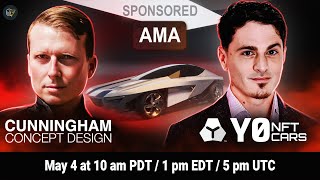
Matthew Cunningham and Nick Papillon discuss Y0NFT, a project launching 3D NFT concept cars for metaverse platforms. The mint is targeted for May 26, aligned with F1's Monaco Grand Prix, with cars available via credit card or Ethereum wallet. Proceeds go toward eco-focused design research.
Chapters
Sa.
Hey everyone, what's up? Thanks for joining us today, Rachel. It's Rachel here with Cointelegraph. And today I'm hosting a very special AMA with Y0NFT. I'm joined today by Matthew Cunningham. He is the automotive designer and feature film concept artist and founder of Y0NFT. Hi, Matthew.
Hi, Rachel. How are you today?
I'm doing well, thank you. And I'm also joined by Nick Papillon, managing partner, Web3 advisor and blockchain architect for the Beehive software. Hey Nick, how's it going?
Very well, Rachel, thank you. How about yourself?
Doing well. Thanks for joining us today. Before we get started, I just want to remind the audience. Please send us your questions in the chat. This is a really, really interesting ama. I'm really excited to be here with Matthew and Nick. I guess just to get us started, will you guys just tell us a little bit about why 0nft?
Absolutely. So essentially Y0nft is a brand and we are launching 3D NFT concept cars. Part of the impetus for this was Nick and I have known each other for a while and he's coming more from the blockchain web 3 crypto area. And I'm a feature film concept artist with a lot of experience in the automotive world as well. And we were kind of interested in the NFT scene and he made a suggestion, maybe it was a few months ago, that we get involved because the scene is evolving quite a bit and we believe that we can add a lot of value to it.
Right? Definitely. Nick, did you have anything you want to add to that? Just about y0nft.
Yeah. I mean, personally I was, I was really excited. I kind of have been one of those who was a little slow to get involved. Just not, not that I don't appreciate just pure art based NFTs, but this to me presented a lot of opportunity for providing utility. So just the ways that you could interact in digital and physical world environments with, you know, an NFT being, you know, providing that access or what have you. So to me it was a utility and you know, of course it's pretty easy to get behind Matthew, right?
Definitely. Now, before we get into the project in detail, Matthew, I'd like for you just to kind of talk about your background because you have a very impressive background. You've been in the automotive industry as a designer for many years. So if you can kind of discuss your background and what drew you into the NFT space, that would be great.
Certainly. So I've been working in automotive and Feature film for about 15 years, maybe 20, depending on who you ask. And what we were kind of crossing when we were on the automotive side and you're working on advanced projects is you'll, you'll have an opportunity to create a concept car in a car studio or sometimes for an internal pitch. But 80 to 90% of that public will naturally see and there's a lot of work that's created that just really never sees the light of day. The flip side of that is the film industry, where you'll spend just as much time as you would on a project in the automotive world. But it does get seen. However, it's not really built and it's not generally utilized by the public. So what we're trying to do with this project is combine the best of both worlds, where with the advent of NFTs and you know, the, the burgeoning metaverse on the horizon, we believe that we have a unique opportunity to bring a lot of the skill sets affiliated with the design process that you'll find in major automotive studios, major Hollywood studios. Bring that into a commercial marketplace where people are able to actually purchase the product and then utilize it to whatever, whatever degree they like. They can simply use it to pilot the metaverse. They can use their 3D printer, they can have it on display in their home or in their virtual garage, or in some limited instances that we're exploring, build the one to one prototype.
Wonderful. Now, I know that we have a short clip of some of the projects that you guys have been working on. So can we show that clip real quick and then I can go into some additional questions. And Matthew, feel free. As the clip is going, you can explain what we're looking at.
Sure. So that's just. This is kind of a clip of just a montage I put together for this submarine, this Virginia class submarine I designed for King of the Monsters. For this particular film I did a giant flying wing, the submarine and interior of an Osprey aircraft. Just wrapped up production or a pre production for me at least on the Godzilla vs King Kong sequel that's now filming in Australia. So there's going to be more of, I can't tell you what, but there's going to be more of something coming.
Nice. Awesome. Okay, let's get into some details here. So these are vehicles for the metaverse. What exactly does that mean? Nick or Matthew? Feel free to take that question.
Yeah, of course. So what's cool here is that, you know, NFTs are essentially, they're operating through smart contracts, right? Smart Contracts is blockchain. Blockchain being programmable. It means that we can enrich NFTs with features that provide utility to their owners. Again, like I had mentioned, access to real world or metaverse environments and locations within those, those spaces. You know, we're also looking at ways to, you know, I don't want to get in trouble by Matthew and tell too much here, but, you know, we're looking at creative ways to use these assets in the metaverse, right. So not just placing it there and rotating it around or changing its scale, but, you know, it's a vehicle, right? And it's, it needs to behave like a vehicle. So we, we plan to go pretty crazy with, you know, once you have this nft, you just go to your metaverse of choice. Whichever one that you're already a part of or the one that you want to bring the vehicle into, log in with your wallet and you'll see that, that our, this nft, this vehicle, NFT is compatible, can be dropped into the environment. So there's, there's a lot of ability to add utility, even after mint as well, which we're, we're really serious about. So whatever utility you see there, just in terms of the NFT and it's its ability to be in your metaverse of choice, there's going to be added utility as we go along. So utility will just be on a perpetual state of increasing.
Got it. Now, Nick, you mentioned the mint. When does that actually happen? When will these NFTs be minted?
So right now we're kind of targeting Matthew's birthday for the launch, which is the end of May. So maybe Matthew, you want to touch on that? So I don't.
Yeah, what we're kind of, we were kind of planning to launch. I kind of had this idea a few months ago that we could, we could sort of launch adjacent to some of the F1 races. So I'm going to be heading to Miami on Thursday and I guess that's tomorrow and we're going to announce the project as we are today. And then I'll be heading over to Europe and going to Monte Carlo for the Grand Prix over there. So we're hoping to start menting on 26 May for Monte Carlo, technically.
Got it. Nice. And I'll also be at F1, so that's exciting. Now how. Yeah, yeah, I'll be there. How can these NFTs be purchased? Exactly.
So, yeah, so we want to. You know, one of the key attributes of a really successful project is ease, ease of Use. Right. So we're actually going to make it available to purchase with credit card or with your, you know, Ethereum wallet, like Metamask. So in either cases, it's still going to be stored in a blockchain wallet. It's easy to access. So we're looking at like Cross Mint. Right. I'm sure a lot of people are familiar with it, but for those non crypto savvy folks, it's essentially you can mint and purchase with your credit card. So again, credit card or Ethereum Metamask.
Got it. Now let's talk a little bit about the goals behind the project. I think it's interesting because we're seeing real estate, for instance, in the Metaverse, and now you guys are bringing us vehicles in the Metaverse. So it seems like those kind of go hand in hand. But what is the goal behind this project and what audience are you guys are you targeting? Are you targeting kind of a car, a car type audience, you know, people who are interested in the automotive industry? Are you targeting, you know, all of web 3 non crypto natives?
Yeah, that's a great question. Essentially, the project has a couple of different goals that sort of fit together. Primary one is that we want to emphasize advanced design and get that out into a marketplace where people can actually appreciate it and utilize it. We're also looking at the concept vehicle as sort of a broader statement about things that we want to draw attention to from societal standpoint. So that would include, for instance, the first release, the syntax. We're focusing on ecological manufacturing processes. So the goal is to draw attention to that and then to take a portion of the proceeds that we have yet to determine how to direct. But we're going to find ways to direct percentages of what we bring in of revenue towards those actual research projects so that hopefully we can have an effect in the actual world that we're kind of suggesting within the virtual one. Each different project is going to have a different, I guess you could say target market, but I would say it's going to have a different sort of ethos to it that's appealing to particular markets in certain ways. And I believe that you're going to see some appeal to not only the automotive enthusiast or the blockchain enthusiast or the collector, but also game enthusiasts. And we're going to sort of tell a story as we go along developmentally. And we have some really interesting things planned for both, you know, phase two, three, four and five, and we're on schedule to produce at a pretty accelerated rate.
Got it. I just want to remind you to please send us your questions. So, Matthew, you were saying that, you know, these are going to be rolled out in stages and it's going to be kind of a storytelling situation. So with phase one, I'm assuming that's rolling out at the end of May, correct?
That's correct.
In terms of storytelling, can you kind of elaborate a little bit on that?
Well, I think, for instance, this first vehicle that we're rolling out is, you know, from a styling standpoint, or at least as it relates to its livery and paint job, it's a. It's an homage to Briggs Cunningham. No direct relation that I know of. Briggs Cunningham was an American sportsman who's famous for racing in Le Mans, and he's the inventor of the racing stripes. So the racing stripes are actually called Cunningham stripes. If you look it up on Wikipedia. Carroll Shelby was inspired by that, or so I'm told. And that's why he adapted that livery with his particular racing mark. So we really wanted to introduce some. Something that was like an American electric muscle car. And that's part of the backstory narrative of it, apart from innovations as it relates to manufacturing that I'm proposing, that would shrink the supply chain and save a lot of energy. That's primary goal with this project. Now, the. The following project is going to have a different application. I think it's going to be a little bit more metaverse centric. The third one may involve teams. Most likely it will. And then the fourth one is secret collaboration that we're going to roll out. As far as scheduling, we just have it phased for the moment. We're pretty confident about the May 26 release, and that's what we're working to towards at the moment. And we'll update everyone within the Discord channels and all of our other social media as it relates to the other drops, but we're looking at a pretty accelerated timeline.
Got it. Nick, did you want to add anything to that in terms of storytelling, the storytelling aspect and why that's important for a project like this?
Yeah, I would say aside from. It's really kind of a story within a story also. So aside from what Matthew highlighted in the intended focus on how this vehicle can alter and evolve the actual physical auto market, there's also a story playing out in terms of the metaverse. Right. So these vehicles right now, they're brilliant, they're beautiful, they're full 3D models. So our plan is that these vehicles are eventually going to have a home in some of our metaverse. Endeavors that we have in the further phases. So they'll have special treatment, special ability. So again, without giving away the farm, there's Metaverse plans and more. And where these vehicles are are eventually going to find quite a bit of utility and you know, they'll exist well there.
Right. And now I know that the theme, you know, one of the themes behind the project is it's bridging science fiction with reality. And I think an important part here for us to Understand is how NFTs are solving certain problems in the automotive industry. And I think this project will demonstrate that. But Matthew or Nick, could you just kind of explain, you know, the problems that we're seeing in the automotive industry and how NFTs could potentially solve those issues?
Yeah, I would say that the primary issue that you run into in automotive is that it's, it's a very expensive market to get into. It cost, you know, last time I checked it cost about a billion dollars to put a car into production. So you're looking at a large overhead, you're looking at gigantic supply chains, you're looking at distribution, and the margins sometimes are not that great. And so you run into situations where a lot of the big competitors, they end up, because they're so risk averse, they end up not really evolving in a visual sense or in a performative sense in a way that they would be able to if their market was differentiated substantially. And I believe that the metaverse and NFTs in particular offer not only that ability to expand the content, but you're also going to be owning the product. And we're building in certain things into our particular NFTs that will allow the user to replicate any of the data at will. They'll have a total license to build, but that includes printing themselves. And I believe this model will eventually expand and encompass some of the bigger suppliers in time.
Got it. So then my next question is, are we eventually going to see physical versions of these NFTs of the digital NFTs further down the line?
Well, I mean, in the, in the very short term, we do have pipelines set up to produce scale models. And so we're looking at differentiating the depending on the rare level of the NFT offered. There's going to be a stratification in terms of, you know, ultra rare, rare. Nick can speak to that better than I can. But we do have the capacity to create scale models that some of the owners of the NFTs would have access to acquiring if they so desired. And we do have pipelines set up where if we wanted to go in and build prototypes, we could with the right amount of lead time and budget. But that's dependent upon the customers and demand from the group, ultimately the Y0 community.
Nick, did you want to add anything?
Yeah, that's a good point he brings up as well. So that's another form of utility that's coming along with a Y0NFT and that the voting rights. So what one of the aspects like the syntax, right. This first vehicle, it's an eco. It's an ecological muscle car, so it's electric. And Matthew went to great lengths to attempt to make the car as recyclable as possible. Right. So there's a couple of things from deciding, hey, let's really build this to hey, what research organization that's focused on, say, bio composites should we look at making a donation to or providing some funding to? So we really want our Y0 community to play a huge role in a. This vehicle getting like pulled into the fabric of reality or changing the manufacturing landscape with sustainable methods and such.
Yeah, that's really interesting. I'd like to know a little bit more about the Y0NFT community actually. You know, if the audience was interested in getting involved, how would you know where, where do those discussions take place? Is that mainly on Discord? Is there a DAO associated with the community?
Yeah, so today it's, it's Discord. I. We, we have again, you know, we're in the very, very beginning stages of, of the project, but we do have dow intentions as well. So, you know, I'd say somewhere, phase three, four, we'll be able to introduce that. So, yeah, to that point, Discord for now and a DAO coming down.
Got it. So what I think is really interesting about this project is that these NFT automotives can be used in different metaverse environments. So Nick, could you maybe talk a little bit about how that's actually possible or how that will be possible?
Yeah, so our NFTs are really actually a package of files. Right. So what you're getting is you're getting a JPEG, you're getting a short animation, and you're getting a 3D model. And from my research so far, it seems that most, if at least the most prominent metaverses they're wanting, it's a 3D file type called GLTF. So that's kind of what we standardized on that. Our NFT package will include a GLTF3D file. But I mean, going above and beyond, Matthew has, you know, committed to you know, somebody needs a different file format on the 3D file. You know, we have ways to airdrop that to them. Or if, you know, some engine technology changes and your, you know, your model format stops being so compatible, you know, we can do model updates. So, you know, we definitely want to support that. You know, this is, this is something that you can continue to use for as long as we're around.
Got it. And Matthew, I'd like to know a little bit more about the design process here, because this is, you know, this is what your expertise is in. This is what you do really, really well. Has it been challenging to take these physical versions of cars and turn them into NFTs, and what has that process been like?
Oh, that's a great question. Well, I think that because what we're doing is we're ultimately taking the digital product, which is something that sort of always stands in between the manufacturer of a prototype and the car design studio, or also for feature film work. So, generally speaking, from a project timeline standpoint, you usually start out with research, and then the research will lead to some form of premise, unless you already have a design brief. In this case, I was really interested in creating a modular vehicle architecture that was highly recyclable in the visual theme of classic American race cars as created by Briggs Cunningham. So that was kind of the influence now as it relates to the execution and the creation of it all. I guess you start with a sketch program, you're doing a lot of drawings. You're doing some 3D modeling, maybe out of clay or something like that. Maybe tape drawing, where you're using tape to draw over what we call a quarter scale package on the wall. That's what we did with this particular car. Then we'll take that linear data and Translate that into 3D curves inside of a computer software to build up the surfaces. Then take that file into rendering engine and animate it. And we're exporting that data set in that fashion. And we're going to be using some customized scripts either within Blender or within Photoshop to generate the varieties of NFTs, because everyone's going to have a custom color scheme, essentially.
Awesome. That's exciting. I'm going to take a question from the audience real quick and just want to remind the audience, keep your questions coming. Rich new design is asking how far off until these types of NFT items include the ability to expand experience, driving it in the metaverse. That's a great question.
Yeah. So I guess I'll take that one. That's really Coming down to the metaverse makers, and we are actually in talks with a couple of the larger ones to work out a scenario where our models are rigged. Well, we can identify wheels and experience motion. So I would say that it's kind of a two part answer, right. Technically, it's possible. Right now it's a matter of just kind of having somewhat of a close relationship with the metaverse creator to ensure that if you didn't make the metaverse, then you need to work with them to make sure your models play well, just in terms of lighting and making the right pieces move. So it's possible now, I would say you'll start to see over the next few months, probably more and more of that. You know, there's a lot of, I'm sure everybody on the car, on the, on the meeting here is familiar with like Play to Earn. So that's a big aspect of where, you know, you're, you have an NFT like this that, you know, inherently implies motion. That thing moving around has different ways that you could use it to, to leverage, you know, generating revenue. So we're, we're on the cusp of it. It's possible and you're going to start to see it happen. You know, you're going to start to see it blossom.
Now, Nick, that's really interesting, you know, that you, a point you bring up about Play to Earn. I don't know if you can elaborate a little bit more on that, but I think that that sounds like a really great use case that's also really interesting. That would allow players to actually earn revenue from using, from leveraging the NFTs.
Yeah. I mean, think of like you, you could drop one of these in and be the coolest Uber driver in the metaverse that anybody's ever seen. Moving people's avatar, moving people's avatars around. You know, like there's a. Yeah.
I mean, right, right now, when I think about the y0nfts, I picture a Metaverse environment with a piece of property and I see the vehicle kind of sitting in front of the house, which kind of adds to that whole Metaverse environment that we're building. Like, we have the property, now we need the vehicle. So this just seems like it, it's the perfect complement.
Yeah, correct.
But soon that utility and actually being able to drive, that will come. Another interesting thought that I just had was I know we, you know, I participated in Metaverse Fashion Week. I covered that event where all the designers were there, big name designers, Tommy Hilfiger and others were there and they were showcasing their designs in the Metaverse. Do you guys think that y0nft would eventually have something like that, like an auto show in the Metaverse, where these cars are on display with other automotives in the metaverse?
I mean, I know that we didn't. Yeah, we didn't think of the auto show, but that's, that's good. You're hired. You're hired.
Yeah, I'm glad I could bring that.
Yeah, that's a good idea.
Yeah.
Yeah. Another question that I had was, are these NFTs actually attainable by the mainstream or are they just going to be ridiculously expensive? Because it seems like, I mean, given the quality and the imagery, that these are going to be pretty pricey. But maybe I'm wrong.
So, Matthew, I'll let you take it and I'll maybe finish it.
Sure. We haven't set a price yet, and that's going to be tied to the final number that we're going to release, but it is going to be an exclusive collection. We're probably going to, we're going to look at the metrics here in the next week, and we'll probably be making announcement in about a week or two as to what more of that data looks like. But it's going to be an exclusive product and people are going to want one, right?
Yeah, I mean, I mean, I want, I want one and I'm not even interested in automotives, but it just sounds awesome.
And I would say, Rachel, if I can. Yeah. I just wanted to say that one thing we are going to do is just be, you know, as responsible as we can and making sure that, you know, those who can't afford to drop many ether on one piece of NFT technology, you know, still have an opportunity here. So we're going to try to make sure that, you know, everyone has a fair chance to, you know, to get their hands on one of these.
Right. And Nick, as you mentioned, the Play to Earn concept is really interesting and I think that utilizing these NFTs in that type of environment will also allow other people access to have it for those purposes.
Yeah, well said. Yeah.
Right. My other question is, in terms of security, how are you guys ensuring that these NFTs are going to be kept safe and protected from hacks?
Yeah, I'm glad you. Yeah, I'm glad you asked, actually. So especially it was, I mean, you know, I'm on the dev, the engineering side, so it was already a concern for me. But then in light of, you know, some of these recent Hacks and such. That's, it's been even more of a, you know, a priority. So we're, we're actually y0 is using a combination of smart contract audit tools as well as having a third party team of professionals in blockchain and cryptography conduct an independent audit to just identify possible vulnerabilities. And what that essentially means is we have a, we have a multi layered quality and security process to, to ensure the, the, the tamper proof is probably not a word, but we're, you know, we're on it with multiple. We're attacking it from multiple.
Got it. Matthew, I have a question for you that just came to my mind because I'm comparing this project to other, you know, like in terms of fashion and the Metaverse, because I've covered that space a lot lately. You're the designer behind this, but how can you ensure that no copyright issues occur? Because I know there was that issue with their, I think it was Hermes. Someone designed a bag and there were some copyright issues. So just you as a designer, how are you ensuring that these vehicles don't infringe upon that?
Well, I'm going to retain the intellectual property, or whomever is the designer will retain the intellectual property and the purchaser of the NFT will have copyright access. The exact legal language we haven't ironed out yet. We're doing a lot of the contract work this week, but whoever's the owner will have access to it and be able to use it in any which way they choose. We're going to determine the particulars of all of that. But as it relates to copyright infringement, if the product's coming directly from the designer, they're the one who would be dispersing that. If there's, let's say, for instance, we're exploring partnerships with other corporations, the extent to which they are willing to relinquish copyrights will determine the extent to which they're participating in the project, I guess you could say, as it relates to dispersing the 3D assets. So that's part of the legal territory that we're carving out over the next two months, right?
Definitely. Audience, keep your questions coming. This is, this is really, really interesting. So, and then another question I had in terms of partnerships, because I know this project is just now launching, it's phase one at the end of this month, but Matthew and Nick, do you have any plans to Maybe partner with F1 drivers or anything like that moving forward with this project?
I think we're open to partnering with a wide Variety of different individuals, companies, organizations. I think it's. We just have to, you know, talk to one another and see what the interests are and what the alignments are. And I think that there's a lot of opportunity there. We're very much interested in emphasizing either technological or societal issues that we think that we could somehow address through using these vehicle concepts as sort of extended metaphors. So if there's a particular issue or technology that people or organizations are trying to promote or they're very fascinated with, then we could in a way find a way to package that. It's something that you could buy as a vehicle nft and drive around, hopefully.
Got it. And in terms of sustainability, it seems like this project is also promoting sustainability. So, for instance, with fashion NFTs now you can take a Fendi dress and superimpose that on a model without having to ship those actual physical clothes. So with a project like this, Matthew and Nick, do you see any sustainability elements where maybe someone's doing a photo shoot and they want to use one of these Y0NFTS in that photo shoot? Is this something that you know is going to be possible?
Yes, absolutely. You know, this is kind of falling in the realm of, I guess, what's kind of loosely called virtual production in the film industry. Most people are probably familiar with the Mandalorian and the extent to which that has kind of taken off, where they're just shooting actors in front of a completely rendered out 3D background on something like a Cyclorama, which is essentially a round screen. And so we were able to simulate quite a bit. Unreal Engine is really taking off. That's a product by Epic Games that's being integrated from the game engine into the film industry. And I think that you're most likely going to see these types of products interacting with Epic games because they also happen to distribute what is called a rig, which is the skeleton for the 3D object to be animated. And so they already have automatic rigging built into Unreal Engine when you bring a model in. And so I think. A lot more ubiquitous, Apple, these types of 3D assets and IRL in real life. And that could include a fashion show, that could include just about anything when you build in the augmented reality component as well. And if people are just wearing glass that is looking at something with a code on it that gives you a certain type of signal, then you could always have some sort of variable skin built into the body panels on a car. So all that's right around the corner.
I think, right Nick, did you want to add anything to that, to what Matthew said?
No, I think he covered that one pretty good.
Yeah. So do you guys think that we're going to see. Because right now there are big bets on the Metaverse, and people are spending more time inside, more time on their computers. Do you think we're going to reach that point where people are so involved with the Metaverse that we're going to need vehicles and cars in order to operate within these environments? Is that something that you guys see happening as we move forward with Metaverse development?
I do, I do, completely. Yeah. I mean, they're also, you know, even though you can hold it in your hand, in your phone or your VR headset, these environments are massive, massive, massive.
Right.
So just. And they, you know, they all have their own physics, so you still need to move across this massive environment. And there's going to be things like cars or slingshots that you can move across that environment faster.
Right.
So I think that they're going to be an integral part of, you know, you have. To your point, Rachel, you have the. You have the real estate. It makes sense that there's a mobility aspect to, you know, to the environment.
Matthew, did you want to add anything to that?
Yes, I would say you're definitely going to have a vehicle component, because the vehicle just kind of represents a line in between spaces, as Nick was kind of pointing out. And so it's also kind of the way that the universes are sort of being built out right now, where they're almost like spheres connected to one another. So you're going to have to get from point A to point B. You might as well do it in style, right?
But no, totally. But I think one of the challenges that we may see with this is within the metaverse environments, the graphics can sometimes not be. The quality isn't that great. It's just not that great right now. And these cars that you're designing, Matthew, I mean, they're beautiful. The quality is amazing. So how can we. Has that been challenging to incorporate that into these Metaverse environments that are low quality?
As of now, I think that there's opportunities in many ways for that. So if we're starting with the highest level data that you can possibly have as it relates to, let's say, you want to build this thing, generally, what happens when you take that level of data and you triangulate it and you bring it into any type of game structure or game environment, it has to do with the level of triangulation that goes into the surface that either preserves it or decimates it. So the, it's really just, the technology is moving at such an accelerated rate right now. I mean, even if you just look at breakthroughs like with Nvidia's RTX cards that came out maybe a year or two ago, we're seeing so many gains in terms of power that I don't, I'm not really concerned about resolution fidelity at all. I'm, I'm more interested in when it's going to become quasi holographic. That's the part that's always been really interesting to me. So when we get into a three dimensional display context, that's when it's going to be really interesting. And I don't think we're that far out.
Cool. I'm going to take a question from the audience and we've still got time, so keep the questions coming, guys. So rich new design is asking, should the metaverse be created around the use of individual vehicles, or should it embrace mass transit to promote it in the real world? That's a great question.
Yeah. I mean, why not? I think it's going to, you're going to see certain things that are mirrored in terms of maybe they'll have a fire hydrant in the metaverse, you don't really need one, but you'll see these types of crossover things that will occur. And then as it becomes a little bit more fleshed out, I think it's going to get weird and you're going to see a lot of things really kind of strange, like a Cinderella pumpkin carriage going around or something like that. That would be impractical in the physical world. But then I think through those types of modified display systems in the real world, that's going to start to bleed back into reality. And so that's kind of how we're talking about the brand as where science fiction meets reality, because it becomes such an overlap that they almost become somewhat indistinguishable from each other.
Right. Nick, did you want to add anything?
Yeah, I would just say too, if I'm picking up the, you know, like the, the spirit of the question, you know, I, I, I'm a big like fan of sustainability and doing everything we can to just get into a better relationship with our planet. Right. So I think what's cool about this, there's a way to look at it to where I know that like I, I'm a driver, I'm a motorhead, I love, I love the experience of driving, but I also know that if I'm out there stomping around in my V8 with no exhaust pipes, that I'm probably not doing the best thing for the planet. So you can think of this as a way to kind of express those urges and go and have fun in a really cool vehicle without the pollution aspect. So just another angle to view it from.
Yeah, and I mean, based on what you just said, Nick, I think that in terms of education and even educating the younger generation, because I think that this is really going to appeal to the younger generation as well. We're seeing this transition now from gas to electric and I think that through Y0NFTs and other NFT use cases, we can teach the younger generation and the public about why electric is so important. They can see these NFTs, they can see how awesome an electric vehicle can look and they can learn about that and make that transition even smoother. Once we see, you know, gas vehicles are going to be, you know what, I think they're going to just be gone in the next 10 years. And so I think that this will help ease that transition in terms of education.
Yeah, good point.
Yeah, great. Well, we've got a few more minutes, so audience, if you guys have any other questions for Matthew and Nick, please send them our way. But I just want to know what we can expect next from y0nft.
So I'll start and let Matthew conclude. I would say that for us, you know, we have some cool projects to Matthew's point, that are already, you know, the assets are ready to go, we're over these new releases. We're trying to not just advance y0 but also advance the NFT space. So there's some cool stuff with like NFT Merge Smart NFTs. So there's some, you know, there's some cool moves that NFTs are, are heading towards where you know, we can, we can write AI or machine learning right into the smart contract. So you know, if conditions are met in the world or you know, some, some weather event happens, I mean those all can be signals for this NFT to self update, to, to evolve, to change. Right. I mean, not that we would want to, to destroy an nft, but like we could bake in rust. So your NFT over time rusts and the, the metal degrades. You know, obviously we want to do something positive not, not, you know, destructive but we're, we're looking at new and cool ways to, to make sure that your NFT is always worth using and looking at and exploring again because it's changing with you it's also evolving, and it's, you know, it's a utility that is evolving or its utilities evolving, as well as it itself. The art, the look. This is some of the stuff we're exploring.
Matthew?
Yeah, I think Nick's kind of emphasizing the most important quality, which is the ability to change. And I think that what we're going to be doing mostly is we're going to go through the launch in Monaco and then we're going to respond to the feedback that we're getting from the people who are part of the community, and we're going to be able to pivot quite quickly. We have scheduled releases, we have some other things that are planned that are pretty exciting that I can't really go into details about right now. But as Nick mentioned, we are talking to some potential partnerships in the Metaverse and other places like that. So lots of interesting things on the horizon.
Yeah, well, I'm excited and I hope to cover it. And like I said, I'll be at F1 in Miami. Hopefully I'll run into you guys. I'm sure some of the audience watching will be there as well, so it's good to know that you guys will be there. Now, if. If the audience members wanted to get involved with the community, with the Y0 community, how would they do that?
Our Twitter and Discord. Yeah, our Twitter and Discord are great places to start right now. They can also. We, you know, we have a contact form on the website just so that, you know, if they want, like, emailed communications, we, you know, we're responsible with that. We're not going to hit you four times a day with an email once or twice over a month, if that. So just give us an ability to keep you, keep you up to date.
Awesome. Wonderful. Before we end, Matthew or Nick, did you guys have any final thoughts to share?
Well, I just wanted to thank you, Rachel, for the interview and Cointelegraph, of course, because this is a great opportunity for us to be here. And I just want to say thanks to everybody who tuned in.
Yeah, wonderful. Well, thank you again, Matthew and Nick. It's been a real pleasure speaking with you. I'm excited for the future. I can't wait to hear more. And thank you again to the audience for joining us. Thanks for your great questions. Please subscribe to our YouTube channel so you can join us for the next AMA that we do.
And.
And yeah, I hope everyone has a great day. Thank you.
Thank you.
Awesome.
Thank you. Bye. Bye.










