Evolution of Audience Participation in Film Through Web3
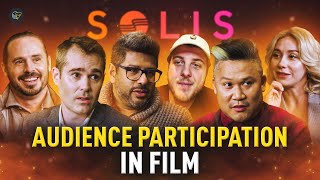
Filmmakers and Web3 founders discuss how blockchain and NFTs are reshaping how audiences fund and participate in film. They cover token-gated access, community-driven funding, and the tension between giving audiences a voice and protecting creators' IP and creative control.
Questions this video answers
Brett Claywell (host), Anastasia Dranevskaya (host), Dante Basco, Labid (Labeed) Aziz, Leo Matchett, Miguel Faus.
Fabulous Filipino Brothers (Dante Basco), Caladita (Miguel Faus).
Chapters
Welcome to the third installment in the.
Evolution of Content series. Presented by SOLUS and Cointelegraph. This series of panels explores how content creation, distribution and engagement are evolving. Featuring a curated selection of producers, actors, directors, artists, creators and founders with traditional and Web3 experience. Today's panel explores the innovative new ways in which audiences are participating in film. With Labeed Aziz of POC Studios, Dante Basco of Fabulous Filipino Brothers, Leo Matchett of Decentralized Pictures and Miguel Faust, director of Hosted by Cointelegraph's Anastasia Dranevskaya and Brett Claywell of Soulless, this is the evolution of audience participation in film.
Welcome, I am Brett Claywell from solus. This is Anastasia Dreinevskaya from Cointelegraph. And we have a panel today for you on the future of audience participation in film. We're joined by some really great leaders in both the traditional and Web three spaces. We have Dante Basco here, a filmmaker and actor. Labid Aziz, the co founder of POC Studios, Miguel Faust, director of Caladita and Leo Matchett from Decentralized Pictures. Maybe I'll let you ask the first question, Anastasia.
Yeah, I think in terms of audience, how blockchain could really change this? How could web3 technologies could change this? Because all of us, we are going to web3 space from traditional world to something like unexpected unicorn. So if you're doing this inside your businesses, how you do this, if no, why so.
So, Leo, you know, we are relying on audiences to tell us how to allocate our funds from our film fund. Users will submit ideas for financing or different types of support from our network of industry partners. And we allow anyone in the world to vote on which artists and which content we should get behind. As a foundation, until now we've been doing completion funds and various development level awards for what we have one called the Screenplay Rent Assistance Grant, where we help screenwriters pay their rent and some bills while they go out and write their screenplays. You know, we're really about, you know, talent discovery and content curation, but we rely on user consensus in an auditable and immutable way so we can prove fairness in the voting process. We can't help everyone, so we rely on blockchain to bring transparency and help us decide who the most deserving people to receive the support are.
I love that. I love that. I think that's one of the great applications of web3 is how we're seeing that applied to helping support maybe underrepresented storytellers or undiscovered stories.
Absolutely.
That's A great application of that. Speaking of Dante, you know, you did something in the traditional space which you did. Just directed fabulous Filipino Brothers. And it's, it's out there in the world. I was flying back on my plane from North Carolina and I saw it up there. I was like, hey, so. But you did, you really built your community by going, you know, it was, it was grassroots, right? You went city to city.
Well, yeah, with fabulous Filipino Brothers. I've been a part of Asian American filmmaking for the last 10 years. I've been an actor for over 35 years, but became a producer.
Don't date yourself.
I know, but became, you know, I got into a place where, you know, you become an adult in the industry and there's things that I wanted to pay it forward to. The next generation started producing Asian American films originally out of Hawaii, then went into Asia because we were like, we have to go into Asia and out of the Philippines. I'm Filipino. And now branching out from there. But it also comes from, you know, I've been acting for a long time. I've been in the whole, the first generation of kind of the web, where YouTube. I was a part of the Maker Studios group and apart as they grew to being the biggest mcn, the first MCN multichannel network to the biggest MCN and then being acquired by Disney. And then one of the co founders, Ron Erickson, split up to make another company called the Machine, which I came on to start producing with him. The narrative stuff, it's all about communities, about the niche communities and where that, what the future's gonna be. Of course this is taking another wrinkle in what's going on. We're trying to all figure it out because we' look, we've all been around where we have audiences and we've kick started stuff and you know, I've been a part of video games that we were trying to raise 75,000, we raised $3 million, we tried to raise 10,000, we raised 100,000. And we're like, how does this work? How does this happen in the Comic Con world? Right? Again, this is massive community. I probably go to a dozen or dozens of 16 comic cons a year and understanding that these communities are what driving the next wave. I often tell these kids who feel they're misunderstood, they're awkward, they're outcasts, you know, like, do you understand that you are the operative taste of pop culture for the next generation. When we go to San Diego Comic Con, the corporations all go, the production companies go there, we're going there because we're trying to find out the next Game of Thrones, we're trying to find out the next Star Wars. We actually don't know. We're spending billions of dollars because, you know, who knows, you know? And we're going there to find out what you're doing. But this also ties into what's going on where it's a very democratized way of filmmaking where we are walking into it, knowing the audiences that are gonna pre buy it, that really want it, and try to cultivate the end experience for the people at the beginning.
Yeah. And Leo, you're involving audiences in supporting the artist in the very ground floor, in the very beginning stages. And Dante, I think what he's speaking about is he's really about representation and how the audience is going to see and experience himself on screen. Labied, you're doing something similar. POC studios play on words though, because it's people of culture.
Correct.
And it's really about, really about finding these stories. And when he's talking about world building, that's what you're trying to do. And how is your audience participating in that process? Do you see that moving forward?
Well, I think, I mean, this is amazing. Start to this conversation. So the audience is actually the community. Right? So we're serving the community and we talk about it all the time at our company. Our boss is the community. Right? That's the master. That's who we're serving. Right. Not an executive over at Disney or Warner's or Paramount or Universal. No disrespect. Right?
Yeah.
They're not the bosses, they are the fiduciaries. They're the ones who are managing distribution and the ecosystem and IP strategies. However, they're also not the best equipped to do so. Right. So you mentioned Comic Con. So my business partner, my chief creative officer, he was the creative co founder of Boom Studios.
Okay.
And so in the world of comic books, he's a legend. Right. He wrote the last Hellboy. He was hired by Activision to set up two seasons of Diablo for Netflix. So we live in that world of IP and Legion M is a part of our ecosystem as well. So it's all about direct fan audience, community engagement. And what I think blockchain web3nfts are truly allowing us to do is to have that direct, uninterrupted relationship and then having the stewards of that power be the creatives or the people who understand the creatives. So for myself, I'm not a creative, I'm a business person. And my job is really simple. I protect the two most important people in the business, those who write the script and those who write the check. Right? And I, and I do that very well and I prove it. Because at my last company I pulled off three historic, never been done before deals with Disney, Warner Brothers and Procter and Gamble. Right? In my last three years, I've proven that I can go toe to toe with the studio heads, but also protect the investors and the creatives and the directors.
This is interesting and it's a great segue to you, Miguel, because if he's talking about the person that wrote the script, that's you, Miguel. And if you're talking about the investors and the people that write the check, that's the community that funded it through the NFTs. So what does that experience taught you about how you made your film and how you're going to distribute your film? And how has your audience participating in that across the board?
In our case, the community is at the very beginning, at the very origin of the whole process because without them we wouldn't have made a movie. We crowdfunded the movie by selling NFTs to, to our community of fans who wanted to watch this movie and see it be made. Right now the community doesn't participate in normal films and TVs because they, I mean they participate only once the product is done, right? When it's finished, they, if they wish to, they watch it and that's their level of participation. Whereas here not only do they kind of funded, so like they, they vibe with the project from the beginning and they think, oh, these are, these are film that I want to watch. So I'm gonna, I'm gonna, you know, put my money in this and collect a piece of, piece of digital art that will kind of be, act sort of as my share in the success of these, of this movie. Even though this, this becomes a bit complicated, but let's just put it that way. But then also they go on a jo filmmaking with us, the creators, because one thing that we did that was really cool is we created a whole token gated behind the scenes experience for our community of holders where they could participate in, in the process of making the film by, by being audiences before the film is made, right? So they went on our website, logged in with their NFTs and they could watch three times a week during our filming in Spain, they could watch small recap videos and behind the scenes footage that was only exclusively available to the community of holders. It's like we're Cultivating an audience before the film is done and we are allowing them to participate in the journey.
Great insight. And I think. I know you've talked a lot. We've talked a lot about how your community has been engaging through the process and like, you know, what are the pros and cons of that? And you did say a little bit about your community. Some of your community was like, I'm not really interested in staying in touch, like, go make your movie and I look forward to seeing it. And there's a little bit of a variance there of those that really want to be in touch the whole time and some that just can't wait to see the movie itself. Leo, you and I have a lot in common, I think with what we've built, with what we're doing with solas. It's really about. We've built production companies with audience in mind. Really understanding that is the community we're focused on. We want to involve them at every layer of the process. And I really respect and applaud you with what you're doing about using that audience to support filmmakers early on. What do you see happening to audience over the evolution of this Web3 journey? How are audiences going to change and how are they going to evolve as we move forward?
It's tough to say, really. I think that at the end of the day, they are the boss, right? And I think that whether it's at the end of the film lifecycle or at the beginning with the audience, it's about risk mitigation. So I think that we are empowering artists with the use of Web3 technology to be a part of that sort of risk mitigation process. And at the end of the day, crowdfunding was a thing in the mid-2000s, all of a sudden there was all of these films being crowdfunded and other projects as well, of course. But there's been some crowdfunding fatigue, I would say. Arguably and quite literally we're doing the opposite of that. We're crowd curating content based on opinion data of the audiences themselves. And that's sort of dictating how we allocate the funds that we have to distribute to new artists. And so I think the evolution is going to be that they'll be more empowered, right? They're going to be part of that green lighting process and they're going to help folks like us, but potentially large studios as well, into the future, make decisions that may not have been made by the accountants that have been running them for so long.
Crowd curated is Such a great word. I don't know if I've heard that before, but I love that idea.
I was part of a project. We won a Webby Award for it. Directed and produced by Bernie sue on Twitch. It was their first show that we did live, right? And we did it live. And we, you know, on the main page. So there's anywhere from 20 to 70,000 people watching at the same time that were voting in real time where our characters were going. So we all the actors, we had to learn probably about 2 1/2 scripts of what we knew and called artificial necks. By the way, artificial nex is, and it was about artificial intelligence. And we have things in our ears where they're telling us as they're voting every 15 minutes. It's like, does he want to go with that girl or that girl? Is he going to say yes or no?
That's crazy.
And we're going there.
Multiple scripts that you were performing.
Multiple scripts. We had all these. We were rehearsing.
Shoot your own adventure book with live content. Brilliant.
It was crazy. We won a Webby board.
You say it so many times that community is a boss. Audience is a boss. So, okay, but who will protect filmmaker? Because everything that you have at the end of the day is your own ip. So in terms of ip, could blockchain support this somehow or give you more rights to access your IP to protect your IP? What do you think about this?
100%. I mean, again, this is what I focus on every day, right? So it's protecting the ip. And when we talk about the audience being the two things, it's a lot of things, right?
But to protect check.
Protect the check and protect the writers of both. Right? So ip. And I love what you said. Risk mitigation, right? There's this. The ability to be transparent and to educate and manage risk. And again, we don't know where the best idea is going to come from. Right? So we might have the ip, but let's say we're crowd curating an idea for an original concept. The IP is still going to be with the filmmaker, but if we crowd curate ideas from the audience, who knows where the best ideas? I'm going to give you an example. My business partner is a showrunner. He tells a story. One time they were working on a show and they were stuck and they ordered a bunch of pizzas to help them Just think about what? Nothing. Right? Well, the pizza guy came, saw the board, and was like, oh, this is really cool. What are you guys doing? And then they're like, do you have anything to say about it? He came back with an idea that helped them clear their block. The pizza man that came in with the pizza. Right. So you don't know where the best idea is going to come from. That show was still owned by my guy, who was the showrunner. But they got this guy, they gave him a really big tip, but they got the idea from the pizza man.
So he got. As a tip, he got a tip.
But again, in a similar fashion, this is what the blockchain can do for us. Allows us to relate, connect. We're coming up with strategies of, let's say, creating NFT avatars that allow people to develop their own story. So we do a lot of animation work, right. So maybe they can create a backstory for their own character. And we can also audition people in terms of their writing style or their voices. And so there's this amazing relationship that we can curate with the audience that who knows where it's going to go and like the possibilities. But again with the ip, how we finance, how we de risk and how we control the IP by not selling off the rights, that's an important factor. Right. So I think we can protect the IP through the smart chains and the blockchain, but smart contracts and the blockchain. But again, IP is so fluid. It's understanding what we mean by ip. And so whether it's a comic book or a graphic novel or an idea, but this transparency is gonna let us really focus on that. Transparency.
That's the word. That's what I was waiting on. It's the transparency. Like Miguel, early on, you gotta have the transparency with your audience that you're gonna help fund this, but you're gonna have very little voice. Cause it's my story, right? Or it's the transparency of if your audience is participating in some way in the waterfall or in anything. It's transparency across the board, both in communication, but also in. In. In just the entire process.
But they'll benefit also. That's important when it wins. They also benefit.
They also benefit. Yeah.
Well, it's just about being honest from the get go and mapping out expectations and the sort of the box that you're playing in. And if you don't play in that box, don't play in the box. But these are the rules of our box. Come in and play or don't play.
It's amazing.
So we talk about community, we talk about like an owner of ip, like actually and we have the third side, like actors inside of filmmaking and they have Payments. I hope so. In America. Could residuals Somehow exist in web3? Or will you pay your actors by avatars? You deserved. Here you go.
I mean, if one person gets a residual, everybody who deserves it will get a residual. That's, I think, for me, the easy answer.
It'll probably be a better system than they have right now.
Correct.
As being an actor for the last three, five years and a part of the whole community. I mean, one of my biggest things on TikTok, my biggest thing on TikTok is called residual check, a lottery where I open up residual checks for fans, and it's like millions of views people love. It's crazy, really, giving people a look behind the curtain, but also nostalgia, you know. But the reality is, I would say 99% of the actors have no clue where any of these checks come from, where they get the numbers. I mean, we know the initial. There's certain things we do know. The first rerun, the box office, first piece. But we're talking about five years, 10 years, 30 years down the road.
Every actor plays that game once his.
Check is coming from where I got played. No idea how much is it, how it got to that thing, but you just kind of get. So I'm sure in this case, it's going to be more transparent than it's been in the past, which is amazing.
Well, I think it's going to take some time because you have unions that will be slow to adopt potentially. But once that one use case proven, I think people are going to want to jump on board really quickly. And actually, I think, you know, I love the whole audience participation thing, but truly, that will probably be a bigger disruptor in the industry, in my mind, than say, you know, all the other use cases.
Maybe it doesn't apply to what you're doing, Miguel, but it's a little bit of a pivot. Like, when we're talking about audiences specifically, how are. What have you learned through this process about your audience? What have you learned about your audience that you might not have known before?
I guess what you were saying earlier about the level of excitement about participation varies widely within. Within a community. Right. Some. Some people just want to see the movie get made and collect a piece of digital art and watch it when it's. And watch it when it's done. And other people really become super fans and want to participate in the whole project, want to try to fly out to filming and want to meet the actors during casting, and they want to be very involved within the whole process of making the movie. I Think it's very interesting what's going to happen. And you know, I'm a big fan of decentralized pictures and crowd curating idea. Although I also think that there is an argument to be made about a lot of the best movies that we love being so out of the box that no amount of audience members could have ever agreed that that would make a great movie, right? Or could have ever come up with that idea. So I think we will still need to rely on the genius of some great filmmakers to just blow our minds and. And, you know, come up with these genius ideas.
My film, when we brought it out before we. We sold to the streamers, Netflix and Asia and Hulu and Stateside, we toured our film by ourselves. We sold it to 1091. They're like, what are you doing? We're like, we're touring it because we know the audience and we sold out films. East Coast, West Coast, Hawaii and going to Europe. But before we sold the film, we recouped before he sold the film, right? So 1091 was like, Orchard Film's like, what are you doing? Like, how are we doing this? Because we knew the audience. The situation where we're at right now in filmmaking is very exciting because we're at a time where traditional filmmaking, which we all grew up in and tech is intersecting, where everyone's trying to hack the system. But when you're hacking the system, which is we're all doing, you have to educate the audience, right? It was a lesson I learned years ago in the African American community in Hollywood when Tyler Perry was touring his plays before the Internet and was going viral within the black community on his plays. Then he started doing films where we were going to club one night with some of my friends, Black friends were like, we gotta go catch the Madea. Get tickets for Madea. I go, I thought we were going to the club. They're like, no, we're going to the club. I said, well, why are we going to the theater? Let's go to Cinerama Dome. Let's all get tickets, then we'll go to the club. I'm like, we're not going to the movies. No, it's opening weekend. You're at Tyler. We got. He's educating the audience of how the game is played. You need to buy opening weekend. So as a community, let's fill out, let's go opening weekend. So it's the same thing we're doing now as we're going in the tech world and we talk about transparency.
They were buying tickets but not going to the movie. They were just supporting.
That's what we do, because we don't want to watch that movie, but we want to. We want to support the community. So that's what we're.
That's education.
That's education, yeah. So we're in education now, and we talk about transparency, and within my tech circles, we talk about something called radical transparency. That's where we're at. And now that's moving into business, where we're. Where the NFTs is a version of radical transparency. This is what we're actually doing. You know what I'm saying?
Absolutely. Absolutely. Just to speak to what you said, Miguel, I totally agree. I feel like there's a reason that the expression too many cooks in the kitchen exists. And I think that actually, Roman Coppola, one of our co founders at Decentralized Pictures, has this thing he calls the rock tumbler effect, where someone has this really clean, awesome idea, and it's got crisp, sharp edges and it's gritty and whatnot. And then you get a thousand different people's opinions on it, and all of a sudden it's like going through a rock tunnel, and now those crisp edges are all wound down, and you end up with the lowest common denominator. So that's why, you know, what we're doing at DCP is once that person gets voted in, they have creative freedom to do whatever the heck they want with the resources that we're going to do.
I also want to back to Miguel at this small point of view because. Well, first of all, I'm admiring that you raised the whole money for the movie using NFTs. I think I have to tell something to my team at the second point in terms of audience, how the audience could be involved. As far as I know, each person in the metaverse can have three types of Avatar. So could these avatars be involved in a movie as actual actors? So people can, you know, make a character by themselves and not be an actual actor by education, but still participate inside the movies in the metaverse? Could this be a future? Especially when, like, we understand that monetization could be through this?
Sure. I mean, in my case, I do more live action films, so that would be a bit trickier with the Avatars, but. But we did include some NFTs and some avatars both in the movie and in the credits. And that was kind of a reward for some of our bigger backers to get their NFTs displayed in the movie, both as artworks in the locations. And also Avatars in the credits. Kind of same thing that you would give someone a producer credit, but we would let them put their avatar in the credits as well. So, yeah, I think everything is possible. And I think when we are talking about the future and audiences, we have to be very humble at that. Mostly we have no idea because it's pretty wild. The technological shifts that are coming with AR and VR and AI are going to be wild. And even nowadays young kids have no business with feature length movies. They don't know what that is. And possibly they might never. They might never like. I hope that's not true. But I have to be open to that idea. In my, in my case, like, I'm a filmmaker, I make films for the theaters. And if in the future there's only three theaters and all the kids are hanging out in the metaverse watching TikTok videos, I'm still going to find ways for, you know, to make movies if, if I can. Because that's my art form. Right?
Yeah, yeah. I, I want to go back a little bit to some things. Both of you said the radical transparency is such a great concept. Dante, we've been, we've been live streaming for. Maybe some of the audience doesn't know, but I co founded a crowdfunding platform and we basically invented or at least pioneered crowdfunding through livestream content. Raised hundreds of millions of dollars now through livestream content where you could donate and influence what character I was gonna race in Mario Kart next. Right. We also produced the Goonies livestream during the pandemic where you could donate in real time to own props from the live stream in real time. So labeed, I'll maybe direct this to you. How do we see Hollywood adapting traditional Hollywood, knowing what we know through maybe Radical transparency or Web3 funding. How is Hollywood going to adapt or how are we going to help them evolve?
Well, I think the key is to understand that we're not reinventing. No, we are refining. Okay. We are using the tools that are at our disposal and we're refining. So speaking to what he said and to what you said and what you've said, let us use these tools to refine. So for example, I'm releasing a film in a thousand theaters in January, Traditional P and a thousand screens. Bookers, just like the old guys. And I need focus groups.
Good luck.
So I need focus groups. It's an African American film, magical reels of dramedy, great cast, influencers, the whole thing. And I needed to have my poster and my trailer vetted by My core demo, which is African American women, 35 to 55. So I had to build that group myself by calling friends and neighbors. Imagine if I built that community before we made the movie, right? And so they're not telling me how to make the movie, but they're now empowered to be a part of the journey and then help when we are creating the marketing campaign, when we're making the trailer. So I literally wanted to find Women who are 35 to 55 watch this trailer and tell me if they loved it or hated it, and tell me why they hated it, why they loved it. If I had my community that I'm not reaching and searching, I'm just speaking directly, right? So that's number one. And number two, the second you're taking somebody else's money, there's a responsibility. So if you're taking the community's money through an NFT or whatever it is, just be a responsible filmmaker. But go do your art. Go take a chance. As long as everyone knows you're taking a chance and you've educated them about the process. So again, let's not reinvent, let's refine, and let's be transparent and honest.
Yeah, I love the beauty of what you're saying. And I'm like, we've spent a decade. I say a lot. We spent a decade converting viewers to donors, and now I'm simply converting viewers to owners. It's that. But I think what you're speaking about is we're also converting audiences to evangelists. Right? We want them to be out there and they're not just experiencing it, they're speaking about it. They're sharing the word and they're promoting it because they're part of that process. Right, Leo? That's what you've been doing.
I completely agree. And just to speak to what you said, you know, as good and amazing as the technology is, it is about refining, right? It's, you know, a story is a good story. I don't care how good the technology is, it's not going to make the story better. So, you know, refining the process and the way, you know, rights or, you know, distribution or whatever it is will help and refine the spaces as a whole. But a great story is always going.
To be a great story.
Well, and also, we need real adults in the room. And I mean that with all the love in the world.
Respectfully, that a lot of the kids have been doing really great work. So, like, not everybody doing great, but adult is informed.
Adult is educated and informed, making decisions that Serve the purpose. Right. That to me is an adult, somebody who's lived life, has experiences and ultimately makes the decision that's best for the project. Right. I think now the adult in the room is going to be accountable to the audience. Right. And we will be able to watch their move. And if they say they're going to do a. If they don't do a, we're watching them. Right. So we still need people who are leaders and bosses and adults in the room, but we now have a visibility that we haven't had before.
Some of the turmoil we're seeing across the industry that's affecting what we do. Because I think everything that we're doing here has real world viability. Right. But the turmoil we're seeing is that lack of transparency that now down the road is coming back to bite people and it's hurting people.
Look at Disney.
Yeah, yeah.
And it's been happening in the studio system for years. Behind the curtain, we all know various people that have been irresponsible with their budgets.
And look, this is delivered certain things web3 and traditional. We've seen that.
It's everywhere. But let's just take Disney without, you know, being negative, is just being honest and transparent. From what we know, Disney is a public company. They have to report to shareholders, mainly on the finance side, but nothing else. But there is a public company, so there's an accountability. However, if you read the trades, you found out that executives were not happy with the current CEO and they made moves that were behind the scenes. Well, if we have transparency, we know if somebody's not doing something and we can get out ahead of it early and not be so disruptive like overnight, everything changes and people are losing their jobs and the whole thing. So I think that level of accountability from the top down will be helpful if we integrate it properly.
I like how you say that we need an adult in the room because first of all, when you started that community is a boss and we are driven by community. I wanted to tell that it should be a balance somewhere. You cannot be always guided by the community because sometimes, as with kids, they do not exactly know what they want and it could be a mess on the market, inside the workplaces, filmmaking, et cetera, et cetera.
So that's the leaders of the art form. But you have to have your finger on the pulse. The more and more you do, even in your own personal social media, as everyone you know what gets most hits, you understand? Oh, my friends, like when I do this. Oh, this is. We all innately Know that. So if you're already creating a community earlier, even without trying, everyone involved already is feeling their audience early. And so when you fill your audience early, it's leading you down the paths that you need to go down. Ultimately, the artists are gonna have to make the big steps.
We're definitely trying to follow the impulse.
But to go now and walk into personality. Yeah, to go in and walk into blind is. We're almost, we can't do that now.
I like what you said. So I have a six year old daughter, right. And I think we have a couple of dads here, right? And she might not always know what she wants, but. But she know how she's feeling, right? She knows at least something. And my job is to get out of her what she's trying to express and then figure out how to create a car, you know, curate her day or give her experience.
Because based on your experience, you can frame her needs, correct?
Based on what I hear her say, like, exactly. So I can take. Pull out of her going back to the best idea wins. I can pull out of her what she's talking about and try to relate to what she needs. That'll make her heart happy and have a great day. Right? So that's where sort of the adult comes in the room. Like, I'm going to hear you. What you say you want might not be the thing, or you're really pouty and you're having a bad day, but you don't know why. My job is to figure out why and make it better. Right.
I think all of us could probably contribute based on what we've done before with your road tour, with your films, with what you're doing with DCP Miguel. Knowing what you know on this is probably, you know, obviously you're going to make another film after this one. What would you do differently, knowing what you know from this experience? Because we all have to grow. So as we continue to mature, what would you do differently next time?
The space moves so rapidly that most of what we did when we launched in March 2021 is useless right now. Or it's not useless, but, you know, wouldn't work in the current market because people are, you know, doing very different things. And right now the most successful strategy might be free minting of NFTs and then trying to, trying to build from the ground up in that way, which of course would be very difficult because then how do you raise the budget of the movie? But like, I don't know, it's. It's weird. It's difficult for me to kind of pinpoint a strategy right now because it doesn't matter because in a year from now, when I'm fundraising for my next movie, it will. It will be as worthless as the one from March 2021, when we call it that. Right. So, March 22nd. Sorry. So I guess we just have to keep listening to what people want and keep our ear to the ground. In the film. In the film 3 space and web 3 space and see what the best strategy is when. When we're ready for. For a new challenge.
It's that balance, right? Like, the best leaders are the best listeners, right? And so there's a certain line of, like, you still have to lead. You still have to be that decision maker, the adult in the room, per se. But you have to do it by listening to your daughter and understanding when you go wrong and when you go right. I think, you know, talking about the changes, we really focused at SOLUS on compliance from a very early stage. You know, we integrated KYC AML into our marketplace from day one, knowing that that's where we wanted to focus, because we believe that audiences would want to participate, but participate on all levels, participate on profits, participate in. In a transparent, compliant way. And so, like, we're just trying in that way to listen to the market, but maybe asking the same question, like, maybe as one of our last questions is like, what would you. Knowing what you know through your experiences, what would you do differently moving forward as you continue to grow?
It's fascinating because I talked earlier. Film and tech is intersecting. And the one thing that we learned from tech, when you talk to big tech guys is like, Miguel's saying, it's not about what they came with, it's about the pivot. It's almost 99% not what the tech people are making instantly. I met with YouTube guys. The creator of YouTube is like we were a dating app. We created this one thing and that became the thing. So because technology outdates itself so fast, they cannot be connected like artists are for the. Since the history of time, we're so connected to the way we do things, and it is a craft. That's what we do. But now tech's involved. We have to let go of a lot of things and be informed as we move forward, because it's moving forward so fast. That's the tech mind shifting where we're at. So what would you do different? It's not doing different. So how do you grow? How do you grow? What's the pivot? What do we keep Pivoting doesn't mean you stop doing anything you were doing. Matter of fact, it's going to fun and strengthen the things that we've done. But you don't know what you actually made. Sometimes you came in going, I made this. Oh, you think you made that, but you actually made. That's gonna make you a billion dollars that you're like that. That was just like one thing we did one night. Like, yeah, but that's the same thing. But that's the same thing. Influencers. You think you made all these videos what went viral? Why did that go viral? That was just something I tripped over. Like, oh, do that. And now you have a business for us.
What we, you know, looking back, what we would do different. I mean, we started the company in 2017 and we spent years in stealth mode building and building and trying to get it right, doing alpha tests internally and with beta tests with different film schools around. And, you know, we didn't really start pushing it out and building what this conversation is about our community until it was Cannes 2021. So in July of 2021 is that's when we sort of publicly announced our project.
You were the one person there, I was the other 2021. There was a couple people there, but.
We were both there.
Not like 2022, I'll tell you that.
Much, although it was pretty crazy. But anyway, looking back. Community, community, community. We should have started building earlier and by the time we actually launched the app crypto winter had sort of started to a certain degree. Celsius was happening and Terra Luna had happened. So we should have started earlier to build community. And I can't stress how important that can community is. So in the future we're all about building community and that's the most important community audience and especially for our use case. I mean, it's about crowd curating, right? The larger the sample size, the better.
The data is going to be in our world. Community and audience are synonyms, right?
I completely agree with this because we are at Cointelegraph, we are everything about community and everyone is about community. Each media. I think because we have to stay neutral, we kinda have voice, but we do not have actual voice because we cannot move things faster. We just observers in kind and 100% transparency facts. So I agree completely.
And hila b, maybe last one to answer and then we'll wrap up. What are you gonna do differently using Web3 than you've done releasing your films prior?
Well, I don't know if it's something that we're gonna do different. I think it's that ultimately we only know what we know and we don't know a lot. Again, going back to the refining versus reinvention study, what has historically worked in terms of strategies of distribution and how are we open to using these tools to just enhance the journey. For us, it's always what's new, what's happening, how are we going to use it to enhance what we're doing? Even going back to what you were talking about earlier, so we have an AI machine learning platform for animation and we are crushing it. We're doing it in less than 12 months, doing it for $5 million breakeven, that is crushing everything in the marketplace. And then going back to what you were saying, we can now integrate through digital humans or avatars, characters in our animated movies or TV shows. And so we can align. But these are things that we're just coming up with because the technology is allowing us to have these conversations and we are open and receptive to those ideas. So I think the thing is we only know as much as the people around us. And so let's just work together as a community to just push the envelope, right? And I think for if anything, you and I have talked about this, right, like we don't know shit. We just know what we've done and how do we do things better and how do we continue to have fun, right?
And Hollywood has built this aura on the exclusivity of the opportunities, right? That's what it's built the aura on. I think the future is about inclusion more than exclusion. And I think that's what we're working on. When we're representing people of culture, we're including audiences in curating films, including audiences and financing of films representing Asian stories that maybe need to be told more. I think that's what's really exciting because anything that we were doing a decade ago, we're doing differently now. We said in an earlier panel that this is like the American online of like web3era, right? Like we're still in dial up mode. So like we can't judge anything based on what it is. But kudos to all of you as being pioneers in the space and really trying to push it forward. Because I think respectfully, with the writers and the person that write the check, the audience is equally important and the audience is the one that keeps us, you know, allows us to pay our rent, whether or not they're directly donating to it or they're helping us. And then the back end with, with whatever we do. And they're supporting and. And they're ultimately part of the process because they're the final piece. They're the ones that's finally watching and experiencing what we've built.
So I think Covid showed us perfectly that exclusive, exclusive community doesn't really exist now. Like inclusive.
We are all one community. Yeah.
Survives.
So Miguel with Caladita, Leo with Decentralized Pictures, labeed with. With POC Studios, and Dante with everything you do. I can't even put it into one sentence now.
I have to find your TikTok.
Yeah. Yeah. Congratulations on everything you're doing. We're big fans and I think we're all in this together. So let's just continue to be good leaders, but leaders that listen really, really well and we'll all get there.
So let's include each other to each other's project.
Exactly.
Yes, we can.
But on behalf of SOLUS and on behalf of Cointelegraph, thank you for watching.
Thank you.










