Free TON AMA: A grassroots blockchain solution for building scalable decentralized governance
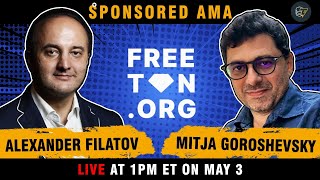
Alexander Filatov and Mitja Goroshevsky from Ton Labs explain Free TON, a blockchain that started as a community fork of Telegram's Open Network. It launched with no ICO, 5 billion tokens in multi-sig, and uses contests to distribute tokens based on merit. The network runs on a multi-sharded proof-of-stake design built for speed and handles governance through community-led groups focused on DeFi, NFTs, and gaming.
Questions this video answers
Launched in May (speakers refer to "May last year").
5 billion tokens (held in multi-signature wallets for distribution).
Started with 17 validators at launch and grew to over 450 validators on mainnet (speakers' figures).
Speakers say they ran more than 150 contests and distributed over 450 million tokens via contests.
Proof-of-stake, BFT-based consensus with multi-threaded, multi-sharded execution (described as multi-threaded/multi-sharded blockchain).
Chapters
Hey everyone, what's up? It's Rachel here. Thank you again for joining us. Today we are doing the Free Ton ama. And we've got Alexander, he is the CEO and co founder at Ton Labs. And Mithya, he's the CTO and co founder at Ton Labs. Hey guys, how are you?
Thank you. Rachel.
Great. Rachel, great to be here.
Yeah, of course. Thanks for joining us today. I'm so excited to speak with you guys because decentralization obviously is such an important topic. So before we get started with all the broad questions, I just want to ask, what is Freeton and how is it powering an open and decentralized Internet?
Sure, I'll start and I'll admit that you contribute. So the origins of Free Tone traced to the Telegram Messenger. Their team was developing what they call Telegram Open Network, later named the Open Network. And the idea is that they were trying. The objectives they were trying to solve is essentially the scalability thing because they wanted that blockchain to be integrated with the Telegram messenger and the user base, which is currently at about 600 million users. So obviously with that kind of user base you need a truly scalable platform and MITI can talk about that. So they basically invented dynamic sharding, which we actually call, to be more precise, multi threading. And our company Tone Labs, that myself and Mitia are co founders at, we were on parallel to Telegram developing their blockchain, we were developing what we call Donos operating systems sitting on top of the blockchain to significantly simplify and accelerate development on the blockchain for developers so that they can bring their use cases faster to the network and also for final users to bring user interface and user experience to the modern realities. In classical it so developing Tone os, we were pretty deep into the protocol itself, the Tone protocol. So when Telegram unfortunately lost to the US regulator because regulators saw that this was unregistered security offering, when they did their token sale three years ago, we were in a good position to unite with 16 other top validators from the space, from the Proof of Stake space, the guys who are currently validators on Tezos, Solana, warming UP for Ethereum 2.0, Polkadot, et cetera. Basically we teamed up and in May last year we launched what we call Freetown. And the idea was to try, maybe I'm trying to be careful, but maybe one of the largest social experiments in the world in terms of truly decentralized governance. We launched it in a very decentralized manner again, 17 from day one, generating zero state and genesis block it was, you know, launched live, not in some sort of lab with Drondalis present on the call. And more importantly, nobody runs or owns this project. There is, there is no foundation, there is no legal entities, there is nothing. It's a fully community driven project. We evolved the governance from initially 17 validators who launched the network to currently over 450 validators on the network, on the mainnet and with over 30 so called sub governances. And we'll explain the concept of sub governance in a few minutes. But basically it's like a dao, a geographical dao or functional dao that helps to distribute the power down to communities around the globe. That's one big thing. It's a fully community owned and driven project. The second thing I would mention is that we did not do any ICO or any other token sales scale in any shape or form. Not a single token ton crystal token was sold by the network. It's all 5 billion tokens that were launched that were issued are in multi sig kind of wallets that again that are not controlled by single party and they're distributed to validators, developers and partners who bring use cases, users and adoption to the network. And again, there are no sales, which is important because one, you avoid regulatory risks this way by not doing any sort of offering which can be recognized at some point as a security offering for some other networks. And B which is more important is you attract slightly different audience. Typically when you start from the token sale you have investment folks coming in and some sort of investment speculative feel at the beginning in the network. Of course then you have adoption. We actually started from adoption. We got developers first, we got activists who wanted to launch Freeton in different countries. We now have active daos in China, Mexico, France, Africa, South Korea, India and Japan coming next week, etc. Etc. And again, it's enthusiasts who first come to the network and then you complement with adoption. So those are kind of the two big things I would mention on the philosophy of the network. Mitu, would you like to contribute maybe on some performance things or on the governance as well?
Yeah, well, it was hard to do. Like technically, if you launch a proof of stake network without selling tokens first, then how do you secure these networks? Because usually as you know, the proof of stake validators, they put something of value to secure the network. That's something that they're afraid of losing. And the biggest problem was how to launch proof of stake network without selling tokens first. So we did something that we called meritocratic token distribution and It's a system where all the tokens are distributed merit based. So you contribute to the network with something and it's done through the contests. So we're all the time running contests. I don't know how many, probably Sasha may know how many contests we already run and how many millions of tokens we have distributed for that. But basically it's a community that proposes the contest for something like something that they want to be, to be done, developed or doesn't matter. And then community, other community members are participating and another community members are judging. And in this way the community itself distributes the tokens to itself for some merit, you know, that they contributed to the development of the network, whatever aspect of the network that is. We're running all the technical developments like that. We're running like there are marketing stuff or partnerships like that. But basically it's all same principle.
Got it?
That's a great remark. And we don't do grants because grants means that somebody decides who gets a grant and who doesn't. And contests in that sense are more engaging.
Yeah, we're building a whole system around that. There is a set of smart contracts for how to vote on this tokens. We call this whole system bftg actually like Byzantine Fault tolerance governance system. And that's a set of smart contracts that govern how to fairly launch this contests, how to fairly judge them and how to fairly distribute the tokens.
Got it? Yeah. So it's very clear that this is a very community driven ecosystem, completely decentralized, which is amazing. I just want to remind our audience members to please ask your questions because these guys are the experts when it comes to decentralization. Be sure to pop your questions into the chat. Subscribe to the AMA before we move on to the next question because you guys said a lot of really interesting things and we already have questions coming in from the audience. I'm going to take this question because this question also comes to my mind. Casper is asking what is thanh and how do I get them? So more importantly here, how did they get thanh? Is the question here because you've kind of already answered the first part of that question, but go ahead.
Yeah, there are three ways to get to get tons again, they cannot be sold. One is contests. And we did the answer in miti's kind of remark. We did more than 150 contests in total and distributed more than 450 million tokens, network tokens that way, which is actually kind of, if you multiply it by the current token price, it's quite a remarkable amount because tokens are kind of somewhere between 55 and 60 cents. But we never advertise that or we never stress that point. But again it's quite significant. So contest is one way. And there's a validator contest. We have another one coming up shortly, actually next week. There are a lot of developer contests. There are community contests for things like films about Freetown or Christmas cards. And so there's all kinds of stuff to contribute. You don't necessarily have to be techie guy to participate. The second way is I mentioned already sub governances, so let me elaborate on that. It's basically dao, a group of people who got together in a certain country, for example, South Korea was the first one for us or a certain functional principle like we have developer experience, DevOps, NFT, DeFi, et cetera. So people feel passionate about developing a certain subject on Freetown. They get together, they do the roadmap, they get allocation of tokens and with those tokens they do contests and if needed print and development and et cetera, et cetera. And the third way is what we call collaboration proposal. So partnerships basically. And that's our way to attract, to get adoption and attract partners with existing use cases or users in the blockchain space or even outside of blockchain space. We already had a couple of cases where the partner would come from outside of the blockchain space and use our network to to bring part of the user experience on chain or to use our token on crystal as part of their loyalty program or their gamification program. So it's contests, participating in governance of the network through sub governances or partnerships. Those are three ways. And then of course you can buy.
It.
Of course, but I meant about the primary distribution. And then of course there are quite a few exchanges which support Don Crystal now and quite a few OTC desks and peer to peer platforms as well. And a few wallets as well. I don't want to mention names, but there are five or six wallets, big wallets that support ton Crystal.
Okay, got it. So yeah, obviously it's accessible and anyone can own ton if they choose to do so.
The easiest one or the most intelligent one I would say anybody can buy it but the best is to engage and contribute and get them for free. Yeah, that's the right way.
Well, it's not for free actually because it's hard to win contest. So it's not for free. You actually put a lot of effort into that. But it's earned.
Yep, exactly. I mean you don't have to pay for it, you contribute to get them. Got it.
Yeah, very interesting. Okay, so I'm going to go onto one of my questions now. So you were mentioning that Free Ton was launched in May, but sufficient decentralization was achieved in December 2020. So what exactly do you mean by this?
I can start and then MITI will contribute. So basically as we started with 17 validators as we mentioned at the beginning, and the idea was to bring the number to let's say over three or four hundred validators. So we ran a series of contests and through those open contests where anybody in the world could contribute subject to being able to perform validator functions. And we ended up adding about 400 validators after those contests between October and November. And that's one important element of decentralization, that you don't have a large exchange or a core developer or anybody else who controls a significant amount of nodes. So that was achieved by December. Is there something else, Matthias, that you think was important for the announcement of sufficient decentralization?
Well, yeah, there are a few aspects. Like there are some technical aspects. There's 450 validators around right now on the mainnet and like 250 or more on the rustnet, which is the testnet where the contest for validators are running now. And another aspect is deep pools which are 400 depots. The validators are not only running their own kind of node with their own stake, but through this decentralized pools concept which we actually I think innovated in the very beginning. Every like you can, you can stake with the validator. It's not delegation because you can still use these tokens for voting, so it's yours. But you don't need to have like, because right now it's what is 350,000 tokens you need minimum to have to have a validator on the validator. So this pool enables anyone with the little tokens to stake with some validators together and earn rewards. And that these depos launch was also very important for decentralization. Kind of taking it to decentralization step so that what happened in December.
Got it. I'm curious, just my own question real quick is so many of these projects in the blockchain space say that they're decentralized, but it seems like a lot of them aren't really decentralized. So what are your thoughts on that? Just other projects that claim to be decentralized, but then there are all decentralized aspects.
Well, I don't want of course to talk about other projects like. And you know. But generally there are two kind of, I think opposite aspects of that. First is there is never. There cannot be like full decentralization, like 100% that does not exist because you deal with people with entities with money, so which tend to be, you know, centralized in a way. Right. There are only like few percent of people, holds most of the money in the world. There is a reason for that. Right. Unfortunately. So it tend to be like it's always a balance between what is decentralizations that you kind of okay with for your network or not. And that's one aspect of that. And the second one, of course there is simple things that of course just if you have them, then you're not decentralized in no way or form. And there are a few examples where you have a set, like if you have a set code on your governance smart contract and you can change the code of your smart contract or parameters of it then by developers. I don't think that that's kind of a decentralized right way to do that.
Got it. Alexander, did you want to add anything to that?
No, I think Mitje pretty much covered that. I think also we mentioned already contests versus grants. I think the minute you start doing grants, you're kind of. You smell decentralization as well. But we did mention that before. And also again, it's important that your validators are truly distributed. Like in our case, we don't even know who they are. When the contest was over, community engaged with the Swiss based KYC platform to make sure that those validators are real, that there is no collusion, that they're all independent and there are no validators from I would say restricted countries. And they wouldn't even share some credentials with us. So we have no idea who is behind the network, which is not, not typical. And then maybe the last thing I would mention is all the governance. Again, Tone Labs is a core deferred developer, but we got only 5% of network tokens, which is quite refreshing as well. It's not typical. It's a proof of stake space. It kind of reminds Satoshi Nakamoto who also got 5% of bitcoins. So we think it's a little bit symbolic. And also we continuously disengage from the governance and from like we don't, for example, do use cases not to compete with the community. We only work and focus on the core. So all of the things working together that we mentioned are contributing to the truly open and decentralized Protocol.
Got it?
Maybe last thing to mention is that if you take for example Ethereum to zero, right? And you have like, the goal is like tens of thousands of validators on the Ethereum network to have, right? The big question is, and of course in order to enable that, you need everyone to be able to kind of validate, which means you are validating with Raspberry PI's and stuff like that. So the question is you can take that to this extreme, for example, but then you know that your network performance will definitely be suffering. You cannot build a truly performing computing network based on the Raspberry PI's, you cannot do that. So everyone, every network has their own account to make towards this balance, as I said before. And if you want a usable network with high throughput, then you cannot have Raspberry PIs as validators and tens of thousands of them. But where is the the board? Like what is the other side? Like where is the decentralization starts to be? And we believe that sufficiently, it's like if you have few hundred validators running high performance computers and of course to sustain the network, like Freetone is one of the fastest network and I think right now we have only one competitor more or less, and it's Solana. And with this kind of high performance networks you cannot run it on like you have to have powerful computers and a lot of bandwidth, but these are cheaply available today. It's not something everyone can pay for that. It's €250, maybe €300 or dollars per month. And you have that right. So it's not that you cannot, I don't know if you need to go to this Raspberry PI kind of scenario, right? You can deal with a high performance server, buy it in hundreds of thousands of data centers around the world for that kind of not too expensive prices and be a validator. But then you need to stake a lot of tokens. And if you enable a lot of people stake a lot of tokens, then you kind of achieve decentralization in another way, preserving the performance and the goals that you put to your network as a computing platform.
Got it? Got it. Speaking of staking, we have a question from an audience member. Anton is asking where can I stake faucet or claim.
You stake for a smart contract. And I don't know what they mean by faucet or claim. You need to buy tokens. And then so there is no faucet that gives that. But there are many ways to stake. You can stake through deep pools, you can download some of the decentralized browsers or wallets for Freeton and stake there. There are some exchanges who are running the staking program for Freeton as well. You can stake with them, although it's a little bit more centralized I would say. But you can do it in completely decentralized way from your own wallet. Just sending a common to this smart contract, sending some tokens there and the smart contract will take care of everything. We did it. I think we did it definitely before it was available on Ethereum to zero.
Just maybe one remark. The flagship browser is called tonesurf browser. So just to be more precise, for example, in Toneserve browser, which is available on App Store and Google Play, you can download it and even with a few tokens you can participate in staking through the poll.
Got it. Okay. I'm sure that clarifies some of the confusion that the audience members might have had. My next question is how do you plan to bring more liquidity to the Free ton platform moving forward?
Yeah, we're big believers overall into interoperability. We currently have three bridges in development. So the first bridge of course was with Ethereum, which is the largest ecosystem by far. There is nothing that comes close to that today with some chains making inroads like Binance, Smart Chain and Polkadot, but still quite far away in terms of adoption. So we thought it was important to bridge Ethereum and Freedom first. Then we're also doing Polkadot and also Tezos because we acquired a network fork of Tezos called Dune because they have some great developer teams and some great traction. So we thought that was important. And it comes with a Tezos bridge essentially. So token Ethereum, again, it's by far the largest ecosystem also in terms of liquidity. When the whole Dex revolution started, I would say almost 100% of liquidity was on Ethereum based Dexs and the other elements of infrastructure. And that's why we focused on that. It's functional, it's in final audit, the bridge. And of course there is wrapped token as part of that thing. So that's a big hope that actually not hope, but I think it's logical that some of the there would be a flow of liquidity from Ethereum to Freeton. One of the reasons is extremely high, as we all know, transaction fees on Ethereum. So folks are looking for cheaper networks to do their stuff in defi and also there is more and more teams who see the power of Free Tone technology. So they would be also migrating. But that's slightly different story from liquidity. MITI do you want to add anything to that?
Yeah, well actually I just think that it will be a lot more of these wrapped things around on polka and Ethereum now and Tezos as well. Because there is decentralized exchanges that we're building on Freetown and Freetown because it is the, well, one of the fastest, though it's not exact precise word but let's just put it simple, one of the fastest networks around and we can build decentralized exchanges that operates on speeds of centralized ones. So these exchanges are having been now and I think with them going into production we will see a lot of liquidity coming from different networks too just to use this exchange because it's extremely fast, it's extremely cheap and it's for example, it's an order book based exchanges as well. So it's not just grid liquidity pool. So you can do all sorts of stuff like trading strategies and whatnot. Right. So you couldn't do that before on decentralized exchanges.
Got it, yeah. And I just want to remind the audience, please keep sending us questions, anything about decentralization or the project, they're happy to answer that for you. I just wanted to ask you guys a question. Based on what we were just speaking about, do you believe that the wrapped on will lead to higher demand for the project's core ton crystal token?
It's a great question, Rachel. The only thing is that we're trying not to bother much or actually I would say at all about the value and demand for ton crystal for a couple of reasons. One reason is that it's an important element of the regulatory framework is that protocols that have been, and there are quite a few as we know that we're focusing I would say too much on the price of the token. There are pumps here and there. We think it's temporary, it's going to go away because there is no way regulators are going to tolerate it down the road. And given that we've chosen that fair launch and extremely clean framework for the governance and for this. So we're not doing this, we're not focusing on demand, we're not focusing on the price very consciously. We think that the way for adoption and essentially for value of the ecosystem is adoption. And that's where we put 100% of the focus at all levels, developer adoption validators and of course users through you working on the front end and use cases. So the answer is of course yes. I mean once you have more liquidity in the network, you have more attention, you have more traction, you have higher trading volumes. But again, this has not been a priority for us. Neither was it ever an objective. Mitya?
Yeah, I totally agree. I don't care the price of a token currently. It's just not important to me personally and I think to a lot of the community members as well, because they understand the long standing value and intrinsic value of the work we're doing. On the protocol level. It will come like it doesn't matter what we do, as long as we do what we said we will and achieve goals that each of us has in terms of the development of this network. The intrinsic value will be there and therefore everything else will just arrive as well.
Yeah. What I love about this ecosystem that you guys have created is that you focus very much on the tech aspects first before anything else. And I think that's really important because sometimes with these blockchain projects, that's not the first point of focus. Can you guys speak about how important it is to have that technical backbone in place before token prices come into play?
Yeah, well, it's very simple. It's not that we're focusing on the technology, we're focusing on the use cases. To enable these use cases we're talking about, we need the technology to be there. And this network was built around the idea of massively scalable technology. So one of our partners, for example, World Chess, which we are building integration with right now, it has millions of use cases users. And as you know, like online, World of chess has 600, more than 600 million users to enable such a use case. There is simply no platform, no blockchain at all that can do that. And we are focusing, we need to be there. And we are, you know, so we're doing the technology that enables this kind of massively scalable use cases, and also the technologies that can be used by millions of people should be really simple to use. And, you know, the user experience should be there. And it should be like, you don't refresh, you don't expect to refresh Facebook page for two minutes or whatever, 30 seconds, right? It's not the user experience that users expecting today from a modern technology platform. So we need to be there with this to enable this kind of use cases.
There is one important thing I would like to add to what Mitje said, and he mentioned that partially is, I think for the first 11 years of the blockchain history to date, actually 12 years by now almost, it's been kind of a very niche and geeky space. And what we're trying to do is now that the performance of a few blockchain and Freeton, we think we're at the very top there, is almost there at par with the centralized it. If we talk about the throughput, if we talk about speed, if we talk about latency and finality, that for the first time in history, essentially in IT history, blockchain in terms of performance comes so close IT that user wouldn't notice the difference. So what you can do is you can bring the use cases which were not possible on the blockchain before, onto decentralized or distributed backend again without user not seeing the differences, but then bring in all the benefits of the blockchain that we know. So, and that's what we're trying to do is that we're not competing in the blockchain space, but we're actually competing, you know, increasing the market share of decentralized distributed backends, enabling benefits of the blockchain for the mass user. That's what we're up to.
Yeah, I also for me, like, I don't think the user shouldn't, you know, at all, at all, like not see that he's using blockchain. I think that there's a lot of value where user actually sees that it's using blockchain. But it needs to be on par with the larger IT in terms of user experience, even when they know, okay, I'm using blockchain. Wow, that works exactly the same as everything else I have used. Right. Because right now it's not at all like that. And of course, when you talk about price of that just to wire tokens in ethereum cost like $100. I don't think that's something we really expected from a blockchain platform. But this cost actually is because of this lack of throughput and scalability of the Ethereum blockchain. Right. That's all basically the same. It's a part of the user experience. How much money you pay for doing this stuff on this computing platform?
Right, Definitely. Okay, before I ask my next question, just want to remind the audience keep sending us your questions. Subscribe, subscribe to our channel and. Because we do these all the time. But next question, based on what you guys were saying. So obviously use cases are important here and I noticed that there's something called the Free Ton Defi Alliance. What is that exactly? And is that focused, I'm assuming primarily on defi?
Yeah, yeah. That's part of decentralized governance. Five independent community teams, teams from the community organized what they call Defi alliance to move Adoption of freedom in the decentralized finance space, building infrastructure like bridges, et cetera, et cetera. I think there are currently up to 10 members already or on the way to 10. We're not part of that Labs being a core developer. We're not part of Defi alliance. And to be honest, I'm not even following what those guys are doing. So for me it's a great example of decentralized activity which is starting to become a little bit more institutionalized, which I don't like the word institutionalized, but people are uniting to be able to do something more powerful and that's what Defy alliance is trying to do. Because obviously the space is very competitive. Again, Ethereum has been dominating the space almost entirely. There are a couple of important players emerging there I would specifically mention maybe Binance, Smart Chain, Polkadot and Solana in the space. And we want to be up there in the very top. So that's what those folks are up to.
Okay, got it. I'm going to take a quick question from an audience member. Elle is asking. Free time has a one year anniversary soon. What are your main goals for the second year?
Oh, that's a great question. We don't have goals. And KPIs, we love that question. That's a very easy answer to that one. Now to be a little bit more serious, Meteor obviously does have like Don lapse roadmap and he can talk about that in a second. But otherwise you cannot because we have no idea what's coming. Like last week all of a sudden we had Japanese and Japan and India communities coming up with the, with their proposals for sub governance. I have no idea who is next. I'm sensing that Italian or German community will be next, like what use cases will be up there, et cetera, et cetera. What pieces of infrastructure will appear because they keep coming from. You don't even know. It's like boom. And it's there on the forum and it's there on GitHub as a code and as a use case. So like it's not the close analogy, but you don't know what's going to be the next article in Wikipedia, right? Because somebody is just writing it as we talk. It's exactly the same happening here. People are just doing stuff so we cannot plan it. But on the core tech side, well.
Again I have a roadmap for my team, which is Tom Lab's team and we are building the platform as one of the core developers. But we are not the only one. So there are definitely Other people that are planning other stuff to do on Freeton main goal is to build a platform that enables this kind of all kind of applications or whatever people want to build on top of that. And in terms of the technical things that we need to achieve is that there are a lot of things that we're looking for. We need to bring the like, we need to demonstrate some, some performance improvements to, to like to go to like hundreds of thousands of transactions per second maybe something like that. And so there are things on the architectural level of the like compilers stuff like more deep technical stuff that we want to do. Of course every team that, that works on these things has their own, their own roadmaps. We, we want to bring our tools like to the level of, for the developers to be able to develop like on par with experience of developing on Firebase for example. Like you don't need like blockchain development shouldn't be that complicated and the platform, the blockchain platform shouldn't be that obscure and really hard to build on top. We can do things like we have dozens of years on it kind of history where we know how to do this stuff and we will do that stuff. You will be able to come and to develop really easily any kind of application you want to build without a PhD in distributed computing.
Maybe one remark Rachel, if I can just not to have an impression that this is completely chaotic and disorganized. So once people form into sub governances they do prioritize and plan. For example, just as an example when defi sub governance was born they said we need bridges first, particularly Ethereum, we want decentralized exchanges next, we want stablecoin. So there is some sort of planning and prioritization that is happening at the sub governance level. But again it's still an open system. So tomorrow somebody can come and say well look, why don't we do a peer to peer lending platform in defy urgently and somebody feels passionate and puts up a contest up there and it will just happen, no community will support it. So that's what we mean. But to answer the question, which I think is a good question in a very broad sense, year one was make sure that technology works. Mainnet is stable, decentralization happens, governance works. And our business model, we don't have a business, it's not a business model but our governance model works with the contests, with DAOs, et cetera, sub governances. So year two really has to be a year of adoption, a massive breakthrough in adoption when there will be hundreds of use cases Real use cases with user base when there'll be meaties claiming there'll be tens of thousands of D bots which are interfaces between the browser.
And browser and decentralized just application basically it's an adopts.
Yeah, yeah, exactly. So et cetera, et cetera and hopefully millions of users interacting within the use cases and extracting value from that technology. So that's a big answer. Is the year of adoption is year two.
Got it. Speaking of the Deebot browser that you mentioned, I have a question from an audience member. Ben is asking, or he's saying, I'd love to hear Mika's thoughts on the importance of the Deebot browser contest.
It was prolonged, it was prolonged for two weeks and there is some technical glitch happened on the sub governance level so they didn't like formally prolonged it. But there is a prolongation for two weeks now and in the end of that I know there are a couple of teams working on the solutions once it's there. Well, I think it's great stuff but I want to see that.
I think the question mito was on the more philosophical level, why is it important, if I understand the question correctly.
Why the bot browser is important because. Because debots are important and debots are important because they replace the Web3 architecture. We don't believe in the vision of Web3 because we don't believe in layered vision. When you have a. You have a decentralized layer and then on top of that you build another layer to solve like problem that you couldn't solve on this decentralized layer for example and that's what Ethereum is doing all the time and we just don't believe in that way. So they solving for example a scalability. Oh, we don't have scalability on the basic layer, decentralized layer. Okay, let's do it on layer two. Let's put some other layer which will not be that decentralized, maybe, whatever, but it will bring us this. And then if we want an interface, user interface, let's do it through another layer which is what it will be. Oh, that will be web. So now we have a decentralized layer but in order to interface with that layer, the user need to go for the centralized web layer. That doesn't make any sense to me at all. So we created debots in order to be able for the user to have the same experience like they have while interfacing with today's web or chat or whatever, but in a completely decentralized way. So there will be no Centralized entity in the middle. Like when this story last year happened with Uniswap, I believe when they had to do some user disclosure because they were running a website. Right, The Uniswap is running the website. You need to run a website in order to enable decentralized application. That is oxymoron. That doesn't make any sense. You need to be able to do that without this. And T bots is a technology of what we call end to end decentralization which enables this user doesn't need to go to the website in order to interact with your smart contract. The only thing you need for a user to interact with your smart contract system is to write two smart contracts. One is a smart contract for your system and another is a smart contract which called dbot. And that smart contract executes on a user inside the user browser locally and interfaces with the blockchain. That kind of technology I think is a cornerstone for user experience and new user experience with decentralized web. That's why I think it's important.
Got it. Well, I also wanted to ask because I know there aren't set goals in mind, but adoption is very important here. How do you think we're going to generate adoption moving forward for the free time, network and community? What are the biggest challenges that must be overcome in order to drive adoption and ensure that?
Sure. Well, I'll start and then I'm sure Mitje will have a lot to say as well. As Mitja already mentioned, it's very important to create the right infrastructure for developers. Like you mentioned, the Firebase example, Firebase came creating mobile applications became 100 times easier because you just, you know, you didn't have to do the whole back end thing. You know, you just focus on the front end. So that's kind of similar thing that we're doing with Tone OS is we have compilers, we have a whole bunch of bindings and the other stuff which enables to, as MITI mentioned, just with two relatively simple smart contracts, boom, you have your own DAPP on Freetone. So that's very important because developers will bring use cases. So I would say this is very important. The other one is we have that partnership program which actually 85% of tokens would go to the partnership program to enable adoption of partner use cases from the blockchain and not necessarily from the blockchain, because as we mentioned already a couple of times now, the technology is there to enable use cases that required, for example, you know, faster speeds or lower latency to be able to have meaningful user experience. So we are doing a lot of that and there are quite a few teams in the community who are helping with integration. We have a whole bunch of chats to support integration of developer entrepreneurs and the use cases. So I would mention maybe those two. I don't know MIT if you want to take it from there.
No, I think that they the you know, the adoption. I agree partnerships are important for to bring use cases and the technology should be there to enable those use cases and that will come because like again I think we were in the like very top in terms of thinking and architecture wise in terms of how you build smart contracts on the sharded blockchain. In terms architectural wise you can build all sorts of use cases that you just cannot do in other decentralized stack. I think that will bring use cases for sure.
Right? Definitely. Just want to remind the audience we've still got a bit of time. Please send your questions our way. Subscribe to the YouTube channel. My next question is we're talking a lot about use cases. Are you guys seeing any NFT use cases at all? Since NFTs are selling right now.
Very, very hot subject. Although I do think it's a bit of a bubble and the space will substantially evolve because if you want my personal one minute philosophical perspective on NFTs, I was probably not the very first user but I had my first two cryptakittis when they just came out maybe months one when cryptokitties came around and that was still have them somewhere those kitties which is important. I mentioned that for a good reason because there was not much to do with the crypticitties and then we had this winter and then all of a sudden people realized oh my God and MITI can talk about the importance of what is the true NFT versus a certificate, digital certificate that shows some sort of ownership. We do have a few. We actually have a contest because remember we always do contests. So we have a contest going on for marketplaces on Freeton which will end on May 24th. So I'm pretty sure that by end of May we'll have 4, 5, 6, 7 marketplaces on top of free tone of different shapes and kinds. So I'm really looking forward to see those. There were a couple of use cases, actually three that I can think of that happened since we launched our NFT token technology. There was a first marketplace, we have a first ticketing case, NFT ticketing case which came just recently. So we do have some early adoption. But once the marketplaces come out by the end of May. There'll be hopefully breakthrough of adoption there. Mitya.
Oh yeah, NFT is. Yeah, it's very hot. It's a completely bubble. The NFT is just a token. And what usually people are confusing that with the ownership of an object. It's not the same thing. Well, usually, of course there are some exceptions, like crypto banks, for example. Well, the NFT itself is an object and then you can talk about real ownership, although this ownership is basically just a, you know, a string in the table, whatever. But that's another story. But Most of the NFTs today are just the certificates of the ownership. So you have some data which is stored somewhere else and you have a hash of that data in the stock. And so kind of it proves that you have, if the data is available, you have it. But what if not? What, what if this data is not available? Like you want probably the NFT that you can hand onto the wall, like you do with the real picture, with the only copy of that picture. You cannot do that mostly today, like most of the NFT is just a certificate that somewhere else you have that picture hanging, you know, and, and I don't think that. I think it's just one of the first iterations over this and it will take some time to really have. It's like an ICO stuff today with the NFTs. But the real think about DAO and tokens came much later. When you have a real value in that and understanding of how to build that and what is important, what is not. The same thing, I think will happen to nft. It will take another couple of years to to build a real solution for the real art or real objects of collectible objects on the blockchain based on.
Fundamentals, not on hype. It will evolve into more gamification. You have fantasy footballs today. So technology has to add value. And as we said, the certificate, you know, of ownership is a very small piece of that kind of value chain. So it has to become a value chain, not just a small element of that value chain, to become meaningful and have mass adoption.
Yeah, even if you have that, and I just want to be very precise, and even if you have the object sitting in one chain, for example, IPFS storage, which is decentralized, blah, blah, blah, and the certificate sitting at a smart contract on another blockchain, they don't know about each other usually. It's not the same as having one object in one place functioning as one immutable object. It's two different things. Just for clarification.
Got it. Yeah. Just in terms of use cases, are you guys able to discuss what the best use cases are for this network?
Well, every massive use case like Chess that I for example already mentioned, it's like massive NFT use case by the way can be also. But again, because you can build stuff which again dexes or anything that involves iterating over large sets of data. Think about like today's smart contract, like ERC20 token for example or whatever. Reincarnation of that technology is basically a huge table sitting in smart contract and a lot of iterations over this huge table. So what if you have like 25 millions of these token holders? What are you going to do? It's simply that the technology is not there. So you need to have some other technology that will enable you to have these kinds of tokens and you have that in Freetown. You may have it some other networks, I'm not sure. But because we are the only network that is taking the parallelization of the smart contract execution with the multi threading technology, I think it's a very unique architecture to build this kind of use cases and. And I think we're the only one who can do that.
Got it. Just broader just to add to that. A couple of cents to add to that. So use cases that require more scalability, essentially like large B2C cases are now possible to do on the blockchain. And also some of the classical use cases that everybody believes will partially or to a large extent migrate to blockchain, like I would mention probably you know, digital identity and the whole question of identity management that has to come to blockchain one day. So we think that's the area where there'll be some killer use cases emerging.
And the reason why they didn't come is because the technology weren't mature enough. And as I mentioned just before you, you cannot put a whole country identity on like blockchain, like Ethereum. It would be a pain, real pain to do that and probably just not feasible. But you can do that on freetime easily. You can put the whole country of identity in like a couple of hours into the blockchain and you know, iterate over whatever, bring whatever functionality you want on top of that. I think once this platform, once everyone will understand that this is possible. I mean these use cases will just happen.
Yeah, no, that's exciting. I think obviously digital identity use cases are huge right now. The enterprise use cases are really important. So I'm excited to see that. Just want to remind the audience members we have a Few more minutes, so please send your questions. I don't have any additional right now from the audience, but I wanted to ask both of you, do you have any additional comments that you just want to add before, before we end the AMA today that we might not have already have covered?
Yeah, we can just relax a little bit and smile a little bit. So one, let me mention a funny use case because we've been very serious talking a lot about technology here and governance. So one of the recent partnerships that we stroke is with one of the first virtual nations called Freeland, which is symbolic, you know, you have freedom and free land and it's basically. It's like a dao, you know, it's a virtual. It's like a virtual nation and that they even have their biometrical passports. So the reason I mentioned this, the reason it's important is that we're going to be by we always mean community, of course are going to be doing a whole bunch of governance experiments on those nations and hopefully one day some of those experiments can end up with real governments around the world. So I think that's an interesting one. The other I wanted to bring up probably we talked a lot again about B2C and the users. We think government tech can benefit tremendously from the blockchain savings costs. We just had Africa hackathon a few days ago. There is a massive problem on identity in Africa. I cannot remember the number. But hundreds of millions of people cannot prove their ownership of land or real estate. All of this can be solved on the blockchain. Let's talk about voting. It's again talking about funny things. Mit, very reputable institution, came up with a paper saying that voting on blockchain not good. So we decided to run a contest that proves that it's good. Blockchain is very good for voting and there were quite a few quality submissions. And we're active members of the government blockchain association to make that take the public. So we think that aspect the whole governments adopting blockchain, hopefully more public than private. That will be an important trend going forward. And I'm sure media has a few important things to mention as well.
I just want to mention that we're totally against private blockchains. Like private blockchains are not blockchains crap. You don't want to do anything with private blockchains. So when we talk about usage in the corporate usage or usage in the government usage, we always talk about usage of the public blockchain for enabling these applications, never private.
Yeah, I mean that's a good point you bring up. And I mean I think at least when it comes to enterprise blockchain, obviously the early use cases were all private, but now that we've been into it a few years, we're seeing the development of public blockchains for enterprise use. Which is amazing because that, that's I think the direction that we need to head in. Not saying that private blockchains are bad, but I see that innovation and I think it's great that enterprises are starting to use public blockchains for important use cases. Yep, great. Wonderful. Well, we are about out of time. We don't have any further questions from the audience. Alexander and Mitya, if anyone wants to contact both of you. How should they do that? Are you guys hiring or I guess not hiring, but how can they become a part of the community? Where should they go online to find that information?
Yeah, that's actually very simple. So it's freeton.org is the catalog where you can see all the resources. It's a catalog, it's not really a website. And then forum.freetown.org is a place where people meet and connect. And then from there, from freetown.org and forum.freetown.org you can go into different chats, you can see all the sub governances and pick the one that is of interest, be it DEFY or NFT or developer Experience or South Korean, Mexican, Japanese, etc. And me and media are very easy to find there. We're not the most active members but we are acting there under real names. We're not hiding, we're trying to answer different questions. It's very easy to find us once you dive into our ecosystem.
Got it. Actually, we've got one more question from an audience member before we end and I think we've already answered this question but I'm just going to ask it in case we didn't. Antoine is asking what kind of protocol is Freeton? Is it a proof of stake, proof of work or dag, which I think you guys answered.
But yeah, proof of stake, BFT based consensus, multi, threaded, multi sharded. The only multi threaded multi sharded blockchain with virtually unlimited throughput scalability. Of course, if you go to TON live you can see that this is one of the explorers. You can see the stats of the network and stuff like that.
It's quite impressive. Blocks have been formed every 0.2 seconds. I just looked at it and it's quite refreshing. 0.2 seconds. Well that's on average, on average of course. Yeah. Whatever shards we have, it's not finality on average.
Well, awesome. Well, you guys have been great. Thank you so much, Alexander and Mitia, for joining us for the live ama. And thank you to our audience members for tuning in. Remember to subscribe to our YouTube channel. And yeah, just thank you guys so much. It's been a great time chatting.
Thank you very much.
Thank you, Rachel.
Thanks.










